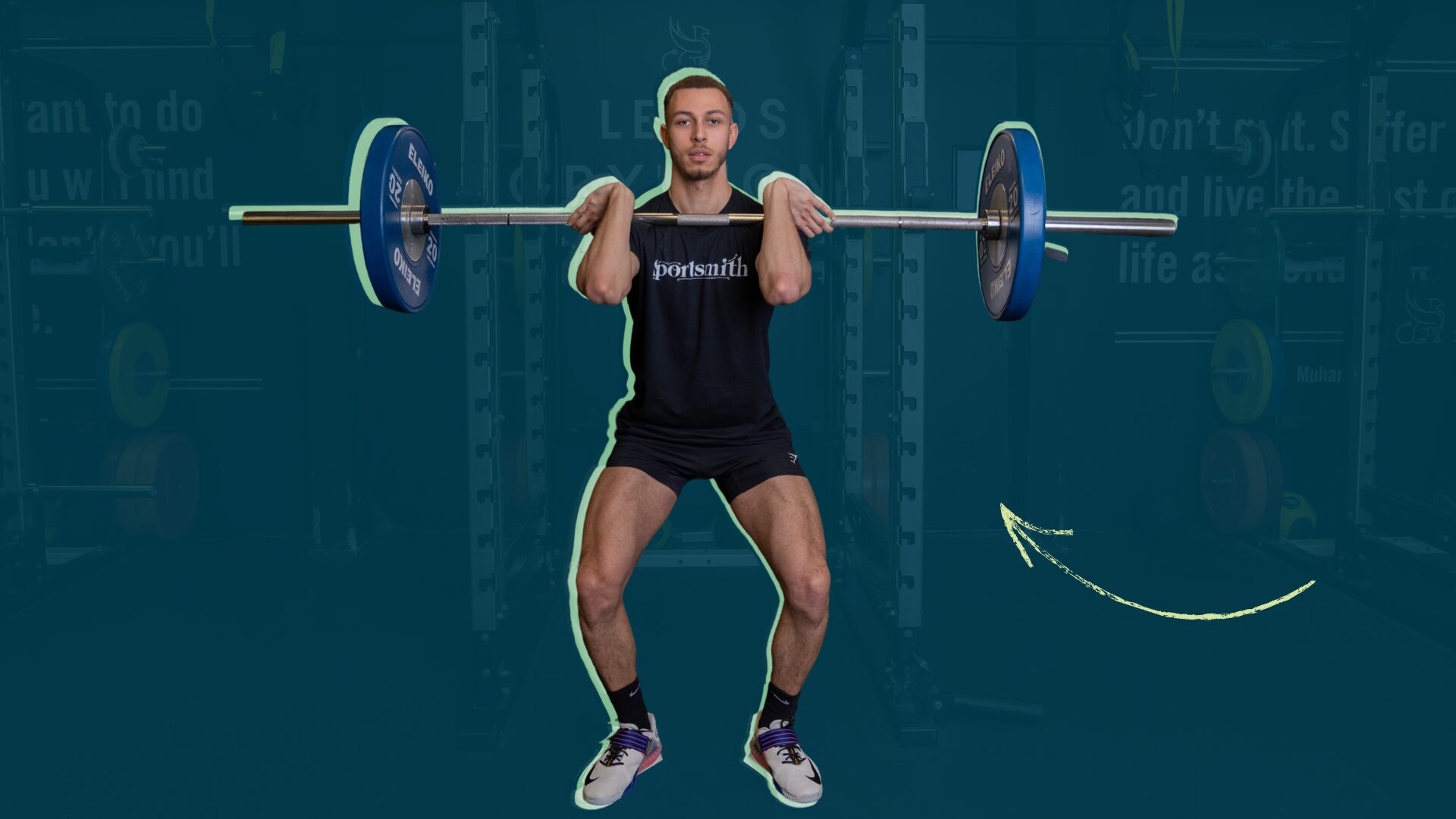
“But the rate of force development in a clean is 5 (5!) times higher… This is a huge difference. It is this stimulus that we are seeking when we incorporate Olympic lifts in our programme. I would contend that this particular characteristic of the Olympic lifts is difficult to recreate from other means.”
A well-respected elder statesman in S&C posted that on X. It typifies the general position held by many perceived authorities in the field that Olympic lifts are inherently unique and superior to all other exercises.
To be clear from the outset, Olympic lifts can be useful exercises; and, perhaps more importantly, their derivatives certainly can be. When performed well, they can elicit high power outputs and peak forces [5, 14].
However, Olympic lifting does not necessarily provide a distinct stimulus compared to other training methods. Furthermore, the insistence on its use and the over-statements of its value have become dogmatic within the field of S&C.
This article will examine the validity of that perceived uniqueness and explore the consequences of Olympic lifting’s dominance within the wider sports performance community.
We’ll start with the physiological basis of human movement and force expression, so we can establish a clear rationale for why one exercise might be more effective than another for targeting a specific stimulus. We can then consider whether it is even possible for any exercise, when performed with similar resistances and maximal intent, to produce five times the rate of force development (RFD) of another, and whether such a comparison is even meaningful.
Tweet ThisTo be clear from the outset, Olympic lifts can be useful exercises; and, perhaps more importantly, their derivatives certainly can be. When performed well, they can elicit high power outputs and peak forces
@Langford_Andrew
Muscle physiology is the ultimate first principle
To initiate a muscle contraction, an action potential must first travel down a motor neuron to innervate a given motor unit. Like a tube filled with gunpowder, once the nerve is stimulated, it fires, and the entire motor unit is activated.
Overcoming a large external resistance requires firing as many motor units as possible, as quickly as possible, and often repeatedly. Among the biochemical adaptations at play is improved calcium handling. This includes increased uptake and release of calcium ions from the sarcoplasmic reticulum, which enhances the efficiency of excitation-contraction coupling.
When a muscle is stimulated to contract maximally, its maximum force emerges from these combined neural and biochemical mechanisms.
As with any physiological adaptation, the principle of specificity applies: training focused on near-maximal resistance will lead to specific improvements in that domain, whereas training focussed on maximal velocity will lead to biased adaptations in that regard.
Imagine, for a moment, two pieces of Velcro perfectly aligned. In this state, the Velcro displays its highest resistance to being pulled apart. Call this its maximal strength.
Velcro is a helpful analogy for how muscle fibres resist external forces. When there is maximal overlap of the actin-myosin cross-bridges, the muscle fibre is capable of exerting its greatest possible force, e.g., during an isometric mid-thigh pull.
Now, imagine we peel the Velcro apart slightly. It no longer offers the same level of resistance as when perfectly aligned. Similarly, when some actin-myosin cross-bridges are unbound, the muscle cannot generate as much force. However, the unbound or “free” filaments are now available to reach the next binding site and generate contraction through cross-bridge cycling. These cycling filaments are responsible for producing movement, that is, velocity, through successive power strokes.
The number of actin-myosin cross-bridges needed to sustain a given force is therefore inversely proportional to the number of filaments available to cycle and produce velocity.
When 90% of cross-bridges are occupied, few are available to cycle, so acceleration and resultant velocity will be relatively low. Conversely, when only 20% of cross-bridges are occupied due to lower external resistance, more filaments are free to cycle, allowing for greater acceleration and faster contraction.
This closely mirrors the mechanistic explanation behind Hill’s historic experiments on frog skeletal muscle [8]. That work underpins our modern understanding of the force-velocity relationship.
Tweet ThisOvercoming a large external resistance requires firing as many motor units as possible, as quickly as possible, and often repeatedly. Among the biochemical adaptations at play is improved calcium handling.
@Langford_Andrew
From physiology to performance
A core principle in strength & conditioning is to improve an athlete’s overall force capacity. If we can increase maximum strength, then for any given submaximal resistance, the athlete will be able to overcome a given resistance more quickly. In other words, they will be able to contract the muscle at a higher velocity.
For example, if someone has a one repetition maximum (1RM) of 100 kilograms, lifting 90 kilograms would involve relatively few free actin-myosin filaments, and muscle contraction would be fairly slow. If that athlete increases their 1RM to 120 kilograms, then 90 kilograms becomes only 75% of their max. More filaments are now free to cycle, and contraction occurs more rapidly.
This adaptation is central to many performance goals in sport. It allows for faster, more explosive movement patterns at submaximal loads.
But this is not the same as improving rate of force development (RFD).
An individual may increase their maximal strength, and therefore their velocity at a given load, without significantly enhancing the rate at which force is initially developed.
Aagaard et al. [1] demonstrated that RFD can be modestly improved (~15%) following resistance training. However, this appears to be primarily a neural adaptation associated with training at maximal intent. Similarly, while peak force increases with heavier loads, RFD remains largely unchanged [11].
Therefore, unless Olympic lifting uniquely stimulates muscle in a way no other exercise can, it is implausible to suggest it results in a fivefold increase in RFD— assuming we are measuring the same underlying phenomenon.
Understanding the mooted 5x increase in RFD during a clean requires us to look at other factors contributing to muscle performance outcomes.
Muscle actions during complex movements
One ostensible feature of Olympic lifts is that they allow athletes to move heavy loads quickly. However, the velocity of a concentric contraction is inversely proportional to the external resistance. In other words, moving a heavy load quickly is inherently limited by the physics of contraction and load.
If the goal is to improve force output during a concentric action, the most important input is the ability to perform with maximal intent. But that is not specific to performing Olympic lifts. If anything, other exercises allow athletes to train with maximal intent far more easily and consistently than Olympic lifts.
A maximal isometric contraction is analogous to the perfectly aligned Velcro: because the body is contracting against an immovable object, there is no joint movement. Therefore, the muscle can reach maximal overlap of actin and myosin filaments. This is why isometric tests like the isometric mid-thigh pull (IMTP) often produce exceptionally high RFD scores: the force is applied instantly and without the added complexity of motion.
In an eccentric contraction, the body is primarily absorbing or dissipating external force rather than generating force to produce movement. For example, when landing from a jump, the body deals with substantial forces (mass multiplied by gravity and deceleration). A stiff landing produces a high force spike; while a more cushioned landing spreads that force over time, resulting in a lower peak.
At any given moment, the body must make complex decisions about how many cross-bridges to maintain and how many to release, while also regulating new cross-bridge formation. This decision making influences how force is absorbed or redirected.
During a stretch-shortening cycle (SSC), a concentric action immediately follows an eccentric action. The quick transition between contraction types means the body can store and reuse some of the eccentric phase energy via elastic tissues such as tendons and fascia. Although some energy is lost in the process, training can improve the efficiency of energy conservation and transfer.
Moreover, how the athlete performs the countermovement phase can influence force production. A sharp, reactive SSC will typically display much higher RFD than a slow, cushioned one. Both will exhibit higher force outputs than a purely concentric action.
Different SSC strategies serve different purposes, depending on the demands of the task. The effectiveness of these strategies will depend in part on the athlete’s maximal contractile strength, neural coordination, and ability to utilise elastic structures such as tendons.
Tweet ThisIf the goal is to improve force output during a concentric action, the most important input is the ability to perform with maximal intent. But that is not specific to performing Olympic lifts.
@Langford_Andrew
RFD and the Olympic lifts
Even if the concentric phase dominates a movement, any complex movement requires the interplay of eccentric, isometric, and stretch-shortening cycle (SSC) actions. RFD reflects the combined forces resulting from multiple overlapping muscle actions, each with distinct concentric, eccentric, isometric, and SSC phases, and therefore each with its own unique force characteristics. And this plays out in muscle groups across the entire body.
RFD, then, is a metric that reduces a messy and complex backstory into a single number. That might be useful when comparing individuals performing the same task or when tracking changes in performance over time. But even in those cases, RFD may not be the best metric, as we do not know exactly how the force was generated or distributed among the different types of muscle actions.
A more appropriate measure for performance outcomes might be impulse (the change in momentum) or peak power. Peak power outputs are nearly identical across a range of exercises that use the same musculature when performed with maximal intent [6].
Fivefold or false comparison?
Now, back to our original statement. Why would we observe a fivefold increase in RFD for an exercise that appears to use similar musculature?
The study in question compared only the concentric portion of a loaded jump squat or a countermovement jump (CMJ) to the entire upward phase of the clean [12]. But this upward phase includes the second pull, which involves a countermovement. In contrast, the upward phase of a jump squat or CMJ primarily involves concentric action of the propulsive muscles. This is comparing apples to oranges.
The authors of the study correctly highlight that the highest RFD observed in the jump squat occurred during the countermovement phase. However, they chose not to use that data in the comparison, opting instead to isolate the concentric phase of the lift.
When we compare the RFD values from the countermovement phase of the jump squat or CMJ to those recorded during the clean’s second pull, we see that they are far more closely aligned than the 5x figure would suggest.
There are also methodological issues inherent in RFD testing. RFD is highly sensitive to the parameters used in data collection, such as the time window selected, the filtering process, and how movement onset is defined [10].
Even small inconsistencies in these factors can produce large variations in RFD values.
Furthermore, in a countermovement jump squat, the athlete must first overcome the downward load by decelerating the bar. This entails absorbing large eccentric forces before attempting to reverse direction and accelerate upwards. The added force of gravity and the downward momentum result in the “effective mass” of the bar being greater at this point than its static weight.
In contrast, during the second pull of the clean, the bar is already traveling upward with momentum. The athlete is accelerating a load that is already moving in the desired direction, making the “effective mass” lower than the static load.
Comparing movements in this context, load becomes a somewhat arbitrary variable. You could replicate the effective mass (and therefore resultant forces) experienced during the second pull of any percentage maximum of a clean using other methods, such as an array of loaded and unloaded drop jumps and plyometrics.
Does high RFD reflect positive adaptation?
Now, if all we are interested in is a high RFD score, we can achieve impressive values using a range of eccentric, isometric, and countermovement exercises, including IMTP, drop jumps, and various forms of plyometrics.
However, to re-emphasize, chasing RFD for its own sake is not the aim of S&C. RFD is only meaningful when considered within the context of a specific sporting movement. If improving RFD is truly the goal, then we must either train the actual movement with maximal intent or improve the underlying physical qualities required for that movement, as discussed earlier.
To give credit where it’s due, the author of the original social media post did point out that we should not conflate the stimulus provided by a clean with that of a jump squat. On that point, I am fully in agreement.
However, with the assertion that the 5x RFD value is the critical factor, and that this is what we should be striving to improve through S&C, I wholeheartedly disagree. This view sets a misleading precedent for how we define effective strength and conditioning practice. I would strongly encourage all professionals in the field to challenge the notion that Olympic lifts inherently provide superior RFD benefits, especially when those claims are built on flawed comparisons.
Olympic lifts: Unique, or one of many?
The second claim to examine is that Olympic lifts provide a unique stimulus. If there are, in fact, truly unique adaptations associated with Olympic lifting, it would go a long way towards explaining why these lifts continue to exert such a strong hold on the strength & conditioning community.
Breaking down the lifts
As we’ve seen, the second pull of the lift does not appear to have any inherently unique qualities when we analyze the forces involved.
The first pull is essentially a deadlift. Depending on the starting position, the specific overload stimulus may vary slightly, but it is fundamentally a pulling action from the floor. This stimulus can easily be replicated through traditional deadlifts, trap bar deadlifts, or similar exercises.
The catch phase involves rapidly absorbing large forces through a combination of eccentric and isometric contractions. Such a stimulus can be effectively re-created using drop landings, depth jumps, or landings from loaded jumps.
The upper body pulling action may also be unique, particularly the combination of arm pull and shoulder shrug at full triple extension. This could have more relevance for certain contact sports, such as wrestling or American football, where powerful upper body involvement is required alongside explosive lower body drive.
Different movements recruit muscles in slightly different ways: each exercise is a distinct neuromuscular coordination demand. The EMG data and movement traces from the study in question show that different exercises engage specific muscles to varying degrees. For example, Olympic lifts appear to involve greater activation of the hamstring musculature compared to jump squats or countermovement jumps. We might conclude, then, that Olympic lifts might offer more benefit for hamstring-dominant activities, such as sprinting. However, the current research does not seem to support this claim [13].
Assessing the lift as a whole
Putting the phases together lets us approach the Olympic lifts holistically, as single standalone exercises rather than a sequence of isolated movements strung together. The technical demands and coordination required to create the whole movements may create a comprehensive and, more importantly, emergent training effect than is greater than the sum of its parts.
Logistically, a single exercise that loads multiple movement patterns could be more efficient than using several separate lifts to target the same qualities.
Conversely, because of the technical complexity of Olympic lifts, they take a long time to learn. Some athletes will learn faster than others, and some coaches will teach better than others. As with any complex skill, Olympic lifting ability will fall on a bell curve: a few individuals will pick it up quickly, most will need significant time and practice to become competent, and a few will struggle with it regardless of training time and coaching acumen.
The time that a coach saves by programming a set of Olympic lifts as opposed to multiple sets of multiple lifts could be less than the amount of time it took to develop the technical proficiency necessary to perform the lifts with maximal intent, which is essential for the desired adaptation.
The key question is not the athlete’s coachability or the coach’s skill set, but whether the time investment is justified.
This may be why we do not consistently see superior outcomes in the research: Olympic lifts take a long time to learn, and the study period ends before the athlete can manifest the lifts’ benefits. All of the adaptations discussed earlier rely on consistent overload. That means exercises need to be performed with maximal intent across many sessions over weeks and months. When an exercise is highly technical, it may take an athlete considerable time just to reach the point where they can apply maximal intent safely and effectively.
For most field and court sport athletes, S&C is only one component of their training. Simplicity is often more effective.
Tweet ThisBecause of the technical complexity of Olympic lifts, they take a long time to learn. Therefore, when an exercise is highly technical, it may take considerable time to reach the point where they can apply maximal intent safely and effectively.
@Langford_Andrew
Research on Olympic lifts
Multiple meta-analyses have shown that traditional resistance training combined with plyometrics produces outcomes comparable to Olympic lifting [2, 13].
Plyometric training was more effective for improving jump performance, a finding that aligns with EMG data and movement pattern differences between cleans and jumping tasks [3]. More surprisingly, the plyometric-plus-traditional group also showed greater improvements in sprint performance compared to the Olympic lifting group.
An interesting study would be one that tracks how long it takes for a group of athletes to learn the Olympic lifts to the point where they can consistently perform them with maximal intent, perhaps defined relative to a percentage of their 1RM back squat. Repeating this across different age groups and sports could provide valuable insight into whether the time commitment is worth it in different contexts.
Another would be examining whether adding a complex, highly technical requirement to an athlete’s training actually enhances performance in their sport, or if it reduces it. Motor learning interference is well documented [4]. For athletes who are simultaneously developing sport specific skills, and perhaps also studying in school or university, adding a significant new technical demand in the gym may not be wise.
Do Olympic lifts define a good S&C coach?
Imagine if all aspiring football (soccer) coaches were required to teach someone how to perform 100 kick-ups in order to be certified as a coach. There may be a slight correlation between that and coaching ability, and perhaps a small link to overall footballing skill, but is it really the best tool to assess either coaches or players?
There’s only a bit of facetiousness separating that hypothetical from what we do in strength & conditioning.
In fact, the UKSCA goes one step further by requiring prospective S&C coaches to personally perform the full Olympic lifts in order to get accredited. This is not about coaching them or using derivatives. It is you, the coach, performing the actual full lifts: the clean and jerk, and the full snatch. You are not assessed on your ability to coach the movements, but on your ability to perform them to a highly technical standard.
This standard is so demanding that Olympic lifting has the highest failure rate—75%—of the four components of a coach’s accreditation test.
Consider the broader implications of this selection process for the S&C profession. Are we, in effect, selecting coaches based on their ability to perform Olympic lifts, rather than their ability to be effective scientific practitioners and educators?
As part of my work with the IUSCA Degree Accreditation programme, I assess universities on the quality of their teaching, education, facilities, and assessment processes. Almost all UK institutions require Olympic lifting in their practical assessment. When asked why, the common response is, “it gets the students ready for industry accreditation.” Rarely is the rationale based on scientific merit or evidence. This, by definition, is dogma.
Universities, which should be promoting open inquiry, critical thinking, and innovation, have been pressured by the accrediting agency into dedicating the majority of their practical teaching time to teaching and assessing Olympic lifting. In doing so, they have sacrificed opportunities for broader skill development.
This is not only dogmatic and anti-scientific, but likely holding the profession back. We may be excluding highly capable future coaches by imposing arbitrary constraints on what it means to be qualified.
This issue may also contribute to the criticism that university graduates are not “industry ready.” If students are investing their time learning to perform a lift rather than learning how to teach a lift, they graduate short of where they need to be.
And because they are required to learn these particular lifts, they graduate with a distorted perception of S&C training should be. Consciously or not they will internalize the idea that those lifts are the cornerstone of the career they are embarking upon. Yet across my visits to universities and high performance teams, I’ve rarely seen groups where most athletes perform Olympic lifts competently and with maximal intent. This is even more evident in youth programs, where few athletes seem to be engaged with the lifts or perform them at an intensity sufficient for adaptation.
The strength & conditioning profession must come to distinguish high standards—which are essential—from elite benchmarks.
Tweet ThisConsciously or not they will internalize the idea that those lifts are the cornerstone of S&C. Yet I’ve rarely seen groups where most athletes perform Olympic lifts competently and with maximal intent.
@Langford_Andrew
S&C and Olympic lifts: With or without you?
The core principle that should guide all strength & conditioning practice is placing the adaptation at the centre of our decision-making.
This “adaptation’s eye view” leads us toward best practice in S&C. Through this lens, we can analyse any exercise or training program and determine what overloads it applies. From there, we can infer how those overloads will stress the body, and what adaptations are likely to occur.
Alternatively, and perhaps more usefully, we can begin by looking at a specific sporting action and identifying the key physiological qualities it demands. We can break down the muscle actions involved, the forces being produced or resisted, and then select exercises that effectively target those qualities. Finally, we can programme those exercises at appropriate intensities and volumes, over time, to create the desired adaptations.
This mindset opens the door to a more creative and precise approach to exercise selection, program design, and coaching philosophy.
Consider running a small experiment. Where you might automatically programme a clean or snatch, pause and work through the reasoning. Is there an alternative exercise that could target the same adaptation more efficiently?
If you are working with a new team, divide them into two groups. Programme one group as you usually would, using Olympic lifts, and assign the other group a different set of exercises targeting the same qualities. Monitor, track, and compare their progress. Ideally, you would run this comparison over an entire season so you could observe and document not just short term responses, but also the long term adaptations and cumulative effects. Tobin [15] provides a good example of how to implement such a process in a team environment.
This doesn’t mean throw out everything you know and have learned just to compare “something else” to Olympic lifts. Not all methods are worth equal consideration: neither Olympic lifts nor the trending exercise or branded scheme you see on Instagram. Start from first principles, apply sound logic, and test your assumptions.
And when you falsify a method—whether it’s “yours” or the tried-and-true—that’s great. That is precisely how scientific progress occurs.
Definitive answers are often elusive in strength & conditioning. It is not the heritage nor complexity of an exercise that gives it value, but the physiological response it produces. Olympic lifts can be useful tools, but they are not sacred.
Goodhart’s Law says that when a measure becomes a target, it ceases to be a good measure. Extending that to S&C, the moment we confuse a given method for a fundamental principle, we lose sight of the very thing we serve: the athlete’s development.
Our responsibility as practitioners is to pursue new knowledge and results through logic, innovation, and critical thinking. Effective strength and conditioning is built on a foundation of anatomy, physiology, biomechanics, and coaching insight, all aligned toward a clear and measurable goal: adaptation.
When we lead with scientific reasoning rather than dogmatic routines, we don’t just improve training, we advance the entire profession.
Tweet ThisNot all methods are worth equal consideration: neither Olympic lifts nor the trending exercise or branded scheme you see on Instagram. Start from first principles, apply sound logic, and test your assumptions.
@Langford_Andrew