
Content of essentials article
- What is eccentric training?
- Why use eccentric training?
- Enhancing hypertrophy
- Enhancing strength
- Enhancing braking rate of force development
- Enhancing jump performance
- Programming considerations for eccentric training
- Conclusion
What is Eccentric Training?
Eccentric muscle actions are part of movements that we all do regularly in day-to-day life, from descending stairs to lowering an object to the floor. In the weight room, coaches and athletes use eccentric training methods (ETM) to achieve specific adaptations that are potentially better than those from conventional methods using similar training strategies or exercises.
The body produces greater force during eccentric muscle actions than concentric and isometric actions. As a simple example, if you squat 100 kilograms, you have the potential to lower 150 kg during the “negative” of a squat, thereby working the muscles to their true maximum capacity.
The end result, then, is athletes get more gains from the same training just by changing the eccentric phase of an exercise.
Definition
A useful way to define eccentric training methods is “training methods that utilise eccentric only actions or that enhance the eccentric phase during eccentric, isometric and concentric based movements by alternating either the mass, torque, force, velocity or duration of the eccentric phase to achieve a desired response.”
Let’s break that down.
Either you are using eccentric only movements, or you alter the eccentric phase by changing the weight, time or speed of the movement. Further, note that eccentric muscle actions are those actions where “a muscle is lengthening, “a muscle is lengthening under tension,” or “when the external force is greater than the force the muscle produces, resulting in the muscle lengthening.”
Muscle lengthening and braking
We have to understand the difference between eccentric braking (the muscle action behind deceleration) and unweighting (negatively accelerating while lengthening or in free fall). Figure 1 shows a countermovement jump as an example.

During the initial descent (yellow), the athlete is almost free falling. Negative velocity is increasing and the muscle is lengthening, but there is no force applied to a braking (decelerating) action. The beginning of the braking action starts in the red band of Figure 1, which starts the deceleration [9].
This is important to understand as, during some movements, an unweighting or free fall phase can occur for some part of the downward phase of an exercise. Just because you are performing the eccentric phase of an exercise does not necessarily mean you are braking for the entirety of the movement. Yes, the muscle is lengthening, per our definition above. But because there is no braking, the adaptations we associate with eccentric muscle actions are unlikely to occur.
Some coaches allow for a greater unweighting phase to let momentum increase through the increase in (negative) velocity during free fall. The athlete subsequently needs to induce a large impulse – a large amount of force in a short time – to stop the downward phase. This is the idea behind methods such as accelerated eccentrics and overspeed eccentrics [8]. Some flywheel research talks about a similar effect, where participants unweight the first third of a movement and then perform a maximum braking strategy [2].
Bottom line: a greater unweighing phase means you move faster, leading to a greater braking force to stop the eccentric phase.
Just don’t forget: to get the desired eccentric adaptations, you actually need to brake!
Tweet ThisEccentric actions improve muscle mass and strength by producing higher force outputs, leading to greater protein synthesis
@handford_matt
Why use eccentric training?
Eccentric training methods create a greater specific response compared to similar isoinertial methods (the regular ones we’re all used to). But just as how not all resistance training methods have the same effect, neither do all forms of eccentric training. Simply programming eccentrics will not lead to greater-than-concentric gains.
Different eccentric training methods are more favourable for enhancing areas such as strength, muscle mass or rate of force development. Let’s take a look at how and why specific ETM lead to specific adaptations.
Enhancing hypertrophy
Both experience and research demonstrate that ETM produce a greater increase in muscle mass than traditional methods, leading to improved muscle strength.
Flywheel, tempo training or accentuated eccentric loading (AEL) – or simply programming “basic” eccentric methods instead of conventionally loaded and timed exercises – creates larger muscle mass gains. The greater increases in muscle mass reflect the higher force output that occurs during eccentric actions, which induces greater levels of protein synthesis.
Flywheel training resulted in greater increases in vastus lateralis [11] and overall lean muscle mass than control groups [3]. Four weeks of AEL resulted in larger muscle thickness than traditional training [4]. Eccentric-only training led to greater increases in biceps femoris long head thickness [12] and volume [1] than no training.
Enhancing strength
The greater force production during the eccentric phase increases strength through improved motor unit recruitment, increasing the cross sectional area of the muscles. Training methods like flywheel and AEL produce greater strength gains than isoinertial methods (5.03% vs 0.63%), [5, 10, 16]as did flywheel training (12.21% vs. 7.86%) [11].
Since strength is the foundational physical quality, these adaptations transfer to improving power and other aspects of muscular performance in sport.

Enhancing braking rate of force development
Recent research has looked at how overspeed eccentrics, shock method, fast eccentric tempos (< 1 s), plyo-AEL (AEL jumps) [7] and accelerated eccentrics require the athlete to develop rapid braking force [9]. The intended adaptations from these methods derive mainly from neural adaptations, such as improved motor unit activity, that increase muscle fibre recruitment. Increased muscle fibre recruitment means the ability to produce more force.
Enhancing jump performance
ETM can increase jump height, with the desirable downstream enhancements of running faster and being stronger. Improvements in jump height mainly come from the greater peak braking force (eccentric) enhancing the stretch-shortening cycle response, subsequently increasing propulsive force production.
Eccentric tempo training led to greater increases in jump height when using 2 second eccentric tempo (4.5%) vs. 4 sec (1.4%) and 6 sec (1.6%) [14]. Both 2 sec and 4 sec improved jumping over the course of the training [15]. Flywheel training had a similar advantage over traditional strength training methods [11, 15].
Eccentric training can improve overall jump performance better than conventional training can, improving sprint speed and, obviously, jump height. But don’t just look at jump height. If you have access to jump testing equipment like force plates, you can also track changes in braking phase performance. These changes could come from increasing the braking force or reducing braking time. Both underlie greater jump performance.
| Training method | Specialised equipment | Technical competence required? | Physiological adaptations | Stage of season | Sample exercises |
| Supramaximal accentuated eccentric loading (> 100% of concentric 1RM) | Weight releasors or specialized equipment | Yes | Strength +++++ Hypertrophy +++ Power ++++ Braking RFD ++ | Off season Prseason | J Hook AEL back squat AEL bench press |
| Submaximal accentuated eccentric loading (< 100% of concentric 1RM) | Weight releasors or specialized equipment | Yes | Strength +++ Hypertrophy +++ Power +++ Braking RFD +++ | Off season Preseason In season | AEL front squat AEL bench press |
| Flywheel training | Flywheel training device | Yes | Strength ++ Hypertrophy +++ Power ++ Braking RFD +++ | Off season Preseason In season | Flywheel squat Flywheel bent over rows |
| Tempo training | No specialized equipment needed | No | Strength + Hypertrophy ++ Power + Braking RFD + | Off season Preseason In season | DB shoulder press Pull ups |
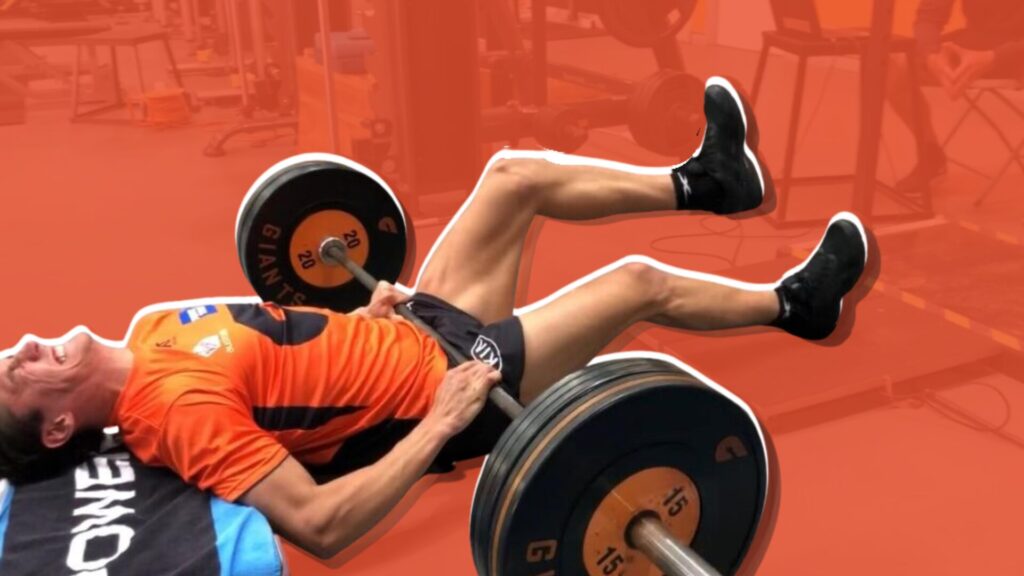
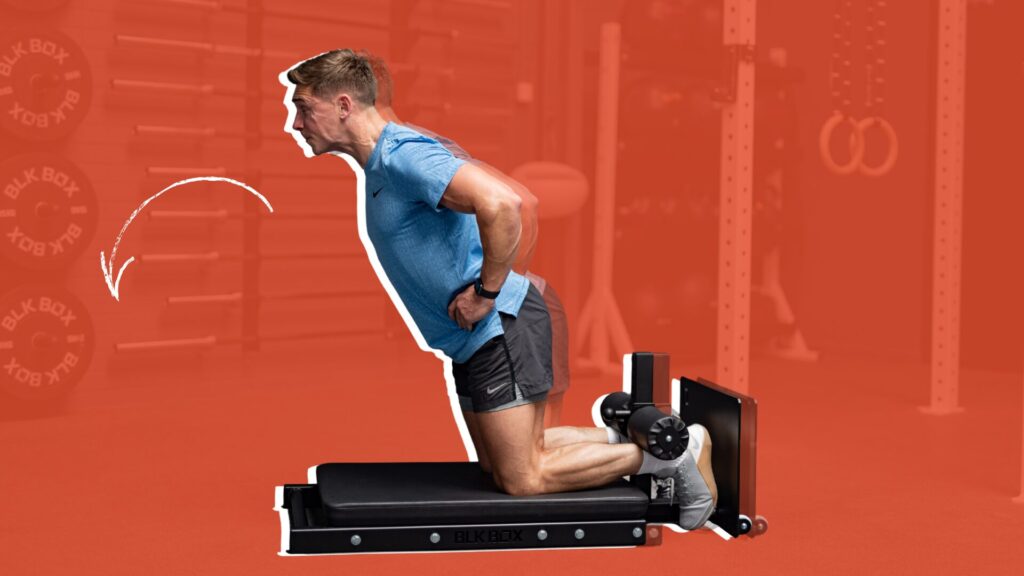
| Negatives (eccentric only) | No specialized equipment needed or isokinetic dynamometer | No | Strength ++++ Hypertrophy +++ Power + Braking RFD + | Off season Preseason In season | Nordic curls ECC bicep curls |
| Accelerated eccentric loading | Resistance bands | Yes | Strength ++ Hypertrophy + Power ++++ Braking RFD ++++ | Preseason In season | Band release countermovement jump |
| Accelerated eccentrics | No specialized equipment needed | Yes | Strength ++ Hypertrophy + Power ++++ Braking RFD ++++ | Off season Preseason In season | Drop catch bench press Back squat |
| Overspeed eccentrics | Resistance bands | Yes | Strength +++ Hypertrophy + Power ++++ Braking RFD ++++ | Off season Preseason In season | Banded bench press Banded box squat |
| Shock method | No specialized equipment needed | Yes | Strength ++ Hypertrophy + Power ++++ Braking RFD ++++ | Off season Preseason In season | Drop jumps Depth jumps |
| 2-1 method | No specialized equipment needed | Yes | Strength +++ Hypertrophy +++ Power + Braking RFD + | Off season Preseason | 2-1 seated row Concentric bilateral RDL Eccentric unilateral RDL |
| Training method | Explanation |
| Isokinetic dynamometry | Using an isokinetic dynamometer for eccentric training |
| Deceleration training | On pitch / court training to improve deceleration during locomotive tasks |
| Change of direction | On pitch / court training to improve change direction during sprinting based motions, such as 45 and 90° cutting |
| Downhill running | Running or sprinting on a decline gradient |
| Eccentric cycling | Cycling motion, where the aim is to resist the cycling motion instead of generating forward movement |
Tweet ThisFlywheel and accentuated eccentric loading (AEL) methods significantly increase muscle hypertrophy and strength beyond traditional exercises
@handford_matt
Programming considerations for eccentric training
Not every exercise in a programme needs to use eccentric training. Many coaches only program ETM on a core lift, like back squat or bench press, to specifically develop a target area.
Know enough to perform a cost-benefit analysis
We tend to look at the benefits of a given training method. However, we don’t always give as much consideration as we should about what they do not do, or if they negatively impact something.
For example, eccentric tempos have a lot of benefits for many people, but they do not reinforce rapid braking actions (rate of force development). Tempos also increase lean muscle mass without aiding in rapid force production. Players, therefore, become heavier, which can negatively impact attributes like deceleration capacity. It’s like putting a big engine on a car and not upgrading the brakes: you’re all gas and go, but when it comes to turning a corner (deceleration and change of direction), you struggle and may crash out.
It is important to consider the potential negative impact on specific performance metrics. Don’t get taken in by just what they achieve. A balanced view will let you programme effectively and choose training methods to address certain issues.
Programming towards a goal
Below are example training programmes, giving the rationale for choosing a specific ETM. Remember: there has to be a reason behind why you use a given ETM, and it has to suit your training facility, time and the athlete’s training experience.
| Scenario 1: In-season programme to increase eccentric rate of force development and ability to decelerate quickly (lower body) | ||||
| Exercise | Sets x Reps | Load | Velocity range (if applicable) or coaching cues | Intended adaptations |
| Broad jumps | 4 x 4 | BW | “Hard landing” “Stick the landing” | RFD increases during landing |
| Accelerated eccentric back squat | 6 x 3 cluster sets (45s rest between clusters) | 40-60% 1RM | 0.8 – 1.0m/s | RFD and peak braking force Enhanced SSC |
| Nordic curls | 3 x 2 | BW | “Resist” | Increase hamstring (distal) strength |
| Scenario 2: Off-season programme to increase hypertrophy and peak braking forces (upper body) | ||||
| Exercise | Sets x Reps | Load | Velocity range (if applicable) or coaching cues | Intended adaptations |
| Supramaximal accentuated eccentric loading bench press | 5 x 2 | 85% concentric 1RM 110% eccentric 1RM | “Resist the downward phase” “Push off as quickly as possible” | Peak eccentric forces, and enhance bench press 1RM |
| Pull ups | 3 x fail | BW | Tempo 2/1/1/1 (Starting from top position) | Increase volume for upper body |
| DB shoulder press | 4 x 10 | 75-80% 1RM | Tempo 2/1/1/1 (Starting from top position) | Increase volume for upper body |
| Scenario 3: Increase jump height | ||||
| Exercise | Sets x Reps | Load | Velocity range (if applicable) or coaching cues | Intended adaptations |
| Plyo-AEL countermovement jump | 4 x 3 | DB 20% of BW | “Drop, stop and release” “Jump high and fast” | Increase peak braking force; increase force at minimal displacement to aid SSC response; increase jump height |
| Hexbar deadlift | 5 x 3 | 85-90% 1RM | “Lift fast with intent” | Enhance propulsive force |
| Hamstring sliders | 3 x 8 | BW | “Control kick out” “Hold and rapidly pull back in” | Enhance distal hamstring strength and RFD |
Training volume and intensity
The training methods determine the training volume and intensity. The table below shows the intended adaptations with their rationale, along with the recommended volume and intensity.
| Rationale | Method | Intensity | Volume |
| Enhance braking RFD Reduce braking phase time Become faster | Accelerated eccentrics and overspeed eccentrics | 40-60% of 1RM | < 4 reps per set Cluster sets: e.g., 6 x 3, 45 s rest between sets |
| Increase strength Experience heavy loads Increase peak braking force | Accentuated eccentric loading (supramaximal) | 80-90% CON 100-130% 1RM | Singles or doubles, as you must put the weight releasers back on after each rep 4 x 2, 60-120 s rest between sets |
| Teaching correct technique Increase muscle mass | Eccentric tempo training | 70-85% of 1RM 2-3 s eccentric tempo | Increase volume to perform more repetitions to learn correct movement Accumulate high workloads to encourage muscle growth 4 x 8-12, 60 s rest between sets. Tempo: 2/1/1/1 |
Tweet ThisThe variety in eccentric training, from tempo to supramaximal loads, caters to different athletic goals, including hypertrophy and power
@handford_matt
Conclusion
Intent predicts outcome
The intent the athlete exhibits when they perform a braking action will become apparent as you become more accustomed to programming eccentrics. Intent is key to enhancing eccentric measures when producing a maximal braking action.
The higher an athlete’s neural intent – simply, the harder they try – the more force they can exert. This has been a major finding of our research over the past three years looking in to accelerated eccentrics and fast eccentric actions. When cueing athletes, ensure they stop the weight and reverse it with maximal intent.
Muscle damage
Muscle soreness goes hand in hand with ETM, especially isokinetic dynamometry and tempos, resulting in muscle damage and soreness after exercise. This is a major reason why coaches are sometimes reluctant to program ETM.
Regular exposure to eccentric training helps the muscles and body become accustomed to the increased load, reducing perceived soreness. This is the repeated bout effect, and bolsters the case for regularly programming eccentrics.
It’s worth noting that many of the studies looking at muscle damage have employed isokinetic dynamometry maximal eccentric actions. These are significantly different from other eccentric training methods so we must consider that the results in these studies could differ.
The bigger picture
Two groups had similar improvements in hamstring strength when performing either Nordic curls or sprint training, but the sprinting group had a greater improvement in sprint performance than the Nordic groups. Likewise, if we implement regular change of direction and deceleration-based tasks within training, we will likely see enhancements in braking rate of force development.
Therefore, when programming eccentrics, view your athlete’s training from a holistic approach: what they do in the gym, on the pitch or court, and what they achieve from playing their sport. That’s the context that strength & conditioning has to consider and work in, to ensure that our athletes can develop all the movements that they will need during competition.
Tweet ThisProgramming eccentric training requires balancing intensity and volume, focusing on specific adaptations like strength or jump performance
@handford_matt