
Just about any sports practitioner with force plates is doing countermovement jump (CMJ) assessments. The CMJ is a staple of athletic performance programs around the globe because it is a simple and practical way to assess slow stretch-shortening cycle (SSC) efficacy and the strategy someone chooses to express lower body power.
Letting athletes self select depths or cueing them to jump as high as they can are two common but problematic practices. When athletes self select a strategy or execute on their coach’s cue to jump for height, their jumps plays out over a timeframe that is not transferrable to the court or field.
Sport does not afford you the time that a force plate does.
Traditional CMJ assessment protocols do not capture the function and role of the slow SSC in common sporting actions. While effective in assessing lower body power, the standard protocol fails to capture the elastic demands in time constrained actions such as deceleration. Winning soccer teams, for example, typically demonstrate a higher frequency and magnitude of intense decelerations (> -3 m/s-2) compared to teams that draw or lose [1].
Tweet ThisTraditional CMJ assessment protocols do not capture the function and role of the slow SSC in common sporting actions. While effective in assessing lower body power, the standard protocol fails to capture the elastic demands in time constrained actions such as deceleration
Spencer Goggin
It’s worth asking, then, whether our gym assessments are evaluating precursors of success on the pitch. If we are going to invest time and energy into developing qualities that have more transfer to what we see on the field, we want to be confident that our assessment protocol captures those abilities.
Constraining an athlete’s strategy might better reflect the rapid, high force contractions that are part of successful decelerations. Take, for example, two athletes who self select a jump strategy and jump 35 cm. Typical reporting would rate these jumps as equal. But how each athlete achieved that height has significant implications for on field performance. While software systems do a great job of collecting and visualizing the data, the practitioner still has a critical role in conducting the assessment.
Jump strategy and deceleration
Coaches use jump assessments to determine an athlete’s ability to express power in low complexity dynamic movements. Jump height is a primary performance indicator. The athlete’s strategy for achieving that height might be just as important.
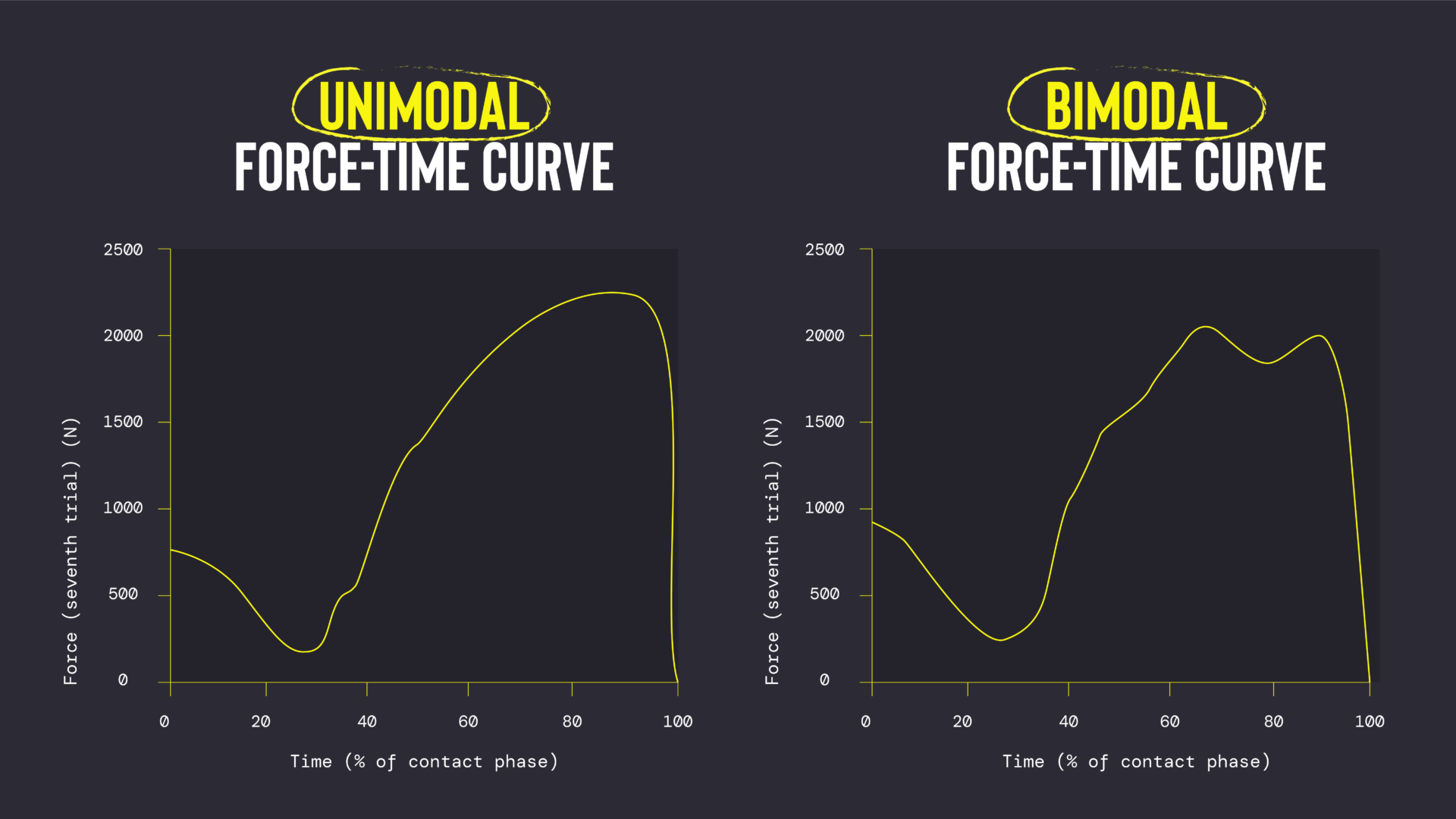
Figure 1 shows two jump profiles with very different force traces: unimodal on the left, and bimodal on the right. The standard, but still debated, explanations for such a divergence is either that the bimodal strategy reflects an inefficient stretch-shortening cycle [2], or that it simply reflects a different movement strategy. One interpretation of the bimodal trace is that the double peak results from additional impulses in the concentric phase shortly before take off, where these impulses are absent in the jump with a single peak [3].
The same athlete may use both strategies during a CMJ assessment, resulting in unimodal and bimodal traces in his or her force plate data.
This may stem from the cues that preceded the jump, which are not captured in the trace; indeed, they may not be recorded anywhere in the assessment.
The cue “jump as fast and as high as possible” produced inconsistent jump strategies across a group of athletes [4]. This trend extends even to a group of skilled jump athletes. NBA players displayed a variety of strategies to achieve high jumps. The “stiffest” jumpers displayed similar jump heights compared to two other groups that moved through a larger range of motion. The former (“stiffer”) group achieved similar heights with faster contraction times, indicating these athletes are better at accelerating towards and away from the ground. The research makes no mention of trace shapes, but shorter contraction times and smaller amounts of angular displacement (CM depth) will likely produce a unimodal trace.
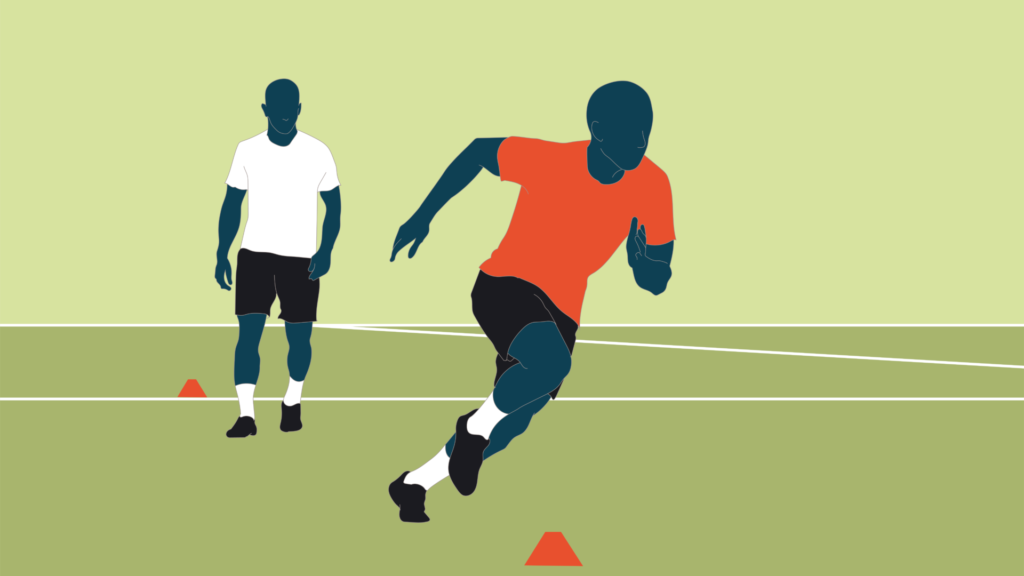
Excellent deceleration performance has a profile similar to a unimodal trace: a tall, thin braking impulse [5]. An assessment protocol that best reflects the constraints of these types of contractions, or that promotes a unimodal strategy, would give coaches the best indication of how well athletes might tolerate high intensity deceleration.
Tweet ThisCoaches use jump assessments to determine an athlete’s ability to express power in low complexity dynamic movements. Jump height is a primary performance indicator. The athlete’s strategy for achieving that height might be just as important.
Spencer Goggin
Cueing athletes to perform CMJ at game speed
Cueing jumps to better reflect what an athlete experiences on the field or court is an unexplored area of neuromuscular profiling. What can jumping fast tell us about an athlete’s neuromuscular system?
Table 1 illustrates that unconstrained CMJ assessments allow athletes to move through large countermovement depths over long contraction times. Those durations are too long to compare to how the neuromuscular system may function during in-game deceleration.
When we cue jumps for speed, on the other hand, the resultant contraction times are much closer to those we see during sport specific deceleration tasks (Table 2).
The 3+3 protocol helps coaches integrate the fast jump approach into their current data collection strategy, allowing for continuity in your methods and data. For the first three jumps, cue the athlete to jump as high as they can. For the latter three, cue the athlete to jump as fast as they can.
Jumps for height reflect maximum force or velocity in an unconstrained setting. As such, they are a general expression of physical abilities. The athletes will deploy a range of (self selected) countermovement depths, and a similarly wide range of contraction times.
Jumps for speed set constraints. The countermovement depth will likely be less than 25 cm, and contraction times will be shorter and more tightly bounded (.350 ms – .500 ms). The force traces will almost all be unimodal.
These features point to a few key changes that you may see as you start cueing for “fast.” First, the athletes may achieve comparable jump heights in shorter contraction times, indicating that they are improving their ability to accelerate their mass, with potentially significant implications for performance. Second, contraction times may shorten while the depth of the countermovement stays roughly the same. This, too, suggests shorter, sharper movements producing the same output. Third, the force traces may change: you may see unimodal strategies more frequently or from athletes who previously always produced bimodal force traces.
| Sport | Average contraction time (time to take off) | Average CM depth |
| Basketball | .730 – .860 | 32cm |
| Soccer | .784 -.788 | 27-29cm |
| Combat | .769 | Not published |
| Sprint and long jump | .98 | 58cm |
| Volleyball | .95 | 37cm |
| Sport | Average ground contact times | Movement |
| Basketball | .403 | 505 test |
| Soccer | .440 | 180° pre-planned COD |
| Soccer, rugby, hockey | .510 (5m entry) | 180° degree pre-planned COD |
| Sub-elite rugby league and collegiate team sport players | .350 – .440 | 505 test |
Tweet ThisCueing jumps to better reflect what an athlete experiences on the field or court is an unexplored area of neuromuscular profiling. What can jumping fast tell us about an athlete’s neuromuscular system?
Spencer Goggin
Introducing force application constraints
Constraints-based coaching or the constraints-led approach is nothing new to coaches. Manipulating tasks or environmental constraints is part of our everyday work on the pitch, so the next step is to introduce constraints-based coaching to the gym.
A core principle of dynamic correspondence theory suggests that developing sport specific RFD should be a primary consideration if your exercise prescription is to transfer directly to performance.
Using a deceleration task as an example, the braking performance [6] framework provides coaches with a clear indication of the physical qualities that underpin successful deceleration performance. This framework goes on to highlight the importance of high force and fast eccentric loading as part of braking force control and attenuation. Improved deceleration capacity means athletes can approach changes of direction at higher velocities, resulting in faster overall COD times. Coaches should pay particular attention to developing an athlete’s ability to tolerate eccentric loading in a time frame corresponding to how they decelerate or control force during competition.

Force application constraints will help refine coaches’ exercise selection to more accurately reflect the performance environment.
Tweet ThisUsing a decel task as an example, the braking performance framework provides coaches with a clear indication of the qualities that underpin successful decel performance. This framework goes on to highlight the importance of high force and fast eccentric loading as part of braking force control and attenuation
Spencer Goggin
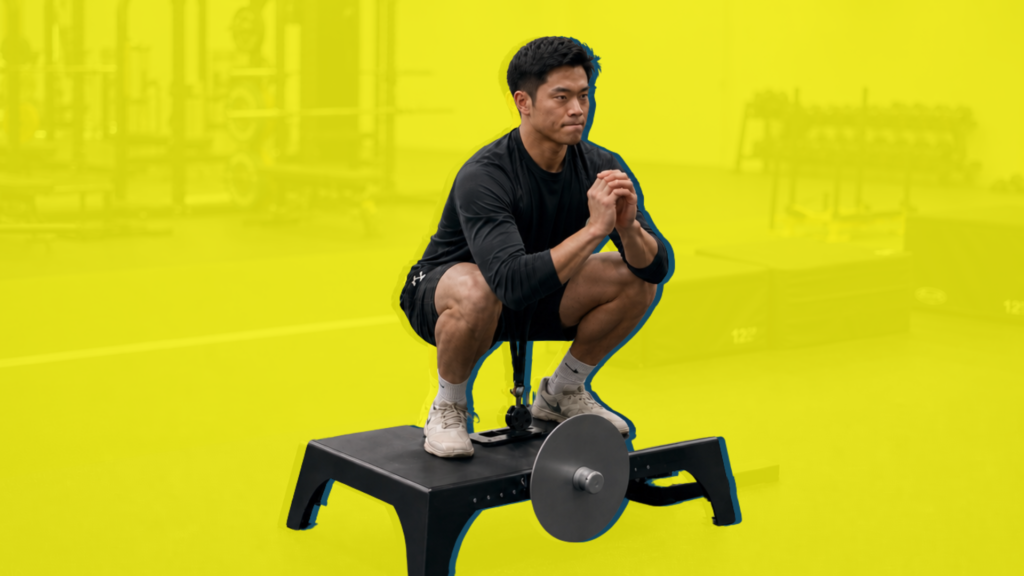
Band-assisted altitude drops
The box is a constraint to help facilitate higher ground reaction forces. Band assisted altitude drop variations challenge the athlete to attenuate eccentric force in a time frame similar to that experienced on the field or court. The direction of force application is also similar to that of 180° changes of direction.
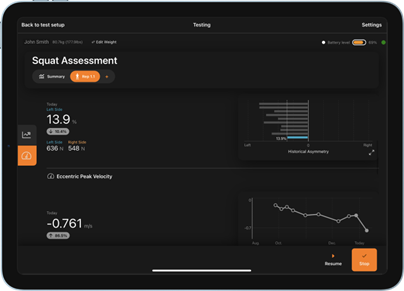
Jump analysis variables that may change in response to these lifts include eccentric peak velocity, eccentric RFD, and braking / eccentric impulse.
Trap bar drop catch
Snap downs and drop catch variations are an excellent way to provide additional load to a movement in time frames that apply to change of direction and deceleration. While altitude drops provide a complete contraction cycle, these drops catch variations provide a simple and effective way to stress the eccentric and isometric components of the contraction.
Jump analysis variables that may change in response to these lifts include eccentric peak velocity, force at zero velocity, and braking / eccentric impulse.
Cueing jumps for speed might produce jumps that better reflect the rapid force application required in sports, especially in crucial moments like deceleration.
While further research is needed to fully validate these approaches, the potential for improving the specificity and relevance of our assessments and training methods is clear. By aligning our practices more closely with the temporal demands of sport specific actions, we may be able to enhance our ability to prepare athletes for the complex demands of their sports.
Tweet ThisBy aligning our practices more closely with the temporal demands of sport specific actions, we may be able to enhance our ability to prepare athletes for the complex demands of their sports.
Spencer Goggin