Players commonly continue to train and compete despite ongoing symptoms, increasing the risk of chronic adductor injury and subsequent time loss from sport. Coaches can expect to encounter players who persistently complain of hip or groin pain throughout a season.
Practitioners must be prepared to identify and manage both acute and longstanding hip and groin problems.
This article outlines the key elements practitioners can use to monitor, interpret, and train the hip and groin throughout the season.
Prevalence and mechanisms of hip and groin injury
Hip and groin injuries are common across team sports, making up 12–14% of all injuries in soccer, ice hockey, Gaelic football, and Australian rules football, and around 8% in rugby union. Groin injuries also carry a high risk of re-injury, often the result of a subclinical issue progressing into a longstanding problem as players attempt to “play through” pain.
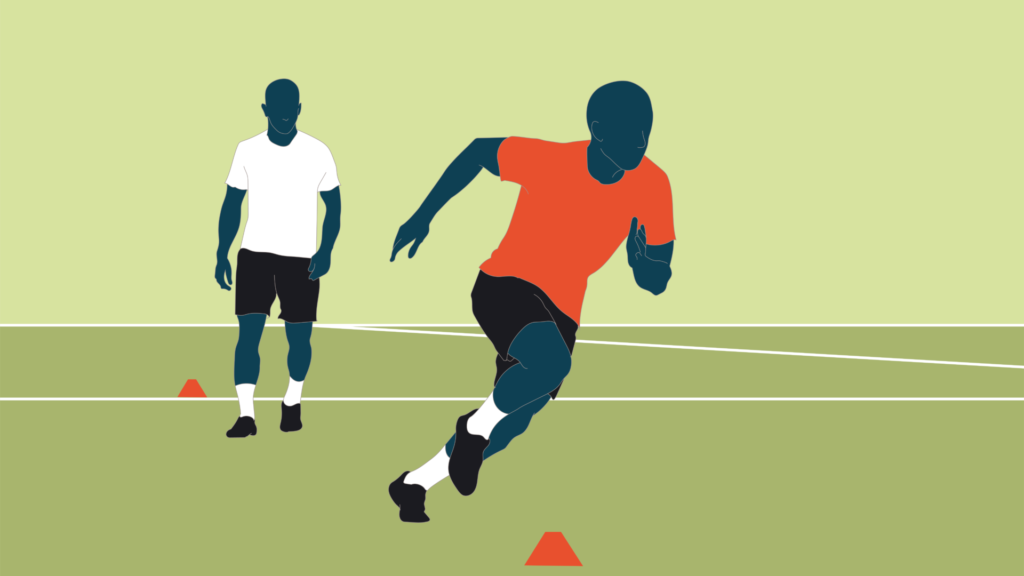
Injuries in these sports most commonly occur via non-contact mechanisms during rapid reactions to changes in play. They can be classified according to open and closed chain movement patterns.
Closed chain injury mechanisms occur during change of direction and high speed sprinting and skating, where the stance limb experiences high frontal and transverse plane demands. These actions involve rapid hip extension combined with abduction and external rotation, generating large external hip adduction and internal rotation eccentric moments.
Open chain injury mechanisms are associated with kicking tasks, particularly during the transition from the late backswing to early forward swing phase. Rapid changes from hip extension to flexion and from abduction to adduction with external rotation result in high angular velocities and eccentric loading of the hip adductors.
Both open and closed chain movement patterns impose substantial mechanical demand on the abdominal and groin musculature as force is transferred proximal-to-distal from the trunk and pelvis to the femur. These actions require the hip adductors to function in near-isometric and eccentric capacities to maintain pelvic stability and control femoral motion.
The coupling of rapid adductor muscle activation with simultaneous muscle-tendon unit lengthening represents a key mechanism leading to injury. Consequently, acute adductor injuries most commonly involve the adductor longus myotendinous junction, whereas longstanding groin pain more frequently presents near the tendinous insertion.
Longstanding groin pain often involves adductor-abdominal related enthesopathy, such as adductor-rectus abdominis aponeurosis injury indicative of athletic pubalgia. The repetitive demands of running, cutting, and skating provide an overuse pattern where mechanical loading exceeds tissue repair capacity. This leads to degeneration of the tendon insertions of the adductor longus or rectus abdominis that extends to the aponeurosis.
Repeated high velocity hip extension through large ranges of abduction, internal rotation, and external rotation can also create microtrauma in the hip joint.
Overtime, these loading patterns cause remodeling of the femoral head. Bony over-growths appear at the femoral head neck offset or acetabular hood. These changes result in femoroacetabular impingement (FAI) of the femoral neck on the acetabulum, limiting hip flexion and internal rotation range of motion. On top of limiting athletic performance, FAI is a risk factor for other intra-articular issues like labral tears and chondral damage.
Longstanding groin and hip pain are generally more severe than acute groin injuries due to longer recovery time frames. Bony, intra-articular, and tendon pathologies are slower to adapt to rehabilitation strategies, with reduced regeneration capacities and an increased risk of persistent symptoms and long-term joint degeneration. Preventing chronic hip and groin injury is therefore crucial.
These mechanisms highlight the need for assessments that replicate sport-specific adductor demands and evaluate the ROM required for optimal movement.
Closed chain injury mechanisms occur during change of direction and high speed sprinting and skating. Open chain injury mechanisms are associated with kicking, particularly during the transition from the late backswing to early forward swing phase.
Hip and groin injury profiles are dynamic across a competitive season. Fluctuations in training load, game congestion, and strength programming all influence injury incidence.
Relying on a single preseason assessment, even when supplemented by intermittent in-season testing, is insufficient for effective injury risk management. Weekly evaluations incorporating both subjective (pain) and objective (strength, ROM) measures provide a more comprehensive understanding of an athlete’s status. This approach allows for early identification of emerging risk factors. It also provides coaches and medical practitioners greater insight into a player’s ongoing response to the loading demands of the in-season period. This knowledge supports timely load modification and targeted prehabilitation strategies.
As a variety of movement and loading patterns (e.g., open and closed chain) can result in both acute and overuse injury, assessments within a prevention framework should focus on a broad range of testing and training methods that reflect common injury actions.
Measures of hip and groin isometric load tolerance, hip ROM, and adductor muscle isometric and eccentric strength all have a place within a broader monitoring framework.
Weekly evaluations incorporating both subjective (pain) and objective (strength, ROM) measures provide a more comprehensive understanding of an athlete’s status. This approach allows for early identification of emerging risk factors.
Isometric “make” tests assess hip adduction strength using a hand-held dynamometer (HHD). These tests effectively identify unilateral weakness and contralateral deficits in players with groin pain. [4] While HHD is the gold standard for unilateral strength assessment, other devices like the ForceFrame strength testing system also show excellent reliability and validity for isometric hip adductor and abductor testing at 0° hip flexion. [7] These tools follow the same standardized guidelines and contraction time frames but are often more practical, quicker, and require less tester experience in team sport settings.
Before any strength testing, measure the athlete’s leg length from the anterior superior iliac spine to the medial malleolus to normalize results relative to limb length (Nm/kg body mass).
With the player supine (0° hip flexion), the examiner applies resistance 5 cm above the medial malleolus. The player performs a 5-second maximal isometric contraction, with peak force and hip / groin pain reported using the 0–10 scale from the Copenhagen squeeze test. Minimal detectable change for HHD adductor testing is 10–15% for peak torque, with strength loss indicating potential groin injury. [5]
In ice hockey, for example, assessing unilateral hip adduction strength between 25° and 50° abduction reflects the end ranges of a skating stride.
Strength assessments using HHD can also target the abductors to calculate an adduction:abduction ratio, using the same protocol but applying resistance to the lateral malleolus.
Injury-free soccer players typically show a ratio of about 1.0, while those with pain can be 24% lower. [6] Ratios below 0.80 indicate the need for targeted adductor strengthening, with a goal of maintaining a ratio close to 1.0 to reduce injury risk.
Isometric strength assessments elicit high levels of adductor muscle activation and force production, so they should be considered in the context of weekly lower body loading. As part of a structured strength program, isometric adduction testing is best prescribed once per week and scheduled on the highest training load day due to its associated fatigue response.
Result thresholds:
Pain: 0-2 green, 3-5 amber, 6-10 red
Asymmetry: 0-10% green, 10-15% amber, 15%> red
Strength decreases vs. baseline: 0-10% green, 10-15% amber, 15%> red
Adduction:abduction ratio: <0.80 red, 0.80-0.90 amber, 0.90-1.10 green
With the player supine (0° hip flexion), the examiner applies resistance 5 cm above the medial malleolus. The player performs a 5-second maximal isometric contraction, with peak force and hip / groin pain reported using the 0–10 scale.
Measuring unilateral eccentric peak force of the adductors via a side-lying “break” test can help identify contralateral weakness and injury risk. [6]
The player lies on the tested side with a straight hip and knee, while the non-tested leg is bent at 90° on a towel stack. The lower leg is lifted 12 inches off the table, and the examiner applies resistance 5 cm above the medial malleolus. The player performs a 3-5 second maximal isometric contraction against the HHD before the examiner applies force to “break” the contraction, recording the highest force required.
Like isometric testing, testing abduction peak eccentric force lets you determine the adductor:abductor eccentric strength ratio. The player lies on the non-tested side with hip and knee at 90° flexion and the testing leg in neutral abduction. The examiner applies resistance 5 cm above the lateral malleolus with the HHD.
Eccentric testing is particularly useful for identifying acute or chronic hip disorders, as sprinting, changing direction, skating, and kicking involve large eccentric forces.
But because eccentric “brake” testing involves high force transmission through the muscle-tendon complex, players should perform them only once per week, on the primary lower body strength training day.
Strength decreases vs. baseline: 0-10% green, 10-15% amber, 15%> red
Adduction:abduction ratio: : <0.80 red, 0.80-0.90 amber, 0.90-1.10 green
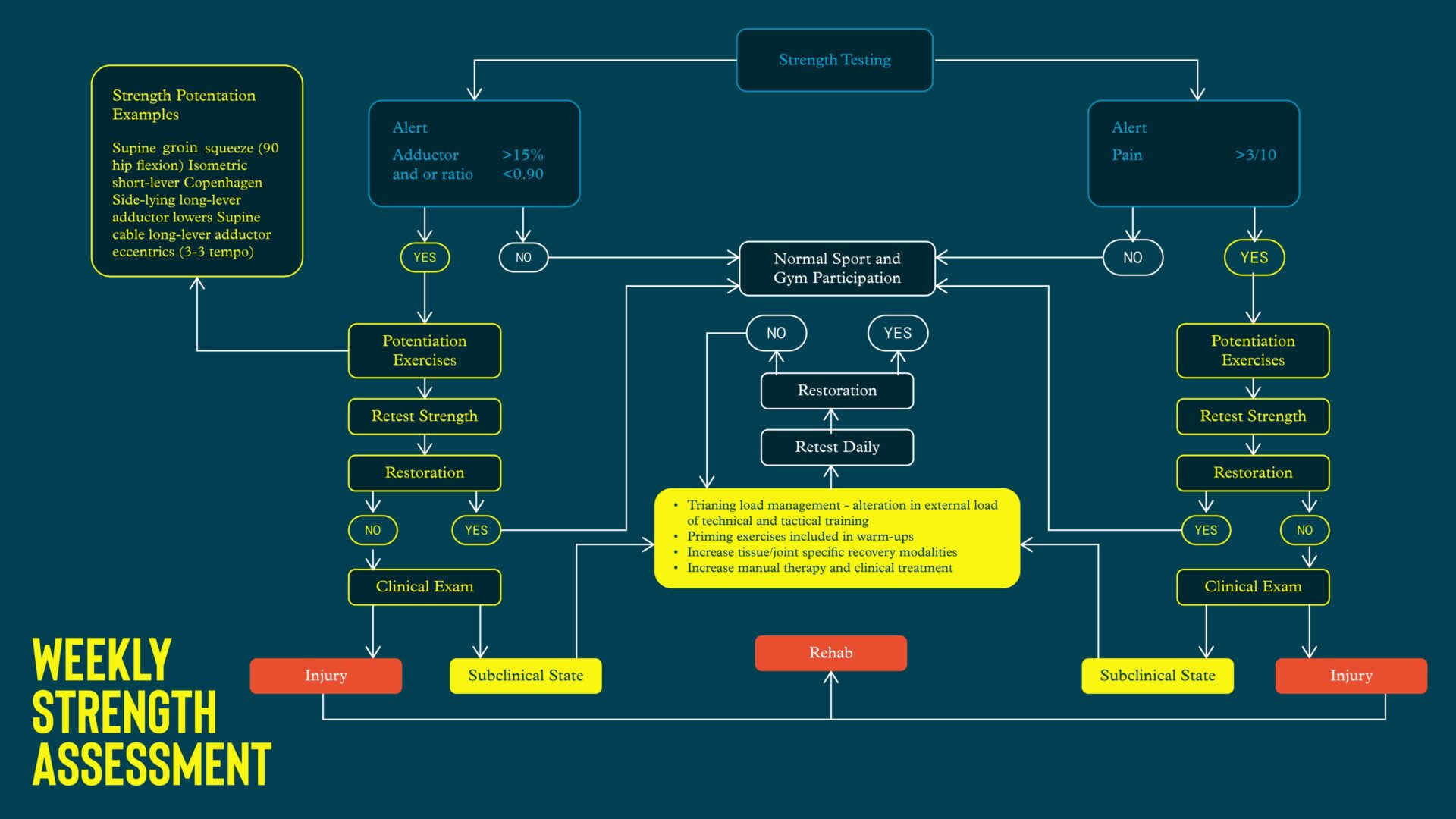
Figure 1. Decision tree for weekly hip and groin strength assessment. Blue/green = unrestricted participation; amber = modified load/subclinical state; red = rehabilitation.
Video 1. Side-lying long-lever adductor lowers
Video 2. Long-lever Copenhagen eccentrics (loaded)Click here to view more eccentric exercises
Video3. Short-lever Copenhagen eccentrics
Video 4. Long-lever Copenhagen eccentrics
Video 5. Standing adductor eccentrics
Video 6. Supine long-lever adductor eccentrics
Hip and groin training considerations
Hip and groin exercises can be integrated into a player’s weekly training program by selecting exercises that target the relevant muscle groups; consider contraction type and movement plane; and replicate hip and groin activation patterns.
Training should emphasize hip strength, coordination, and control of the hip, pelvis, and trunk during dynamic tasks. Key components include eccentric and isometric adductor strength; hip flexor strength; lateral hip control; lateral hip strength; anterior oblique sling strength and coordination; and plyometric drills.
These should be paired with foundational strength movements, such as single leg squats for lumbopelvic control and quadriceps / hip strength, and deadlifts for lumbopelvic control and posterior chain strength. Tables 1-7 summarize key exercises and progressions for each component. Exercises are organized by progressive loading and technical demand. The practitioner will guide selection and progression based on the results of their assessments, the sport-specific demands, and the training phase.
Adductor strength training
Improving eccentric strength increases the adductors’ tolerance for higher forces by adding sarcomeres in series and improving activation at longer lengths.
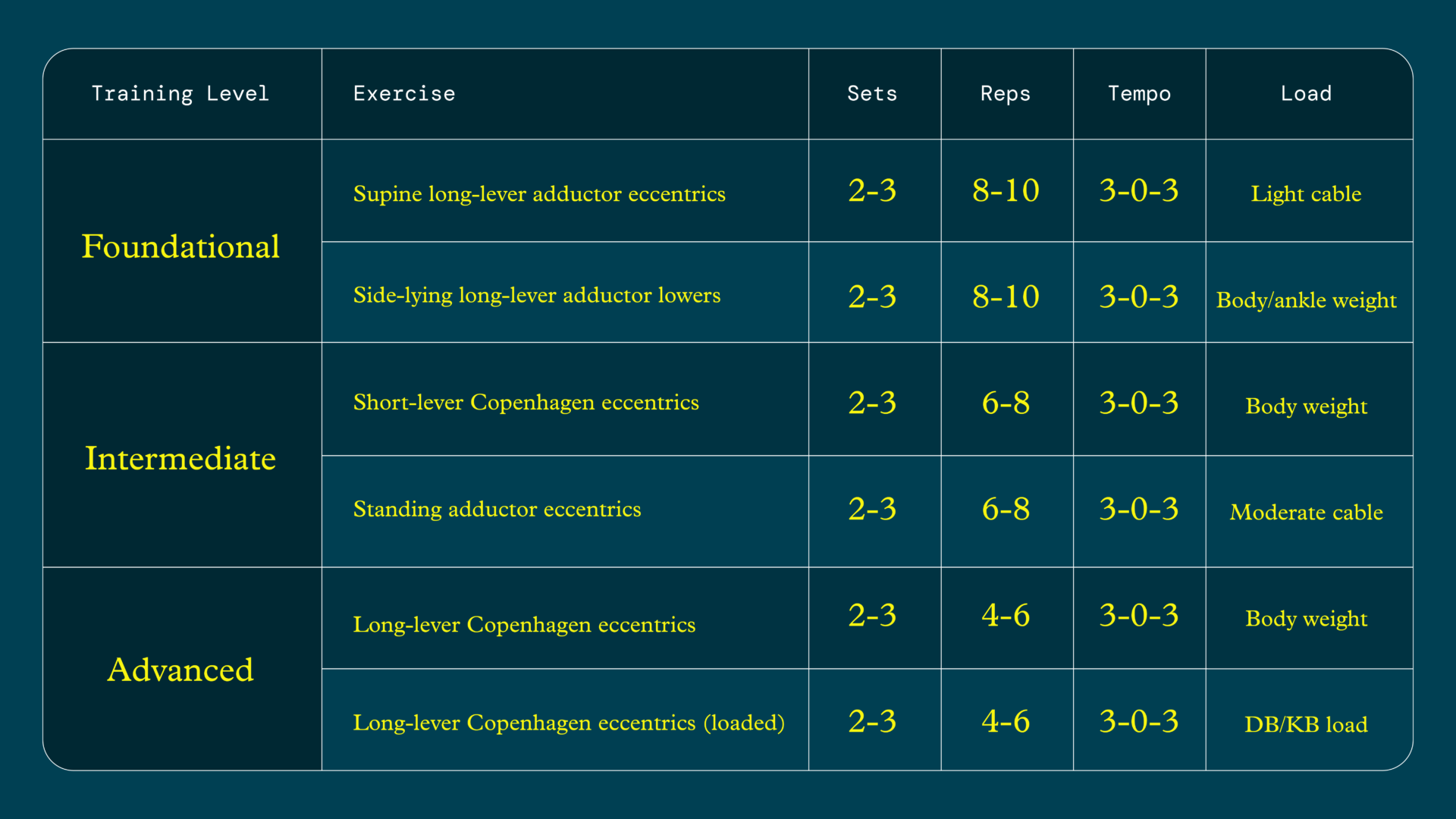
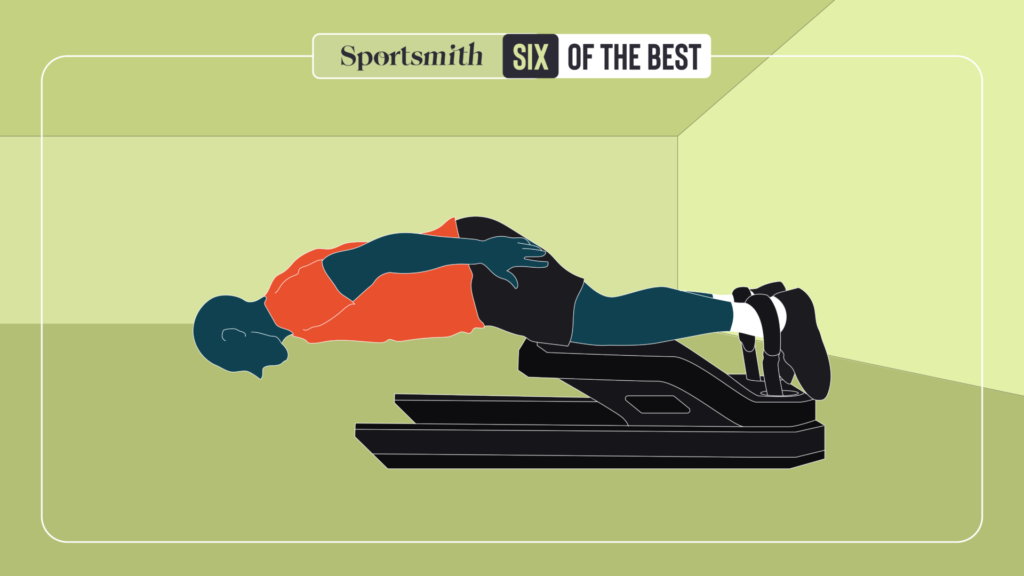
For the adductor longus, this increases force tolerance during fast lengthening movements like sprinting, cutting, kicking, and changing direction. Eccentric hip adduction exercises should be performed through a large ROM with controlled lowering to strengthen the muscle at end ROM (~25°-50° hip abduction), where it is most vulnerable. [8] Effective options include banded adductor eccentrics and Copenhagen variations, using a steady 3-second lowering and 3-second return tempo (Table 1).
Table 1. Sample exercises and progressions for eccentric adductor strength development
Isometric exercises are effective for enhancing motor-unit recruitment and strengthening the adductor complex. They can target specific muscle lengths (e.g., inner or outer ROM) and are especially useful when limiting high intensity lengthening work during dense training or competition periods.
Isometric holds can vary in duration and intensity, from longer 20–30 second low intensity efforts (30–50% maximum voluntary contraction) to shorter 4–6 second near-maximal efforts (80–90% MVC). Effective exercises include bilateral groin squeezes at shorter adductor lengths (~90° hip flexion) and isometric Copenhagen variations at 0°, 25°, and 50° hip abduction.
Prioritize exercise prescription in this category when the athlete exhibits low adduction:abduction strength ratios or progressive reductions in isometric or eccentric strength. Match exercise type, intensity, and ROM to the specific deficits.
Level
Exercise
Sets
Duration
Intensity (%MVC)
Joint Angle
Foundational
Supine groin squeeze
2-3
20-30s
30-50%
0° hip flexion
Short-lever Copenhagen isometric
2-3
20-30s
30-50%
0° abduction
Intermediate
Long-lever Copenhagen isometric
2-3
20-30s
30-50%
0° abduction
Advanced
Long-lever Copenhagen isometric
3-5
4-6s
80-90%
0°, 25°, 50° abduction
Table 2. Isometric adductor exercises
Isometric holds can vary in duration and intensity, from longer 20–30 second low intensity efforts (30–50% maximum voluntary contraction) to shorter 4–6 second near-maximal efforts (80–90% MVC).
Better force distribution around the hip can lower the risk of isolated adductor overload.
Targeted hip flexor training can help reduce the risk of intra-articular hip injuries. Eccentric hip flexor exercises support hip control by limiting anterior pelvic tilt and allowing greater functional ROM during dynamic movements. [10] Supine hip flexion exercises can progress to standing cable variations to challenge lumbopelvic stability, eventually advancing to loaded unilateral eccentric hip flexion (Table 3). Throughout, the abdominals should be braced and the pelvis stable.
Level
Exercise
Sets
Reps
Tempo
Load
Foundational
Supine hip flexion
2-3
8-10
2-0-2
Light-moderate cable
Hip flexion ISO with abdominal brace
2-3
8-10
Hold
30-50% MVC
Intermediate
Standing cable pull-through
3
6-8
2-0-3
Moderate cable
GH single-leg hip flexor sit up
3
6-8
2-0-3
Body weight
Advanced
GH single-leg hip flexor sit up (loaded)
3
4-6
3-0-3
Plate load
Thomas position eccentric hip flexion
3
4-6
3-0-3
KB load
Table 3. Hip flexor exercises
Level
Exercise
Sets
Reps
Tempo
Load
Foundational
Lateral step-up with knee drive
3
8-10
2-0-2
Body weight
Kickstand RDL
3
8-10
2-0-2
Body weight
Intermediate
Lateral step-up with KB goblet
3
6-8
2-0-2
KB load
Single-leg RDL with DB offset
3
6-8
2-0-2
DB load
Advanced
Lateral step-up with off-set KB goblet
3
4-6
2-0-2
KB load
Single-leg RDL with BB landmine
3
4-6
2-0-2
BB load
Table 4. Lateral hip control exercises
Video 7. Lateral set-up with off-set kettlebell goblet
Video 8. Single-leg RDL with barbell landmineClick here to view more lateral hip control exercises
Video 9. Lateral step-up with knee drive
Video 10. Single-leg RDL with dumbell offset
Video 11. Lateral step-up with kettlebell goblet
Video 12. Kickstand RDL
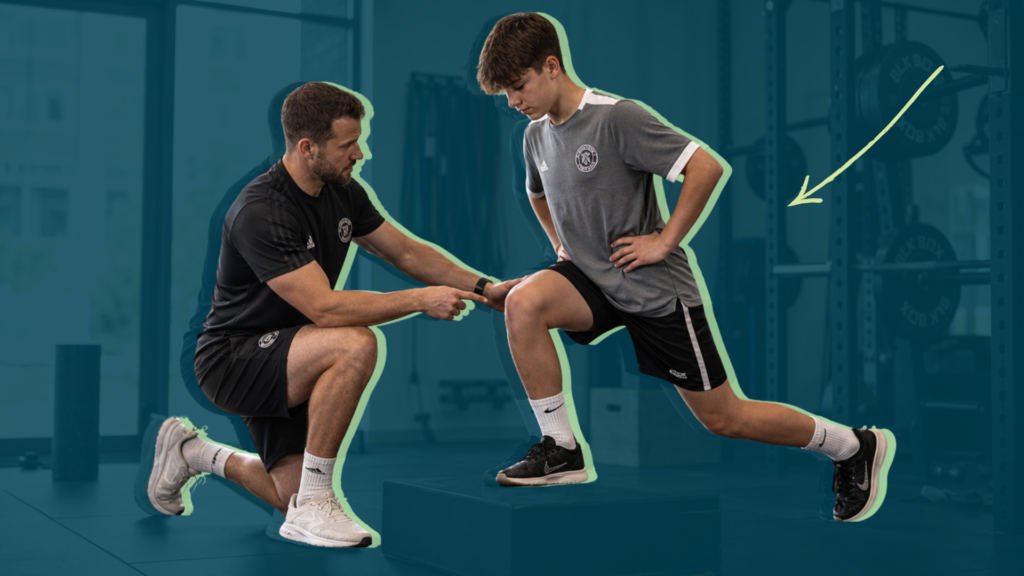
Lateral hip control exercises, such as step-up variations, help develop coordination and stability around the pelvis (Table 4). Lateral hip strength exercises, including lateral squats and lunges, target multisegmental movements by engaging the muscles responsible for hip abduction and external rotation (Table 5).
Both types of exercises should be included in a training program to enhance overall hip strength and stability.
Level
Exercise
Sets
Reps
Tempo
Load
Foundational
Lateral pivot squat
3
10-12
2-0-2
Light-moderate cable
Lateral lunges with DB goblet
3
10-12
2-0-2
DB load
Intermediate
Lateral squat with DB
3
6-8
2-0-2
DB load
Lateral lunge with BB landmine goblet
3
6-8
2-0-2
BB load
Advanced
Lateral lunge with BB
3
4-6
2-0-2
BB load
Landmine lateral skater squat
3
4-6
2-0-2
BB load
Table 5. Lateral hip strength exercises
Athletes who demonstrate excessive anterior pelvic tilt or pelvic drop during cutting and change of direction tasks, or who present with reduced internal, external, or total hip rotation ROM, may benefit from prioritizing exercise selection within this category to improve dynamic pelvic control and hip load management during movement.
Anterior oblique sling training
Exercises coordinating the anterior oblique kinetic chain can improve pelvic alignment, trunk control, and lower limb stability by developing strength and dynamic stability in the obliques, rectus abdominis, and adductors (anterior oblique sling (AOS)). [11] These exercises reduce excessive trunk flexion and rotation, enhancing force transfer efficiency between upper and lower extremities. The strain on the hip and groin during multiplanar movements decreases accordingly. [11,12]
Triaxial AOS exercises that challenge lumbopelvic function with rotational and pelvic load transfer include medicine ball rotational throws, cable diagonal chops, and multiplanar lunges with trunk rotation (Table 6).
Athletes who demonstrate poor intersegmental coordination or trunk stability, such as excessive trunk flexion or side flexion during dynamic tasks (e.g., reverse lunges with rotation), may benefit from prioritizing prehabilitation exercises within this category to enhance lumbopelvic control and force transfer during multiplanar movements.
Level
Exercise
Sets
Reps
Movement Velocity
Foundational
Standing cable Pallof press
2-3
10-12
Low
Alternate deadbug
2-3
10-12
Low
Intermediate
Standing cable chop
3
8-10
Moderate
Med-ball rotary catches
3
8-10
Moderate
Advanced
Forward lunge with cable rotation
3
6-8
High
Med-ball split stance rotary throw
3
6-8
High
Table 6. Anterior oblique sling exercises
Plyometrics
Plyometric training involving repetitive jumping and decelerative exercises is essential for improving neuromuscular coordination and timing around the hip and knee. These exercises complement AOS training by enhancing joint stability and force transfer under higher velocity demands. The consequence is translating trunk strength and pelvic control gained through AOS training into high speed movements.
Plyometric drills enhance hip adductor pre-activation and adductor–abductor co-activation, promoting coordinated agonist–antagonist activity. [13] This improves lower limb alignment during ground contact and increases hip joint and muscle stiffness. Adduction and abduction moments during high speed running and cutting consequently decrease. [5]
Multiplanar plyometric exercises, such as frontal and transverse plane skipping and bounding, optimize adductor–abductor coordination and reflect the force-velocity demands of competition (Table 7).
These drills support the high speed demands of closed chain movements through reactive strength and speed development. They should be included as both a prehabilitation and performance training stimulus. Base progression on individual technical proficiency, advancing from lower intensity skipping drills to more demanding bounding and hopping variations.
Level
Sets
Reps
Plane
Foundational
Lateral shuffle with dowel overhead
2-3
6-12
Sagittal/Frontal
Skipping with dowel overhead
2-3
6-12
Sagittal/Frontal
Intermediate
Ascending lateral bound
2-3
4-8
Frontal/Transverse
Skater hop and hold
2-3
4-8
Frontal/Transverse
Advanced
Continuous skater bounds
2-3
4-8
Frontal/Transverse
Cable resisted ascending lateral bounds
2-3
4-8
Frontal/Transverse
Table 7. Plyometric exercises
Video 13. Cable resisted ascending lateral bounds
Video 14. Skipping with dowel overhead
Click here to view more plyometric exercises
Video 15. Skater hop and hold
Video 16. Lateral shuffle with dowel overhead
Video 17. Continuous skater bounds
Video 18. Ascending lateral bounds
Multiplanar plyometric exercises, such as frontal and transverse plane skipping and bounding, reflect the force-velocity demands of competition which require hip adductor pre-activation and adductor–abductor co-activation.
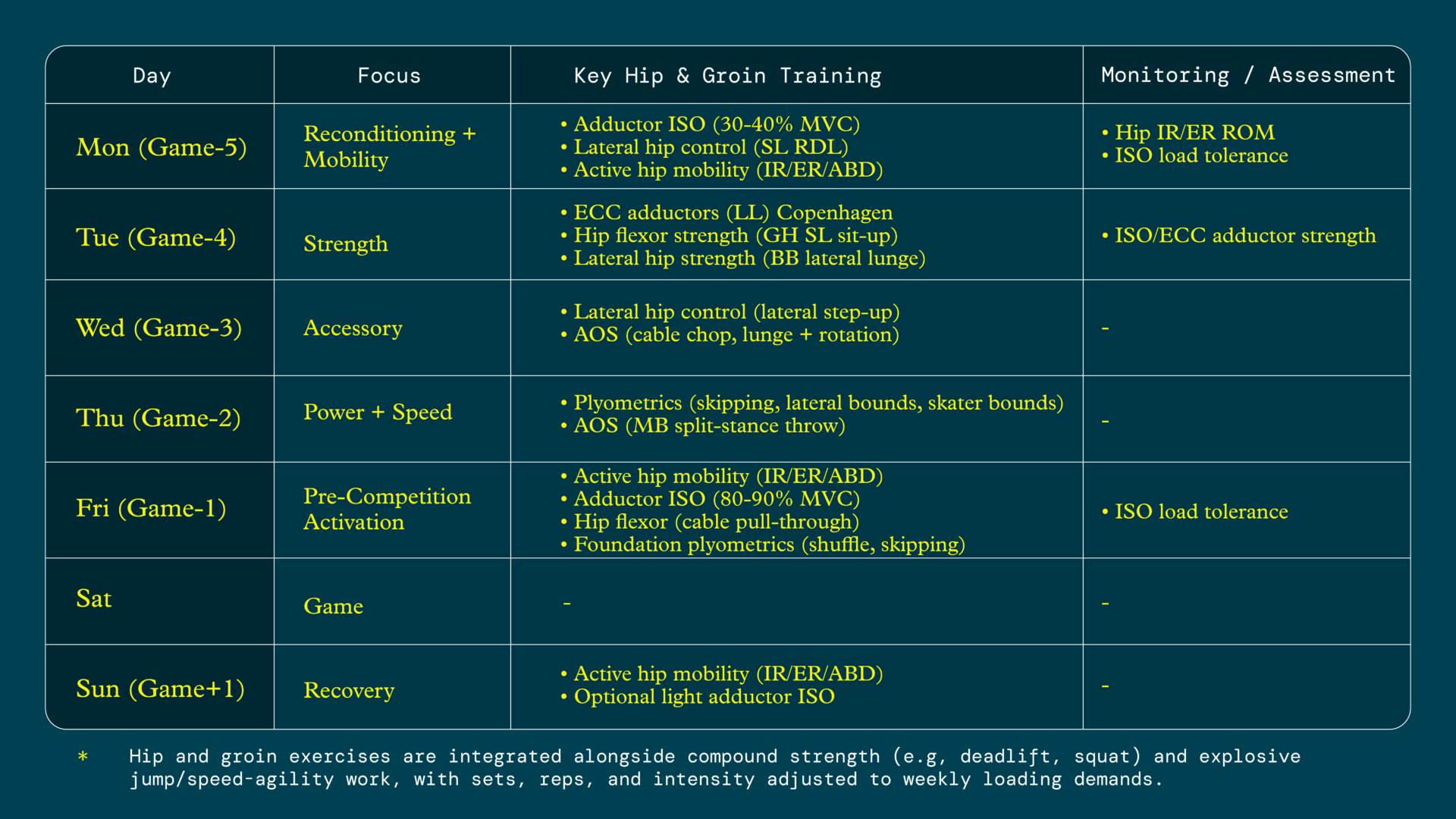
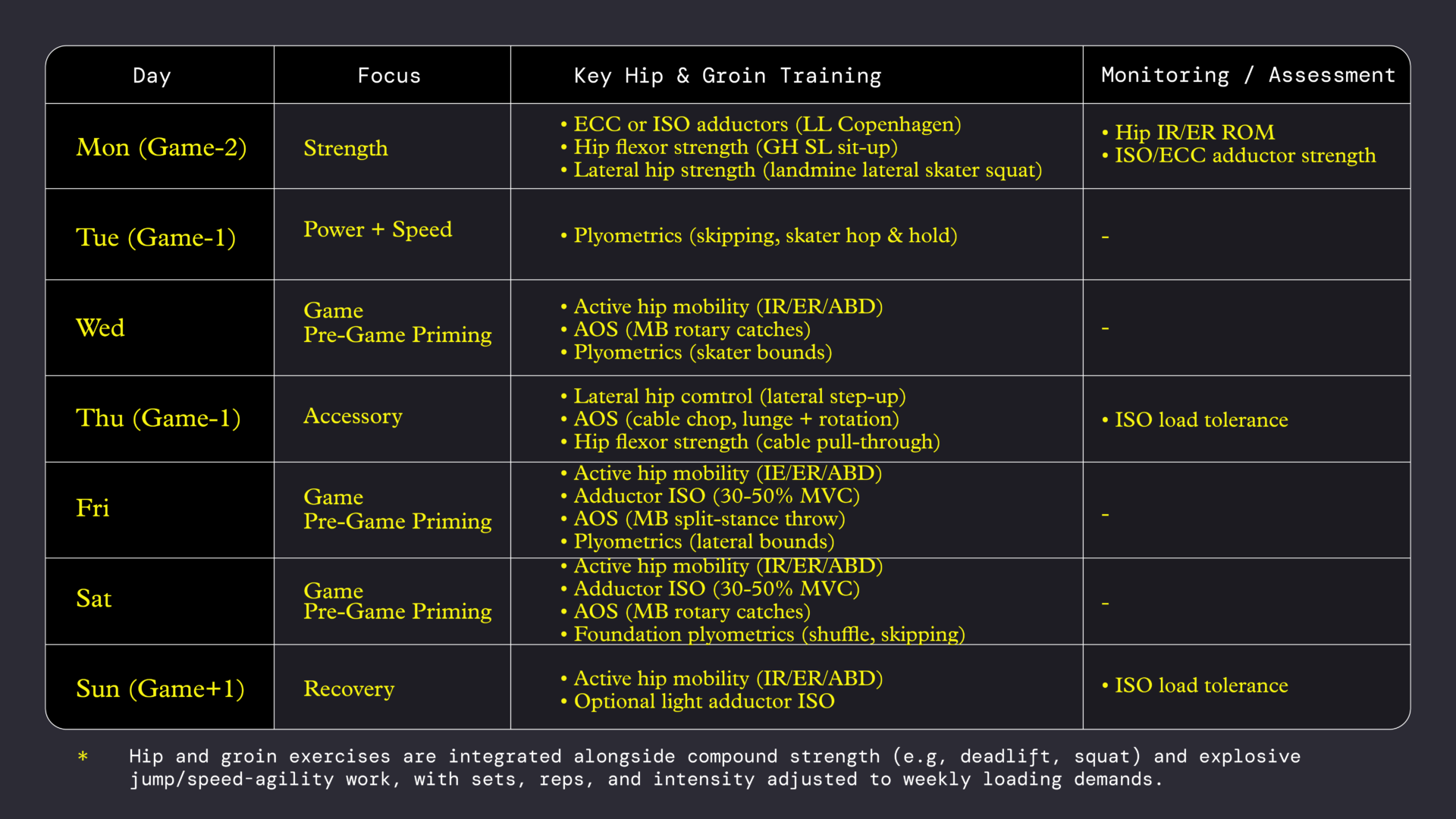
Weekly microcycles integrating hip and groin training and assessment should reflect each sport’s competition demands. For example, in sports with one game per week (e.g., rugby, American football), program plyometric and dynamic AOS exercises on power and speed training days. In sports with multiple weekly competitions (e.g., basketball, ice hockey), practitioners can microdose these exercises within pre-game priming routines to maintain cumulative training stimulus.
Daily adductor strength assessments (isometric or eccentric) can be part of a “testing equals training, and training equals testing” philosophy. This provides an efficient way to monitor hip and groin health in-season. Tables 8 and 9 present two programming examples incorporating key training and assessment components.
Table 8. Weekly hip and groin programming with targeted monitoring and strength assessments during a one game per week microcycle. AOS = anterior oblique sling; IR = internal rotation; ER = external rotation; ABD = abduction; LL = long lever; MB = medicine ball; MVC = maximum voluntary contraction; GH = glute-hamTable 9. Weekly hip and groin programming with targeted monitoring and strength assessments during a multiple game per week microcycle. AOS = anterior oblique sling; IR = internal rotation; ER = external rotation; ABD = abduction; LL = long lever; MB = medicine ball; MVC = maximum voluntary contraction; GH = glute-ham
Integrating hip and groin training and assessment should reflect each sport’s competition demands. For example, in sports with one game per week, program plyometric and dynamic AOS exercises on power and speed training days.
By clicking "Accept all", you agree to the storing of cookies on your device and the processing of
information obtained via those cookies (including your preferences, devices and online activity) by us
and our commercial partners to enhance site navigation, personalise ads, analyse site usage and assist
in our marketing efforts. More incormation can be found in our Privacy
Policy and Cookie Policy.
You can ammend your cookie settings to reject non-essential cookie by clicking 'Settings' below.