
Has testing change of direction got any value for strength and conditioning coaches?
I believe my perspective on this matter might provoke differing reactions, as it seems we often find ourselves in opposing camps when it comes to strength and conditioning. To shed light on how I view the current state of the field, I’ll share my insights. There’s a tendency within our discipline to seek quantification and mathematical precision. We crave definitive figures as they provide clarity and validation to our methods. In the scientific domain that dominates strength and conditioning, data and metrics serve as beacons of certainty. While measuring aspects can be valuable, it can also veer us slightly off course.
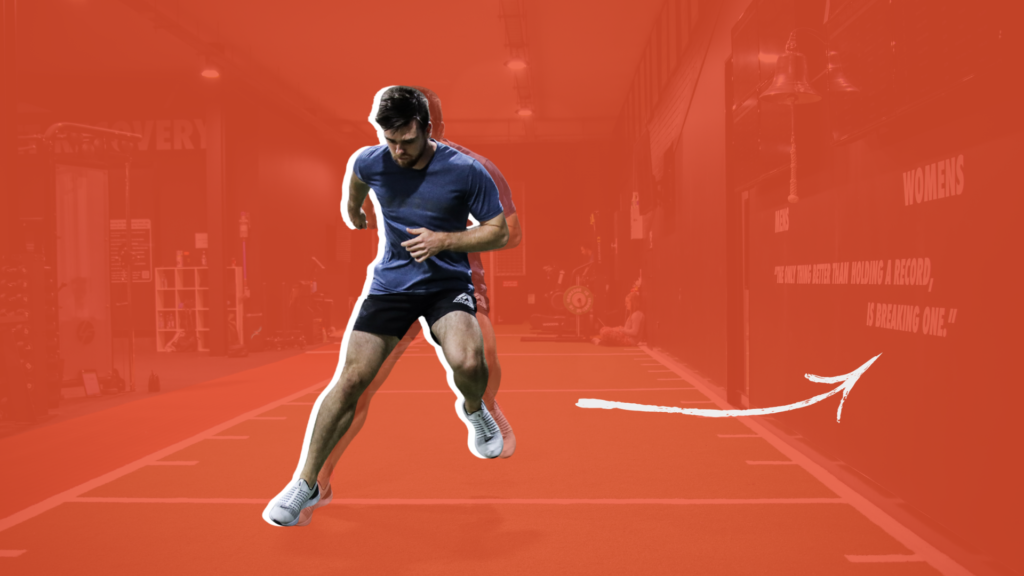
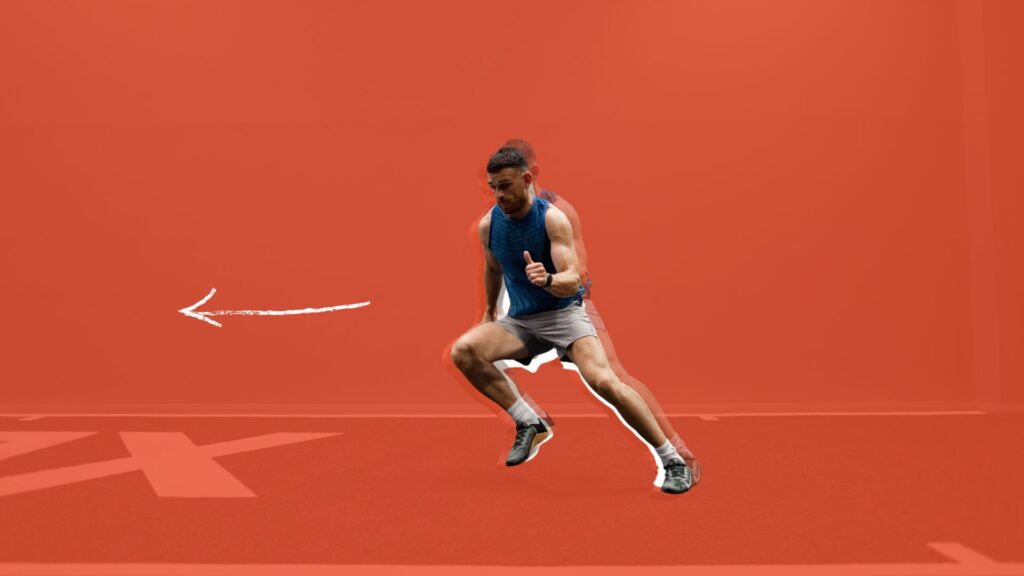
Reflecting on the past, I used to conduct agility tests, which are now essentially known as change of direction tests. However, I began questioning the validity of these tests in terms of their real-world applicability and effectiveness in driving training decisions. I found that observing athletes’ movements across various scenarios and patterns yielded more insights for program development than the tests themselves. This marked the start of my shift away from relying heavily on testing agility, and I’ve continued along this trajectory.

This doesn’t necessarily imply that testing is inherently flawed, but my reservations arise when we extrapolate lessons from change of direction tests to the broader realm of agility. These tests often measure two primary variables: time and, occasionally, force. The assumption is that faster or more forceful execution is synonymous with improved performance. However, in many game situations, this isn’t always the case. The objective often isn’t to move as swiftly or forcefully as possible, but rather to execute tasks effectively.
My qualms arise when we translate the conclusions drawn from change of direction studies directly into practical agility scenarios. Such an approach tends to overlook crucial factors that influence agility performance. In a game context, changing direction involves assessing the unique environmental conditions, team positions, ball location, opponent actions, and temporal dynamics. These elements collectively dictate the optimal movement strategy.
This game context drastically differs from the confined scope of change of direction tests. The potential pitfall lies in over-relying on purely research-based perspectives, which neglect many of these dynamic aspects. To form a more comprehensive understanding, I find it invaluable to engage with individuals who’ve actively played the game. Combining experiential insights with research findings creates a more holistic perspective of the intricate elements at play.
Tweet ThisThe objective often isn’t to move as swiftly or forcefully as possible, but rather to execute tasks effectively
Ian Jeffreys
What are the key bits of information that you would try to pick out to try and make sense of a movement that you are seeing to be able to evaluate its effectiveness?
As coaches, we must embrace the realm of uncertainty with greater ease. Our lack of comprehensive understanding shouldn’t hinder our actions. While I admit that I don’t grasp every intricacy of agility scenarios, and I doubt anyone ever truly will, this doesn’t hinder me from engaging and producing favourable outcomes. The essence of my impact lies in aiding athletes to perform more effectively in their sport—ultimately, that’s what movement is all about.
Certainly, tools like spreadsheets and rating systems have their place, but an athlete’s core desire from me is simple: Can I enhance my game performance? Can I execute more line-breaks, score more goals, and elevate my defensive prowess? When athletes witness their efforts translating into actual game success, their investment in our methods grows exponentially. The significance of this understanding and its practical application on the field often surpasses mere improvements in test scores, particularly when athletes fail to perceive the link between these scores and on-field performance.
My training philosophy has consistently revolved around improving real-game skills. Drawing from my rugby background as a winger, I focused on executing outside and inside breaks. My approach required understanding the essential elements of achieving those goals. This perspective reshapes how I view additional aspects like cuts. For instance, shifting your positioning before making a cut doesn’t heighten the force or speed of the cut. On the contrary, it can often diminish both. Yet, it optimizes the cut’s effectiveness, revealing the intriguing dichotomy between our measurements and game efficacy.
What I’ve discovered over time is my inclination towards prioritizing game-effectiveness over fixating solely on measurements. This perspective is anchored in the notion that true success in sports isn’t solely determined by numbers, but by the ability to thrive within the complex dynamics of actual gameplay.
Tweet ThisSuccess in sports isn’t solely determined by numbers, but by the ability to thrive within the complex dynamics of actual gameplay
Ian Jeffreys
Do you approach defensive agility differently to attacking agility?
Certain movement patterns may appear similar, yet their execution varies significantly. In the realm of defense, the essence lies in maintaining a position that enables one to react swiftly, anticipate the next move, seamlessly integrate actions, and manipulate the attacker’s trajectory as desired. This skill hinges on mastering what I term “transition movements.” Intriguingly, whether it’s side shuffling, backpedaling, or jockeying, it’s the position of control that holds paramount importance—not necessarily the speed of the movement pattern.
Observing a skilled defender, such as Ashley Cole or César Azpilicueta, my football bias becomes evident, their expertise lies in securing an optimal position and preserving it with finesse. To the opposing offensive player, these defenders’ movements might appear intricate and challenging. In truth, they’re working to thwart the offensive player’s attempts to destabilize their position.
While this perspective hasn’t always garnered attention, it’s increasingly gaining prominence. Contemporary trends are shifting toward scrutinizing both offensive and defensive player dynamics. However, this is a focus I’ve held dear for quite some time.
Tweet ThisChange of direction tests and real-world agility scenarios diverge in their practical application, with the former often neglecting the dynamic aspects and unique environmental conditions encountered during actual gameplay
Ian Jeffreys
Is there any room for closed drills with any population?
Do I incorporate closed drills when training athletes? Absolutely. I integrate a variety of closed drills, finding them particularly beneficial for helping certain athletes achieve specific positions. Each movement progression within the Gamespeed syllabus that I utilize involves a series of closed drills. However, this doesn’t imply an exclusive use of closed drills nor does it advocate solely employing open drills. It’s not a matter of choosing either cheese or ham; sometimes it’s both or even a ham and cheese sandwich. What we could improve upon in the strength and conditioning realm is embracing combinations.
If you were to observe any of my training sessions, you’d notice a blend of closed and progressively open drills. The emphasis on each type fluctuates from day to day and is contingent on factors such as the skill in focus, the athlete’s profile, and their developmental stage. I wouldn’t advise against using closed drills because I’ve seen them yield significant success for specific purposes. Similarly, I wouldn’t discourage the use of open drills either, as I’ve found them to be incredibly effective for certain objectives. Ultimately, the key is discerning our goals and making informed selections based on them.
Tweet ThisIn the scientific domain that dominates strength and conditioning, data and metrics serve as beacons of certainty. While measuring aspects can be valuable, it can also veer us slightly off course
Ian Jeffreys
Is there be an example you could give us where you would use a closed drill?
In the process of teaching cutting techniques, I follow a structured sequence. Initially, we engage in side shuffling and planting movements. During this phase, I place considerable emphasis on specific aspects such as foot placement, knee alignment, hip positioning, and the overall stability of the body. This allows the athlete to develop a tactile sense of the desired position. As we gradually progress, I introduce more open variations of the movement. However, the foundational position remains an anchor that serves as a reference point. This serves as a point of comparison: “Were you able to maintain that position? Were you able to generate force effectively?” This position becomes a familiar touchstone for athletes. My aim is for them to internalize this effective posture. It may not be about finding one absolute perfect position, but rather comprehending the underlying concept of leveraging force in one direction to create movement in another.
Tweet ThisMy qualms arise when we translate the conclusions drawn from change of direction studies directly into practical agility scenarios. Such an approach tends to overlook crucial factors that influence agility performance
Ian Jeffreys
And finally, many of your fellow coaches like Vern Gambetta, Eddie Jones, Kelvin Giles etc, all who have been on the podcast, have come through a physical education background before there was formal S&C education. Have we lost something from that pathway as the S&C industry has grown?
Certainly, the distinction lies in the skill set and problem-solving approach. Physical education (PE) teachers typically emerge from a coaching background, which may not always incorporate the depth of scientific analysis seen in newer practitioners. However, PE teachers often excel in application, building rapport with players, and fostering relationships—integral aspects of effective strength and conditioning programs.
Interestingly, the origins of strength and conditioning programs can be traced back to sport science. Yet, had they emerged from physical education, the profession might have taken a different trajectory. In such a scenario, the emphasis could have been on coaching prowess with the need for added scientific support.
It’s important to recognize the influence of path dependency. Once the perception solidifies that strength and conditioning is fundamentally a science, a particular trajectory is set. Currently, few PE teachers are regarded as strength and conditioning experts, as more individuals with sports science backgrounds are entering the field. This shift isn’t necessarily negative; it’s just a different approach, one that has potential strengths but also potential weaknesses.
Appreciating both the strengths and potential limitations of these approaches is essential. We must devise strategies to address these limitations. By doing so, we can develop an education system that’s truly fit for its purpose.