Lateral ankle sprains remain the most common musculoskeletal injury across field, court, and running sports, accounting for up to 25% of all time-loss injuries in some cohorts.[7] Recurrence rates remain stubbornly high: 30–70% of individuals develop chronic ankle instability (CAI) following an initial sprain.[5,11] These athletes experience repeated episodes of “giving way,” impaired confidence, and elevated reinjury risk, often years after the initial trauma.[13]
Historically, rehabilitation following lateral ankle sprain has focused on restoring range of motion (RoM), strengthening the peroneal musculature, and progressing balance training; often through wobble boards, resistance bands, and closed-chain strengthening.[25,26]
While these interventions reduce reinjury risk and improve (self-reported) function, recurrence remains problematic.[26]
Moreover, optimal content and dosage of rehabilitation is still unknown. One explanation is that contemporary rehabilitation programmes do not specifically target known impairments.[25] Clinical guidelines and frameworks address this limitation by recommending an impairment-based approach.[4,17,24] Another explanation is that exercises are mainly single plane, without incorporating lateral ankle sprain (LAS) mechanism-related activities. They insufficiently address the rapid, multiplanar inversion and internal rotation movement that occurs during landing, cutting, or unanticipated directional change, typically within the first 100 milliseconds of initial contact.[16]
Observational injury surveillance studies consistently show that most lateral ankle sprains occur during single-leg landings, cutting manoeuvres, unanticipated changes of direction, and player-to-player contact during deceleration.
Ankle sprains frequently occur in sports such as basketball, volleyball, soccer, and handball when athletes land on another player’s foot or during aggressive lateral cutting with limited preparation time.[3,7] These scenarios combine high ground reaction forces, rapid triplanar moments, neurocognitive load, external perturbations, and fatigue-related reductions in neuromuscular control.
Yet many rehabilitation programmes fail to meaningfully expose athletes to these exact demands before return to play.
Understanding these mechanisms and the neuromuscular constraints around preventing them allows clinicians to design rehabilitation that better prepares athletes for the demands of sport.
In particular, three interacting factors appear central: peroneal reaction time, intensity and feed-forward activation; inversion–internal rotation biomechanics during landing and cutting; and task-specific exposure to high velocity multiplanar loads.
This article explores the scientific basis for these factors and outlines how rehabilitation can move beyond isolated strengthening and static balance toward dynamic, reactive, sport-relevant movement preparation via the injury mechanism itself.
Tweet ThisAnother explanation is that exercises are mainly single plane, without incorporating lateral ankle sprain (LAS) mechanism-related activities. They insufficiently address the rapid, multiplanar inversion and internal rotation movement.
@jentewagemans
Inversion-internal rotation is primary driver of LAS
High-speed video analyses of ankle sprains during competition have transformed our understanding of injury mechanics. Most LASs involve a rapid combination of inversion and internal rotation occurring immediately after foot strike.[16] Peak inversion angles are 48°–142°, with angular velocities exceeding 1,500°/s and peak internal rotation velocities up to 1,000°/s, far exceeding physiological limits of ligamentous restraint.[16]
The timing of these events is critical: in most cases, injurious motion occurred within 50–150 ms after initial contact. This narrow window severely limits the ability of reflexive muscular responses to protect the joint once excessive inversion begins.[6,8,9,15,18,21]
Pre-positioning of the foot at landing appears to be a major contributor to injury risk. Athletes who land in relatively plantarflexed, inverted, or internally rotated positions are more likely to experience excessive loading of the lateral ligament complex upon ground contact.[23,27] These biomechanical patterns reduce the ankle’s capacity to attenuate frontal plane loads and increase reliance on passive ligamentous structures.[28]
Tweet ThisMost LASs involve a rapid combination of inversion and internal rotation occurring immediately after foot strike. Peak inversion angles are 48°–142°, with angular velocities exceeding 1,500°/s and peak internal rotation velocities up to 1,000°/s.
@jentewagemans
Peroneal muscle reflex latency vs. injury speed
The peroneus longus and brevis muscles are the primary active restraints against excessive inversion. Their capacity to generate an eversion torque is critical for dynamic ankle stability.
However, the protective potential of these muscles depends not only on strength but also on timing. Injury biomechanics research shows that damaging ligament strain may occur within 40–60 ms of inversion onset.[16] This suggests that pure reflexive activation is unlikely to prevent injury once the ankle begins collapsing into inversion.
Instead, joint protection appears to rely heavily on feed-forward neuromuscular control and anticipatory muscle activation that increases joint stiffness and positions the foot favourably prior to initial contact.
Hence, preventive strategies should focus on refining contraction timing, coordination, and task-specific preparedness. Similarly, rehabilitation should not only target muscle strength but also anticipatory control of landing and cutting mechanics, particularly under reactive and fatigued conditions.

Tweet ThisInstead, joint protection appears to rely heavily on feed-forward neuromuscular control and anticipatory muscle activation that increases joint stiffness and positions the foot favourably prior to initial contact.
@jentewagemans
Shifting rehab toward a mechanism-centred approach
Clinicians traditionally focus on restoring RoM, strengthening inversion and eversion with resistance bands, training static balance on unstable surfaces, performing heel raises, and progressively returning to running. While these interventions improve symptoms and function, they leave a gap that insufficiently addresses peroneal feed-forward neuromuscular control, high velocity triplanar loading, unanticipated movements, neurocognitive integration, and fatigue-induced movement quality. Patients in such programmes are not prepared for the required loads, demands, and exposures of sport.
Injury mechanism-based rehabilitation explicitly trains the neuromuscular system under conditions that resemble the environments in which injury occurs.
Rehabilitation informed by lateral ankle sprain biomechanics spans three interacting domains: peroneal neuromuscular readiness, landing and multiplanar load tolerance, reactive change of direction control.
Rather than progressing exercises purely by load or surface instability, clinicians can progress by speed, unpredictability, multidirectionality, task complexity, and cognitive loading.
Optimising peroneal neuromuscular readiness
Strength alone is not enough. Lateral ankle sprains occur under high strain rate and multiplanar loading, where rapid deformation exceeds viscoelastic capacity. This strain, not supramaximal load, drives ligamentous failure.[22]
Injurious inversion–internal rotation develops within 50–150 ms, which is faster than the time required to generate meaningful muscular force.[16]
Effective protection depends on rate of force development and anticipatory activation, not peak strength alone. While eversion strength deficits are common following ankle sprain, strength does not address delayed muscle onset timing or impaired anticipatory control. In fact, individuals with CAI may demonstrate normal or near-normal eversion torque yet still display delayed peroneal reflex responses and altered movement strategies.[12,14,19]
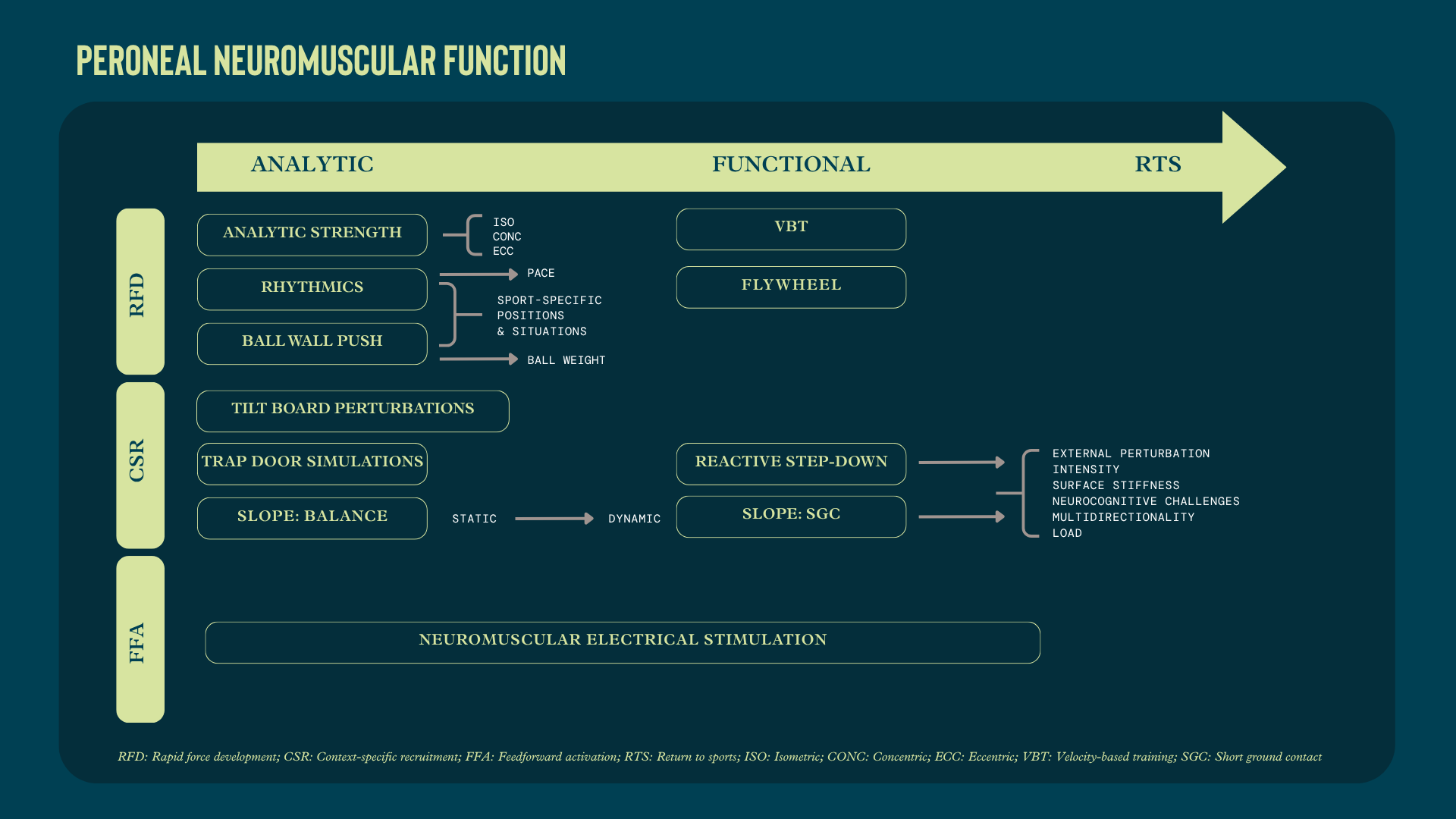
Peroneal rehabilitation should emphasise rapid force development, feed-forward activation, and context-specific recruitment.
Achieving rapid peroneal activation requires both strength and timing training, substantiated by objective and standardised testing of maximal force and rate of force development with high frequency dynamometers (e.g., Push/Pull).
Assessing the peroneal muscles includes some difficulties in terms of compensations, such as hip external rotation. Ideally, we conduct these tests in side lying position with the knee flexed, and the ankle hanging off the table. In this position, the table supports the medial tibia just proximal to the medial malleolus and the ankle mortise, whilst the fixed dynamometer is placed facing down, perpendicular to the ankle.
In early stages of rehabilitation, the physiotherapist can bolster the peroneal muscles with analytic resistance training in various directions. The target maximal strength threshold for optimal athletic performance is 3.5 N/kg.[1]
For rapid force development, we start with training speed coordination via rapid cyclic ankle inversion / eversion rhythmics using a metronome in a controlled setting. Then progress gradually to increasing supported positions and situations specific to the injury mechanism.
Clinicians can incorporate rapid peroneal activation with isometric-concentric exercises where the patient pushes an object (e.g., a ball; Video 1) isometrically for three seconds against the wall, off the ground, with the foot and ankle by performing eversion. The patient is then instructed to release the object and rapidly perform a concentric contraction before the object drops to the ground.
In later stages of rehabilitation, physiotherapists can incorporate velocity-based training specifically addressing rapid peroneal force production.
Apart from these direct and specific targeted methods, we can apply a wide spectrum of balance options to stimulate peroneal neuromuscular readiness. These address mainly context-specific recruitment of the peroneal muscles.
The physiotherapist can provide unpredictable medial tilt while the patient performs a single-leg balance task on a tilt board. Trapdoor simulations are where the patient stands relaxed and the physiotherapist provides a quick, small amplitude inversion perturbation that requires rapid correction. In early phases, the patient can start reactive step-downs by stepping off a box (increasing in height) while the physiotherapist unpredictably applies light lateral perturbation at landing, e.g., with resistance bands. The patient progresses to jumping off the box.
The intention is to progress towards injury mechanism-specific situations, so functional balance and plyometrics come next.
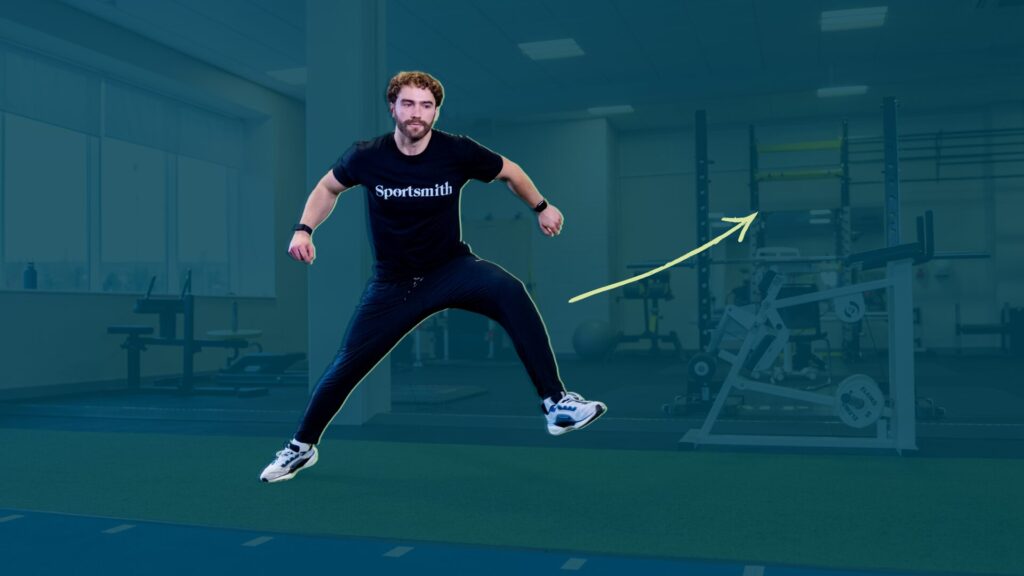
Short ground contact pogo exercises on an inversion slope force the patient to rapidly control inversion during load absorption in a sport-specific context. Progress the patient by varying surface stiffness, giving neurocognitive dual tasks, decision making, change direction of the pogo jumps (forward, lateral, diagonal), incorporate load, or increase pogo jump intensity (height, distance).
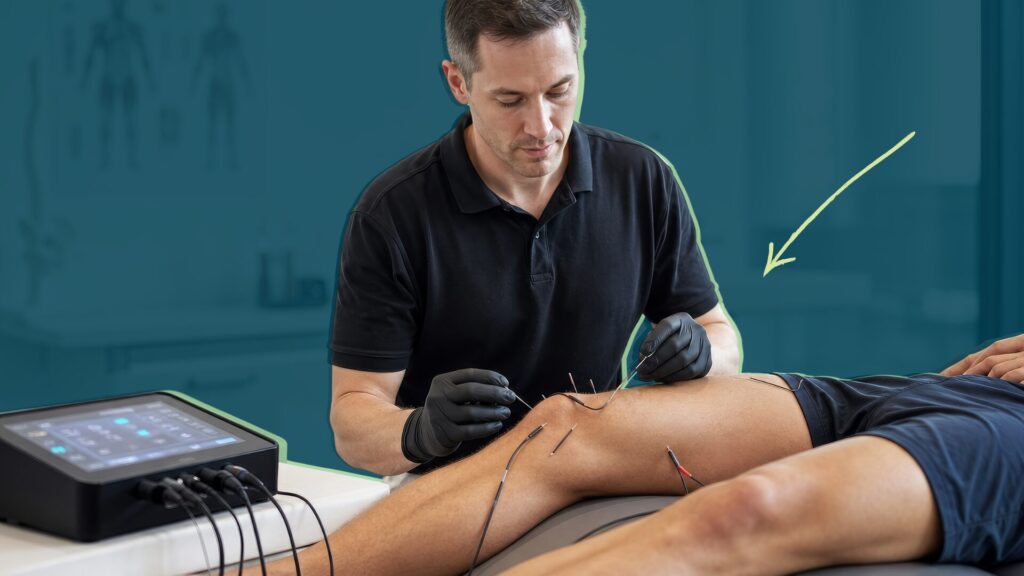
Incorporating neuromuscular electrical stimulation (NMES) of the peroneus longus into these movements and activities can augment feed-forward activation. Place the electrodes over the proximal and distal peroneus longus, and use moderate frequency (35–50 Hz) with strong but tolerable contraction.
The key is to pair the stimulation with exercises, but better yet with functional tasks in a sport- and mechanism-specific context. Progress to NMES-triggered hops and jumps, changes of direction, and cutting, where stimulation activates prior initial contact.
The key is combining NMES with movement, not using it passively.
Tweet ThisShort ground contact pogo exercises on an inversion slope force the patient to rapidly control inversion during load absorption. Progress the patient by varying surface stiffness, giving neurocognitive dual tasks, and decision making.
@jentewagemans
Landing mechanics and multiplanar load tolerance
While optimising peroneal neuromuscular readiness is critical, most lateral ankle sprains occur during high velocity, multiplanar tasks such as landing, cutting, and rapid deceleration. Mechanism-driven rehabilitation therefore requires deliberate, progressive exposure to inversion–internal rotation stress during dynamic load acceptance.
Implementing landing and multiplanar load tolerance in rehabilitation is not just about plyometrics, but restoring the ankle’s capacity to absorb, attenuate, and redirect force in line with the injury mechanism. This incorporates the neurocognitive pathways to facilitate motor learning as well as local neuromotor recruitment to enhance load capacity.
From a neurocognitive perspective, exposing the athlete to variable, multiplanar loading enhances the integration of sensory input with motor output. This enhances central processing and more efficient afferent–efferent coupling. The athlete becomes better at detecting joint position, speed, and perturbations; and at responding appropriately under time constraints, a key requirement during unpredictable landing and cutting tasks.[20]
From a motor learning standpoint, repeated exposure to variable landing and multiplanar stress promotes the development of adaptive movement strategies rather than rigid patterns (i.e., declarative learning).[10] At the level of local tissue function, progressive exposure to multiplanar loading drives mechanical and sensory recruitment and adaptations in the ankle’s muscle–tendon–ligament complex. This increases the tissue’s ability to tolerate stress in specific directions (e.g., inversion–internal rotation), improving load distribution across passive and active structures.[20]
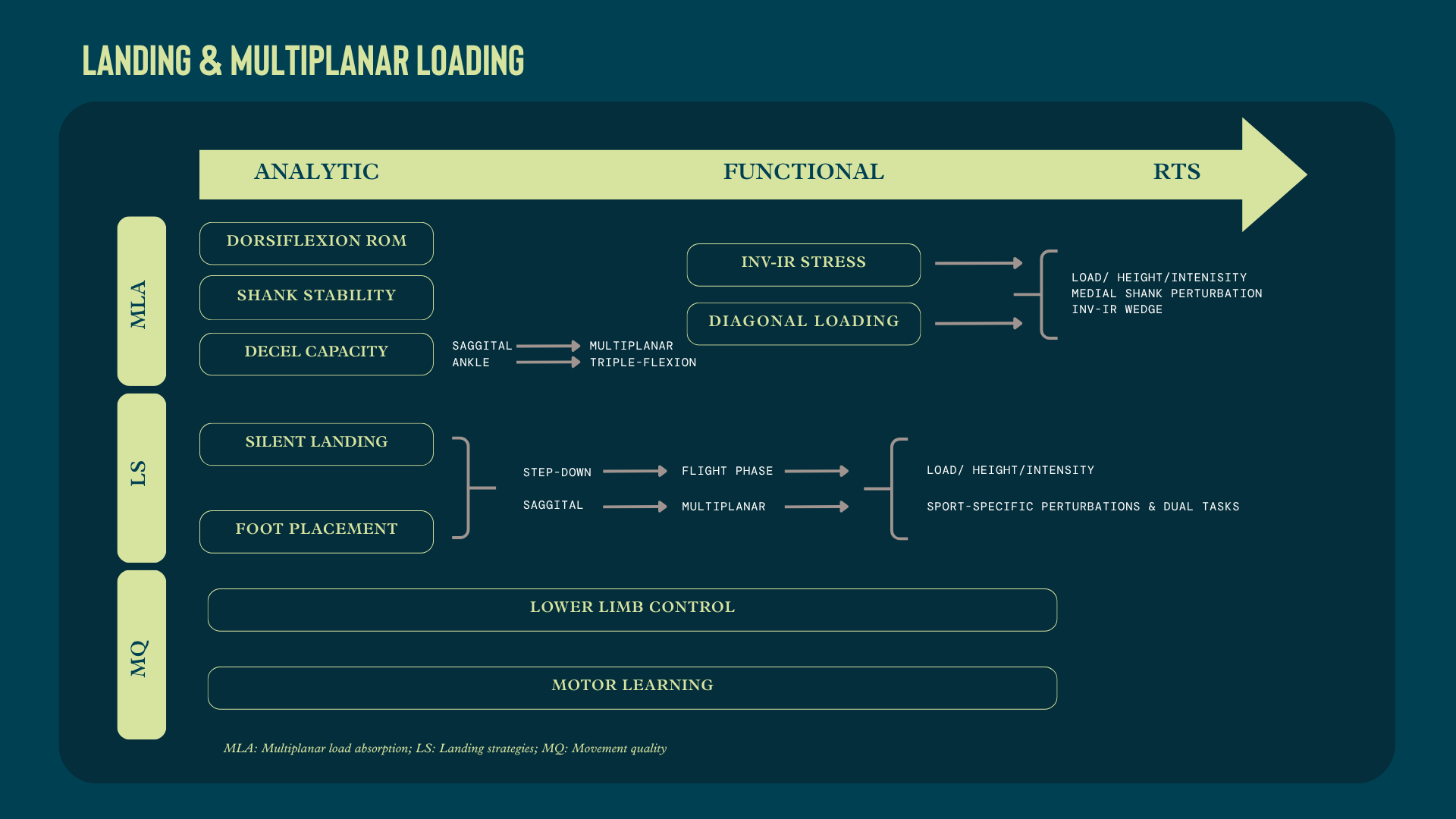
Rather than avoiding landing early in rehabilitation, clinicians should introduce progressive load exposure once tissue healing permits. Start by emphasising sagittal plane shock absorption, landing strategies, and movement quality. From the start, progression should involve intensity, height, volume, directionality, and reactivity.
Similar to peroneal muscle function, calibrating load and modalities should be underpinned by objective and standardised testing, ideally with force plates and 3D motion analysis.
It is important during the early phases of rehabilitation to restore dorsiflexion RoM, coordination, and muscle strength during triple flexion. This builds the athlete’s capacity for load absorption and attenuation, and shank stability. These elements are the building blocks for increasing sagittal plane load absorption capacity in these initial phases, as well as for maintaining postural stability, controlling tibial internal rotation, and regulating inversion excursion.
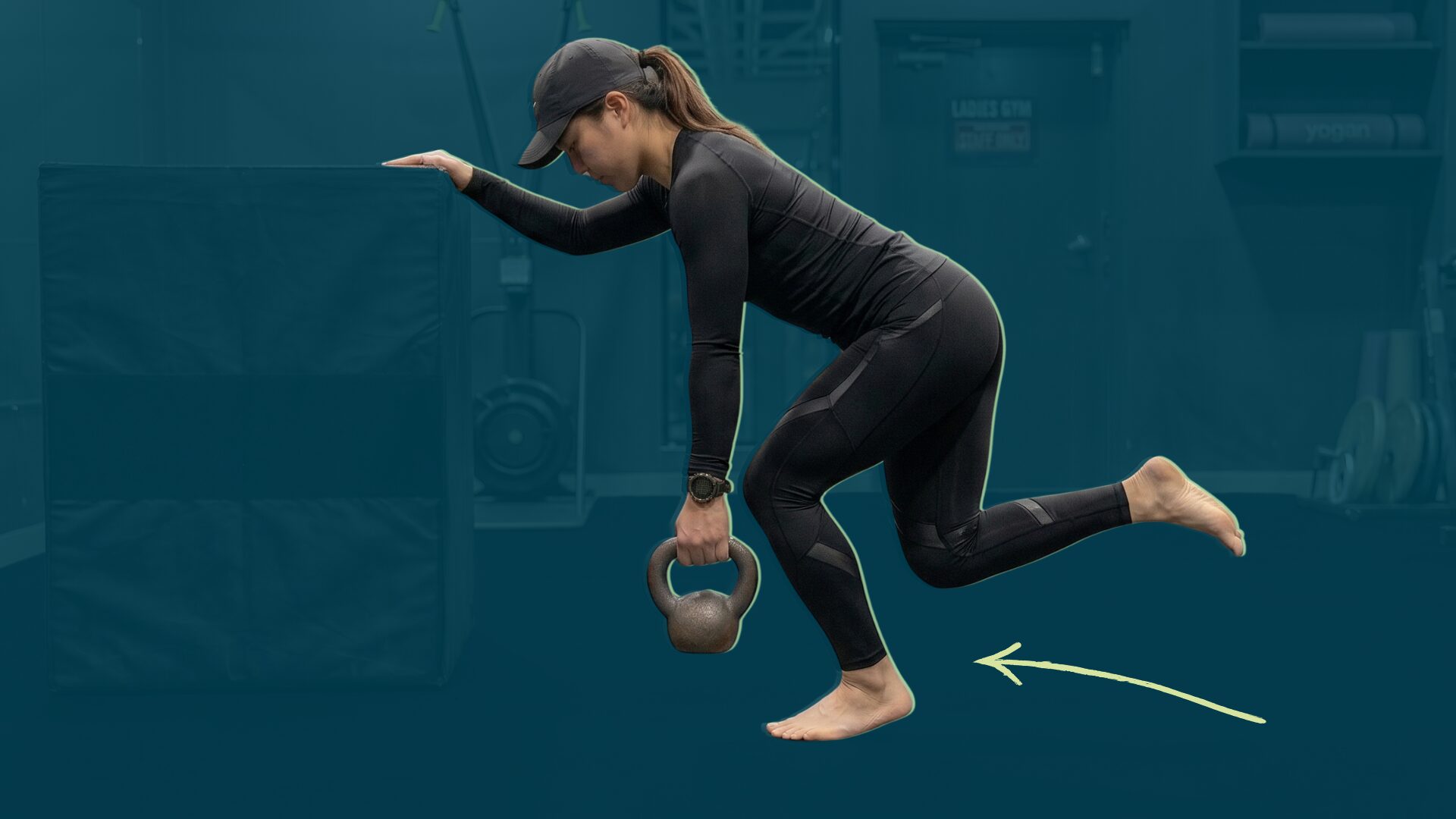
Subsequently, physiotherapists should focus on eccentric strength training of the gastrocnemius and soleus in the sagittal, frontal and transversal planes. At the same time, they should consider the intrinsic and extrinsic foot muscles.
Another aspect is to work on landing strategies by sticking the landing. Here we should instruct our patients to land quietly and give external cues to ensure knee and hip synergy, slight ankle eversion at initial contact, and tibial control.
We should increase load, height, and intensity in later phases of rehabilitation. More importantly, we should implement diagonal loading and inversion-internal rotation stress.
Medial shank perturbations (e.g., elastic bands) during initial contact or single-leg tasks are one way. Another is to have patients perform the loading exercises on an inversion-internal rotation wedge, mimicking the vulnerable position of the ankle that often contributes to LAS. Then increase load capacity in this vulnerable position.
Physiotherapists can further build on these methods through more intense, multidirectional, and rotational hop and landing exercises.
Repeated pogo jumps can target stiffness and elastic reactivity. Changes of direction and cutting exercises that include proximal disturbance, inversion-internal rotation stress via shank perturbation as well as wedges with increasing slope angles, neurocognitive double tasks, and induced fatigue all mimic a sport-specific chaotic environment.
Tweet ThisThe timing of these events is critical: in most cases, injurious motion occurred within 50–150 ms after initial contact. This window severely limits the ability of reflexive muscular responses to protect the joint once excessive inversion begins.
@jentewagemans
Reactive change of direction and cutting control
In competition, athletes rarely decide when and where to cut in advance. They respond to opponents, ball trajectory, tactical cues, and unpredictable environmental constraints. It is precisely this reduction in anticipation and feed-forward preparation that contributes to the vulnerable window in which inversion–internal rotation stress can exceed neuromuscular control.
Video analyses of ankle sprains in field and court sports demonstrate that many injuries occur when attention is externally focused and the athlete must redirect unexpectedly.[2,3]
Reactivity is not an optional “advanced add-on” to ankle rehabilitation. It is a central component of mechanism-driven preparation.
The key difference between pre-planned and reactive change of direction lies in motor planning time.
In pre-planned drills, the athlete can pre-activate the peroneal muscles, adjust trunk position, and calibrate foot placement before the plant step. In reactive drills, that preparation window narrows significantly. If the ankle cannot regulate inversion and tibial internal rotation rapidly under these time-constrained conditions, the risk of frontal-plane collapse increases.
Implementation should begin once the athlete demonstrates sound movement quality during high speed, pre-planned cuts. The first step is introducing simple external cues that alter direction late in the approach phase. For example, the athlete accelerates toward a central cone while the clinician provides a visual signal (left or right hand, coloured marker, light stimulus) within one to two steps of the plant.
Initially, the objective is not maximal speed, but preservation of braking mechanics and frontal plane control under time pressure. Clinicians should observe whether the athlete reverts to a plantarflexed, inverted contact position when surprised, or whether they can maintain tibial alignment and foot / ankle stability.
As control improves, reactivity can be intensified by shortening the decision window. This may involve auditory cues delivered at the penultimate step, randomised light systems, or a partner acting as a moving stimulus. Importantly, the environment should remain constrained enough to monitor quality. Excessive speed without technical control merely rehearses faulty patterns.
The clinician’s role is to ensure that inversion excursion remains controlled, whilst trunk and hip coordination support the redirection rather than amplify frontal plane ankle stress.
To further approximate injury-specific contexts, reactive cutting should incorporate proximal disturbance and transverse plane demand. A light manual perturbation at the trunk or elastic resistance pulling the shank medially during the plant step challenges the athlete to stabilise against inversion–internal rotation torque. This graded exposure builds tolerance in the exact vector associated with LAS. Similarly, rotational redirection tasks, such as reacting to a cue requiring a 90° pivot rather than a simple lateral cut, increase transverse-plane loading and demand rapid stiffness modulation at the subtalar joint.
Fatigue integration is critical. Reactive control often deteriorates before strength does.
Short bouts of conditioning (e.g., repeated sprints or shuttle runs) performed immediately before reactive drills can reveal whether frontal plane stability is preserved when neuromuscular resources are taxed. If mechanics degrade significantly, endurance of the sensorimotor system requires further development before return to sport.
Ultimately, implementing reactivity means accepting a degree of controlled chaos within rehabilitation. The athlete must learn to organise ankle stiffness, tibial rotation, and whole body alignment in real time: not in a quiet, predictable setting, but under pressure. When they can perform reactive change of direction drills at near-competition speed, with stable foot positioning, controlled inversion tolerance, and confident acceleration out of the cut, the ankle is no longer merely strong. It is adaptable.
Tweet ThisFatigue integration is critical. Short bouts of conditioning (e.g., repeated sprints or shuttle runs) performed immediately before reactive drills can reveal whether frontal plane stability is preserved when neuromuscular resources are taxed.
@jentewagemans