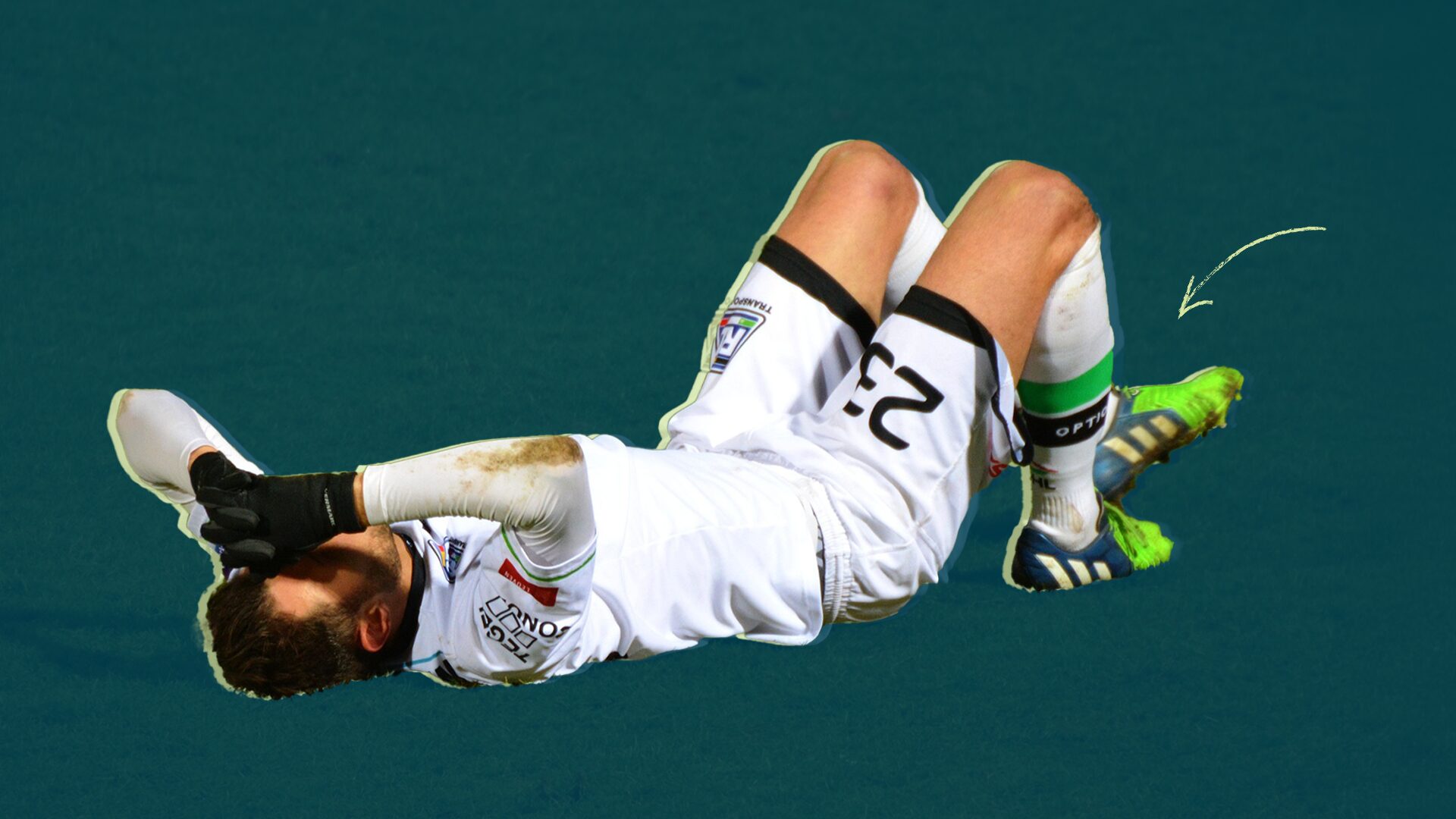
Lateral ankle sprains (LAS) are the most common ankle injuries in sports and have the highest recurrence rates. Around 40% of individuals fail to “cope” or fully recover to pre-injury status and have ongoing symptoms that include recurrent giving way, a sensation of instability, fear of re-injury and significant self reported disability [18]. This group of people meet the standards of chronic functional ankle instability (FAI).
A study of males (mean age 22) who had sustained an LAS compared the “copers” (full recovery) to “non-copers with FAI” across a series of neurocognitive tests [19]. The subjects with FAI had significantly lower levels of neurocognitive function, specifically related to reduction in spatial awareness, reduced capacity to process high volumes of information, and lower ability to create appropriate responses at speed, especially in the presence of additional environmental stimuli.
These findings suggest that these types of injuries should be viewed as a nervous system coordination error, rather than a matter of aberrant biomechanical forces.
Lateral ankle sprains and neurocognition
Many non-contact injuries such as anterior cruciate ligament (ACL) tears and LAS occur at high speeds, often during unplanned or unpredictable changes of direction; and potentially when the athlete is distracted or challenged cognitively.
The initial injury to the lateral ligament disrupts mechanoreceptors. This alters the neural afferent input from the ankle to the brain, with the potential to modulate central nervous system (CNS) neuroplasticity. That, in turn, can result in proprioceptive and motor coordination deficits.
When one sensory system is disrupted, e.g. proprioception, another sensory system, such as vision, can be amplified to support feedback. This compensation in feedback is called sensory reweighting. The eyes are the primary input for achieving balance in controlled settings, but in a dynamic sports setting, the proprioceptive and vestibular systems respond rapidly to changing stimuli.
Patients often become more visually dependent to maintain equilibrium and require greater levels of visual-motor processing activity. This may reduce the nervous system’s ability to prepare for and react to unanticipated events within sport. Practitioners need to assess this early in the rehabilitation journey and take steps to avoid over reliance on vision for balance control.
The high rate of recurrence in LAS and the failure of some patients to cope with a return to sport may be, in part, due to traditional rehabilitation approaches not addressing the changes in the brain at the time of injury. Traditional return to play protocols address strength deficits, limb symmetry and a combination of agility drills. How many of them replicate the cognitive demands that the athlete will face in a sports setting?
The ability to make rapid decisions while processing ball speed and recalling set plays may overwhelm some athletes’ working memory reserves.
Athletes need to be prepared for the chaotic, unpredictable, complex, visually demanding sporting environments in which they play [20]. They must be able to split their attention between multiple stimuli while performing physical tasks and processing complex visual-spatial information.
Tweet ThisLateral ankle sprains are common in sports and often lead to chronic issues. Around 40% of athletes do not fully recover, experiencing instability, fear of re-injury, and significant disability, highlighting the need for improved rehab approaches
@anjiephysio
Case study: Recurrent LAS in an adolescent female netballer
Emma is a 14 year old netballer with three successive right lateral ankle sprains in the last two years.
She plays regional level netball 4-5 times per week and is a competitive cheerleader training three times per week. She has grown 9 cm in the last year and her predicted adult height (PAH) via the Khamis Roche method is 177 cm. She is currently 92% of PAH, putting her in the middle of her adolescent growth spurt by peak height velocity (PHV). There is an increased risk of injury during PHV due to changes in coordination, longer levers, reduced bone density and heightened muscle tension.
Emma has generalised hypermobility spectrum disorder and has a diagnosis of attention deficit hyperactivity disorder (ADHD). She reports being a poor sleeper averaging only five hours of sleep each night. During higher training loads, reduced sleep volume is associated with more than doubling the injury risk in adolescent athletes [14].
Baseball players with a diagnosis of ADHD had a higher rate of ankle sprains [2].
This may result from the individual differences in neurocognition across ADHD patients. Lower reaction times, processing speed and memory can influence the complex integration of vestibular (balance), visual, and somatosensory information that contribute to neuromuscular control [21].
Emma’s coaches and practitioners may not have recognised how the inherent changes in her brain and its processing capacity could hinder her recovery. That may explain the failure of previous bouts of physiotherapy to prevent recurrent ankle sprains.
Emma had been through a comprehensive rehabilitation programme for both of her previous ankle sprains, and she lacked the motivation to repeat a similar programme. The key strategies for a new approach were:
- reducing eye dominance during motor skills
- developing the ability to complete the motor control tasks without conscious thought
- prepare her for the chaos of sport, where she could multitask and split her attention when needed
- restore confidence in the ankle.
Tweet ThisTraditional rehab often fails to address brain changes from ankle injuries. Effective rehab must prepare athletes for chaotic, visually demanding environments, ensuring they can make rapid decisions and handle multiple stimuli
@anjiephysio
LAS rehab stage 1: Protect
In the early stages of rehabilitation, the emphasis is on protecting the ankle from further injury. Emma wore a compression fracture boot for two weeks and was permitted to bear weight as tolerated.
| Goal | Intervention |
| Reduce swelling | Cold therapy |
| Reduce pain | TENS |
| Prevent muscle atrophy | Cross education Motor imagery AROM |
| Build confidence | Address beliefs and fears Positive self-talk and use of non-fear provoking exercises |
The main emphasis at this stage was to reduce swelling and pain. She was instructed to use a device to promote compression with cold therapy.
While she was applying the cold therapy, Emma watched videos that involved the sort of repetitive ankle dorsiflexion and plantarflexion that occur during jumping in cheerleading or netball, and to imagine herself performing the actions as she watched the videos. This technique, motor imagery therapy, promotes neuroplasticity in stroke patients by “exercising” the connections between the brain and target muscle tissues, even in the absence of movement.
This helped Emma feel more autonomous and in control of her rehabilitation journey, which promotes motivation and engagement. Understandably, after multiple consecutive injuries, Emma was very nervous about moving the ankle.
In ACLR patients, transcutaneous nerve stimulation (TENS) reduces pain and arthrogenic muscle inhibition (AMI). The research is split about whether this modality is more effective than active range of movement (AROM) exercises alone. However, it gave Emma greater confidence and distracted her attention sufficiently to enable her to perform foot and ankle AROM exercises.
Emma had restricted mobility of the right first metatarsal phalangeal joint compared to the left. She was unable to isolate hallux dorsiflexion from the other long extensors. Patients with FAI may have reduced hallux and lesser toe strength [8].
To address this, Emma completed regular foot intrinsic strength and motor control exercises.
Cross-training the unaffected limb
While Emma was in the boot, she also performed a series of eccentric resisted banded exercises at home on her non-injured ankle. Repetition of strength based exercises in the contralateral limb preserves muscle strength and supports neural adaptations in post-ACLR patients [9].
Change the beliefs and self talk
Many young patients have multiple fears that we need to address during rehabilitation sessions. Johansen et al. [7] highlights the challenges and barriers that go along with supporting young people with chronic conditions. They stress the importance of the child being able to communicate what is wrong, the importance of practitioners and professionals using words they understand, and how language must not increase fears but address beliefs they may have acquired from others.
Self talk and its relationship to confidence are often not addressed in recurrent ankle sprains.
Emma and her mother described her right ankle with words like “weak,” “damaged” and “unstable.” Emma also said that she had been told she would always have a weak ankle after the first injury.
That made it necessary in the early sessions to explain the nature of her injury and how, with the right rehab, she could make a full recovery. We also discussed how the negative language was constantly bombarding her brain with negative sensations that were reinforcing the need to still protect the ankle.
We gave clear instructions to everyone who were supporting Emma to only use the word “right” ankle when referring to her injured limb. This can support the neurocognitive approach to normalising the environment and building confidence, as opposed to embedding negative emotions into the motor pathways.
LAS rehab stage 2: Protect
After two weeks, Emma was able to remove the boot and begin a progressive return to full weight bearing.
| Goal | Intervention |
| Gait re-education | Backwards walking, virtual reality training |
| Balance retraining | Dampen the role of the eyes: rapid neck movements and stroboscopic glasses in single leg stance |
| Re-educate movement patterns | Differential learning: change the environment every three repetitions Implicit learning: Watch it, do it Contextual interference: change the sequence of the movements and add perturbations as tolerated External focus of attention: use lasers and sliders |
| Strengthen | Isometrics to banded eccentric ankle stabilisers Foot intrinsics |
| Build confidence | Distraction with dual task activities Self talk |
Coaching with the language of rehabilitation
The language of coaching movement and rehabilitation is critical to ensure the transfer and retention of skills en route to a return to sport.
The athlete must be able to move competently without conscious thought, thereby freeing up the brain to process information that emerges on the field of play. The more attention the athlete must consciously invest to perform the skill, the less attentional resources available to focus on environmental stimuli. This may affect both performance and injury risk.
During early phases of rehabilitation, the instructions we use to coach movement should not have excess words. Less is more.
As I started to introduce Emma to simple squat and lunge techniques, I coined “Roll the DICE”: differential learning, implicit learning, contextual interference, external focus of attention.
My first priority was developing her ability to lunge and squat without interference or additional cognitive load.
Implicit learning is aprocess of learning without intention, perhaps even without conscious awareness of what has been learned. Implicit learning may facilitate the transfer of skills into a sports setting.
Learning skills in this manner reduces the dependence on the working memory and reduces cognitive demands, promoting a more automatic, unconscious skill development. That lets the brain focus on environmental factors and respond to unpredictable environments – not on how to move. In contrast, explicit learning has the intention and conscious awareness of learning. This does not transfer as successfully when the athlete returns to the complexities of the sport setting.
Using an analogy or metaphor can be an effective method of creating implicit learning provided the cue is applicable to the athlete and setting.
To encourage balance re-education, for example, I gave Emma the cue “balance like a flamingo.” The external cueing is lost in translation if the athlete is not familiar with flamingos!
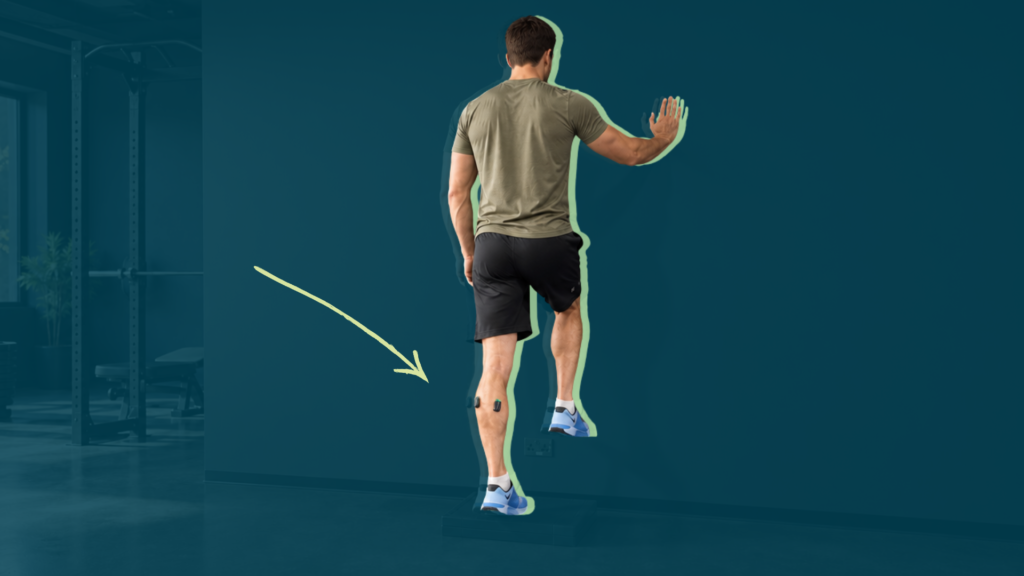
To reduce conscious awareness, once she could complete the task successfully for 10 seconds without loss of balance, I added cognitive challenges to the single leg balance drill asking her to:
- recite the alphabet backwards
- spell her name backwards
- name animals from Africa
Tweet ThisUsing stroboscopic glasses and vestibular rehab techniques, athletes can improve proprioception and reduce over-reliance on vision for balance. This enhances their ability to process multiple stimuli and maintain environmental awareness
@anjiephysio
Eyes open or closed?
Patients with chronic ankle instability (CAI) exhibit an over reliance on the visual system during single leg activities [6]. To avoid visual over dependence, rehabilitation and coaching interventions should focus on methods and techniques that reduce the role of the eyes during movement skill acquisition.
The traditional method of closing the eyes when progressing balance drills fails to replicate the true demands of most sports. Vision is rarely fully removed in sport. But it may be obscured, and in other situations athletes must maintain their visual acuity while moving their head.
To assess the level of visual over reliance, Emma completed a balance test with and without stroboscopic glasses.
Practitioners can filter the amount of light that passes through stroboscopic glasses, lowering the reliance on vision for balance and force the brain to de-prioritise visual input to encourage less reliance on vision for balance and greater reliance on proprioception [6]. This frees the visual system to process multiple visual stimuli and greater environmental awareness and attention.
In the absence of stroboscopic glasses, adding virtual reality technology or using vestibular rehabilitation techniques such as single leg balance while performing rapid rotation of the head can train a reduced reliance on visual input.
Differential learning is an approach that creates novel stimuli with little input from the clinician. The athletes learn to adapt and react to stimuli. The scenarios force the athletes to explore and develop their own movement solutions and variability, resulting in them performing multiple movement patterns.
For example, they may perform the same skill under different conditions:
- technique: assisted TRX squat, sit to stand, wall squats
- environment: barefoot vs. shod, outdoors vs. indoors, Bosu ball
- duration
- intensity
Tweet ThisCreating an external focus of attention in rehab, such as using lasers or dual-task activities, helps athletes develop automatic skills. This reduces conscious control of movements and improves performance in dynamic sport conditions
@anjiephysio
A programming example might complex a forward lunge to a balance pad (A), forward lunge with overhead reach (B), and standard forward lunge while catching a ball (C). The athletes might perform the sequence ABCABC (serial practice), AABBCC (blocked practice), or ABBCAB (random practice).
This replicates the demands of the sport more effectively. How often would a netballer or cheerleader perform 10 squats followed by 10 lunges? Sport requires unique movements in response to unplanned stimuli.
An approach that supports developing the skill to adapt to unplanned movements is contextual interference (CI).
CI is effective in improving skill acquisition and retention [22]. It describes the learning and adaptation that takes place because of changing or interfering with the execution of a motor programme, or by mixing up several movements in a random and variable – rather than blocked – order. For example, squat-lunge-lunge-squat-lunge-squat, vice three squats followed by three lunges and then another three squats.
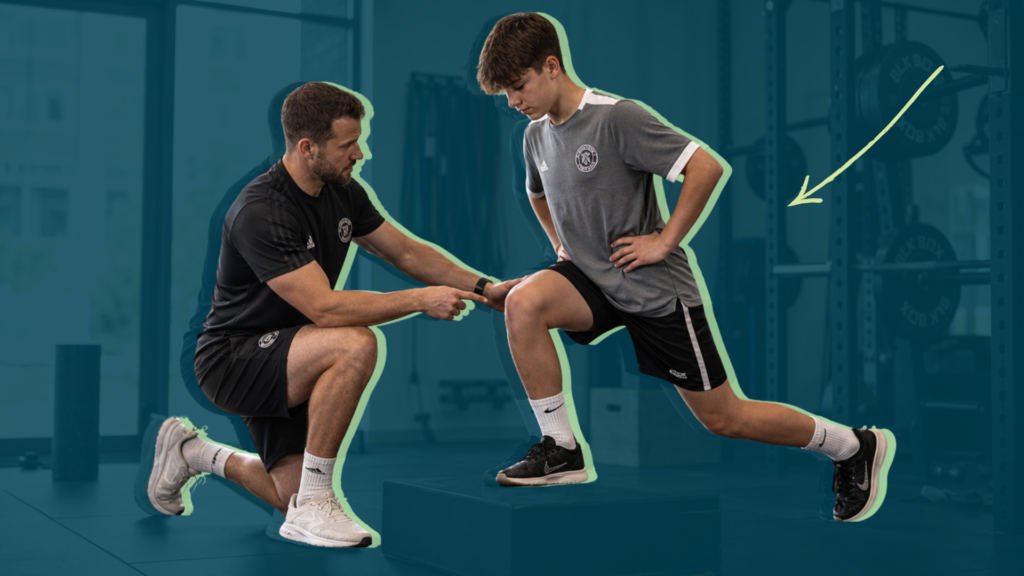
As Emma became able to reproduce the lunge movement, we added higher levels of perturbation as a form of contextual interference.
One example starts in a split squat position. The athlete maintains a static posture while the practitioner randomly taps them with their hand. Another places a resistance band around the athlete’s waist or knee during lunge drills to create a gentle push-pull effect.
Warn the athlete that performance will drop initially
Interference may result in a greater number of errors in the short term, but the transfer and retention of the skill to the sports setting may be enhanced [22]. Part of sport relevance means the “ideal” movement may be compromised in favour of speed and outcome. The research regarding this approach has conflicting results.
While skill retention may improve with the use of CI techniques, it may be at the cost of accuracy. That means it may be most suitable when reaction time and faster recall is more important than precision.
It is important to thoroughly explain the process to the athlete. Otherwise, their confidence may take a hit, particularly among athletes who display more perfectionist traits and who might not be used to making repeated mistakes.
Creating an external focus of attention
Many traditional approaches for lower limb injuries focus on biomechanical considerations, such as stopping the knee falling into valgus during activities like lunging, squats and hopping. Movement cues include “don’t let your knee fall in.” These types of instructions create an internal focus of attention, where attention is consciously directed toward the affected muscle or joint [1].
Focusing internally may lead to greater conscious control of movements, which constrains the motor system by interfering with automation.
By contrast, an external focus of attention shifts awareness and intention to an environmental stimulus, encouraging less conscious motor control to maintain joint stability.
Emma was nervous about moving the ankle into dorsiflexion in the early stages of rehab. By creating an external focus that distracted her attention away from this movement, she was able to explore the movement.
There are many ways to create an external focus: biofeedback, metronome, reaction lights, coloured cones, laser, language (e.g., cue landing strategies to be softer or quieter during hopping or jumping), dual tasking, and virtual reality.
We attached a motion guidance laser to her knee, and asked her to shoot different scores on a target on the wall or floor, replicating a knee to wall action. We gave minimal instruction (implicit learning), and encouraged her to explore different ranges of dorsiflexion to encourage movement variability.
Placing a slider under her uninjured foot further increased dorsiflexion range of motion as she performed multidirectional lunging movements. Around her were coloured numbers akin to a clock face or Star Excursion Balance Test (SEBT).
Before adding dual task challenges to this activity, we assessed to what degree Emma could perform a modified SEBT with and without a dual task challenge. This would let us know if there were any quantitative or qualitative changes, as a “dual task cost of greater than 10% in patients following ACLR could indicate excessive neurocognitive reliance” [10].
Emma moved the slider towards a randomly selected number or colour, and we compared video of the two tests. Emma contributed her rate of perceived exertion (RPE) score on a scale of 1-10. She was able to observe the differences in movement quality across the two settings, and scored the cognitive dual task test as an RPE of 6, versus the motor task alone as a 3.
She enjoyed the task more when it had the cognitive challenge, so we made this a home exercise.
Emma also performed double leg eccentric calf raises. A metronome – an auditory external cue – distracted Emma from thinking too much about the movement, and facilitated the action itself.
Dual tasking
Once Emma performed the movements competently and without excessive conscious control, we added a cognitive challenge to simulate the dual tasking environment within her sport. Athletes must be able to multitask and split their attention between multiple external stimuli and create effective motor solutions [19].
Coaching considerations when introducing dual task challenges include: differences between males and females, impact of maturation on dual tasking, presence of any different processing difficulties and learning preferences, and whether the athlete do the physical task and the cognitive task in isolation before combining.
The level of cognitive skill must be appropriate to the athlete’s maturity and capability. They also must achieve the skills in isolation before combining them.
Asking an athlete to do a task that is too hard for them or overloading them with too many stimuli stimulates fear and anxiety, which interferes with the quality of the movement pattern.
Create a safe space for the athlete to explore the movement without fear of failure. This allows them to try different movement solutions. Those with a lower skill level, or a child new to the sport or movement, will benefit more from low levels of interference. Those with more experience or a higher skill set may thrive in learning environments where they encounter high levels of interference [4].
Tweet ThisNeurocognitive deficits, including reduced spatial awareness and slower processing speeds, are linked to chronic ankle instability. Viewing these injuries as nervous system coordination errors can change how we approach rehabilitation
@anjiephysio
Creating athlete autonomy within rehabilitation
In a rehabilitation setting, the clinician dictates the content and the details of a session, partly to protect the patient from further injury and to create desired outcomes. The clinician assumes an instructor role and the patient often adopts a passive role.
Wulf et al. [16] developed the OPTIMAL theory of learning: Optimizing Performance through Intrinsic Motivation and Attention for Learning. They highlighted the factors associated with motor skill learning and emphasised the importance of the learner having an active role in their learning journey. They could decide on feedback style to encourage involvement; and choose their exercises, how to receive their exercises, how long they want to exercise for, or how often.
In keeping with this research, Emma had choices around which exercises she wanted to include in both the session and her home exercise programme. Following the completion of a movement sequence, Emma was encouraged to decide when to request feedback.
Welling et al. [15] discovered that feedback after “good trials” increased intrinsic motivation and confidence. Athletes’ confidence correlated with lower perceived disability, so reinforcing the positives was key [11, 12].
In view of Emma’s low motivation and confidence, autonomy gave her a sensation of control over her treatment journey.
| Goal | Intervention |
| Creating fun within sessions | Creating games and challenges linked to their interests |
| Appropriate level of challenges | Combining physical and cognitive dual task challenges appropriate to the individual |
| Autonomy and choice | Which exercises, number of exercises, frequency, timing, mode of exercise delivery (video vs. printed) |
Emma created dual task challenges at home with her siblings to help her develop autonomy, as well as the ability to adapt movement strategies under constantly changing environments. Examples include: single leg balance while catching a ball, single leg balance while counting back from 10, hold up large numbers or playing cards where 6 = right foot forwards in a lunge and 3 = left, hold up a coloured cone where red = squat and yellow = lunge, games like mirroring a partner or playing “Simon says” (better for younger athletes), and using reaction lights to set up agility drills.
Many rehabilitation settings are limited to the confines of small treatment rooms, but it is imperative that rehabilitation does not stop when the athlete becomes pain free.
Current return to play testing procedures measure physical function such as muscle strength, power, hop tests and self reported outcome measures. They rarely assess neurocognitive performance and may fail to detect critical neural compensations that are supporting motor control.
Simply making athletes stronger with better biomechanics will not prepare them for the chaos of the sporting arena. Adding cognitive and motor challenges to increase working memory, visual field scanning and processing early in the rehabilitation journey will set the foundation for neuroplasticity in the sensory and motor areas of the brain, improving performance and reducing the risk of further injuries.