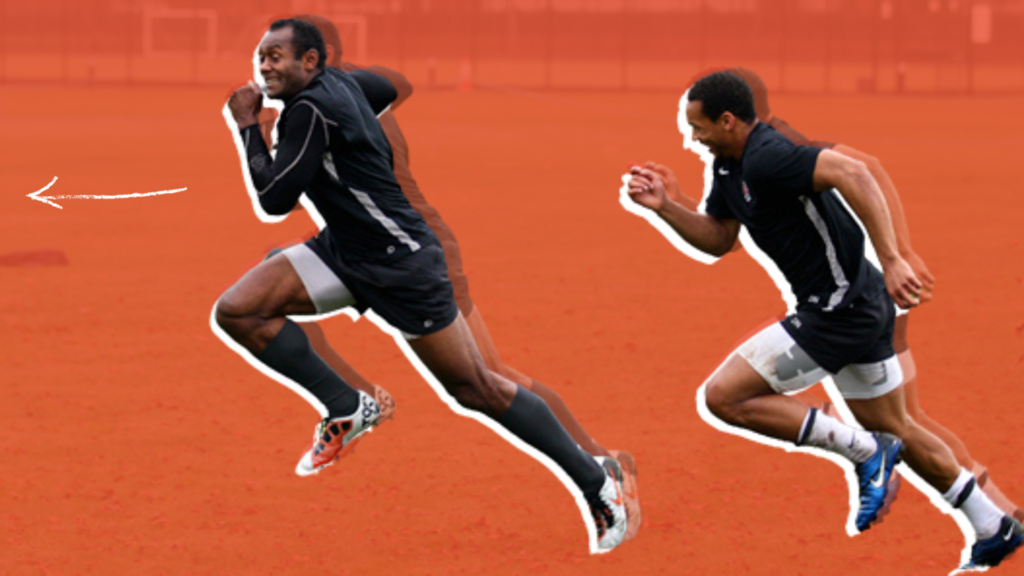
Hamstring strain injuries (HSI) have a range of contributing factors: age, injury history, muscle architecture, lumbo-pelvic stability, range of motion, and increased sprint running. Abnormal running kinematics are another key contributor.
Running mechanics are increasingly part of training models across sports. A targeted intervention programme can have positive impacts on sprint running mechanics and favourable performance outputs.[1] Yet there is still a lack of scrutiny when evaluating, implementing, and assessing the effectiveness of these training methods.
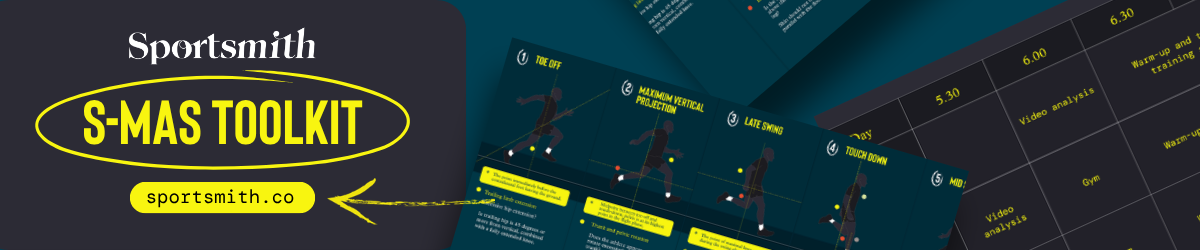
Given the need to individualise physical development strategies, our intervention used the sprint mechanics assessment score (S-MAS) to assess individual movement strategies, gather information around physical qualities, develop a structured programme, and evaluate the effect on HSI rates.
Classifying athlete sprint strategies with the S-MAS
The sprint mechanics assessment score has gained traction in recent years. A higher S-MAS score indicates increased risk of sprint-related HSI.[2]
We conducted S-MAS testing in the second week of preseason. This gave us sufficient time (including the later stages of the off-season) to expose the group to sufficient speed work enabling them to perform max velocity sprinting.
Each player started with a dynamic warm-up, three running mechanics drills, and two build-up runs at a perceived effort of 80% and 90%. They then performed two maximal 35m sprints. We filmed each sprint from the left and right side to ensure we could accurately analyse both limbs. The players then went on to their morning training session.
From the analysis, we categorised the players as either having poor backside mechanics, overstride mechanics, or lumbo-pelvic control (LPC). Each scoring item from the S-MAS fits into each of these profile buckets.
The player with the highest score for each bucket would have specific running mechanic drills and supplementary gym exercises added to his training programme.
If a player scored multiple items in each bucket, the bucket with the highest score would determine which intervention they would follow. For example, if a player scored 4 on backside, 2 on overstride, and 1 on LPC for a total score of 7, they would be in the backside pathway.
| Subcategory | Areas | Detail |
| Lumbo-Pelvic Control | 1 | Trunk & pelvis rotation Do they look to rotate excessively through the trunk? This may appear as large arm movements, trunk twisting with the upper arm and shoulder visible on the far side of the body. |
| 2 | Lumbar extension / anterior pelvic tilt At any point between maximum vertical projection and late swing, does there look to be an increase in anterior pelvic tilt or lumbar extension? This may look like excessive arching of the lower back, elevated chest or ‘bum behind the body’ | |
| 3 | Lumbar extension / anterior pelvic tilt Does there look to be an increase in anterior pelvic tilt or lumbar extension? This may look like excessive arching of the lower back or ‘bum behind the body’ | |
| Overstride | 1 | Forward lean Do they look to have an increased forward lean? This may look >15⁰ if a line drawn from the vertical compared to one from the greater trochanter to the C7 vertebrae |
| 2 | Foot v Centre of mass distance Is the foot too far ahead of the CoM? | |
| 3 | Shin angle Does the shin look to be extended? This may appear as an ankle joint centre positioned in front of the knee | |
| 4 | Foot inclination Is there a visible gap between the forefoot & the floor, or heel & the floor? (Excessive heel strike or forefoot strike) | |
| 5 | Vertical collapse / mid-stance collapse Is there increased knee flexion / ankle dorsiflexion? This may look like the subject is ‘sinking’ into the stride, ‘sitting down’, or the knee is translating over the toes with the foot flat | |
| Backside Mechanics | 1 | Trailing limb extension Does the athlete look to be in excessive extension? This may be characterised by the trailing hip oriented at >30⁰ from the vertical, combined with a fully extended knee. |
| 2 | Back kick Is the heel of the trailing limb above the calf of the trailing leg? Shin should not be higher than parallel with the floor. | |
| 3 | Thigh separation Is the knee of the trailing leg behind the glute? | |
| 4 | Thigh separation Is the gap between the thighs >20⁰ or the trailing knee behind the back? |
We initially planned for a six-week intervention programme. However, the reality of hectic playing schedules in professional football meant that the intervention period lasted 10 weeks before we could schedule the players for their S-MAS retest.
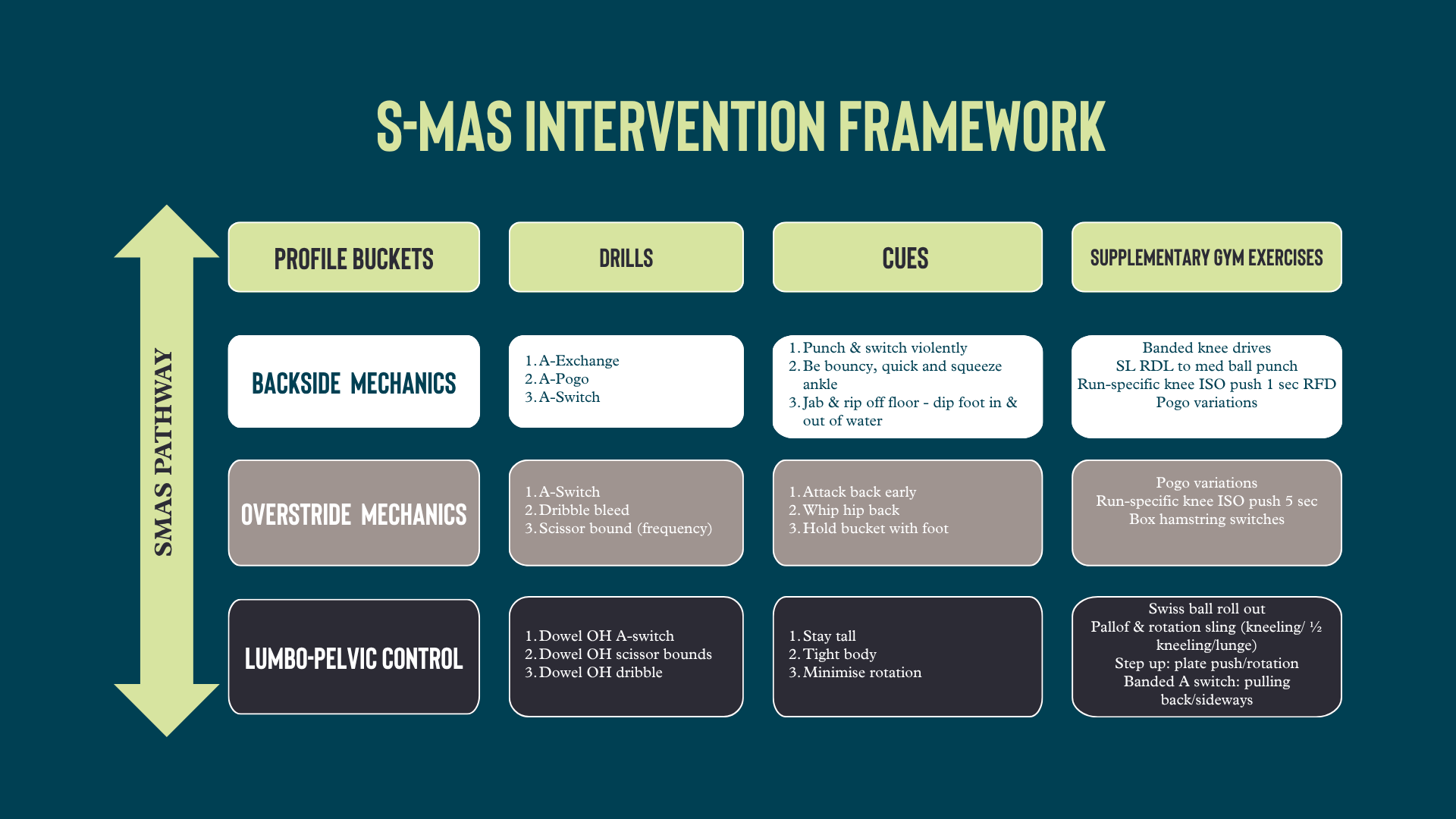
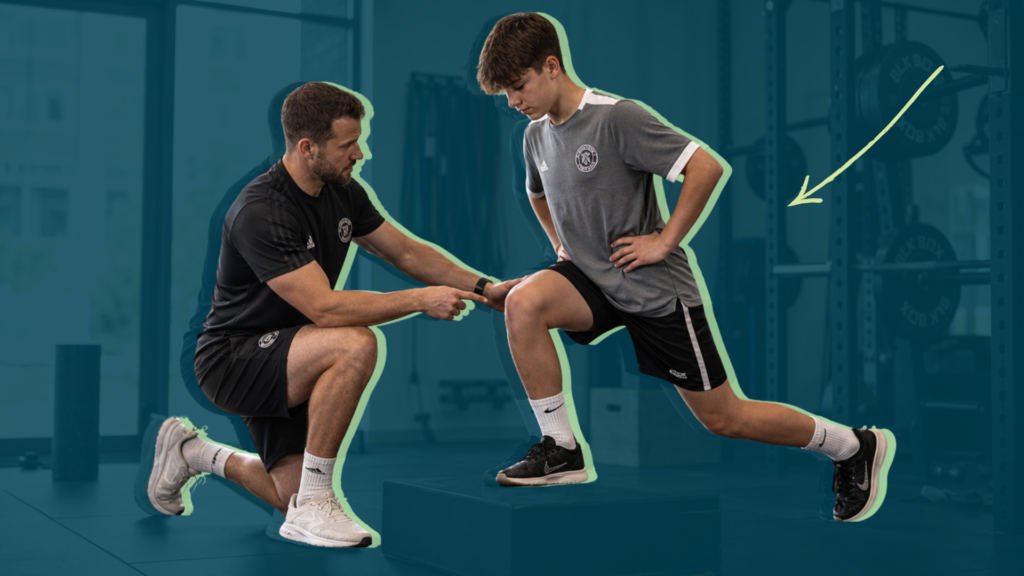
The intervention (Figure 1) consisted of running mechanics drills and supplementary exercises in the gym. All activities were relevant to one of the movement buckets, based on their kinetic and kinematic specificity.
For the run-based drills, simulating the task used a part-practice method. This broke the task into smaller parts and allowed the players to translate the feeling of ‘optimal movement’ when sprinting at max velocity.
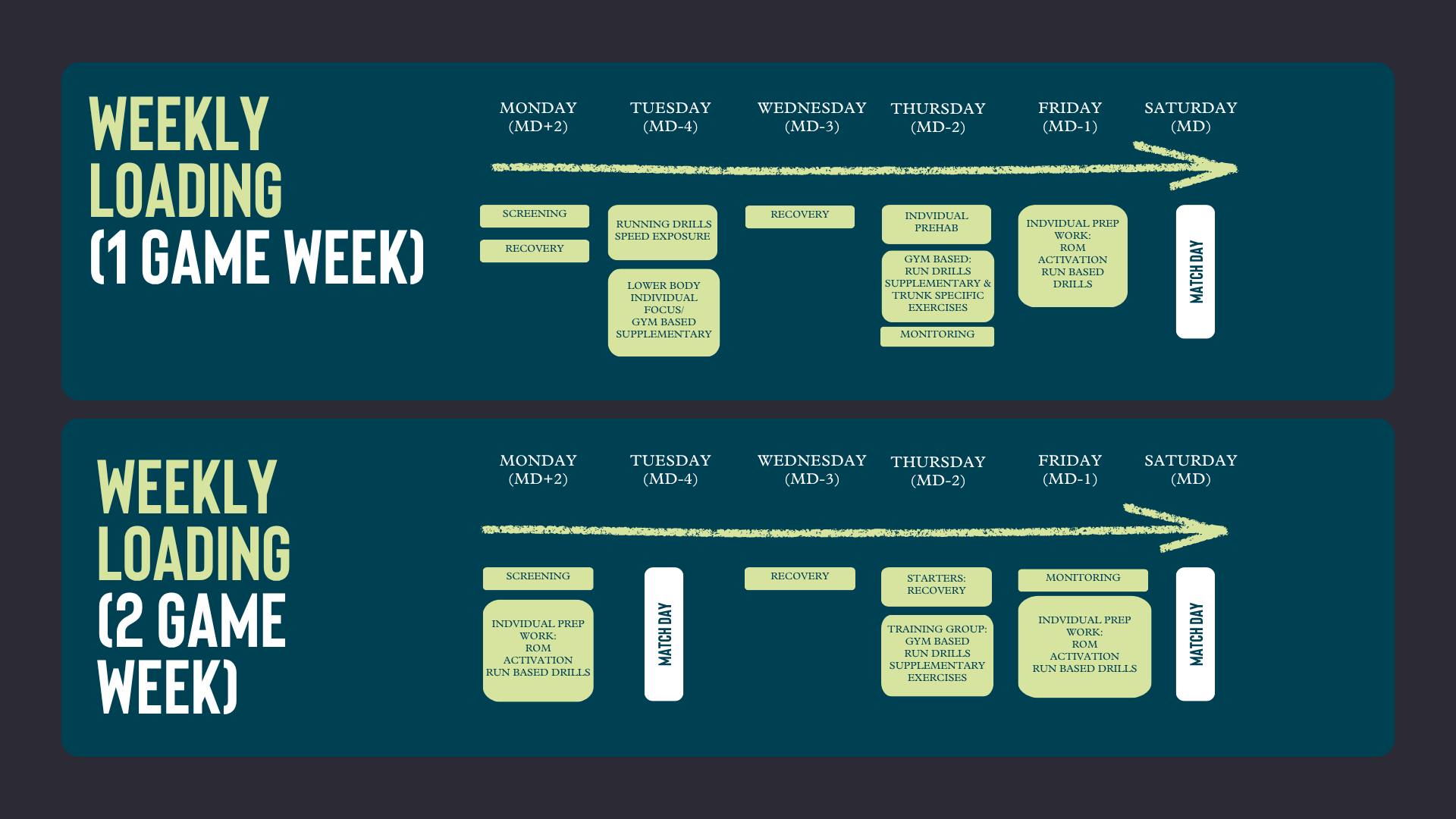
Specific cues for each drill provided feedback to players and optimised the learning environment. The players performed each of their run drills and supplementary gym sessions at least once per week (Figure 2).
Tweet ThisEach player started with a dynamic warm-up, three running mechanics drills, and two build-up runs at 80% and 90%. They performed two maximal 35m sprints. We filmed each sprint from the left and right side to ensure accurate analysis of both limbs.
@jwperformance1
Backside profile
The defining characteristics of backside running mechanics are excessive extension at toe-off, and a trailing limb that is predominantly behind the centre of mass (CoM).
The athletes in this group typically rely on excessively pushing the ground away to maintain forward momentum. Athletes in the backside group commonly displayed longer contact strategies in the 10/5 hop test. This matches up with a sprint strategy that produces longer ground contact time.
The backside profile exposes the hamstrings to greater strain within the mid-to-late swing phase.
Developing the athlete’s ‘strategy’ and ‘capacity’ is key to shift them from ‘backside’ to ‘frontside’ movement patterns.
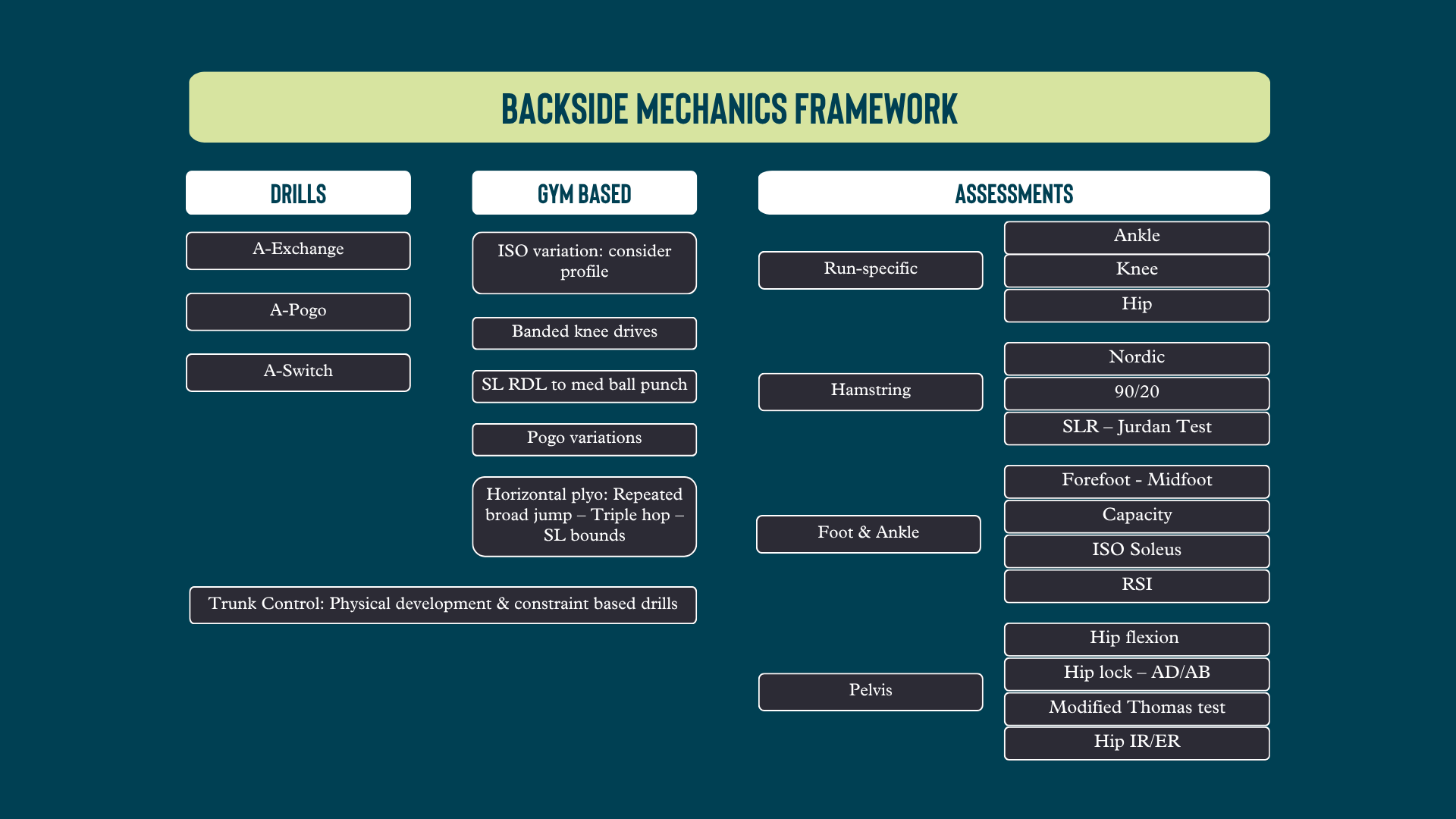
Physical capacity assessments should include run-specific isometrics at the ankle, knee, and hip; along with maximal and rapid force qualities across the lower limb (Figure 5). High and rapid eccentric force qualities in the hamstrings should be a priority for athletes in this group. Coaches should also target the trunk musculature, as excessive trunk movements can further increase hamstring stretch and strain.
The focus for these athletes is to spend less time ‘pushing’ on the ground and, instead, ‘whip’ or ‘punch’ the trailing leg. A quicker release off the ground and efficient punching of the lead leg will drive a scissor-like action.
Shifting from a ‘backside’ to a more ‘frontside’ strategy has two main benefits. First, it lowers the stretch and strain on the thigh musculature from toe-off to ground contact. Second, creating higher knee lift during swing phase sets the athlete up for an optimal position to ‘attack the ground’ on the subsequent step, resulting in higher ground reaction forces.
| Drills | Cues | Supplementary Gym Exercises |
| 1. A-Exchange 2. A-Pogo 3. A-Switch | 1.Punch & switch violently 2.Be bouncy, be quick, and squeeze the ankle 3. Jab & rip off floor – dip foot in & out of water | 1. Banded knee drives 2. Single-leg RDL to med ball punch 3. Run-specific knee isometric push (1 sec RFD) 4. Pogo variations |
Abbreviations: RFD = rate of force development
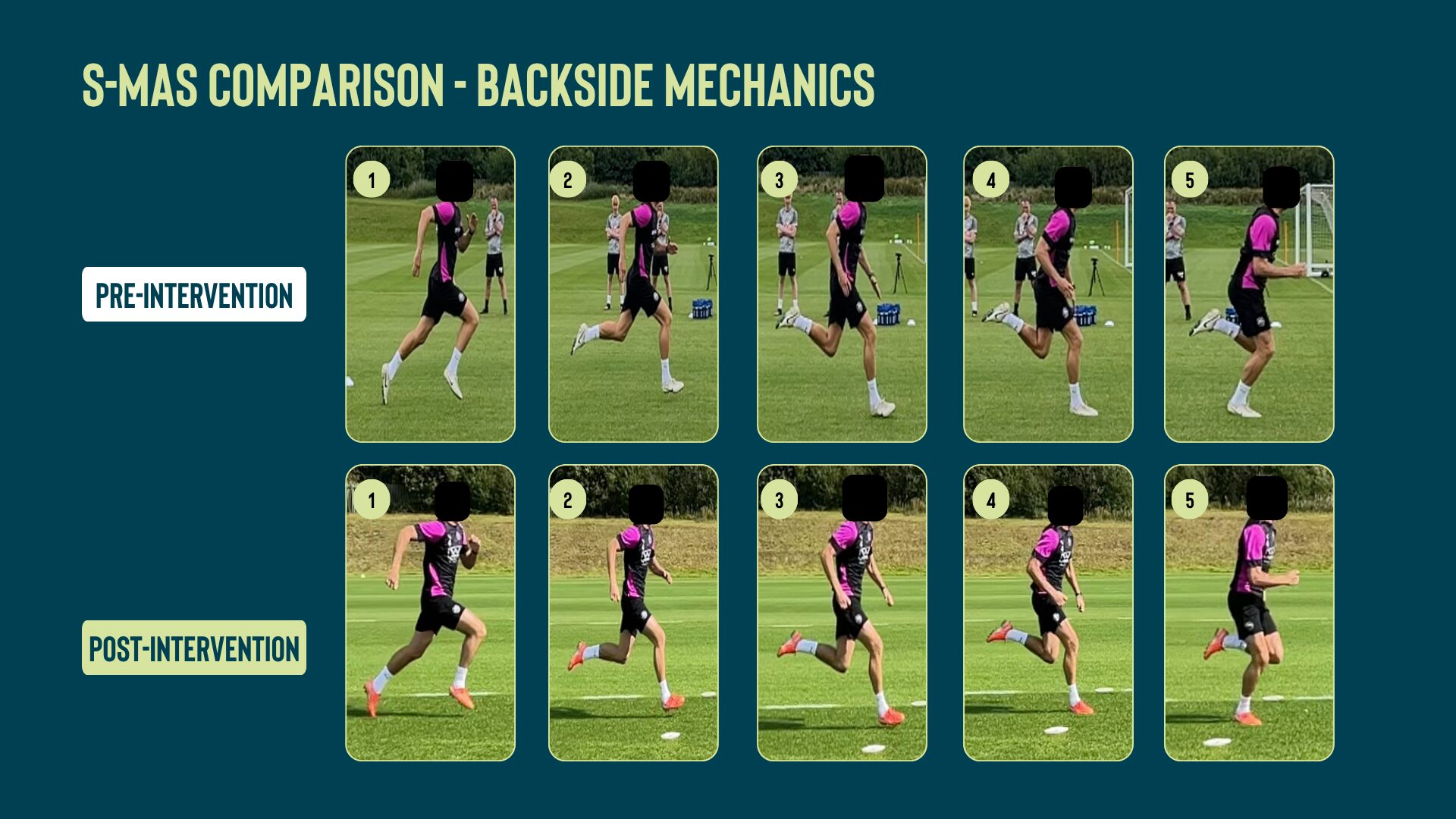
The run mechanics drills (Table 2) for the backside athletes promote shorter ground contact times and emphasise efficient switching of the limbs when released from the ground. Post-intervention S-MAS imaging during the toe-off position of the athlete in Figure 3, displays a higher ‘knee lift’ accompanied by a more upright torso and less trailing limb extension at toe-off.
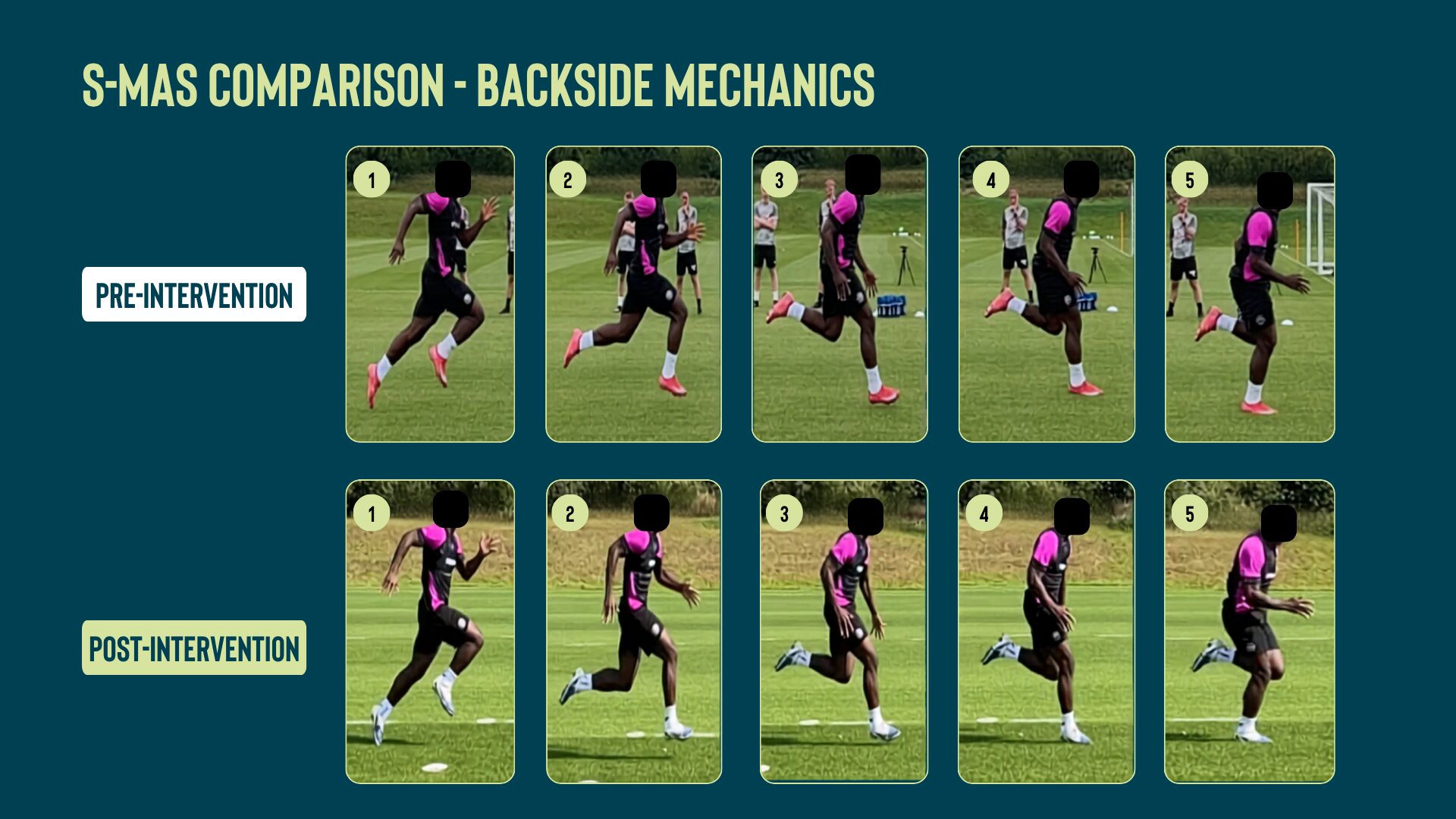
The supplementary gym exercises further developed both their strategy and capacity. Banded knee drives and single-leg RDL to med ball punch influence effective ‘punching’ of the hip to promote the scissor-like action. The run-specific knee isometric push (RSKIP) and pogo variations develop the lower limb’s capacity to resist deformation, improve stiffness, and reduce ground contact time.
Table 3 provides detail around the RSI and isometric force qualities of an athlete in the backside group.
| RSI | Knee ISO Push PF | Knee ISO Push RFD @ 100ms | Ankle ISO Push PF | Ankle ISO Push RFD @ 100ms | Hip ISO Push PF | Hip ISO Push RFD @ 100ms | |
| Score | 2.5 | 4 (n.kg.bw) | 2.8 (n.kg.bw) | 2.5 (n.kg.bw) | 1.9 (n.kg.bw) | 2.5 (n.kg.bw) | 1.5 (n.kg.bw) |
| Benchmark | 3 | 4 | 3.2 | 3 | 2.4 | 3 | 2.4 |
Note: Green, yellow, and red indicate good, average, and poor comparative to benchmark scores, respectively.
Abbreviation’s: PF = peak force, ISO = isometric, RFD = rate of force development
As with most athletes in our backside group, the athlete displayed an average RSI of 2.5, following from a long contact time of 188ms.
Our priority was developing maximum and rapid force production to enhance the qualities around the foot and ankle to avoid the tendency to ‘over-push’ upon toe-off. The 1-second RFD knee isometric push improved force quality under short time constraints, while developing posterior chain peak force and RFD.
By taking a deeper dive into these force qualities, we built out their physical development programme while including specific exercises for their backside mechanics.
The combination of the specific drills and gym exercises led to an improved S-MAS score on the retest, with noticeable differences at toe-off through to full support. This athlete remained injury free and also reached a new maximum speed during the intervention period.
Tweet ThisThe defining characteristics of backside running mechanics are excessive extension at toe-off, and a trailing limb that is predominantly behind the centre of mass (CoM). The backside profile exposes the hamstrings to greater strain.
@jwperformance1
Overstride profile
Athletes who display overstride mechanics typically land with the lead limb in front of the CoM. One way to see this is to observe the distance between knees at touchdown. These athletes often lack a vigorous scissor-like action of the thighs, further contributing to their overstride strategy.
Athletes in this group experience greater mechanical work, with the hamstrings, specifically, experiencing high braking forces.
The focus should be promoting leg switch efficiency using run drills such as dribble variations and scissor bounds, and gym exercises such as hamstring box switches.
| Drills | Cues | Supplementary Gym Exercises |
| 1. A-Switch 2. Dribble bleed 3. Scissor bound (frequency) | 1. Attack back early 2. Whip hip back 3. Hold bucket with foot | 1. Pogo variations 2. Run-specific knee isometric push (5 sec) 3. Box hamstring switches |
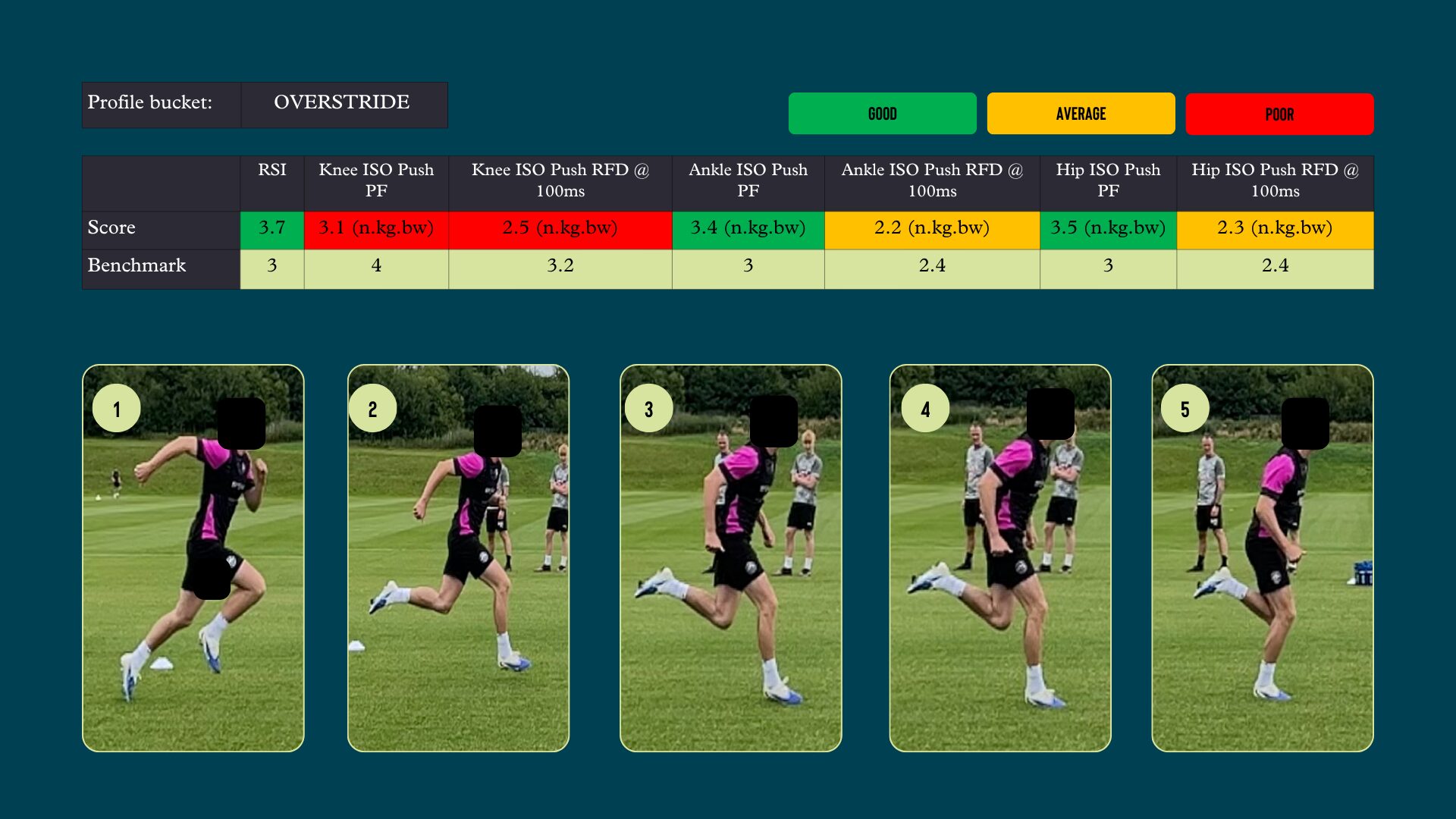
Athlete A (Figure 6) touches down well in front of the CoM. A big focus for this athlete, then, was to ‘whip the hip back’.
Tweet ThisAthletes who display overstride mechanics typically land with the lead limb in front of the CoM. One way to see this is to observe the distance between knees at touchdown. These athletes often lack a vigorous scissor-like action of the thighs.
@jwperformance1
Clear cues linked to the strategy you are trying to develop are very important. Where possible, visual feedback also helps the athlete discern the quality of their movements. Both methods help maximise the learning environment and positively transfer the drills to effective sprint technique.
Despite the potential to generate great reactivity during profiling, Athlete A clearly struggled to engage this ability when running at top speed. With the foot landing ahead of the CoM, the contribution shifts away from the ankle and towards the hip extensors.
In addition to having limited ability to ‘attack back’, this athlete had reduced ankle flexion on the lead limb upon toe-off. This causes a loss of pre-tension and contributed to further energy loss through to the stance phase. Another cue for this athlete was to imagine ‘holding a bucket with the foot’. This aimed to create pre-tension to influence the lack of deformation from contact to mid-stance.
Upon ground contact, the hip and knee extensors generate a large vertical force in order to avoid deformation. This deformation is a key strategy of the overstride profile, contributing to longer ground contact times and a lack of efficiency within the stance phase. The run-specific knee isometric push (RSKIP) is a useful exercise to counter this tendency.
Athlete A’s peak force in the RSKIP was a limiting factor. However, this may not be the case with every athlete.
Targeting the musculature around the pelvis also addresses vertical collapse at mid-stance. Reduced strength capacity and neuromuscular function at the hip can contribute to visible sinking and contralateral pelvic drop.
The lower limb and hip musculature should be viewed collaboratively to produce system stiffness and ultimately fight against collapse at mid-stance.
For an overstride athlete, the run-specific hip isometric push and 90/90 isometric hamstring test, in addition to the RSKIP, are helpful for investigating proximal and distal hamstring qualities.
Practitioners are advised to collate and analyse relevant physical qualities and movement strategies when working with their athletes. Do they possess the relevant physical qualities? Or is it due to their technical strategy? Can any links be created between the two to understand the why behind our athletes movement patterns? Being aware of both allows you to tailor your approach when looking to reduce the work demands the hamstrings face.
Athlete B’s (Figure 7) physical profiling was poor across the board. Given their overstride strategy and poor force qualities, conditioning the hamstring musculature was essential. Short-duration maximal isometric derivatives at longer muscle lengths can develop high and fast force qualities in the hamstrings.
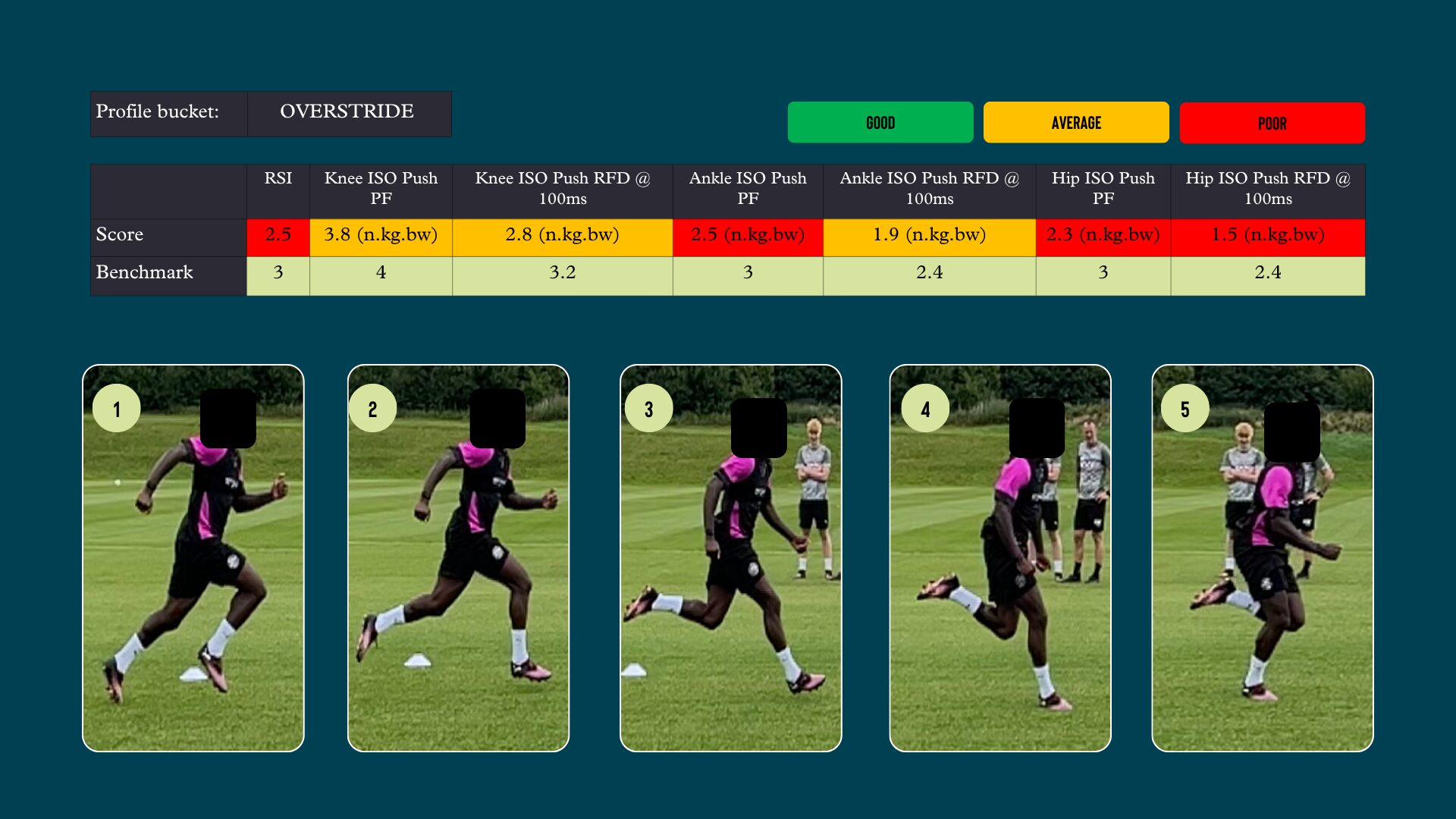
Digging deeper into the capacity of hamstring musculature lets you refine the athlete’s programme. Some useful observations are their force capacity on multiple reps of testing; their ability to repeatedly demonstrate high and fast force; how they cope in a long-lever isometric bridge position; and whether they tolerate yielding volumes longer than 45 seconds.
This approach gives you confidence you are developing the required physical quailities. While exposure to the drills aim to shift the bandwidth of their sprint strategy. Chasing individual improvements over perfection. Remember, not all our athletes will look like elite sprinters, but more favourable mechanics can reduce strain on the tissues.
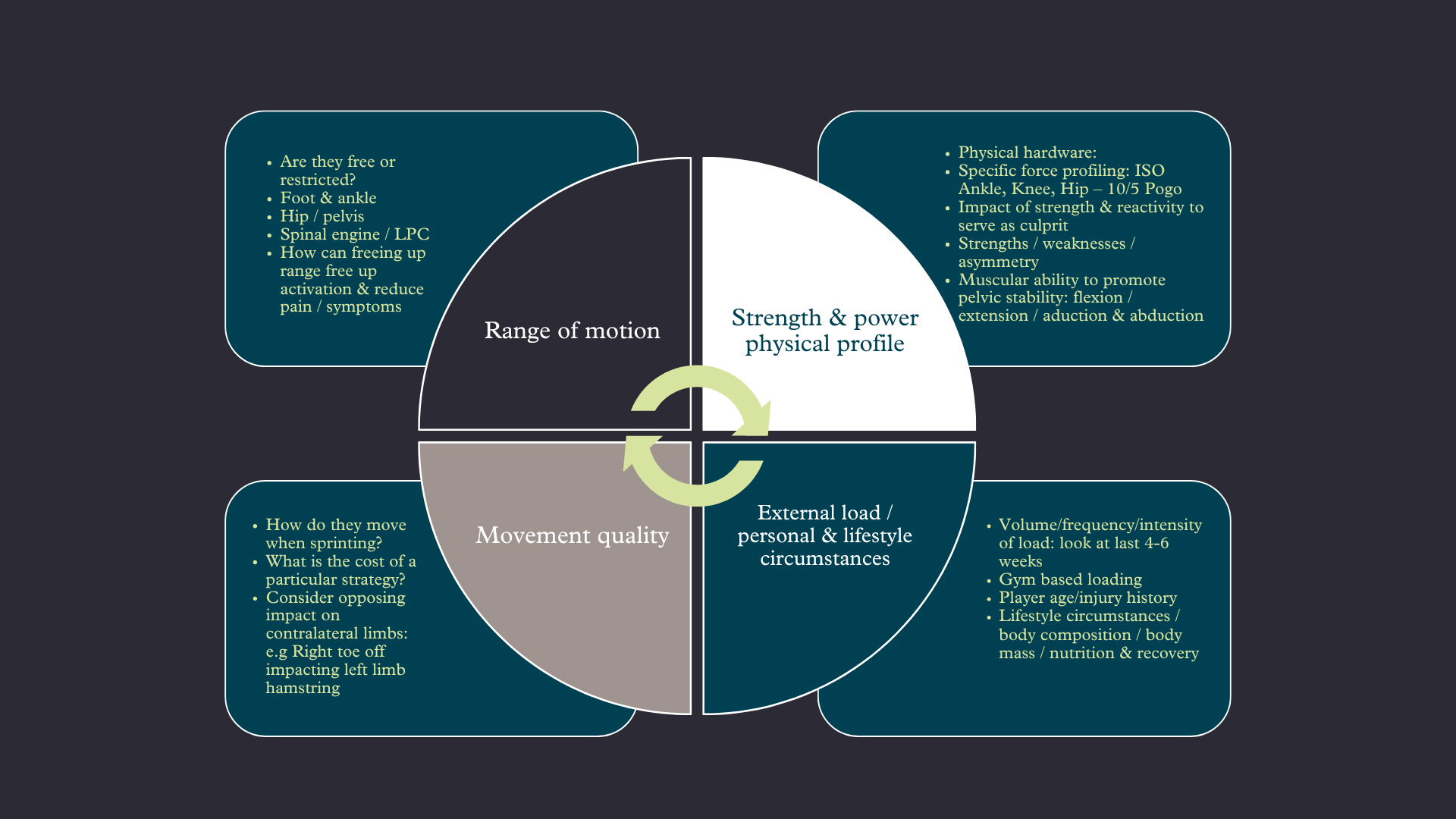
Higher scores on the S-MAS and a below average force profile indicate there is a high cost to the athlete’s sprinting. Practitioners therefore should carefully manage workload, not just in terms of loading in each session but in the frequency of high-workload sessions.
The interplay between overstride and backside mechanics should give some indications for how we can affect the rest of the sprint cycle.
Athlete B was in the overstride group yet displayed multiple backside points. The back limb trailing the CoM further influenced the overstride strategy.
For this athlete, then, the focus should be to ‘rip the leg off the floor’ while ‘whipping back from the hip’. An A-switch where the athlete ‘rips’ the stance foot off the floor will cause the lead leg to respond with a more optimal backward motion towards the base of support.
Tweet ThisHigher scores on the S-MAS and a below average force profile indicate there is a high cost to the athlete’s sprinting. Practitioners therefore should carefully manage workload.
@jwperformance1
Lumbo-pelvic control profile
For athletes in the lumbo-pelvic control (LPC) group, the target movements are anterior pelvic tilt (APT) and trunk movement. The pelvis acts as an anatomical lever and can influence force distribution and strain on the lower limb.
Improving APT can be a challenge, as it may follow from the athlete’s skeletal structure—something that influences strategy but is not modifiable.
| Drills | Cues | Supplementary Gym Exercises |
| 1. Dowel OH A-Switch 2. Dowel OH scissor bounds 3. Dowel OH dribble | 1. Stay tall 2. Tight body 3. Minimise rotation | 1. Deadbug variation / Swiss ball roll out 2. Pallof & rotation sling (kneeling/ ½ kneeling/lunge) 3. Step up: plate push / rotation 4. Banded A-switch: pulling back / sideways |
The athletes that displayed APT and excessive movements of the trunk as a result of the chosen strategy did not display single deficiencies. They would adopt multiple strategies associated with the other buckets.
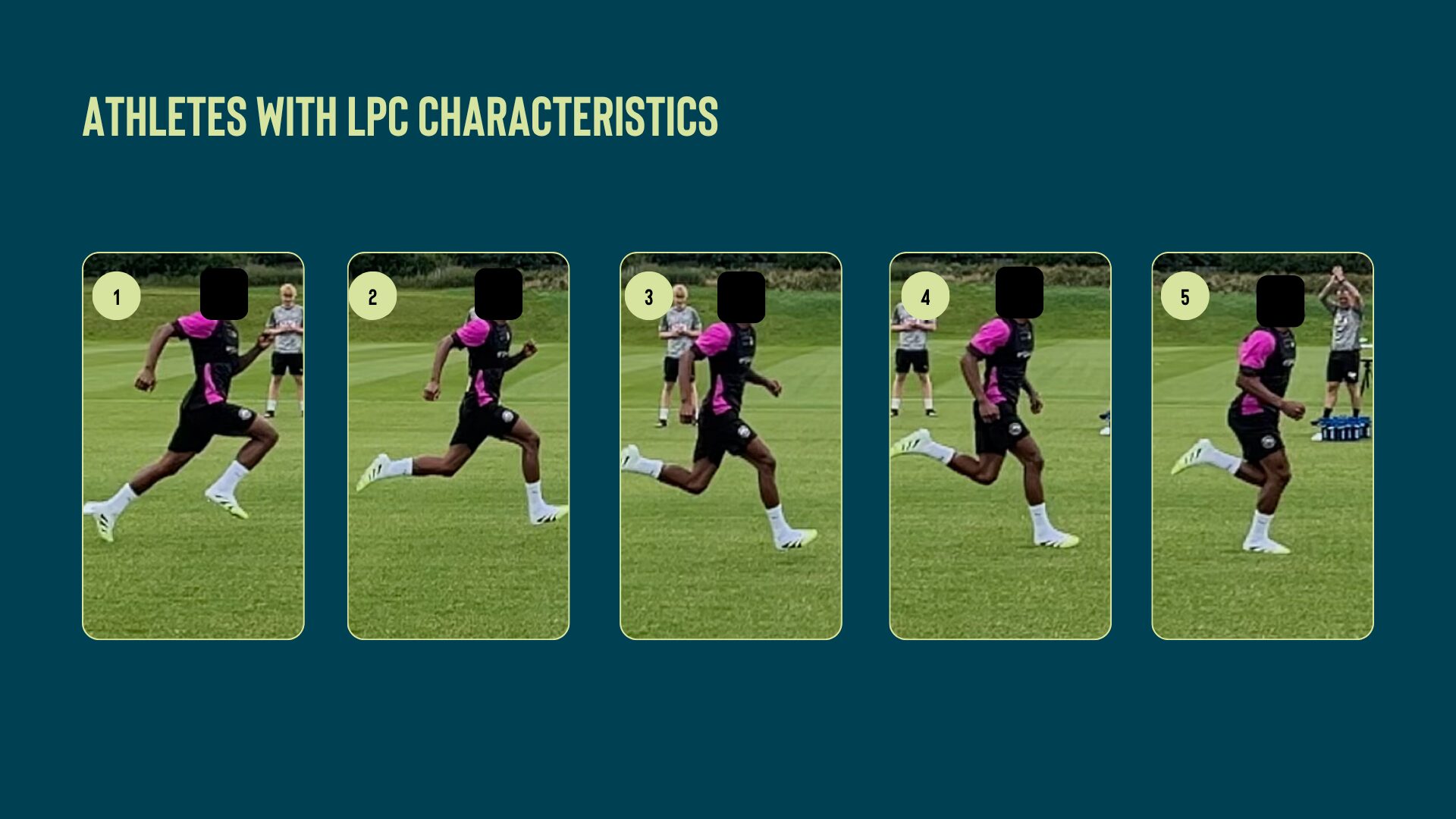
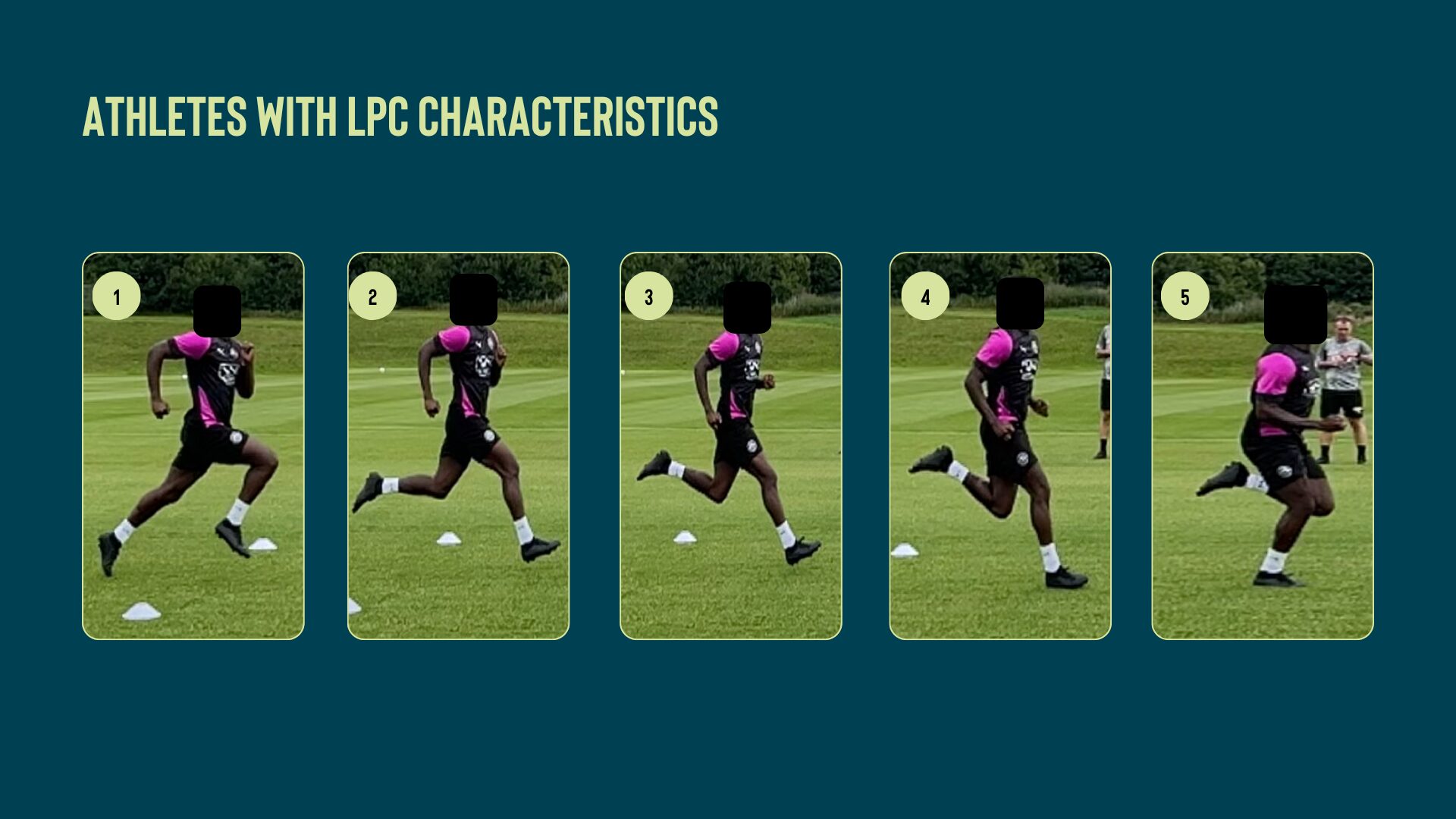
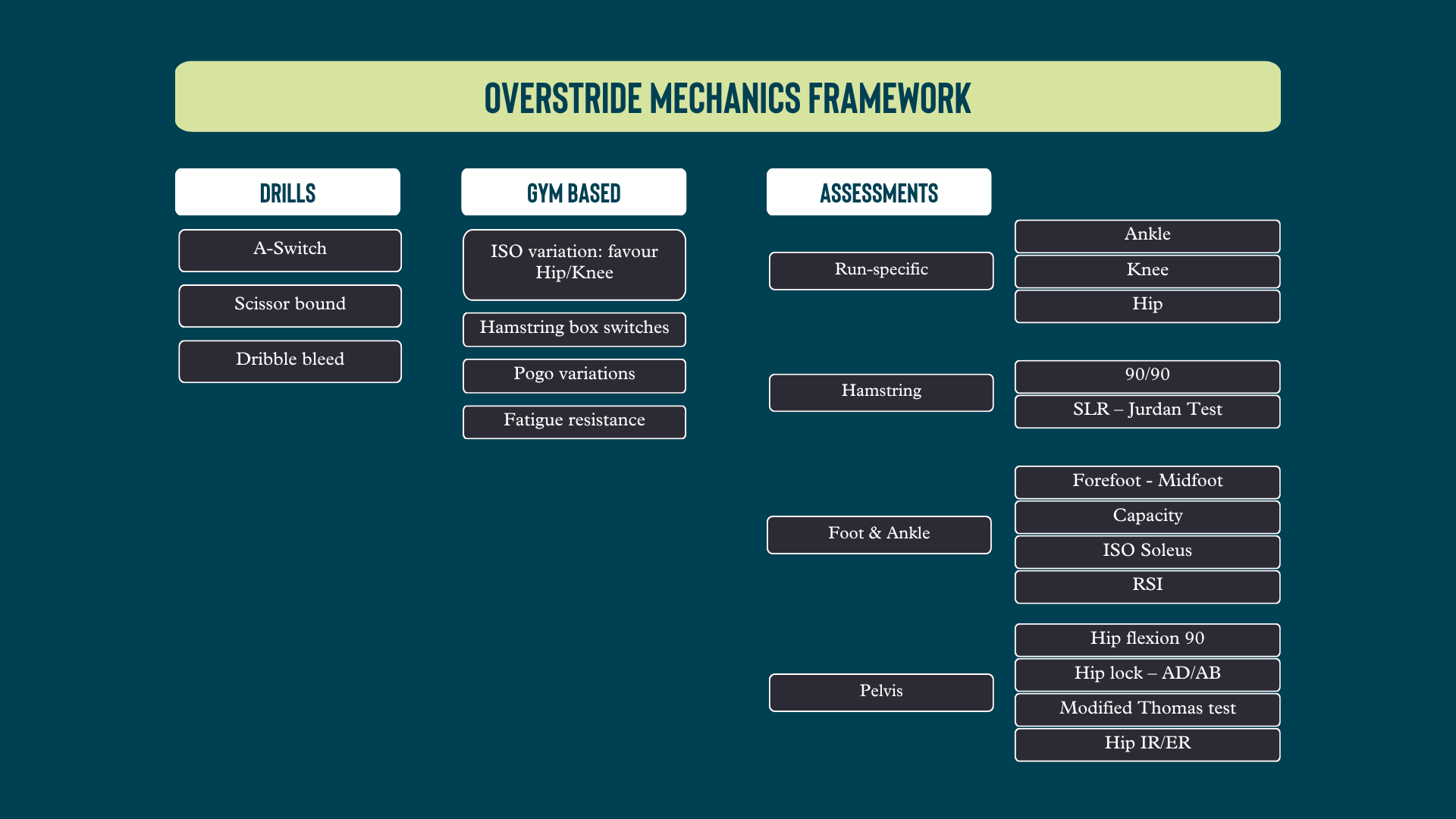
Athlete C displays excessive toe-off, and the knee of the trailing leg remains behind the glute in late swing (Figure 9). Excessive extension at toe-off leads to a lack of leg switch efficiency and subsequently more APT (Figure 10). These are characteristics of a backside strategy, too. These movements rotate the pelvis anteriorly in the late swing phase, making the hips look like they are behind the body, while also causing an over-rotated trunk.
The priority cues during run-based drills were to ‘jab and rip off the floor’ upon toe-off, while ‘punching the knee forward’ and remaining ‘tight’ with the trunk.
This athlete tested poorly on both an ankle isometric push and the 10/5 hop test. The foot and ankle are unable to propel the body forward under short time constraints. That shifts the load proximally, ultimately affecting pelvic position.
Drills from the LPC bucket such as overhead scissor bounds and overhead dribbles were great tools to combat both the LPC indicators and the overlapping overstride deficiencies. Cueing the athlete to ‘attack back’ and ‘whip the hip back’ encouraged a focus on thigh angular retraction velocity to influence a more optimal pelvic position within the running cycle.
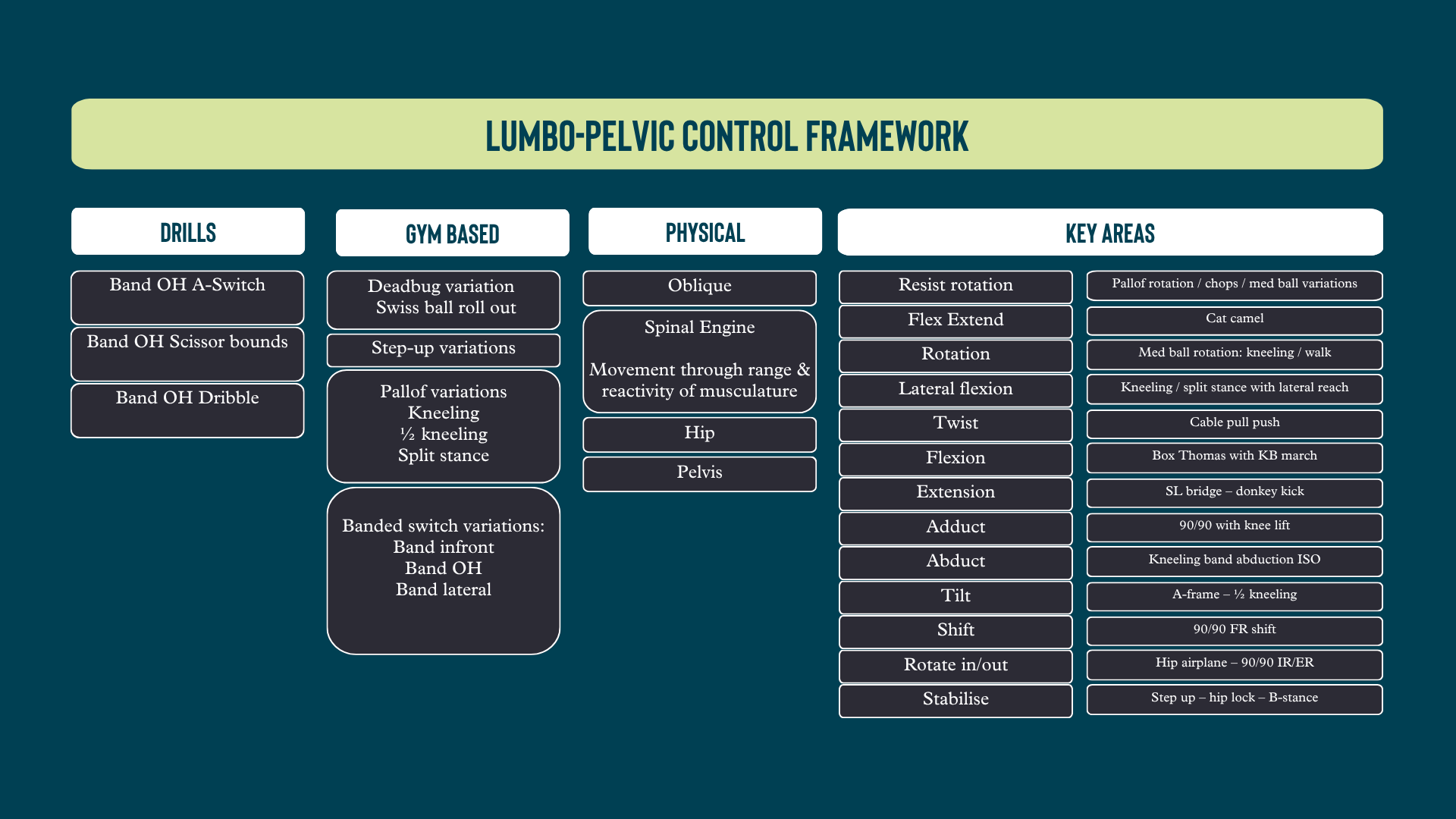
The framework for each category can allow practitioners to cherry pick from each profile bucket. Improving technique through drills and considering relevant gym-based conditioning strategies. While not losing focus on the main objective for these athletes: improving LPC.
Gym-based drills had two key areas of focus: enhancing the physical development of musculature around the trunk and incorporating control of movements within functional exercises.
Tweet ThisCueing the athlete to ‘attack back’ and ‘whip the hip back’ encouraged a focus on thigh angular retraction velocity to influence a more optimal pelvic position within the running cycle.
@jwperformance1
The oblique musculature provides trunk stability, specifically resisting trunk rotation. Performing an exercise and putting a band overhead either from behind or laterally immediately challenges the obliques to stabilise the trunk. An activity like this combines control within functional exercises (Video 14).
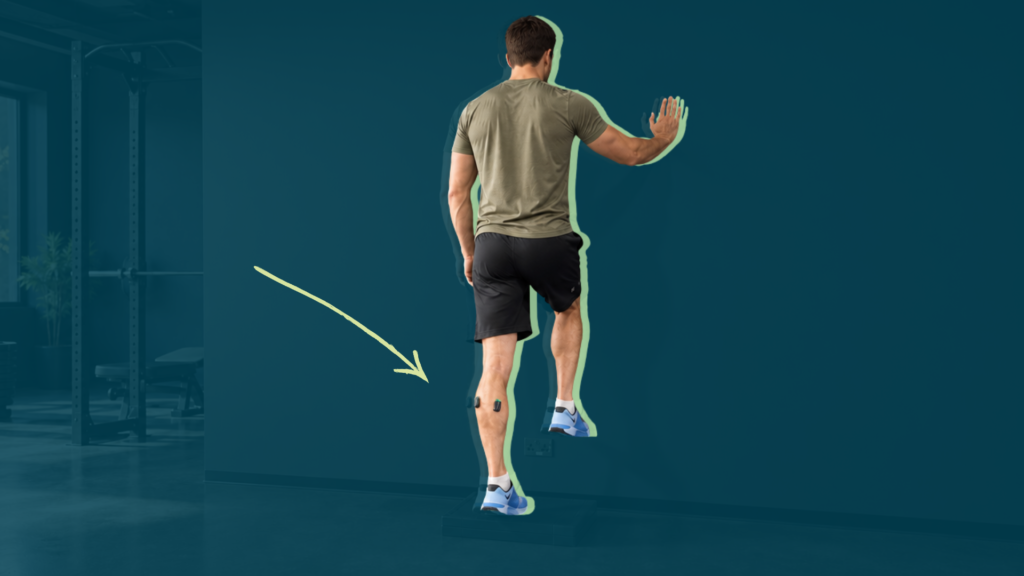
Athletes with increased APT often display poor movements associated with the hip and pelvic region. Promoting pelvic stability, particularly integrity within the frontal plane, should be a key staple of gym-based work. A few standard exercises are step-up variations, hip hiking, or hip lock drills with constraints.
Often, this work is non-fatiguing (although some athletes find it harder than others). Work targeting lumbo-pelvic mobility and stability could be part of prehab programmes or pre-training preparation.
The S-MAS model addresses the issue around inadequate prescription of running mechanics. It provides the diagnosis and prescriptive tools to shift from a one-size-fits-all approach to an individualised approach, targeted towards sprint movement quality.
Our intervention contributed to every player improving their S-MAS along with a reduction in days missed to injury compared with the previous season.
Tweet ThisPromoting pelvic stability, particularly integrity within the frontal plane, should be a key staple of gym-based work. A few standard exercises are step-up variations, hip hiking, or hip lock drills with constraints.
@jwperformance1