What does the persistent polarization tell you about how our field thinks about power development, and what does a systems-based approach offer that the either/or framing doesn’t?
A lot of the polarization around power development comes from coaches misunderstanding what power actually is. Power is simply work divided by time. It’s a quality, not a specific exercise. Somewhere along the way, the field started treating certain lifts as if they are power instead of just one possible method for developing it. That’s where a lot of the confusion starts.
If an athlete gets stronger and also improves their ability to express that strength quickly through sprinting, jumping, bounding, or change of direction work, they are becoming more powerful whether a power clean is in the program or not. That’s not opinion based. It’s just the facts based on the definition. I think the bigger issue is that coaches often blur the line between developing power and expressing power. Those are related, but they are not the same thing.

Expression is highly specific. Development is broader. You can improve power through maximal strength work, plyometrics, sprinting, loaded jumps, ballistic work, Olympic lift variations, and a lot of other methods depending on the athlete and the situation. Once you understand that distinction, the conversation changes completely. It stops becoming “Olympic lifts versus jumps” or “strength versus speed” and becomes a much better question: what quality does this athlete actually need right now, and what’s the most efficient way to improve it?
Specificity obviously matters, but it’s only one programming principle. It can’t become the entire framework. When we train in true high-speed environments, we want tools that create high outputs without needless cost. Loaded jumps, trap bar jumps and dumbbell jumps produce consistently very high power outputs with less technical demand and less time investment than Olympic lifts. That matters, notably in environments where time is limited and development windows are short.
A systems-based approach helps remove a lot of the emotional attachment coaches have to exercises. The exercise itself is never the goal. All that truly matters is what stimulus are we chasing, and how do we best create it? That shift matters. Once coaches start thinking from principles instead of tradition, you can think critically and identify the best methods to truly improve the quality you are trying to chase.
Tweet ThisExpressing power requires specificity in movement and velocity. Developing power requires a much broader toolbox, one that includes maximal strength work, rate of force development training, plyometrics, and sprint-based work.
@Nick__DiMarco
You position quasi-unilateral lifts as primary drivers rather than accessories. What is the rationale for that elevation in status, and what does it demand of the athlete that a bilateral primary lift doesn’t?
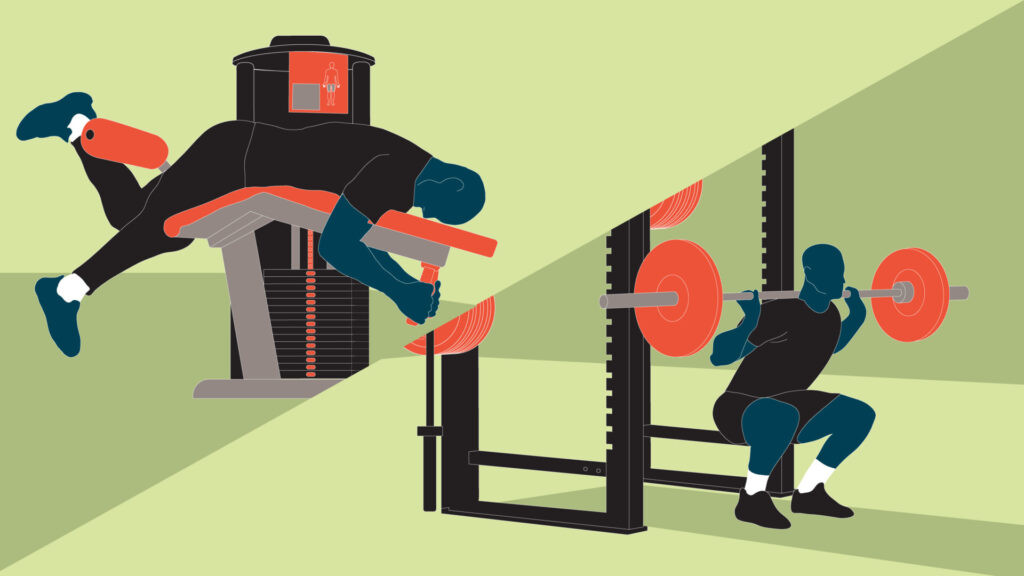
For me, it starts with the demands of sport itself. Most high-intensity actions in sport happen from a staggered stance, split position, or single-leg base. Sprinting, cutting, decelerating, jumping, changing direction, even a lot of contact situations, they’re asymmetrical by nature.
So, if the majority of lower body training is built entirely around bilateral patterns, there’s a gap there. That doesn’t mean bilateral lifts don’t matter. They absolutely do. But I think the field has over-centered them for a long time. Another issue is what actually limits heavy bilateral movements.
In a lot of cases, the trunk and the ability to brace become the limiting factor before the lower body is truly maximally challenged. Once you move into unilateral or quasi-unilateral loading, the stress shifts more directly into the lower extremity and starts looking a lot more like the actual demands athletes experience on the field.
That’s where the transfer starts becoming more meaningful. Single-leg work also exposes asymmetries that bilateral lifting can hide for years. Athletes can compensate really well under a bilateral barbell. Once you put them in split stance or single-leg environments, weaknesses become obvious immediately. In that sense, unilateral training becomes both a developmental tool and an assessment tool at the same time.
What does it demand from the athlete? More stability. More hip control. More proprioception. More coordination. More balance under load. Those things aren’t drawbacks; they’re part of why the movements are so valuable. I think a lot of programs still treat unilateral work like accessory filler instead of giving it the same progression, intent, and importance as traditional bilateral lifts. That’s a mistake.
When it is programmed aggressively and progressively, unilateral work can create changes that bilateral dominant systems consistently leave underdeveloped. The athletes who handle these environments well usually move better, stabilize better and transfer force better in sport.
Tweet ThisThis is specificity in the truest sense: not movements that visually resemble sport, but adaptations that directly transfer to the demands of competition where it actually counts.
@Nick__DiMarco
How does the order in which power work is presented within a session affect adaptation, and what sequencing mistakes do you see coaches making most frequently?
Power is highly sensitive to fatigue. That’s probably the biggest thing coaches need to understand. If the goal is true power development, those outputs need to happen when the nervous system is fresh.
Once fatigue accumulates, the quality of the stimulus changes. At that point you’re not really training maximal power anymore. You’re training the ability to produce submaximal outputs while tired. That has value in some contexts, but it’s not the same adaptation.
For us, speed and power work always happen early in the session. We structure training around protecting those qualities rather than squeezing them in wherever there’s leftover room. A mistake I see often is coaches treating power work like a block they simply need to include somewhere in the session. So athletes sprint, condition, lift heavy, accumulate fatigue, and then do jumps or Olympic lifts at the end. The intention may still be “power training,” but physiologically that’s not what the body is experiencing anymore.
The body adapts to the actual conditions present, not the coach’s intention. The same issue shows up across the week too. Some programs try to hit power every day because they think more exposure automatically means more development. Usually it just creates accumulated fatigue and lowers the quality of every session.
Freshness matters. Our sequencing generally follows performance prep, speed, then power. Honestly, some of our best outputs happen when jumps or ballistic movements are paired immediately after sprint work because of the potentiation effect. We use that deliberately.
Another major mistake is coaches ignoring what happened the day before. A heavy lower-body session carries a cost. So does excessive conditioning volume. If athletes come into a power session neurologically flat, the quality of the work drops before the session even starts. The best programs don’t just organize exercises. They manage fatigue.
Tweet ThisOur sessions are sequenced around this principle: performance preparation, then speed, then power. Our best power outputs consistently occur when those movements are paired with or follow immediately after speed work.
@Nick__DiMarco
How do you distribute power training across a training week, and which variables shift that structure most significantly?
Our weekly structure is heavily influenced by Charlie Francis’s high-low model. The entire goal is to create high outputs on the days that matter while protecting recovery enough for athletes to actually express those outputs. I think one mistake coaches make is treating each session as its own isolated event instead of viewing the week as one interconnected training unit.
For us, Day 1 usually acts more like a primer. There’s enough stimulus to wake the system up and prepare athletes neurologically, but not so much fatigue that it compromises the next day.
Day 2 is typically our highest intensity day. Speed and power become the priority, and almost everything in the session is organized around maximizing output.
Day 3 shifts toward more field-based or technical volume with lower CNS demand.
Day 4 is generally our lowest intensity day, often upper-body dominant in the weight room, mainly to set athletes up for another high-output lower-body day.
Then Day 5 becomes our second major speed and power emphasis of the week. That setup allows us to strategically distribute stress instead of accidentally stacking fatigue on top of fatigue. One thing we’ve noticed over time is that athletes don’t always produce their best outputs after a complete day off. Sometimes they actually perform better after a lower-intensity primer session the day before. That’s why we structure the week in the way we do.
The biggest variable that changes everything is the proximity to competition. As the season approaches, the emphasis shifts. In off-season environments we usually chase development and peak outputs in regulated environments. In season, the goal becomes maintaining and repeatedly expressing these qualities under accumulated stress. That’s when we’ll move towards more of a three-high structure. At that point it becomes less about building the engine and more about expressing it consistently while managing fatigue from practices, games, travel and overall workload.
Understanding when to push development versus when to focus on repeatability is one of the biggest periodization decisions a coach makes throughout the year.
Tweet ThisDay 2 is our highest intensity day. Speed and power are the priority, and every programming decision in that session is in service of producing maximum outputs. Day 3 shifts to field-based volume work, technical and positional in nature.
@Nick__DiMarco
What does the minimum viable version of your framework look like for coaches working in resource-limited environments?
The good thing about this framework is that it was never built around expensive technology in the first place. It’s built around principles. That distinction matters because systems that rely entirely on resources tend to fall apart once those resources disappear.
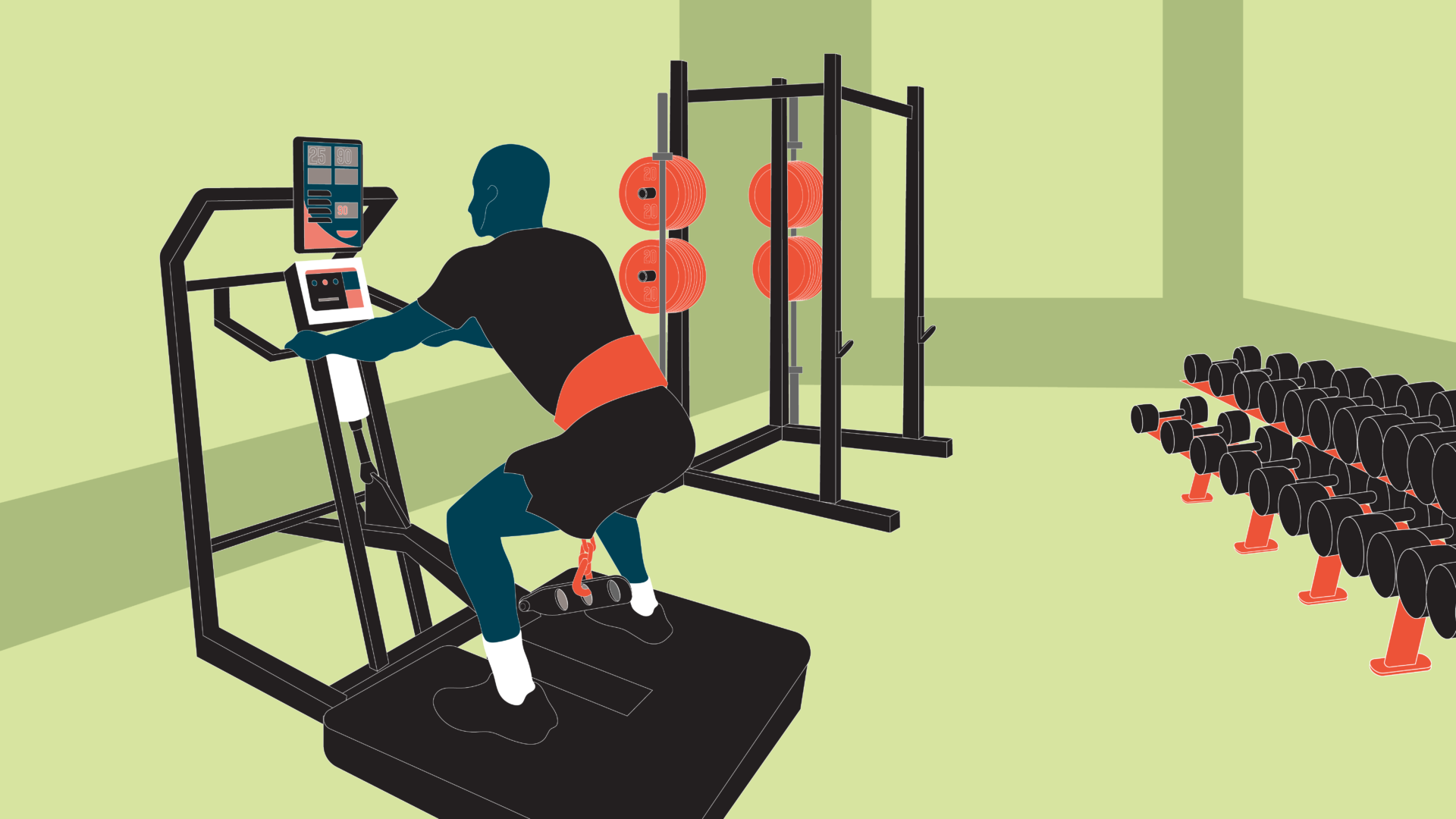
Force plates, timing gates, GPS systems, and VBT units can absolutely help. They provide useful data and can sharpen decision-making. But they’re not what creates the system. Good programming principles create the system. Periodization, progression, specificity, overload, variation, coaching quality, movement quality, and continuous assessment cost nothing.
A coach with a basic rack, barbells, dumbbells and open space can still perform meaningful speed and power development at a very high level. The methods can scale depending on the environment, but the principles should not. I think coaches become sometimes overly dependent on technology because it gives the appearance of precision. But technology should support coaching judgement, not replace it.
If removing the tools causes the entire system to collapse, the system probably was not very strong to begin with. A high school coach with limited equipment can still organize a high-low week, favor speed and power correctly, progress unilateral work, manage fatigue and effectively develop athletes. That’s why I always tell coaches to start with what they have. You do not need a perfect environment to build a good system. You need clarity in your principles and dependability in how you apply them.
As more resources become available, layer them where they really improve feedback or efficiency. Tools should never become the foundation. The coaches who consistently develop athletes well are usually the ones who understand the “why” behind what they do, not simply those with the most technology.

Tweet ThisThe underlying principles of periodization, progression, specificity, overload, variation, quality coaching, and continuous assessment and refinement cost nothing and transfer directly to any environment that has athletes and basic equipment.
@Nick__DiMarco
What is the most persistent myth about power training that you’d like the coaching community to move on from, and why has it proven so difficult to shift?
Probably the idea that the power clean is the gold standard for power development. A lot of coaches still treat it like an untouchable cornerstone of athletic performance training. Part of that comes from the name itself. The word “power” is literally built into the exercise, so people automatically associate it with superior power development. The other reason is tradition.
A lot of coaches were trained in systems centered around Olympic lifts, had success within those systems, and then carried those methods into their own coaching careers without ever really questioning whether the exercise itself was the reason for the adaptation. That doesn’t mean the lift is bad. It just means it probably gets more credit than it deserves.
When you objectively evaluate power cleans against basic programming questions, what quality are we targeting, what outputs are actually being produced, and what’s the technical cost of teaching the movement, they stop looking quite as replaceable. Loaded jumps, trap bar jumps and other ballistic movements often produce equal or greater power outputs with less technical learning time and less coaching bandwidth.
That matters, especially in large team settings or short development windows. Now, if an athlete already has strong technical competence and the movement fits the environment, there is nothing wrong with using it.
Olympic lifts can have absolutely value within a wider program. The problem is when coaches act like they are compulsory. They aren’t. Teams have developed elite athletes with Olympic liftings. Teams have also developed elite athletes without them. The exercise itself isn’t the magic. The real question is whether the overall system is consistently developing the qualities that matter most for the sport.
Coaches who are willing to think through that question honestly usually move beyond the argument pretty quickly. The ones who stay stuck in it are often defending tradition more than they’re evaluating outcomes.
Tweet ThisWhen you evaluate the power clean against clear programming criteria, what power output does the movement actually produce, what is the time and technical cost of producing that output, it does not hold up as a primary power development tool.
@Nick__DiMarco