Mike Boyle
As we continue to move forward and refine our program, time is still finite. Adding an exercise to the workout or training program generally means subtracting something. In the private sector where time is literally money, this is even more true.
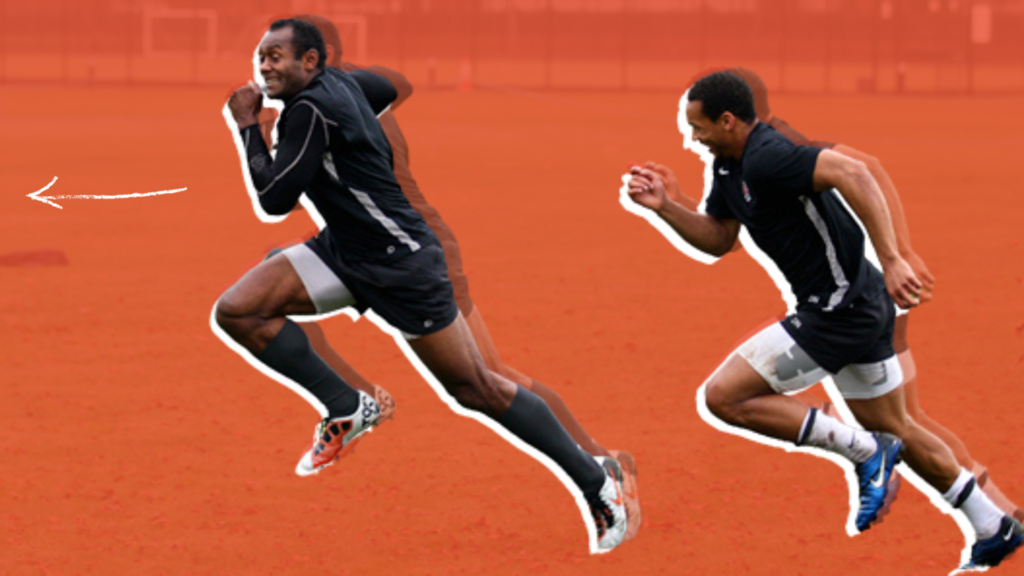
Added: Timed sled sprints
Speed decrement and sled loading are key. Speed decrement basically is “how much slower will this make me run.” J-B Morin’s work indicates a 50% speed decrement is a good target for sled loading.
Sled sprinting has been somewhat controversial over the years, as we seemed to disagree about how heavy and how far, and even about the potential benefits. “How far” was simple for us. Most of the year, we have 40 yards in which to accelerate and decelerate. With a waist mounted sled belt and leader, that means a 20 yard run with room to slow down.
I began to look at sled sprints as a horizontal power exercise — basically a horizontal power clean. We use velocity decrement and PRE to gauge load, basing speed on a flying 10 with a ten yard fly.
Removed: Even more conditioning
One thing that has become obvious is that our athletes are more and more active with things like private skills coaches in the off season. We have always been big “conditioning people,” but you need to change with the times. Our athletes are doing less and less conditioning with us as the amount of off season skill work increases. Summer leagues, tournaments, and private skill sessions all fill the low to moderate intensity conditioning bucket.
Dan Baker points out that for field and court sport athletes, “most of the skill and tactical training undertaken are at ‘long slow distance’ types of speeds and heart rates. Given that skill and tactical training with the sport coach is the major form of training performed by field sport athletes for most of the season, and this training involves cardiovascular stimulation at the lower end of the ‘polarity spectrum,’ the role of the strength & conditioning coach is to provide a high intensity stimulus to improve aerobic fitness.”
Conditioning now is more high intensity “top ups” than longer extensive sessions.
Tweet ThisI began to look at sled sprints as a horizontal power exercise — basically a horizontal power clean. We use velocity decrement and PRE to gauge load, basing speed on a flying 10 with a ten yard fly.
@BodybyBoyle

Danny Foley
The most significant and impactful change that I’ve made to my programming within the last two years has been adding manual therapy to my practice. My work is primarily built around injuries and pain management. Adding in the manual therapy component has become essential for me in how I approach and organize my sessions. While there are the obvious benefits of manual therapy from a regenerative and restorative standpoint, these concepts work very well for potentiating training sessions. A combination of tissue work and table time helps create the optimal transient window to apply load prior to training.
This means doing away with a lot of the low stimulus and isolated “rehab / prehab” style exercises so I can devote that time to either tissue work or more time for heavier loading. These accessory drills have value, but that value is tied to the frequency at which they are performed. With a short amount of training time and frequency with athletes, I found it difficult to justify these activities. Replacing them with more direct applications, and then spending more time on more structural, compound loading has been a great solution.
Tweet ThisAdding in the manual therapy component has become essential for me in how I approach and organize my sessions. While there are the obvious benefits of manual therapy from a regenerative and restorative standpoint, these concepts work very well for potentiating training sessions
@danny_ruderock
Jermaine McCubbine
One major addition is the use of AI powered motion analysis technology, which enables a deeper, data driven understanding of how athletes move, highlighting areas for improvement while uncovering movement patterns that may increase injury risk.
Regarding risk, I have observed numerous cases where athletes with high levels of absolute and relative strength still sustain hamstring injuries, even when no abnormalities in internal or external workload or other modifiable risk factors are present. This has led me to question traditional preventative measures and seek a more comprehensive understanding of biomechanics and how kinematic features may influence hamstring strain.
While my coach’s eye opens the door for subjective interpretations of movement, the objective, data driven feedback helps to support or challenge my assumptions. At the same time, the interactive, visually engaging reports enhance feedback opportunities and strengthen athlete buy in.
Reflecting on what I’ve removed has been more challenging. However, as Abraham Maslow once said, “we have two options, to step forward into growth, or step back into safety.”
I made the conscious decision to stop using horizontal hop tests to assess limb symmetry and knee function as a measure of readiness to return to play.
Traditionally, hop tests have been highly valued in RTP decision making due to their simplicity, reliability, and ability to provide insights into strength, stability, and control. I was once a strong advocate of these tests.
However, despite athletes achieving adequate limb symmetry, strong evidence suggests that hop tests do not fully capture the nuanced deficits in knee function, as they do not engage the knee as much as previously thought. In fact, only a small percentage of propulsive work is driven by the knee, with the hip and ankle actually serving as the primary joints that facilitate the movement. This challenges the assumption that horizontal hop tests effectively measure knee specific recovery.
In light of this, I have prioritised alternative assessments that demonstrate greater sensitivity in evaluating limb symmetry, with outcomes that more accurately reflect knee function and performance.
Tweet ThisI made the conscious decision to stop using horizontal hop tests to assess symmetry and knee function as a measure of readiness to RTP. However, despite athletes achieving adequate limb symmetry, strong evidence suggests that hop tests do not fully capture the nuanced deficits in knee function
@jermainePT
Luke Storey
In recent years we have placed more emphasis on heavy eccentric training. On social media, these are called “supramaximal eccentrics,” but, without sounding too petty with semantics, this is a misnomer and a poor description of what heavy eccentrics truly are.
Simply, it is impossible to achieve “supramaximal eccentrics.” “Supramaximal relative to concentric” would make far more sense, but doesn’t roll off the tongue as well.
In the past, I was certainly guilty in thinking that heavy eccentric training should be used with great care and caution, and at only a few particular times throughout the year. This was due to the fear of excessive DOMS and general extra load placed upon the athlete.
However, although eccentric contractions, ROM, and volume all have an effect on muscle damage, DOMS is exacerbated most by unaccustomed exercise. If the body is not used to something, it will certainly freak out over the subsequent 24-48 hours — whether that’s the result of eccentrically dominant exercise or something else.
With this in mind, we’ve made a conscious effort to have fewer and shorter periods of time without heavy eccentric training within the program for the majority of our teams. When introducing heavy eccentric training for the first time, we’ll definitely edge on the side of caution and only work up to 5-10% more load than what the players are normally able to achieve concentrically. This will, however, increase over the following weeks and months to 30-50% more load (dependent on exercise selection).
As we continue to gather more and more longitudinal kinetic data on our teams, the case for the regular inclusion of heavy eccentric training for our student-athletes only becomes stronger.
On the other hand, for several years we have moved away from the isometric mid-thigh pull (IMTP) assessment.
Our two main reasons are time and validity. Wrist straps and changing bar height are time invasive in a large group setting.
My bigger issue, however, is with the validity of the assessment. In 2022, we assessed a group of collegiate athletes with different maximal force assessments. We found that the belt ISO produced around 153% of the IMTP peak force. Obviously, this will differ slightly on the athlete’s experience with the IMTP. There is no doubt that a relationship exists between an individual’s Belt ISO and IMTP peak forces. However, the R value is far from 1.
The IMTP’s limiting factors are the athlete’s torso and upper limb strength. Subsequently, it not a true indicator of their hip and knee extension force capabilities, thus not a valid assessment for lower extremity strength.
Tweet ThisAlthough eccentric contractions, ROM, and volume all have an effect on muscle damage, DOMS is exacerbated most by unaccustomed exercise. If the body is not used to something, it will certainly freak out over the subsequent 24-48 hours — whether that’s the result of eccentrically dominant exercise or something else
@lukerstorey
Lachlan Wilmot
Probably the most notable thing that I have removed is not the entire warmup, but general warmup volume, and I’ve started to see that the less I do, the more results I get. When I was younger, I certainly prioritised doing a very structured and detailed warmup, a lot of movement prep, and a lot of activation type work.
Sometimes, coming through the professional sporting field, you kind of feel obliged to do it as a bit of an insurance policy, and if someone gets injured, you can kind of say, “Well, it wasn’t because I didn’t warm up properly because look at how detailed and how precise our warmup has been.”
But especially in the gym, I’m finding less and less need to do general prep and more and more need to do really good warmup sets of the exercises that we’re chasing.
It might sound silly to say that out loud because I think that’s a common thread that a lot of people are starting to see now. But I’ve found far better results with athletes where I’ve started prioritising their loaded movements, rather than prioritizing going through their preps, their activation, and everything in between.
It’s still beneficial to have a small prep that focuses on key aspects of that individual session. For example, if the athlete has patellar tendinopathies, we make sure to get some good isometric work done. If they have some low back or hip pain, we have them do some sort of mobility to free up and feel better for the session. But overall, the prep has drastically reduced, and the focus has shifted far more to warm up sets of specific movements.
Especially over the past eight months, I’ve had more focus with my athletes around loaded higher velocity movements.
Ticking off big, force producing movements like box squatting and deadlifting have always been a fairly large part of my program. But so has the high speed plyometric jump-type work.
But I probably dabbled only a small bit in doing this accelerative type strength: slower velocity that still requires a lot of impulse. I’ve started to really favor that with a lot of my athletes, knowing that they’re getting good high speed exposure via court or field based scenarios.
I’ve started to double down on movements that may involve, e.g., Olympic type variations; trap bar or barbell type jumping movements; and loaded counter movement jump work, even if it’s only a small load, like 8 – 10kg anteriorly loaded.
I’ve started to see the results of shifting that curve a little bit, and allowing athletes to have a little bit more impulse in what they do, in particular contact based athletes who hit, grab and throw individuals for a living. The focus on that middle ground of medium loading and medium velocity has created a really good stimulus for a number of my athletes.
Tweet ThisI’ve started to see the results of shifting that curve, and allowing athletes to have a little bit more impulse in what they do, in particular contact based athletes. The focus on that middle ground of medium loading and medium velocity has created a really good stimulus for a number of my athletes.
@lachlan_wilmot
Shayne Murphy
I’ve noticed an erosion of what we might call the “coach’s eye” — our ability to see athletes move and interpret those subtle cues that technology often can’t capture. The role of data should be to support our practice, not to dictate it. To ensure I don’t lose this essential skill, I’ve committed to placing my coach’s eye at the forefront of every session and assessment. Before I even think about the data, I observe.
Watching an athlete simply walk barefoot up and down a track can reveal so much: how they move, how they balance, and any underlying issues that might influence performance.
Movement patterns cascade through their stride: how they walk often mirrors how they jog, and how they jog aligns with how they sprint. Sure, force plates can confirm these insights, but there’s so much more to see with the naked eye. For example, I look for external foot rotation, signs of hallux valgus, the flexibility or restriction of the mid-tarsal joint, ankle dorsiflexion, heel striking, and more. Each of these details paints a unique picture of the athlete in front of me.
In the last five years, I’ve made it a non-negotiable to “see” the athlete first — to ensure my coach’s eye is always engaged, alert, and continually honed.
As Gary Gray put it, “Everyone thinks the dancer is crazy if they can’t hear the music.” There’s a truth in this: if we lose our capacity to observe, we risk missing the rhythm of each athlete’s movement.
In every assessment, even before technology enters the equation, careful observation reveals critical insights. Technology has its place in confirming or refining these observations, but it should never replace them. This approach keeps the coaching process deeply human, grounded in seeing the athlete first, supporting them with tools second. That is what makes coaching both an art and a science.
Tweet ThisIn the last five years, I’ve made it a non-negotiable to “see” the athlete first — to ensure my coach’s eye is always engaged, alert, and continually honed. In every assessment, even before technology enters the equation, careful observation reveals critical insights
@SDMperformance