Every professional football club can expect hamstring injuries over the course of a season. Despite the increasing scientific interest and advancements in the technology to monitor and train players, the number of hamstring injuries in professional European football clubs rose over 2% every season between 2001 and 2014, and continues to go up [8]. On average, a team can expect seven hamstring injuries per season [5].
Knowing the epidemiology of hamstring injuries and mechanisms of injury can help us design injury prevention strategies and create a specific rehabilitation programme.
The studies are very clear across professional footballers: the biceps femoris, particularly the long head (i.e., proximal), is most at risk. Approximately 83% of all hamstring injuries affect the biceps femoris, 11% the semimembranosus and 5% the semitendinosus [7]. Exercise selection during rehabilitation should prepare these muscles to cope with the increasing physical demands of football matches.
Tweet ThisDuring rehabilitation and for injury prevention, high load eccentric exercises are paramount to prepare the hamstring muscles for sprinting
Paolo Perna
Mechanisms of hamstring injuries
The most common mechanisms underlying hamstring injuries relate to sprinting, stretching into an open chain and stretching into a closed chain [10].
Hamstring injuries during sprinting
Sprinting is the most frequent action at the time of a hamstring injury, with the injury generally occurring during acceleration or high speed running. Most studies identify the late swing phase of running as the most susceptible to injury due to a rapid high eccentric loading [2].
During rehabilitation and for injury prevention, high load eccentric exercises are paramount to prepare the hamstring muscles for sprinting.
One factor to consider is the speed of the movements during the injury. Injuries happen at high intensity and speed, requiring the hamstring to produce high forces in a short period of time. Practitioners have to include exercises that target the hamstring muscles with fast eccentric movement and improve their rate of force development. High speed running and gradual exposure to sprinting are the main targets during the advanced pitch based phases of rehab.
Open kinetic chain stretching
The most common open chain mechanisms in football movements combine a simultaneous movement of hip flexion and knee extension, like kicking.
Specific exercises can target hamstring strength in lengthened positions. Having good strength outputs in the inner range of movement (i.e., shortened / contracted muscles) only gives a partial picture of the hamstrings’ ability to produce the necessary forces during football related actions.
Closed kinetic chain stretching
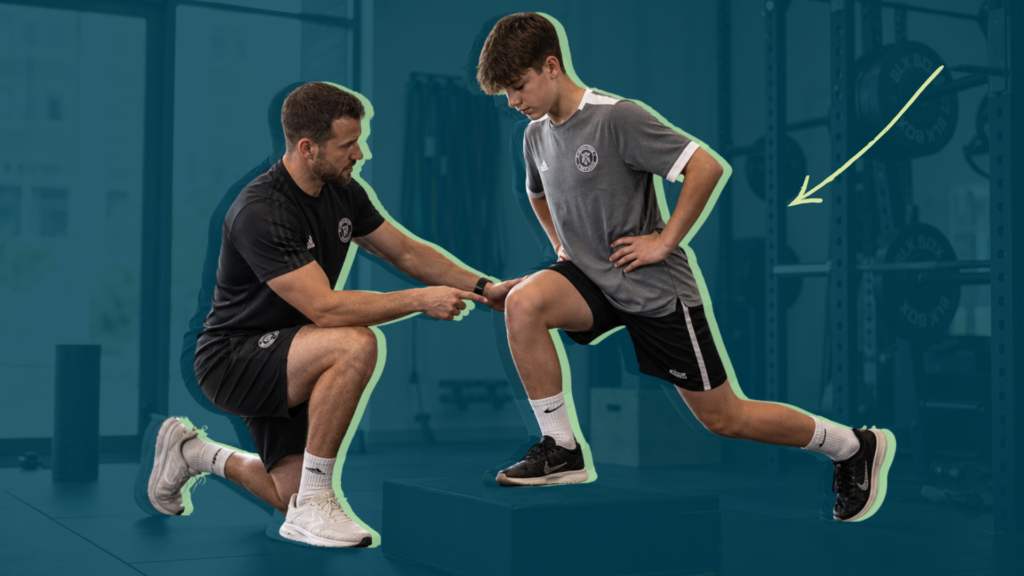
The most common closed chain mechanisms occur during eccentric contractions: decelerating and stopping during landing or lunging. These movements require eccentric control of the hamstring in the deceleration phase.
Single leg closed chain movements are an essential part of rehabilitation exercises, but technique modification can help target hamstring muscles’ eccentric activation. On top of the strength work, plyometric and power exercises in the gym are the natural progression to train fast eccentric loading and the stretch-shortening cycle actions. During pitch based rehabilitation, the specific targets are the ability to change direction at a maximal intensity and absorb high forces.
We use objective measures to obtain useful information regarding rehabilitation progression and readiness to return to competitively playing football. Strength tests assess readiness to return to running and performance, and are good measures of the athlete’s progress in the gym and remaining areas for improvement [1].
One of the advantages of working in professional football is the easy access to technology to complete players’ screening. However, working on a limited budget does not preclude many forms of strength assessment; and practitioners should not use their budget as an excuse for not conducting these tests. Less expensive options are available and have been validated. For example, instead of a fixed frame technology for isometric strength measurements, a hand held dynamometer can provide valuable data. One concern with their reliability is the difficulty of stabilising the device during testing. An isometric frame has a more stable point of contact for the muscle to produce force.
Even more affordably, blood pressure cuffs have demonstrated good reliability in detecting isometric strength.
The most crucial point is the rationale behind the test. Why are we choosing one test over another? What information does this test provide? How will the information we derive from it change our practice and inform rehabilitation and return to play (RTP)?
Muscle tests follow the same rule as the exercises in terms of selection. Each targets a specific area of the muscle and gives specific information about the ability of the muscle to produce forces in each position and at the required velocity.
During isometric testing, the player must maximally activate the muscles for a 5-second hold. The results include absolute peak force (N) and force:body weight ratio (N/BW). We evaluate the player’s performance by comparing the outputs to his baseline, inter-limb asymmetry and force:body weight ratio.
Tweet ThisBecause the long head of the biceps femoris is the most commonly injured site, we select exercises that can target and strengthen the injured area rather than work solely on general hamstring strength
Paolo Perna
Matching gym-based exercises to the specifics of the injury
Hamstring injuries can affect lateral or medial muscles, be proximal or distal, and involve the muscle, the myotendinous junction or the tendon. They can also have different mechanisms of injury, along with different risk factors. Practitioners must consider all of these elements when approaching hamstring injury rehabilitation. Strength exercises have to be specific and target the desired muscles, and adapted to optimise the key characteristics of each exercise [4].
Along with the muscles involved in an exercise, we assess the modality of contraction (isometric, concentric, eccentric); whether it is knee dominant or hip dominant; velocity and duration of the movement (slow or fast speed, short or long contraction); and the specifics of the injury we are rehabbing, e.g., the mechanism underlying the injury, the severity or grade of the injury, and the player’s injury and fitness history.
Knowledge of hamstring activation is very important to target the injured muscle during rehabilitation [12]. Several studies have looked at hamstring activation with EMG or functional MRI during different types of common strength exercises [9,11]. Because the long head of the biceps femoris is the most commonly injured site, we select exercises that can target and strengthen the injured area rather than work solely on general hamstring strength.
Hamstring exercises are commonly divided into knee dominant and hip dominant. Knee dominant exercises work the hamstring muscles via their function as knee flexors. These exercises commonly target more the medial hamstring and the distal portion of the muscles. Hip dominant exercises access either the hip extension function of the hamstring muscles or a hinge pattern to target the hamstring eccentrically. Hip dominant exercises better target the lateral muscles, particularly the long head of the biceps femoris, and primarily the proximal portion of the muscles [13].
Different types of muscle contraction strategies can help achieve a good functional outcome and prepare players for high intensity work on the pitch and returning to performance.
Eccentric exercises have gained a lot of recognition in the literature and among practitioners for their ability to prevent hamstring injuries and injury recurrence. Eccentric strength is fundamental to preparing the muscle to cope with the high demand of the late swing phase of running, the most common mechanism of injury. Both knee dominant and hip dominant eccentric exercises have shown good reliability in preventing injuries and strengthening the hamstring muscles [3].
Isometric exercises have an important role in a hamstring strength programme. Practitioners regularly use them in the initial phase of rehabilitation to improve motor unit recruitment before progressing to lengthened exercises in order to protect the healing phase. They are also important in grade “B” and “C” injuries with tendon involvement to increase tendon stiffness and initial force production. Isometric exercises can also condition the hamstring and improve fatigue resistance.
Isometric exercises should target endurance with longer holds (20-30 seconds) at lower intensity (30-50% maximum voluntary contraction) or short bursts of 3-5 seconds of high intensity contractions (80-90% MVC).
We plan gym based rehabilitation for hamstring injuries based on the practitioner’s clinical reasoning. Injury type can completely change the approach and the priorities. Some exercises might be a priority for a specific injury and not be relevant for another.
Tweet ThisEccentric strength is fundamental to preparing the muscle to cope with the high demand of the late swing phase of running, the most common mechanism of injury
Paolo Perna
Isometric knee flexion
The player is prone with hips at 30° flexion and knees at 45° flexion. The player pushes against pads that are in contact with the distal calf. The testing position challenges the hamstrings in an inner range of movement. This is a knee dominant test that targets the distal portion of the semimembranosus, semitendinosus and biceps femoris short head.
Results light system:
Asymmetry: 0-10% green, 10-15% amber, >15% red
N/BW: > 5 green, > 4.5 < 5 amber, < 4.5 red
Isometric hamstring claw prone
The player is prone on a 30 cm box, with the hips in contact with the edge of the box and knees at 30° flexion with the pads touching the proximal calf. The player pushes maximally into hip extension for five seconds. This hip dominant test targets the proximal portion of the biceps femoris long head.
Results light system:
Asymmetry: 0-10% green, 10-15% amber, >15% red
N/BW: > 3.5 green, > 3 < 3.5 amber, < 3 red
Isometric hip extension
The player is prone with hips at 30° flexion (use a foam roller or something similar to position the hip) and knees at 60° flexion with a 30 cm box supporting the ankles. The player pushes against the pads, which are against the distal thigh. This is a hip dominant test that targets the gluteus maximus and the proximal portion of the biceps femoris long head.
Results light system:
Asymmetry: 0-10% green, 10-15% amber, >15% red
Force plate isometric single-leg bridge
The player is supine with the knee flexed 30°. The heel of the testing leg is in contact with the force plate, and a barbell is on the top of the player’s hips. The barbell should be heavy enough to provide resistance that the athlete can produce maximal force against. The player pushes the heel down against the force plate as hard as he can. This targets the gluteus maximus and the proximal portion of the biceps femoris long head.
The test can also be performed with 90° knee flexion to target the medial hamstring and reduce the activation of the gluteus maximus.
Results light system:
Asymmetry: 0-10% green, 10-15% amber, >15% red
Force plate 90:20 hamstring standing test
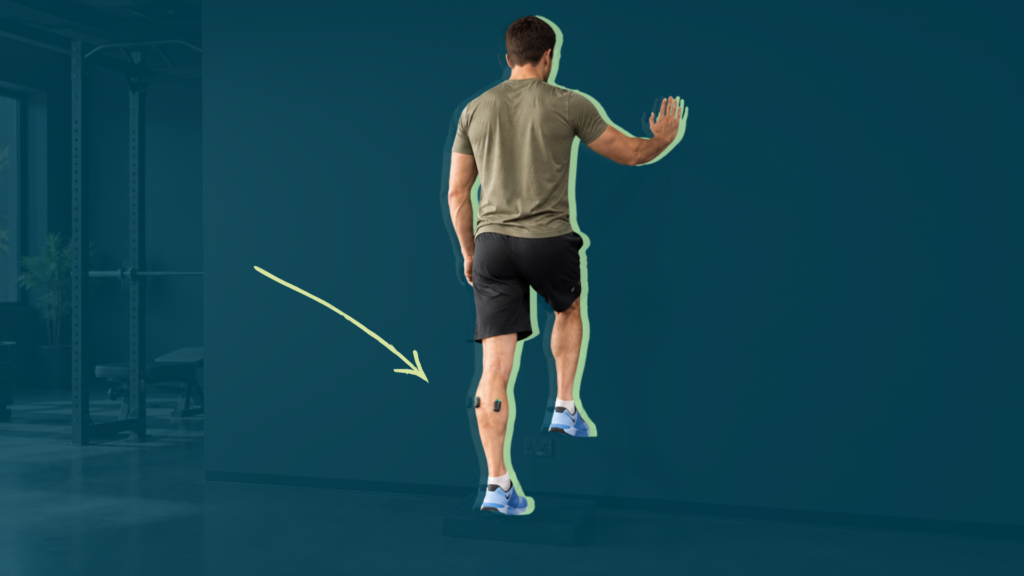
The player stands with hips, upper back, head, non-testing leg and heel against a wall. A force plate is set atop a box, and the heel of the testing leg is on the force plate, with the ankle in a neutral position. The height of the box depends on the player’s height. The optimal position has the hip at 90° flexion and the knee at 20° flexion. The player crosses his arms on his chest, with hands touching the opposite shoulder. He then pushes down with the heel onto the force plate.
This test activates the biceps femoris in a long length position, reproducing a functional position during sprinting. Although this test gives good information on the ability of the hamstring muscles to produce forces in a lengthened and more realistic position, the less stable position may require a longer period of familiarisation and places an extra challenge on the examiners to ensure the athlete is in the proper position and is not compensating during the test.
Results light system:
Asymmetry: 0-10% green, 10-15% amber, >15% red
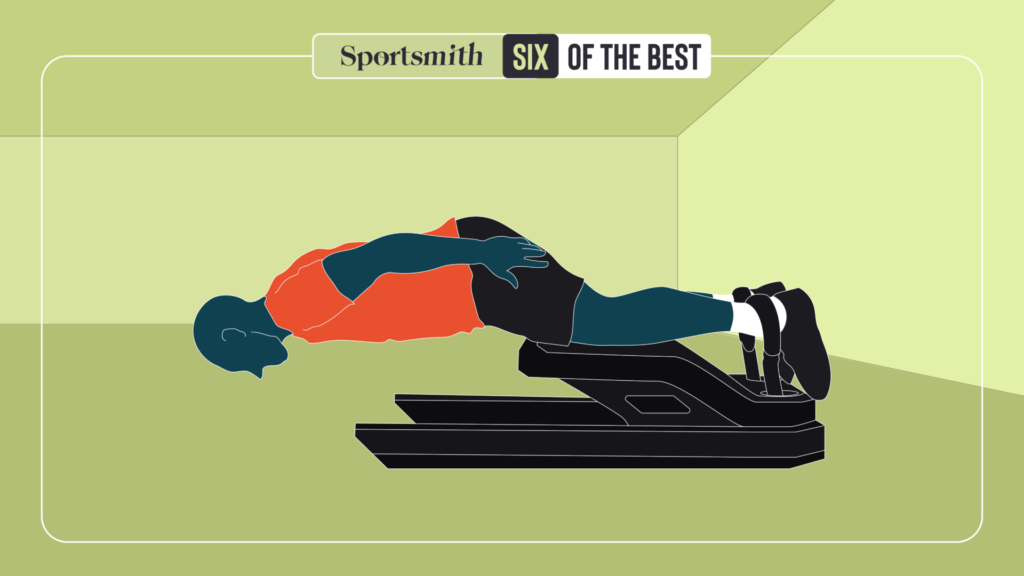
Eccentric Nordic hamstring curl
If you have a Nordbord or something similar, the player kneels on the board and places the hooks around the tops of the ankles. Otherwise, secure the athlete’s feet and ankles in a similar fashion. Cue the athlete to maintain a neutral trunk position with head up and chest tall. The action is to lean forward and resist the falling by pulling with the ankles against the anchor point. This targets eccentric activity in the semitendinosus and biceps femoris short head.
Results light system:
Asymmetry: 0-10% green, 10-15% amber, >15% red
N/BW: > 6 green, > 5 < 6 amber, < 5 red
Tweet ThisHaving good strength outputs in the inner range of movement (i.e., shortened / contracted muscles) only gives a partial picture of the hamstrings’ ability to produce the necessary forces during football related actions
Paolo Perna
Optimizing rehab and maximizing performance during the RTP process
The best way to organize a player’s return to play process is to have clear aims for each stage and criteria to decide if the player has met the objectives and is ready to progress to the next step. The decision making process is complex because of the multifactorial and context-specific nature of injuries. Clinical objective measures are just one part of the puzzle and could lead to wrong decisions if assessed in isolation.
Only a few studies have looked at RTP criteria for hamstring injuries, and only a subset of that literature is specific to professional football. Many of the criteria for progressing rehabilitation are subjective (i.e., pain) and partially objective (i.e., manual strength tests). In recent years, more researchers have been trying to validate new tests to objectively assess hamstring strength and help practitioners make informed decisions. Hamstring strength testing is an essential part of RTP, but gathering this objective data comes with higher financial costs.
Professional football clubs have a very congested schedule, limiting the amount of time the sports performance staff can dedicate to the players’ physical development.
Physios and S&C coaches have more time with the player during the rehab phase than during the regular training period. They should take advantage of that time to work on specific areas of development that they cannot address when the player is training with the rest of the squad for upcoming games.
Especially with young professional players, the rehabilitation period can be a very useful time to improve physical capacities and undertake general education around well-being and injury prevention. Some of the areas young injured players have benefited from the most from were upper body development, gym education, body awareness, self-management, nutrition planning and psychological resilience.
Players returning from a hamstring injury often show an inter-limb strength imbalance. This is probably one of the reasons why the reinjury rate for these injuries is much higher than others.
Strength testing can provide objective information on the ability of the muscle to produce forces and quantify the difference between the legs. A threshold of 10% is a common benchmark to identify significant differences. Some studies, including Chris Bishop’s work, have described other ways to measure significant asymmetry, but 10% is a good starting point to gauge the player’s strength.
Strength exercises are less specific at the beginning of the process when the interest is more about understanding and improving the ability of the injured muscle to produce forces. Over time, the program becomes more individualised and specific to target the injured muscle in challenging positions.
Ultimately, the process reaches high load and high velocity eccentric movements that enhance the ability of the injured muscle to produce the required forces on the pitch while running at high speed or during high intensity changes of direction.
The existing frameworks provide a solid base to plan the RTP process but they do not imply a “one size fits all” solution. There is high variability in hamstring injuries, and each case should be assessed individually. A needs analysis of the athlete at the start of rehabilitation can give useful information on the player’s overall physical attributes and areas for improvement, giving the practitioners a stable starting point for building an effective rehab and RTP program to minimize time lost to injury and reduce the risk of reinjury.