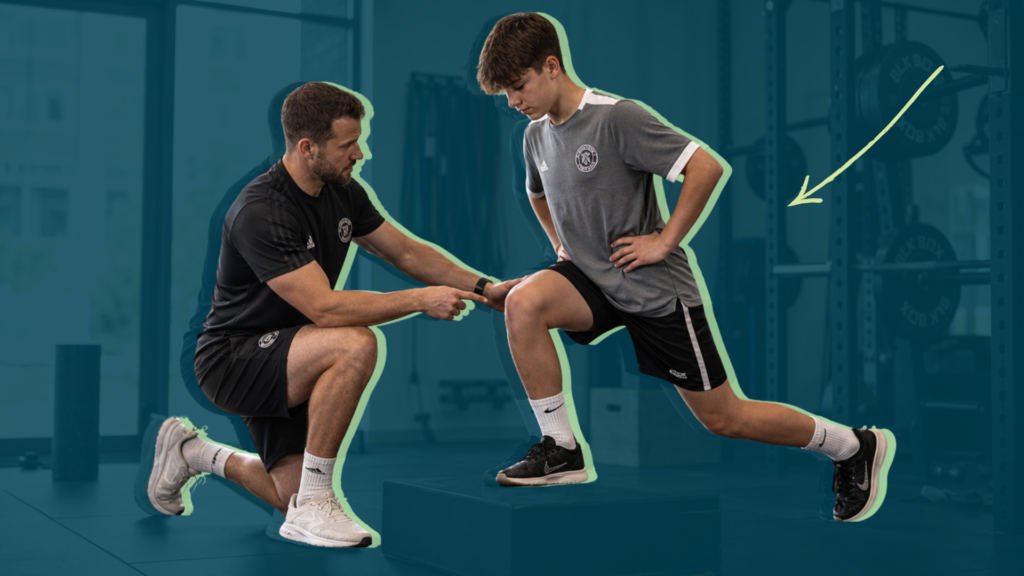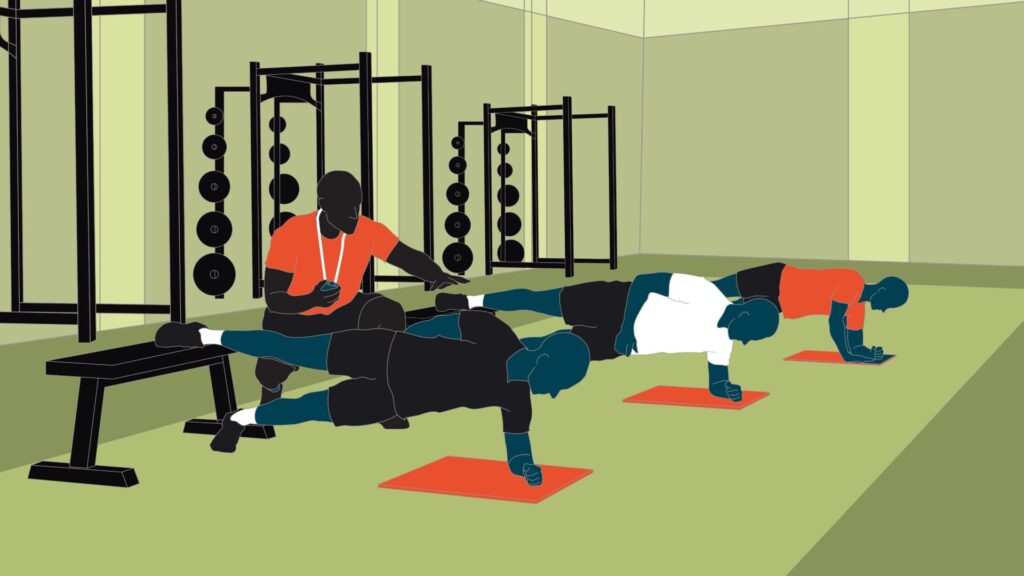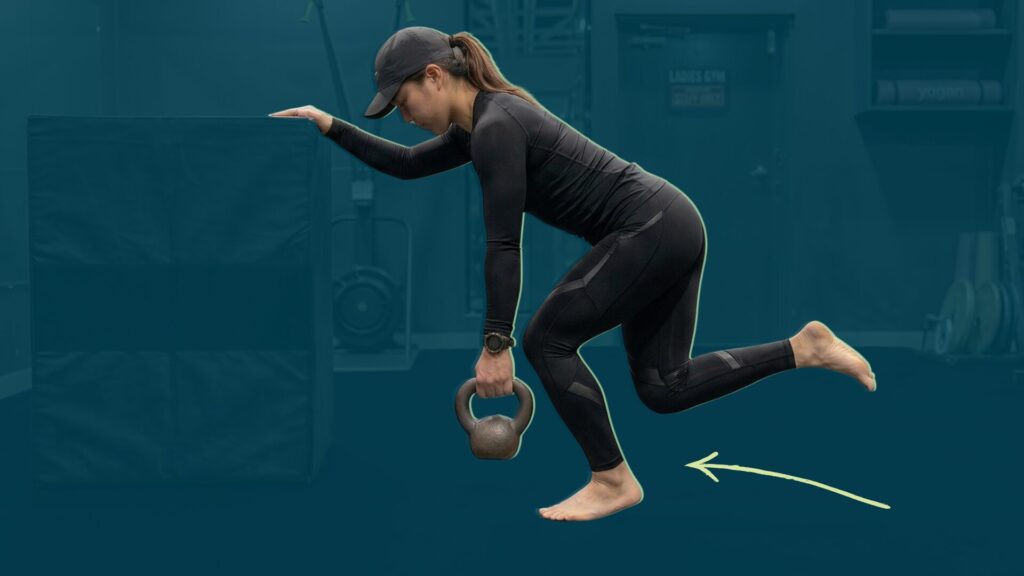


Hamstring injuries continue to be a drain on playing time for athletes across the world. So what is the solution? There are a number of exercises that get a lot of attention in this space but seem to still cause controversy despite the body of research that is behind them. So how do we decide which exercise to programme for our athletes? Bas Van Hooren investigated the adaptations from three popular exercises, Nordics, the Romain chair and the single leg deadlift (SLDL) so we asked him 6 questions about this.
According to a recent UEFA study, the number of hamstring injuries still seems to be on the rise. What is it about fascicle behaviour and muscle force that is so important when choosing an exercise aimed at reducing these injuries?
Previous studies have shown that having short fascicles, and exhibiting lower hamstring strength, increases the risk of hamstring injuries. If we can program exercises that modify these risk factors, we can decrease the risk of hamstring injuries.
The question, of course, is which exercises are most effective to do so.
To answer this question, we first looked at how to best train fascicle length and strength. The research suggests that exercises that actively lengthen the muscle fascicles during the exercise are most effective for increasing fascicle length over the long term; and exercises that place a high force demand on the muscles are most effective for increasing maximum strength. So we compared fascicle behaviour and muscle forces between three popular exercises.
Tweet ThisIf coaches want to increase hamstring fascicle length and potentially reduce injury risk, the Nordic curl would be the best choice compared to the single leg deadlift and Roman chair exercise
@BasVanHooren
With that said, how do muscle fascicle length and hamstring strength differ across the three exercises you investigated, Nordics, Roman chair hold and the single leg deadlift?
We expected the largest increase in fascicle length to occur during the deadlift, but our findings showed the Nordic hamstring curl had the greatest effect. Over 80% of the lengthening occurred after the break point (i.e., free fall) in the Nordic curl.
These findings suggest that if coaches want to increase hamstring fascicle length and potentially reduce injury risk, the Nordic curl would be the best choice among these three exercises.
Importantly, however, the Nordic curl may need to be so heavy that athletes cannot perform it with control over the whole range of motion. But they may need to “break” or “fall” at some point to increase the amount of fascicle lengthening during the exercise, in order to induce larger increases in fascicle length over the long run. There is some longitudinal research that supports this reasoning, as well.
With regard to the muscle forces, we also found the Nordic hamstring curl generally exhibits the highest peak muscle forces. Importantly, the peak muscle forces typically lasted for very short durations compared to the peak forces in the deadlift. The peak forces were also associated with a strong reduction in muscle activation. This may reflect less motor unit recruitment during the eccentric phase. Consequently, these brief high peak forces may not provide an effective stimulus for long term strength adaptations, which would be consistent with other longitudinal studies.
Tweet ThisThe Nordic hamstring curl had the greatest effect on fascicle length compared to the single leg deadlift and Roman chair exercise. Over 80% of the lengthening occurred after the break point (i.e., free fall)
@BasVanHooren
Do these effects vary across different muscles within the hamstring?
There were, indeed, some subtle differences in the muscle forces and activation between the exercises. Fascicle behaviour may also differ among the hamstrings between the exercises, but we did not investigate this.
Peak muscle forces did not significantly differ for the biceps femoris long head between the Roman chair and Nordic hamstring curl. Considering that the peak muscle force is very brief in the Nordic hamstring curl, it may not be the best exercise to train biceps femoris long head strength. Other exercises such as the Roman chair hold or deadlift may be more effective for this purpose.
What does this mean for coaches when they are selecting an exercise to put in their athlete’s programme?
Overall, our findings suggest that a combination of exercises is likely optimal, as they all have a slightly different effect on the muscles. Some exercises are better for increasing fascicle length and some are more effective at increasing strength for specific muscles.
If a coach investigated the fascicle length and strength, or cross-sectional area via MRI or ultrasound, of the specific hamstring muscles, they can then apply our findings to provide a more targeted training program. The coach can select which exercise is most effective to specifically train the aspect that the athlete most needs to improve.
Tweet ThisA combination of exercises to reduce hamstring injuries is likely optimal. Some are better for increasing fascicle length(Nordics) and some are more effective at increasing strength for specific muscles (Roman chair and single leg deadlift)
@BasVanHooren
What do we need to be aware or cautious of when using this information only for exercise selection? What else should we take into account, barring the obvious (equipment availability etc)?
Of course, there are more exercises than those we investigated in this study; there are more risk factors; and there are other mechanisms that each exercises can address.
For example, sprint mechanics may also relate to hamstring risk, but may not be targeted most effectively using these three exercises. As you note, the deadlift and Roman chair both require equipment, while the Nordic curl is easy to perform without much equipment.
What are the biggest mistakes you see young practitioners/clinicians make, and what advice would you give them to help?
Understanding what physiological adaptations an athlete needs to improve performance or prevent injuries, and how to induce these adaptations, is key. Too often, I see young practitioners copy-pasting exercises they see on Instagram, for example, without knowing what they are actually training with the exercise. As a result, they do not know the key elements in the exercise execution. This potentially makes the whole exercise useless if the athlete is performing it in such a way that they do not train what was intended to be trained.
Likewise, something I often see during the workshops I give is that young practitioners tend to disregard simple and effective exercises for highly complex exercises that are not necessarily more effective. This is particularly the case when working with rather untrained individuals.
While we do need to train intermuscular coordination so the athlete can apply strength in the weight room, we also need to apply heavy strength training for most athletes, as it will often lead to other adaptations. Again, it’s essential that practitioners know what an athlete needs to do to improve, the adaptations they need to gain, and what exercises or interventions will induce these adaptations.