
Long term injuries such as Achilles tendon rupture (ATR) and anterior cruciate ligament (ACL) tear are devastating and career limiting, with long lay-off times and uncertain prognoses for both amateur and professional footballers[1–6]. Most of the athletes, especially at higher level of football, do return to play (RTP). For elite football players, despite high RTP rates, performance decrements[1,6–8] and reduced career[3,5] length are likely, following these severe injuries.
Practitioners and clinicians should ideally return injured players to sport at or above their pre-injury performance levels and with acceptable risk of re-injury. This is particularly challenging during complex rehabilitation pathways, where there is limited consensus on optimal rehabilitation strategies and RTP criteria[9,11]. Available evidence is characterised by clinically based experience[9,10,44] and single case studies[12,13]. Despite the absence of gold standard rehabilitation approaches, stage oriented and criteria based rehabilitation is best practice after long term injuries[14].
At Isokinetic Medical Group, our therapeutic ambition is to progress players to their maximal functional recovery possible (MFRP), defined as complete physical and psychological readiness to RTP. Players are managed by a multidisciplinary team, including a sports medicine doctor, a sport physiotherapist, and a strength & conditioning coach / sport scientist, with input from consultants (e.g., osteopath/chiropractor, podiatrist, nutritionist) as needed. The rehabilitation plan is designed with the end goal in mind, in accordance with the player’s level and sport demands. Players progress through a criteria based rehabilitation program to resume 11-v-11 competitive football. The athlete is involved in planning short- and long-term goals to empower decision making and maintain their engagement in the rehabilitation process.
A critical step in the rehabilitation process is deciding when the player is ready to commence advanced rehabilitation activities on the football pitch. Little published research is available and there are limited guidelines to support the decision. As such, this article will discuss key steps and criteria we use at Isokinetic Medical Group to progress our football players to the on-field rehabilitation (OFR) phase. The proposed approach and criteria can be applied to professional or amateur football players recovering from different types of long-term injuries, such as ATR and ACL injuries.
The on-field rehabilitation and the progression to RTP
The OFR comprises holistic rehabilitation approaches where the footballer recovering from a short- or long-term injury is supported in transitioning from gym based rehabilitation to the team training environment[15]. It is an optimal rehabilitation environment to minimise the differences in workload that the athlete can experience when they RTP [16,17].

We progress players across the rehabilitation process with the intention to complete a five staged OFR period[16] where workload is one of four aspects of the progression[15]. This very last step of the functional recovery process can last several weeks, typically 6 to 8 for long-term injuries, such as an ACL rupture and related surgery. GPS data is the backbone of our workload monitoring, and players gradually increase their volume across the OFR stages so they are able to cope with team training demands once back with the club.
OFR sessions include individual or group football and running type drills, with the complexity increasing as the player progresses. We evaluate specific criteria – such as workload, muscle soreness, joint / tendon stiffness and swelling, and the player’s capacity to sustain increased workload – to determine when to transition the player from one stage to the next, or to regress to an earlier stage.
The OFR programme and attendant decision making process are crucial in determining if a player has trained sufficiently to safely RTP[16,18]. For instance, some football players (4%), after ACL surgery, suffer a graft rupture during the final phase of rehabilitation or within three months of their first match back from injury[3,5]. A sufficient volume of training before RTP may protect athletes from re-injury by enhancing their sport specific training capacity[18,19], with one study suggesting a 28% re-injury risk reduction for every additional month of rehabilitation until return to training (RTT)[5]. Therefore, taking the appropriate amount of time to develop chronic workloads, quantified and monitored during the OFR phase, increases a player’s chances of successfully reintegrating with the team in training[16,20,21].
Tweet ThisIsokinetic’s rehabilitation emphasises individualised on-field sessions, with workload, muscle soreness, and joint stiffness being key criteria for progression. This approach is crucial for determining a player’s readiness to return to play safely
@FilippoPicinini
A criteria-based approach to commence the on-field rehabilitation
Time is only one factor related to the biological healing of the damaged tissue. Knowing when our players are ready to resume pitch training requires two important considerations:
- Programming and planning the workloads and the type of activities players will perform during the first week back on the football pitch;
- Ensuring the player has been physically prepared enough to cope with the workload he/she will be exposed to during the first week of OFR.
These shape the criteria for determining the prerequisites for commencing the OFR phase. Practitioners have to comprehend the workloads and types of activities that players undertake at the onset of the OFR phase.

OFR programming and periodization
The first week of OFR after a long-term injury, such as ACL tear or ATR, is characterised by 1-4 sessions of 75-90 minutes each on alternate days. The number of sessions depends on the level of football (e.g., professional vs. amateur), unique situation of the player (e.g., funding, compliance, time) and indoor physical preparation they completed. Generally, professional football players complete a greater number of sessions than amateur players (e.g., 3-4 sessions during week 1 vice 1-2 sessions).
In terms of OFR periodization, workload is progressively incremented across weeks and managed depending on how the injured body part responds; this is today the best guidance given the paucity of rigorous research. Volume, intensity and complexity are manipulated each session of the week to stimulate adequate physical adaptations while avoiding overloads; recovery is vital in between sessions alongside load management considering sessions performed in other rehabilitation environments during the same week (e.g. gym or movement re-training room).
For instance, if we consider an elite football player recovering from an ACL injury and we want to plan the OFR workloads across a 12 weeks mesocycle, the author recommends to begin by using a linear periodization for the first and second week in order to better manage the musculoskeletal response from novel loads subjected to the player at the beginning of the OFR phase. Over the following weeks, after accumulating some chronic loads during the initial weeks, it is suggested to continue with an undulating periodization where volume (e.g. Total distance, high speed running ext.) and intensity (e.g. Total distance per minute, accelerations and decelerations per minute ext.) are alternated during the week. During the last 2-3 weeks, the workloads should be planned to replicate the sport-specific demands ahead of RTT (see Figure 2).

From clinical experience, there is always a gap in the workload experienced by the footballer at the beginning of the OFR period. Further, soft tissues that are exposed to novel types of loads and stresses sometimes require more time to adapt and to recover; if muscles are loaded too fast than they’re able to respond, they can get damaged. Hence, commencing the OFR by linearly increasing workload can result in faster increments in local-tissue capacity and tolerance to withstand undulating periodization progressing forward.
During the early periods of OFR, it is key to limit rapid increases in load when transitioning from gym-based to pitch-based rehabilitation. This might happen due to the variety and types of loads delivered in the gym (e.g., resistance exercises, jump and landing activities) and on the football pitch (accelerations and decelerations in larger spaces, football drills, etc.).
The main priorities are helping the player refamiliarise with the environment via low intensity and pre-planned activities, and exposing the injured body part to a controlled amount of workload while monitoring the dose response. Avoiding adverse reactions from the injured body part, such as swelling or pain, is important psychologically as the player could experience them as a setback.
Designing appropriate OFR activities
The first of our five OFR stages comprises highly controlled, pre-planned runs: both curved and linear, with and without the ball, across the penalty area or spanning the edge of the penalty area to the halfway line. These factors all help limit the volume, extent and intensity of the drills[16].
Pre-planned accelerations, decelerations and cutting manoeuvres progress movement quality and coordination at low to moderate intensity. We minimise high intensity multidirectional accelerations / decelerations and reactive soccer specific activities with the ball in order to limit musculoskeletal and mechanical demands, and to reduce movement variability and unpredictable situations, which could result in re-injury. Fundamental football technical drills stay basic, with short distance stopping and passing drills performed individually, in restricted areas and with task constraints, under the guidance of the football rehabilitation coach.
Linear and curved runs progress from low speed (12-15 km/h) to moderate speed (15-20 km/h) to ensure sufficient cardiovascular conditioning in estimated aerobic (time between 70-85% of HRmax) and anaerobic zones (time >85% of HRmax) via effective work-to-rest ratios.

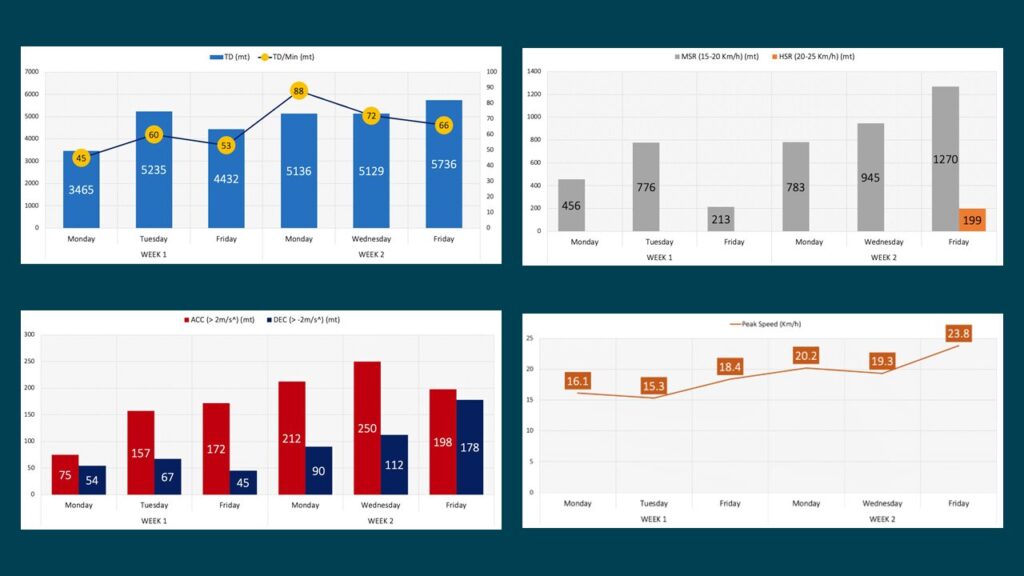
Some drills help restore the player’s confidence in movements and tasks included in the injury situational pattern. For instance, ACL injury is a deceleration injury[25], so restoring deceleration technique and workloads in the earlier stages of the OFR period is key. This comes before we expose the player to reactive position specific football drills involving high intensity and sudden decelerations.
The starting workload
The starting physical workload on the football pitch after long term injuries is not well-documented, with only anecdotal clinical commentaries[16] and single case studies to guide our decisions[12,13,26]. From clinical experience, the more indoor physical preparation the player completes, the greater his/her physical tolerance in coping with different types of loads on the football pitch.
Footballers who are physically well prepared and psychologically confident in commencing the OFR phase, they usually progress workloads quicker during the first few weeks on the pitch.
Isokinetic, as a medical group composed of eight clinics, has the advantage of sharing experience amongst practitioners. All the GPS data that we collect from players during the OFR phase feeds into a centralised database that’s shared between clinics. OFR specialists can consult the database to support clinical decisions and workload planning for their players. This system supports the practitioner and helps minimise the risk of overloads during the transition from gym-based rehabilitation to OFR.
Table 1 summarises the workloads completed during the first week on the pitch by a cohort of 100 football players who underwent ACL reconstruction (ACLR). The table breaks down data by the number of OFR sessions completed and level of play[46].
| Variables | Level of play | 1 OFR session per week (mean ± SD) | 2 OFR sessions per week (mean ± SD) | 3 OFR sessions per week (mean ± SD) |
| Total distance (km) | Professional (n = 20) | 3.4 ± 1.1 | 7.5 ± 1.8 | 12.5 ± 5.2 |
| Amateur (n = 80) | 3.3 ± 1.1 | 7.4 ± 1.9 | 13.7 ± 4.3 | |
| Moderate speed running (m, 15-20km/h) | Professional (n = 20) | 466.8 ± 272.7 | 358.1 ± 283.2 | 573.5 ± 576.4 |
| Amateur (n = 80) | 114.8 ± 178.6 | 264.9 ± 346.9 | 456.3 ± 317.8 | |
| High intensity distance (m, >20km/h) | Professional (n = 20) | 11.9 ± 66.8 | 24.4 ± 10.9 | 21.3 ± 12.5 |
| Amateur (n = 80) | 10.3 ± 45.6 | 12.2 ± 35.4 | 15.1 ± 16.9 | |
| Peak speed (km/h) | Professional (n = 20) | 16.8 ± 3.2 | 17.5 ± 1.4 | 16.2 ± 4.1 |
| Amateur (n = 80) | 16.0 ± 3.4 | 16.4 ± 2.3 | 18.1 ± 3.1 | |
| Acceleration distance (m, >2m/s2) | Professional (n = 20) | 62.3 ± 63.7 | 127.3 ± 100.2 | 169.8 ± 181.0 |
| Amateur (n = 80) | 37.5 ± 49.3 | 83.9 ± 116.5 | 163.6 ± 44.6 | |
| Deceleration distance (m, >-2m/s2) | Professional (n = 20) | 18.6 ± 21.3 | 38.3 ± 40.7 | 66.0 ± 40.8 |
| Amateur (n = 80) | 15.6 ± 22.9 | 33.5 ± 48.8 | 58.8 ± 41.7 |
Verifying the player is physically prepared to start OFR
Adequate physical preparation can minimise the risk of overloading or re-injuring the affected body part during the last phase of the rehabilitation process. Our Education and Research Department has published anecdotal clinical commentaries providing relevant criteria to transition from mid-stage to late stage rehabilitation after long term injuries[9,10,44]. Validating these frameworks is our current mission.
From the combination of practical experience and scientific knowledge, we generally recommend the following physical components before commencing OFR:
- Analytical and functional strength of the main muscles around the injured body part and adjacent joints, e.g., knee isokinetic test for ACL injuries – the difference versus contralateral limb should be lower than 20%;
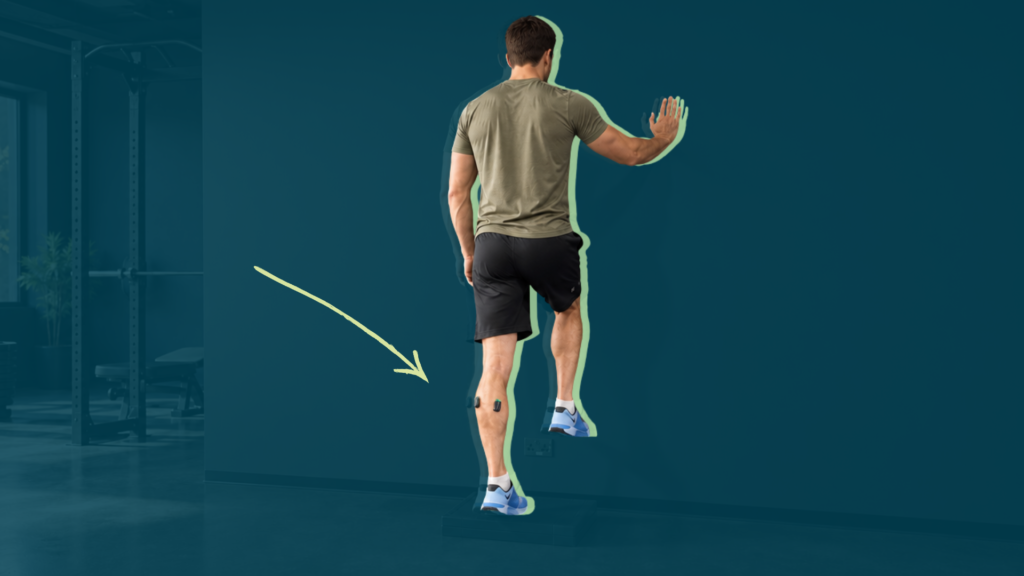
- Ability to run on treadmill with sufficient capacity (at least 10 minutes at 8 km/h) and normalised running mechanics;
- Optimal movement quality in pre-planned sport type movements (e.g., drop jump, deceleration, cutting manoeuvres ext.) measured via a qualitative analysis test (the Isokinetic Movement Analysis Test).
Analytical and functional strength
After long term lower limb injuries, the most frequently reported and longest lasting physical impairment is a decrease in strength[27]. This begins at the time of the initial injury and often worsens after surgery. For instance, deficits in maximal isometric voluntary force of ~ 40–60% have been observed 4-6 weeks post-ACLR when comparing injured and uninjured limbs[28].
The loss of strength is due to a combination of factors, including arthrogenic muscle inhibition following surgery, muscle atrophy following immobilization and incomplete volitional muscle activation[29,30,44].
After long-term injuries, such as ACL injury, restoration of maximal and functional strength is vital to provide dynamic joint stability, to produce and to accept force and to achieve optimal kinematics during planned and unplanned movements[9,10,37].
Periods of reduced capacity for the player to load the injured body part can make it difficult to maintain strength in the contralateral side. ACL reconstruction affects the strength of the non-operated leg, potentially reducing its usefulness for comparisons when restoring limb symmetry[31,32].
Given these deficits and imbalances after long term injuries, functional tests – especially bilateral tests – may obscure these frequently observed unilateral deficits, usually due to neuromuscular compensations during the test. Practitioners should also be careful when setting benchmarks based upon the strength of the contralateral side, given the evident risk of underestimating the optimal baseline.
Testing muscle strength in adjacent joints will be very important, as periods of reduced loading will lead to strength deficits throughout the kinetic chain. For instance, deficits in plantar flexion strength and muscle strength about the hip and lumbo-pelvic region are frequent after ACL injury and can impact neuromuscular performance and movement quality[9]. The foot, ankle and calf complex plays an important role in force generation during running,[33] and the ankle joint eccentrically accepts approximately half of the impact forces for the whole lower limb when landing[34]. Strength and function at these adjacent joints will determine readiness to progress as much as testing at the injured joint.
Ensuring sufficient lower limb strength and capacity is essential before exposing the injured body part to repetitive loading on the football pitch for the first time after the injury. Hence, we recommend a combination of analytical and functional single leg strength tests, where scores are normalised to bodyweight (BW).
Example of strength tests include:
Analytical: Isokinetic testing at 90°/s (4 repetitions) to measure muscle strength of the knee extensors and flexors, respectively. Recommendations:
- Peak torque at 90°/s Q:H/BW for amateur football players: 2.5:1.75 N.M.kg-1 (e.g., for a 75 kg player this equates to 187.5 Nm for the knee extensors and 131.5 Nm for the knee flexors, with a ~60-65% flexor to extensor ratio)
- Peak torque at 90°/s Q:H/BW for professional football players: 3.3:2.1 N.M.kg-1[35] (e.g., for a 75 kg player this equates to 247.5 Nm for the knee extensors and 157.5 Nm for the knee flexors, with a ~60-65% flexor to extensor ratio)
- >90% limb symmetry index peak torque
Functional: 5 RM leg press test (single leg). Recommendations:

Running mechanics and loads
Return to running is a key milestone after long term injuries. Players usually experience an important mental relief when they run on a treadmill for the first time. For some players this might happen at ~ 12 weeks post-surgery[45], considering inter-individuals variability and specific criteria. This achievement gives them confidence in progressing further.
Running styles vary a lot between footballers, so ensuring sufficient running coordination and optimal technique are important before progressing the player to the OFR phase. In fact, after long-term injuries, alterations in running biomechanics are frequent and if not assessed and corrected before progressing the player to the football pitch, they’ll likely be magnified at higher speeds[10].
After ACLR, specifically, sagittal plane knee mechanics are the most altered variables during running biomechanics assessment[36]. If players progressing to the pitch are exposed to loads in excess of their physical capacity, neuromuscular compensations are likely alongside sub-optimal running technique and reduced confidence. To avoid this obviously adverse situation, we must address major biomechanical deficits via gym-based rehab sessions while progressing the player to the OFR phase.
Among the criteria to progress football players to the OFR phase, it is suggested to ensure their ability to run on treadmill for 10 minutes at 8 Km/h with sufficiently normalised running mechanics[16]. Further, well prepared footballers starting OFR will likely cover 3.5-4.5 km each session with a weekly total distance ranging between 3.5 and 13 km, depending on the amount of OFR sessions completed (see Table 1). Ensuring that players can tolerate a certain amount of running volume during their first week back on the football pitch is as important as addressing the biomechanical deficits noted during qualitative running analysis.
In the 2-3 weeks ahead of returning the player to the pitch, the author recommends to consider small bouts of running on treadmill (e.g. 3-4 minutes continuous running at 8 to 10 Km/h, alternated with 1 minutes walking and repeated for 5-6 sets), manipulating volume and intensity, in addition to other activities planned for the indoor sessions (e.g. plyometric and ballistic tasks, functional strength, movements re-training ext.). From a load management perspective, this will be key in developing load tolerance to pitch-based activities. The player should progress to the OFR phase if there is no pain or swelling in the injured body part and if he/she is able to tolerate increased running distance on treadmill, alongside optimal movement quality in pre-planned sport relevant tasks (e.g. accelerations, decelerations, cutting ext.)[10,16].
Movement quality in pre-planned sport-type movements
ATR and ACL injuries present specific injury mechanisms, situational patterns and biomechanics[25,40]. During the inciting event, players display altered kinematics with subsequent increased mechanical demand for the knee and the Achilles tendon, in addition to intrinsic factors[25,40]. In contrast with ATR injuries which are more acceleration injuries, ACL injuries are deceleration injuries[40].
In addition to altered kinetics and kinematics, athletes who are at risk of or have suffered an ACL injury may engage neural resources typically used for visual processing, action planning, and executive functioning to compensate for maintaining motor coordination. This means that when cognitively challenged, they either need to reduce the attention to the environment or the task, thereby reducing performance or biomechanics[38]. The novel challenges of a sporting environment can exacerbate this compensation strategy, as the sport activity demands the player’s focused attention[39]. Therefore, assessing and training movement quality is crucial after long term injuries as it may help in designing primary or secondary reduction measures and late-stage rehabilitation approaches[37,40].
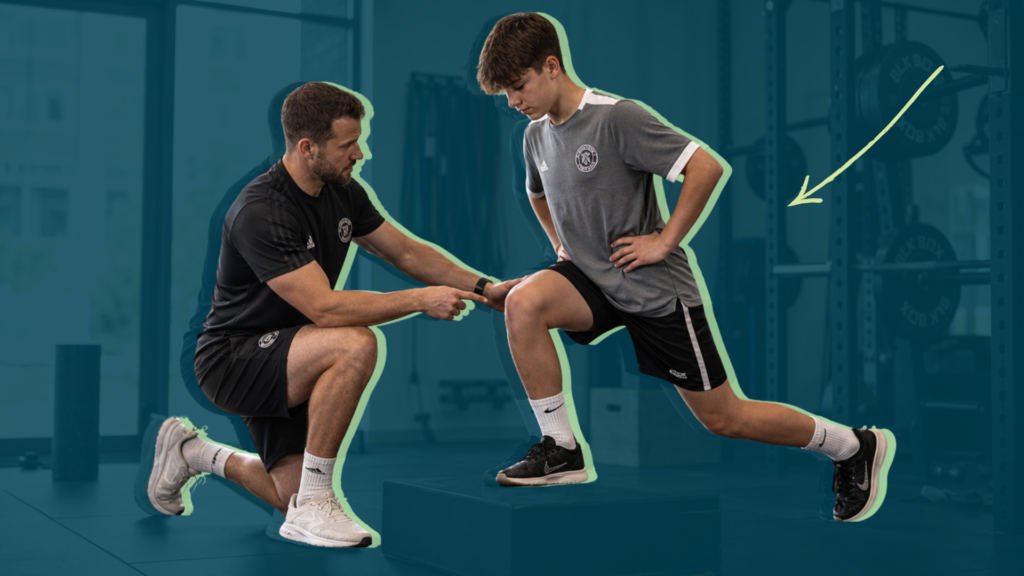
In Isokinetic Medical Group, we aim to restore sufficient movement quality from discrete tasks (e.g., squat, lunges ext.) to sport-type movements (e.g., deceleration, drop jump, hopping ext.) before progressing the player to the OFR phase. In fact, progressive automatization of sport-type movements can help athletes allocate neural resources to environmental stimuli rather than just maintaining motor control and coordination. This highlights the importance of restoring movement quality prior to the player re-entering the sport specific environment.
This phase of the rehabilitation takes place in our “Green Room,” a movement analysis and re-training room that bridges the indoor and outdoor rehabilitation environments. In addition to addressing ‘faulty’ movement patterns, we use it to minimize any potential jump in workload that the player can experience once begins the OFR phase. We first assess the ability of the player to perform a range of pre-planned functional tasks (e.g. single led squat, drop jump, deceleration, single leg hop and 90° cut) with sufficient quality, via a 2D video-analysis system (VICON Nexus) and a customized approach that we validated with different studies[47–50]. This provides indication of the time and volume of movement training required and potential at risk movement patterns (e.g., dynamic knee valgus). During customized rehabilitation sessions based on use of a range of neuromuscular training techniques (e.g., corrective core work, flexibility, movement education, targeted muscle strength, single leg balance and dissociation drills, landing/deceleration and plyometric drills using some form of biofeedback ext.), indoor specific tasks breaking down components of the deficient sport-type movement (e.g. change of direction) are re-trained to “rebuild” optimal form and coordination at progressively increased velocity[10,37]. This enables us to improve the player’s physical tolerance to increased workloads on the pitch and his/her psychological readiness to approach advanced rehabilitation activities.

Movement intensity and complexity are progressed across the re-training process and tasks are repeatedly practiced to favors local tissue loading of the musculoskeletal system via eccentric muscle actions, and retrains the muscle to absorb kinetic energy during landing[10,41,42]. Absorbing kinetic energy during the eccentric/landing phase of certain movements is not the only physical quality we should aim to develop in football players recovering from long-term injuries.
The video shows some football players restoring acceleration/deceleration competence after ATR and ACL injuries.
Football is inherently multidirectional in nature and players during football practice and matches repeatedly perform high-intensity sporting tasks involving short ground contact times (GCT) and explosive efforts demanding the ability to absorb and to produce force rapidly. During targeted neuromuscular rehabilitation sessions, in preparation to approach the OFR phase, it is key to consider training methods to optimise the ability of the muscles to produce force rapidly, termed rate of force development (RFD). Alongside movements re-training programmes, we recommend to implement jumping and plyometric-type of activities as they represent fantastic training methods to improve neuromuscular performance qualities, in particular explosive strength (RFD)[43].
These drills, alongside restoration of running, naturally assist the development of linear speed and the sporting movements the rehabbing players will encounter on the football pitch during the early OFR phase[10,16,37].
Tweet ThisPlayers should progress to the on-field rehab phase if there’s no pain or swelling and they can tolerate increased treadmill running alongside optimal movement quality in pre-planned sport relevant tasks
@FilippoPicinini
Effective rehab spans the clinic and the pitch
Long term injuries such as ACL or AT rupture can lead to long lasting physical impairment that can make the player’s return to the pitch difficult. Structuring a criteria based rehabilitation plan is crucial to keeping the player engaged in the process.
Restoring sufficient analytical and functional lower limb strength are key in preparing the injured body part to handle repetitive loading. Progressively automatizing a large variety of pre-planned and sport type movements supports the player’s transition to the football pitch by reducing the cognitive load necessary for each task. Motor control and coordination assessments via qualitative movement screens help identify and correct movement impairments prior to progressing the player to reactive sport specific scenarios.
Ultimately, accurate load planning and drill design for the first week of OFR are solid criteria and goals for the rehab team and the player to work towards together.
Tweet ThisA 2D qualitative movement assessment of a deceleration task detects football players with high knee joint loading, crucial in return-to-play testing for injury prevention and recovery
@FilippoPicinini