
Understanding athlete assessments through the six physical performance qualities is a good starting point, but it is just that: merely the start. To take things to the next step, coaches need a system for evaluating these pillars. This system will vary based on each coach, what they value, their setting and many other factors unique to the coach-athlete-environment combination.
Although this article will emphasize the movement / function pillar in depth, the key concepts of creating a systematic approach to the assessment, interpretation, integration and, finally, re-assessment can be applied to any of the other pillars of performance. Coaches must stay mindful that an assessment is only as valuable as the system in which it is used and the action it prompts. Not every test will prove useful in every coach’s situation.
Tweet ThisCoaches must stay mindful that an assessment is only as valuable as the system in which it is used and the action it prompts
@Matt_Van_Dyke
There’s no performance without movement and function
Movement and function are the foundations of athlete performance, so they are rightly the most important aspects in this athlete assessment framework. How an athlete moves is how they load their body. Biomechanics matter, and every athlete’s movement response to different variables matters.
Three components serve as key cornerstones in evaluating an athlete’s movement and function:
1. Kinetics and kinematics: Gravity, locomotion and triplanar loading
2. Functional biomechanics: Ankles, feet and toes
3. Neuromuscular integration: Sensory input and the brain
We must always consider the context in which we are evaluating our athlete’s movement. An isolated range of motion test will not be as valuable as evaluating biomechanics during natural movement under the constraints of a gravity, as our athletes experience in competition. Evaluations based on single joint range of motion have their place, but “real-life” movements provide a better, more contextual option that can work in conjunction with other assessment methods to assess our athlete’s movement strategies.

Assessing gait through kinetics and kinematics
Gait – walking, running or something else altogether – is constantly watched by coaches. But how often do coaches quantify gait? Given that biomechanics dictate loading strategies across the body, do we have the ability to determine specific potential deficiencies in movement?
Walking gait serves as a standard entry point to gravity-based locomotion, and we can frame the role of quantifying gait as: “If an athlete is lacking a specific joint angle while walking, then how can we expect it to become available when they are running or sprinting?”
By breaking down gait into phases – such as using the kinogram model – coaches can learn to spot potential loading discrepancies in movement. An extremely simplified output is in table 1. These joint angles serve as benchmarks for athletes while they do something they do every single day, throughout the day: walking.
| Gait phases & joint angles | |||
| Initial contact | Loading response | Terminal stance | |
| Hip | 20° | 15-20° (EXT) | |
| Knee | 0° | 20° | 0° |
| Ankle | 0-5° | 10° | |
| Hip (frontal plane) | 5-7° Hip ddduction | ||
When these joint angles are well understood, coaches can begin to implement training to improve them.
Although these are primarily sagittal plane angles, we must continue to consider every joint in all three planes of motion. Hip frontal plane control is one of the most critical factors in creating appropriate loading across the body. Figure 1 provides an example of ankle loading in all three planes, which is critical for biomechanics and loading strategies in locomotion. If an athlete is deficient in one plane of motion in their gait, they will likely compensate through either a different joint or plane of motion.
Tweet ThisHip frontal plane control is one of the most critical factors in creating appropriate loading across the body
@Matt_Van_Dyke

Functional biomechanics: Ankles, feet and toes during gait
As oversimplified as the above summary of the triplanar loading concept is, coaches must understand it and meticulously incorporate it into their “coach’s eye.” Otherwise, athletes are likely learning to compensate in an inefficient manner.
“Compensation” is a buzz word in athletics at the moment. However, if we continue to view our athletes and their movement through a biomechanical lens, we realize changes in movement lead to over- and under-loading of different tissues. Eventually, these altered patterns will likely lead to some type of injury due to stresses on a tissue that is not prepared to tolerate that force, speed, direction or other loading parameter.
The ankles and feet are among the most common areas of the body where compensations occur. The complexity of the ankles, feet and toes can create a bit of anxiety when attempting to evaluate them, making the system that Chris Korfist has implemented so valuable. From the introduction of the three-rocker system to the foot tripod all the way through the big toe, Korfist was the first and best to conceptualize the importance of the feet, ankles, and toes in a way that leads to productive training and positive athlete outcomes.


With the ankles, feet and toes being the primary points of contact with the ground during the majority of sport competitions, they are playing a constant game of “telephone” with the rest of the body. Compensation patterns or poor loading strategies that are not addressed can lead to changes in loading throughout the entire body.
If an athlete lacks their ankle rocker or big toe ability, they will find a way around using that joint. A few examples of these altered loading strategies include:
- Feet turning in during push-off
- Feet turning out
- The “bouncy” athlete
- Spinning out through the big toe
- Anterior pelvic tilt
- Hips or knees swinging wide

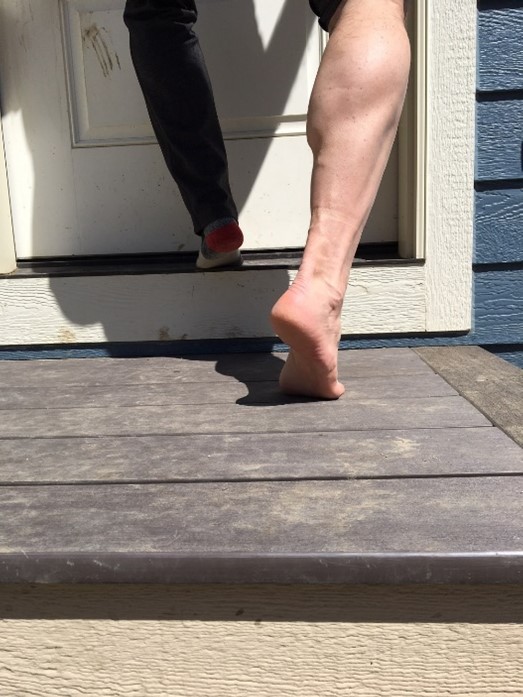
We can directly relate the training of the ankles, feet and toes to speed changes in training, some in an extremely short amount of time.
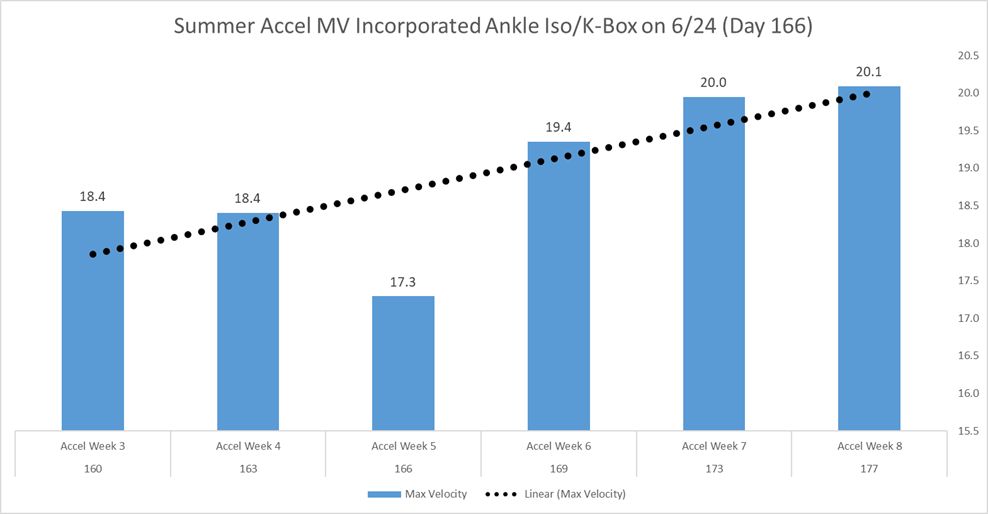
The data and training below is from an athlete who had been training at a high level for many years. He was extremely strong (squatting over 500 lbs with a body weight around 245 lbs), but didn’t demonstrate good speed for his position. His max speed over the last two years was 18.5 mph.
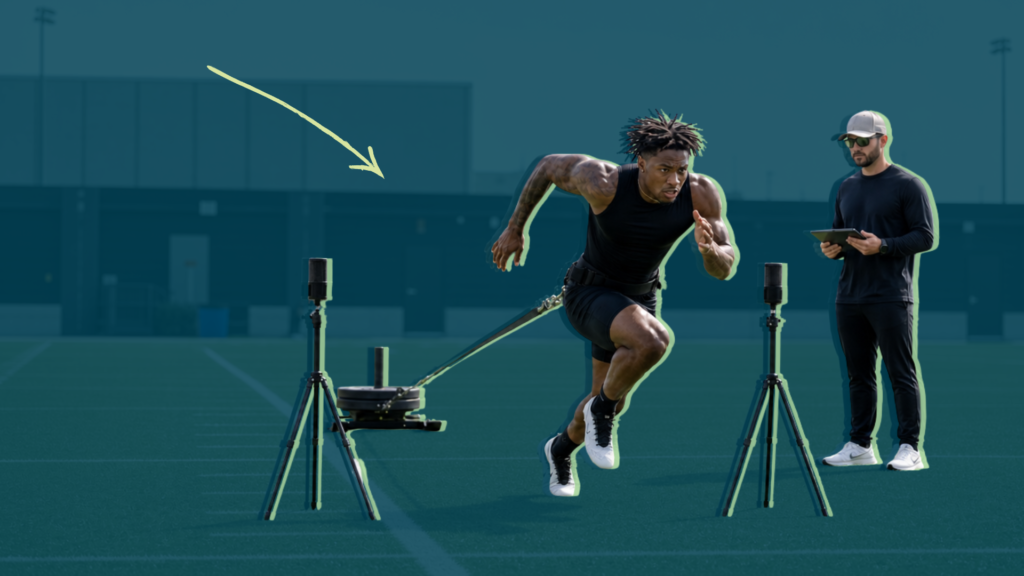
Figure 4 comes from a 20-yard acceleration in training throughout the summer program. The distance stayed constant, which is noteworthy because it precluded the opportunity to hit higher velocities by accelerating over greater distances. After filming a few of this athlete’s starts in early training weeks, we realized he was “bleeding power” with every step he took. His ankles and feet were simply not strong enough compared to the forces his hips were generating. During Week 5, we began implementing various ankle rocker training exercises:
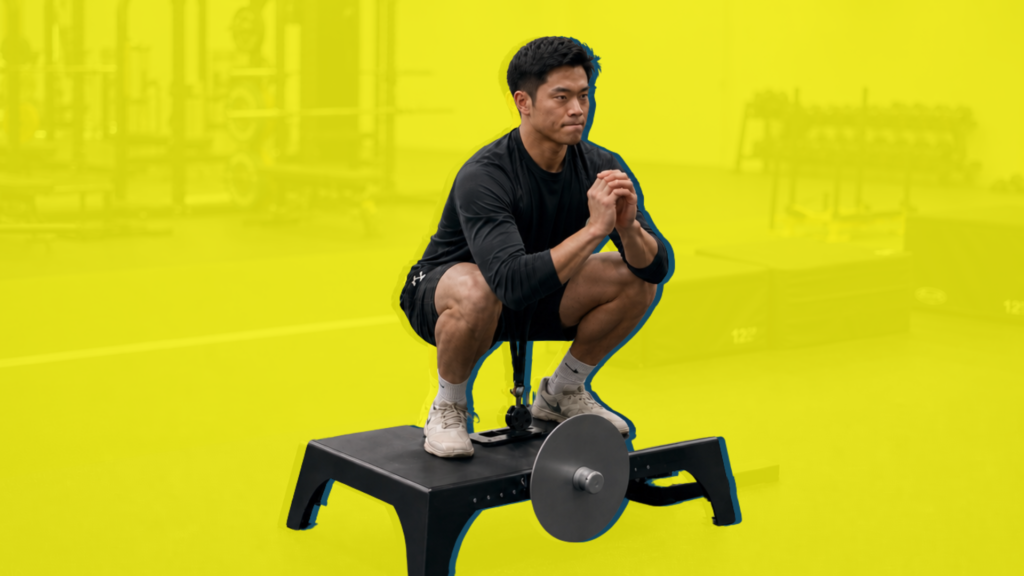
- K-Box Split Ankle Squat
- Spring Ankle Loading (One Example)
- Reverse Plyo Press
- Lateral Plyo Press
- Rock Mat Step
After implementing these exercises on a daily basis for one week, this athlete realized a new PR in max velocity. He went on to set a PR in the next two weeks, as well. In a matter of 14 days, he achieved a nearly 10% increase in his max velocity, while running the same distance of 20 yards.
This was one of the most eye-opening experiences for me as a coach, as this athlete was plenty strong but simply didn’t apply that force on the field. After this, I began filming all of our athletes’ ankles and feet. I found that our fastest athletes (over a 10-yard split) had the strongest ankles that did not “bleed power.”

Sensory input and the brain: Training integration and reflex development
Up until this point, we have viewed our athlete movement assessment through a biomechanical lens. But this risks missing an entire system that is able to rapidly alter locomotion patterns. As we continue to gain insight into the link between the brain and its ability to dictate movement strategies, sensory input will begin to lose the stigma of being “voodoo” beyond the reach or job description of coaches, and eventually will be implemented as part of a holistic training approach.
The tactile, visual and proprioceptive systems are just as capable as the biomechanical systems of creating issues and imbalances when they are overlooked in training.
A simple example is one eye being dominant. Eye dominance may seem relatively small in the grand scheme of recovery and performance, but the desire to direct more input to the stronger eye will result in a head tilt favoring that side. Although this may seem minor, consider the cascade of events across the body and the small alterations in muscular function that result in response to this shift. This new head position now requires a new “center” of where the body feels it is in space, which alters posture and ultimately changes the ability of the body to move in a safe and effective manner.
If this head tilt and alteration in posture is on top of a vestibular issue, the athlete has now created multiple interlocking compensation patterns throughout the body.
Multiple inefficient systems only leads to greater compensation patterns. We must approach training with the concept of creating change at the root of the problem. These central, neurologically driven methods can lead to rapid changes throughout the entire body.
Wanting to test for myself whether sensory input could have an in-session effect on athlete movement and function, I measured surface EMG in response to altering only sensory input aspects in a warm-up. My “experimental protocol”:
- Athlete completes our normal warm up
- Jumps three times for maximal height
- Measure EMG output for their glutes as an average of those three jumps
- Athlete then completes tactile, visual and vestibular warm up (45 seconds total)
- Jump three more times for maximal height
- Again measure EMG as an average of the second set of three jumps
I fully understand the limitations of surface EMG and the improper set up of this so-called “study.”
However, the data shows a drastic change in the athlete’s motor output after adding only about 45 seconds of sensory input training. This reduction in his compensation pattern may seem small, but if we did not address it, it could lead to an injury or overuse issue down the road. In a matter of 45 seconds, we created a completely different motor output and improved the balance of muscle utilization across an athlete’s body.

Every movement results from the input received through the senses. After the information is received, it is processed and compared to previous situations (pattern recognition) in order to provide an appropriate response. The causal relationship between sensory input and motor output means our movement will only be as good as the sensory input and the brain’s pattern recognition ability.
It is common for an athlete’s sensory input to be slightly “off” due to previous experiences or injuries. These can lead to defense mechanisms and inefficient loading patterns as the body attempts to “protect” itself. If we can correct the alignment of the body, we have a much greater chance of increasing performance and reducing injury, as demonstrated in the jump and EMG example above.
Tweet ThisThe tactile, visual and proprioceptive systems are just as capable as the biomechanical systems of creating issues and imbalances when they are overlooked in training
@matt_van_dyke
Training the brain for its “upstream” role
The brain selects movement strategies reflexively, which is what underlies the game of “telephone” that the foot plays with the rest of the body to determine threat and movement patterns as discussed above. The brain occupies a higher place within the process and hierarchy that creates the sensory input – motor output flow. Considering the drastic changes in performance we see by targeting the “purely” biomechanical issues at the ankle and feet, we have to consider the potential of interventions that work at a higher level.
That potential is why gait is so valuable as an assessment tool. It’s an incredible window into the nervous system. Practitioners and clinicians can examine its complex, reflexive nature to determine specific deficiencies in brain function. Think of the stereotyped alterations in gait due to neurological disorders such as Parkinson’s disease. Understanding how different regions of the brain relate to gait dysfunction creates the opportunity to prime certain areas of the brain to reduce potential compensation patterns.
When comparing the kinetic / kinematic, biomechanical and neuromuscular approaches to training, I use an analogy of a dam and the fish below the dam. If the dam is blocking nutrients (in this analogy, the neuromuscular activity) from flowing through, the fish must feed on something below the dam (voluntary movements / biomechanical parameters). We can continue to focus on coaching cues and voluntary contractions, but we will have to come back and feed those patterns every day, especially when we bring gravity and locomotion back into the picture.
Voluntary actions only make up 10% of total movement output, while reflexive components make up the rest to maintain postural stability. That tells us that we must begin to focus on what moves the needle to the greatest extent for our athletes. If we only access the voluntary system to address an overuse issue through “corrective exercises” or “prehab,” we’re neglecting the true root cause of the issue.
Take cueing, for example. Cueing an athlete to squeeze their glutes would lead them towards a voluntary contraction, while the use of the glute in gait is more reflexive. Cueing obviously serves a purpose, but we must consider what we are cueing and how our cues influence or, in some cases, adversely override the deeper reflexive systems at work within the body.
Understanding how we can impact our sensory input system is vital for enhancing athlete movement patterns, ultimately increasing performance and resiliency. If the maps provided by the brain and vestibular system are poor, then no alteration down the chain will create lasting change. If our goal as coaches is to create efficient, highly functioning athletes, we are likely doing them a disservice if we are not building upon an appropriate map.
In an attempt to address these potential overlooked reflexive areas, the emphasis falls on four major components: the vestibular, tactile, visual and proprioceptive systems. With the understanding that this complete neurological system provides constant feedback to the body in order to create spatial awareness and other “mappings” of the body, it is not only critical to performance but almost entirely untapped by contemporary training methods.
We are all willing to state that the brain is the master of the body and ultimately dictates its outcomes, but how are we applying this in training? Whether you intend to or not, you are already applying neuroscience throughout your training programs. You are always training your athlete’s brain. The question is whether you are doing it with intention.
Just as we use specific exercises to target muscles and create resiliency, we can apply neuroscience to enhance performance.
A reflexive pattern trumps a voluntary contraction in performance, at all times. Coaches that are able to view the body through both a neural and biomechanical lens have a significant advantage when it comes to increasing performance and reducing injury likelihood.
Tweet ThisUnderstanding how we can impact our sensory input system is vital for enhancing athlete movement patterns, ultimately increasing performance and resiliency
@Matt_Van_Dyke
Assess from the “big picture” and then train for it
Athlete movement matters, biomechanics matter. If an athlete has poor movement strategies, they are at an increased risk of injury due to compensation patterns or loading of inappropriate tissues. The context of those biomechanics also matters. Understanding compensation patterns or inappropriate loading strategies becomes much clearer when we measure gait under the constraints of gravity and locomotion to guide the use of athlete assessments. The ankles, feet and toes, specifically, cannot be overlooked, as these critical pieces alter both loading patterns and speed. Finally, a paradigm shift, one which emphasizes the aspect of neurology over the common biomechanical approach, can be used by all to create drastic changes in athlete function.
If nothing else, I hope this article has increased the urge of all coaches to question everything we see (or think we see) in our athletes. I realized this the first time I saw the effects of a sensory input warm-up and how sensory competence drives motor proficiency.
This motor proficiency is crucial in the context of sport as we are all working to increase an athlete’s performance and resilience to injury.