

Practitioners rehabilitating high grade hamstring injuries, e.g., 4c on the British Athletics muscle injury classification (BAMIC) scale, need to create an optimal environment for healing, particularly when managing these cases non-operatively. The goal is to promote closure of the tendon gap and stimulate a robust, well-organised scar, while also preparing the athlete for the demands of their sport.
In the absence of clear guidance from published case series, this article brings together the current evidence and outlines what appear to be logical loading strategies in cases where the tendon is disrupted but managed conservatively.
Tweet ThisWhen rehabilitating high grade hamstring injuries non-operatively, an optimal environment for healing must be created. The goal is to promote closure of the tendon gap and stimulate a robust, well-organised scar.
@KerinPerform
Epidemiology of complete hamstring tendon tears in sport
Full thickness tendon injuries typically appear as gapping or waviness on an MRI. At the moment of injury, there is often a palpable defect or audible “pop.” Despite their apparent rise becoming a point of fascination within the sports medicine community and media, the true epidemiology of complete intramuscular tendon ruptures remains difficult to pin down. The reported numbers are low, but that likely reflects variation in study methodology and the sporting demands of the cohorts being studied.
Take Shamji et al. [1], who analysed 61 MRI-confirmed hamstring injuries at Aston Villa (English Premier League football) over eight seasons. A full third were grade 3 injuries, yet no grade 4 injuries were reported. Similarly, an audit at Liverpool FC identified no Grade 4 injuries across four seasons [2].
Outside of the Premier League, a study across the Netherlands and Qatar reported that roughly one in six intramuscular tendon injuries were complete disruptions [3]. However, their strict inclusion criteria make wider generalisation difficult.
From my own experience working in the Premier League and consulting to several clubs and athletes across the football pyramid, these numbers appear low.
Most clubs now seem to encounter at least one injury of this severity every season. This observation is supported by recent NFL data [4]. In a cohort of 180 MRI-confirmed hamstring injuries across four franchises, 17.8% were classified as 4c: complete tendon disruption, most involving the proximal biceps femoris.
Ben Dinnery of PremierInjuries.com recently reported a 65% increase in severe hamstring injuries in the English Premier League during the 2023-24 season, compared to the average of the four previous years. Severe injuries—those resulting in more than 30 days out of training—appear to be rising in both frequency and complexity, with a corresponding increase in surgical interventions evident this season.
While grade 4c injuries are less frequent than lower grade strains, they certainly exist and may be under-recognised or under-described in some sporting contexts.
Rehab protocols aren’t keeping up with 4c injuries
The highest severity classification, the 4c—a complete intramuscular tendon tear or discontinuity—remains relatively underexplored, leaving a notable gap in the literature. This is particularly relevant in high performance environments, where decisions around surgical referral are often contested.
One of the most influential studies in this space mapped rehabilitation outcomes to the anatomical site of injury [5]. The recommendations from that study, though, extend only to BAMIC grade 3c injuries. Other datasets have the same shortcoming [6, 7].
Most published outcomes focus on BAMIC 2c and 3c injuries. In a study of 3c injuries, a location-specific rehabilitation model yielded a median return to full training of 51.5 days (range: 28 – 70 days; IQR 23.8 days), with no reinjuries over a four year period. These outcomes have underpinned much of the thinking around progressive, targeted loading. However, it remains unclear whether these same principles apply in more severe injuries involving complete tendon disruption.
There is still no consensus on structuring rehabilitation for a 4c. Should they follow the 3c template, with prolonged offloading, or do they require a bespoke pathway?
Among seven athletes from the Qatar Stars League with complete tendon discontinuity on initial MRI—a presentation broadly equivalent to a 4c injury—none had full restoration of tendon tension by the time they returned to play. Six of the seven showed only partial continuity, while one returned with persistent full thickness disruption. Importantly, none of these seven sustained a reinjury.
Across the broader cohort, which included injuries comparable to BAMIC 2c and 3c, 56% of athletes returned to sport with either partial or complete tendon discontinuity still visible on MRI. Crucially, this was not associated with poorer outcomes. These findings challenge the assumption that anatomical healing must be complete prior to return to play, particularly in tendon-dominant injuries. These data suggest that anatomical normality is not always a prerequisite for functional success, even in cases of complete tear.
Tweet ThisA complete intramuscular tendon tear or discontinuity—remains relatively underexplored. This is particularly relevant in high performance environments, where decisions around surgical referral are often contested.
@KerinPerform
To operate or not to operate?
These discussions are especially relevant when weighing whether to manage 4c injuries surgically. This question remains open-ended in the literature. A proportion of these injuries can recover well without surgery, but we lack matched cohorts directly comparing surgical and non-surgical management. No refined subclassification currently exists to guide decision making.
That notwithstanding, surgical repair of hamstring injuries is increasingly considered in elite sport, particularly where there is tendon retraction, failed conservative progression, or other performance pressures [8–10].
We prepared a case series (unpublished) of eight professional rugby players who underwent surgical repair of intramuscular tendon injuries. All returned to full training, regained symmetrical strength, and restored their previous level of sprint performance. However, these outcomes came with consistently longer timelines to full training than those typically reported for non-operative cases. Similarly, non-operatively managed cases from the Australian Football League took a median of 72 days, compared to 91 days in those treated surgically [11].
While surgery may restore anatomical structure, it does not necessarily accelerate recovery.
Standard post-operative protocols in the UK often follow a 16-week timeline, typically with cautious loading until week six. This is broadly similar to my recommendation following 4c injury. Aside from wound care and any appropriate short term bracing, the rehabilitation principles should remain largely consistent across operative and non-operative cases [5]. The difference should be the enforced restoration of anatomy: surgical repair approximates and secures the tendon ends, whereas non-operative rehab relies entirely on biological healing.
Optimising non-operative management remains essential, especially where surgery is not feasible. Factors such as access, cost, cultural beliefs, or athlete preference may all limit the availability of surgery. In those cases, a defined rehabilitation strategy becomes critical.
How does the hamstring repair itself non-surgically?
When an intramuscular tendon ruptures completely, the torn ends retract, leaving a gap filled with hematoma and necrotic tissue. To restore continuity, the body forms first a scaffold, then a bridge, of dense connective tissue [12]. Over time, this remodels and begins to behave like tendon.
The process starts with inflammation and clearance. Neutrophils and macrophages infiltrate the site, removing debris and releasing cytokines that activate both fibroblasts and satellite cells. Fibroblasts deposit type III collagen into the gap, while satellite cells regenerate myotubes from the muscle stumps [13]. This highly cellular, vascular granulation tissue forms the initial scaffold across the rupture.
Over the next 2-3 weeks, the scar thickens and consolidates [14]. Type I collagen begins to dominate, and the fibrovascular bridge matures into a structural band that connects the torn ends and transmits force. Though still biologically immature, this early scar re-establishes mechanical continuity and begins adapting structurally to its new role: transmitting force and restoring load bearing function across the musculotendinous unit. As remodelling continues, collagen fibres align along stress lines, vascularity regresses, and the matrix becomes denser, less cellular, and stiffer. MRI shows the the injury site becoming hypointense, consistent with the fibrous consolidation seen histologically [14].
Tweet ThisWhen an intramuscular tendon ruptures completely, the torn ends retract, leaving a gap filled with hematoma and necrotic tissue. To restore continuity, the body forms first a scaffold, then a bridge, of dense connective tissue.
@KerinPerform
Key principles of optimal loading for healing
The development of a functionally mature scar, one capable of tolerating the demands of athletic performance, is not passive. It is modulated by load.
In our clinical experience, the 4c injuries that progress best are those loaded early, consistently, and with clear reference to the underlying tissue behaviour. Imaging and functional outcomes tend to reinforce each other when this process is applied deliberately.
Creating a favourable biological environment
Loading can prevent disuse following injury. Stiffness in the soleus aponeurosis decreased 29% after just four weeks of immobilisation, demonstrating how disuse negatively impacts tendon properties and hinders recovery. While this is well-established, a more pertinent question is whether early loading, in the presence of tendon discontinuity, helps to approximate the tendon gap or if it exacerbates it, while promoting compensation through adjacent tissue.
The first step is to create an environment that promotes healing, rather than impedes it. For high grade injuries involving the intramuscular tendon, this means establishing the right conditions for early remodelling, where force can be directed through the healing tissue in a way that stimulates adaptation without causing harm.
The initial question, therefore, is whether the athlete should be offloaded for a period of time. It now seems clear that doing so would deny the athlete a critical window for adaptation and potentially delay the healing process.
Tendon and muscle healing are active, rather than passive, processes (Table 1) [15]. Without sufficient stimuli, the scar may fail to regain the orientation, stiffness, or mechanical strength needed for high speed force transfer.
In tendon tissue, specifically, the early proliferative phase produces a mechanically weak, disorganised collagen network [16]. Load, delivered gradually and repeatedly, is a key driver of collagen alignment and matrix reorganisation, a principle long demonstrated in both animal and human models [17]. Early mechanical loading following tendon repair can be delivered safely, and may facilitate faster return of function without compromising structural outcomes [18]. Meanwhile, the surrounding muscle is vulnerable to early atrophy, reflex inhibition, and maladaptive scarring if it’s left unloaded [19].
These insights support the idea that loading is not just possible early—it’s a requirement. It shapes the direction, structure, and capacity of the healing unit.
Olympic athletes with full thickness proximal hamstring avulsions performed twice-daily loading from day one [20]. These were long hold, low load isometrics spaced six hours apart. This was not necessarily to develop strength or force generation capability, but simply to maintain a stimulus. Each session aimed to produce a pain-free line of force through the injury site, to provide structure and signal for collagen formation.
The six-hour spacing helped preserve session quality while creating multiple signalling windows within the same day [21].
This aligns with what we know from tendon biology. The early phase of repair involves several cell types—fibroblasts, tenocytes, macrophages—that are mechanosensitive [22]. These cells remain active and support remodelling when exposed to appropriate mechanical input [15]. If that input is absent, the tissue environment may shift toward disorganised or fibrotic healing [22]. Early and consistent loading, particularly when frequent, helps maintain this favourable cellular behaviour [15].
Keith Baar’s work on engineered ligaments helps explain why. His group demonstrated that just 10 minutes of low load cyclic loading can stimulate collagen synthesis for up to six hours, with no added benefit from longer or heavier loading [23].
This approach, combining short bouts with extended rest, allows cells to respond optimally without being overloaded. In high grade injuries, where tissue tolerance is low, this principle becomes crucial.
The aim early on isn’t strength or hypertrophy, but consistent signalling to guide organised tissue repair. Satellite cells are key players in muscle regeneration, and are stimulated similarly. Their activation is both time sensitive and load responsive. Without mechanical input, they may remain dormant. Mechanical loading modulates the immune environment, with pro-inflammatory macrophages shifting toward a regenerative profile through increased IGF-1 and IL-4 expression [20].
Blood flow restriction (BFR) training may be another valuable tool here [25]. BFR can maximise mechanical stimulus, even while direct loading is limited following high grade hamstring injury. Mechanistically, BFR could influence anabolic and angiogenic signalling pathways, including mTOR, VEGF, and satellite cell proliferation [26]. It may be a way to get the maximal effect from low load to stimulate structural adaptation.
Tweet ThisThe first step is to create an environment that promotes healing, rather than impedes it. For high grade injuries involving the intramuscular tendon, this means establishing the right conditions for early remodelling, where force can be directed through the healing tissue.
@KerinPerform
| Influence | Effect on tendon healing | Reference |
| Cyclic loading | Promotes collagen synthesis, particularly with short, repeated bouts of low load cyclic loading. | Baar (2017) |
| Mechanical loading (low load) | Stimulates collagen alignment and matrix remodelling, important in early tendon healing. | Kjaer (2004) |
| Lengthened state eccentric training (LSET) | Promotes hypertrophy and changes in tendon size, with lengthening of the intramuscular tendon. | Maeo et al. (2024) |
| Shortened range isometrics | Transverse contraction of the tendon contributes to force production and muscle-tendon interaction. | Hulm et al. (2024) |
Progressing load based on structural involvement
Hamstring injury recurrences were lower from 2015-2019 than from 2010-2014. This was not from expanding return to play timelines but by tailoring rehabilitation to the injured tissue. An effective approach to high grade intramuscular tendon injuries prioritised mid-range loading strategies in the early phase, while delaying hip dominant loading, outer range eccentrics, and speed to allow for optimal healing.
The logic underpinning the early loading components of this model flow from foundational physiological principles. Early, appropriate, mechanical loading supports the structural and functional reorganisation of disrupted tendon tissue.
Regarding the delaying of lengthening exercise, these tissues behave in complex, length-dependent ways [27]. When the muscle contracts in a shortened position, the intramuscular tendon can experience a slight shortening due to the bulging of the muscle belly. In contrast, when loaded in a lengthened position, the aponeurosis stretches more like a typical tendon, accumulating tensile strain. These shifts likely reflect changes in the architectural gear ratio of the muscle-tendon unit, influenced by fibre orientation and pennation angle. This reinforces the rationale for delaying outer range and hip dominant loading.
In early rehab, shorter range loading may support re-opposition and protect the injured aponeurosis, while premature exposure to length may amplify strain on compromised structures.
Later in rehabilitation, as the athlete is preparing for the end stage of individual rehab or re-integration with the team, the goal is not simply to tolerate eccentric load at length. The goal is to arrive at this point with the maximal architectural and neuromuscular readiness. Outer range iso-eccentrics have a role at this stage. As the aponeurosis stretches longitudinally under load, its behaviour mirrors the demands of sprinting and other high tension tasks. These exercises provide the necessary stimulus required to drive tendon remodelling, collagen alignment, and speed specific adaptations.
It’s also important to recognise that performance adaptation requires stressors, and it would not be enough to linger too long at shorter range isometrics. Key adaptations like fascicle length, eccentric strength, and tolerance to high speed loading arise from outer range, eccentric, hip dominant work [28]. While caution is necessary early on, outer range loading becomes crucial. Short range loading alone will fail to stimulate the structural remodelling required for optimal return to performance.
Tweet ThisIn early rehab, shorter range loading may support re-opposition and protect the injured aponeurosis, while premature exposure to length may amplify strain on compromised structures due to changes in the architectural gear ratio of the muscle-tendon unit.
@KerinPerform
| Phase | Primary goal | Loading Strategy | Adjuncts and testing |
| Protection | Establish early mechanical signal Maintain proximal biceps femoris activation | Pain-free knee isometrics targeting biceps femoris Short-to-mid range 2–3x / day. Controlled range only Low jerk | BFR Neuromuscular stimulation EMG |
| Loading | Restore appropriate loading through injured region Respect tissue healing | Gradually increase intensity and range of isometrics. Introduce controlled mid-range eccentrics. Mid-range, low speed, knee dominant. | As above Isometric strength monitoring |
| Accumulation | Build structural capacity Infer adaptation (tendon hypertrophy, fascicle length, eccentric strength) | Multi-joint lifts progressing into greater ranges and complexity Introduction of hip dominant exercises and longer range eccentrics Moderate speed Lengthened state eccentric training | Nordic strength testing RFD monitoring at multiple ranges Maximal concentric IKD Jump testing |
| End-Stage | Develop higher strain tolerance (load at length) Train hamstring reactivity and power | High load eccentric and reactive iso-eccentric training. Reflexive / reactive movements Outer range, full length, high velocity and plyometric hamstring exercises | Springbok Analytics Speed (GPS) Maximal through-range eccentric testing |
Updated imaging to track and characterise healing
Two similarly graded injuries, even in two similar athletes, can progress symptomatically at very different rates, particularly when the intramuscular tendon is involved. A common observation in this subtype is that athletes often feel better faster, despite the severity of the structural damage. This mismatch between symptoms and imaging raises an important point: clinical signs alone may not reliably reflect underlying tissue healing [29].
Non-uniform strain patterns may help explain this clinical mismatch. Muscle-tendon contraction produces non-uniform strain across the aponeurosis, meaning different regions experience different levels of stretch or tension during the same task [27]. This variability becomes more pronounced during complex or multi-planar movements. As a result, some regions may appear functionally restored, even though they remain underloaded or disorganised. This explains why athletes may test well, report no pain, and yet still be at risk.
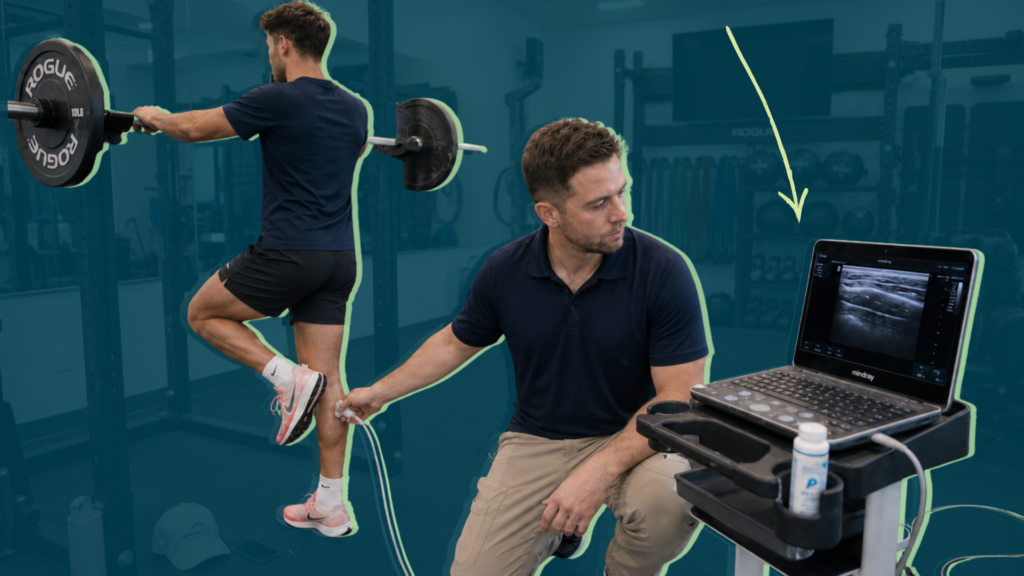
Sequential MRI provides one route to monitor biological change. MRIs show reduced waviness, early scar formation, oedema resolution, return of tendon continuity, and progressive scar remodelling at different times following significant hamstring injuries [20, 30]. These are not thresholds or binary progression criteria, but indicators.
When oedema declines, tension returns, or waviness decreases, we can tentatively say the current loading strategy is producing a constructive response. These indicators validate the loading strategy.
If healing is delayed, stagnates or regresses, there may be a mismatch in load frequency or magnitude.
The imaging features most strongly associated with reinjury include gapping across the tendon, failure of the tendon to re-tension, diffuse oedema within the tissue, and persistent structural discontinuity on imaging at return to play. When two or more of these signs were present, reinjury risk increased by nearly 30-fold.
A staged model for healing reframes deliberate loading to be about more than developing strength. It becomes a tool to actively shape healing. This should help energise the practitioner and athlete during the early phases of rehabilitation. When paired with clinical reasoning, imaging allows us to ask a more meaningful question: Is the tissue responding faster or slower than average?

Overcoming inhibition and ensuring load fidelity
Rehabilitation is not only structural but neuromuscular. Injury to the biceps femoris long head (BFlh) often results in reflex inhibition [19]. Oedema surrounding the sciatic nerve occurred in 81.3% of grade 4 injuries in the NFL [4]. This suppresses recruitment of the affected muscle, redirects load away from the intended tissue, and accelerates local atrophy.
Long-hold isometrics in place of eccentrics addressed this in the early phase of 3c rehabilitation. Using isometric loading at various angles from day one reintroduced direction-specific force through the injured region in a way that is tolerable and localised.
Ensuring that the load is applied to the appropriate location within the tissue may be critical here. In early tendon injuries, accurate load targeting specific to the injured muscle and region—also known as adaptation fidelity—may be more important than total output. This can take the form of EMG feedback; or an open, consistent dialogue with the athlete, teaching them what they should feel.
Inhibition also creates challenges in testing. It is not unusual for athletes to present with near-normal isokinetic or NordBord outputs while showing clear long head atrophy, either clinically or through imaging. Tools such as Springbok Analytics offer volumetric analysis of muscle structure, often revealing deficits that traditional strength assessments miss. This mismatch of normal strength with reduced mass is frequently seen in higher grade or recurrent cases, and may explain why some athletes break down despite clearing objective return-to-play thresholds.

Translating principles into rehab programmes
These principles—from creating a favourable healing environment to sequencing load based on structure and neuromuscular status—ultimately need to translate into a usable plan. Table 2 presents a structured framework that applies these concepts phase by phase, giving clinicians a practical guide for how load, range, adjuncts, and decision points evolve across rehabilitation.
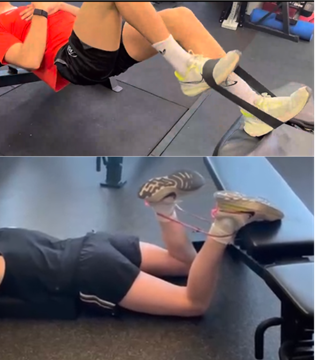
Early isometrics are introduced in mid-range positions, typically knee dominant and programmed at 3-4 sets of 20-45 second holds, performed twice daily (Figure 3). These are placed in pain-free joint angles and primarily target neuromuscular reactivation and tendon signalling. The goal is precision and localisation of load, not maximal effort, even if that means shorter holds than the athlete could tolerate otherwise.
As progression shifts to controlled concentric-eccentric work, prone knee flexion at a 3-1-3 tempo typically begins at 3-4 sets of 8-10 reps. These can start in a shortened range and gradually extend to mid- and outer range as tolerance allows. Common compensations include anterior pelvic tilt or lumbar hitching at inner range, excessive time spent at mid-range, or skipping terminal range entirely.
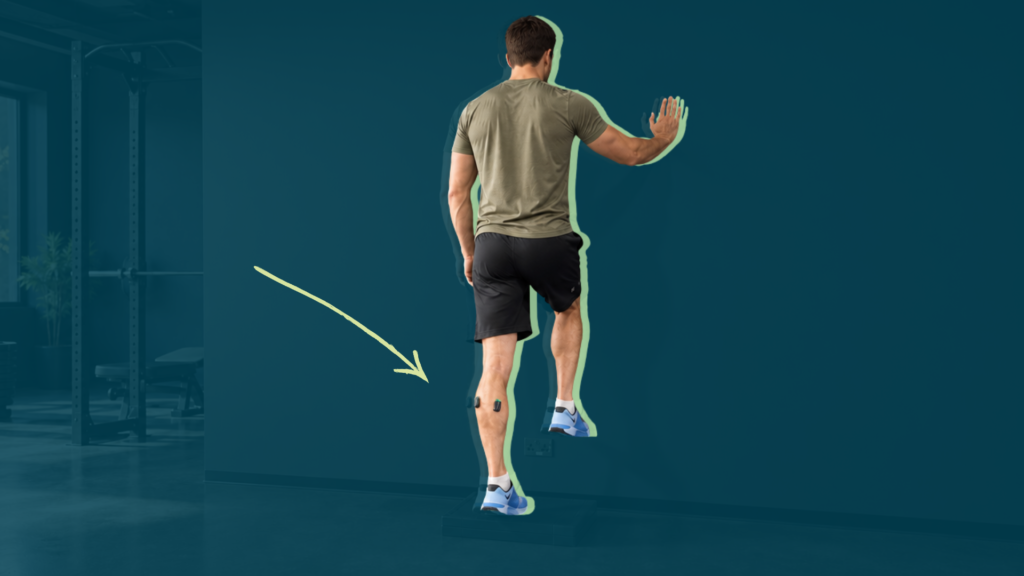
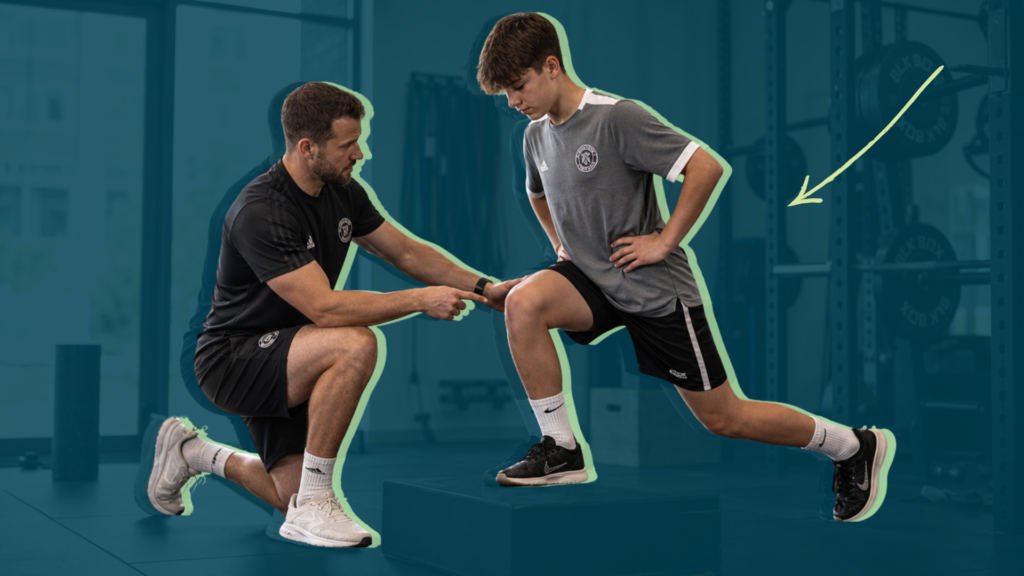
Hip-dominant loading follows a similar progression: short to long range, with slow tempo control. Split stance Romanian deadlifts are especially effective in this phase, as they bias eccentric loading through hip flexion, knee extension, and internal rotation, maximising biceps femoris activation. However, a set of 10 reps at a 3-1-3 tempo equates to over 70 seconds of continuous work, so coaching and programme structure need to be tight to avoid load spilling into the lumbar spine.
Lengthened-state eccentric training becomes a key focus in the mid- to late block, particularly heavy, tempo based loading during seated knee flexion [31]. These are typically programmed at 3-4 sets of 8-12 reps, with a 5 second eccentric phase to drive tendon adaptation.
Regardless of joint bias or contraction type, intensity must increase over time, not just volume or time under tension.
In the later stages, sets of 3-5 at maximal effort replicate the force demands of swing phase loading. Reactive eccentrics (Video 2) are also valuable. These are typically a short (3 second), heavy isometric following an unexpected eccentric contraction. These require high neuromuscular output and appear well suited to late phase tendon preparation.
While the decision to operate or rehabilitate in high grade hamstring injuries remains case dependent and up for debate, the vast majority of these injuries are managed non-operatively. The success of such an approach will ultimately hinge on the quality of the rehabilitation process.
A structured approach—grounded in tissue biology, guided by structural diagnosis, and progressed according to functional response—provides a practical, adaptable roadmap for clinicians managing tendon-dominant injuries.
Tweet ThisWhile the decision to operate or rehabilitate in high grade hamstring injuries remains case dependent and up for debate, the vast majority of these injuries are managed non-operatively with a structured approach—grounded in tissue biology.
@KerinPerform