Given the role of the foot-ankle complex as the only interface with the ground, what should we know about the function of foot-ankle muscles when prescribing our exercises?
We misunderstand the energetic and biomechanical roles of the different foot muscles during locomotion. Looking at all the foot strengthening protocols, we are in the era of “it’s all about intrinsic foot muscles” when it comes to foot strength and foot stiffness, as if they regulate the entire function of the foot complex. They don’t.
The extrinsic foot muscles (EFM) are the dominant energetic contributors to the foot’s functional capacities of force absorption and propulsion. They perform approximately 75% of the work, with the intrinsic foot muscles (IFM) picking up the remainder [1–3]. The IFM’s role is during the late stage of propulsion, providing an active mechanism for increasing forefoot stiffness to allow effective force transmission into the ground [1,4].
If you include the triceps surae (TS) in the energetics and biomechanics of the foot-ankle complex, the role of the IFM decreases even more [3].
Knowing that the foot-ankle complex goes through a triphasic action from deceleration to acceleration, you can classify your strengthening exercises accordingly.
The soleus and EFM (especially anterior tibialis, posterior tibialis, and fibularis longus) have a major role in “absorbing foot-ankle exercises.” These muscles are strongly involved in vertical elastic absorption of energy, supporting the rearfoot and midfoot during the first half of the stance phase.
“Propulsing foot-ankle exercises” access the metatarsophalangeal joints (MTPj) flexors. The EFM toe flexors (flexor hallucis longus, flexor digitorum longus) and IFM work as functional groups to stiffen the forefoot, augmenting the ability to generate propulsive work and power coming from the TS and the lower limb [1,4].
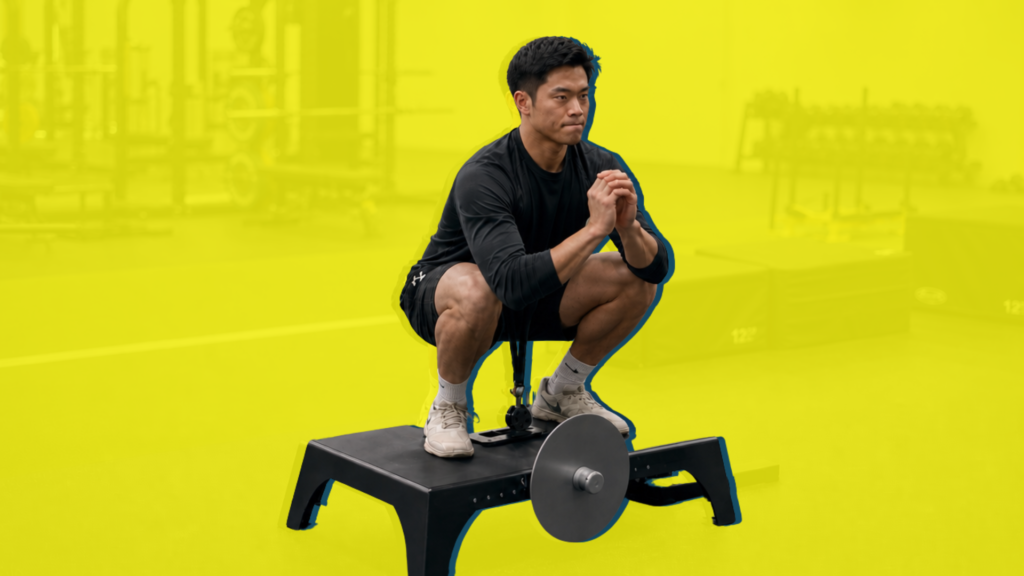
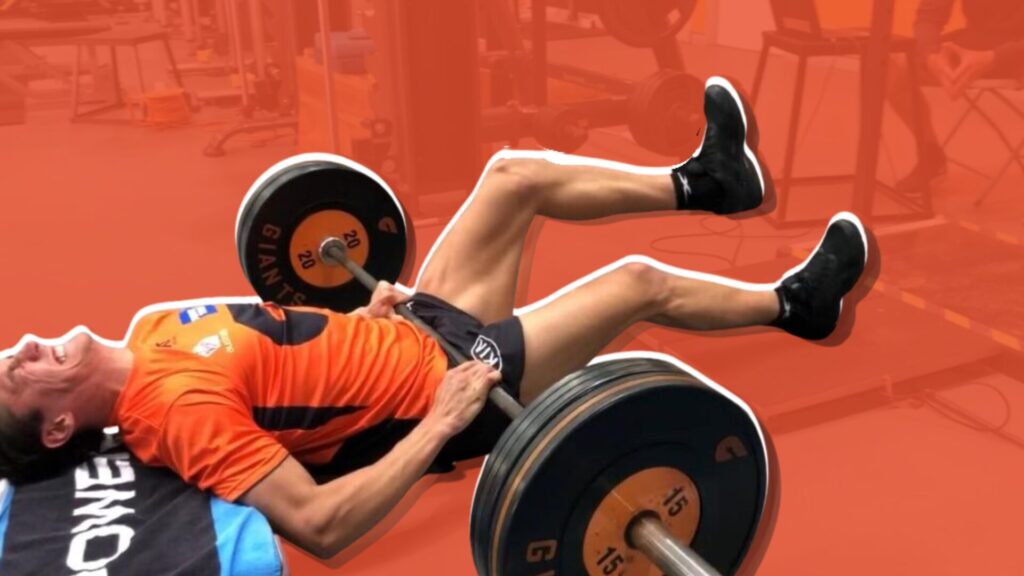
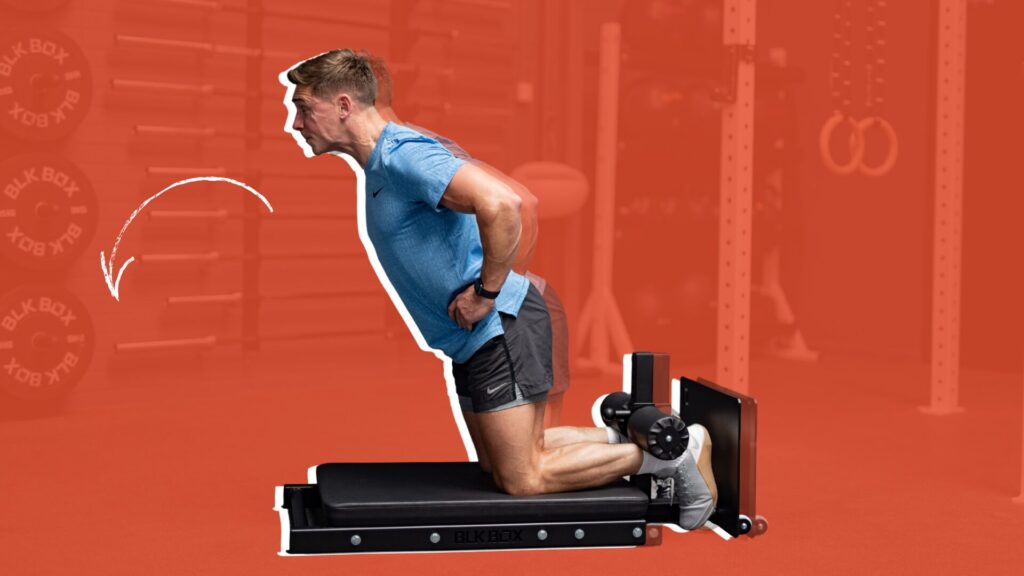
Coaches can enhance the absorbing or propulsing functions of the foot-ankle using analytic strength training exercises on each particular muscle group (foot or ankle), while also using a foot-ankle coupling approach that emphasizes exercises oriented towards foot-ankle absorption or propulsion (e.g., midfoot landing, foot-ankle push up). These two approaches are the foundation for enhancing foot-ankle complex interaction with the ground during explosive global movement such as deceleration, drop jumping, and sled sprinting (Figure 1 and 2).
Tweet ThisWe misunderstand the energetic and biomechanical roles of the different foot muscles during locomotion. We are in the era of “it’s all about intrinsic foot muscles” as if they regulate the entire function of the foot complex. They don’t
@r_tourillon


Tweet ThisThe extrinsic foot muscles are the dominant energetic contributors to the foot’s functional capacities of force absorption and propulsion. They perform approximately 75% of the work with the intrinsic foot muscles picking up the remainder
@r_tourillon
Regarding just MTPj flexion strength, what is the major limitation with current protocols for enhancing this parameter?
The gap between the large amount of forces that the forefoot encounters during the stance phase of explosive tasks [5] and the actual exercises that are usually prescribed to strengthen the forefoot [6].
Seeing this massive athlete sprinting at 35 km/h and then performing a toe flexion exercise against a blue Theraband in a sitting position has always surprised me.
Today, we’re at the turning point. Two meta-analyses of rehab oriented studies showed a small effect of foot muscle training exercises on forefoot strength and morphology (volume, thickness, cross sectional area)[7,8]. By contrast, performance oriented studies showed the greatest effects from a high training volume (24-36 sessions of 30-40 min) [9–13] with either small or no effects on improving MTPj kinetics and force production during locomotion in competitive athletes [9,14,15].
By questioning this strength training efficiency some years ago, we started to develop a “harder, better, faster, stronger” foot strengthening approach.
“Better” corresponds to taking a holistic approach, based on a better understanding of the biomechanical role of each muscle of the foot to create the appropriate exercise (absorption, propulsion, or spring oriented).
“Harder” is using overloading parameters, as the foot has a versatile function for fine tuning load. If you overload and then lean the body forward, muscle activation and MTPj torque will increase substantialy from the values in a quiet sitting or standing position [16,17].
“Stronger” refers to applying the fundamentals of resistance training, like progressive overload, specificity, variation, and periodization.
Finally, “faster” comes from the ability of a well designed foot protocol to maximize strength gains in a short amount of time.
Our ongoing randomized controlled trial in athletes showed that this “harder, better, stronger, faster” approach on the forefoot region demonstrated the same amount of MTPj maximal strength gains (»+30%) after eight weeks as previous performance studies, [9–13] but with significant less training volume (16 sessions of 35 min vs. 24-36 sessions of 30-40 min). Athletes showed significant strength gains – above the minimal detectable change – by the middle of the protocol (end of week 4).
More importantly, we found that these strength gains have lasting effects. The improvements were still present at the end of the detraining period of four weeks.
Tweet ThisCoaches can enhance foot-ankle absorption or propulsion by using analytic strength training for specific muscle groups, along with a foot-ankle coupling approach that emphasises exercises oriented towards enhancing foot-ankle absorption or propulsion
@r_tourillon
What do you find about the relationship between MTPj flexion strength, sport performance, and force production and transmission improvement?
Alongside MTPj strength gains, we found significant cutting and horizontal countermovement jump performance improvements for more “positive responders” (i.e., athletes whose improvement exceeded the MDC, which increased from 42% to 67%). We didn’t find any change in acceleration or vertical jumping performance.
Interestingly, we showed that improvements in cutting performance were largely due to an improvement of the medio-lateral ratio of force: a better medio-lateral force transmission through the ground for the positive responders improved their cutting performance. The others improved their performance thanks to a greater horizontal force production during the cut, giving them a better braking force production.
Likewise, horizontal CMJ improvement was largely due to an associated increase in horizontal force production and a better force ratio. That translates to better transmission through the ground for about 75% of positive responders. This could result from a better forward lean during the push off phase. Drifting the center of force application anteriorly under the toes and increasing the external MTPj moment arm allow a better body orientation to produce or transmit more concentric horizontal force through the MTPj, resulting in higher horizontal take off velocity.
Finally, although sprinting overall performance and acceleration kinetics did not improve after the protocol, there was an increase of vertical force propulsion at maximal speed (<30m) in 75% of positive responders. This confirmed the link between forefoot strength and vertical force production at maximal speed that we found in our previous cross sectional study on high level athletes [18].
All the improvements had acute and long lasting effects (four weeks), as there were no significant decrements after the detraining period.
That said, remember that the aim of research like this (a doctoral dissertation project) is to focus on a specific aspect, in this case, MTPj flexion strength and performance kinetics. If you are a performance practitioner who wants to improve your athlete’s propulsion kinetics, follow the reasoning of the first question above: improve energetics and biomechanics of the calf as well as the MTPj.
Tweet ThisBy questioning previous strength training efficiency, we developed a “harder, better, faster, stronger” approach, incorporating a holistic method and resistance training fundamentals like overload, which maximizes strength gains in a short time
@r_tourillon
Why is foot-ankle stiffness probably a good thing for force transmission?
We often hear this regularly, but we have to start by properly defining foot-ankle stiffness. Stiffness is the extent to which an object resists deformation in response to an applied force. That gives us a general idea that the foot complex must not deform – it must be completely rigid to be a functional lever that transmits force.
Contrary to what one might think after reading that definition, having a perfectly rigid or stiff foot lever is not ideal for enhancing foot-ankle propulsion [19,20]. In fact, restricting arch mobility through equipment (orthotics, footwear) or surgery (joint fusions) impair force production through the ground, causing the foot to leave the ground early and increasing the force requirement of the proximal joints as compensation [19,21].
Foot arch mobility is fundamental during the push off phase. Arch recoil substantially enables a better orientation of the talus and the tibia, which then enhance propulsive TS work and power [19]. This arch spring function stores elastic energy in the tendinous tissues of the passive structures (plantar fascia) and active structures (extrinsic and intrinsic foot muscles) to add or remove mechanical energy [22,23].
Likewise, the MTPj range of motion is also fundamental to absorb energy via dorsiflexion of the toes, which creates a biomechanical coupling link with the midfoot recoil to produce power during push off [24,25].
For all these reasons, we must not immobilize nor stiffen the foot. Instead, we should encourage and enhance midfoot gliding by direct manual techniques, or active exercises for foot arch motion and compression to encourage the necessary deformation and elicit desirable spring mass qualities (Figure 1).
There is also the crucial role of tibial motion within the foot-ankle complex, and how we should approach this with our athletes.
Ankle dorsiflexion range of motion is a key component of effective force absorption, allowing greater use of Achilles tendon elastic strain energy during weight bearing while reducing peak ground reaction forces [26–28]. The tibia also serves as an organic protractor with the ground, showing which direction the athlete is directing force. That highlights how fundamental it is for propulsion [29,30]. Enhancing the motion of the tibia known as “shin roll” mechanics will influence effective force application to induce forward motion, ultimately improving acceleration performance [31].
Enhancing ankle dorsiflexion range of motion could follow from a clear clinical reasoning for each individual using specific manual bone glide therapy, mobilization with movement, specific weight bearing stretching techniques, or tibial nerve neurodynamics [32] (Figure 1). Shin roll motion mechanics could be trained via specific shin roll movement in propulsion related positions during wall drills or half kneeling lunge.
Tweet ThisFoot arch mobility is crucial during push-off. Arch recoil improves the orientation of the talus and tibia, enhancing propulsive work and power. This function stores elastic energy in tendinous tissues, helping to add or remove mechanical energy
@r_tourillon
Be strong, compliant, and not necessarily completely rigid. What are the other qualities that the foot-ankle complex must have to produce and transmit force well?
Coming back to the stiffness definition, we know that compression and compliance is valuable and warranted around the foot-ankle. But an athlete who compresses too much and can’t handle this large level of forces will lose energy and fail to use the stored elastic energy during extension. Therefore, negating or disrespecting elastic and spring-like capacities at the foot-ankle complex will lead to ground strike interaction problems.
Reactive strength comes from the ability to efficiently use the stretch-shortening cycle (SSC).
But while this quality makes sense to many people in the S&C industry, we sometimes forget that improving this quality does not only involve focusing on the contact phase but also (or especially) on the swing or flight phase [32,33]. Indeed, producing and maintaining dorsiflexion from toe-off through to the moment prior to ground contact results in a higher level of pre-activation, allowing isometric elastic muscle action and greater elastic energy storage in the Achilles tendon and medial longitudinal arch [32,34].
This mechanical advantage of creating pre-stretch follows from increased co-activity of agonist (dorsiflexors) and antagonist (triceps surae) muscles just before and after touchdown. I’m always surprised to see athletes performing multiple plyometrics with sustained or premature plantar flexion during the swing / flight phase – as if a “springy foot-ankle complex” simply means having athletes bounce quickly.
It’s therefore essential to consider these often overlooked foundations. Ankle posture and pre-position will dictate ground contact mechanics. From there, we should work on foot-ankle plantarflexion and dorsiflexion coordination exercises (“penguin marches”), midfoot (flat foot) striking during pogo jumps, and develop strategies to help an athlete correct any faulty foot-ankle pre-position.
To specifically evaluate foot-ankle reactive strength, we compared the reliability and usefulness of the foot–ankle rebound jump test (FARJT) of Bosco [34,35] to the classical vertical drop jump test, and to repeated jump tests that allow hip and knee flexion.
Athletes performing the FARJT aim to jump “as high as possible and as quickly as possible,” while keeping their lower limbs fully extended and pushing against the ground with only ankle plantarflexion and MTPj involvement (Video 1). They complete eight jumps. Using a force platform or optoelectronic system, we assess the mean RSI of the four middle jumps, as these have less variability (CV <3%) on most metrics compared with the first four jumps or the last four jumps [35].
We found that FAJRT has excellent reliability (ICC ≥ 0.90 and CV = 8%) and is useful for quantifying foot-ankle reactive strength capabilities in athletes, for example, following a training block. However, its usefulness as an accurate daily or weekly monitoring tool is questionable, as the variability in RSI was greater than the smallest worthwhile change [35].
We talked about force production and transmission, but why is force distribution within the foot-ankle complex also very important? How can we measure this?
Force distribution is how forces are distributed within the foot, since the foot-ankle complex is the only interface with the ground during locomotion. We can measure force distribution with plantar pressure measurement technologies, with metrics like peak or mean plantar pressure, maximum force, or the force-time integral under a specific foot region.
The forefoot region has the highest peak plantar pressure during cross cut, side cut, acceleration, sprint, and straight running [5]. During explosive tasks, the forefoot is a transmission area where forces should be distributed efficiently on the first ray, as forces will be higher than in any other part of the foot in healthy feet [37].
Force distribution within the first ray is vital for enhancing ground contact kinetics interaction for two main reasons. First, the muscle volume dedicated to the first ray is ~1.6x larger than the lesser toes [38,39]. You’ll have greater forefoot stability and propulsion mechanics if you use your stronger ray.
Second, there is an opposite plantarflexion at the ankle and dorsiflexion at the MTPj during the push-off phase. This induces a force transfer by the flexor hallucis longus (largest volume of the deep EFM and IFM) from the proximal shank to the distal part of the foot while working in a near-isometric manner. It’s essential to consider this by using analytic maximal strength training exercises on the first ray. Above all, train athletes to use and distribute force on the first ray during lower limb global exercises like explosive heel rise, single leg switch, or horizontal stepping push off.
Even if you don’t have a plantar pressure measurement system (which are not very accessible), you can still use frontal plane videos in slow motion to look at the position of the foot during toe off. Excessive supination of the rearfoot and the detachment of the head of the first ray on the floor could demonstrate a poor propulsive strategy within the foot axis.
Tweet ThisAnkle dorsiflexion range of motion is a key component of effective force absorption allowing greater use of Achilles tendon elastic strain energy during weight bearing while reducing peak ground reaction forces
@r_tourillon