
A patellar tendon rupture is a severe injury, requiring 6-12 months of rehabilitation, and with significant consequences for athlete and club: about 25% of athletes who suffer this injury do not successfully return to play. Those that do show ongoing performance decrements [1].
Patellar tendon ruptures are rare in the Australian Football League, despite the complex running, jumping, and collision demands of the sport. The incidence rate is 0.05 per club per season [2]. The rarity and severity of the injury create a conundrum: there are no published protocols to guide practitioners through functional improvements and performance outcomes.
Advances in surgical techniques to repair the patellar tendon limit osseous tunneling. Along with greater recognition of the value of early post-operative loading, there is hope for improving return to play and performance outcomes.
This case study follows the high performance and medical departments as they collaborated on an accelerated return to play process from a patellar tendon rupture. We deployed a number of novel on and off field loading strategies to mitigate deconditioning and to directly address functional and confidence deficits.
Tweet ThisA patellar tendon rupture is a severe injury, requiring 6-12 months of rehabilitation, and with significant consequences for athlete and club: about 25% of athletes who suffer this injury do not successfully return to play.
James Grierson
Details matter from day one of rehab planning
A 20-year old defender in his third year at the club suffered a ruptured right patellar tendon during an aerial contest involving a maximal single leg jump effort. The team was about two-thirds of the way through the season at the time of the injury.
The athlete had chronic bilateral proximal patellar tendinopathies that were stable at the time of injury. These were closely managed with a mixed loading protocol of isometric and through-range loading. The player did not miss training sessions or games because of these issues. His symptoms were most pronounced in the afternoons following main training loads during lower body gym sessions.
The athlete’s average game demands were approximately 90 minutes of game time, covering ~12 km total distance, ~1800 m of high speed running (>19 km/hr), and ~250 m of sprinting (>25 km/hr). His position and its tactical demands entail many high intensity reactive changes of direction while the ball is on the ground, and aerial tasks while the ball is airborne.
The player’s tactical profile was pertinent in our case because we knew the athlete would face variable maximal demands upon his return to training and play.
The patellar tendon was surgically repaired with anchors and allograft reconstruction with semitendinosus transosseous tunnel and ultra tape augmentation. Initial post-op instructions were a straight knee brace with crutch assistance as tolerated for all weight bearing, and 0-30° range of motion when unloaded.
Our performance health team collaborated internally and externally to prepare for the athlete’s extensive rehabilitation demands.
We separated the evolving demands and stages into phases where different training methods could complement tissue repair.
Early on, these reflected the various range of motion limitations to ensure ongoing tissue repair post-operatively. They then progressed to strength training in the context of significant muscular atrophy and patellofemoral joint trauma.
Moving towards the later stages of rehabilitation, mixed speed, power, and plyometric techniques supported a significant on field training focus, aiming to restore movements and performance parameters specific to our athlete.
The performance health team determined the KPIs that would demonstrate capacity and tissue resilience for a return to play:
- isokinetic knee extension at 3x bodyweight and within 10% symmetry
- single leg drop jump height and RSI at baseline and within 5% symmetry
- 3RM Smith machine split squat within 10% symmetry
- single-leg leg press 3RM within 5% symmetry
- two weeks of full unrestricted training, with a total of six weeks modified group training
Tweet ThisThese reflected the various range of motion limitations to ensure ongoing tissue repair post-operatively. They then progressed to strength training in the context of significant muscular atrophy and patellofemoral joint trauma.
James Grierson
Early phase: Weeks 0-4
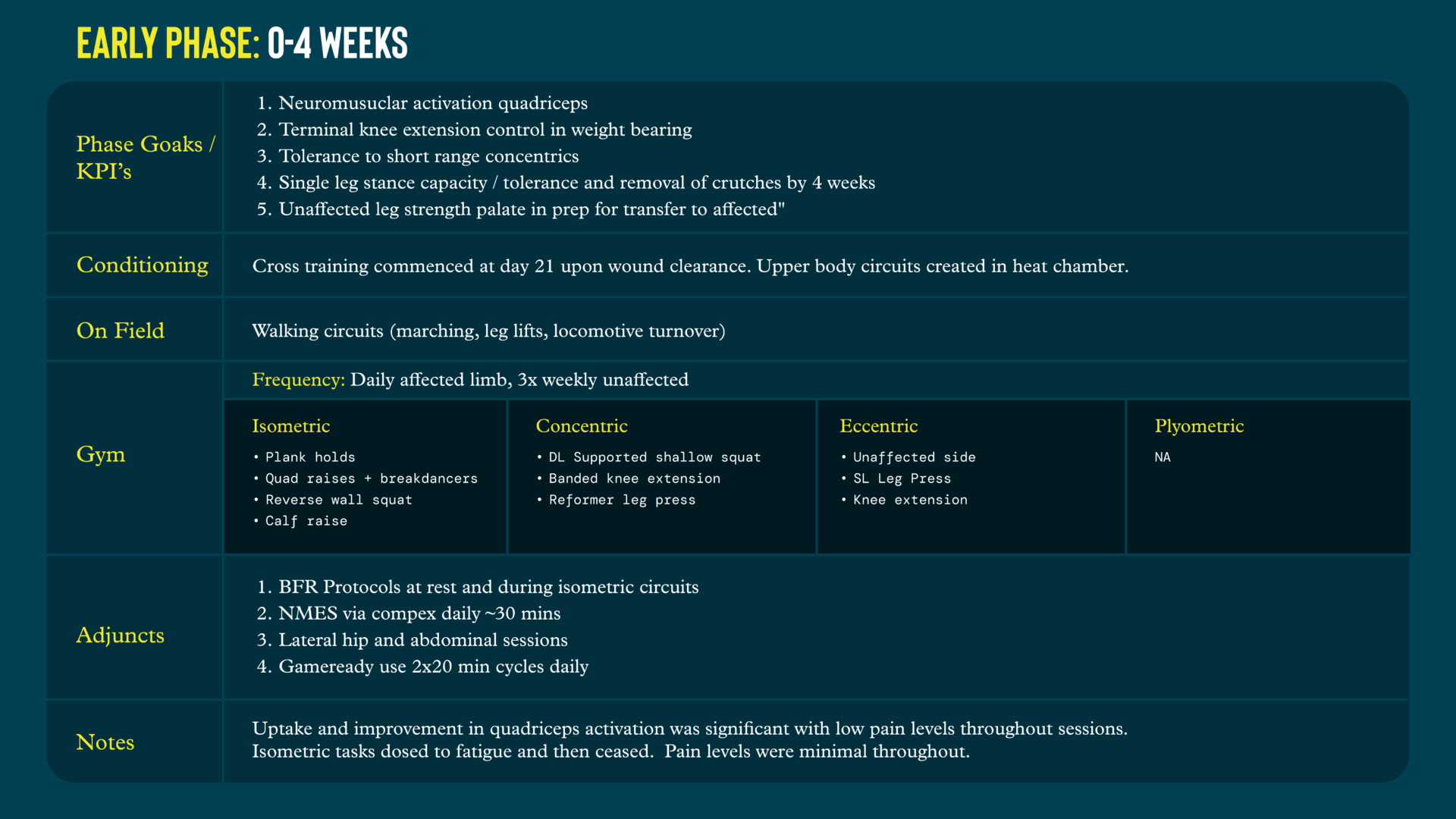
The rehab team recommended the athlete remain in a straight knee brace and crutches for all weight bearing tasks. The purpose was to avoid de-tensioning the repair via knee flexion tasks in the early stages.
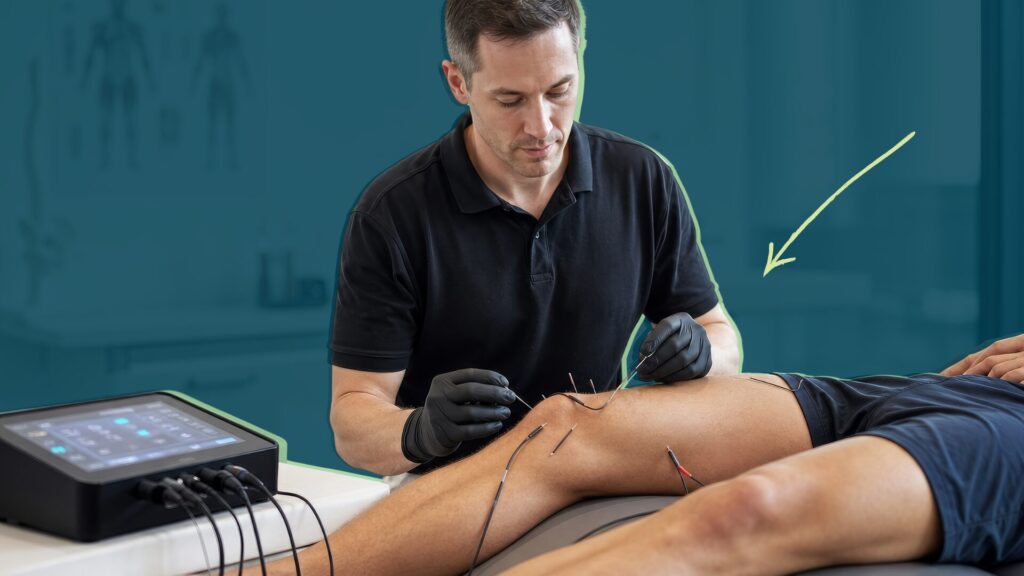
This level of immobilisation will cause significant muscle atrophy. The high performance team mitigated muscle loss through a number of strategies, including high load NMES and blood flow restriction during low load tasks to increase neuromuscular and metabolic demands. We also employed high load contralateral limb training to familiarize him with the loading strategies that he would eventually perform with the affected limb, ideally with some benefit from transfer.
With relatively low tension on the repair in supine terminal knee extension, we were able to complete significant work in this range with some strong early contractions. Starting on day 7, a daily cycle of low load, high volume tasks three times per day saturated the neuromuscular system. These progressed in range and intensity as long as the athlete was comfortable.
Isometric tasks in terminal knee extension were the predominant loading strategy, with dosage to fatigue.
Uptake and improvement in quadriceps activation was significant with low pain levels throughout sessions. He began walking drills to restore single leg stance function and gait; and upper body conditioning circuits.
Early-to-mid phase: Weeks 4-8
When the athlete regained control of terminal knee extension and sufficiently improved his single leg stance capacity, we opened the hinged knee brace 0-30° for all weight bearing activities, and took him off crutches. The surgeon told us that this was a risky period. The player had increased function and comfort, but the repair site was still immature as it re-vascularized. Even with the ongoing improvements and low pain levels, we maintained our focus on repair protection.
We opened the hinged knee brace by 10° each week from weeks 4-8, leading up to its removal at week 8. Thigh girth measures showed a 2.5 cm and 3 cm deficit at 10 cm and 20 cm, respectively, superior to the patella.
Goals for this period centered around normalizing the gait cycle through cyclical locomotive turnover drills such as stair walking and deep water running. Another milestone was commencing single leg weight bearing strength training in preparation for a return to running.
Strength activities progressed each week as the player’s comfort allowed greater ranges of loading. He had three strength sessions each week alongside contralateral limb training.
We took a functional focus to double- and single leg squat activities. Knee extension isometrics and leg press isometrics were dosed at high intensities in short ranges. We maintained light loaded exercises from weeks 2-4 with BFR twice weekly, while also including a specific hamstring and calf injury prevention portion.
The performance health team began objective screening around the hip to identify and, as necessary, address any potential factors that could contribute to injury or become barriers to a successful return to performance. Hip function assessment via VALD ForceFrame found ~10% deficit in the affected limb’s hip adduction and abduction deficit.
Tweet ThisWe opened the hinged knee brace by 10° each week from weeks 4-8, leading up to its removal at week 8. Thigh girth measures showed a 2.5 cm and 3 cm deficit at 10 cm and 20 cm, respectively, superior to the patella.
James Grierson
Mid phase: Weeks 8-12
At eight weeks post-op, we performed a review with the surgeon who gave us high confidence in the repair. The athlete no longer had to wear the hinged knee brace and could walk without restrictions, allowing him to go up and down stairs and perform sled walks in preparation for a return to running 10 weeks post-injury.
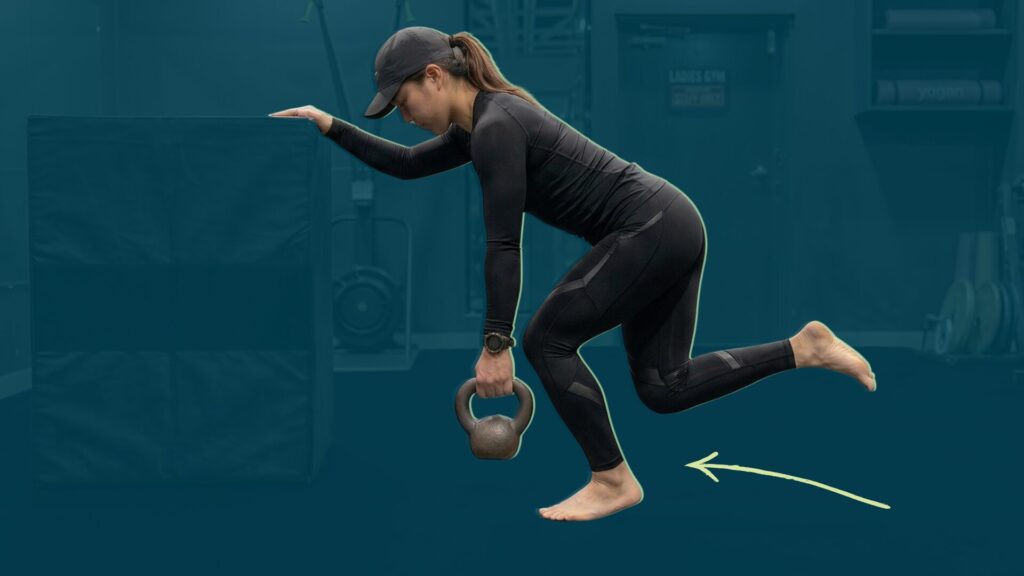
Strength programming had more variability as functional tolerance improved significantly. Loaded single leg tasks progressed towards 90° of knee flexion, while heavy isometric activities progressed at variable ranges.
We introduced light plyometric activities with a focus on ankle spring, as well as schoolyard skipping exercises at low intensities to improve confidence in jumping. The athlete completed his main strength activities three times per week. He had very high DOMS following strength sessions for the first time in rehabilitation, indicating muscle hypertrophy adaptations.
Additional remedial sessions focused on the hip, ankle, or Pilates. They targeted deficits that we found during the week 8 hip screen. Repeat testing at week 12 showed significant improvement.
Return to running commenced on the anti-gravity treadmill for one session before progressing to on field running activities.
We observed longer ground contact times and decreased knee flexion throughout stance and swing phases on the affected limb. He completed five running sessions over the first fortnight, up to ~60% max velocity and ~3 km total distance. Those sessions also included shuffle intensity change of direction and light football activities, including kicking small and medium sized balls.
We were unrestricted in off feet conditioning using mixed modality aerobic and anaerobic circuits. Our preference was for the bike given the quadriceps involvement. We tracked aerobic performance using functional threshold power tests on the watt bike. Anaerobic bursts on a fixed gear bike out of the saddle helped saturate lactate into the quadriceps. We also used deep water running to prep for higher limb turnover during on field running.
Mid-to-late phase: Weeks 12-18
With a large portion of healing and low to no pain during strength and light running activities, we were able to make significant progress in rehabilitation.
In the initial return to running phases, we observed a noteworthy asymmetry in ground contact times and knee flexion. This became a priority to address prior to progressing into higher speed activities. This was less about re-injury risk and more about taking the opportunity to address a dysfunctional movement pattern before it became reinforced through repeated training sessions.
The athlete performed running activities three times per week with a progression of weekly total volumes from 6 km to 14 km across the period. The largest single session was about 6 km.
The athlete did not reach high speeds (>19 km/hr) until approximately 15 weeks post-op. From that point, total weekly volume increased to 3000 m by the end of the block.
After sufficient exposure to progressive maximum speeds and improved kinematics and function, sprinting (>25 km/hr) commenced at week 17. Total weekly sprint volume reached 350 m by the end of the block, with the highest speed nearing 90% of his pre-injury max velocity.
Progressive change of direction activities helped increase acceleration and deceleration forces. He could do planned lateral cuts, drop steps, and linear decelerations without restriction and at a high intensity. Random and reactive changes of direction were progressively overloaded. They required lower forces than the planned activities, but had higher neuromuscular and coordination demands. The player completed these activities with other athletes at gradually increasing intensities, incorporating more organic football movement postures.

Formal objective testing commenced at week 16, with baseline scores serving as a platform for monitoring progressions over time.
As expected, he showed significant asymmetries between the affected limb and unaffected limb on peak knee extensor isometric strength (66%) and belt squat (70%). Compared to pre-injury levels, he still was deficient in CMJ jump height (88%) and RSI (68%).
Single limb testing completed at week 18 showed 19-27% asymmetry in single leg CMJ height and RSI; and 22-29% asymmetry in single leg drop jump height and mRSI.
He tolerated these tests well, and they were great tools for objective monitoring and driving focus in the rehab program.
Given the increase in intensity, throughout this period, there were intermittent periods of mild knee effusion and anterior knee pain, particularly with a return to kicking. Specifically for his anterior knee pain, he had clinical signs consistent with patellofemoral joint pain rather than the patellar tendon or repair site.
The athlete also experienced higher levels of general soreness and DOMS around the quadriceps and hamstrings as the depth of concentric strength tasks increased to 90°, and as high load eccentric strength exposures increased.

Late phase: Weeks 18-24
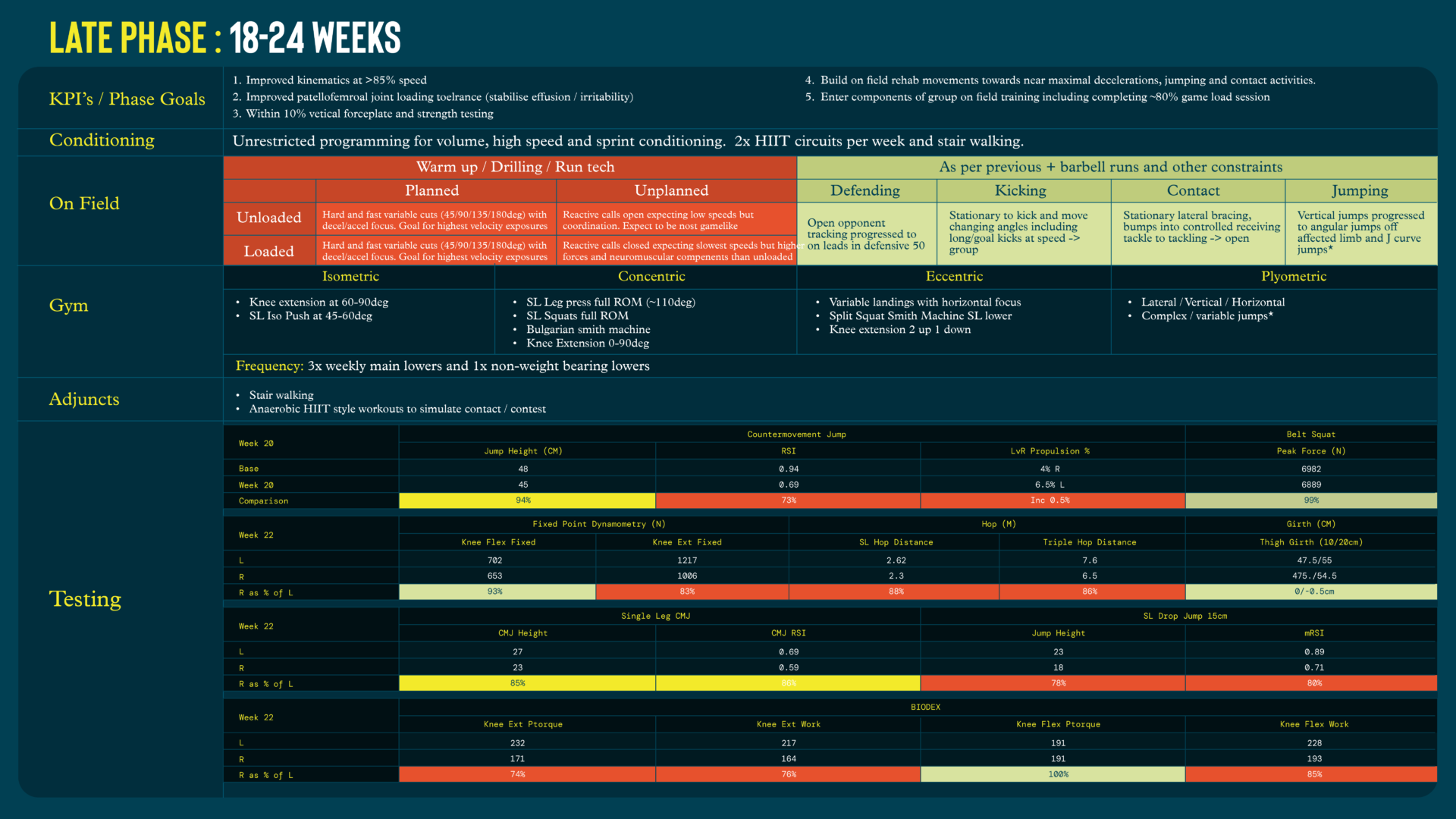
A key goal of this late phase was mapping the player’s integration into group football training. His ability to first tolerate and, then, perform the progressive speed, volume, COD, and football activities in the mid-late block gave us what we needed. We also sought to improve running kinematics at speeds >85%, stabilize the mild irritations and effusion at the patellofemoral joint, and progress to within 10% asymmetries for vertical jump testing.
Strength programming was now unrestricted. However, we tapered the total gym volume given the significant on field training loads. He now had two (instead of three) main lower body sessions per week to maximise recovery and readiness to perform on field. Concentric exercises went to full depth, with significant loads on eccentric tasks and variable / complex plyometric activities.
A maximal push / yielding isometric thread drove further adaptation for maximal motor unit recruitment, particularly towards improving peak knee extension force.
On field loading stepped up considerably with progression towards match day loads. Contested efforts are a cumulative metric that we developed and use internally. Using GPS data, it aggregates accelerations, decelerations, postural change, and collisions. The average player accumulates ~1000 contested efforts per game.
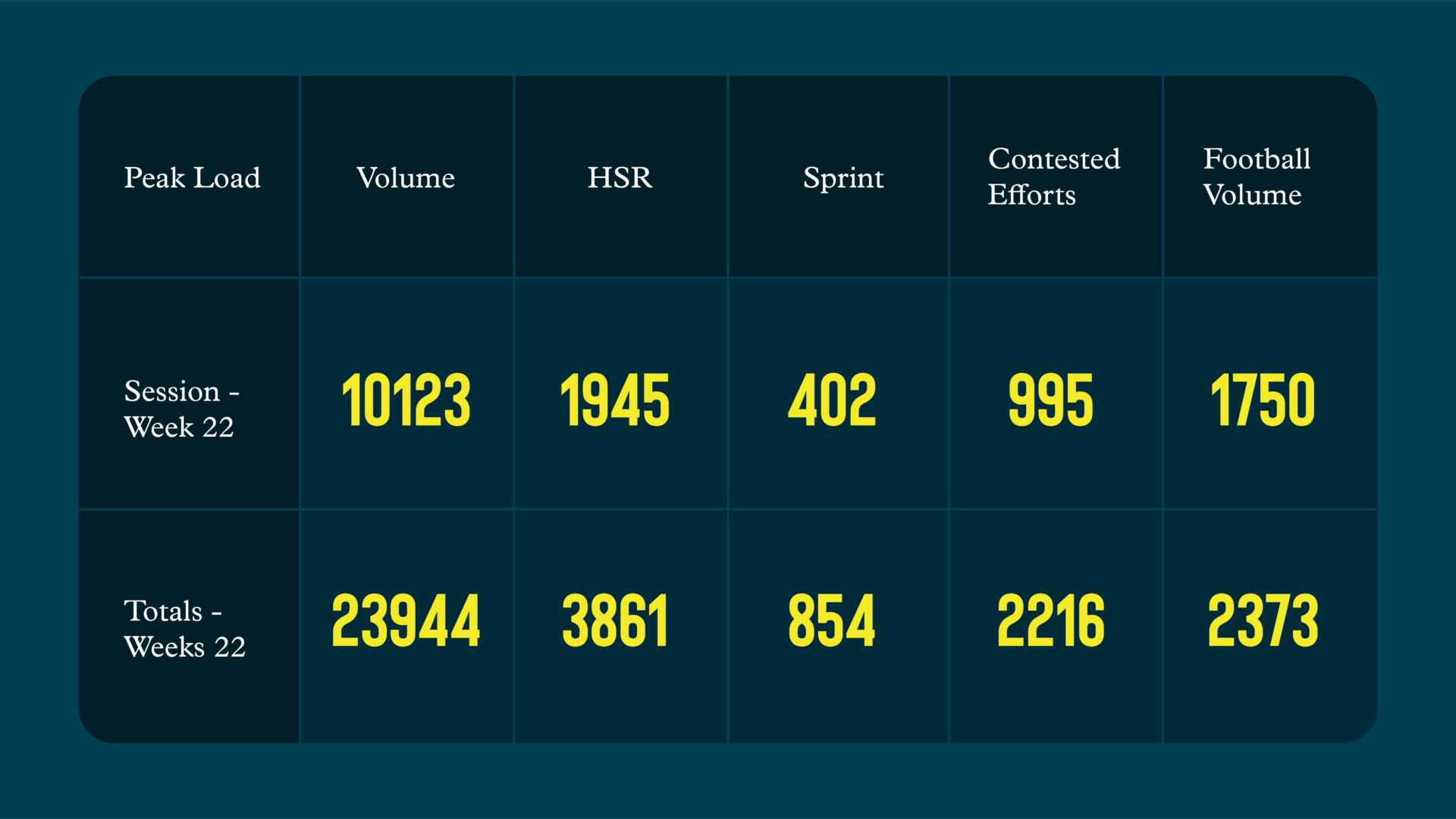
Change of direction and agility training followed planned, unplanned, loaded, and unloaded activities.
The intent behind having the athlete perform more planned tasks under load at this stage was to increase the deliberate forces and neuromuscular demands through the joint, alongside the cognitive and coordination demands of random unplanned movements.
Football progressions became more intense and mimicked specific positional demands. Opponent tracking progressed to defending 1v1 in the forward 50, leaving significant room for complex lower limb postures. Physical contact activities became more open and reactive, building to unrestricted tackling with repeat efforts.
With these on field tasks, we paid significant attention to the aerial component of the athlete’s game, given the initial mechanism of injury.
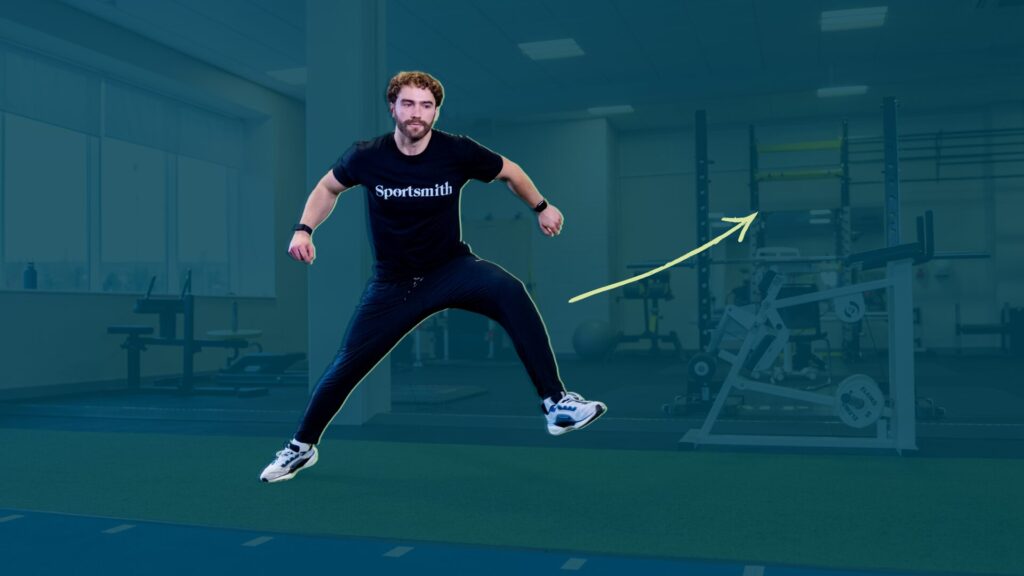
Despite excellent progress in vertical jump test results, post-injury jumping in competition rarely progresses and transfers as smoothly or linearly. In breaking down jump tasks on the field, the athlete noted poor performance and confidence in specific positions. The most notable was a “J mark”—running at an angle away from the ball before rotating and launching to intercept the ball. He performed this task regularly and repetitively throughout sessions, both while fresh and under fatigue to gain tissue exposure, strength, and confidence.
Integration into group technical training with group warm ups and non-combative skill based drills started in week 20. There was less straight line conditioning as the preference shifted towards rehab football circuit activities that simulated combative training.
We discussed the player’s progression towards full training in the context of moderate improvement in objective testing, alongside reasonable proof of work with run volumes and intensities. A solid base of high speed and sprint running gave the performance health team confidence to integrate the player into group training with decreased soft tissue injury risk. CMJ height and belt squat peak force were within 5% of baseline scores, with vertical jump testing sitting at 15-20% asymmetries.
We completed a Biodex assessment concentric/concentric at 60 °/s, which displayed a ~25% knee
extension peak force deficit.
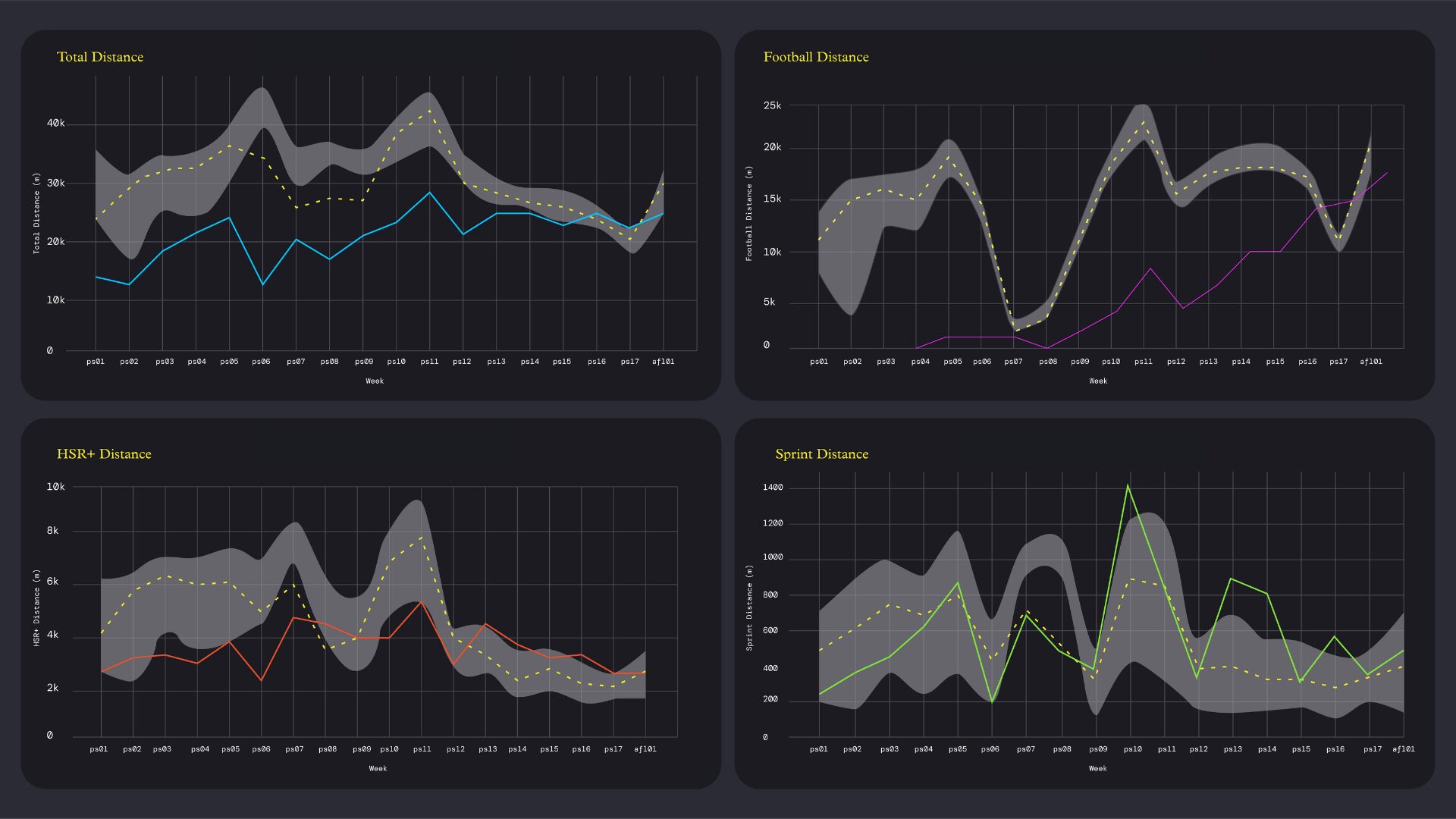
These scores showed that despite the solid progress and tolerance to group training activities, there were ongoing moderate asymmetries.
The performance health team deliberated over these findings, and ultimately were confident in his positive trajectory. We discussed scenarios where certain markers stagnated while on field function improved, and what level of comfort we would have with that. Ultimately, because of where we were in the calendar with another eight weeks until competition began, we had the opportunity to continue to train and target some of these deficits while also progressing group integration.
Tweet ThisThe intent behind having the athlete perform more planned tasks under load at this stage was to increase the deliberate forces and neuromuscular demands on the joint, alongside the cognitive and coordination demands of random unplanned movements.
James Grierson
Perform phase: Weeks 24-30
Our key goal for this phase was to progress to a successful return to play with high confidence and adequate performance. We continued to target improvements in reactive vertical jumping, peak knee extensor force, and horizontal movement competencies. Strength testing demonstrated symmetries within 10% for the single-leg leg press and Smith machine split squat at 2.5x BW and 1x BW, respectively.
Football volume progressed to where we could begin a modified training block.
Early in this phase, the athlete integrated into breakdown drills, which involve competitive phases of play, including competitive aerial and defending tasks.
Extensive objective testing at 26 weeks post-op satisfied all performance criteria with the exception of Biodex testing, which showed a 14-16% knee extensor peak force deficit. This prompted significant discussion from our high performance and medical teams.
There were three bases of this decision.
First, the player’s excellent on field performance in late rehab phases with significant exposure to “football movements.” Second, his excellent results on vertical and horizontal jump testing, in light of our belief that these placed the patellar tendon at highest risk of injury or soreness. Third, the belief that knee extensor Biodex testing places a significant amount of force directly over the fulcrum of the patellar tendon, with performance deemed sufficient at ~2.5x BW (with ongoing focus in the gym to improve).
The player participated in small sided games and full open matchplay, with the rehab team closely monitoring his movement skills and confidence in the team environment. He returned to competition in a preseason match at week 30 post-injury.
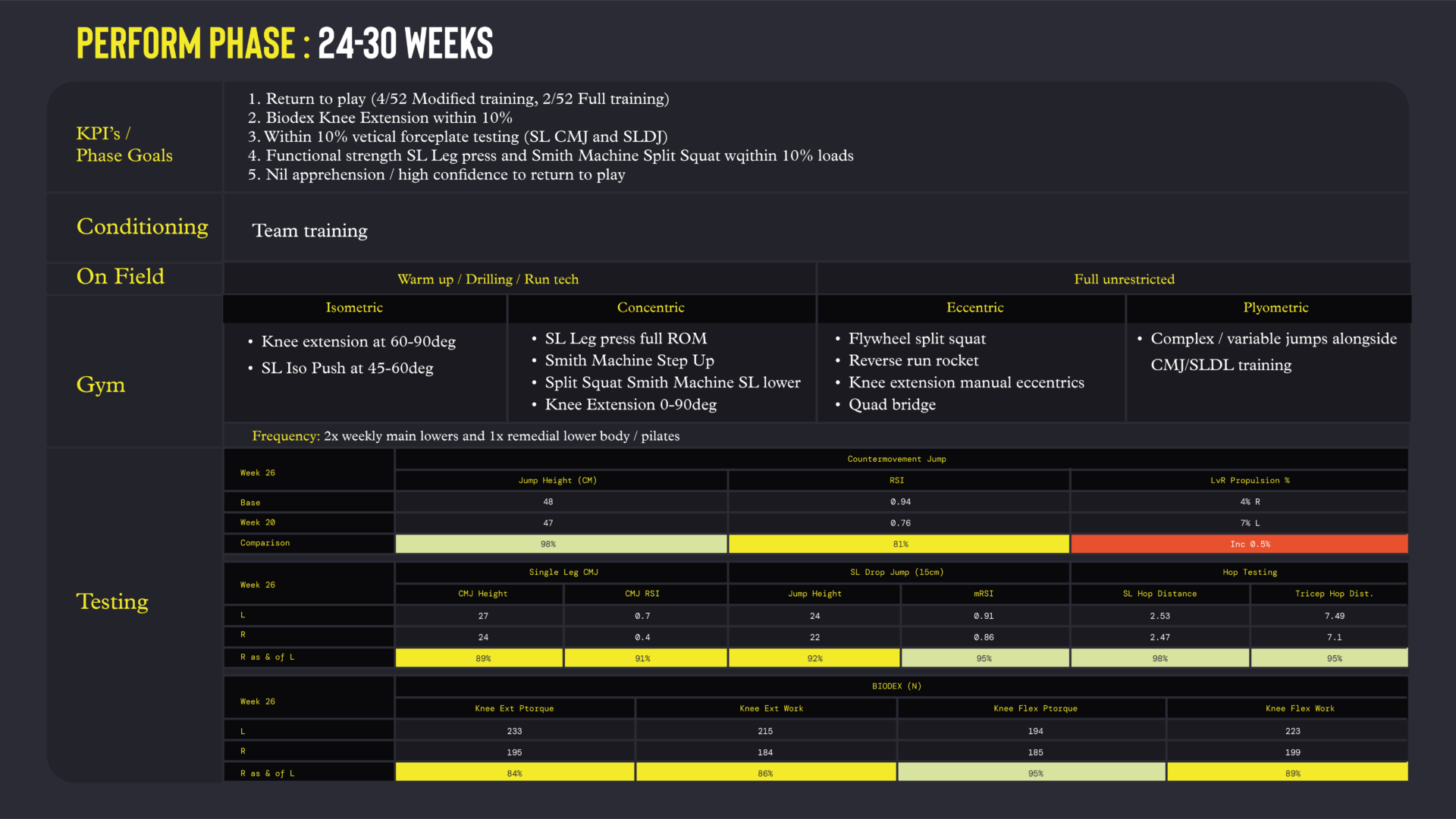
Football loads increased over a month in preparation for a return to AFL competition, which came in the second competitive match of the season. The player completed 86 minutes in that game.
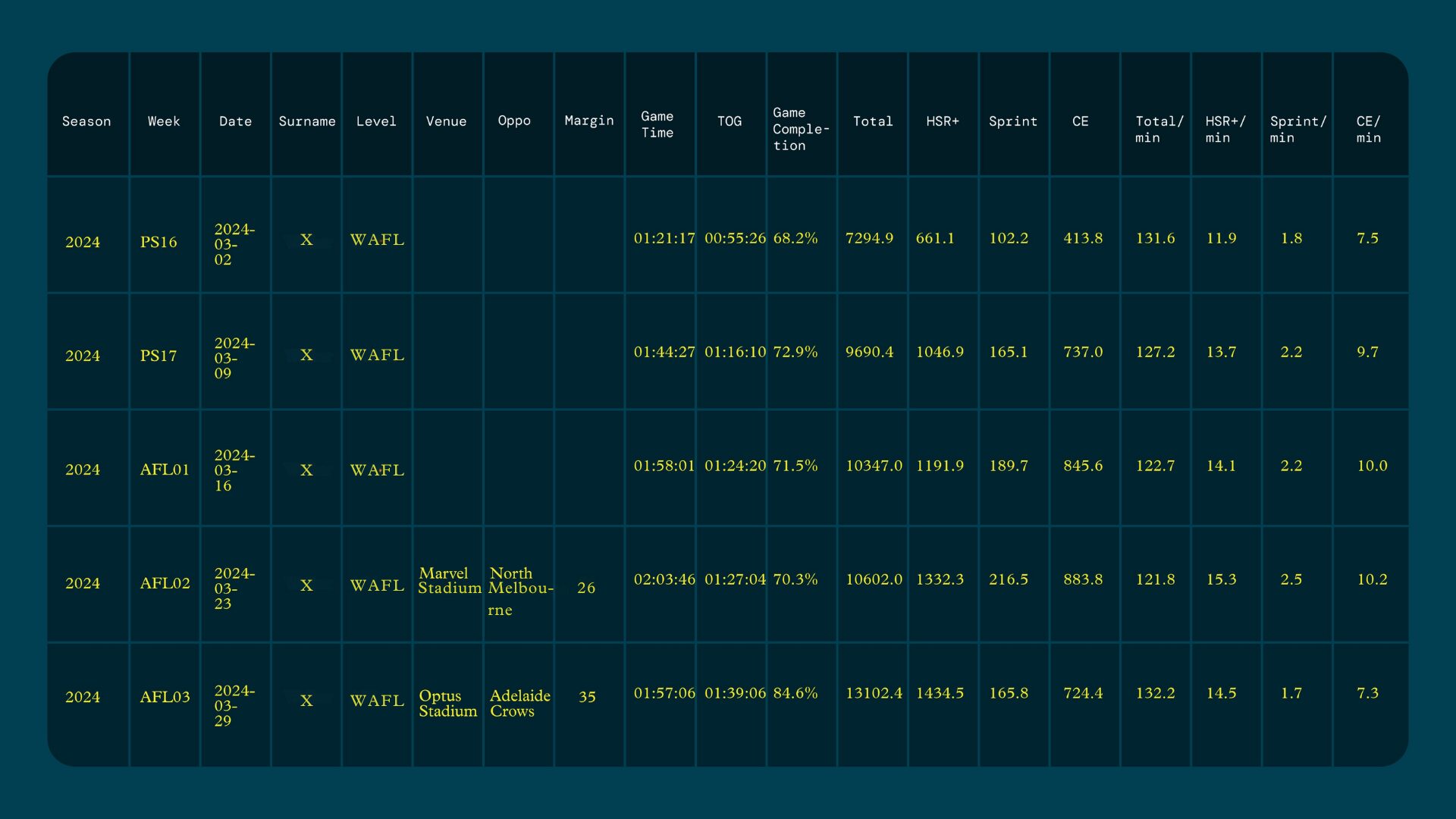
Tweet ThisOur key goal for the perform phase was to progress to a successful return to play with high confidence and performance. We continued to target improvements in reactive vertical jumping, peak knee extensor force, and horizontal movement competencies.
James Grierson
Aftermath: RTP to the present
The athlete rarely missed training throughout the entirety of the subsequent season. He did not suffer any soft tissue injuries or significant periods of knee soreness, and only missed one game—and that was due to illness.
Occasional de-loads throughout the season reflected short breaks between games with less training. End-of-season Biodex testing—a bit over one year post-op—showed complete symmetry restored with scores sitting at ~3.1 x BW.
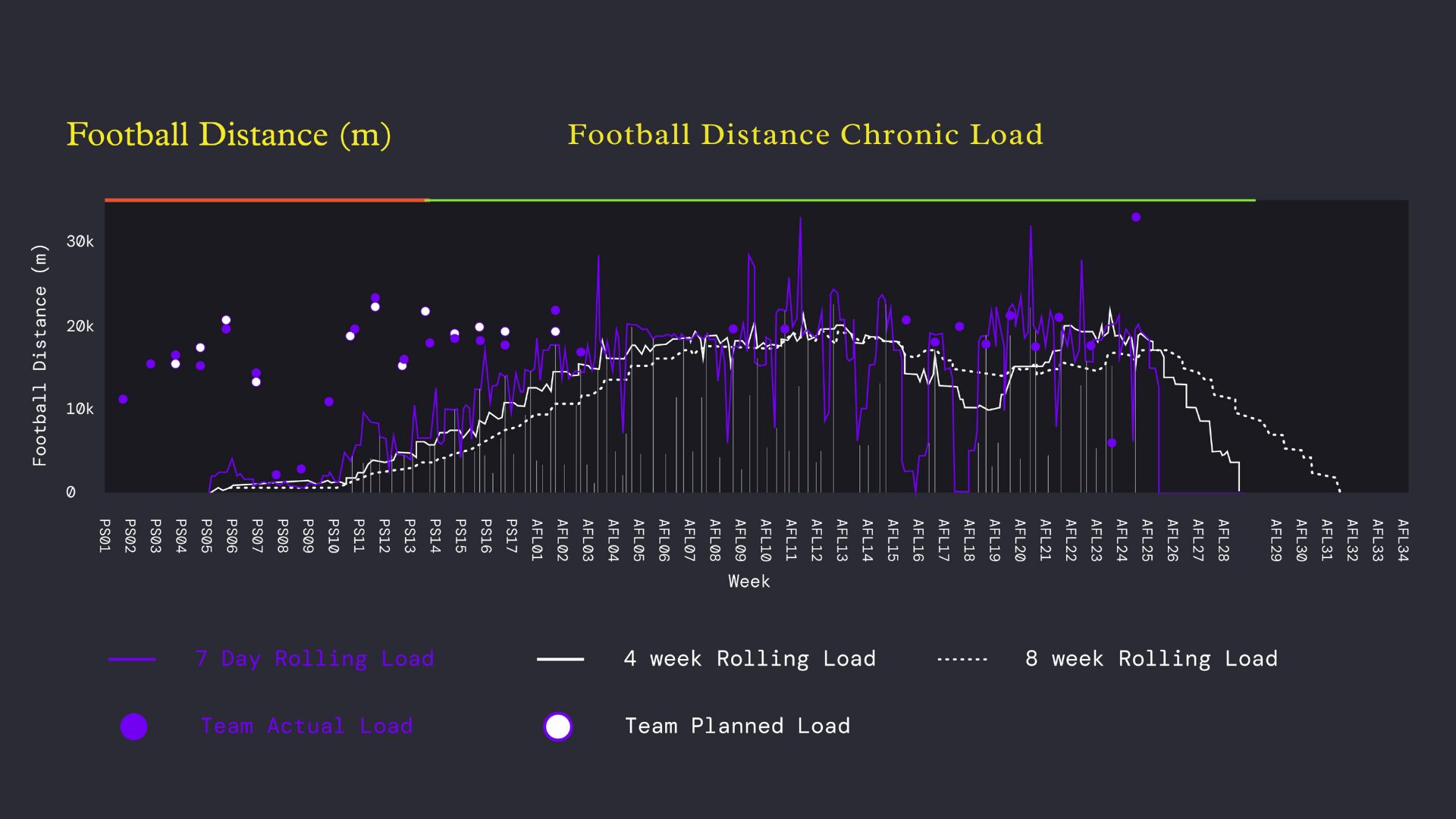
This staged program provides a framework with examples of milestones, KPIs and the performance health team’s decision making for a rare, serious, long term injury. It illustrates the nuances of rehabilitating patellar tendon ruptures and the particulars specific to on field progressions in the AFL.
By combining structured gym-based loading, conditioning, adjunct therapies, and progressive on-field exposure, clinicians can support athletes through each stage of recovery. Potential setbacks or sticking points have been articulated so clinicians can identify and address these early. This example shows how to respect objective testing by placing certain scores into context and understanding how that relates to specific injury risk and potential to return to performance.
Overall, any athlete’s progression across milestones and phases must remain individualized, responsive to athlete tolerance, and guided by ongoing clinical assessment and skills.