

Patellar tendinopathy or patella tendon pain is a common complaint among many athletes participating in high level sporting activity. These symptoms can be just an annoyance for some. But for others, it can be debilitating pain resulting in reduced overall performance and, in severe cases, loss of practice and game time.
This article will discuss strategies for managing patellar tendinopathy in-season for a collegiate American football player. He has a reactive on degenerative presentation, and our aims are to reduce symptoms, improve performance, and minimize practice or game time loss.
Tendon pathology continuum
The tendon pathology continuum has three stages: reactive tendinopathy, tendon dysrepair, and degenerative tendinopathy. [1, 2]
Reactive tendinopathy is characterized by a short term adaptation, followed by a thickening of a portion of the tendon. Since stress equals force divided by cross sectional area, this growth either reduces stress by increasing cross sectional area or allows further adaptation to compression. [1]
In normal tendon adaptation, tendon stiffness increases in response to well managed loading. [1] Reactive tendinopathy, on the other hand, typically results from an acute overload of stress, e.g., an increase in jumping, running, or high intensity deceleration volume. Another potentially contributing variable is the playing surface. Artificial turf fields are traditionally less compliant than grass, and can yield increased tendon loading during similar high intensity efforts.
Fortunately, reactive tendinopathy can revert to a normal tendon presentation in the absence or reduction of the overloading stimulus. [1]
Tendon dysrepair presents similarly to reactive tendinopathy. The body attempts to heal the tendon, but there is greater matrix breakdown: increased collagen separation and disorganization, as well as an increase in nerve and blood vessel ingrowth into the tendon. [1]
Tendon dysrepair can be challenging to distinguish from reactive tendinopathy clinically, but contextual factors including symptom duration and severity are useful if imaging modalities are not available. Tendon dysrepair typically occurs in cases where reactive tendinopathy has not been well managed, and an athlete continues to “push through” symptoms without modifying load.
A critical, non-diagnostic distinction between the two is that tendon dysrepair poses a longer and more challenging rehabilitation process, without the guarantee of return to normal tendon structure. [1]
The most severe stage of tendinopathy is the degenerative stage. This is characterized by areas of cell death due to apoptosis, trauma, or tenocyte exhaustion. [3] Further, large areas of the tendon matrix are disorganized and filled with vessels, matrix breakdown products, and low collagen volumes. [1] These large areas of disorganization or degeneration no longer contribute to the distribution of tensile or compressive forces. However, it is important to note these changes seldom pervade the full thickness of the tendon. Rather, focal points of degenerative tissue are interspersed within healthy tendinous tissue. [1]
Athletes with degenerative tendinopathy generally present with a history of tendon pain that resolves with reductions in load but returns as tendon loading increases. [1]
Degenerative tendinopathy may also occur post-surgically, particularly after ACL reconstruction, where the patella tendon is a common graft harvest site. If the degeneration is significant enough and the tendon is placed under extremely high load, the tendon can rupture in severe cases. [4]

Once the tendon has reached the degenerative phase, the capacity for reversing pathological changes is low. [1]
Given those stages, what do we mean by our athlete’s presentation of reactive on degenerative tendinopathy?
In short, it is a mix of the two presentations. Degenerative tendinopathy is characterized by focal points of tissue degeneration that can no longer contribute to transmission of tensile and compressive forces. This leaves the (healthy) remainder of the tendon to compensate for the reduced loading capacity, thus increasing the likelihood of mechanical overloading in previously well tolerated tasks. [2]
| Normal tendon | Reactive tendon | Tendon dysrepair | Degenerative tendinopathy | Reactive on degenerative tendinopathy |
| Classified as tendinous structure with collagen fascicles remaining intact and organised. | Occurs in response to acute mechanical overload. Results in a short-term thickening of part of the tendon to reduce tendon tissue stress. Reversible with reductions of mechanical loading. | Occurs in response to continual loading of the tendon in the reactive phase. Potential for increased neovascularitsation (neuronal and vascular ingrowth). Some reversibility in this phase with reductions of mechanical loading. | Occurs in response to continual loading in the reactive or tendon dysrepair stage of the continuum or secondary to post-operative changes (patella tendon graft). Resulting in portions of the tendon unable to transmit load. Reversibility of presentation very unlikely. | The remaining non-degenerative portion of the tendon shifts into and out of the reactive tendinopathic phase. Reversibility of the reactive portion of the tendon with reductions in mechanical loading. |
Tweet ThisFacing tendon dysrepair suggests a need for careful load management and specialized rehabilitation strategies to avert the path towards degenerative tendinopathy. Early, focused intervention is essential for recovery and long-term tendon health
@MattHobbs_DPT
Practitioners’ roles in early stage management
Athletes presenting with reactive on degenerative tendinopathy generally experience soreness and pain of the patella tendon during extensive quadriceps loading activity or when the quadriceps is stretched. Upon further clinical examination, the site may be point tender with increased swelling and warmth around the area.
Managing these symptoms early and appropriately is critical, as it lays the foundation for the remainder of the rehabilitative process.
The early management of these symptoms works best through an interdisciplinary team, where sports medicine, strength & conditioning, and sports science work collaboratively to improve athlete health and performance.
Sports medicine
Early management, whether in season or in the off season, needs to focus on swelling and pain reduction, coupled with reducing mechanical loading. [1]
We need to reduce swelling because the accumulation of fluid within the tendon may contribute to increased intratendinous resting pressure, further impairing vascularization and increasing compressive load within the tendon. [5] The end result of that combination is overall delayed healing.
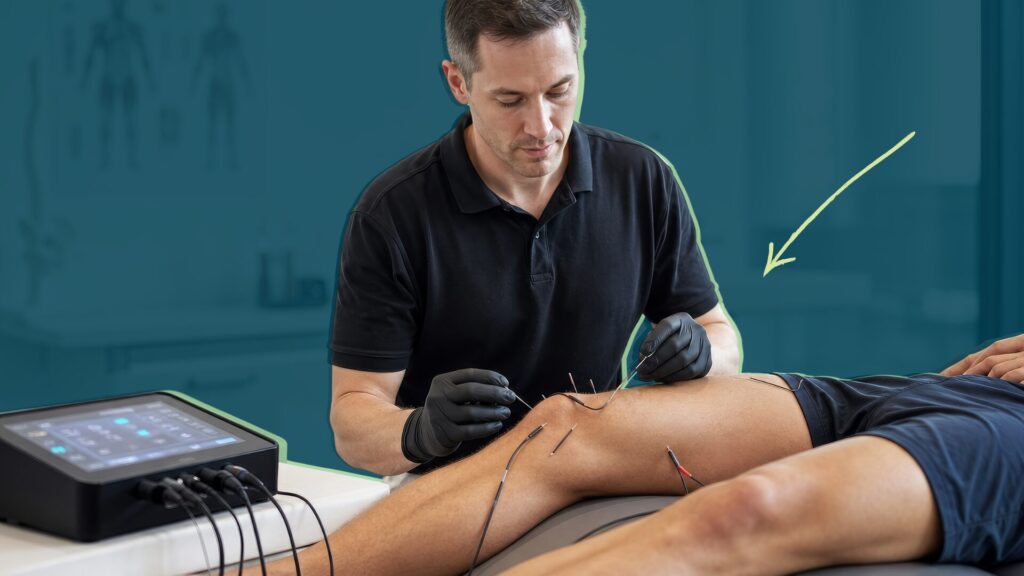
Pain management is also a critical factor in the early stage of rehabilitation, as increased pain – and swelling, for that matter – inhibit muscle contraction and strength. [6] The sports medicine staff can address both pain and swelling management through various therapeutics modalities, medications, and exercise variations including isometrics.
Strength & conditioning
Strength & conditioning’s main contribution is reducing mechanical loading.
In season, we make all efforts to keep the athlete’s participation level as high as safely possible, with their long term health as the primary consideration. This process begins in the weight room, as in season training is a staple amongst collegiate football programs. But football is the priority in season – strength training is a supplement. Therefore, any reduction or modification of mechanical loading has to start in the weight room before manipulating practice or game participation.
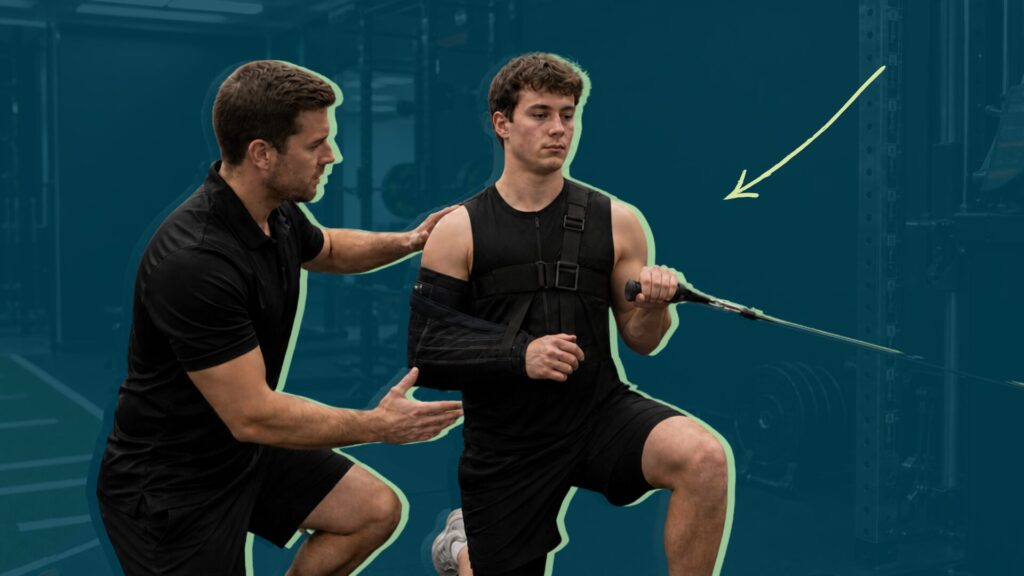
During the early stages of reactive on degenerative tendinopathy, the athlete will not tolerate traditional lower extremity loading variations very well. However, isometric variations can continue driving strength based qualities while also inducing immediate analgesia. [6] A multi-angle overcoming belt squat isometric may be more beneficial and well tolerated, for example.
Avoid deep knee flexion ranges of motion that stretch the anterior patellar tendon while compressing the posterior aspect against the tibia. Both aspects contribute to increased intratendinous pressure and potential delayed healing. Midrange isotonic or isometric variations can reduce the probability of exacerbating symptoms.

Sports science
If weight room modifications don’t sufficiently reduce mechanical load, we need to change the player’s practice and, potentially, game participation.
Several factors will determine the player’s level of participation in practice and in games: current symptom severity, ability to perform position related movements, symptoms following activity, and the position the athlete plays. In American football, the demands on the patella tendon are significantly different for a skill position player than for a lineman. The skill position player experiences a greater volume of tendon loading, and makes more use of the stretch shortening cycle than their lineman counterparts. The lineman may, therefore, tolerate greater volume of practice and game time than a skill position player with the same clinical presentation.
Regardless of the position, in an effort to keep participation as high as safely possible, the sport science staff must identify those parts of practice where the athlete can participate without risk of exacerbating symptoms and ensure they are integrated in those activities. GPS data can identify periods of practice that yield fewer high intensity efforts, and thus decreased tendon loading.
Further, countermovement jump testing on force plates can provide greater insight into lower extremity loading asymmetries. The most relevant metrics for patellar tendinopathy are eccentric peak force, eccentric deceleration impulse, and eccentric peak velocity. Concentric values can provide significant value, as well.
Interdisciplinary team
The final piece to early management is tying together all the information, including the athlete’s subjective reports of pain and function. Once all the information is in hand, the interdisciplinary team establishes a plan with the athlete’s help to reintegrate them into training.
| Reactive on degenerative tendinopathy practice participation (skill position) | ||||
| Period # | Period type | Normal tendon | Early stage | Late stage |
| 1 | INDY | Full participant | Full participant | Full participant |
| 2 | 1 ON 1s | Full participant | Modified participant (no more than 3 reps in a row) | Full participant |
| 3 | 7 ON 7 | Full participant | Out | Modified participant (no more than 4 reps in a row) |
| 4 | SPECIAL TEAMS (FG/FG BLOCK) | Full participant | Modified participant (no more than 3 reps in a row) | Full participant |
| 5 | SPECIAL TEAMS (KO/KOR) | Full participant | Out | Out |
| 6 | INDY | Full participant | Full participant | Full participant |
| 7 | TEAM SCRIMMAGE (1O VS 2D) | Full participant | Out | Modified participant (no more than 3 reps in a row) |
| 8 | TEAM SCRIMMAGE (1D VS 2O) | Full participant | Out | Modified participant (no more than 3 reps in a row) |
| 9 | TEAM SCRIMMAGE (2D VS 3O) | Full participant | Out | Modified participant (no more than 3 reps in a row) |
| 10 | TEAM SCRIMMAGE (2O VS 3D) | Full participant | Out | Modified participant (no more than 3 reps in a row) |
| Load prescription: | Workload cap: 100% / 400 High intensity effort cap: 100% / 28 | Workload cap: 50% / 200 High intensity effort cap: 40% / 11 | Workload cap: 85% / 340 High intensity effort cap: 75% / 21 | |
Tweet ThisEarly tendinopathy? Reduce loading & focus on isometrics to decrease symptoms & prevent progression.
@MattHobbs_DPT
Practitioners’ roles in mid to late stage management
By the time the athlete has reached the mid to late phase of reactive on degenerative tendinopathy, swelling should be negligible and pain substantially lower. Athlete management focuses less on the reactive nature of the tendon pathology and more on the degenerative nature.
As symptoms reduce, we can gradually increase mechanical loading volume. It is important to remember that though symptoms have reduced, the athlete is still more susceptible to re-entering a reactive tendinopathic stage secondary to the degenerative tissue present within the tendon. [2] The interdisciplinary team must carefully consider any substantial mechanical loading volume increases, which could exacerbate patella tendon symptoms and regress the athlete to the reactive phase.
Practice and game participation continue to be the top priority, so any significant mechanical loading reductions should take place outside of those confines first.
Sports medicine
During mid to late stage management, the sports medicine team plays an important role in identifying potential signs of symptom exacerbation, including increased pain, swelling, and potential warmth surrounding the patellar tendon – all signs of re-entry to the reactive tendinopathic stage. They also provide supplementary interventions like pain management strategies, increasing quadriceps and hip flexor extensibility, and improving proximal hip stability.
Their largest contribution, however, is collaboration, especially with the strength & conditioning staff. Ensuring all stakeholders are communicating and not performing the same interventions in multiple spaces is critical in avoiding a flare up of symptoms.
Strength & conditioning
The focus in mid to late stage management is on progressively increasing load capacity, something the strength & conditioning staff is well versed in developing.
Research on increasing load capacity in the presence of degenerative tendinopathy is heavily weighted towards eccentric training. But this emphasis appears to be unnecessary in practice, as outcomes are independent of contraction type. [8]
Recently, heavy-slow resistance (HSR) training has grown in popularity as a potential way to increase tendon loading capacity. The research surrounding HSR training is mixed, as some authors say loads need to be over 70% 1RM with various time spent under tension for each repetition, as well as a combination of various repetition schemes. [8–10] The recommended time under tension coupled with the suggested repetition schemes make loads >70% 1RM implausible; and including heavy eccentric training can increase delayed onset muscle soreness and decrease performance, both of which are disadvantageous in season.
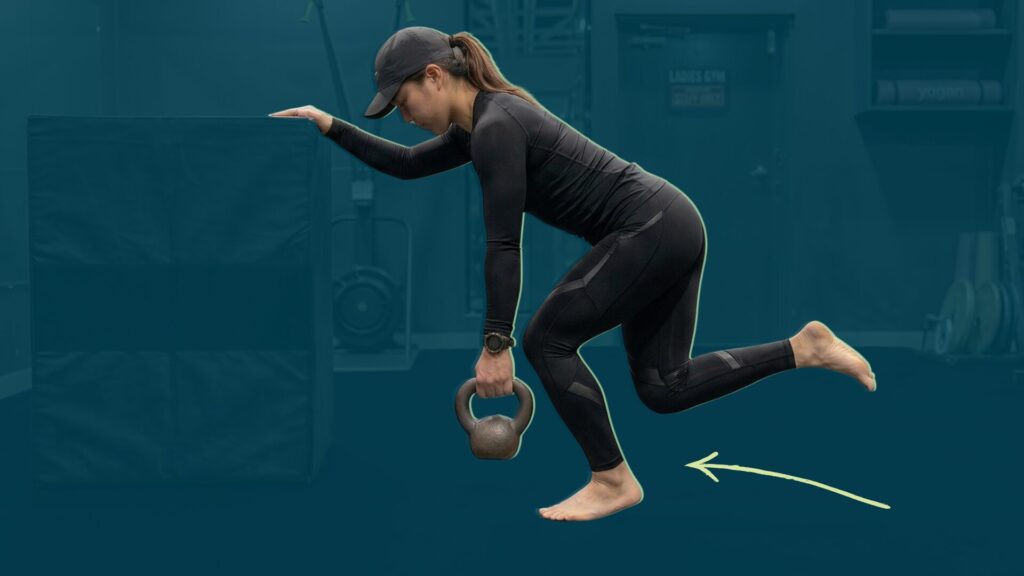
That said, HSR training should have a place in this stage of the process. Exercise selection can avoid compound movements. Instead of using a back squat for HSR training, which may result in a significant amount of fatigue and subsequent decrease in performance, HSR training would be better suited for a single leg knee extension or other single leg variations.
Similar to traditional strength training principles, progressive overload is necessary to continue increasing loading capacity. Practitioners can progress HSR training by increasing load or time under tension, or progressing the range of motion. Be patient when manipulating variables, as tendon adaptation is slow. Progressing too many variables at once can result in mechanical overload and regress into a reactive tendinopathic presentation.

Sports science
As in the weight room, management of mid to late stage reactive on degenerative tendinopathy in practices and games requires increasing tendon loading capacity. For athletes who have been out or operating at a limited capacity, increasing mechanical load is simply a gradual progression in the volume of participation.
Referencing the athlete’s historical data or position group data will show the details of full participation demands, which serve as the end goal for complete practice and game reintegration.
Monitoring volume changes in high intensity accelerations, decelerations (vertical and horizontal), and changes of direction will require increased attention, as these variables are associated with significant mechanical loading of the patella tendon.

Interdisciplinary team
Determining a rate of progression and, ultimately, an exact timeline for full reintegration in practices and games can be challenging as each athlete presents with different levels of degeneration. The interdisciplinary team must be flexible and patient, as they will undoubtedly have to modify the reintegration plan based on the athlete’s symptom and functional presentation.
Ensuring all stakeholders, including the athlete, are well informed of the varied nature of late stage reactive on degenerative tendinopathy is important, as the full reintegration process is hardly linear and minor symptom exacerbations are normal.
Tweet ThisDealing with degenerative tendinopathy involves a nuanced approach, focusing on maintaining function through low-impact exercises and carefully controlled movements to manage symptoms and support tendon capacity
@MattHobbs_DPT
Preventing tendinopathy through proactive monitoring and management
Better than managing reactive on degenerative tendinopathy is preventing the injury from occurring.
From a team wide perspective, avoid large increases in mechanical loading volume during off season and preseason training, both on field and in the weight room. As the season approaches, the volume of field based training needs to increase to improve tissue loading capacity in preparation for the demands of training camp and practices. This is best accomplished by starting off season training with more closed skill tasks that focus on movement competence and progressing toward open skill tasks that better emulate positional demands.
For the individual athletes, making use of the entire interdisciplinary team becomes critical. The sports medicine team can help identify individuals who are high risk for developing reactive on degenerative tendinopathy (either post operative or based on previous history). After identifying high risk individuals, the sports science and strength & conditioning staff can collaborate on strategies to further minimize mechanical loading volume increases, with the understanding that these athletes may require more time to adapt to imposed training and practice demands. This may require accruing high intensity volume more slowly in training, and preemptively modifying early practice participation to avoid any symptom worsening.
Managing in season reactive on degenerative tendinopathy is challenging to navigate. However, establishing criteria for the return to performance continuum along with consistent communication with the athlete can make the return to play process much easier.
| Reactive on degenerative patellar tendinopathy RTP continuum | ||
| Status | Stages | Outcome |
| OUT (0-1 week) | Stage 1 Acute (No activity) | Range of motion Limb symmetry >90% |
| Swelling/Edema Limb symmetry <1cm | ||
| Quad strength (Nm/kg) Limb symmetry >70% | ||
| Pain tolerance <7/10 | ||
| Pain to palpation (mild – moderate – severe) < moderate | ||
| LIMITED (1-4 weeks) | Stage 2 Sub acute (Modified) | Quad strength (Nm/kg) Limb symmetry >80% |
| CMJ testing – baseline and LSI Eccentric peak force <20% deficit Eccentric deceleration impulse <20% deficit Eccentric peak velocity <20% deficit Concentric impulse <20% deficit | ||
| Pain free linear running Velocity >70% | ||
| Player workload >50% historical average | ||
| Player high intensity efforts >40% historical average | ||
| Pain tolerance <5/10 | ||
| Stage 3 Reintegration (Hard limitation) | Quad strength (Nm/kg) Limb symmetry >90% | |
| CMJ testing – baseline and LSI Eccentric peak force <10% deficit Eccentric deceleration impulse <10% deficit Eccentric peak velocity <10% deficit Concentric impulse <10% deficit | ||
| Pain free linear running Velocity >85% | ||
| Player workload >75% historical average | ||
| Player high intensity efforts >65% historical average | ||
| Pain free change of direction Yes/No | ||
| Pain tolerance <3/10 | ||
| Stage 4 Sport specific (Soft limitation) | Quad strength (Nm/kg) Limb symmetry >90% | |
| CMJ testing – baseline and LSI Eccentric peak force <5-10% deficit Eccentric deceleration impulse <5-10% deficit Eccentric peak velocity <5-10% deficit Concentric impulse <5-10% deficit | ||
| Pain free high speed running Velocity >90% | ||
| Player workload >90% historical average | ||
| Player high intensity efforts >80% historical average | ||
| Pain free position specific movement patterns Yes/No | ||
| Pain tolerance >1/10 | ||
| FULL | Return to play | |
Tweet ThisManaging patellar tendinopathy focuses on symptom reduction, improving performance, and minimizing practice/game time loss
@MattHobbs_DPT