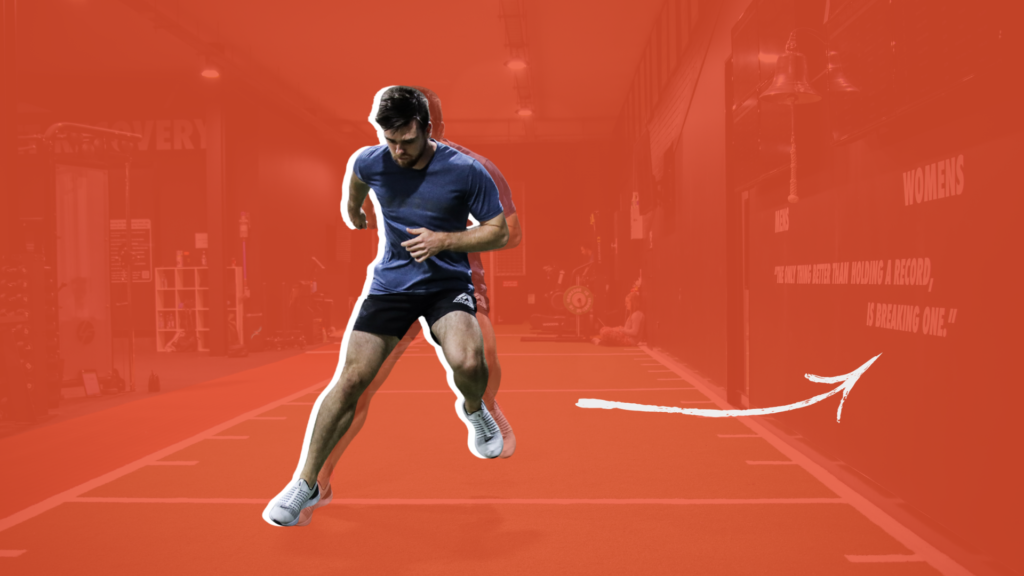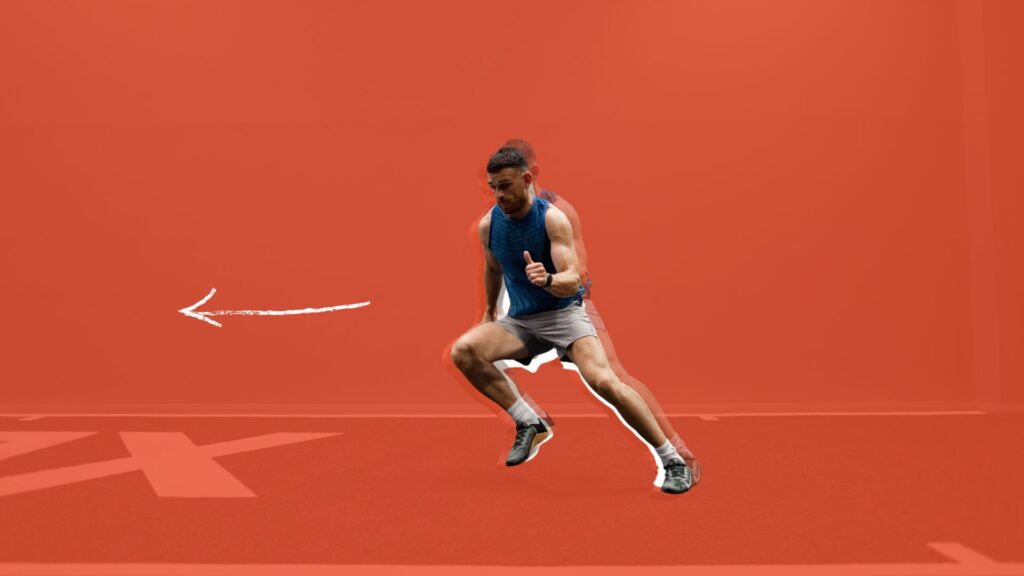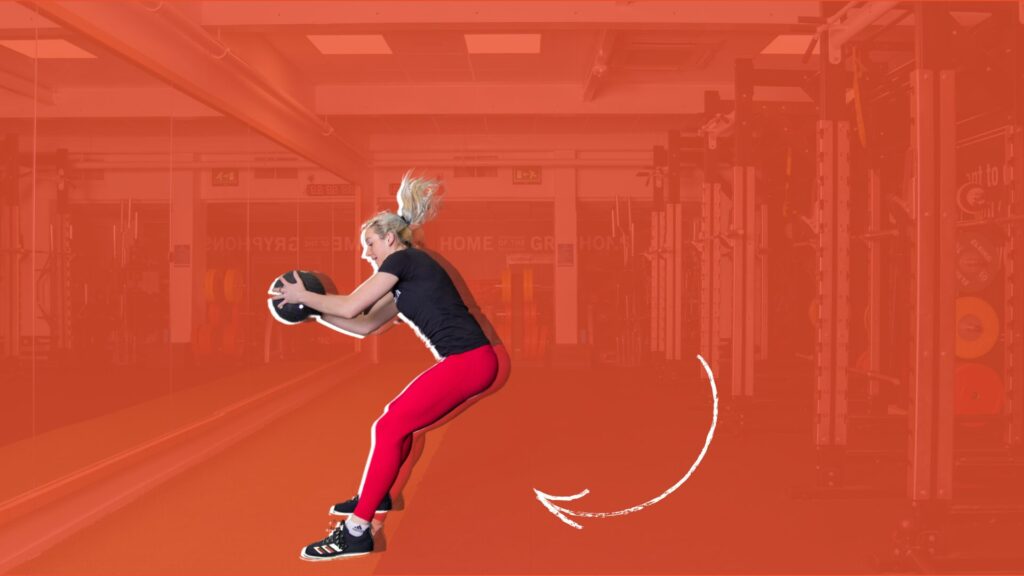

An important skill for rehab and performance practitioners to have is the ability to analyze athletes’ movement strategies. Whether stationary movements like a squat or dynamic movements such as a change of direction (COD) maneuver, practitioners must be able to evaluate whether the strategy is appropriate for that individual athlete. The big questions to ask ourselves are: “Does the strategy meet the technical aspects of our model of movement?” and “Where is this strategy on the continuum of what a ‘good’ movement looks like?”
Approaching this latter question can be incredibly subjective when it comes to agility activities.
COD drills are easier to analyze than agility activities, as they are more reproducible and predictable. They limit temporal and spatial uncertainty, resulting in simpler movement problems for the athlete to solve, while making it easier for the practitioner to analyze each movement pattern and overall maneuver. However, COD drills lack the perception-action coupling that make agility activities more representative of the movement problems athletes face in sport.
Young, Rayner and Tapley [1] discuss how preplanned COD drills lack the “ecological validity” to be representative of how an athlete will move in a reactive situation, in part because “according to the concept of perception-action coupling, technique changes when reacting to a stimulus.” Therefore, the strategies utilized in closed, preplanned COD drills with no reactive stimulus will likely not be the same as those the athletes employ in open, reactive agility activities.
COD drills do not have the same instantaneous problem solving that agility activities do. They allow athletes to preplan every aspect of how to complete the drill. Therefore, they do not promote the spontaneous emergence of various movement patterns or strategies.
Agility activities, on the other hand, give practitioners the opportunity to see what movement strategies athletes are able to use. These movement behaviors and the strategies that emerge can inform us about the athlete’s motor capacities. The different strategies that the athlete demonstrates will depend on the design of the activity and the athlete’s individual constraints.
Tweet ThisThe strategies utilized in closed, pre-planned COD drills with no reactive stimulus will likely not be the same as those the athletes employ in open, reactive agility activities
@resilientppt
Assessing technical aspects of changes of direction
The three fundamental questions when assessing any COD maneuver, whether it’s a closed COD drill or open agility activity are:
- Can the athlete produce enough force?
- Can the athlete produce enough force fast enough?
- Can the athlete apply the force at the appropriate angle?
If the answer to any of these is “no,” the athlete’s performance will be limited, regardless of whether we expose them to a closed COD or open agility drill.
There are technical aspects to every COD maneuver that allow the athletes to perform them successfully and safely. The athlete’s motor capabilities underlie the ability to execute technical aspects of movement.
Kadlec, Miller-Dicks, and Nimphius [2] state “Motor capacities, such as muscular strength and power, act as boundaries for the safe execution of perceptual-motor skills and co-determine the emergence of unique movement strategies,” but “…having adequate strength or motor capacity does not guarantee coordination and control, and therefore, other factors interact with motor capacity to determine movement strategy.”
One of these factors is simply their skill. As an athlete’s motor capacities improve, they need repeated exposures to agility activities in order to improve their skill. By using activities that allow “repetition without repetition,” we can hopefully improve the link between an athlete’s motor capacities and their perceptual-motor skill, resulting in improved movement strategies.
Almost all COD maneuvers have two shared technical components that enable a quick change of direction. First, wide lateral foot plants with perpendicular angles of force application create more horizontally directed ground reaction forces.
Second is the ability to maintain balance. This is key as one navigates a reactive situation, as success in an agility task is not always about the first move an athlete makes, but the ability to link multiple moves together. Athletes that are able to do this can reposition their feet around their center of mass (COM). Repositioning steps allow the athlete to find the necessary angles of force application while dynamically maintaining their balance.
The athletes who are able to reposition their feet well and have the appropriate physical capacities look fluid, smooth and quick while they move. Athletes that have difficulty in these areas will likely struggle with agility activities. They may appear slow, with choppy or rigid movements, have difficulty covering space quickly, and get “stuck” when performing various COD maneuvers.
| Key Areas | Questions |
| Role and task | – Are they offensively or defensively focused in this scenario? – Are they closing or escaping space? – Are they competing against an opponent? – Did they accomplish their task in the activity? |
| COD angle and maneuver | – What angle did they perform a COD? – Did they reduce their velocity prior to the COD? If so, did they need to? If not, should they have? – Did they cover ground effectively? – What type of COD maneuver did they use? – Was the braking to propulsion moment rapid? |
| Balance | – Did they maintain balance during the COD? – Did both limbs have to move to one side of the COM during the COD? – Did they favor using one side of their body more than the other? |
| Footwork | – Were they able to reposition their feet, if necessary, to find wide lateral foot plants? – Did they get “caught” in a bad position that they couldn’t get out of? – Was their foot angle open or closed during the COD? – Were their steps fluid or choppy? |
Some of the most important motor capacities underpinning these technical aspects are relative peak force production; eccentric deceleration; reactive strength; and having enough mobility to achieve various shapes. Consequently, the answers to the questions in Table 1 will point practitioners towards actionable areas to improve performance.
| Observations | Targeted training intervention |
| Strong but slow in and out of cuts | Reactive strength |
| Needs long runway to decelerate and brake | Eccentric deceleration |
| Loses balance and relies on leaning the trunk | Trunk control and trunk stiffness |
| Obvious dominant / preferred side | Simple, less intense, single leg change of direction tasks |
| Struggles to move feet quickly | Single leg plyometrics |
| Unable to achieve wide foot plants | Lower body or whole body mobility |
| Difficulty with pattern recognition, deception or other tactical elements | Training from specific cues or tactical education strategies |
Using uncertainty to uncover athletes’ COD strategies
Adding the elements of temporal and spatial uncertainty – not knowing when or wherethey will move – to a drill decreases the time available to execute a COD. It also may create a situation in which an athlete decreases their velocity too much prior to a COD. In this case, the likelihood of completing the task will decrease.
Assessing CODs in a reactive situation is more representative of the movement strategies athletes need to be able to execute in sport, where the pressure of time is high and the spatial uncertainty is great.
We will use the terms frontside and backside to differentiate between the limbs during a COD. The frontsideis the limb in the direction the athlete is traveling, and the backsideis the limb opposite the direction they are moving. For example, when an athlete shuffles to their left, the left leg is frontside and the right leg is backside. When they change direction and go from moving left to right, their left leg becomes the backside leg and their right leg becomes the frontside leg.
Single leg movements are the gold standard of COD
For athletes to be successful in agility situations, they have to be able to reposition the feet to find and apply the best angle of force. As the time constraints around a COD intensify, being able to perform a COD in a single step becomes much more valuable. Typically, this puts the emphasis on one limb while limiting the potential effectiveness of leaning the trunk.
A single leg COD is what we see when athletes “cut on a dime.” Examples occur all the time in sports when offensive players are able to evade their defenders, or when defenders instantly change direction to close the space with the offensive player. While not every COD can be performed in a single step, a large percentage of CODs in team sports happen at submaximal entrance velocities, which often can be performed in a single step.
Single leg CODs allow athletes to transition quickly between angles and link different movement patterns together.
A single leg COD requires the athlete to produce the entire braking and propulsive impulse in one ground contact (the final step) with their backside leg. A simple cue that often works well to free up an athlete’s movement is “Let your feet move,” This cue allows them to be more dynamic and not focused on moving in a specific way as they work through the movement problem we present.
Compensations to avoid a single leg change of direction
When athletes are unable to perform a single leg COD, there are many compensatory strategies they can use to reduce the force demands on the backside leg during the final step. The two most common are increasing the braking force in the penultimate step with the frontside leg, and using a double leg COD with both feet hitting the ground on the final step.
Using the penultimate step to provide a large braking force reduces the force demand of the final step, and allows the backside leg to provide a primarily propulsive impulse.
A double leg COD, sometimes referred to as a hockey stop, is when the athlete hits with both feet at the same time for the final step. Rather than keeping their legs separated around their COM, the athlete brings both legs to one side of their COM to apply the necessary horizontal braking force for the final step. This typically results in the COD appearing to have distinct braking and propulsive phases instead of a smooth, rapid transition between the two.
These strategies are not necessarily compensatory when there is a high entrance velocity into a COD, or when the presence or activity of other players affects the timing of the COD. Outside of identifiable situations like these, however, we can asses these movements as compensations if the athlete lacks the requisite motor capacities.
Both of these COD strategies occur with the trunk leaning in the frontside direction prior to the final step. Trunk lean can be an effective strategy to improve COD speed in a drill, as it moves the COM towards the frontside to give the backside leg better leverage to apply a horizontally directed force. But it becomes less effective when there is a reactive component.
If the frontside leg needs to reposition quickly to become the backside leg, as it can if an athlete bites on a fake and makes a mistake, then the trunk lean reduces the likelihood that the frontside repositioning occurs with good leverage relative to the COM. A poor repositioning step due to excessive trunk lean decreases the horizontal force the limb is able to produce, thus making the COD slower.
Leaning the trunk early for a reactive COD also tells an opponent where you are going, giving them more time to counter.
Some of the factors contributing to these compensations in reactive situations are limited relative peak force production; reduced rate of force development; poor eccentric deceleration; decreased reactive strength; and limited mobility, which reduces the ability to achieve the requisite angle of force application relative to the COM.
Tweet ThisAssessing CODs in a reactive situation is more representative of the movement strategies athletes need to be able to execute in sport, where the pressure of time is high and the spatial uncertainty is great
@resilientppt
Case study: Lateral shuffle to sprint in post-ACLR athlete
To examine this type of single leg COD performance, we will look at an agility activity with a defensive emphasis. The setup is simple: the athlete shuffles to whichever direction the practitioner points until a ball is thrown to the athlete’s left or right, at which point their task is to catch the ball before the second bounce. There is temporal uncertainty because the athlete does not know when the ball will be thrown, and there is spatial uncertainty because the athlete does not know where the ball will be thrown. If the athlete anticipates where the ball will be thrown and is wrong, then their COD will be slower and they may not accomplish the task.
When assessing the movement strategy in a drill like this, we need to determine if each limb’s strategy is the same as the other’s. This is especially the case when one limb has sustained or is recovering from an injury. This can help us determine if there is a difference between each side’s motor capacities, if there is an “optimal” strategy for the athlete, or if the athlete needs more practice in reactive situations.
The athlete in the following videos was in the later stages (8-9 months post op) of her return to sport progression after an ACL reconstruction. We’ll use three questions to assess each of the three major components of the task.
COD Maneuver
- Does the final step occur with one or two legs?
- Is the transition from the braking to the propulsive moment smooth and rapid, or broken up and slow?
- Does the COM project in the new direction after the final step?
Balance
- What is the body angle / lean in the final step?
- Does each limb display similar strategies?
- Is she leaning in a way that unloads the backside leg?
Footwork
- Does she achieve a wide lateral foot plant?
- Does she close off her backside foot?
- Are her steps excessively choppy or fluid?
In the first video, we see the athlete perform a double leg COD and use her frontside (left) leg to apply a braking force in the final step. She swings both legs to her right while both feet come close together to touch the ground simultaneously for the final step as she leans her COM to her left (notice the low left shoulder).
She appears to abduct her right hip to achieve a wide lateral foot plant with a closed off foot. But this is actually the result of her leaning her trunk to the left, as this body angle would limit her ability to redirect to her right, if necessary.
The frontside foot is underneath the COM instead of staying to the left of the COM, with good leg separation to be ready for the next ground contact after the right side pushes.
Because the left limb had to reposition underneath the COM to apply a braking force in the final step and the right limb doesn’t produce enough propulsive force, the left limb doesn’t have enough time to reposition to the left. And the double leg braking moment makes the COD appear to have separate braking and propulsive actions.
All of these factors in the final step cause the athlete to rise more vertically rather than travel horizontally, thus limiting how much her COM projects in the new direction.
When performing the same drill to the opposite side she is able to execute an excellent single leg COD, with her left leg as the backside leg. Once she knows that she needs to run to her right, she abducts her left leg to get it outside of her COM, redirecting her foot to close it off as she sticks it in the ground.
She has almost zero trunk lean to her right (notice the angle of her shoulders) and maintains great balance as she achieves a wide lateral foot plant. We see her right leg come close to her left leg, but it doesn’t touch the ground until the left leg finishes producing a propulsive force to move her COM to the right. Her COM already moves to the right after the left leg pushes, so she is able to drop her right shin angle to drive down and back, pushing her more horizontally instead of vertically.
These differences add up to more COM projection in the new direction of travel, resulting in a faster COD off her left leg than her right.
Practitioners need to be careful of drawing conclusions and making assumptions about an athlete’s movement capacities based on one rep. There are skill components to every agility activity, and every rep is only a snapshot in time. Only after giving this athlete multiple reps and attempts to practice this (and other) CODs was it clear that she used a different strategy on her right leg than on her left.
After determining that the movement strategies were, in fact, different, we could begin to address the potential causes.
Tweet ThisPractitioners need to be careful of drawing conclusions and making assumptions about an athlete’s movement capacities based on one rep
@resilientppt
Exercises to improve specific change of direction attributes
The interventions addressed the primary components of the motor capacities required for COD: relative peak force production; eccentric deceleration and reactive strength; and angle of force application.
For the sake of this discussion, we’ll categorize the exercises based only upon the main intent behind their inclusion.
Relative peak force production
Reduced quadriceps strength is one of the most common limitations after an ACL reconstruction. Therefore, we programmed a seated quad pushing isometric (PIMA) to improve her relative peak force production. A parallel stance lateral PIMA targeted her ability to produce high levels of force from a wide lateral foot plant. This variation gives her more time to produce as much force as she can in the shape we are looking to train.
Similarly, the tier 1 band resisted shuffle cut increases the time for her to produce the necessary braking and propulsive forces in a wide lateral foot plant shape. We introduce a transverse plane rotational force by having her hold the band in her hands during the COD. She has to resist the rotational moment from the band with her trunk to keep her upper body square as she transitions from right to left, increasing the demand for core control.
| Exercise | Sets x Reps | Rationale |
| Seated quad PIMA (see below) | 4 x 3x 3-5 sec / leg | Increase quad peak force production |
| Parallel stance lateral PIMA Seated quad PIMA (see below) | 4 x 3 x 3-5 sec / leg | Increase peak force production in the requisite shape |
| Tier 1 band resisted shuffle cut (see below) | 3 x 3 / leg | Increase GCT and, thus, the time available for the backside leg to produce force. The reactive component makes the athlete reposition feet when necessary. |
Eccentric deceleration and reactive strength
All COD maneuvers have elements of eccentric deceleration and reactive strength. The quickest and most agile athletes are able to rapidly produce eccentric forces and move from relatively eccentric to concentric muscle actions quickly.
Dot drills make athletes apply force at various angles around their COM in brief GCTs while maintaining balance dynamically. The low box shuffle allows athletes to apply horizontal forces rapidly with a wide lateral foot plant. The high entrance and exit velocities with a short GCT requires good reactive strength. Rebound heidens also train a wide lateral foot plant while preventing the use of the frontside leg during the transition from one direction to the other. The ramp aids in keeping the footplant wide and increases the demand on the lateral hip.
| Exercise | Sets x Reps | Rationale |
| Dot drills (see below) | 4-5 patterns x 5 reps each | Requires athletes to reposition limb around COM while performing small CODs with short GCTs. |
| Low box shuffle (see below) | 3-4 x 5-8 / leg | Allows athletes to find a wide lateral foot plant relative to COM with a short GCT. |
| Rebound heidens (see below) | 4 x 6-8 / leg | Makes athletes maintain leg separation to COD off one leg in hip abduction. |
Tweet ThisThe quickest and most agile athletes are able to rapidly produce eccentric forces and move from relatively eccentric to concentric muscle actions quickly
@resilientppt
Angle of Force Application
The medicine ball jab step focuses on an aggressive wide foot plant where the athlete must close off their foot to get back quickly. The fake throw adds a little momentum to the action while increasing the demand on the trunk.
Medial hop to lateral run makes the athlete perform a single leg COD as they must reposition their foot from under their COM to lateral to it. Having a reactive component limits how much trunk lean they can use to unload the limb. The lateral hip plays an important role in achieving a wide lateral foot plant through hip abduction.
A short lever side plank trains the lateral hip to control a greater hip abduction angle.
| Exercise | Sets x Reps | Rationale |
| Med ball lateral jab step (see below) | 3-4 x 5 / leg | Allows for an aggressive foot plant as they move the foot from frontside to backside, and close it off. |
| Tier 1 medial hop to lateral run (see below) | 2-3 x 3 / leg | Increases the distance athletes must reposition the limb to perform a single leg COD while increasing the momentum they need to redirect. Reactive component stops the athlete from using excessive trunk lean to unload the limb. |
| Short lever side plank (see below) | 3 x 15-20 sec | Increases hip abduction control to improve ability to achieve a wide lateral plant angle from COM. Short lever allows for a greater angle of hip abduction to be achieved. |
During the next month of weekly sessions, the athlete performed these interventions prior to the same agility activity. She typically did 1-2 exercises from each category at each session. After a couple of weeks, her physical abilities improved and she became able to brake on one leg.
Here the athlete attempts to perform a single leg COD. She abducts her right leg to achieve the appropriate angle for the final step and is able to stop her momentum. However, she is unable to produce a propulsive force on her right leg to push her COM to the left. Once she stops, her left leg repositions under her COM before pushing into the ground to begin moving her to the left.
Ultimately, she was able to produce a single leg braking moment, but not a single leg COD since the final step was broken into separate phases of braking and propulsion.
After a couple more weeks of continuing to perform the same interventions, we can see a significant difference in her strategy.
The athlete is able to execute an excellent single leg COD on her right leg. She, again, abducts her right hip and closes off her foot to find the wide lateral plant angle, a crucial component of the final step.
Her trunk lean is not as far to the left (shoulders are more level), which allows her to redirect back to her right, if necessary. As her right foot touches the ground she is able to stop her momentum and push her COM to the left.
Her left foot is in the air as these right leg actions occur, and it doesn’t touch the ground until after her COM has begun moving to the left. We see a smooth and quick transition from braking to propulsion by her right leg. Once her right leg has finished pushing, there is an aggressive switching action of her legs as she drives her left leg down and back with a good shin angle to continue accelerating and projecting her COM to the left.
She is able to continue performing a single leg change of direction as we progress to activities that are more open and allow her to move at different angles. In this clip we can see her use a single leg COD as she transitions from a shuffle to a hip turn as she retreats to cover space.
For athletes to be effective in agility situations, they need the requisite motor capacities and the ability to implement them within their perceptual motor skills. The interaction between motor capacities and perceptual motor skills determines the movement strategies an athlete can employ.
COD maneuvers require athletes to apply enough force, in the right amount of time, and at the right angle. The movement strategies that work in closed change of direction drills do not necessarily translate to the strategies that will be successful in agility activities.
By having a framework to examine COD maneuvers in agility activities, practitioners can determine the limiting factor(s) that they need to train.
Tweet ThisThe movement strategies that work in closed change of direction drills do not necessarily translate to the strategies that will be successful in agility activities
@resilientppt