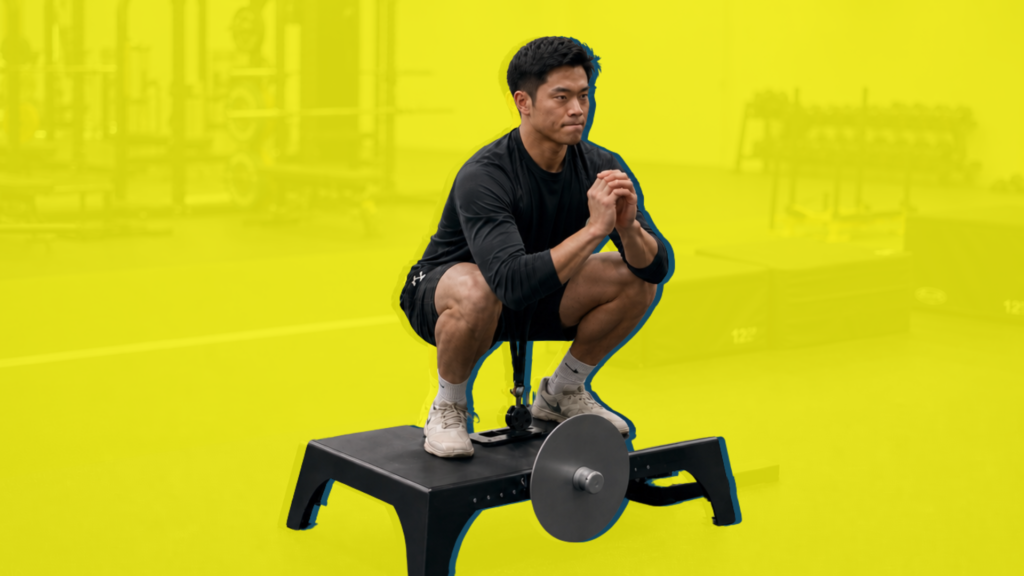
Flywheel training is a high intensity resistance training modality that elicits marked neuromuscular and sport specific performance improvements [1]. Flywheel devices apply the concepts of rotational speed and moment of inertia (kg·m2) to store energy during the concentric phase with one or more rotating discs. When the cord rewinds in the eccentric phase, the athlete must resist the rotating disc(s) (Video 1). The moment of inertia is the inertial load of the discs and is analogous to changing the intensity or weight during isotonic resistance exercises.
How to familiarize your athletes with flywheel training
To optimise the familiarization process, we aim to pair athlete and coach perception with mechanical outputs such as peak power. Initially, the athlete will not attain consistent mechanical outputs, with technique and movement patterns appearing suboptimal and uncoordinated. The focus during the first phase should be on utilizing lower or medium moments of inertia at submaximal intensities.
Athletes will develop sufficient technique and postural control during maximal movements, but may still not be able to achieve reliable peak power outputs, especially with higher moments of inertia. During this phase, coaches should limit their athletes to lower ranges of moments of inertia.
Once it is evident that an athlete is comfortable and can perform movements with a high level of technique and postural control, coaches can begin programming a greater number of challenges, e.g., manipulating intensity, volume or exercise selection [3]. With well-trained athletes, a protocol involving a high volume (4-6 sets) of near maximal squats, with moments of inertia ranging from 0.050 – 0.075 kg·m2, repeated over two sessions can be extremely effective. Alternatively, if athletes are less trained, a variety of exercises (upper body, single-joint) at lower moments of inertia over multiple sessions is more appropriate.
Tweet ThisCoaches should approach power or velocity outputs from flywheel training on an individual or team basis
@MarcoBeato1 & @kevdekeijzer
How to coach the flywheel squat
The initial repetitions: from stationary to maximal
Athletes at the start of flywheel training should focus on achieving the desired range of motion (ROM). Coaches can prescribe one or more isometric contractions for this initial “acceleration” of the flywheel.
Coaches should encourage athletes to drive through the floor while maintaining rhythm. Athletes will know if they are performing this correctly if they feel like they can achieve and maintain maximal force and velocity quickly. Two repetitions are typically prescribed as the initial / acceleration repetitions. These will always feel slower and harder for the athletes. Because they do not accurately capture the flywheel mechanics, practitioners usually discard them from the final data analysis.
| Squat phase | Phase focus | Phase cues | Technical points | Common technical errors |
| Initial repetitions Nothing to maximal | Maintain balance, obtain desired ROM, and develop high force quickly and safely | Drive through the ground pushing with mid-foot, keep rigid upright torso, accelerate the disc(s) as fast as possible | Stance (width, foot placement) and Lean (neutral back and chest up) | Forward and backward lean leading to loss of balance and sub-optimal training or injury |
| Turning point Concentric to eccentric | Transition quickly and smoothly, maintain balance and posture, avoid early deceleration | Heels stuck to platform, feel the end ROM, glide down, maintain tension ready to brake | Maintain control, tension, and tempo during the transition | Lacking awareness means heels come off flywheel device (causing loss of balance, injury, or sub-optimal deceleration). Poor focus on tempo of movement |
| Deceleration Fast to stop | Obtain high eccentric force in a short period of time, do not sacrifice postural control | Delay and fight back, Heels firmly grounded, torso upright, pushing and not just ‘stopping’ | Move hips backward, avoid leaning forward too much | Excessive forward lean (poor postural control), athletes begin decelerating too soon |
| Re-acceleration Eccentric to concentric | Apply as much force as possible as soon as possible. Focus should be on maintaining postural control and force throughout the entire re-acceleration phase. Athlete must achieve the highest velocity possible | Attack the ground, maintain postural control, continued maximal effort | Hips and torso should move uniformly, force and power must be applied throughout | Athletes do not continue to maximally push in the mid-portion (and begin to think about the next phase too soon), excessive forward lean |
The turning point: From concentric to eccentric
The turning point from the concentric to eccentric phase requires high levels of coordination, awareness and timing for the athlete to perform it quickly, as it does not allow for a pause or temporary “break.” The most competent athletes will have an intuitive understanding of how to perform this phase.
Athletes must maintain balance and rhythm, remembering to work almost continuously throughout the pre-determined ROM. They should set a target to perform the turning point quickly and sharply, with minimal interruption between the concentric and eccentric phases. Athletes may find this tricky to manage as every repetition will be slightly different in terms of the ROM and torque they achieve. Sometimes, the heels will come off the machine, similar to the initial phase of a jump or shrug. Coaches should watch for this and intervene if they see it, as it can damage the machine and is more likely to cause the athlete to lose their balance.
Deceleration: From fast to stop
Coaches can prescribe several different methods to decelerate the movement. This phase is often prescribed as a delayed, brief and forceful period near the end of ROM [4].
Encouraging a “catch” during the movement can be very effective for those athletes who can then re-accelerate quickly. Other athletes, though, may appear disjointed, slower or otherwise sub-optimal in response to the “catch” instruction. Coaches must give the athlete sufficient time to practice the deceleration phase prior to altering the exercise, volume or intensity. Coaches should perform a visual inspection, ask the athlete how the movement feels, and pair their observations with the quantitative output of power produced.
The athlete’s technique during this movement often determines whether they achieve an “eccentric overload.” Indeed, attaining high eccentric overload outputs, which coaches should confirm via the output data, relies on the athlete’s experience, intent to generate a maximal concentric contraction and their ability to produce an appropriate moment of inertia [5].
Coaches can progress the athlete by providing concentric assistance during the squat. This method has become more mainstream to increase the mechanical outputs of the eccentric phase and generate a larger eccentric overload. Alternatively, coaches can prescribe lateral or rotational squats to provide different challenges for athletes. It is important that coaches provide athletes with a brief familiarisation phase for each specific exercise to ensure optimal performance. The athlete will be working maximally throughout the movement but will likely feel the greatest strain during those early repetitions.
Re-acceleration phase: From eccentric to concentric
In this phase, the cues and focus should be on achieving the highest velocity possible. A library of key words and cues that your athletes understand can be particularly effective here, e.g., explosiveness, speed or aggressiveness.
Although the priority is re-acceleration, coaches and athletes must pay attention to balance and control coming out of the “hole” of the squat. Coaches may see their athletes unconsciously lean forward or backward during maximal repetitions, potentially causing them to lose their balance, especially with novice or fatigued athletes. Athletes typically are so focused on generating as much speed as possible that they do not realise they are losing their balance.
Coaches can manipulate the fast re-acceleration process by changing moments of inertia and instructions during the training progression. Overall, the athlete must focus on generating as much torque as possible, as slacking during the re-acceleration phase will make the rest of the exercise less effective.
The beginning of the re-acceleration phase is also where the flywheel has no “energy,” which makes it the appropriate place for the athlete to complete the set.
Integrating technology for coaching the squat
The use of rotatory encoders that record mechanical outputs such as angular velocity and power have become commonplace in team sport environments, and their outputs can be incorporated into both training and testing with team sport athletes [6]. Coaches can prescribe a variety of progressions involving lateral, rotational and split stance squats. Regressions and progressions involve changing the moments of inertia (intensity) or volume.
Incorporating testing into flywheel training may provide valuable data in-season in a practical and time efficient way. Specifically, practitioners can monitor concentric and eccentric peak power during flywheel squats (e.g., three sets of 6+2 repetitions) using a moment of inertia of 0.061 kg.*m2 to test their athletes during congested training periods.
Research and practice have not yet produced a clear idea of the limitations of flywheel devices for testing, particularly regarding how strongly changes in flywheel performance correlate to field-based measures of performances. For example, although we may see changes in a mechanical output like peak power, we may not always see a similar trend in sprinting, jumping or strength performance. The different types of machine characteristics and techniques utilized during flywheel training make it difficult to create such standards. Furthermore, there are currently no predetermined or universal standards as you may expect with jump, sprint, or strength performance.
Coaches, therefore, should approach power or velocity outputs from flywheel training on an individual or team basis.
Flywheel post-activation performance enhancement (PAPE) protocols
Post-activation performance enhancement (PAPE) is a physiological principle that explains performance improvement following a pre-activation or warm-up activity. Strength & conditioning coaches can incorporate flywheel devices into their PAPE protocols, with some key methodological considerations guiding how they implement flywheel exercises into their routine.
Flywheel technology could be a valid alternative to traditional resistance exercises for PAPE and in some cases, might be a better option.
Flywheel exercise consists of a demanding concentric phase followed by a (usually) more demanding eccentric phase. The eccentric contraction can have a role in stimulating PAPE because such a contraction selectively recruits higher order motor units to a greater extent than concentric and isometric contractions. Moreover, flywheel devices are gravity independent: they do not require the athlete to lift a heavy load, so many coaches and athletes may prefer an option that does not load the spine like, for example, traditional squats. Additionally, since they do not involve hundreds of kilograms of metal, these devices are portable, so teams can use them near the training pitch, court, track or rink.
Given these advantages, how can we design an effective flywheel resistance exercise protocol, specifically to access the PAPE benefits?
We know that exercises involving multiple sets can be effective. Ideally, 2-3 sets will elicit positive acute responses [7]. If coaches are short on time or want to reduce training load, a single set of exercises may be sufficient. A broad range of intensities (moments of inertia ranging from 0.03 to 0.11 kg·m2) can induce PAPE (see Table 1). However, it is unclear if, within this range, lower moments of inertia are more effective than higher moments of inertia to stimulate PAPE. Therefore, practitioners should use a moment of inertia based around the athlete’s training stressors and experience.
When considering the optimal protocol, it is essential to remember that fatigue and potentiation fluctuate. Fatigue is dominant during the early stage of the recovery period following a pre-activation exercise. This fatigue impairs muscle potentiation in the minutes immediately after the flywheel exercise, usually extending about three minutes. PAPE, then, dominates the second part of the recovery process, from 3 – 9 minutes post-stimulus. Therefore, practitioners need to plan a recovery period between the pre-activation and the subsequent exercise. This is important when using complex training methodologies with pre-activation via flywheel before other lighter or sport-specific movements.
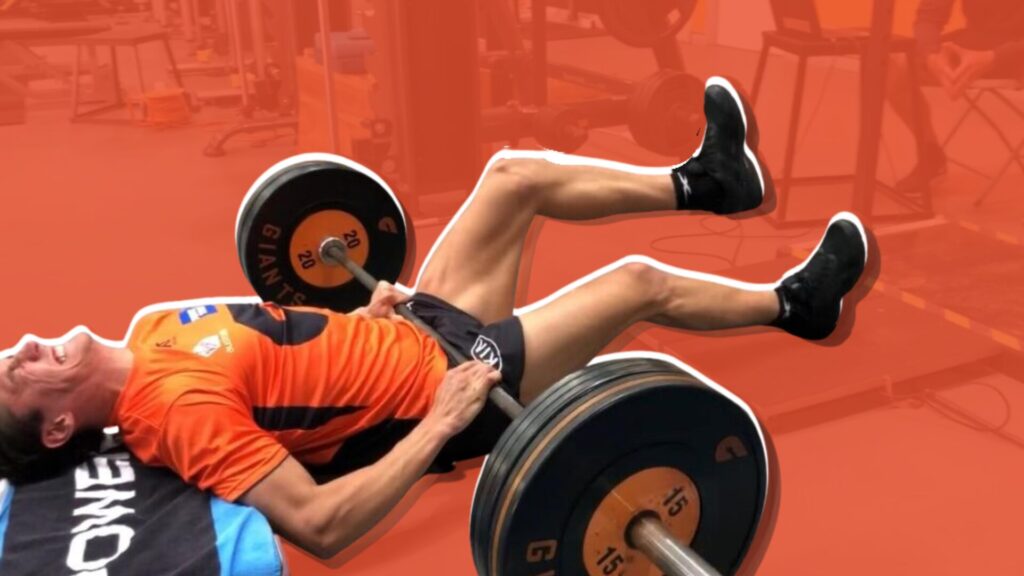
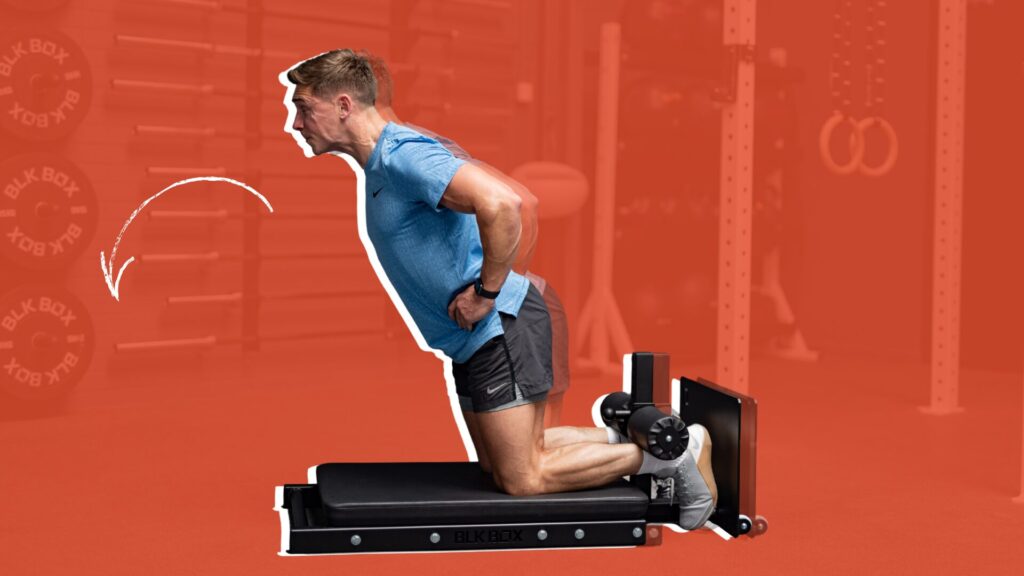
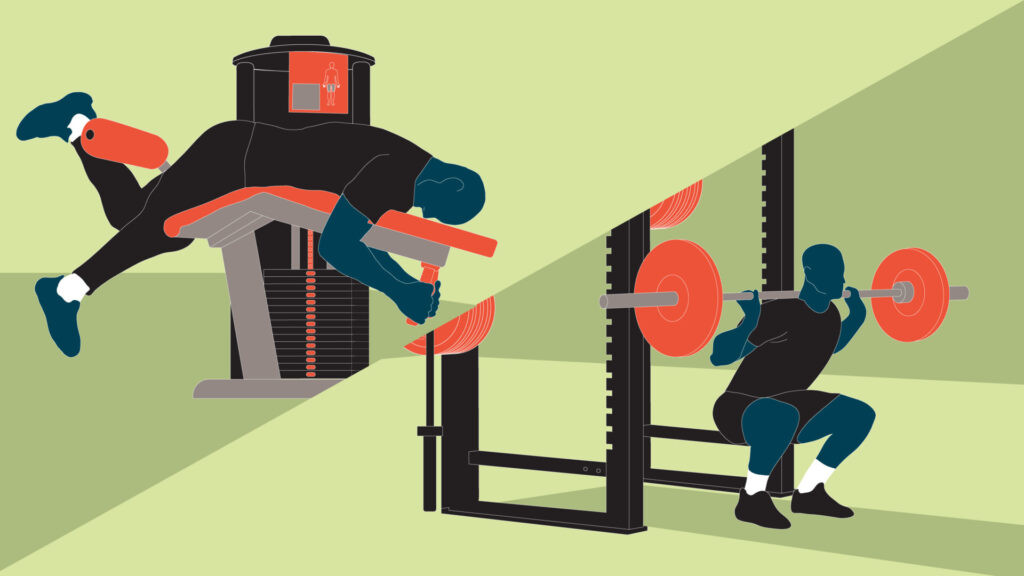
Practitioners can use multi-joint exercises (squat and deadlift, see Figure 1), single leg exercises (leg extension or curl) or sport-specific movements (cross-step) on a flywheel device to stimulate PAPE. We have demonstrated that a flywheel deadlift protocol of 3 sets x 6 reps, using a moment of inertia of 0.029 kg.m2, can stimulate a PAPE isokinetic hamstring strength response [8]. Potentiation of the hamstring musculature could offer some interesting applications for performance enhancement and injury prevention. This is particularly important for athletes who show a lack of hamstring eccentric force to decelerate knee extension, which may predispose them to hamstring strains.
Tweet ThisFlywheel technology could be a valid alternative to traditional resistance exercises for PAPE and in some cases, might be a better option
@MarcoBeato1 & @kevdekeijzer

| Exercises | Intensity | Volume | Recovery |
| Squat exercise | 0.029 to 0.11 kg·m2 | 2-3 sets x 6-8 reps | 3 minutes of recovery between PAPE and the next exercise (until 9 min) |
| Deadlift | 0.029 – 0.061 kg.m2 | 3 sets x 6-8 reps | |
| Cross-step (or specific movements) | 0.029 – 0.061 kg.m2 | 2-3 sets x 6 reps x limb | |
| Unilateral exercises (e.g., leg curl or hip extension) | 0.029 – 0.061 kg.m2 | 1-3 sets x 6-10 reps x limb |
Flywheel periodization and current practice in soccer
Flywheel training can be integrated within team sports periodization and planning along the same dimensions as other forms of training: volume, intensity, training frequency and exercise selection, to obtain the same desired physiological adaptations leading to enhanced performance enhancement and lower risk oif non-contact muscle injuries. The only published research currently available on flywheel training periodization or planning is Beato., et al., 2021 [9].
The intensity needed to obtain significant morphological changes must be moderate to high. We recommend using a moment of inertia > 0.05 kg.m2, although some improvements are possible with a 0.03 kg.m2 moment of inertia, for example, if the aim is to generate power.
Regarding volume, three or more sets per session with 2-3 sessions per week offer greater long term adaptations. Within these sessions, we recommend multi-exercise protocols of three sets per exercise [11]. This is sometimes difficult to implement in team sport settings due to travel, schedule congestion, greater focus on technical and tactical training, and recovery protocols associated with the in-season period. Table 3 shows two planning concepts that could facilitate the implementation of flywheel training with limited available training time.
Tweet ThisOur work demonstrated that a flywheel deadlift protocol of 3 sets x 6 reps, using a moment of inertia of 0.029 kg.m2, can stimulate a PAPE isokinetic hamstring strength response
@MarcoBeato1 & @kevdekeijzer
| Day of the week | ||||||
| MD+1 | MD-2 | MD-1 | MD | MD+1 | MD-1 | MD |
| Group 1: Recovery for players that played more than 60 min during the previous game | Micro dose* of flywheel training with a focus on power development for the whole team | Tapering | Game | Group 1:Recovery for players that played more than 60 min during the previous game | Tapering | Game |
| Group 2: Flywheel training with focus on strength and injury prevention for the rest of the team | Group 2: Flywheel training with focus on power and injury prevention for the rest of the team | |||||
*Micro dose: low-volume high-intensity flywheel training (e.g., 1–2 sets x 2–3 exercises).
The first concept is related to the idea of splitting the team into two groups based on the match. Specifically, players who played > 60 minutes will focus on recovery on MD+1, while others will perform flywheel training with a focus on strength and injury prevention. The second concept uses a microdose of flywheel training with a focus on power development for the team. This microdose aims to stimulate the players in a light way to obtain some neuromuscular adaptations while avoiding muscle damage, soreness and residual fatigue since the next match is within 48 hours.