






We asked experts who specialise in monitoring and improving hip and groin function these questions, and this is what they responded:

Steve Short
Vice President of Sports Medicine & Allied Practice, Denver Nuggets
A detailed subjective history as part of physical preparation screening will guide the related testing and intervention when assessing hip and groin function. Previous chronic or acute symptoms give weight to any long term concerns. We can quantify the qualitative interview through the hip and groin outcome score (HAGOS). [1]
Once you have completed the athlete history, you can better appreciate and contextualize objective testing.
The five-second Copenhagen squeeze test is valid, reliable, simple, and cost- and time effective. [2] Combine the results of the Copenhagen test with the athlete’s history to attain a higher fidelity assessment through methods like handheld or isokinetic dynamometry.
Dynamometry provides better results when the test uses a long lever assessment, and when there is an eccentric “break,” as opposed to an isometric assessment. [3,4]
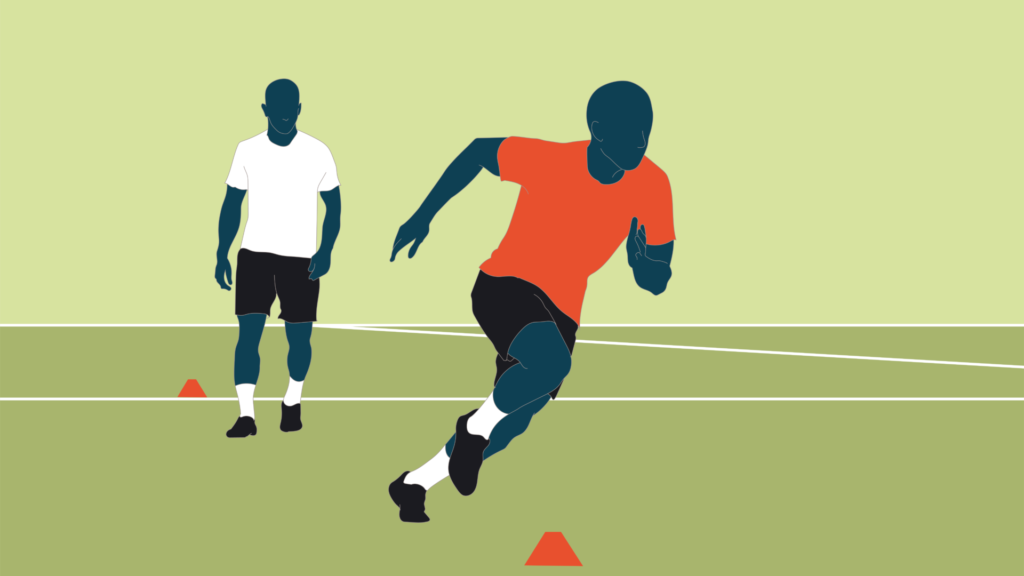
Assess how the isolated strength testing interacts with compound or sporting movements. Consider local strength impairments alongside change of direction testing in athletes with and without groin pain. This combination facilitates complementary training and exercise prescription strategies. [5]
The final pieces are maintaining an adequate sport training status, and balancing the athlete’s tolerance against their current competitive demands. [6]
Tweet ThisThe five-second Copenhagen squeeze test is valid, reliable, and simple. Combine the results of the Copenhagen test with the athlete’s history to attain a higher fidelity assessment through methods like handheld or isokinetic dynamometry.
@Steveshortdpt

Michael Giakoumis
Head of Rehabilitation, Manchester City
The answer depends on what we mean by “hip and groin function.” The region is complex, incorporating multiple joints and numerous muscles that act across all the three movement planes.
The value of any test is determined by the specific question we’re trying to answer.
Before choosing tests, we must be clear on the purpose of the assessment. Are we examining global function? Screening an athlete? Evaluating pain and pathology? Each scenario requires a different approach.
Let’s assume we are assessing global hip and groin function in the absence of pain or injury. This is a typical screening scenario. Useful tests would help us understand force production across the sagittal and coronal movement planes.
A comprehensive strength profile should include assessment of the four strongest movements of the hip: extension, flexion, adduction, abduction.

These should be tested in their strongest torque positions to provide meaningful scores that allow us to evaluate the ratios between the various movement planes, i.e. adduction to abduction, extension to flexion.
Hip extension couples with abduction during movement, and flexion with adduction. Therefore, it is also helpful to compare paired movements, such that flexion + adduction = extension + abduction.
This gives insight into how well the flexors and adductors can counterbalance the extension and abduction forces required in acceleration, sprinting, and change of direction tasks. Expected scores should be relative to the individual and their maximum demands during sporting tasks. It might be unfair to compare an individual capable of running 9 m/s (20.3 miles per hour) to someone capable of 12 m/s(27 mph) when setting expectations on ideal strength profiles.
For an even deeper understanding, these strength tests can be performed in inner-, mid-, and outer-range positions. Increasing the joint angle alters the mechanical demands and increases tensile load on tissues. Inner range (e.g., groin squeeze) may provide insight into the region’s ability to work synergistically with the lumbo-pelvic musculature to transfer load. That gives us additional information about how the hip and groin function under different conditions.
Tweet ThisBefore choosing tests, we must be clear on the purpose of the assessment. Are we examining global function? Screening an athlete? Evaluating pain and pathology? Each scenario requires a different approach.
@MickGiakoumis

Enda King
Head of Elite Performance and Development, Aspetar

Michael Palladino
Physiotherapist, Aspetar
Groin pain is highly variable and multifactorial, limiting the utility of structural diagnosis alone for clinical decision making. Symptom sources may not correspond to underlying problems; and athletes with the same anatomical diagnosis may present different biomechanical and functional profiles, requiring distinct rehabilitation strategies.
Consequently, a combination of pain provocation and functional tests are the most valuable key performance indicators to guide rehabilitation, monitor progress, and inform clinical decisions over time. They help practitioners evaluate intervention efficacy, the appropriateness of their reloading strategy, and whether their exercise selection and coaching strategies achieve intended adaptations.
A structured test-retest approach is essential. Pain provocation tests quantify the level of irritability and objectively guide transition criteria such as return to running, change of direction, and kicking. These tests are particularly sensitive to test-retest.
Functional tests such as motor control, range of motion, and strength use the same test-retest approach to track rehabilitation changes.
The adductor squeeze test—performed at 0°, 45°, and 90° of hip flexion—is practical, sensitive, and reliable. Despite its limited specificity for diagnosis, it loads the entire anterior pelvic region and is highly sensitive to symptoms in the area. Changes in pain (visual analogue score) and force across angles help the clinician decide when to progress or regress between rehabilitation phases. It also represents a useful KPI for readiness to initiate change of direction drills.
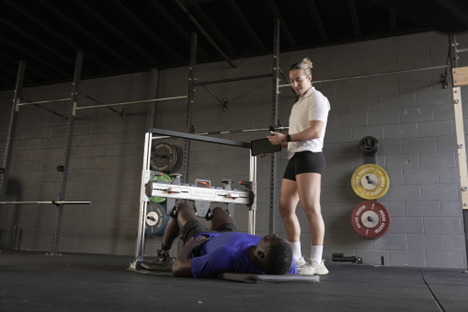
The crossover test measures contralateral pain on resisted hip flexion in the Thomas test position. It assesses groin irritability in a posture that simulates running positions and serves as a useful KPI for readiness to start linear running exposure.
The adductor outer range stretch challenges the adductors at maximal length, replicating positions encountered during change of direction or tackling. It functions mainly as a pain provocation test for acute groin injuries and can remain limited when middle and inner range adductor tests have recovered.
Hip range of motion highlights deficits in available range that can influence loading of the hip, but also the adjacent pubic bone and symphysis.
These deficits can arise from articular morphology or pathology, motor control dysfunction at the hip, or biomechanical strategies in higher level activities. Comparing hip internal rotation prone (0°) and supine (90°) can help differentiate between functional and articular drivers of loss of range. Symmetrical hip internal rotation is a KPI for progressing to COD activities.
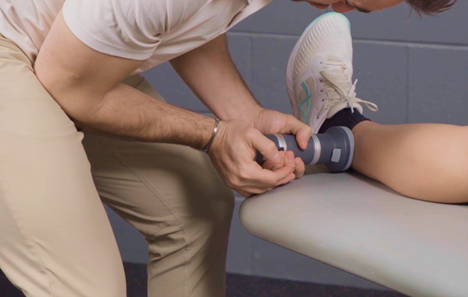
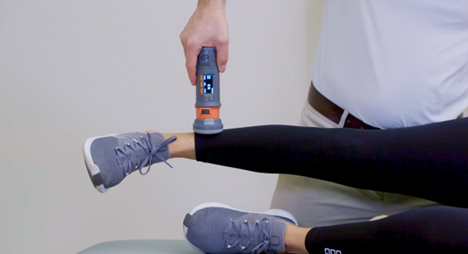
Hip strength tests using hand-held dynamometry yield objective strength measurements with high reliability. This practical, portable, and widely accessible tool enables precise monitoring of rehabilitation progress. But it requires standardized protocols to minimize inter- and intra-tester variability.
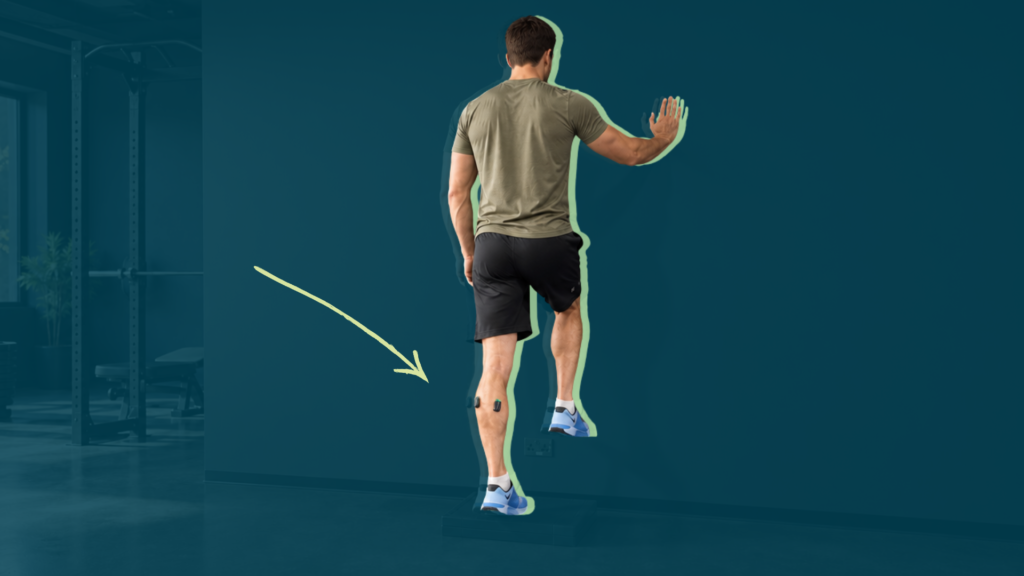
The single leg squat can reveal frontal and transverse plane control deficits at the foot and hip that manifest during those higher level functional activities. It can be monitored on a more frequent basis, regardless of the severity or irritability of the athlete’s symptoms.
Tweet ThisThe crossover test measures contralateral pain on resisted hip flexion in the Thomas test position. It assesses groin irritability in a posture that simulates running positions, serving as a useful KPI for readiness to start linear running exposure.
@Enda_King and Michael Palladino

Edward Gannon
Clinical Director of Strength and Conditioning, University of Buffalo
Hip and groin function is highly complex. To develop a comprehensive evaluation of athlete-specific hip and groin profiles, practitioners need to take a systems approach that incorporates quantitative analysis, clinical screening, and strength assessment.
One of the strongest risk factors for groin-related injury is previous injury incidence. An athlete-reported outcome questionnaire, such as the HAGOS, is a primary tool to quantitatively evaluate musculoskeletal disorders localized to the hip and groin regions.
Clinical assessments of range of motion deficits are also valuable, low-impact methods for identifying athletes at risk of dysfunction. Restricted hip ROM negatively affects biomechanical characteristics, and limits energy transfer between body segments. This may increase supraphysiological tissue loading. [7] Common hip ROM provocation tests include flexion adduction internal rotation (FADIR) and flexion abduction external rotation (FABER). Pain on either test, and limitations in passive hip internal rotation (<30° with the hip flexed to 90°), indicate elevated injury risk. [8]
Practitioners should consider chronic monitoring and preventive strategies if they detect a ROM deficit.
Isometric assessments (“make” tests) using a hand-held dynamometer effectively evaluate unilateral adduction strength and recovery in athletes with groin dysfunction.
This test measures muscle strength in a supine position (0° hip flexion), and informs injury risk by identifying groin pain or contralateral muscle weakness. [9]
Measuring unilateral eccentric peak force of the adductors via a side-lying “break” test also detects contralateral muscle weakness. [10] Eccentric testing may be more effective for identifying acute or longstanding hip disorders, given the substantial eccentric demands of sport-specific movements.
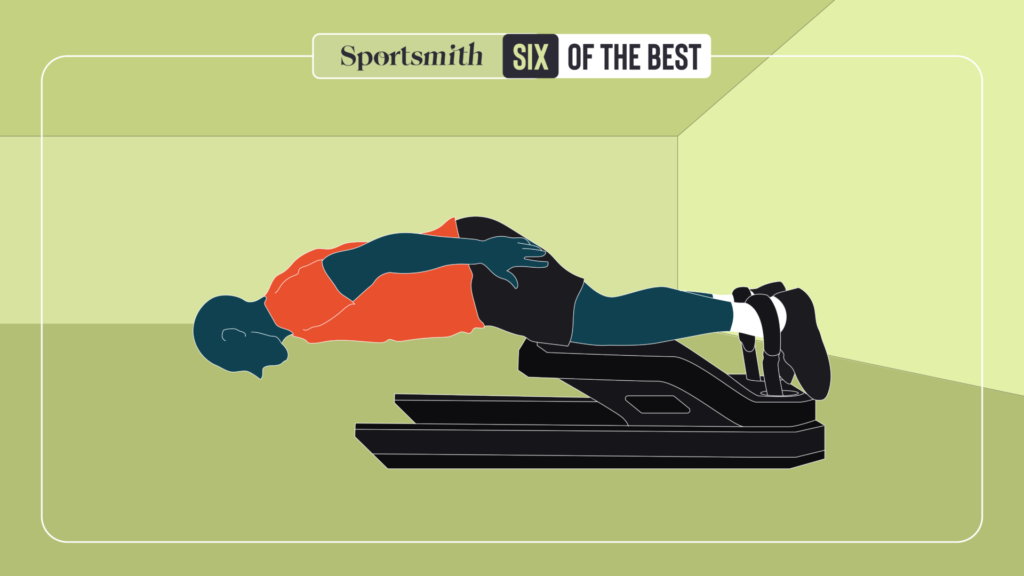
Eccentric hip adduction:abduction strength ratio assessments may indicate hip strength imbalance and functionality. Groin health is compromised when the adductor:abductor strength ratio <0.80. The ideal ratio is near 1.0 to reduce injury risk. [11,12]

Weekly, monthly, or bimonthly screening of adductor and abductor strength is a valuable monitoring strategy that easily integrates into an athlete’s testing and training schedule.
Isometric and eccentric strength testing provide a comprehensive analysis of adductor–abductor functional capacity. Asymmetry thresholds, ratios, and baseline values offer useful metrics for evaluation. Combined with hip ROM measures, these metrics support athlete risk assessment, aid in developing training programs, and act as clinical milestones that guide return to sport progression during rehabilitation.#
Tweet ThisTo develop a comprehensive evaluation of athlete-specific hip and groin profiles, practitioners need to take a systems approach that incorporates quantitative analysis, clinical screening, and strength assessment.
Edward Gannon

Patrick Pröller
Physiotherapist, BSC Young Boys
The underlying principle is to start with the end in mind. One goal is to keep players available and performing. The other is to return an athlete to their sport not just pain-free, but more robust and powerful than before.
The “why” is to build a resilient athlete capable of withstanding high intensity demands by identifying and correcting their weakest links. This principle keeps us on track, ensuring every test has a direct line to performance and injury resilience.
The assessment’s focus—whether it is performance enhancement, robustness for injury prevention, or rehab from athletic groin pain—dictates the emphasis, but the framework remains holistic. We must first understand the sport’s specific demands: the cutting, kicking, and sprinting in soccer; the explosive lateral movements in basketball.
The athlete’s injury history is our map, revealing vulnerable areas and guiding our investigation.
Based on this, we establish KPIs like change of direction biomechanics, jump height, and adductor long lever strength.
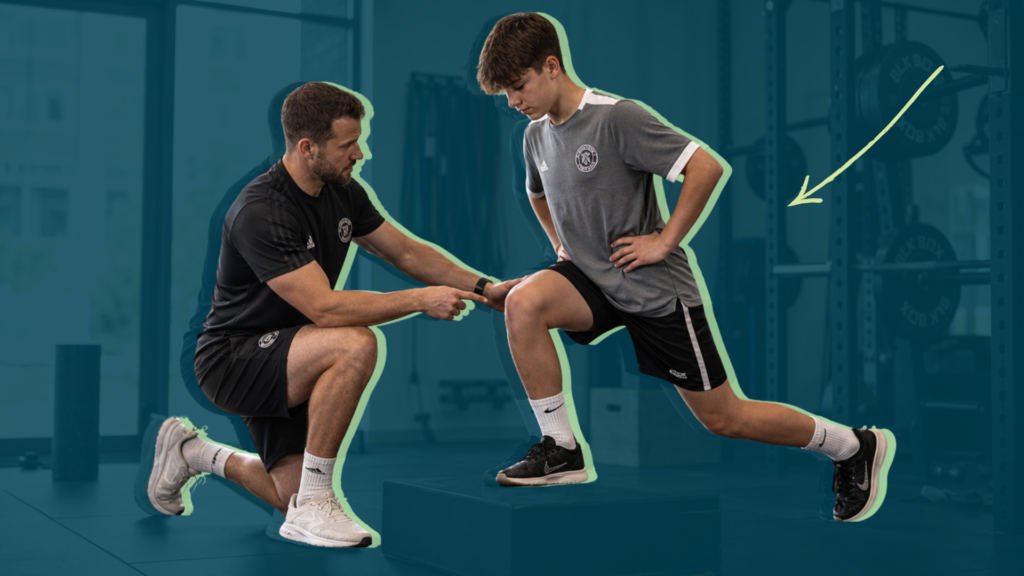
To assess the athlete’s current state, we begin with a foundation of motor control. We analyze the biomechanics of global compound movements like squats and lunges to identify compensatory patterns and lack of lumbopelvic control.
We then build upon this base with tests for strength and power. This includes assessing hip strength in all planes (anterior, lateral, medial, posterior) and testing the inner and outer range of hip flexors and extensors. We progress to power and plyometric capacity through tests like the countermovement jump for force production; and the 10/5 hop test and lateral / medial hop tests to evaluate ankle-foot stiffness and dynamic pelvic control under replicable load.
Looking beyond the hip is crucial. Proximally, we assess the core; distally, we evaluate the ankle-foot complex. Running mechanics, particularly at mid-stance, are analyzed for pelvic position in the frontal and sagittal planes to identify trends or drops.
Finally, we assess sport-specific actions like jumping, COD, and shooting mechanics.
Local tissue-specific tests remain vital. The adductor long lever squeeze test is a highly sensitive clinical test for monitoring groin function. However, based on the principle of action-reaction (Newton’s Third Law), it is crucial to also assess the athlete unilaterally to detect hidden compensatory patterns. The crossover test (or modified Thomas test) is excellent for assessing sagittal plane mobility and lumbopelvic control.
Tweet ThisLooking beyond the hip is crucial. Proximally, we assess the core; distally, we evaluate the ankle-foot complex. Running mechanics, particularly at mid-stance, are analyzed for pelvic position in the frontal and sagittal planes to identify trends.
@Prller

Matthew DeLang
Head of Medical, FC Nordsjælland
In a complex region with complicated pathoanatomy and a lack of consensus when naming injuries, it’s very difficult to boil down the most valuable tests for the hip and groin, especially when capturing the scope of both intra-articular (hip) and extra-articular (groin) problems.
With that in mind, I’ll take the perspective of screening tests for extra-articular groin problems, and narrow that even more to adductor-related groin pain.
Adductor-related groin pain is consistently the most common clinical complaint, and is often part of multilocational cases. [13–15]
Screening for adductor-related groin pain likely provides the most bang for your buck in applied team settings. If the intent of screening is to detect groin problems early and intervene to mitigate the risk of longstanding, severe cases, there is no better place to begin. Long lever hip adduction squeeze testing with an objective strength component, i.e., the Copenhagen five-second squeeze test, is likely the most valuable approach. [16,17]
Long lever adductor squeeze testing with the hips in slight abduction most directly targets the adductor longus and provides a sensitive tool to detect groin pain. [16,18] Incoming data collection includes both subjective pain reporting and objective strength measures.
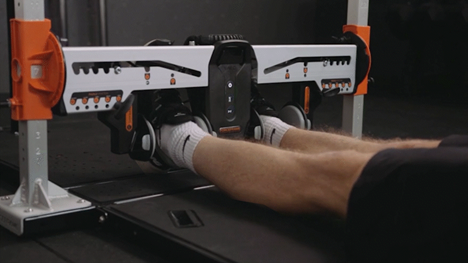
It also allows for quick, easy implementation across an entire team. The short lever testing position requires between-player adjustments to maintain joint angles. The long lever position does not require changing the testing setup.
Of course, a single screening test is not all-encompassing. Findings from long lever adductor squeeze testing need to be further examined to understand whether decreases in strength are clinically relevant, whether subjective pain feedback is trustworthy and reliable, and the actual origin of the pain. [19]
This screening tool is not as sensitive to iliopsoas-related or inguinal-related groin pain; nor does it provide between-limb comparisons, like eccentric hip adduction “break” testing does.
Despite these limitations, long lever adductor squeeze testing systematically implemented in a team setting is the single-best testing option to screen extra-articular groin problems.
Tweet ThisIf the intent of screening is to detect groin problems early and intervene to mitigate risk then Long lever hip adduction squeeze testing with an objective strength component, is likely the most valuable approach.
Matthew DeLang