
Johannesburg, July 11, 2010. As a young, Dutch football enthusiast, I stood with the rest of my hometown at a large public square. Dressed in full orange kit, I held an ice cold beer and the hope that within 90 minutes our Dutch Lions would be crowned champions of the world. The match against Spain was tense from opening kickoff. In the 62′, the crowd rose as Arjen Robben received a deep pass from Wesley Sneijder, creating a one-on-one against Spanish goalkeeper Iker Casillas. Robben delayed his shot, attempting to flick it into the goal. We all held our breath as the ball bounced off the goalkeeper’s foot. The game went into overtime, and four minutes before the end, Andrés Iniesta shattered our orange-colored dreams, turning Spain into the 2010 World Champions.
This little heartbreak illustrates the pivotal role goalkeepers play in a match outcome. In many situations, they are the last players who can prevent conceding a goal.
Beyond the advantage of using their hands, the way they move on the pitch differs significantly from the 10 outfield players. This demands a different training approach from multiple perspectives.
While the technical aspect is well-established—almost every club has a goalkeeper coach—the physical aspect is somewhat underexposed. Goalkeepers are easily lumped in with outfield players for physical development work, or they receive marginal attention due to manpower or time constraints.
Our match data from the past three seasons reveals that our goalkeeper covers an average total distance of 4.5–5.2 km over 90 minutes. Notably, 98% of this distance is at speeds below 14 km/h: predominantly walking or jogging. High speed running and sprinting are negligible.
For context, our outfield players average 10-13 km per match, with 3-4.5 km faster than 19 km/h.
On average, a goalkeeper passes 33-40 times per match, including goal kicks (about seven) and throws (4-5). Between 30-40% of the kicks exceed 40 meters.
The team faces an average of 3-4 shots at goal per game that require intervention from our goalkeeper. However, he might need to intervene on additional shots. For example, he’ll react to cover a shot that ultimately goes close to—but wide of—the post. This shot will not be recorded as a shot on target, but he reacted as if it was.
These statistics show why we must prepare our goalkeepers for distinct output demands in matches. Goalkeepers need different preparation, strength training, movement skill training, energy system development (ESD), and overall mindset. We must ensure that goalkeepers can perform a limited volume of maximal power outputs—for instance, reaching the far corner or attaining optimal positioning to stop the ball—potentially influencing match outcomes. This concept of “sharpening the knife” should manifest in every aspect of training, both in the gym and on the pitch.
This article emphasizes the importance of an individual approach for goalkeepers by exploring the physical training programs for our first goalkeeper (an older and more established player) and our third goalkeeper (a young player with a lot to develop).
Tweet ThisGoalkeepers need different preparation, strength training, movement skill training, energy system development (ESD), and overall mindset, ensuring that goalkeepers can perform a limited volume of maximal power outputs.
Yannick van der Schee
What do goalkeepers need day-to-day and long term?
We need some unconventional thinking when developing periodization strategies. Particularly with our first goalkeeper, the frequency of matches presents a challenge. Playing a match every 3-4 days leaves limited time for heavy strength or pitch-based stimuli.
The key distinction between outfield players and goalkeepers is that goalkeepers’ match output does not occur in high volumes. From a strictly physical perspective, this means goalkeepers should be capable of receiving substantial physical stimulus the day after a match. But when we consider the cognitive and neuromuscular perspectives, we recognize the need to be cautious with highly complex exercises.
Readiness checks
Player readiness is assessed through various parameters—creatine kinase (CK), wellness questionnaire, drop jump test, Oura data—on MD+1 and MD+2.
Different forms of fatigue influence the training design for that day [2].
Creatine kinase values are an objective measure related to muscle damage. This muscle damage predominantly occurs after a match or training with high outputs. Even though jumps contain large eccentric components, our goalkeepers do not get enough output from matches to reach significantly higher CK values, compared to outfield players. After many dives—and the subsequent hard landings on their back and side—bruises are possible contributors to higher CK values. Along with the medical team, we assess if those bruised areas are affecting range of motion (ROM) and the ability to safely perform strength training, and whether the goalkeeper should continue with the planned training for that day.
The drop jump test measures neuromuscular fatigue, and tells us something about the force producing capacity of the muscles. This is our second piece of the recovery puzzle after the game. Rarely does a goalkeeper’s output on this test indicate that they should not perform the day’s session.
The Oura ring gives us a look at their internal load, quantifying sleep and recovery scores (for example, HRV) to put a number on readiness to train.
Perceived fatigue is the final important piece. We always have a one-on-one talk with our goalkeepers the day after the game to find out how they are feeling. What is their mood after the game? Are they happy about their performance? How heavy does conceding that goal weigh on them? Did they sleep well or did their kid wake them up early? Things like this give the last bit of context to help tweak the designed training. From there, we start working on the stimulus.
Identifying the stimuli
The primary challenge within the relentless schedule of domestic league and European competitions is identifying opportunities for appropriate stimuli. With this time constraint, efficiency is key. “Failure to prepare is preparing to fail,” which means we need clear training objectives.
Defining the end goal of a gym-based program is essential. While outfield players focus extensively on high speed running and sprinting, these elements are less critical for goalkeepers. Goalkeeper movements can be categorized as short, horizontal displacement in multiple directions; vertical displacement, i.e., bilateral and unilateral jumps in multiple planes; or fast upper body movements in full ROM.
The volumes of the movements that occur in the game might be low, but output must be as high as possible every single time. There must be a optimal balance between the force-velocity strategies. Goalkeepers should have high rate of force development (RFD) rates and low contact times, which also transfer to high jumping rates.
Having identified match demands from multiple perspectives, the next step involves examining individual characteristics to identify strengths, deficiencies, and opportunities for improvement. We used the countermovement jump (CMJ) and squat jump (SJ)—both bilateral and unilateral—the 10-5 hop test, and the isometric mid-thigh pull (IMTP) to comprehensively assess goalkeeper performance parameters. To round out our profiling, the goalkeeper coach provided input relevant to the milestones he has set for his goalkeepers. Watching video of the goalkeepers helped us set the goals and design training programs accordingly.
Tweet ThisThe primary challenge within the relentless schedule of domestic league and European competitions is identifying opportunities for appropriate stimuli due to time constraints.
Yannick van der Schee
Even periodization is different for keepers
We typically start our day in the gym. “Low days” feature reduced volumes on the pitch, if field work occurs at all. These are your recovery sessions, technical sessions, and large sided games. “High days” involve significant volumes on the pitch, sometimes combined with gym based stimuli. These include intensive goalkeeper sessions, finishing drills, and small sided games.
The “RAMP protocol” ensures we tick the right boxes in our preparation [3].
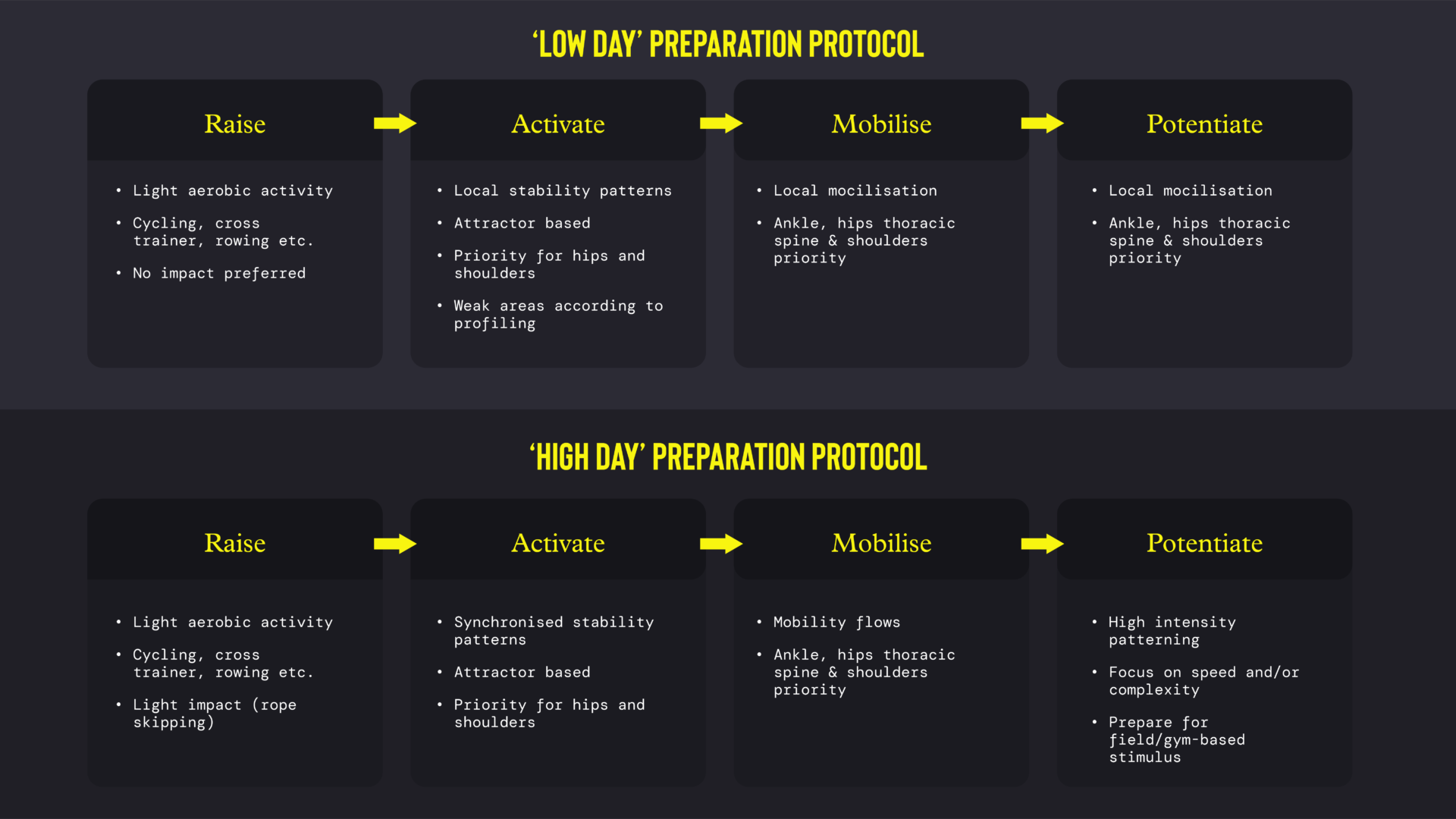
We put together a checklist for each goalkeeper’s individualized preparation. An example of an individualized preparation plan is below. For practical reasons, we limit ourselves to 4-8 exercises. This facilitates consistent implementation, even when training time is constrained.

First goalkeeper’s gym sessions
The goal for our first goalkeeper was to improve his stretch-shortening cycle (SSC) capabilities. His testing profile indicated great strength, with potential for improvement in contact times and reactive strength index (RSI) scores. The goalkeeper coach observed that he naturally adopted a very deep position when preparing for shots. Given that this movement had been his approach for many years, abruptly trying to alter this movement behavior would be challenging.
Another priority was improving his vertical push off to cover more ground and reach balls at greater distances. With these considerations, we focused on improving RFD and optimizing SSC qualities to enable harder and faster push-offs, thereby increasing his reach and potential impact on match outcomes. These push-offs and landings—when not on the side or the back—are predominantly unilateral. He needs to deal with high levels of eccentric forces, so we build eccentric strategies into the jumps.
An additional consideration is that most goalkeepers use their medial leg to push off when moving toward the corner. This obervation influences program design for posture and patterning exercises.

With limited time between games, despite the relatively low output demands for goalkeepers, we must ensure they do not enter matches in a fatigued state. Microdosing leg strength enabled us to incorporate two strength stimuli per week, even during congested periods. This approach provided flexibility with session timing. If readiness metrics indicated that a player was not prepared for an intensive session on a particular day, we could postpone it without compromising consistency.
We maintained a frequency of 1-2 upper body sessions per week. We schedule 2-3 sessions to provide autonomy and flexibility for our player to adjust, as necessary. The first goalkeeper’s sessions are lower in volume than those for our younger goalkeeper.
Upper body sessions focus on developing fundamental athleticism while preparing for high impact situations that may occur during set pieces. We place additional emphasis on kinetic linking through rotational core exercises and shoulder positioning. Unilateral perturbations in various positions enhance shoulder joint stability.
From a strength perspective, the first goalkeeper’s pound-for-pound strength required minimal attention.
Continuing with the microdosing approach, intensive exercises were distributed across multiple sessions. Plyometric exercises, movement skill exercises, or a combination of both complemented the strength exercises. The sessions took place during pre-activation. This promoted long term adaptations while potentially leveraging post-activation potentiation (PAP) effects for subsequent field sessions.
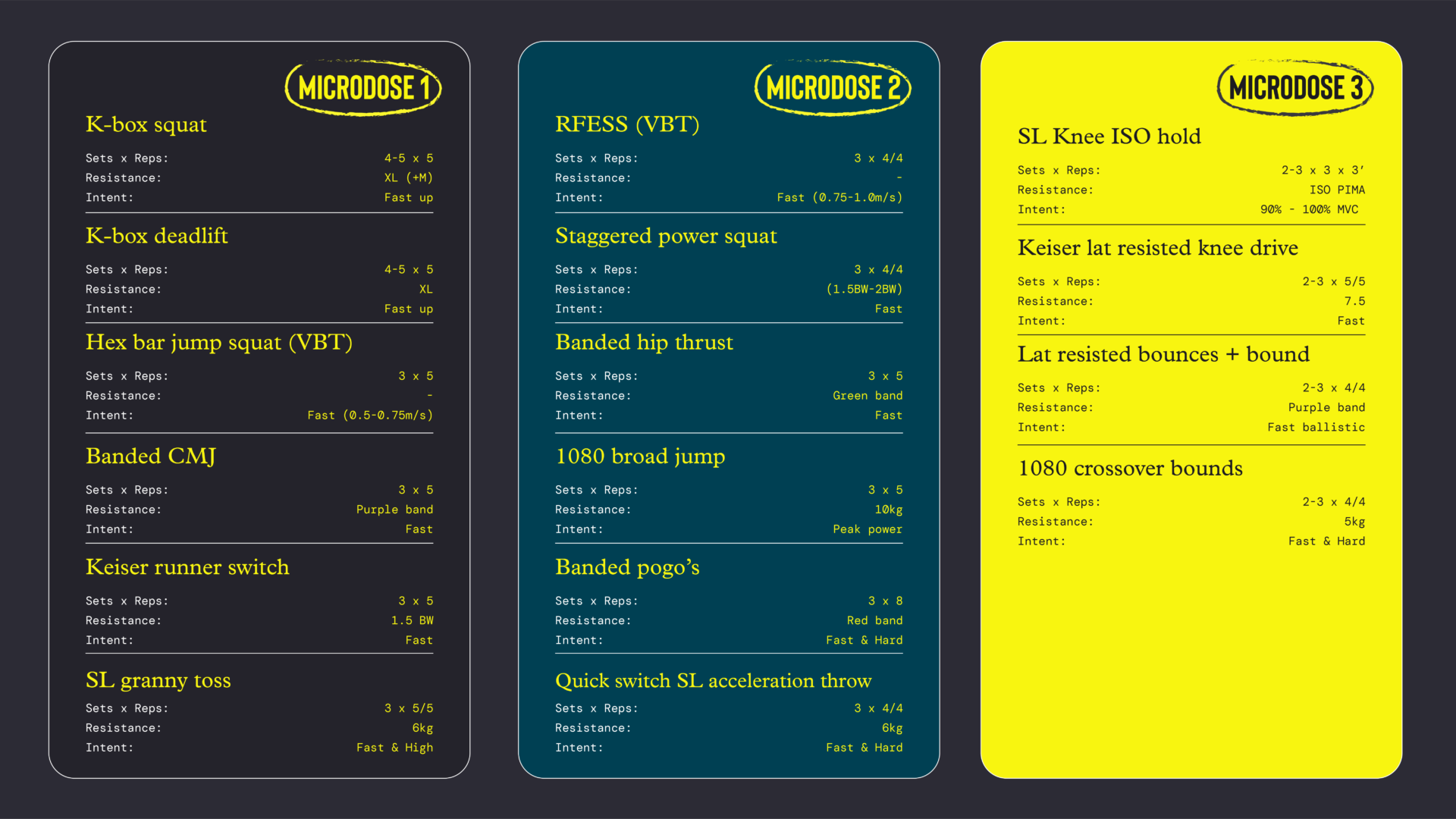
Figure 4 shows three different microdosing sessions. The first is typically scheduled a bit further from the game, including in the week of a cup game. The second session could be on MD-2, and the third on MD-1. Exercises in red are predominantly strength dominant, while those in blue emphasize speed-strength, plyometric, or skill components.
Gymaware, VALD force plates, and the 1080 Sprint provided objective measures for plyometric and speed-strength exercises. These data facilitated progress monitoring between sessions and provided additional insights regarding training readiness.
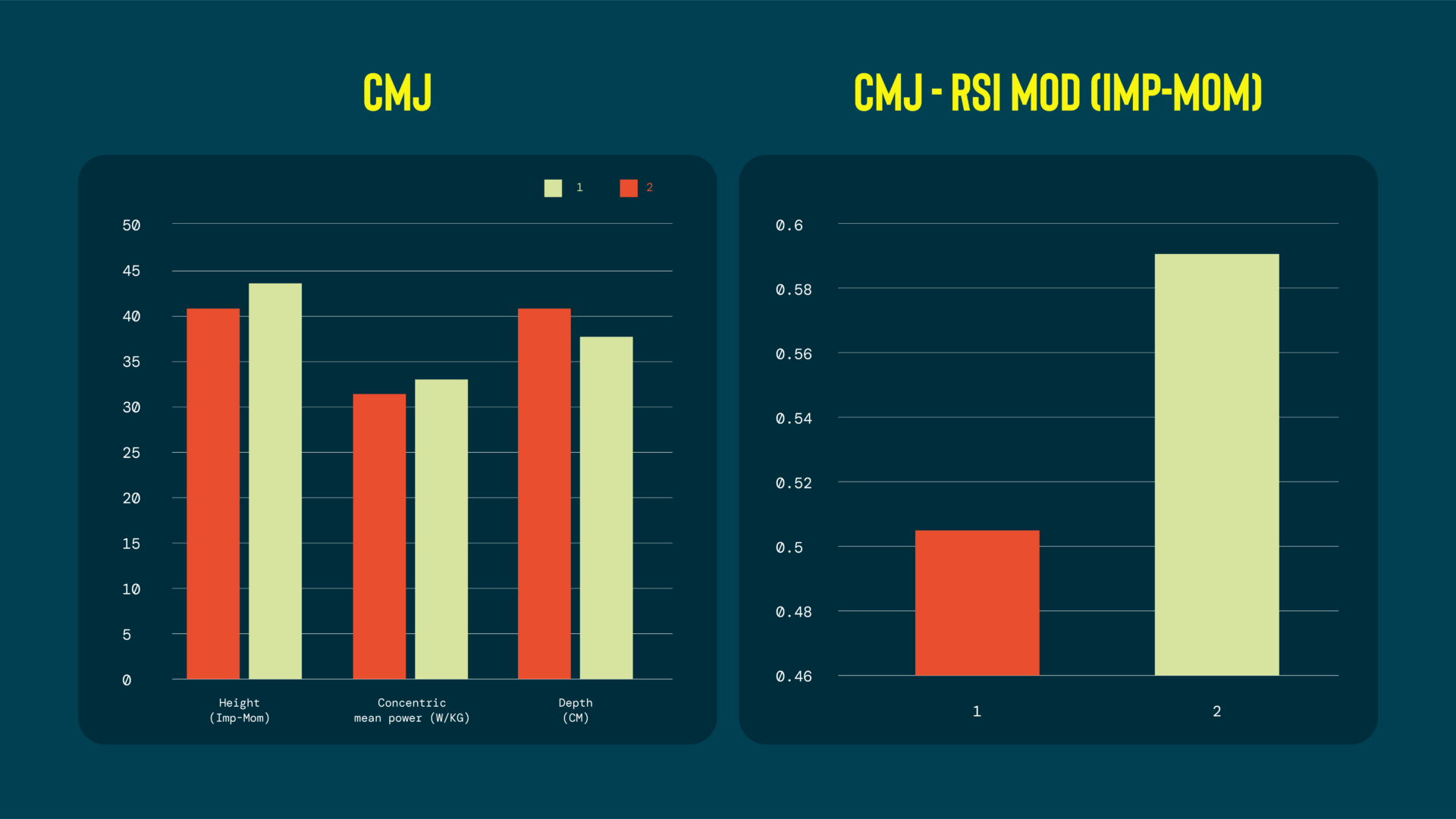
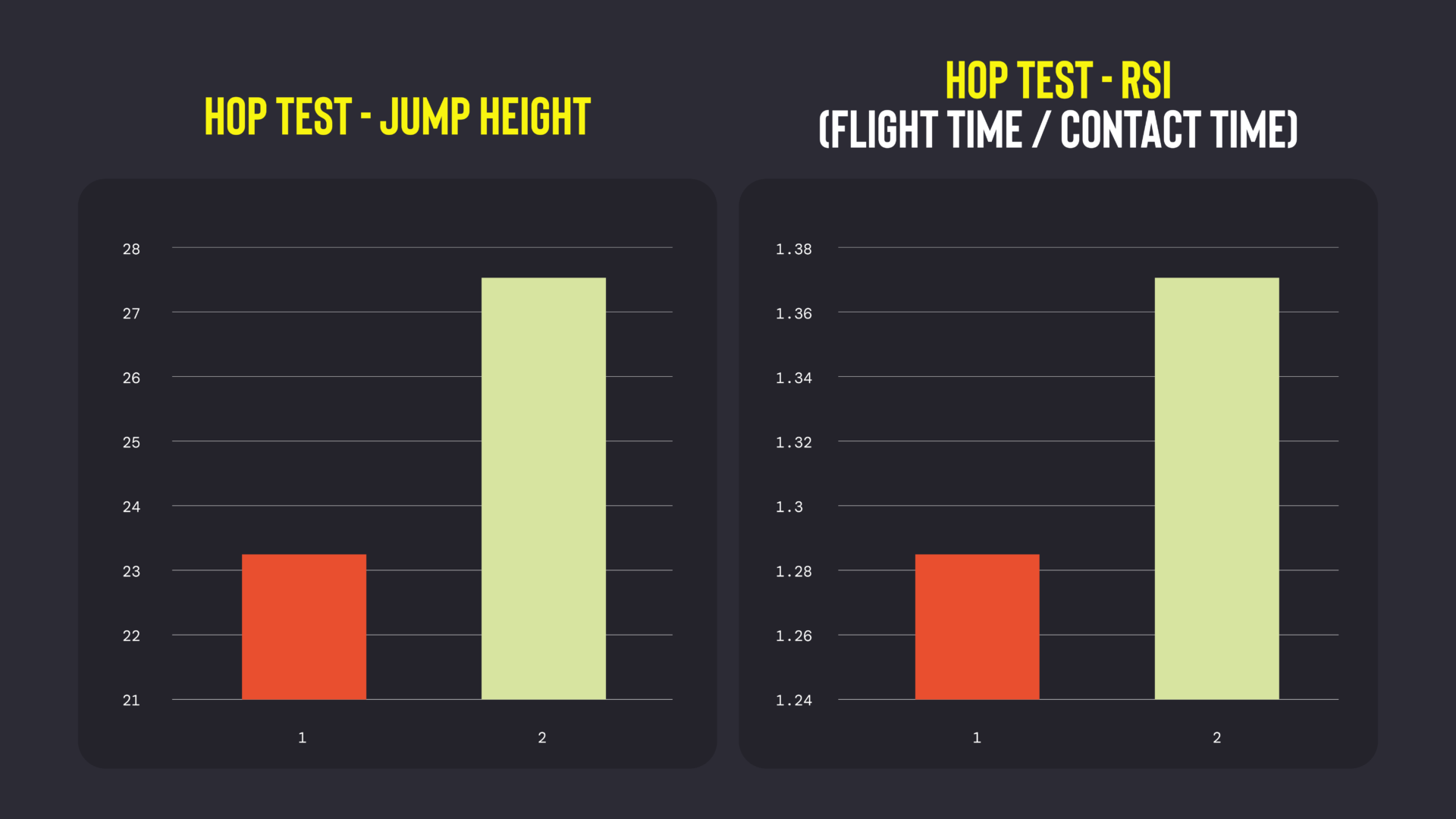
Figure 5 shows some results of a six month mesocycle. Because of the continuous busy schedule, we couldn’t find a proper testing window at three months, as we were able to do with our young third goalkeeper. The orange bars are the tests that were conducted in September, the green bars from the tests in March.

Tweet ThisWe focused on improving RFD and optimizing SSC qualities to enable harder and faster push-offs, thereby increasing his reach and potential impact on match outcomes.
Yannick can der Schee
Third goalkeeper’s physical development
We took a slightly different approach with our young, third goalkeeper. While participating in a match in a fatigued state is never desirable, we aimed to create an educational environment featuring higher volume, more frequent intensive training. Although matches were less frequent than with our first goalkeeper, there were occasional short turnarounds between games.
The objective was to maximize training session benefits while optimizing recovery. This placed emphasis on rest, sleep, nutrition, and hydration between intensive training days.
He primarily competes with the U23 team but serves as a substitute for first team matches. Since the physical demands of the backup goalkeeper on first team match days are minimal (mostly just helping warm up the starting goalkeeper), there are opportunities for training and increased workload on these days. These sessions are always individualized, combining gym-based and pitch-based work with the goalkeeper coach.

Microdosing is not part of the younger goalkeeper’s training structure. Instead, he performs two complete leg strength sessions weekly.
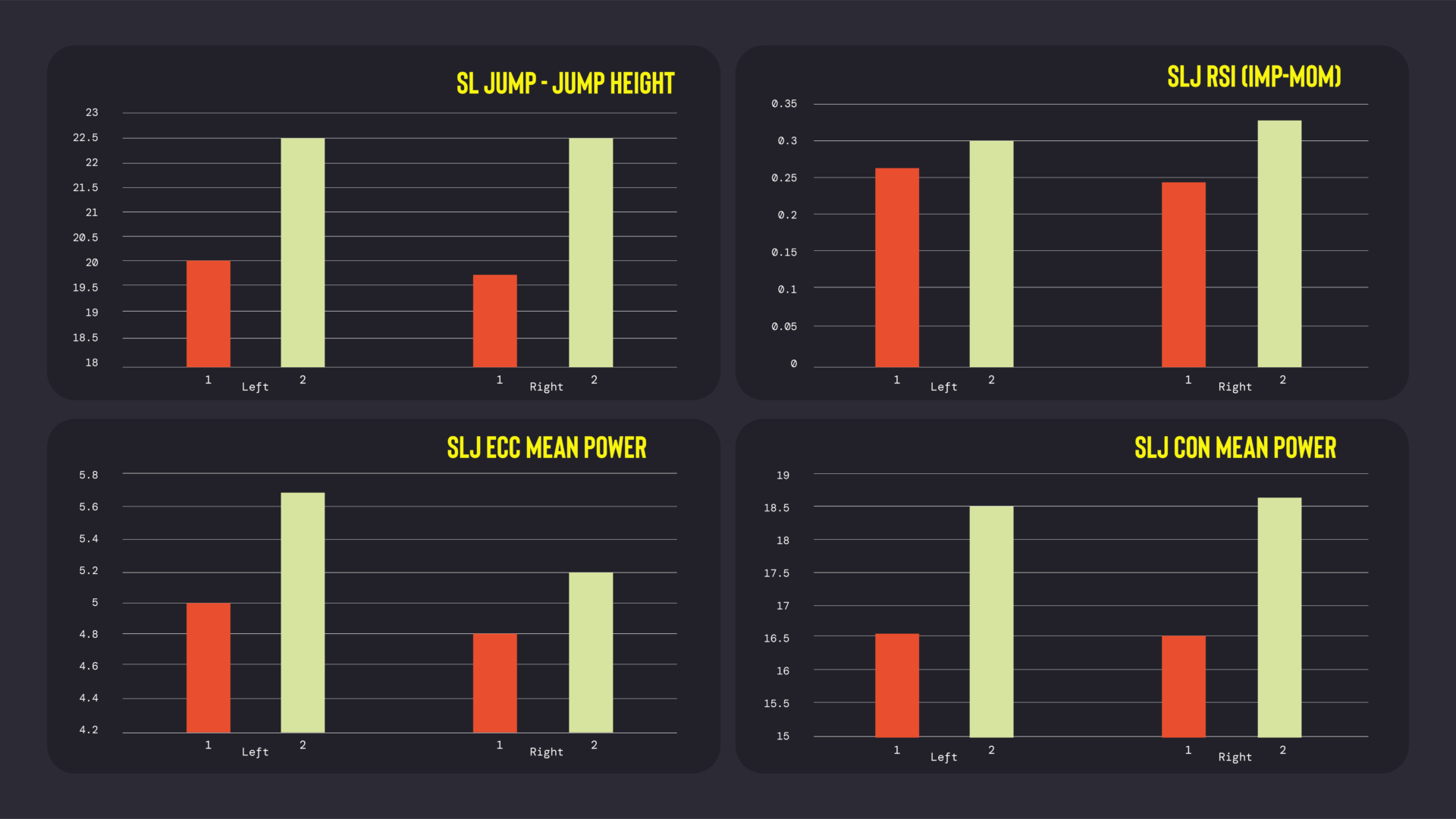
We maintain a structured approach to foster lifestyle improvements. While his lifestyle habits were adequate, he made significant enhancements that enabled him to progress within our program. Beyond lifestyle education, we established objectives based on profiling data. He already achieved substantial improvements in pound-for-pound strength during previous periods. This time around, RSI scores, contact times, and impulse scores guided our focus toward rate of force development and speed-strength, combined with SSC capabilities.
Upper body hypertrophy training occurred once a week, with energy system development (ESD) sessions scheduled according to match frequency.
| Exercise | Sets x reps | Resistance | Intent |
| Keiser staggered squat | 4 x 4/4 | BW | Fast |
| RFESS (VBT) | 4 x 4/4 | 52kg | Fast (0.75-1 m/s) |
| Weighted pogo’s | 4 x 8 | Orange dynabands | Fast & high |
| Depth jumps | 3 x 5 | 45cm | Fast & high |
| Quick switch lat resisted knee drive (aquabackpack) | 3 x 4/4 | 6 keiser | Fast |
| 1080 crossover steps | 3 x 4/4 | 10kg | Fast |
Figures 9-11 show results from the three month mesocycle. The orange graph bars are from the tests in December, while the green graph bars show data from March.


Tweet ThisMicrodosing leg strength enabled us to incorporate two strength stimuli per week, even during congested periods. If readiness metrics indicated that a player was not prepared for an intensive session, we could postpone it.
Yannick van der Schee
Energy system development for goalkeepers
Another area where goalkeepers differ from outfield players is the energy system demands. Energy system development trains the underlying physical mechanisms that assist in the technical sessions and matches.
Goalkeepers predominantly perform brief actions like jumps (vertical, lateral, or combined) and accelerations (mostly 5-15 meters). From an energy system perspective, these activities primarily involve anaerobic, alactic work.
But another crucial, sometimes overlooked component is aerobic conditioning. Beyond supporting basic athleticism, the aerobic system facilitates rapid recovery between explosive actions. While games rarely feature numerous consecutive explosive efforts, training sessions often do. In a way, developing this system is mainly conducive for the intensive training sessions.
The pitch based sessions contain high levels of mechanical load. These large eccentric components put a lot of strain on the body. We needed to conduct training modalities that develop the underpinning physical mechanics, without further straining the body mechanically.
Off-feet sessions emphasize the aerobic modalities, as the pitch sessions cover the high intensity (anaerobic alactic) work. For developmental reasons, the third goalkeeper has extra high intensity work.
Goalkeepers do limited running during matches and training. Their anthropometric characteristics often present challenges for traditional conditioning approaches. Our two most common training methods include low intensity, extensive skill training (numerous technical repetitions with minimal rest) and gym based, off-feet conditioning.
The pitch-based skill conditioning is periodized without the use of objective monitoring. As our tracking system does not provide goalkeeper specific metrics, we rely on old school rep counting, marking the time at certain intensities as needed.
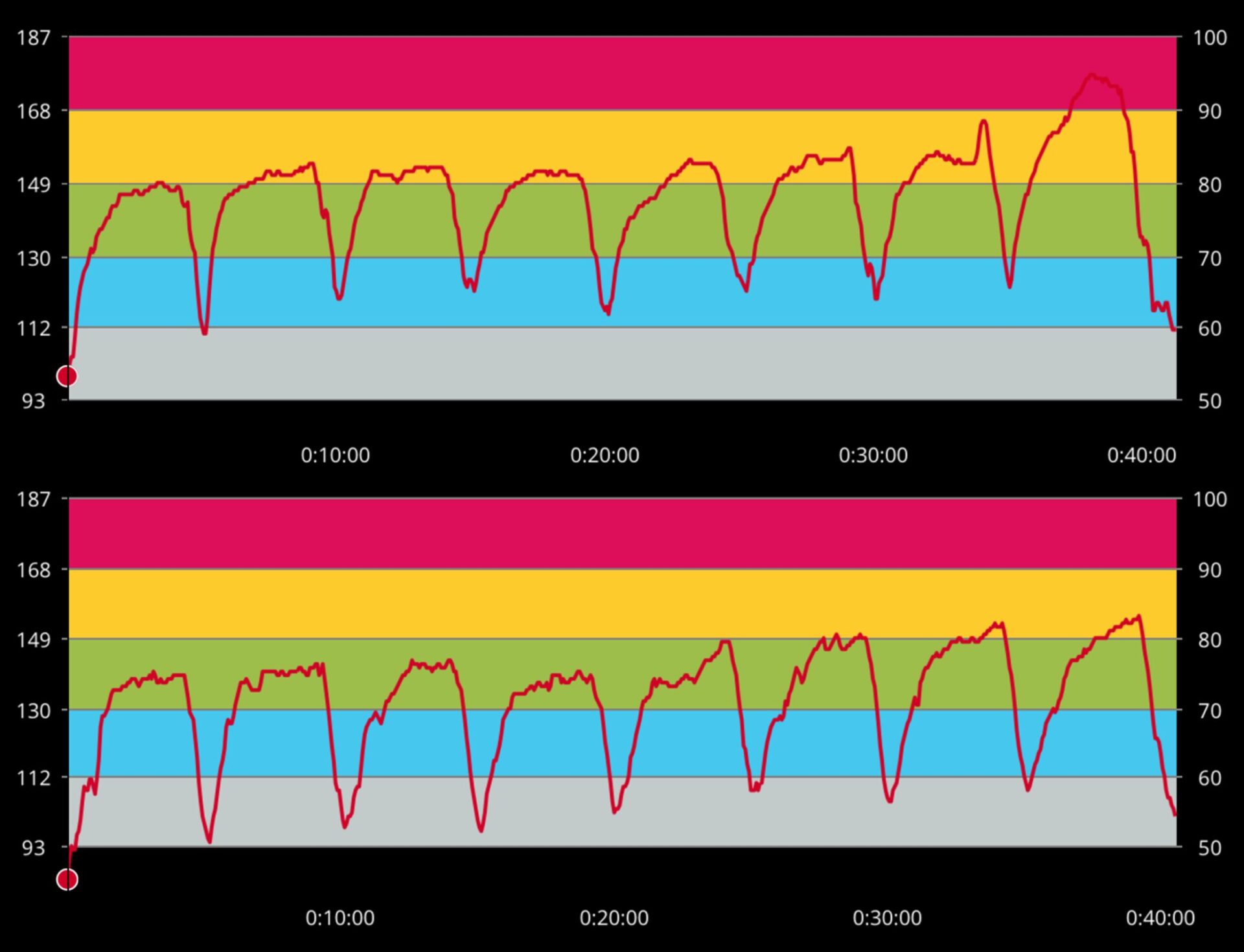
Heart rate zone training is the basis of any off-feet programs for aerobic development with more central adaptations. These zones come from bike tests as part of medical checks. Recently, we implemented Pete Burridge’s “4:1 protocol” on the total body trainer, which has become a valuable addition to our systematic approach to stimulate cardiac output and VO2max. The heartrate graphs from the training sessions show that with equal resistance on the total body trainer, the player has lower heart rates and higher 1-minute recovery rates.
Different modalities fit the bill for anaerobic alactic training. The most specific approach involves field based training. We conduct weekly discussions with the goalkeeper coach regarding training design and periodization.
Goalkeepers have their own “high” days and “low” days, just like the outfield players but with different parameters. High days may include numerous jumps and push-off movements with the goalkeeper coach, or small-sided games generating substantial activity in front of the goal within short timeframes.
Off-feet sessions that stimulate the anaerobic alactic system revolve around output measures. For example, setting a higher gear on the total body trainer challenges the player to maintain a certain output (watt or RPM) for the full 10 seconds. Once this drops out of a set band, we know the predominant energy system will shift and we need to take a longer break to recover. This determines the set and rep range.
Over time, the number of reps increased, demonstrating development of the system.
| Off-feet ESD | Aerobic endurance | Aerobic interval | Anaerobic alactic |
| Exercise modality | Bike, cross trainer, etc. | Keiser total body trainer | Battleropes, Keiser total body trainer |
| Work:rest ratio | 45-60 minutes continuous | 4 minutes on : 1 minute off | Between 10-30 sec and 15-1 with SP 2’-4’ |
| Reps | N/A | 6-12 reps of 5’ (4’-1’) | 4-8 sets of 3-6 reps |
| Bike, cross trainer, etc. | Zones 2-3 | >85% max HR | All out |
Matches are generally classified as “low” days. Physical output for goalkeepers is considerably lower compared to training sessions. Consequently, intensive training the day after the match presents no issues. The only consideration involves mental and neuromuscular readiness for heavy lifts, high speed outputs, or high volume jumping exercises.
Tweet ThisOur two most common conditioning methods include low intensity, extensive skill training (numerous technical repetitions with minimal rest) and gym based, off-feet conditioning.
Yannick van der Schee
Matching nutrition to demands
Considering these differences in match and training demands, goalkeepers should also have different nutritional recommendations than the outfield players. Duration and intensity of the session represent the primary determinants.
Carbohydrate recommendations for goalkeepers are lower than for outfield players, while protein intake is higher. On match days, carbohydrate intake is typically lower than on intensive training days (“high” days). Timing of match day intake remains consistent. The Foodcoach app is useful for tracking our athletes’ nutrition. This helps them to get the right amount of food on their plate and helps our nutritionist tweak their program.
Hopefully this lluminated our approach to session design for goalkeepers. We emphasize the importance of details, recognizing that every element can prove valuable in critical one-on-one situations, so when the next Arjen Robben approaches at full speed, the goalkeeper has the opportunity to secure victory.
Tweet ThisCarbohydrate recommendations for goalkeepers are lower than for outfield players, while protein intake is higher. On match days, carbohydrate intake is typically lower than on intensive training days (“high” days).
Yannick van der Schee