
Strength & conditioning has a pretty noticeable bias towards theory and methods focused on power based sports and goals. While there is a certain lure to training someone to be better at punching through the opposition on a rugby pitch or sprinting down a track, many of us support athletes with performance goals linked to endurance.
Distance running, cycling, rowing and multisport events like triathlon have gained more purchase within S&C. This has created more opportunities both in sporting organisations but also the private sector. At Coalition Performance, endurance sport athletes are the largest sporting population we support.
Even so, power based team sports still dominate the S&C knowledge base and educational system, leaving a vacuum of quality S&C information for those coaching in endurance sports. While a foundation of research and information shows the benefits of S&C training on endurance performance and its derivatives, there is little real world experience out there for us to learn how coaches and practitioners turn this science into application on the gym floor.
I’ve had this experience first hand. Having spent the first nine years of my S&C coaching career predominately in rugby, I knew very little about applying S&C coaching and training successfully to endurance sport. This was despite the fact I was a keen amateur endurance runner myself at the time, applying S&C to my own training.
Similar to being a student and aspiring coach, all I saw was the black and white, with a naivete and discomfort for the many grey areas that consume endurance athletes and their coaches.
S&C needs a fresh look at endurance athletes
The favourable influence of strength training on endurance capacity and performance in recreational and highly trained athletes has been reported for a long time [1, 2]. However, recent research suggests this verdict is not as conclusive or straight forward as previously thought [3]. Likely due to some studies being too short, using unsupervised training interventions, and testing inferior training protocols, there are likely greater complexities to creating a successful S&C programme with endurance athletes.
Richard Blagrove, one of the most prominent researchers in the field of endurance sport S&C, said “Research will struggle to tell us more on this topic, as there is so much variability in participants and confounding factors, to reach something that represents a meaningful difference.”
S&C coaches can expect to face three important, common challenges when training an endurance athlete.
First, the athlete is generally not going to have the strength qualities of a team sport or power athlete. Second, their sport will require submaximal efforts over sustained periods of time, not maximal or near maximal efforts for a very short time. And finally, the athlete is more likely to have a limited S&C training background than athletes from other sports.
These elevate the importance of being a technically proficient coach. It’s highly likely a number of unsuccessful S&C interventions reported in the literature or anecdotally turn out that way due to inadequate execution by the coach.
Shortcomings include a lack of control during the eccentric phase of a strength exercise; suboptimal body positions (e.g., excess knee valgus, not bracing); submaximal intent on the concentric phase of exercises; high degree of inconsistency between repetitions.
In many ways, S&C goes against many of the habits athletes have developed over years through their sport, which they associate with progress. In the gym, they now they have to perform reps for very short periods (~20 seconds) versus prolonged ones, using maximal rather than submaximal efforts, and not training under cardiovascular or metabolic fatigue.
Eamonn Flanagan has worked with endurance rowers over the last seven years. He said “Maybe we can sometimes focus too much on the sport and not enough on the individual. Rather than just look at the specific event, we should look at the athlete more and their performance, to best inform S&C training.”
Tweet ThisEffective S&C for endurance athletes demands technical proficiency and adaptation to their distinct needs, highlighting the importance of coach-athlete communication
@CrippsDave
Very different sports, very different athletes
When you coach endurance sport athletes, you suddenly realise they are often not like you. In fact, they are typically not like most people you will have coached before, namely, team sport athletes. To choose and enjoy training under sustained fatigue, for extended periods, doing what many would consider monotonous exercise, requires a unique psyche.
A marathon runner we supported for several years said “I hate gyms. Look at me. I’m the last type of guy you would expect to find lifting weights.”
He had a point, but he trained with us every week over several years. A big reason was because we allowed him to discover that although S&C wasn’t (and will never be) what he loved, it could support him in his ambition to be better at what he did love, running.
Many endurance athletes simply don’t naturally enjoy S&C. Our coaching ego can easily get frustrated with this, leading us into less than ideal decision making and unconscious ways of communication that compromise the coach-athlete relationship.
However, by simply accepting that S&C isn’t an intrinsic motivator to all athletes and that’s OK, you can appreciate the next best thing: letting them discover it as something that can really help them. It sounds simple, but this form of motivation – “introjected regulation” – was one piece of understanding that really helped me when working with more unconventional people.
Listen and learn (You! The coach!)
Coaches often lack the most important asset necessary for educating: the ability to truly listen. In the enthusiastic pursuit of explaining why we’re right, we can lose rapport with an athlete. As Brett Bartholomew wrote, “You’re not an expert unless someone invites you into their life…to build trust, listening is a linchpin that helps you better relate to and get the most out of those you lead.” [4]
More so than other athletes, endurance athletes tend to have a greater perception of how their body feels.
While this can have positives, it tends to be a common point of frustration for many coaches. Your methods may be accurate on paper, but a failure to account for how the athlete feels can compromise the buy in you hope your methods achieve.
We had a marathon runner with chronic Achilles tendon issues. On a taper week, we should have dropped volume and maintained intensity. However, he perceived that this fatigued him and didn’t make him feel race ready. My younger self would have convinced him that he was wrong, so he would give in to our programme.
| Session 1 | ||
| Exercise | Sets x Reps | |
| 1 | Reverse lunge off 10kg plate | 4 x 6 (each side) |
| 2 | Bear hold with plate slide | 4 x 4 (each side) |
| 3 | Half kneeling pull through adductor mobility | 4 x 6 (each side) |
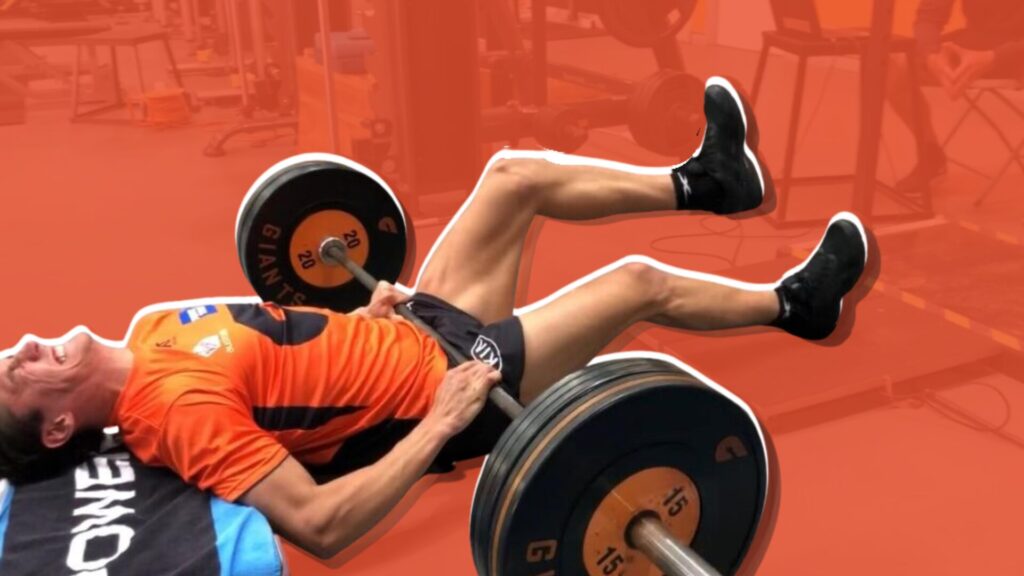
| 4 | Shoulder elevated bilateral hip lift | 3 x 7 |
| 5 | Gym ring assisted pull up | 3 x 6 |
| 6 | Single leg calf isometric in cage | 3 x 3 x 4s (each side) |
Instead, the coach who led his programme slightly dropped the intensity / load to where the athlete was happy while staying within a sound range for adaptation. The coach also reduced the volume while ensuring maximal intent during reps.
Call it compromise if you wish, but it was a successful approach that gave the athlete what they needed and also what was wanted. He felt listened to, and he bought in.
Endurance athletes are volume monsters
Volume is fundamental for athletic development and success in endurance sports. It’s a pivotal physiological driver for superior performance.
However, the world of S&C and the science behind it can very easily be biased against volume. High volume training conjures up thoughts of DOMS, injury risk and outdated training methods not suitable for sport performance. That makes sense in our domain of power racks and barbells. But outside of the gym, in an endurance athlete’s overall training regime, we can’t allow such blinders to impact our broader, holistic beliefs towards the athlete’s performance.
Eammon Flanagan with more insight:
“In S&C we can easily overlook how important overall training volume is as a driver of endurance performance… In rowing, 200+ km per week appears a critical volume that, when backed up in cycles, can be a real driver of performance. Therefore, in S&C we have to ensure our training supports – and does not distract from – this.”
While we know S&C training can create positive benefits in endurance performance, it is easy to forget we need to support the main source of adaptations in these sports: overall training volume. We need to balance how much and how hard to push in the gym to facilitate performance without undermining the bigger picture.
That said, injury avoidance is not a sufficient paradigm. Staying healthy and in good condition can be a strong motivator, but it’s not going to be enough for most athletes.
We have to pursue the positive aspects of performance to make it as attractive and motivating as possible for the athlete.
Tweet ThisHigh volume training, pivotal in endurance sports, challenges S&C norms, urging a balance that supports overall training without compromising performance
@CrippsDave
Use intensity to drive neuromuscular benefits
When the topic of training volume arises, so does the conundrum of risk versus reward. How much volume in the gym is enough to evoke the best adaptations favourable to the athlete, without incurring levels of fatigue which could compromise them (i.e., the minimum effective dose)? How hard can you push them with respect to the intensity of loading and their proximity to rep failure?
Like with team sports, the requirements of endurance sports will direct the specifics of the S&C program. The differences between running and cycling, swimming and rowing, for example, are obvious at the surface level and relevant at the biomechanical and kinetic levels. This holds true even when matched for volume.
“In a session, endurance athletes can do seven sets of lower body S&C training and still drive adaptation…[and they don’t] need to push near to rep failure,” Richard Blagrove said.
Our work at CP over the last eight years suggests 60 minutes of S&C per week, can create meaningful improvements in strength, power and endurance qualities, in addition to overcoming common injuries. That comes with the caveat that we cannot conclusively say how much of those improvements were the result of S&C interventions.
While S&C training volume is one variable to consider with risk versus reward, so is intensity.
In endurance sports, S&C should prioritize neuromuscular adaptations from strength training as these are associated with improved performance. That entails more intense training methods training methods. For example, strength exercises at >80% 1RM and plyometric exercises.
However, we have to keep in mind that endurance athletes don’t possess the same strength and power qualities of most team and power sport athletes. S&C training at the higher intensities could be more risky. That doesn’t make high intensity, neuromuscular focused work inappropriate – in fact, I consider it essential in appropriate doses. But we have to be cautious.
As an example, we coach an athlete who competes internationally in Ironman triathlons. Her training and performance were hindered by recurring Achilles and patellar tendon problems. Plyometrics seemingly make sense for her. However, she previously tried them with another coach and had a massive reaction in her Achilles, which resulted in her lacking confidence with this training.
| Session 1 | ||
| Exercise | Sets x Reps | |
| 1a | Reverse lunge to plate (2s lower) | 4 x 5 (each side) |
| 1b | Half kneeling vertical band pull | 4 x 5 (each side) |
| 2a | Single leg isometric hamstring bridge (3 angles) | 3 x 3 (each angle, each side) |
| 2b | Straight + bent knee calf raise eccentrics | 3 x 3 (each way, each side) |
| 2c | Wall hinged thoracic stretch | 3 x 5 x 7s |
| Session 2 | ||
| Exercise | Sets x Reps | |
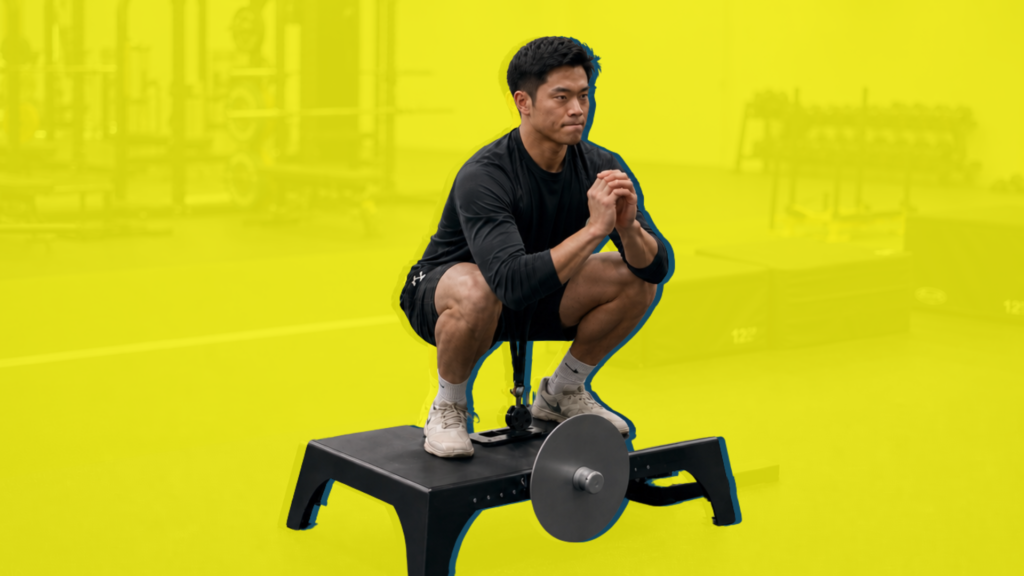
| 1a | Single leg squat from box | 4 x 5 (each side) |
| 1b | Single arm KB row (3s lower) | 4 x 6 (each side) |
| 1c | Half kneeling single arm overhead press | 4 x 6 (each side) |
| 1d | Half kneeling pec minor stretch with abduction | 4 x 4 (each side) |
We introduced her to very basic, lower intensity plyometrics in low volumes. After a couple of sessions, her perception was that they were creating a problem again. Ask yourself: Do you persist with, or change approach?
When considering all variables, we felt the risk relative to the reward was too high, so we retired that aspect from her S&C. We haven’t had reason to regret that decision, and given that we continue to use plyometrics with other athletes, we understand that the best answer is unique to the athlete.
Tweet ThisIntensity in S&C should drive neuromuscular benefits for endurance athletes, carefully balancing the risk of fatigue with the reward of enhanced performance
@CrippsDave
Does S&C training improve movement quality?
I asked a coach in the earlier stages of his S&C career how S&C improves endurance athletes. His response was, “it improves their movement.”
One of the biggest assumptions we can make as S&C coaches is how the strength we develop in our athletes translates to the specific movements of a sport. The inconvenient truth is there is very limited evidence that S&C training changes running kinematics [5], including specific elements of running gait [6]. Then, when you look to other sports like swimming, there is no research to support the notion that strength gains improve movement.
Does this mean you should dismiss this potential benefit? Certainly not.
S&C improves endurance performance and its derivatives via improvements in the kinetic aspects of performance [7]. Whether or not there’s an additive impact via kinematics is semantics as, ultimately, it’s performance that matters most.
But with a constrained amount of training time each week for S&C, the content of a programme has to be highly focused on prioritising what matters most. In pursuit of being too clever, we can end up being less effective by sacrificing time where our S&C is based on sound principles for exercises and methods reliant on poor ones.
S&C training can improve kinetic aspects of sport to help endurance performance, but it’s completely unclear whether it may help even slightly any kinematic aspects. If we design the programme to improve performance, we’ll be providing the athlete the best tools to improve the their kinematics (if there are gains to be made there).