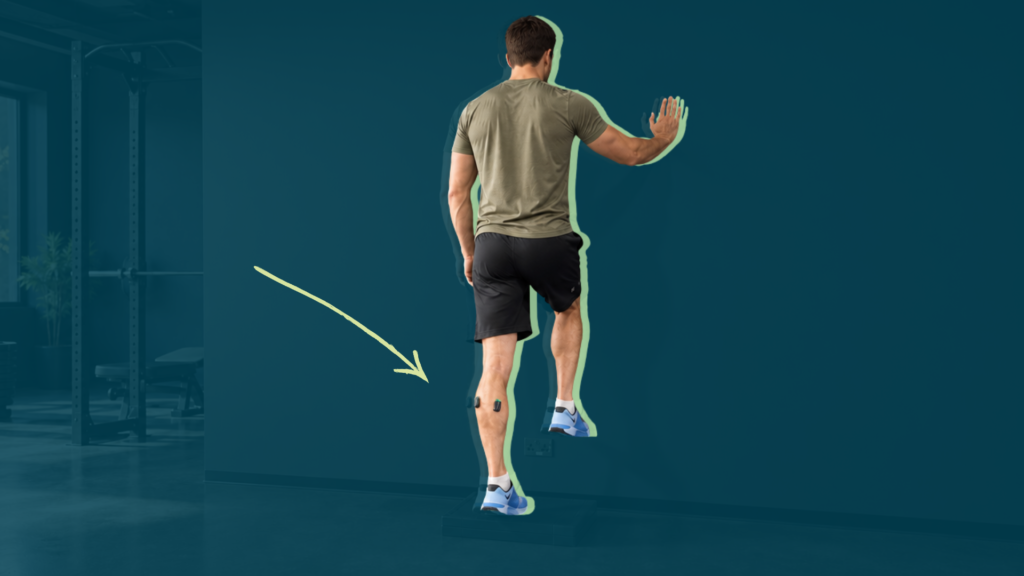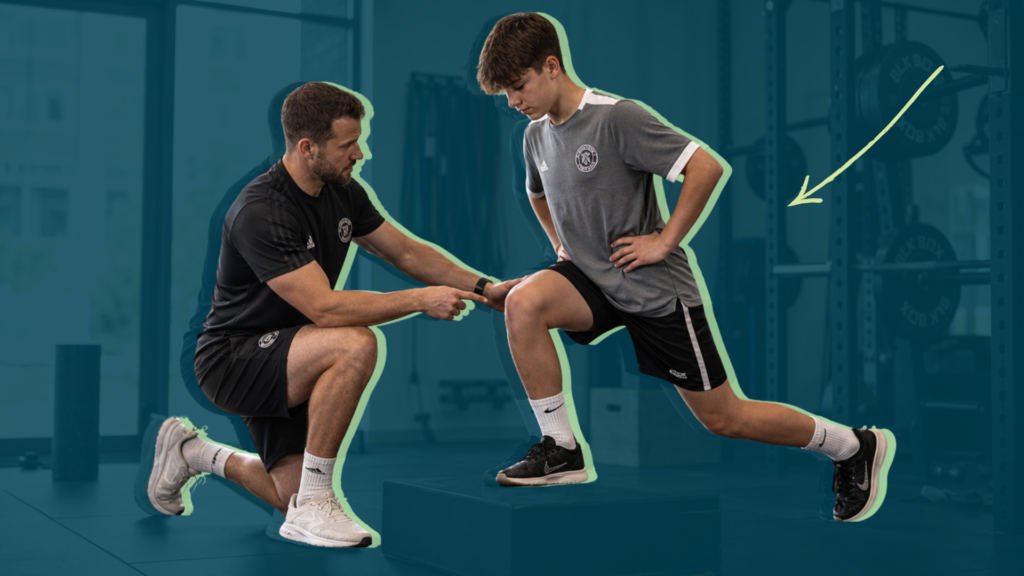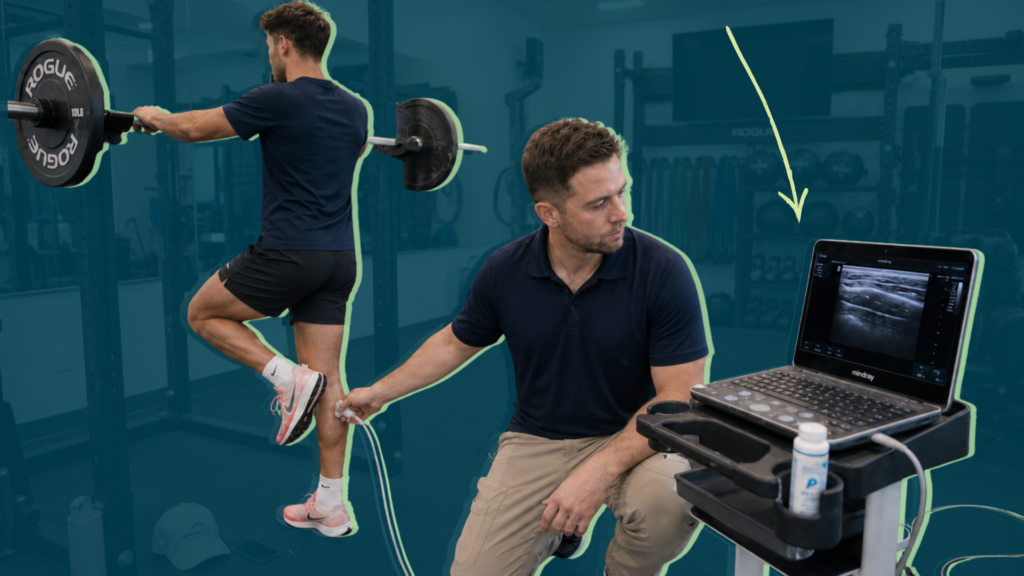


Primary and secondary prevention strategies provide a stable foundation to mitigate the risks of longstanding groin problems. But it would be naïve to imagine, even with solid primary and secondary prevention strategies in place, that we could eliminate all groin injuries. Tertiary prevention considers what to do in the event of a time-loss injury.
Effective rehabilitation and treatment of extra-articular groin injuries require an accurate differential diagnosis and subsequent treatment pathways specific to that diagnosis. This article will discuss treatment pathways based on the Doha Agreement clinical entities, with particular emphasis on the severe, unresolved groin pain cases that are not detected early through secondary prevention [1].
Tweet ThisEffective rehabilitation and treatment of extra-articular groin injuries require an accurate differential diagnosis and subsequent treatment pathways specific to that diagnosis.
Matthew DeLang
Keeping sport at the centre of groin rehab
To apply rehabilitation into a football context, our treatment philosophy follows three main criteria: keeping the rehab primarily exercise based (local, regional, global), regularly using test-retest, and reverse engineering football performance.
Active interventions are more successful than passive ones for groin rehabilitation [2]. Exercise based interventions also provide an indirect benefit in a football club setting by promoting player independence, not interdependence on passive modalities.
Exercise interventions are applied using a local, regional, and global approach. Local directly targets the injured tissue (agonists); regional targets the tissue immediately surrounding the injury (antagonists, synergists, stabilizers); and global maintains the global capacities required for sport participation (lower extremity strength / power, cardiovascular demands).
| Region of Pain | Local Targets | Regional Targets | Global Goals |
| Adductor-related | Adductors | Abdominals Glutes, abductors, hip rotators Hip flexors | Cardiovascular fitness Lower body strength |
| Illiopsoas-related | Hip flexors | Abdominals Glutes, abductors, hip rotators Adductors | |
| Inguinal-related | Abdominals | Adductors Glutes, abductors, hip rotators Hip flexors | |
| Pubic-related | None/All | Adductors Abductors Glutes, abductors, hip rotators Hip flexors |
Practitioners should be regularly testing and retesting throughout the rehabilitation. Test-retest allows both athlete and practitioner to observe meaningful improvements throughout the rehabilitation process–and ensure that the trajectory is heading the right direction.
Obviously, we will use adductor squeeze strength throughout the rehabilitation process as a test-retest, given that we have a groin profile on every player in the academy and first team for comparisons. But test-retest goes beyond standardized objective tests. It can also involve retesting a clinical examination (e.g., reduced palpation tenderness), restored range of motion (e.g., bent knee fallout or hip abduction PROM), or improvements in functional exercise (progressing a deadbug heel tap pattern to deadbug leg lowering) and resisted exercise (performing a cable adductor exercise with the same resistance but reduced pain).
“Start with the end” by reverse engineering football activities and checking off those capacities before returning to sport. Often, some aspects of pitch based rehabilitation can be cleared in parallel with gym progressions. For example, linear running can commence on an adductor-related groin pain case as soon as the athlete can tolerate it, which may be before maximal effort change of direction or curled corner kicks are safe. This concept also helps reverse engineer gym based exercise prescription by breaking down a complex movement task, like high speed change of direction, into the sum of its parts: adductor strength, frontal plane stability, multi-planar force production and transfer.
Tweet ThisOur treatment philosophy follows three main criteria: keeping the rehab primarily exercise based (local, regional, global), regularly using test-retest, and reverse engineering football performance.
Matthew DeLang
Overview of treatment pathways
We will narrow down the following treatment pathways to include only extra-articular groin pain cases, that is, those related to one or more of the adductor, iliopsoas, inguinal ligament, and pubic symphysis. We assume the clinical examination has already ruled out the lumbar spine and sacroiliac joint, any intra-articular hip pathology, and other red flags.
Tweet ThisA local approach directly targets the injured tissue (agonists); regional targets the tissue immediately surrounding the injury (antagonists, synergists, stabilizers); and global maintains the global capacities required for sport participation.
Matthew DeLang
Pubic-related groin pain
Pubic-related groin pain is the least common, but the most “different” in terms of treatment pathways.
Pubic-related groin pain is characterized by bony stress at the pubic symphysis or adjacent pubic rami. It’s important to note that bony pubic edema is common in asymptomatic football players, and “osteitis pubis” is a diagnostic term, not a pathology.
Bone stress requires rest. Treatment guidelines for pubic apophysitis cases clearly outline the rehabilitation plan: obtain complete analgesia, correct postural control impairments from static to dynamic, and then progressive football specific exercises [3]. Applying the local, regional, and global exercise prescription primarily applies to the latter two steps, where active exercises and resistance training resume. In Table 1, the local exercises for pubic-related groin pain are noted as “none/all” because while there are no active soft tissue structures to directly address, all of the tissues crossing or attaching to the pelvis act on the pelvis.
Tweet ThisPubic-related groin pain is characterized by bony stress at the pubic symphysis or adjacent pubic rami. It’s important to note that bony pubic edema is common in asymptomatic football players.
Matthew DeLang
Iliopsoas-related groin pain
Intra-articular origins of pain are quite common in iliopsoas-related cases due to the close relationship of the iliopsoas tendon and the antero-superior labrum, and common “12 to 3” positioning of a cam morphology. But assuming we can rule them out, then tissue loading for the iliopsoas muscle and tendon are similar to most muscle injuries. The goals are to modulate pain, restore static and dynamic range of motion, improve local load tolerance, maintain or improve regional load tolerance and neuromuscular control, and maintain global load tolerance.
To test-retest the local load tolerance of the hip flexors, we assess isometric long lever hip flexion with handheld dynamometry; functionally observe cable hip flexion at 20-25% body weight resistance through a full range of motion; and, finally, test explosive hip flexor load tolerance, ideally using a Keiser machine for objective power output.
Inguinal-related groin pain
Inguinal-related groin pain differs from adductor- and iliopsoas-related because there is no active soft tissue directly involved. Rather, passive soft tissues define the injury, whether at the conjoint tendon (external oblique and transversus abdominis) or the external ring.
Therefore, core / abdominal exercises that place stress on the passive soft tissues involved pathoanatomically serve as the local load tolerance exercises. Providing an adaptive stimulus to improve local load tolerance can be challenging. Often, tracking the player’s symptoms later in the same day and into the next morning will determine if an appropriate load was prescribed. We often try to push the limit to being relatively pain free during the session, reasonably sore or feeling overworked following the session, but returning to baseline the following morning.
The treatment goals remain to modulate pain, restore static and dynamic range of motion, improve local load tolerance, maintain or improve regional load tolerance and neuromuscular control, and maintain global load tolerance.
Adductor-related groin pain
Adductor-related groin pain is the most common, and when it manifests into multilocational groin pain, potentially the most burdensome. Consider three types of adductor-related groin pain: acute / sudden onset, gradual / overuse onset detected early, and gradual / overuse onset not detected early.
Acute onset adductor-related groin pain rehabilitation centers around restoring static and dynamic range of motion, restoring adductor local load tolerance, transitioning into higher load and higher speed adductor-related movements, and maintaining regional and global tissue load tolerance. Criteria-based return to sport guidelines help clinicians navigate the rehabilitation process [4].
Gradual / overuse onset groin pain that is detected early (among the benefits of a serial monitoring system) is also fairly straightforward. The primary focus of these cases is pain modulation and, subsequently, restored adductor squeeze strength.
When gradual / overuse onset cases reach a threshold to require time-loss, the same local / regional / global exercise approach is appropriate. Pain modulation exercises can fit into both local (e.g., contract-relax) and regional categories (e.g., reciprocal inhibition).
Although most of these cases result in only mild to moderate time-loss, practitioners should make a number of regional and global considerations during the player’s time out of training. Regional exercises should emphasize postural demand and pelvic control. Remember: any tissue that attaches to or crosses the pelvis then acts on the pelvis. Global exercises maintain cardiovascular fitness and lower extremity strength and power. Often, lower extremity strength exercises can progress from more isolated movements (requiring less adductor involvement), such as open chain machine leg extensions, to more complex movements that require more adductor involvement. That could include kettlebell goblet squats, wide stance kettlebell goblet squats, or rear foot elevated split squats with increasing depths and speeds.
While acute onset and early detected gradual onset cases are relatively simple to manage, longstanding cases that are not detected early are significantly more complicated.
Tweet ThisAcute onset adductor-related groin pain rehabilitation centers around restoring static and dynamic range of motion, restoring adductor local load tolerance, transitioning into higher load and higher speed adductor-related movements, and maintaining regional and global tissue load tolerance.
Matthew DeLang
Multilocational groin pain
Many longstanding groin pain cases manifest into “multilocational” groin pain (more than one of the Doha clinical entities are present). Longstanding cases often have multiple regions with pain provocation, leading to a complicated local and regional exercise prescription strategy [5]. Often, the initial approach is calming down the sensitive areas and determining where the primary cause of pain is centered. Most multilocational groin pain cases include adductor-related groin pain as one of the entities present [6–8].
Clinically, we often consider unresolved adductor-related groin pain as a “gateway” to multilocational groin pain, and therefore severe time loss.
When adductor-related groin pain leads to decreased unilateral muscular output, the complex balance of active and passive soft tissues around the pelvis can be altered. Continuing to play through unresolved, under reported adductor-related groin pain may result in compensatory movement strategies, increased stress on regional tissues, and manifest into complicated, multilocational groin pain cases.
Due to the close anatomical relationships between the adductor and the opposing conjoint tendon and rectus abdominis, a longstanding adductor-related groin pain case can turn into an inguinal-related case. Add in the increased shear forces across the pubic symphysis, and pubic-related groin pain comes into play. Combine all three, and the rehabilitation process becomes messy: every time you attempt local load tolerance of the adductor, the inguinal / core region hurts, and vice versa. When programming that balance, and also having to account for potential bony stress and discomfort, the case quickly becomes hard to manage.

Tweet ThisWhen adductor-related groin pain leads to decreased unilateral muscular output, the complex balance of active and passive soft tissues around the pelvis can be altered.
Matthew DeLang
We try to unravel the symptoms in reverse order. If inguinal-related groin pain emerges alongside adductor-related groin pain, we attempt to resolve the inguinal-related symptoms first.
The first step of the treatment pathway is to assess function, starting with the load tolerance of each local and regional tissue: adductors, hip flexors, abdominals / core, glutes / hip abductors / hip rotators. Understand which primary movements are painful. For example, resisted adduction may be painful, but sidelying adduction with manual assistance through the concentric phase is pain free; split stance pallof press is painful, but regressed postural demand to a half kneeling position is pain free.
Globally, we can also assess which functional patterns are problematic, and which are options to promote strength maintenance, e.g., squat, lunge, hinge, push, pull, carry, rotation, anti-rotation.
Once you’ve established the baseline functional assessment, gradually increase local and regional capacities while consistently monitoring the player’s pain experience during and after exercise, and even into the next morning.
Slowly but surely, progressive overload leads to improvement in local / regional load tolerance. Be careful not to turn up too many dials at once: if the session “fails,” it’s difficult to know which dial caused an increase in symptoms the following day.
Finally, as the player’s local and regional load tolerance continues to increase (and pain provocation /sensitivity decreases), begin checking off the boxes until meeting on-pitch football demands.
These cases are longstanding for a reason – 12-16 week conservative rehabilitations are not uncommon.
Tertiary prevention can be efficiently implemented by accurately diagnosing specific clinical entities for groin pain and developing a thorough rehabilitation plan to execute. Tertiary prevention of extra-articular groin pain in football players spans from relatively easy to overwhelmingly difficult. With a foundation in exercise based rehabilitation, guided by test-retest, and always planning ahead with the end goal in mind, seeing the forest through the trees becomes clearer.
Tweet ThisThe first step of the treatment pathway is to assess function, starting with the load tolerance of each local and regional tissue: adductors, hip flexors, abdominals / core, glutes / hip abductors / hip rotators – understanding which movements are painful.
Matthew DeLang