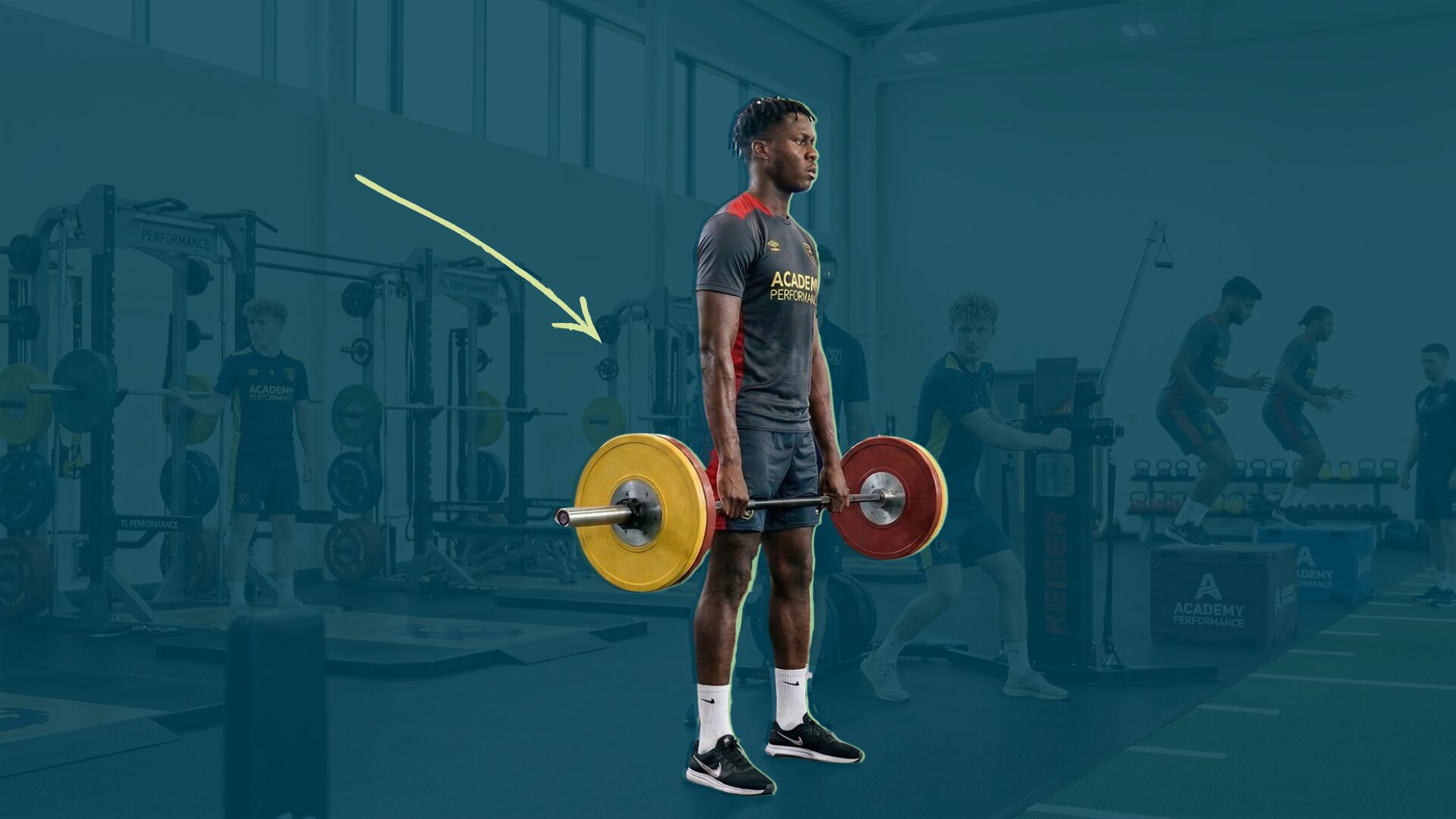

Returning to the Premier League for the first time in 10 years, everyone on the performance staff at Sunderland AFC knew this was going to be a different beast than the last time the club was here. Since 2015/16, the league’s running demands—total distance, high speed distance, and sprint distance— have increased significantly. Our players need to meet those running demands and have the capacity to handle the rigors week in and week out.
The main difference between the Premier League and the Championship (the second tier of English football, where Sunderland played the last three seasons) is speed. Total distance is similar, but high speed volume and sprint volume are significantly higher. This was going to involve increased mechanical stress, pushing players to attain and sustain higher high-speed running distances and higher sprint distances, while simultaneously improving strength, power, reactivity, and speed.
A lot of questions came into my head: we want to improve players, challenge them, and allow them to have long careers in which they are consistently meeting the demands of the league they play in.
How do we achieve this? How can we develop players in the Premier League in a gym-based performance setting, all while the running demands have increased, on top of the increased media demands, appearance demands, and travel demands of the top flight?
For years, the foundation of our gym training was two main sessions a week focused on strength and power. Players could develop high levels of fatigue given the dense nature of these sessions.
However, now we need to limit fatigue. Do we decrease the number of sessions, or do we spread the load throughout the week?
The latter approach—microdosing—emerged as the most promising option. Instead of two main sessions a week, we provide smaller stimuli, targeting what each player needs for training and for their individual development, e.g., injury reduction, position specific work, or tactical specific work.
Tweet ThisTotal distance is similar, but high speed volume and sprint volume are significantly higher. This was going to involve increased mechanical stress, while simultaneously improving strength, power, reactivity, and speed.
@McGrathKeith
Leaving two “main sessions” behind
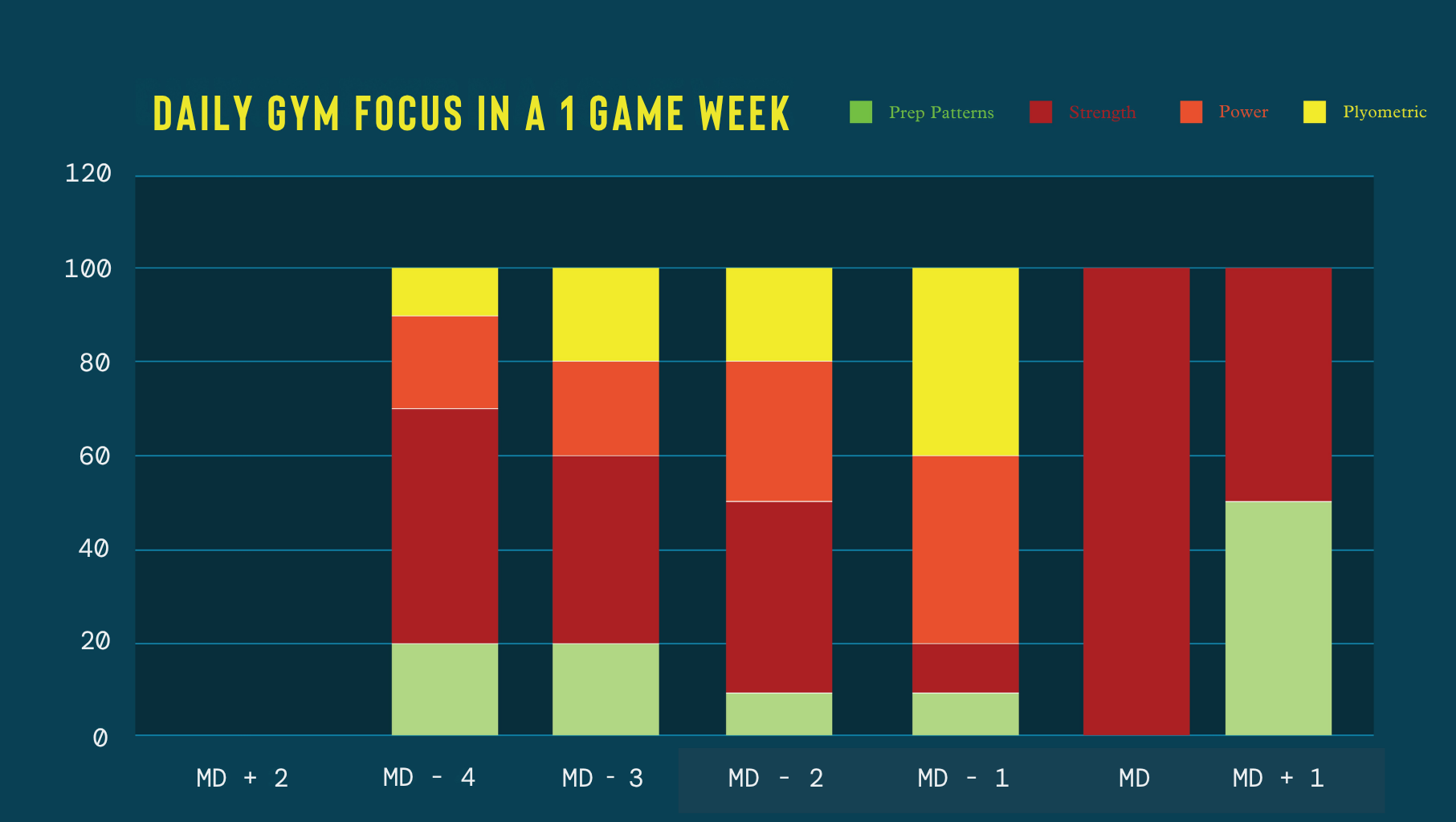
In a normal one-game week, the classic setup is two gym sessions of 40-50 minutes each: a posterior dominant day and an anterior dominant day. During congested weeks, one of those disappears. Players who regularly play complete games may go 10 days between lifts.
Microdosing solves that by redistributing volume: 4-5 sessions of 15–20 minutes, all pre-training and highly specific.
Strength in football isn’t about lifting heavy loads. The key is how players generate force, how they apply force, and their movement quality, repeatedly and under fatigue. Short, intent-driven sessions expose players to key strength and power qualities on a daily basis. This reduces the fatigue or soreness that could compromise their subsequent training quality or matchday abilities.
Consistently working daily strength qualities improves neuromuscular readiness; supports acceleration and deceleration; and helps maintain eccentric strength across congested fixture periods when training and recovery times are minimal.
Tweet ThisIn a normal one-game week, the classic setup is two gym sessions of 40-50 minutes each: a posterior dominant day and an anterior dominant day. During congested weeks, one of those disappears. Players who regularly play may go 10 days between lifts.
@McGrathKeith
Microdosing allows S&C work to happen before pitch training
All main gym work happens pre-training. This single shift transformed outcomes in adherence and compliance, culture, injury resilience, and performance markers. Players start the day attentively and actively, they prepare their tissues for the movement patterns they will face during their on-pitch training, and post-training fatigue no longer compromises the gym session.
This lets us focus on what the player needs overall, as well as the requirements that the upcoming session and match plan will place upon him.
Each block runs six weeks with different emphases—preparation, maximum strength, dynamic strength, power and speed—but the framework stays the same. It’s predictable for players, yet flexible for coaches.
We can tailor the work towards each player’s specific needs. For example, microdosing is particularly valuable for tendon health given its frequency and consistency. Players with tendon issues will have a program that incorporates more isometric movements and slow, controlled eccentric-concentric movement. They will have less high eccentric loading movements until those can be safely re-introduced.
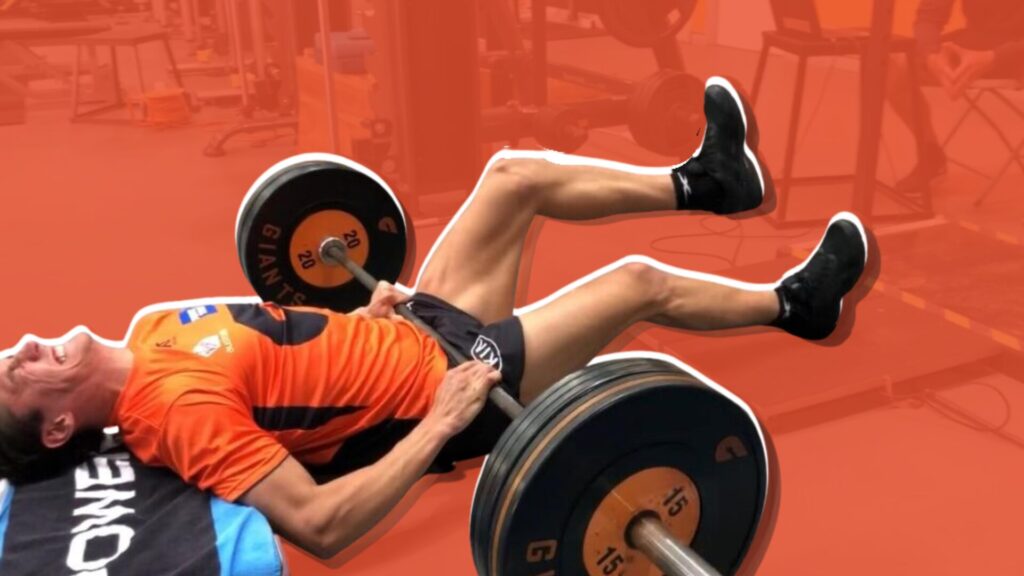
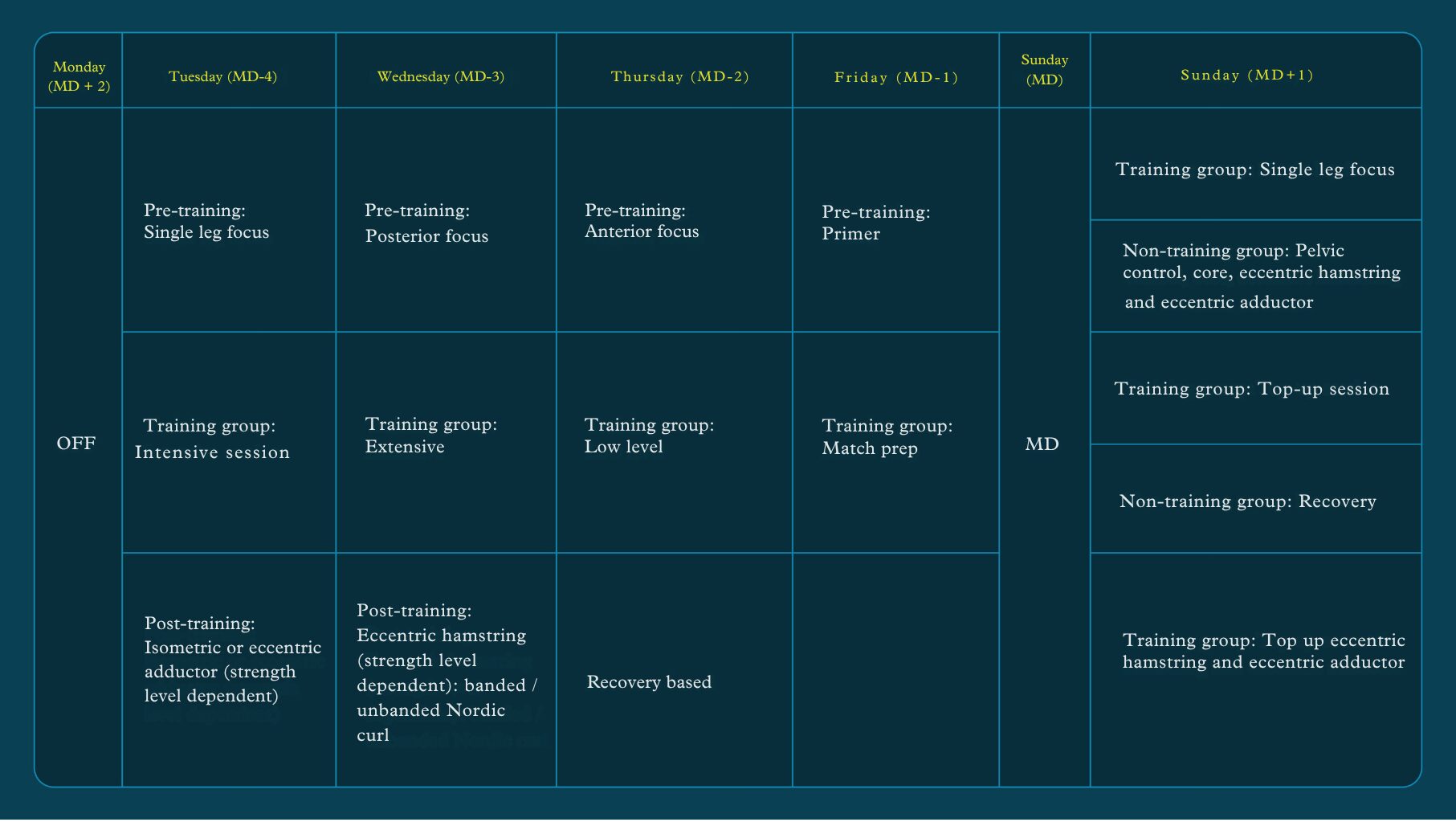
Across the week, the sessions on intensive training days (MD-4) are single-leg dominant; posterior dominant sessions precede the extensive training sessions (MD-3); anterior dominant sessions come on the low level or off-feet / walk-through days (MD-2); and primer sessions are on MD-1, with robustness and control sessions on MD+1.
Bucketing sessions into specific lower body themes like this aligns gym sessions with what the grass-based session will be and what the players will experience.
Intensive sessions on grass involve activities in small areas, which impart high levels of mechanical stress from change of direction actions, accelerations, and decelerations. Players accelerate and decelerate in a staggered, i.e., single-leg, position, so it only makes sense to focus the players’ pre-training strength work on single-leg activities. The same thought process applies to putting the posterior focus on their extensive pitch session days.
These two days are their hardest days physically given these mechanical and metabolic stressors.
The players find anterior-based exercises the easiest to perform, so we place the anterior focus on MD-2, their easiest training day. This session produces the lowest level of fatigue amongst the group. Combined with the low demands of the pitch-based sessions on MD-2, the players consider it more of a regeneration day after the previous two heavy and intense days.
The MD-1 focus is solely on preparation and fast, reactive, competitive work. Like any typical primer session, we address mobility through resisted movement patterns and movements in and out of different positions. From there, we work in three contrasting exercises, e.g., weighted power movement, ballistic or plyometric movement, and an over-speed or maximal isometric movement.
Each player has a session built for him. Certain players don’t react well to plyometric based movements, others require more tendon-based work, and some require competitive feedback from velocity-measuring devices or simply doing box jumps for height. Anything that drives competition, intent, and fun is potentially on the table.
Key priorities include deep hip flexion, pelvic control, rotational work, and targeted eccentric strength. Football match play places repeated demands on the hip complex through high speed running, braking, and multi-directional actions, often resulting in increased neuromuscular tone and a temporary reduction in accessible range under load. Rather than relying solely on passive mobility strategies, players experience these positions through controlled strength exercises performed in deep ranges.
Loading deep hip flexion patterns—such as split squats or decline squats—allows players to regain force-producing capacity at longer muscle lengths while simultaneously targeting the adductors and deep hip musculature. This supports restoration of movement quality, improves pelvic control, and maintains eccentric strength in key injury-risk areas, without introducing excessive mechanical stress.
Framing MD+1 in this way enables recovery to occur through purposeful re-loading, ensuring players retain both range and control in positions they will repeatedly encounter during subsequent training and match play.
| Grass emphasis | Gym emphasis | Main exercise selection | Sets and reps |
| Intensive | Single leg focus | Split squat SL leg press BB step-up Staggered pin squat (banded or unbanded Split squat flywheel | 2 sets of 3-6 reps (reps highly dependent on training history and phase within program) |
| Extensive | Posterior focus | Hip thrust Staggered hip thrust SL hip thrust DL BB sprinter bridge SL BB sprinter bridge SL hip thrust to a catch | |
| Low level tactical walk-throughs | Anterior focus | Back squat Leg press Smith machine box squat Pin squat Banded pin squat Flywheel squat | |
| MD-1 | Primer / reactivity | BB squat jumps BB CMJ BB repeated jump DB squat jumps Staggered BB/DB CMJ | 3 sets of 2-6 reps |
| MD+1 (Starters) | Pelvic control: Eccentric / isometric strength | Hip extension patterns Step up with press Staggered cable rotations Goblet squats Goblet split squats SL hamstring slides SL lateral slides | 2 sets of 3-8 reps (reps highly dependent on training history and phase within program) |
| MD+1 (Subs) | Session dependent | Normal pre-training session | 2 sets of 3-6 reps |
| Theme | Exercise selection | Sets and reps |
| Prep pattern | Hip mobility: Movement based | 2 sets x 6-8/15-20s |
| Prep pattern | Hip mobility: Movement based | 2 sets x 6-8/15-20s |
| Main exercise | Single-leg dominant; hip dominant; knee (anterior) dominant | 2 sets x 3-6 |
| Accessory | Accessing range / control that helps player perform the main exercise | 2 sets x 6-8 |
| Dynamic effort | Plyometric or ballistic exercise: player dependent | 2-3 sets x 4-12 |
| Position | Isometric strength and around the ankle | 2-5 sets x 5s/15s/20s/6-8 |
Gym sessions are microdosed across the week to ensure consistent exposure to key strength and power qualities while minimising acute fatigue and interference with pitch-based training.
Rather than concentrating volume into one or two dense sessions, load is spread across multiple short, intent-driven exposures that meet the minimum effective dose required to maintain or develop physical qualities.
Microdosing works by preserving training residuals—particularly maximal strength, eccentric capacity, and neuromuscular readiness—through frequent low volume stimuli, preventing prolonged unloading periods that commonly occur during congested schedules. In football, where players may go 7–10 days without a traditional gym session, these short exposures act as “top-ups,” maintaining adaptation without generating excessive soreness or fatigue.
Tweet ThisMicrodosing is particularly valuable for tendon health given its frequency and consistency. Players with tendon issues will have a program that incorporates more isometric movements and slow, controlled eccentric-concentric movement.
@McGrathKeith
Player testing data validates microdosing: First half improvements
Tables 4-6 show testing data from three players at three points over the first half of the season: the beginning of preseason, the end of preseason, and after Christmas (roughly halfway through the season). Each improved consistently in eccentric hamstring strength, isometric adductor strength, and CMJ metrics, suggesting that frequent low dose exposure supported both tissue capacity and neuromuscular output.
By distributing strength work across the week rather than concentrating it into single high fatigue sessions, players were able to tolerate regular loading in key injury-risk areas without excessive soreness or disruption to pitch work.
| Test metric | Post preseason: Left (N) | Post preseason: Right (N) | Post- Christmas: Left (N) | Post- Christmas: Right (N) | Post preseason | Post Christmas |
| Eccentric hamstring strength | 471 | 571 | 518 +9% | 619 +8% | ||
| Isometric adductor strength: Long lever | 249 | 260 | 322 +23% | 315 +17% | ||
| CMJ height: Flight time (cm) | 37.4 | 44.7 +7.3cm | ||||
| CMJ impulse: momentum (cm) | 33.2 | 39 +5.8cm | ||||
| Test metric | Post preseason: Left (N) | Post preseason: Right (N) | Post- Christmas: Left (N) | Post- Christmas: Right (N) | Post preseason | Post Christmas |
| Eccentric hamstring strength | 439 | 508 | 498 +12% | 483 -5% | ||
| Isometric adductor strength: Long lever | 297 | 292 | 310 +4% | 295 +1% | ||
| CMJ height: Flight time (cm) | 52.1 | 57 +4.9cm | ||||
| CMJ impulse: momentum (cm) | 50.4 | 52 +1.6cm | ||||
| Test metric | Post preseason: Left (N) | Post preseason: Right (N) | Post- Christmas: Left (N) | Post- Christmas: Right (N) | Post preseason | Post Christmas |
| Eccentric hamstring strength | 451 | 400 | 456+1% | 515 +22% | ||
| Isometric adductor strength: Long lever | 188 | 212 | 285 +34% | 238 +11% | ||
| CMJ height: Flight time (cm) | 45 | 47.1 +2.1cm | ||||
| CMJ impulse: momentum (cm) | 39 | 40.2 +0.6cm | ||||
Two other players, both of whom presented with ongoing knee-related issues, demonstrated clear improvements in eccentric rate of force development, as reflected in the impulse–momentum variables within their CMJ data. For them, microdosing allowed a subtle but important shift in emphasis toward anterior-dominant and tendon-focused work. This included moderate-to-heavy single-leg time under tension exercises (e.g. single-leg leg press) and targeted isometric loading (single-leg knee extension at ~60°; 2-3 × 20 s per side).
The ability to expose these players to frequent, controlled loading without large spikes in joint stress appears to have supported improvements in force production during the braking and propulsion phases of jumping, while maintaining full training availability.
This highlights how microdosed programming can be individualised to address specific joint and tissue considerations, while still contributing positively to overall performance outputs within a congested football schedule.

Tweet ThisMicrodosing works by preserving training residuals—particularly maximal strength, eccentric capacity, and neuromuscular readiness—through frequent low volume stimuli, preventing prolonged unloading periods.
@McGrathKeith
Post-training work to build robustness
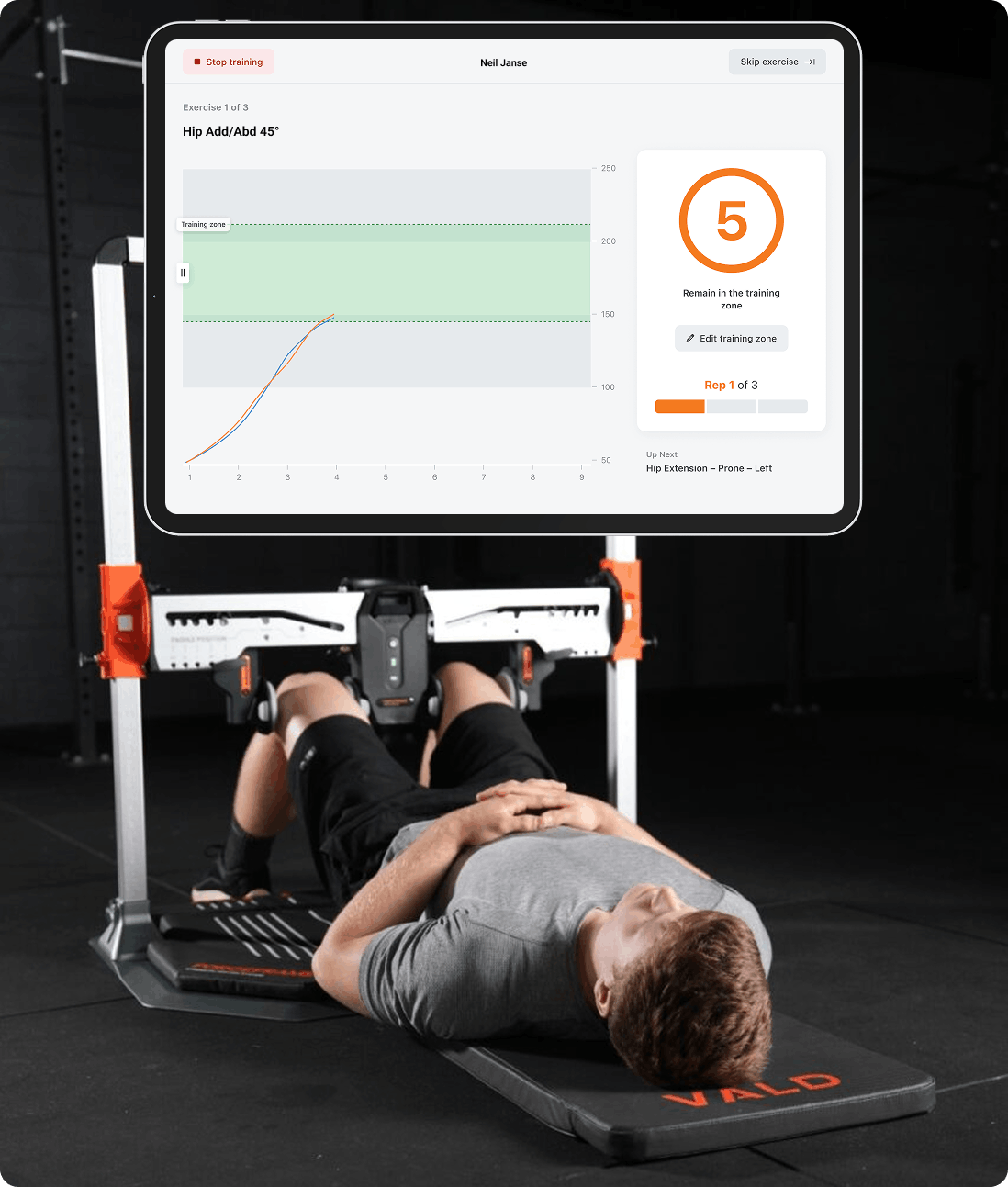
Post-training, adductor-specific strength work uses Copenhagen-based variations, selected according to both phase and individual player tolerance. These range from isometric-focused Copenhagen holds (short or long lever), to isotonic variations involving controlled lowering and raising of the hips, adjusting the load as necessary.
This work falls on MD-4, directly following the intensive pitch session, in order to concentrate higher levels of adductor fatigue into a single day. This lets us impose high levels of adductor-specific neuromuscular stimulus without increasing player fatigue within the pitch session itself. At the same time, we can allot sufficient recovery time before subsequent training and match play.
Not all players tolerate Copenhagen exercises. Adherence is critical in a microdosed system, so ensuring players complete some targeted adductor work is preferable to losing exposure altogether. Alternatives include weighted lateral sliders, lateral lunge variations, or resisted cable adduction.
While the level of motor unit recruitment may differ slightly between exercises, the underlying aim remains consistent: maintaining regular adductor loading.
Tweet ThisNot all players tolerate Copenhagen exercises. Adherence is critical in a microdosed system, so ensuring players complete some targeted adductor work is preferable to losing exposure altogether.
@McGrathKeith
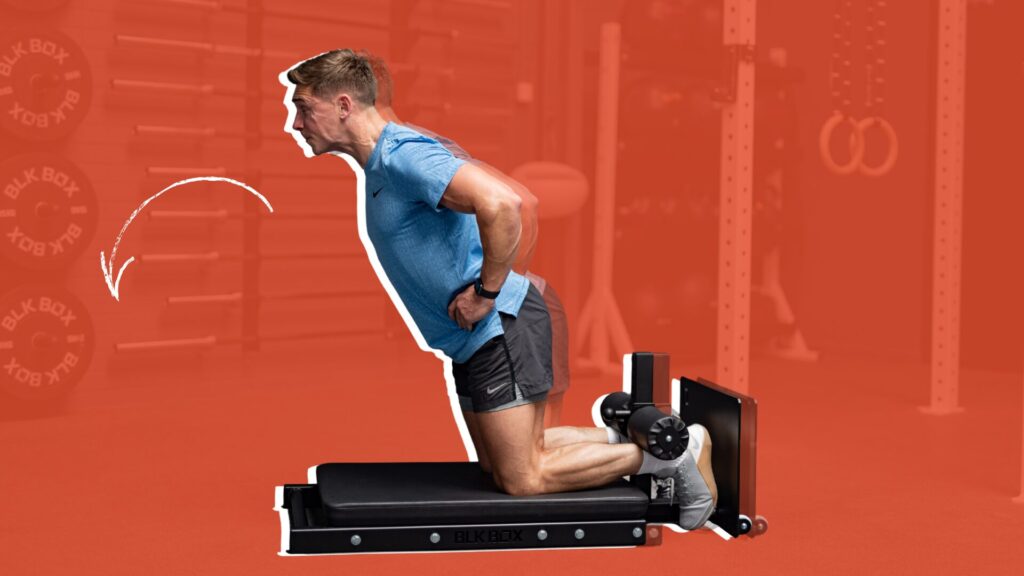
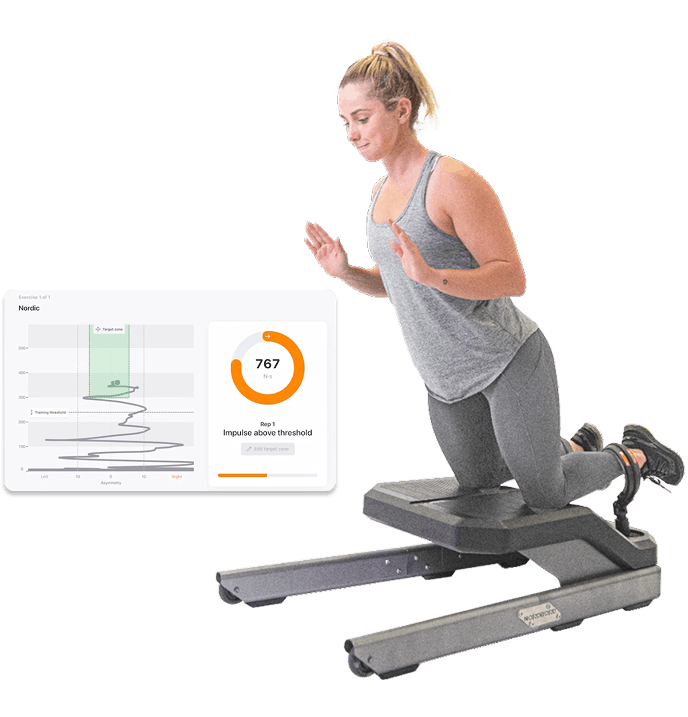
On MD-3, Nordic hamstring curls are placed immediately after extensive or speed-based pitch sessions to align eccentric hamstring loading with the highest velocity demands of the week.[5] High speed running and sprinting expose the hamstrings to substantial eccentric forces at long muscle lengths, particularly during the terminal swing phase.
Introducing Nordic hamstring work near these exposures reinforces tissue capacity under fatigue, rather than isolating eccentric loading on a separate day that may lack contextual relevance.
This allows small but regular eccentric stimuli at the minimum effective dose required to maintain or develop hamstring strength, without accumulating excessive soreness. Such frequent low volume exposures help preserve training residuals and prevent prolonged unloading of key injury-risk tissues during congested schedules.
By distributing Nordic volume across the week and pairing it with speed exposure, we consistently reinforce eccentric capacity while minimising interference with training quality and match availability.
Microdosing has reduced the players’ acute fatigue. By distributing the volume, we’ve removed the 48-hour DOMS lag that can compromise training quality.
We’ve observed better tissue quality and movement control, which we attribute to the players’ ability to improve technique over these frequent, low fatigue exposures. Going along with that, the pre-training lifts prime the neuromuscular system, letting the players take the pitch potentiated and with improved coordination. Microdosing is a practical solution for modern football’s reality. It keeps the “main thing” the main thing—training and performance on the pitch—while protecting the strength and power qualities that underpin it. By reducing acute fatigue, increasing contact time, and improving tissue quality, it bridges the gap between our “ideal” as practitioners and what actually fits inside a congested professional week.
Tweet ThisMicrodosing is a practical solution for modern football’s reality. It keeps the “main thing” the main thing—training and performance on the pitch—while protecting the strength and power qualities that underpin it.
@McGrathKeith