What led you down the path of exploring what later became called “reflexive eccentrics”?
MJ: In our work together over the years, we formulated what we called “The System,” based on Verkoshanky’s Main Adaptation Cycle.
The acquisition phase is when an athlete acquires foundational performance factors (FPF). This was the stepping stone towards the development of specific performance factors (SPF) that often consist of a highly individual set of physical capacities and abilities that allow an athlete to express their highest level of performance potential.
It may sound obvious now, but we observed that the key ingredients weren’t the same across athletes and sports. Certain strength training methods and exercises worked better for some than others. This was the impetus behind Stu’s “pusher-puller” concept.
We recognized that applying the wrong focus at the wrong time left gaps in physical development. For example, skipping over the FPFs with the fresh faced adolescent athlete to prioritize the SPFs hampered performance as much as prioritizing FPFs (such as maximal strength and hypertrophy) for too long in a senior elite athlete.
Tweet ThisApplying the wrong focus at the wrong time can leave gaps in development. Skipping foundational performance factors for adolescents or prioritizing maximal strength for elite athletes can hamper progress. Timing is crucial
@stuartmcmillan1 & @jordanstrength
This was a turning point for us, and spurred us to view muscular strength as an umbrella term that encapsulated many different force capacities.
Central to this web of factors were those related to isometric, quasi-isometric and eccentric strength. Charles Poliquin’s early work helped us categorize sport movements into different contraction types.
We questioned and redefined what we understood about traditional strength training methodology, knowing when to apply the basics and when to experiment with other training methods that deviated from the norm.
SM: My observations on isometrics and their impact on the explosiveness of bobsleigh athletes were particularly counterintuitive. We started going straight to the source and integrating insights from Schmidtbleicher, as well as concepts from Verkhoshansky’s Supertraining, especially with respect to what he termed reflexive isometrics.
Embracing the nuance of strength training methodology was not without its challenges, however.
Hypertrophy and maximal strength were easy to see and measure in the weight room. But other capacities like rapid eccentric force, stiffness, and reflexive isometric strength were far less easy to put a number on.
MJ: I can remember referring to them as esoteric capacities, avoiding the word “theoretical,” when I would present this to our interns and practicum students. We would discuss this as a part of our training methodology section, but essentially, while we knew these capacities were important for performance, we couldn’t really measure very much.
We just knew that something else beyond strength and hypertrophy seemed to predict sport performance potential to a greater extent in the best athletes. Nothing was simple when it came to identifying what that was.
Tweet ThisEccentric strength training enhances neuromuscular capacity and mitigates functional decline post-injury. Understanding ECC-RFD and ECCmax regulation is key to improving performance, especially in rapid multi-joint movements
@stuartmcmillan1 & @jordanstrength
When you worked together in Canada, focused eccentric training wasn’t commonplace. How did you explore this?
MJ: The focus on eccentric strength was not arbitrary. It was an essential component of our approach to training and rehabilitation.
There was a growing awareness in the strength training community about the importance of eccentric strength for sports performance. Eccentric strength, particularly during rapid multi-joint movements, was known to be a complex, vital aspect of muscular function, crucial for activities like running, jumping, and changing direction. Studies and experience were beginning to elucidate the potency of eccentric strength training.
My exploration in this field involved trying to quantify these eccentric force capacities. We knew they were important, but traditional equipment and methodologies fell short in measuring them effectively. This gap in our understanding and ability to measure drove much of our research and experimentation.
Tweet ThisExploring eccentric strength, we realized traditional methods fell short in measuring these capacities. This drove our research, leading to innovative training methods that emphasize rapid eccentric force and neuromuscular adaptation
@stuartmcmillan1 & @jordanstrength
SM: I was seeing firsthand the impact of integrating isometric and eccentric training into the training of high performance athletes. Again, the example that stands out above others is the bobsledders – some of the most powerful athletes on the planet. Their increased performance gains from my occasionally unconventional training methods were impressive, even counterintuitive at times.
This period was marked by a significant shift in our approach. We moved from a traditional “get big, strong, and powerful” mindset to a more nuanced understanding of strength, where the specific shapes and patterns that occurred in the sporting movement, and the quality and type of muscle contraction, became as important as the quantity of force produced.
Tweet ThisReflexive eccentrics help develop explosive eccentric strength by training the body to respond rapidly and instinctively to eccentric loading. This nuanced approach shifts from ‘get big, strong, and powerful’ to focusing on movement quality
@stuartmcmillan1 & @jordanstrength
The lesson was begin with the sport and athlete in mind, rather than with the overly generic and simplified twin objectives of bigger and stronger. While this seems quite normal and obvious now, this was a time when the S&C profession was still very much finding its feet.
Tell us about your exploratory work with reflexive eccentrics.
SM: As we progressed in our understanding of eccentric strength, we worked to further corroborate reflexive eccentrics. These are a different type of contraction than more traditional accentuated / overloaded eccentrics. Rather than working to develop absolute eccentric strength, the objective of reflexive eccentrics was to develop explosive eccentric strength. We coined the term based upon Verkhoshansky’s reference to “reflexive isometrics” in Supertraining, and Siff’s Biomechanics in Sport.
Our guiding principle here was “weighted fast eccentric,” something we didn’t feel was being addressed with traditional training.
This concept emerged from our conversations involving training the body’s response to eccentric loading to be rapid and instinctive. If the training objective is to develop explosive strength, then the eccentric tension should be generated with the maximum speed possible. The reflexive explosive eccentric action produced by plyometric movements can be extremely effective in this respect.
A traditional example is using drop jumps in training speed-power athletes, working to improve the effectiveness of attenuating and redirecting forces. But with loaded reflexive eccentrics, instead of increasing loads through higher drops, we focused on overloading the mass portion of the force equation.

MJ: This idea emerged almost organically from our discussions and observations. In our more scientific work, we have generally been led by the things we observed in practice, and the questions that came up.
Working with speed skaters, I was constantly seeking ways to maintain an eccentric stimulus during the season without compromising their on ice performance. This led me to experiment with combining reflexive eccentrics with high concentric rate of force development (RFD) movements.
For example, pairing barbell split squat drops, a high eccentric RFD movement, with a hang snatch or fast alternating step ups – high concentric RFD movements – became a staple in my in season strength maintenance protocols.
But we had no clue how to measure training adaptations or quantify these capacities.
We understood that muscular strength encompassed various force capacities, crucial for performance. But the missing piece of the puzzle was how to effectively measure explosive eccentric strength, particularly in multi-joint movements. This became a key focus of my research and practical application.
Tweet ThisReflexive eccentrics bridge the gap between gym performance and sporting performance, focusing on neuromuscular control for rapid force production. This approach is crucial for activities like sprinting, jumping, and changing direction
@stuartmcmillan1 & @jordanstrength
How did you measure this capacity?
MJ: Studying multi-joint, closed kinetic chain muscle function when the foot is fixed to the ground is important, because this is how we engage with our environment when we run, sprint, jump, and change direction. The problem is that the human system is redundant. As soon as we move away from single joint dynamometry to multi-joint dynamometry, we expand the solution space, which makes studying multi-joint closed kinetic chain muscle function challenging.
Think about how much we can shift the focus of a squat pattern from the hip to the knee with a small change in biomechanics. The contribution of multi-joint rapid eccentric force capacity to stretch-shortening cycle (SSC) function is even less understood, but is nevertheless a crucial contributor to various tasks requiring lower limb stiffness.
The physiological and biomechanical mechanisms that underpin rapid eccentric force capacity (ECC-RFD) and maximal eccentric force capacity (ECCmax) are not totally clear, and this includes the response to chronic training. Eccentric strength training is known for enhancing neuromuscular capacity and mitigating functional decline post-injury. Therefore, gaining mechanistic insight into ECC-RFD and ECCmax regulation is essential.
One significant challenge has been the limitations of standard laboratory equipment in testing closed kinetic chain eccentric strength in humans.
My lab aims to address this using a robotic leg press. This equipment will allow us to isolate and analyze the neuromuscular determinants of ECC-RFD and understand how it responds to strength training. It also opens the possibility of examining the contributions of ECC-RFD and ECCmax to SSC function.
We use surface EMG recordings to study the neuromuscular control of ECC-RFD, assessing the relationship between muscle contractile properties, ECCmax, and ECC-RFD. Additionally, examining peripheral muscle factors like muscle fascicle length, cross sectional area, and basic muscle properties (force-length, force-velocity, RFE) offers a chance to link fundamental physiology to performance.
SM: I observed the effects of these methods in a range of sports, from bobsleigh, to soccer and American football, to track & field. The common thread was the realization that explosive eccentric strength, particularly in rapid, multi-joint movements, played a crucial role in sport performance.
What intrigued us was not just the what, but the how.
How did these reflexive eccentrics contribute to performance? How could we integrate them effectively into training? These questions drove our experiments and training methodologies. We began to venture beyond traditional strength paradigms, exploring the nuances of muscle contraction and its real world applications.
Tweet ThisDeveloping reflexive eccentric exercises involves aligning them with the sport’s biomechanical demands. Exercises like the barbell split drop and staggered stance RDL drop emerged to support specific movement demands of bobsledders and sprinters
@stuartmcmillan1 & @jordanstrength
How did you develop the reflexive eccentric exercises that have become commonplace?
SM: We developed reflexive eccentric exercises by focusing on their dynamic correspondence, ensuring the exercises align with the biomechanical demands of the sport or activity.
Dynamic correspondence refers to how well a training exercise relates to the movements, forces, velocities, and muscle actions involved in the competitive exercise. The principle of “weighted fast eccentric” also serves to govern the particular exercises, emphasizing the importance of rapid eccentric actions. A big thing for us was to try to ensure that the training exercise aligns with the shapes and patterns that the athletes create in the task, event, or sport, leading to more effective transfer of training.
When most people think about movement patterns, they typically think about the “fundamental” ones, such as push, pull, hinge, squat and carry. These patterns provide a solid foundation for understanding basic human movements and are particularly useful for organizing and prescribing exercises for younger athletes, those new to training, and non-athletes. These patterns are essential for developing overall strength, coordination, and stability.
However, for athletes competing at higher levels, it is crucial to focus on specific movement patterns more relevant to their task, sport or event. Generic fundamental movements may not adequately address the specific demands of their particular activities.
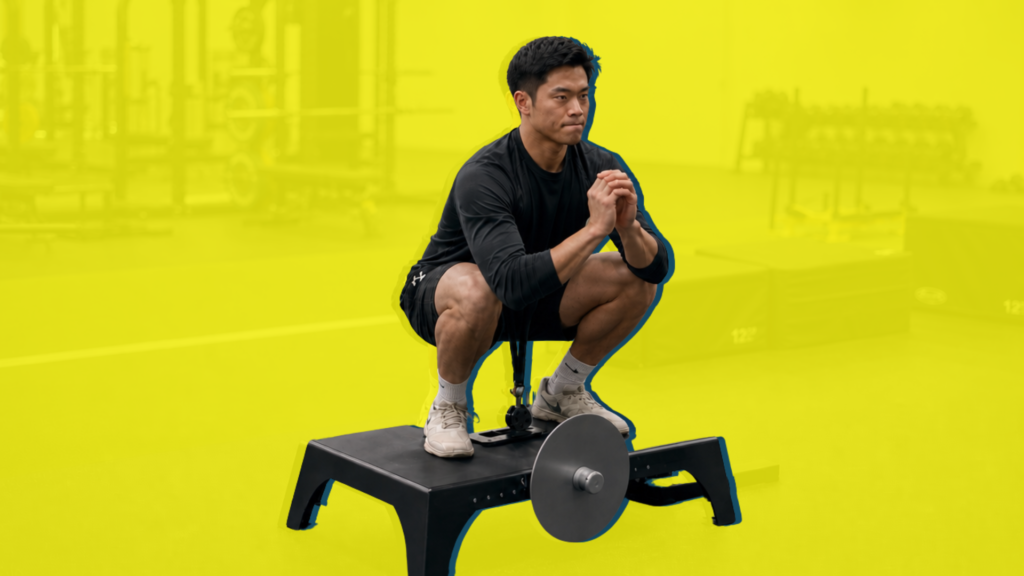
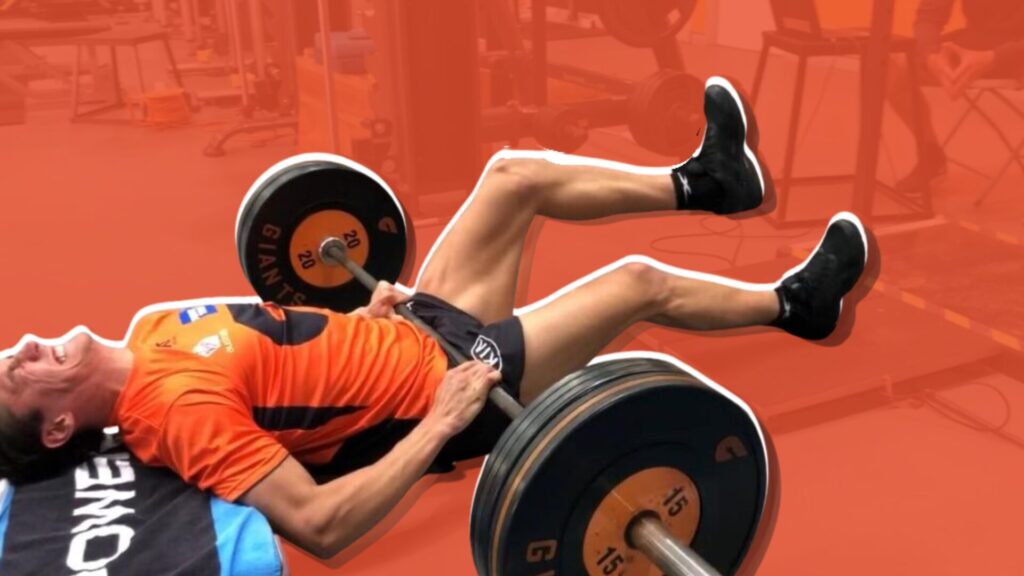
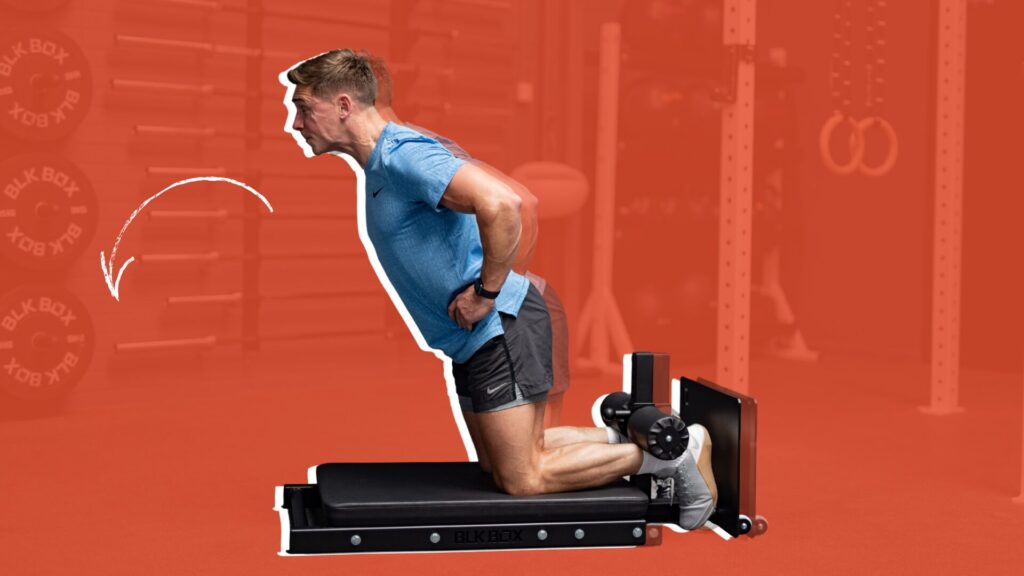
The more commonplace reflexive eccentric exercises – and two of the first we examined – are the barbell split drop and the staggered stance RDL drop.
They best support the specific movement demands of bobsledders and sprinters, the two populations of athletes that I was working the most with at the time. Later on, the rear foot elevated squat drop (BSqdrop in the figure below) became a personal favorite.

As the figure shows, peak force and time to peak force of the RFE SQ-Drop compare favorably with sprinting, with peak eccentric forces reaching as high as 4500N in less than 20ms. Dr. Deborah Newton’s research, which included some work with my sprint group in London, was an impetus for further exploration.
Reflecting on all this, how do you think reflexive eccentrics contribute to performance?
MJ: The space between sporting performance and gym performance is often vast. While there’s some overlap, particularly among strong athletes who excel in ballistic movements, many top athletes excel due to their ability to regulate and capitalize on increasing their lower limb stiffness during rapid eccentric deceleration movements.
It’s not uncommon to see athletes who are average in conventional gym strength measures outperform their relatively stronger peers when it comes to sprinting, punching, kicking, jumping, and change of direction maneuvers. This highlights the specificity in the neuromuscular control for rapid force production, which are key components of reflexive eccentrics.
Exercises with a reflexive eccentric focus develop physical capacities such as lower limb stiffness, rate of force development, and plyometric function.
These are fundamental in an array of sports, but the mechanisms that underpin exactly why this type of loading contributes to performance increases are not totally clear. We might be able to speculate that peripheral factors like muscle fascicle length, tendon stiffness, and even upregulation of muscle structural proteins such as titin are at play. The other key sites for adaptation lie within the nervous system.
While traditional heavy strength training remains important in the long term, the advantage of reflexive eccentrics lies in pushing the neuromuscular system to its maximum potential for rapid force production.
Incorporating reflexive eccentrics into an athlete’s training program addresses a critically important strength capacity, and possibly the best example of its importance can be seen after injury. Maybe it’s best to understand the impact of reflexive eccentrics on performance when it becomes highly detrained after injury.
In addition to losing eccentric strength and rate of force development, we often see the impact during rapid SSC movements such as hurdle hops and drop jumps, during sprinting, and during high demand change of direction maneuvers. Reflexive eccentrics are the best method to train these neuromuscular deficits.
This is also purely a hunch, but the next time you are in early phases of rehabilitation with an athlete who is recovering from an ACL injury, have them do a very low load reflexive eccentric. One of my favorites is the band stomp and catch, either standing or supine. You will probably notice that the athlete will display a highly altered neuromuscular control strategy that has nothing to do with maximal strength, exhibiting decreases in the neuromuscular control of reflexive eccentric movements.
This is one reason that I say reflexive eccentrics are both a strength capacity and a movement skill. Training reflexive eccentrics both from a skill acquisition standpoint and a capacity standpoint are crucial foundational stepping stones in athletic development, especially after injury.