
A young athlete will encounter many challenges throughout the various stages of physical development, especially during periods of accelerated growth. From a psycho-social perspective, it can be difficult to understand. An athlete can experience reduced levels of coordination, unsuccessful execution of technical skills, the inability to transfer force and power to sport specific movements, and increased incidence of injury. Athletes may see their peers develop at faster rates, which can become frustrating and lead to low self-esteem.
Sport scientists should be there to support athletes through these challenging periods with careful consideration, optimizing athletic development and reducing risk of injury.
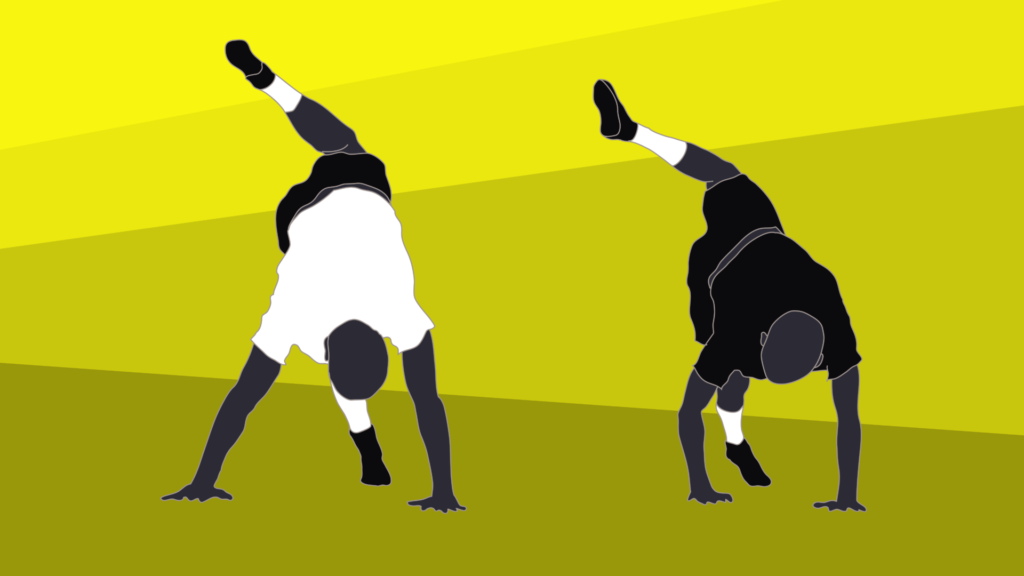
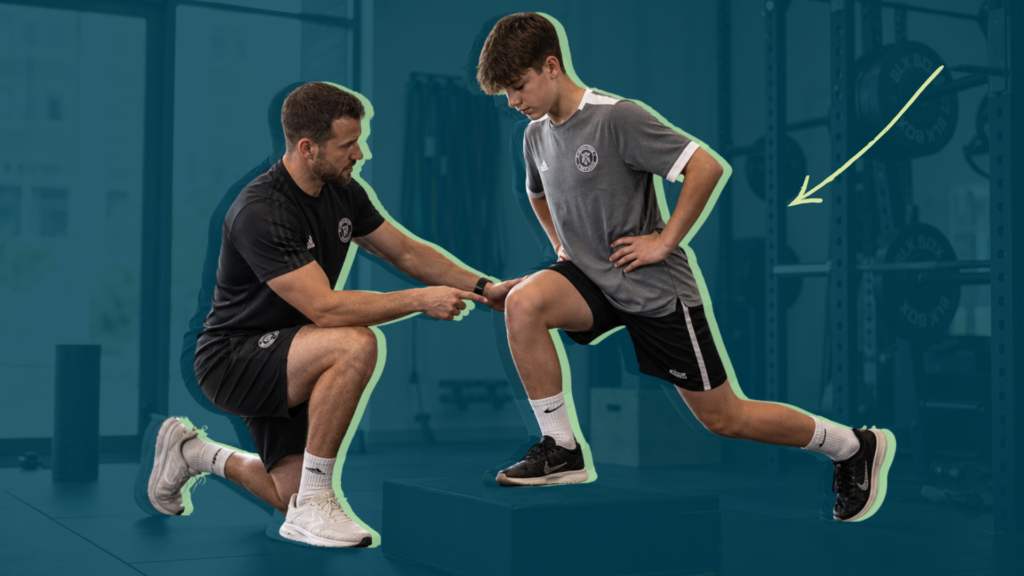
While exposing young athletes to traditional methods of strength training is important, on-ground movement patterns can be a useful addition to a coach’s toolkit. These movements promote continued development of basic motor properties (coordination, strength, stability, speed and mobility), which enrich an athlete’s potential to learn specific skills needed to participate and compete in various sports at a later stage.
Animal flow exercises have gained popularity over recent years, especially in a youth development context. They can be a great addition to athletic development programs, but there is the danger that they can be used without purpose or intent, and, therefore, yield very little benefit.
On-ground movement patterns, specifically the animal flow exercises, can be split into four categories. Each has its own distinct purpose, and can therefore be programmed according to the desired outcomes.
- Crawling patterns
- Force absorption
- Contact and bracing
- Rolling and momentum
Tweet ThisWhile exposing young athletes to traditional methods of strength training is important, on-ground movement patterns can be a useful addition to a coach’s toolkit
@Jack_C91 and @BowhaySam
Why incorporate on-ground movement patterns into your programs?
These exercises provide a great implicit learning opportunity. Athletes have to find movement solutions to obscure situations. As a result, they develop important physical qualities and skills that have the potential to improve sport specific skills [2]. When used correctly, they can provide a number of different functions within an athletic development program :
1. Movement diversity
I love the following analogy: we are providing athletes with a greater vocabulary, so in time they will be able to make better sentences. In essence, the sport specific skill will come but the athlete will be more articulate if we have given them more general skills to choose from.
2. Unconventional strength
We begin to think outside the realms of simple movement patterns and explore obscure movements in multiple planes and axis. This is the real world of sport, especially team sports that require coordinated movements in all directions. Programmed correctly, we can develop strength through a greater range of movement without putting excessive load through joints and tendons.
3. Coordination, rhythm and momentum
Some of these exercises require huge amounts of coordination between both upper and lower body to develop the kinetic chain. They may rely on timing, and learning how to generate momentum or mastering rhythm to move efficiently.
4. Challenge early specialization
Early specialization can limit athletic development, increase risk of injury and potentially reduce longevity of engagement with the sport. Yet it continues to happen and is a constant challenge [3].
These exercises are an opportunity to develop physical qualities without the need to overload the same movement patterns our athletes use day in, day out.
5. Fun and engaging
Let’s not forget they can be really enjoyable, and this may be the purpose of your session! They are an opportunity to take athletes outside of their comfort zone and try to master something new. They also develop the social side of things if the athletes are working in pairs or as part of an icebreaker, which can help with coach-athlete buy-in.
Four categories of on-ground movement patterns
Crawling patterns
Crawling involves traversing across the ground using animal-like movement patterns. Animal locomotion can be categorized by the number of contact points with the ground. For example, a bear crawl is quadrupedal, involving four-points of contact: two hands, two feet. By removing points of contact, we increase the challenge predominantly in the form of resisting rotational forces or increasing the load through the remaining limbs.
As a child, learning to crawl encourages improved cognitive function in areas such as concentration, depth perception, memory and spatial awareness, and they can provide similar benefits to our young athletes.
To move effectively across the ground, athletes need to achieve some rhythm and develop trunk strength by resisting rotation and extension. The benefits of crawling patterns include:
- Stability through the trunk, hips, ankle, foot and shoulder
- Increased active joint range of motion (wrists, shoulders, hips and ankles)
- High levels of core muscle activation and control
- Efficiency and quality of movement
- Improved body confidence and awareness
| Level 1 | Level 2 | Level 3 |
| Bear crawl forward and lateral | Quadrupedal crawl | Tripedal crawl |
| Crab walk | Monkey crawl | Scorpion crawl |
| Underhand lateral crawl | Low spiderman crawl | Bear-crab crawl |
| Wheelbarrow walks | Bunny hops | Single leg wheelbarrow |
Force absorption
Think of any contact or court sport, and you can inevitably recall a time when an athlete has been hit or fallen to the ground. In our sport, football, this is often accompanied by a number of rolls, screams and a miraculous recovery. However innocuous a fall or a hit may seem, reacting efficiently is a skill that can provide a competitive advantage.
Providing athletes with a breadth of movement patterns and coping strategies will increase the chances of them intuitively reacting effectively at speed.
“Donor sports” enhance skill development in a different performance context [1]. You will notice this category involves exercises derived from Parkour (donor sport), as it requires performers to learn how to negotiate obstacles with differing properties such as textures, surfaces, inclinations, sizes and angles in the most effective and efficient way possible [1].
Jumping and landing from height requires elements of force absorption to enable the athlete to eccentrically decelerate. A jump or roll might also require first contact with the hands to break the fall, so having the ability to absorb force can protect the athlete and also aid the transition from one movement to the next.
Although these exercises are presented in isolation, try combining them with various obstacles, speed and direction of approach.
The benefits of force absorption exercises include:
- Eccentric strength
- Trunk strength
- Stiffness qualities
- Timing and coordination
- Kinetic chain development
| Level 1 | Level 2 | Level 3 |
| Safety vault | Lazy vault | Kong vault |
| Squat – press up | Reverse safety vault | Butterfly vault |
| Squat – high plank | Monkey vault | Jump roll |
| Stand – high plank | Squat – single arm high plank | Stand – press up roll |
| Stand – press up | Frog stand | Stand – press up (high position) |
Contact and bracing
Not every sport involves physical contact. However, every young child will learn to experience a collision or physical contact from a competitive game or movement, whether in an organised sport or random play in the school grounds.
It is important that athletes learn how to anticipate contact and effectively “brace,” creating tension in the system and making it more reactive. By creating tension during physical contact, the athlete is more likely to be protected from a musculoskeletal injury.
The benefits of contact and bracing exercises include:
- Provide protection to the spine
- Create tension
- Maintain stability and postural control
- Reduce energy leakage
| Level 1 | Level 2 | Level 3 |
| Partner prayer push | Partner pick up | Crouched buffalo charge |
| Partner squat pull | Side plank wrestle | Partner pick up |
| Press up tag | Single leg hop and push | Crucifix carry |
Rolling and momentum
Rolling is usually associated with gymnastics and may potentially be seen as lacking relevance in other sports. However, rolling requires a huge amount of coordination and provides a significant challenge to proprioception as we invert our center of mass and quickly reverse.
Momentum is also key to a number of different sporting movements. We liken this to David vs. Goliath: if an athlete can master the use of momentum, the big guy doesn’t always win.
For example, an athlete might effectively use an opponent’s momentum to roll that opponent or win a 50:50 duel. Judo is a fantastic multisport activity for this section, as success in a bout comes from creating momentum from awkward positions and manipulating your opponent.
The benefits of rolling and momentum exercises include:
- Coordination and timing
- Increased active range of motion
- Rhythm
- Stiffness qualities
| Level 1 | Level 2 | Level 3 |
| Forward roll | Backwards roll | Jump roll |
| Pencil roll | Forward roll repeated (single leg exit) | Jump roll (obstacle) |
| Shoulder roll | Backwards roll (kneeling exit) | Cartwheel |
| Teddy bear roll | Sit to stand | Single leg sit to stand |
Providing athletes with a breadth of movement patterns and coping strategies will increase the chances of them intuitively reacting effectively at speed
@Jack_C91 and @BowhaySam
Monitoring
On-ground exercises are very difficult to collect objective markers of adaptation because any performance measures will be an indirect measure of the intervention. For example, if we used a 10-5 jump test to assess stiffness qualities, a number of different factors contribute to this adaptation. It would be very difficult to ascertain to what extent on-ground movement patterns contributed.
We implement a competency based curriculum. As a practitioner or organization, set clear technical competency outcomes you want an athlete to demonstrate within each level. Give them opportunities to demonstrate these competencies periodically. If they succeed, they can progress to the next level.
Each individual should have a scorecard like this:
| Player | Crawling patterns | Force absorption | Contact and bracing | Rolling and momentum |
| 1 | 1.1 | 2.3 | 1.3 | 3.1 |
| 2 | 1.3 | 2.2 | 3.0 | 3.1 |
| 3 | 3.2 | 1.2 | 2.3 | 3.2 |
Below is an example of what this may look like for crawling patterns:
| 1.1 Can demonstrate effective trunk control during a bear crawl in both a forward and lateral pattern | 2.1 Can transition crawling patterns across varying surfaces | 3.1 Can effectively complete a 20m unilateral wheelbarrow walk without rotation at the hips |
| 1.2 Can maintain trunk control when transitioning between different crawling patterns | 2.2 Can complete repeated bunny hops with legs beyond the hands | 3.2 Demonstrate sufficient thoracic mobility to maintain hand under shoulder and rotate through a scorpion crawl |
| 1.3 Can resist rotation when isolating one limb during a wheelbarrow hold | 2.3 Can effectively combine crawling patterns without a loss of tempo and trunk control | 3.3 Complete 10 alternating bear-crab rolls without touching the floor in transition |
Tweet ThisOn-ground exercises are very difficult to collect objective markers of adaptation because any performance measures will be an indirect measure of the intervention. Because of this we implement a competency based curriculum
@Jack_C91 and @BowhaySam
Principles of progression and overload
The principles of progression apply across these movement categories. Progress and vary the task constraints using the 4 C’s:
1. Context. Switch up the context and change the area they have to move around, e.g., the surface, number of athletes, rules of the game, and equipment they have to navigate.
2. Coordination. Increase the coordination challenge by adding patterns together, either from the same or a different category, or by making the pattern more complex.
3. Challenge. Adjust the load, volume, tempo or speed.
4. Cognitive. Add external stimuli that increase the cognitive challenge and give them less available bandwidth to focus on the movement pattern.
When to prescribe on-ground movements
The on-ground movements can be implemented across all age groups to add variety to training and provide the athlete with a fun and engaging learning experience. At MyPerform, we categorize our athletes into three development phases:
- Developing Athlete (9-12): High frequency on-ground movements (i.e., weekly). Establish KPIs or a curriculum to ensure the movements are not entirely random. Vary frequency throughout the season (1-3x / week, 10 minute sessions).
- Emerging Athlete (13-16): Fantastic tool during PHV. Low impact and low risk, helps teach coordination and control.
- Performing Athlete (17+) : Athletic prep periods (before training or gym). Provides variation, fun and engagement. Combining on-ground movement patterns with conventional pre-activation exercises can help microdose strength exposures.
Training prescription
Coaches should have the freedom to implement the on-ground exercises in a variety of ways, such as during warm-ups, as part of a gym session or embedded within a multi-sport continuum program.
| Warm up phase | On-ground element | Reps/Time | Sets |
| Raise | Partner face slap | 30s | Best of 3 |
| Activate | Squat – single arm high plank | 5s (each side) | 2 |
| Mobilise | Partner squat pull | 5s (each side) | 1 |
| Potentiate | Crouched buffalo charge | 10s | Best of 3 |
| Sequence | Exercise | Reps/Sets |
| 1a | Back squat | 5, 5, 3, 3 |
| 1b | Bench press | 5, 5, 3, 3 |
| 1c | Squat – press up | 5, 5, 5 |
| 2a | Chin up – neutral | 5, 5, 3, 3 |
| 2b | Barbell single leg RDL | 5, 5, 5 |
| 2c | Dish rock n’ roll | 8, 8, 8 |
| 3 | Tabletop challenge | 3′ to master |
Multisport inclusion
Although early specialization in sport is still an area that requires further investigation, current evidence suggests that it increases injury risk due to the highly repetitive movement patterns young athletes are required to perform over a long period of time [3].
In addition, early specialization may also limit the development of fundamental athletic skills, which may hinder long term athletic development [4].
Multisport is vitally important within a long term athletic development model. It’s an effective way to protect against the potential negative impacts of early specialization. However, when prescribing multisport activities, we should be intentional in our selection, picking sports that have specific skills we want to develop with our athletes and that cross over to the sport in question. The alternative sport allows our athletes to practice these skills in a different performance context and will hopefully improve their skill execution when practiced in an open and random setting.
On-ground movements can have some relevance here, especially within the force absorption category, where we discussed the relevance of parkour as a donor sport.
On-ground movement patterns can be a great way of engaging athletes, disguising athletic skill development and creating a positive learning environment. They can be used to supplement traditional strength training methods and add movement breadth to athletic development programs, complementing an athlete’s long term athletic development.
Tweet ThisWhen prescribing multisport activities with youth athletes, we should be intentional in our selection, picking sports that have specific skills we want to develop with our athletes and that cross over to the sport in question
@Jack_C91 and @BowhaySam