
Give us a recap on the sensitivity of vertical jump tests vs. horizontal hop tests to detect asymmetries in post-ACLR athletes
Functional tests play a vital role in assessing an athlete’s recovery following anterior cruciate ligament reconstruction (ACLR). These tests help identify any residual deficits in strength, function and motor control, which are crucial for a safe and successful return to sports activities.
Among the various functional tests available, both vertical and horizontal hop tests have gained prominence due to their clinical feasibility and ability to detect differences during the rehabilitation process.
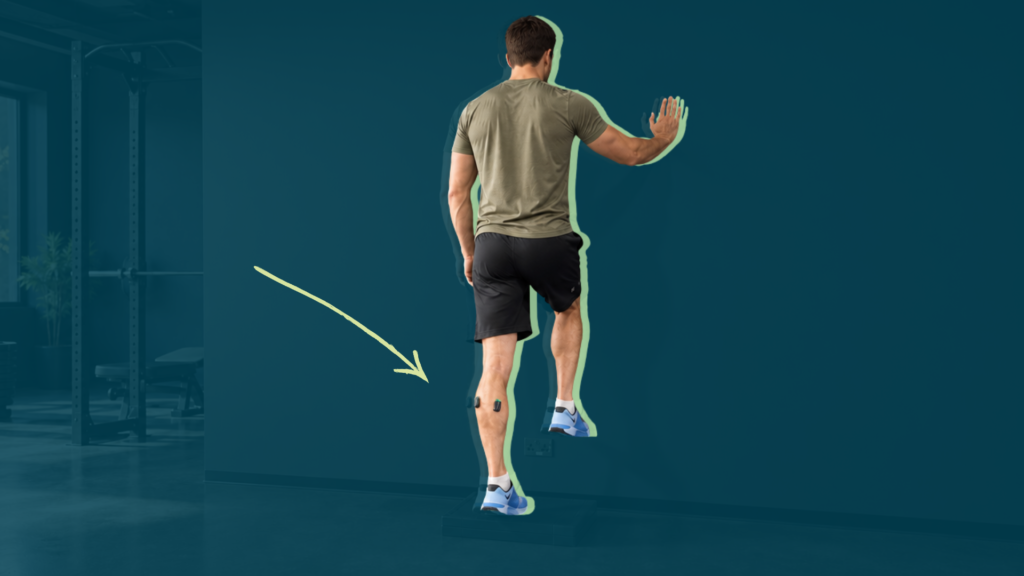
The horizontal hop test primarily evaluates an athlete’s ability to generate power and propel themselves forward. The distance the athlete hops is primarily influenced by the function of the hip and ankle joints. While achieving symmetrical hop distance is important, it does not necessarily indicate that the underlying biomechanics have been fully restored. Athletes may employ compensatory strategies, such as altered ankle, hip or upper body movements to achieve symmetry in distance without addressing the fundamental biomechanical deficits at the knee [1,2,3,4].
By contrast, the vertical jump test provides a more comprehensive evaluation of an athlete’s biomechanical restoration. This test measures the athlete’s jump height and reactive strength index (RSI), which are more sensitive performance metrics in capturing underlying differences in biomechanics [5]. During a vertical jump, the contributions of the hip, knee and ankle joints are almost equal, both in propulsion and landing [1]. Consequently, any deficiencies or compensations in these joints will be more apparent during the vertical jump, making it a valuable test for assessing an athlete’s readiness to return to sport. Additionally, we can monitor progress on the vertical jump without the need for advanced equipment.

Tweet ThisAny deficiencies or compensations in the ankle, knee and hip will be more apparent during the vertical jump (than horizontal jump), making it a valuable test for assessing an athlete’s readiness to return to sport
@RoulaKotsifaki
What is it about the single leg drop jump that makes it so valuable during the return to sport (RTS) process post-ACLR?

The single leg drop jump is a highly valuable functional test during the RTS process following ACLR. This test is effective in evaluating an athlete’s recovery and identifying any remaining deficits in knee function.
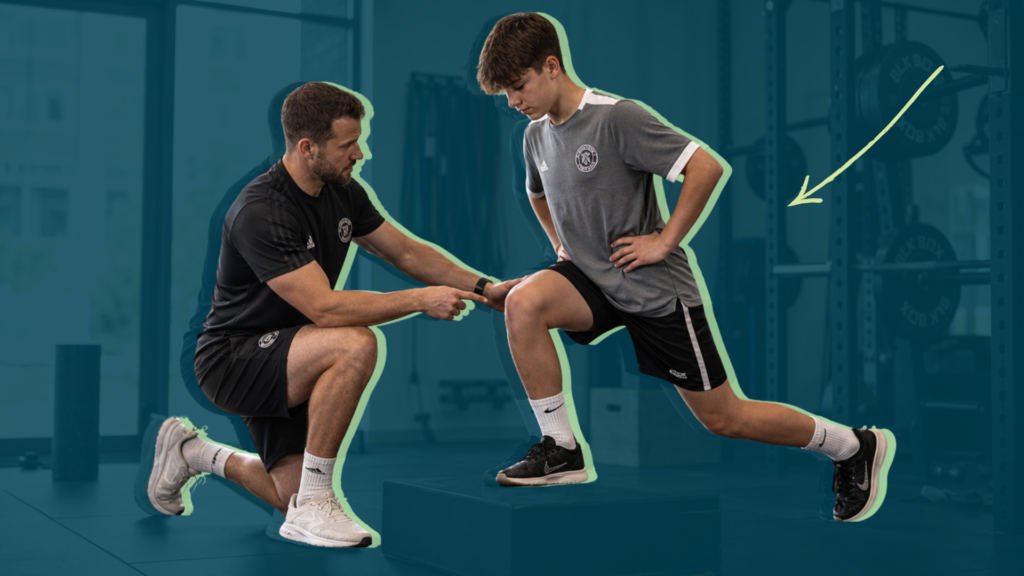
The single leg drop jump exposes knee deficits in athletes recovering from ACL injury [5]. Our recent study [6] showed significant differences between controls and post-ACLR athletes at the time of RTS in the eccentric impulse, force at zero velocity and the concentric impulse symmetries. There were still significant performance differences between legs in athletes after ACLR for jump height and RSI.
Importantly, neither the involved nor uninvolved limbs reached the performance values of the control group in any of the performance metrics. This highlights the test’s effectiveness in revealing disparities in kinetic and performance outcomes between the involved and uninvolved sides.
By identifying these deficits, clinicians can tailor the rehabilitation program to address specific areas of weakness and promote more symmetrical lower limb function.
The reactive phase of the single leg drop jump consists of two components: the eccentric and the concentric force. These components shed light on the leg’s ability to accept load and generate force, respectively. The deficits identified during these phases provide valuable information for tailoring the rehabilitation program. By understanding the specific areas of weakness, clinicians can design exercises and interventions that directly address the identified deficits, focusing on improving asymmetries and enhancing overall functional performance.
Performance metrics such as jump height and contact time are important indicators of an athlete’s functional abilities. There can be large differences between the involved and uninvolved limbs during the single leg drop jump. These discrepancies highlight the remaining deficits in power, reactivity, and overall functional performance. Clinicians can then identify specific areas that require further attention and develop targeted rehabilitation strategies. Single leg drop jump asymmetries in height and RSI are likely to be the last jump performance metrics to recover post-ACLR. We aim to restore vertical jump mechanics. Once we do that, we are almost 95% in our rehabilitation progress.
Tweet ThisEven at nine months post-ACLR, there are still differences in sagittal and frontal plane biomechanics during change of direction tasks, despite no statistical differences in performance time
@RoulaKotsifaki
What other tests can give us important information to guide our decision making?
Unilateral tests allow us to assess and then compare the performance capacity of one limb to the contralateral limb, and to normative reference data. Bilateral tests are useful to evaluate a patient’s inter-limb compensatory movement strategies.
In the current study [6], we found differences during landing in both double leg tasks (countermovement and drop jump), indicating that athletes still shift their weight during landing to the uninvolved leg. The landing impulse metric had greater variance (trial-to-trial differences) in both controls and post-ACLR athletes, so we suggest using the peak landing force metric instead of landing impulse.
While restoring vertical jump mechanics is crucial, it is not sufficient to clear an athlete for RTS after ACLR.
For athletes involved in pivoting sports, it is important to also restore mechanics during change of direction tasks. Even at nine months post-ACLR, there are still differences in sagittal and frontal plane biomechanics during change of direction tasks, despite no statistical differences in performance time [7, 8]. Targeting these variables during ACL rehabilitation may help reduce the risk of reinjury [9].
Furthermore, at the time to RTS, there are still differences in symmetry in ACL forces and tibiofemoral joint contact forces, particularly during higher loading tasks like cutting and sprinting [10].
Last, it is essential to restore landing biomechanics in horizontal hops. The single leg hop for distance is one of the best tests to challenge knee function during landing, as the knee contributes approximately 65% of the work [1,4]. It is, therefore, a sensitive test to evaluate energy absorption efficiency of the knee, and to check for interlimb compensations. However, both change of direction and horizontal hop landing require laboratory equipment for 3D biomechanical analysis.
Tweet ThisThe single leg hop for distance is one of the best tests to challenge knee function during landing, as the knee contributes approximately 65% of the work
@RoulaKotsifaki
Do you have any normative data that may help clinicians taking athletes through the RTP process? Are there any important considerations when looking at this data?
Professional football players are generally symmetrical in terms of kinetics, except for landing peak force and impulse during bilateral tests. Clinicians should be mindful of the relatively high variance, even in the control group, when interpreting the results.
Symmetry during landing can vary from 50-150% in healthy athletes, as they may favor their left or right leg, which can change from trial to trial.
In the case of athletes after ACLR, the approach to load distribution during rehabilitation differs. Initially, athletes tend to avoid loading the injured leg. As rehabilitation progresses and their confidence in the leg increases, they gradually reduce the asymmetry between legs. The ultimate goal is for athletes to exhibit loading patterns similar to the control group, where they can effectively load the involved side. However, even when athletes achieve this goal, the mean difference between legs in 3-4 trials may still be more than 10-20% limb symmetry index (LSI).
Clinicians need to be aware that metrics such as jump height in vertical jumps are highly individualized and influenced by various factors, including age, sex, activity level, sport and position. While performance metrics can serve as a general reference, it is important to establish individualized performance norms for each athlete. These norms should progress during rehabilitation, but the ultimate goal for each individual may vary.
In the context of drop jumps, minimum criteria for reactivity can ensure a baseline standard for discharging professional athletes. Our recommended minimum RSI for bilateral drop jumps is 1.3, and 0.5 for unilateral drop jumps.

Tweet ThisSymmetry during landing can vary from 50-150% in healthy athletes, as they may favour their left or right leg, which can change from trial to trial
@RoulaKotsifaki
You mention the need for more plyometrics during the RTS process. What is the importance of reactive testing and plyometric training during rehabilitation after ACLR?
It is essential to incorporate plyometric exercises, including single leg drop jumps, into the rehabilitation protocol to enhance neuromuscular control, power development and reactivity.
The residual deficits in single leg drop jump metrics after ACLR suggest that athletes may not have been adequately exposed to plyometric training.
Reactive tests such as drop jumps are crucial for evaluating additional performance parameters like power and reactivity. Plyometric training, which involves reactive jumps, is often overlooked in current rehabilitation protocols, yet it should be an essential component of rehabilitation after ACLR. Plyometric training can significantly enhance explosive sports performance and improve subjective function and functional activities without compromising knee stability or exacerbating pain [12].
One big issue when clinicians are taking athletes through the RTS process may be a lack of baseline data. Do you have any recommendations as to how they can address asymmetries without it?
The goal of rehabilitation is to return the athlete back to normal. Defining what is “normal” can be challenging due to the lack of baseline data and individual variations.
The use of LSI for evaluating outcomes after ACLR has been questioned, mainly because the uninvolved healthy limb, which is used as a reference, is deteriorating during the long rehabilitation period after ACLR [13, 14]. However, this might not always be true if training the uninvolved leg is part of the rehabilitation protocol.
In many cases, performance and strength metrics of the uninvolved leg are the only ones available to evaluate the progression of rehabilitation. Symmetrical strength and performance levels should be a minimum requirement before allowing the athlete to return to their pre-injury activities.
While achieving symmetry is important, it is equally vital to restore the athlete’s previous level of performance.
In the absence of preoperative data, we recommend monitoring the uninvolved limb during rehabilitation, and aiming for both limbs to reach normative values comparable to matched controls. Although there has been some debate about the significance of symmetry, it is important to note that the control group during vertical jumps tests exhibited minimal between-limb asymmetry in all variables examined, except for landing.
Given that healthy athletes are mostly symmetric in strength, functional and biomechanical outcomes [4, 15], we suggest that restoring symmetry should be among the goals of rehabilitation after ACLR.
Tweet ThisIn the context of drop jumps, minimum criteria for reactivity can ensure a baseline standard for discharging professional athletes. Our recommended minimum RSI for bilateral drop jumps is 1.3, and 0.5 for unilateral drop jumps
@RoulaKotsifaki