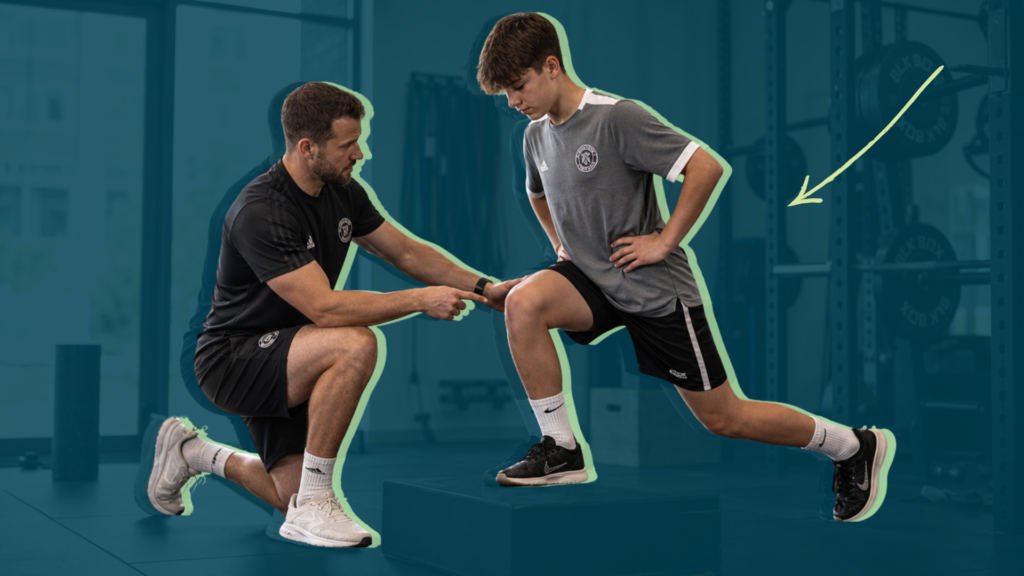







The role of growth and maturation (G&M) in the development of young athletes is complex and highly individual. Current research suggests that the rate at which a child matures has a significant effect on their long term athletic success. Early maturing children are often over–represented within academies across many sports, giving them access to better coaching, resources, and support, which all contribute to increased chances of progressing through the pathway. [1] Early developers, for example, play up to 1,000 more match minutes per season than their late developing peers.
Before delving into how practitioners can apply G&M data to optimally develop young players, let’s recap some key definitions.
Growth is the increase in mass and stature of a child, and is typically episodic. Growth spurts can occur very rapidly (>10-12 cm / year, 10-11 kg / year) in periods, but can stagnate in other periods.
Peak height velocity (PHV) is the greatest rate of a child’s adolescent growth spurt, and typically occurs between the ages of 11-15 in males. During PHV, academy football players’ susceptibility to injury increases significantly. [2]
Maturation is a child’s natural progress towards adulthood. This occurs physically, psychologically, and socially. Maturation can vary greatly between individuals, primarily because of genetic factors, but it can also be influenced by environmental factors in extreme cases. Maturation is typically considered in terms of timing (early, on-time, late), tempo (rate of progress), and status (pre-, circa- and post-PHV).
Tweet ThisCurrent research suggests that the rate at which a child matures has a significant effect on their long term athletic success. Early maturing children are often given access to better coaching, resources, and support.
@BrentfordFCPDP
Calculating and applying growth & maturation data
At Brentford FC, we assess maturation with the Khamis-Roche method, which takes in a player’s standing height, weight, date of birth, and biological parents’ heights. [3] This is the most widely used non-invasive method in elite youth sport due to its simplicity, reliability, and accuracy.
The Khamis-Roche method accurately predicts adult height (PAH) within 2.2-5.3 cm (50-90% confidence intervals). [4] A confidence interval is a statistical term for how many times out of 100 a result will fall within the estimated range: if a player’s PAH is 180 cm, we can say with 90% confidence that the player’s true adult height will be between 174.7 and 185.3 cm.
Naturally, this is very useful information for technical coaches and recruitment staff when planning a young player’s progression through the Academy pathway in terms of position, physical profile and, potentially, type of player.
Be aware, though, that the range of predicted adult height expands to 2.8-7.2 cm in U12-15 players, who may be going through the adolescent growth spurt. [4]
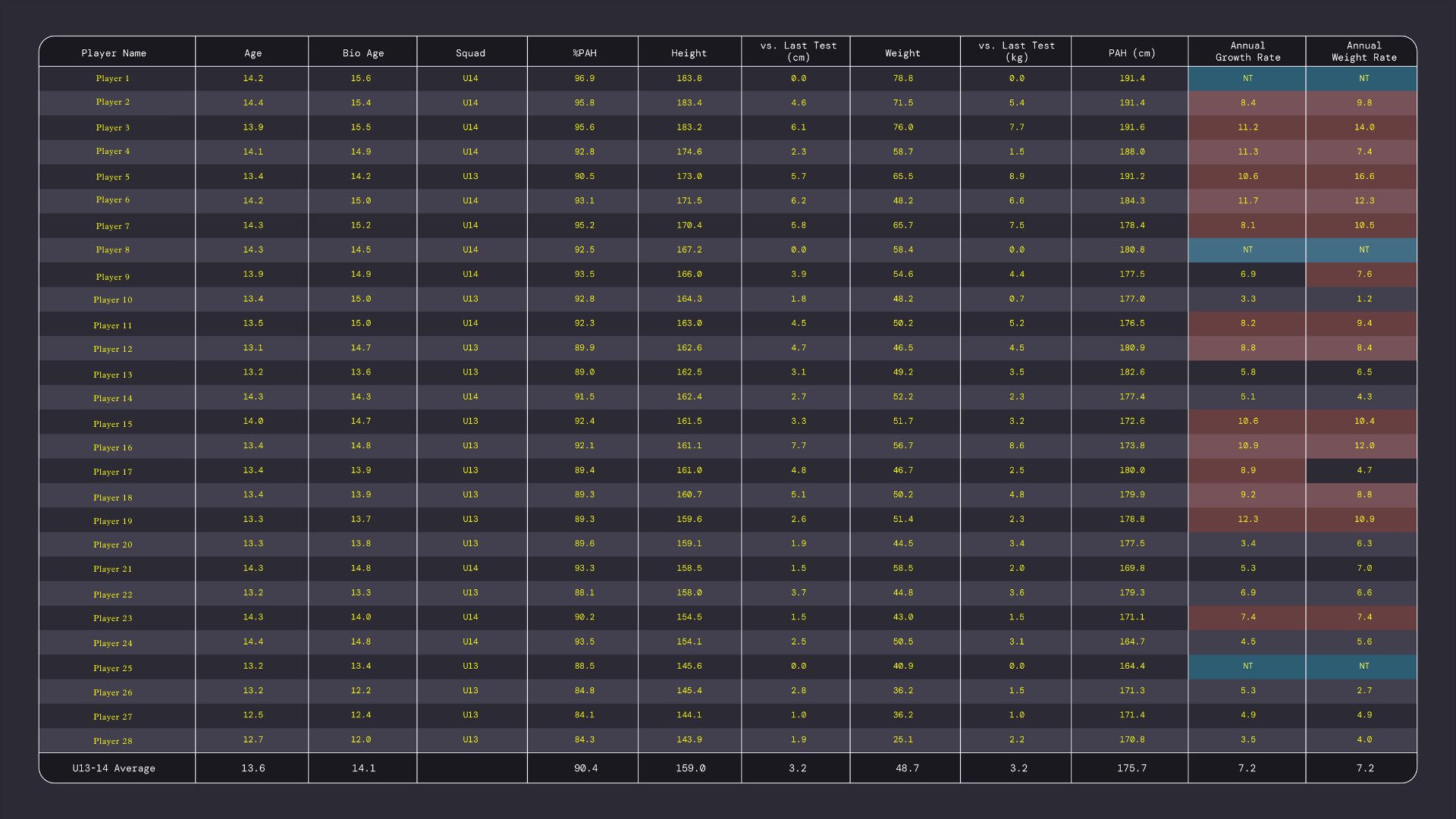
By calculating PAH, we can easily determine the player’s current %PAH, as well as the maturity timing (early, on-time, late) and biological age. Cross-referencing the player’s current chronological age and %PAH to that of the national averages and calculating the difference gives us that player’s biological age. For example, a U14 player is 13.7 years old and 95.6% of his PAH, which is 1.8 years ahead of the average, making his biological age 15.5 years. A player’s maturity timing is also calculated using these offsets, with a player being a late maturer if he is more than 1.0 year behind the national average for that age; and an early maturer if more than 1.0 year ahead of the national average.
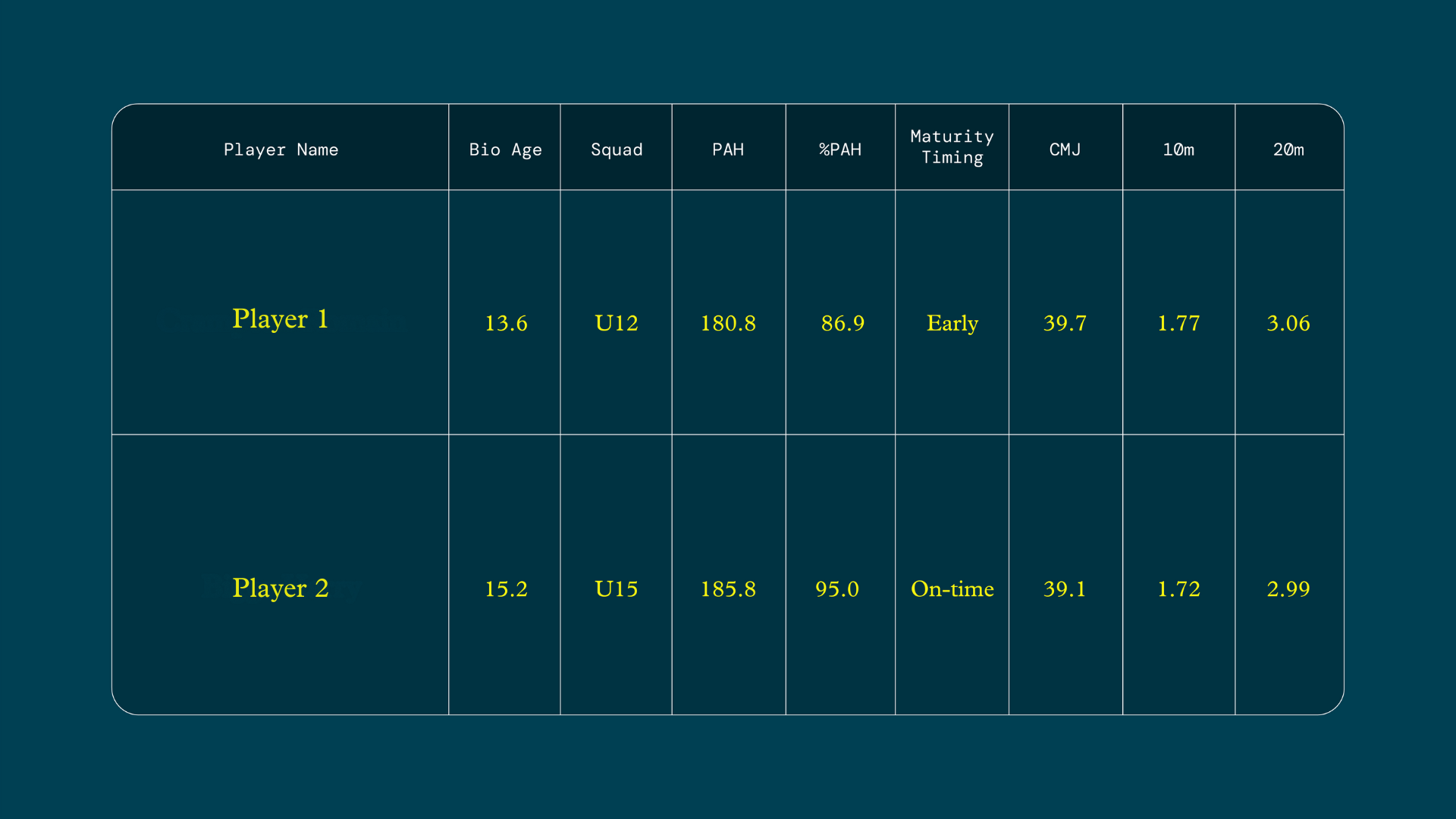
Tweet ThisBy calculating PAH, we can easily determine the player’s current %PAH, as well as the maturity timing (early, on-time, late) and biological age. A player’s maturity timing is also calculated using these offsets.
@BrentfordFCPDP
Grouping players biologically, not chronologically
Bio-banding is the technique of grouping players based on biological maturity instead of chronological age. Players’ current %PAH can be the basis for grouping players at similar levels of physical development, irrespective of chronological age. This can be employed in many contexts, such as training, match play, and athletic development sessions.
Variations in young players’ physical size and stature still exist in bio-banded groups, much like in adult populations. The purpose is to reduce the gap in physicality to allow for more accurate and insightful analysis of technical and tactical ability.
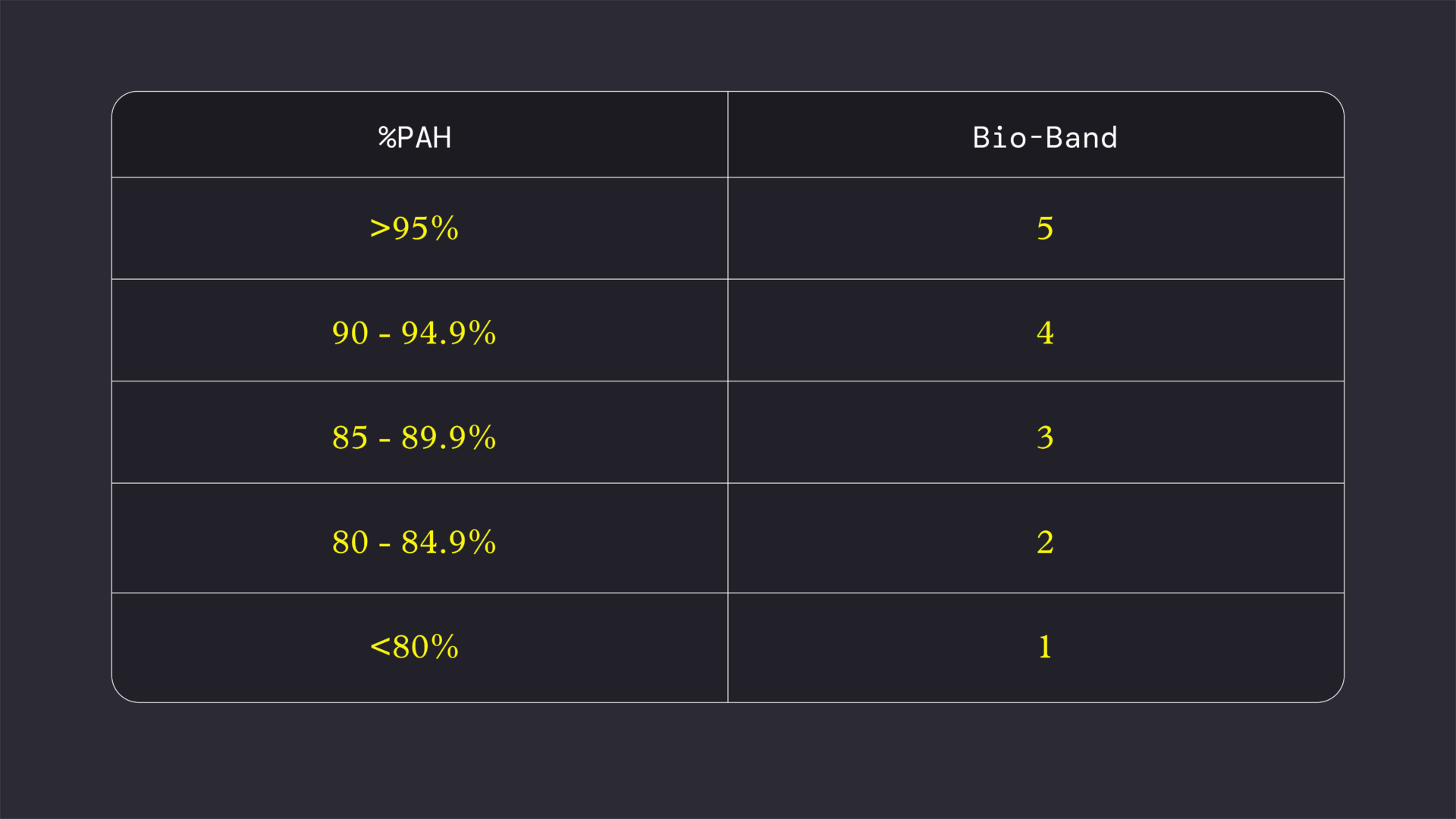
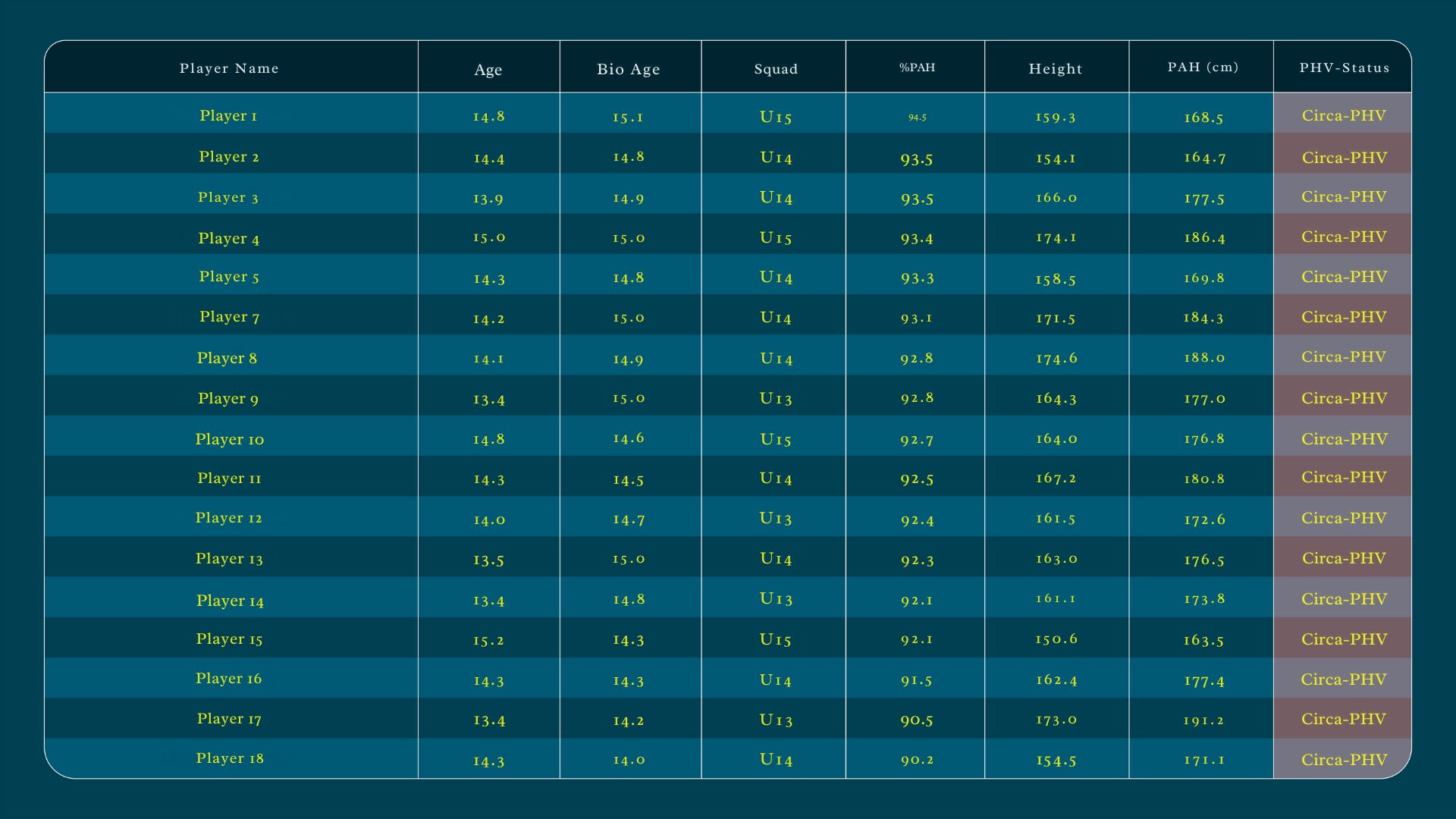
Many football academies are successfully using bio-banding to identify and develop talent, with players and coaches reporting more positively challenging matches for both early and late maturing players. [5]
From an athletic development perspective, bio-banding allows for training specific to a player’s maturation status, which improves physical performance by promoting synergistic adaptation.[6] Synergistic adaptation is when the practitioner targets training adaptations that may be accelerated during that stage of maturation due to natural changes to a child’s physiology.
For injury risk reduction, an understanding of the specific growth-related injuries (GRI) most prevalent at different stages of maturity is crucial for managing symptoms and time-loss.
Tweet ThisBio-banding allows for training specific to a player’s maturation status, promoting synergistic adaptation. Synergistic adaptation is when the practitioner targets training adaptations that may be accelerated during that stage of maturation.
@BrentfordFCPDP
Bio-banding and athletic development
Long term athletic development (LTAD) is a widely used term in youth sport to describe a framework or model that aims to promote life long physical activity, fundamental movement competency, and development of overall physical performance in young people. Balyi’s LTAD model promotes “windows of opportunity.” The more widely used YPD model from Lloyd and Oliver promotes movement competence and muscular strength from an early age, while stating that physical qualities can be developed at any stage of a child’s development. [7, 8]
There is a natural variation in biological maturity within age groups across all sporting academies.
Brentford FC’s dual banded age groups mean that players can vary by up to 3-4 years of biological age. There is also a large variation in training age and movement literacy within the groups, posing an interesting challenge to practitioners trying to physically develop all their players. Bio-banding helps tailor a player’s programme for gym and pitch based sessions to focus on specific adaptations that are appropriate to the stage of development; or on exercises that are appropriate to the individual’s level of movement competence.
For example, a player who is currently pre-PHV may train with an emphasis on neural adaptations, such as motor learning and inter-muscular coordination through the 1×20 protocol, as there is greater neuroplasticity (ability to develop new synaptic pathways) in children during this stage of development.
A post-PHV player in the same age group may complete more traditional strength training, focussing on maximum strength development and changes to muscle architecture, due to the increased presence of androgenic hormones during this stage of development.
The framework keeps movement competency at the forefront. To accommodate for differences in physical literacy due to training age, maturation status, and temporary reductions in motor control due to “adolescent awkwardness,” a tiered programme is provided with clear progressions and regressions. For example, we regularly observe players struggle with a “hinge” pattern due to rapid changes in femur length circa-PHV. If a barbell Romanian deadlift is our level 2 exercise, we may regress a player to a kettlebell RDL or progress to a single leg RDL, depending on their technical execution. Some exercises may be progressed by increasing complexity, while others may be progressed by increasing load.
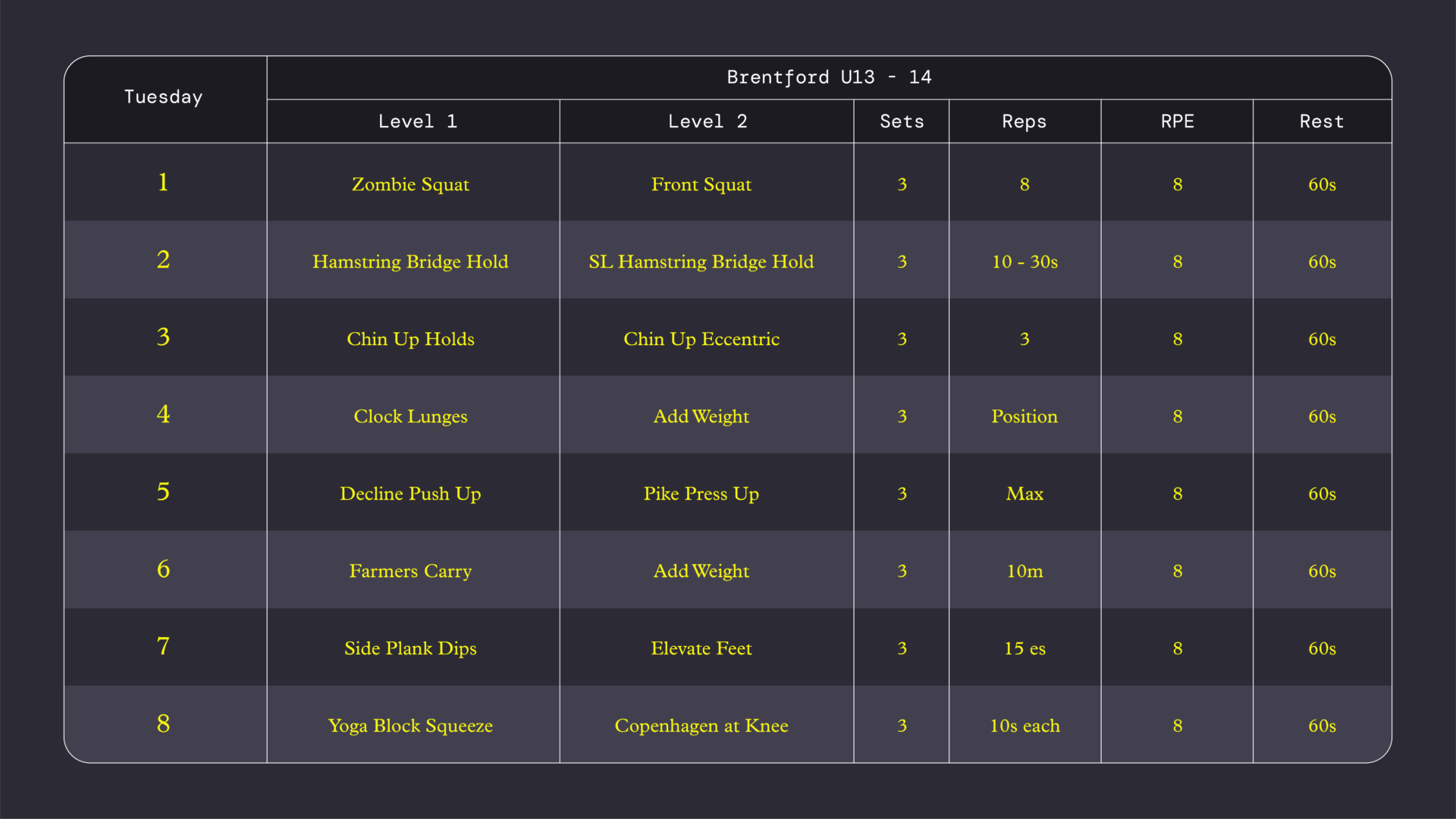
On the pitch, bio-banded athletic development sessions offer a more competitive learning environment to drive application and outputs.
Early maturing players may be grouped together for sprint races, plyometrics, and jumping or throwing competitions to reduce the gap in physicality, creating greater competition and engagement. Late maturing players may be grouped together for the same reason, which mitigates the adverse psychological effects of racing a more biologically mature peer.
Training should also be mindful of a player’s maturation stage, with pre-, circa-, and post-PHV each responding better to different training modalities. Pre-PHV males achieve greatest improvements in speed following plyometric training interventions, indicating that practitioners should prioritise neural adaptations and skill development through things like extensive plyometrics and running drills.
Circa-PHV males, on the other hand, had a greater improvement in speed from strength and plyometric training combined. [6] Movement quality should also be a priority during this stage to prevent losing key motor skills and coordination due to rapid growth: wall drills and wickets will be important components.
Post-PHV, players can more readily achieve structural changes to muscle architecture, making strength and hypertrophy training effective.

Tweet ThisOn the pitch, bio-banded early maturing players may be grouped together for sprint races, plyometrics, and jumping or throwing competitions to reduce the gap in physicality, creating greater competition and engagement.
@BrentfordFCPDP
Injury risk reduction
Recently, there has been a surge of high quality research into the relationship between growth, maturation, and injury risk within youth athletic populations.
Growth related injuries (GRIs) are overuse injuries characterised by inflammation of the growth plate (apophysis) due to repetitive mechanical stress. [9] During periods of rapid growth, the apophysis becomes weaker than surrounding tissues, compromising structural integrity and increasing susceptibility to injury.
Three major risk factors for GRIs emerge from the literature: growth rate > 7.2 cm / year, reaching 88-95% PAH at circa-PHV stage, and exposure to high training and match loads. [2] Individuals will vary greatly in their tolerance for loads—”high” is a very context-dependent descriptor.
Interestingly, the trend in the site of GRIs mirrors the distal-to-proximal pattern of skeletal growth in children.
Practically, this means that pre-PHV (10-12 years old) there’s a greater prevalence of Severs (calcaneus apophysitis); circa-PHV (12-15 years old) there’s a greater prevalence of Osgood-Schlatter’s (tibial tuberosity apophysitis); and post-PHV (15+ years old), more hip related apophysitis.
Recognising these trends is critical, as it allows practitioners to tailor injury prevention strategies to specific age groups or bio-bands, with the aim of reducing the incidence and burden of GRIs.
Rate of growth, maturity status, and training load are the three key factors associated with GRI. Managing the intensity, frequency, and volume of training circa-PHV is critical.
At Brentford FC, we encourage players to continue playing grassroots football and explore other sports. While this approach aligns with the current consensus that early sampling promotes broader athletic development,[6] it can also lead to unpredictable and elevated cumulative loading. Weekly activity levels commonly exceed 10–15 hours when accounting for Academy sessions, school matches, and physical education, presenting a significant management challenge for practitioners.
Player and parent education on appropriate training load management during these different stages of development therefore forms a key part of our approach.

We reduce the training load at the club for players experiencing symptoms of GRIs, in order to manage the time-loss burden. By removing players from certain practices that may be aggravating to symptoms, and replacing this training load with specific strength, proprioceptive, or mobility training interventions that may have a protective effect, subjective scores of symptoms have been trending down, while training and match minutes have been trending up. This is supported by the work of Johnson et al.,[10] who found that injury incidence and burden significantly decreased in players who exhibited all three red flags.
Bio-banding levels the playing field for talent ID
The ultimate goal of a Premier League Academy is to develop elite players to transition into the professional game. Identifying, retaining, and developing talent is therefore a crucial mission for clubs.
G&M data, particularly for the U11-16s, offers powerful insights for identifying and predicting talent in the short and long terms.
Bio-banding is one way to achieve this on the pitch. We regularly bio-band in both training and matches to reduce the gap in physicality between players and promote appropriate levels of challenge. Early maturers that may often rely on superior physical attributes in their age group will need to develop new solutions to problems faced in their bio-band. Late maturers may find that the reduced physical gap in the bio-band offers the perfect opportunity to express their technical and tactical abilities. This allows for coaches and recruitment staff to better identify talented players that may otherwise be missed due to the over-representation of early maturing players in Academy football.
G&M data is integrated into physical profiling reports to form a key part of individualised development planning for players, offering insights into current and predicted anthropometrics and physical performance.
For coaches and recruitment staff, reporting PAH ±5.3 cm (90% CI), current %PAH, biological age, and maturity timing are essential to accurately assess a player’s current performance and long term potential. For instance, a U13 player with a biological age of 15 years may be expected to perform well due to superior physical qualities that provide a temporary advantage over less biologically developed peers.
Tweet ThisWe regularly bio-band in both training and matches to reduce the gap in physicality. Late maturers may find that the reduced physical gap in the bio-band offers the perfect opportunity to express their technical and tactical abilities.
@BrentfordFCPDP
Growth and maturation data can also aid long term development planning.
For example, let’s say we predict that a U15 centre back will attain a final adult height of 175 ± 5.3 cm. Considering a centre-back profile in the English Premier League typically favours taller players for aerial duels and physical presence, this player may fall below the anthropometrics commonly associated with elite positional performance. As a result, the coaching staff may start developing the player to play a different position that places less emphasis on height, such as a wide defender or central midfield, where speed and agility or tactical awareness are more critical.
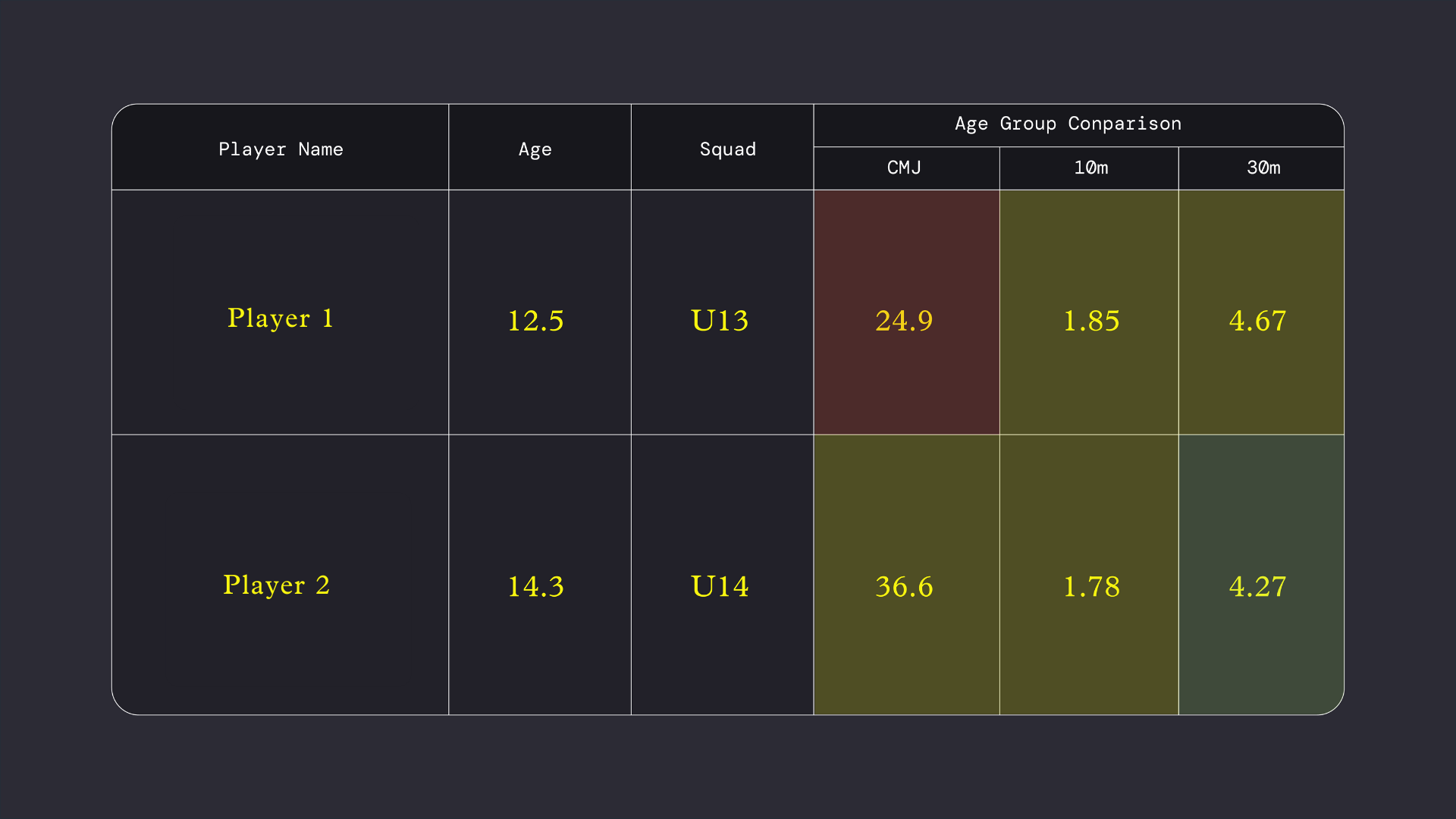
When assessing long term athletic potential, bio-banding physical testing reports can offer additional insights that would not emerge from age-group comparisons.
We recently compared two players in the U13-14 age group. The project identified that Player A’s poor acceleration ability in his age group was actually well above the average in his bio-band, because he is a late maturer. The opposite was true for player B, an early maturer who performs very well in his age group but is below the average for his bio-band.
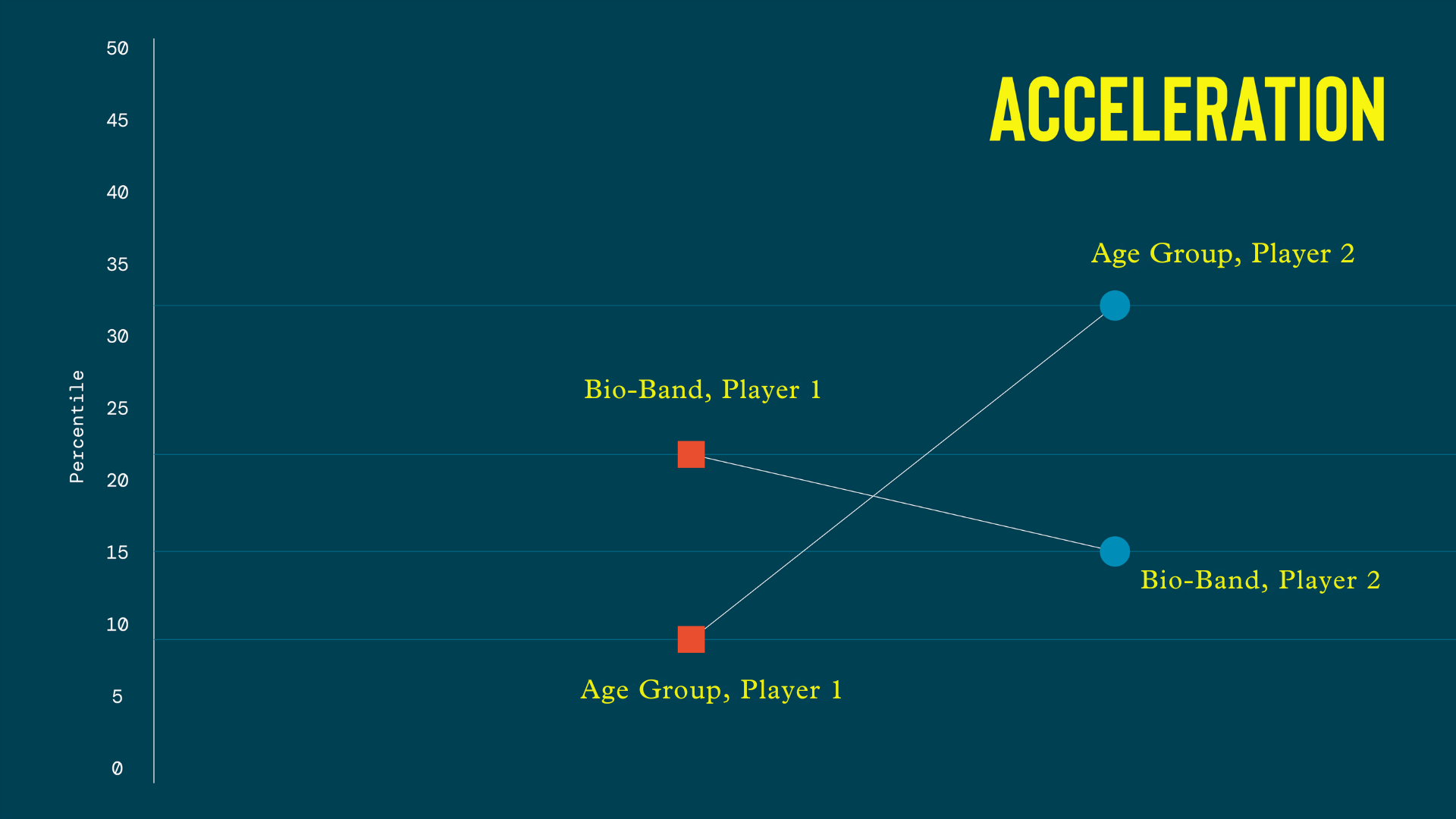
This is a key example of performance vs. potential: player B currently performs better than player A, but player A has more long term potential to progress through the Academy pathway due to his technical ability and tactical awareness. Developing both players optimally requires holistic collaboration from the multi-disciplinary team, with G&M data playing a key role in both athletic and football development.
Brentford FC’s mission is to be recognized as the most caring and progressive Academy in the world. The use of G&M data and bio-banding is just one example of how we bring this purpose to life, allowing us to keep players healthy and provide bespoke individualised development plans to give players the best chance of progressing into professional football.
Young athletes grow and mature at very different rates, which clearly impacts selection and progression within football Academies.
Early maturing players dominate representation due to temporary performance advantages resulting from accelerated physical development. Late maturing players are often prematurely released from the system despite their (unidentified or overlooked) long term potential. Comprehensive knowledge of how to monitor, interpret, and report G&M data is crucial for practitioners to collaborate with the multi-disciplinary team to make informed decisions on individual player development plans.
In the next article in this series, we will explore how we reduce the burden of growth-related injuries, including the idea of the “Grower’s Group” that optimises training and match load, introduces key interventions in the gym, and creates detailed weekly schedules for players suffering with symptoms of growth-related injury.
Tweet ThisThe use of G&M data and bio-banding is just one example of how we bring this purpose to life, allowing us to keep players healthy and provide individualised development plans to give players the best chance of progressing into professional football.
@BrentfordFCPDP