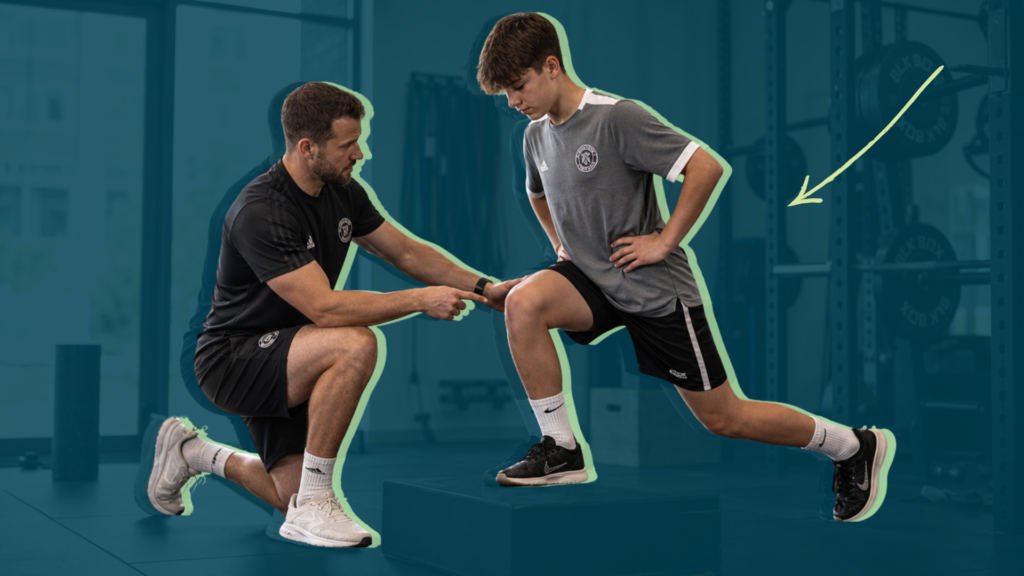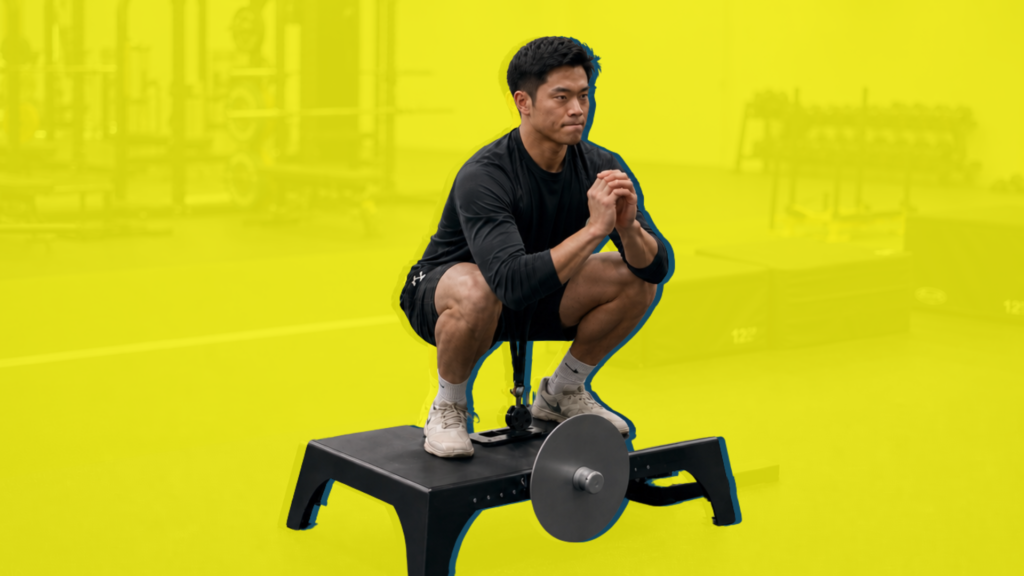
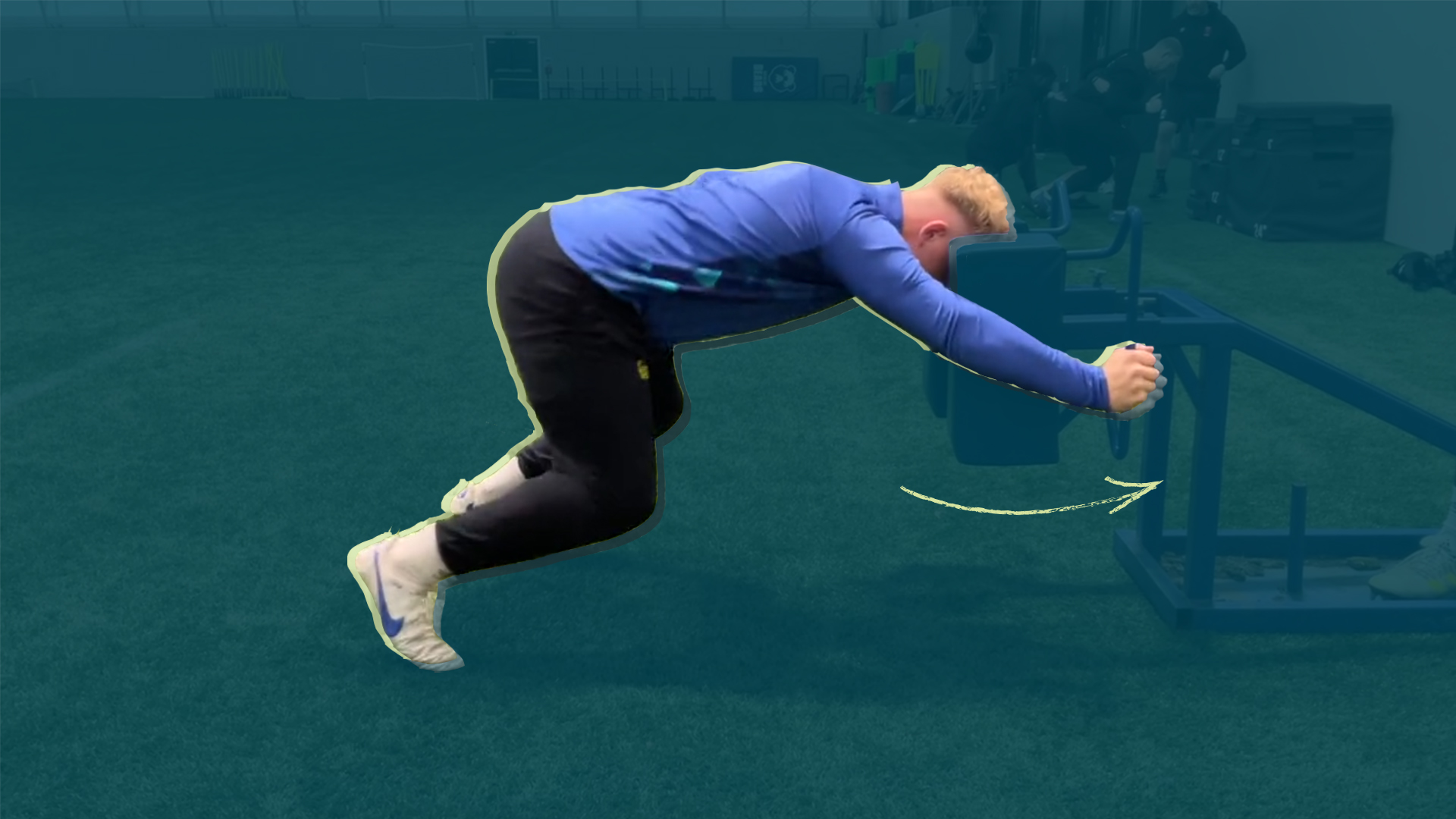
Movement skill training is at the heart of most youth strength & conditioning programmes. Scroll through Twitter or Instagram, and you’ll see a spotlight shining on the development of technical competence, coordination and control.
While we are doing a great job teaching young athletes to squat, lunge, hinge, push and pull, couldn’t youth athletic development go further than that?
Movement matters
Movement clearly matters. Players who look natural, fluid and effortless on pitch are often most successful. Think Cheslin Kolbe, or Bristol Bears’ own Charles Piutau.
Good movement starts with mastering the fundamentals, the “building blocks” of more complex tasks. Competence in the fundamentals accelerates the adoption of sport specific skills. Take the hinge pattern, for example, laying the foundation for an effective scrummaging technique: the ability to maintain a neutral torso, with the key maneuver of breaking at the hips.

Proficiency in the fundamentals also prepares players for the chaos found in sport, allowing them to manipulate well learned patterns to meet the specific demands of a sporting skill. In Rugby Union, when attacking with the ball in hand, players must first read the cues given by the opposition, then accurately select, adjust and execute a movement that overcomes the defence.
Effective movement has been described as coordinating the body to accurately complete a task, yet it exceeds accuracy alone. Effective movement also helps maximise our athletic performance, allowing us to apply every drop of our force producing potential to the opposition, ball or floor. Imagine the young winger whose KPI is running fast. The ability to adopt the desired front side positions during maximum velocity sprinting – “Drawing the hammer high” – opens the door for them to produce and apply more force.

Good movement also enhances efficiency. Optimised patterns reduce the cost of performing a task, and subsequently ease the accumulated fatigue experienced during sport. Take running, for example. With players typically covering between 5-7.5 km per game, greater running economy lets them deliver the same output with reduced demand. Or, better yet, it helps increase their physical output. They can work harder, for longer and at a lower cost during competition.
Movement efficiency connects to injury risk, as well. With greater fatigue, compensatory patterns set in and place undesirable levels of stress on tissues and joints. This heightens the likelihood of both acute and chronic injury, where loading may exceed the tissue’s capacity in a single traumatic incidence or cumulatively over time. Reducing the risk of injury is of primary importance for youth, as their availability to play and train determines their opportunities to refine their technique and develop tactical understanding through the experiences they gain in the sport.
Working with youth, we have an incredible opportunity to improve movement competency. Given their greater levels of neuroplasticity, young athletes are primed to develop new synaptic pathways and embed desirable patterns. Excitingly, young athletes, when exposed to good training, can exceed their predicted adult potential in motor skills compared to natural development alone.
While we can develop movement skill at any age, the older we get, the harder it becomes.
Our role here is more important now than ever, with the number of children possessing insufficient motor skills rocketing [1].
With reduced rates of physical activity and free play during childhood, we must replace the time lost playing in parks and climbing trees with high quality movement skill training.
At the opposite end of the spectrum, individuals in academies such as ours often specialise early, commonly having only ever played a single position in their single sport. With the lack of sampling and exploration, we must consider the opportunities we are providing to develop a breadth of movement skills within our programmes. At the same time, we have to recognise that the further players progress through professional pathways, the less time will likely be available to do so later on.
Tweet ThisIndividuals in academies often specialise early, commonly having only ever playing a single position in their sport. With the lack of sampling and exploration, we must consider the opportunities we are providing to develop a breadth of movement skills within our programmes
@NedPartridge
Youth S&C is more than just movement
Those working in professional sport will recognise the need for young athletes to perform early, showing sufficient potential to gain or retain their contract. This requires an adequate level of physical ability in addition to a foundation of movement skill. This is even more true in Rugby Union, where players have to survive in a fast and physically abrasive sport. On top of that, academy graduates step straight out of schoolboy rugby and into the senior men’s game, making physical preparedness key.
In his recent Sportsmith article, Dr. Rhodri Lloyd highlighted the need to develop both form (movement skill) and function (muscular strength and power) when training youth. In our environment, we often describe this as equipping players with both the hardware and the software to successfully perform a task. Rewinding back to the young winger previously discussed, only when he pairs the ability to move effectively with the production of sufficient force will he be able to run fast.
Movement skill and muscular strength are therefore interrelated. Boys with low relative muscular strength are nearly eight times more likely to display low movement competency [2]. This was brought to life in our recent preseason, when an 18 year old academy athlete with low levels of strength was required to lift a 130 kg senior player overhead during a lineout. While previously demonstrating adequate levels of lifting technique within his own age group, when stepping onto the senior stage he did not have the necessary strength to succeed. Following a period of consistent strength training, he now has the physical ability to unlock his movement skill and lineout lift effectively.
Muscular strength is also protective against injury. Regular strength training reduces acute injuries to almost a third and overuse injuries by more than half [3]. While we often hear that we should not build an individual’s engine before developing their brakes, we must remember that their force producing capabilities are responsible for both speeding them up and slowing them down. When paired with the appropriate coordinative abilities, I’d back the player with the biggest engine to also have the strongest brakes.
Muscles and movements should develop together
A foundation of movement skill and muscular strength is essential for young athletes to survive and thrive in their chosen sport. The concurrent development of strength and skill is possible, yet this does not have to be achieved using the same tool. In some cases, adopting a more polarised approach can maximise the success of our training plans.
Writing effective training programmes begins with clearly identifying the aim: what is it you are trying to achieve?
With this clear in our minds, we can pinpoint the specific adaptations that underpin the physical quality and identify the stimulus required to evoke an adaptive response. Only then can we begin to select the training tools most appropriate for the job.
- Identify your intended training outcome.
- List the underpinning adaptations.
- Describe the required stimulus to evoke an adaptive response.
- Select an appropriate training method relevant to the above.
When training for the development of muscular strength, we are primarily targeting neural adaptations, such as increased high threshold motor unit recruitment, synchronisation or firing frequency. High levels of effort and force production are essential for achieving a meaningful stimulus. With this in mind, we can begin to identify the training methods most likely to evoke an adaptive response.
Heavy resistance training is the most commonly adopted means of developing muscular strength. The back squat, bench press and deadlift remain staples across most strength training programmes.
It is not quite that straightforward, however, as practitioners must also consider the individual’s movement proficiency to determine whether a given exercise is a viable option to develop strength. Practitioners must recognize that gym based movements are first skills that athletes must learn before they become exercises that we can programme for those athletes to develop physical qualities such as strength.
Only once athletes can maintain appropriate shape, range and control under the necessary loads can we safely and effectively adopt that exercise as a tool for the development of strength.
Moreover, the stimulus the athlete experiences must exceed what is typical for that individual in order to achieve a training response. Lifting light loads due to a lack of technical proficiency is insufficient to develop strength. In this instance, we must lean upon alternative training tools to achieve the required intensities, while continuing to develop competence in more traditional exercises. As youth strength & conditioning coaches, we are responsible for building a toolbox of gym based competencies that may be required later on. However, we must also ensure we are developing the physical qualities that underpin performance in sport.
Maximising the development of muscular strength in youth
In contrast to the development of skill, which requires variety and increasing complexity, strength training is reliant upon achieving adequate levels of intent. For this reason, exercises that are simple, stable or well learned are key. Below are examples of how I have developed muscular strength among male adolescent Rugby Union players from within our senior academy (age 16-21).
Make it stable
Exercises that are unstable significantly reduce our ability to produce force. Take the walking lunge, for example, which is unstable as one foot leaves the floor. While this may be advantageous for the development of balance, coordination and control, it is detrimental to our ability to produce and apply force. Opting for a reverse lunge, where the stance leg remains in contact with the floor, increases stability and allows us to lift greater loads.
Taking this a step further, a hand supported safety bar split squat gives us additional balance using our hands and enhances our ability to express force.
Similarly, when training upper body muscles through an overhead press, prescribing a seated variation in place of a standing one can significantly increase the load. By sitting the athlete down, we increase their base of support and reduce the requirement for them to stabilise their core. The demand for stabilisation can be reduced further by selecting a barbell over a dumbbell derivative. That increases motor unit recruitment, force expression and, subsequently, the adaptive response.
When chasing increases in strength, choosing the more stable exercise is key.
Keep it simple
Selecting inherently simple exercises emphasizes force expression over skill training, lowering the barrier to entry for the development of muscular strength.
Take the barbell back squat, where joint flexion and extension occur across multiple joints, through large ranges of motion. With many degrees of freedom, this exercise requires greater coordination and control. Alternatives such as the hex bar deadlift challenge similar muscle groups with the added benefit of a lower coordinative demand. Young and novice lifters can learn this lift quickly and then progress to the necessary loads to develop strength, all while maintaining appropriate shape, range and control. Beyond the physical adaptations, this capability and relatively rapid progression bolsters the ambition of young rugby players who want to lift heavy loads by letting them do so safely.
Young lifters can typically increase the load they lift week after week. This is likely a reflection of improved inter-, rather than intra-, muscular coordination. We may not be developing strength at the rapid rate at which it first appears.
David Clark identified how weak lifters exhibited higher trunk muscle activation during heavy back squats [4]. This exercise may challenge the trunk stabilizers to a greater extent than the lower limb extensors in weak and novice lifters, typically defeating the primary purpose for prescribing the squat.
To combat this, I will commonly programme a barbell back squat and hex bar deadlift within the same training block to achieve opposing goals. The back squat supports technical development, and the hex bar supports earlier progression of load. Later in their athletic journey, when players can lift with the necessary intensity to challenge strength, I will typically transition to predominantly using the squat. At this stage, we continue to refine movement quality throughout warm-up sets with specific tempos or pauses, followed by true working sets where their sole focus can remain on lifting with appropriate intent.
Similarly, the hinge pattern can be hard to master. With the barbell held out in front of the hips during an RDL, many young lifters will lose their thoracic control, precluding a hip dominant movement. To combat this, I often introduce a barbell hip thrust first. When athletes are instructed to adopt a wide grip and gaze down towards the bar, they can lock in their posture and simply emphasise the flexion and extension of their hips. This accelerates their learning, so when we add the RDL we can more quickly progress the load.
Tweet ThisI commonly programme a barbell back squat and hex bar deadlift within the same training block to achieve opposing goals. With the back squat supporting technical development, and the hex bar supporting the earlier progression of load
@NedPartridge
Machines make machines
The options available to develop muscular strength far exceed traditional resistance training alone. Despite the apparent stigma attached to machine based exercise for youth, they are particularly effective for the development of muscular strength. Remember, it is the adaptation within the muscle and nervous system that is of the greatest importance for transfer to sport. Positive training outcomes are not driven by mimicking a sporting movement, but by effectively training the muscles that contribute to the sporting task. Acceleration, for example, requires large knee extension torques. Single leg extension is therefore a viable tool to target the muscles that underpin a critical sporting task.
I also regularly prescribe bilateral and unilateral leg press variations for youth Rugby Union players. Athletes can then achieve higher relative intensities compared to many of the free weight alternatives on offer. With machines typically operating in a single plane of motion, the task is again more stable, and all the athlete’s attention can be focused on force production.
Tweet ThisDespite the apparent stigma attached to machine-based exercise for youth, they are particularly effective for the development of muscular strength
@NedPartridge
Isometric and eccentric training
Recently, there has been a rapid increase in our understanding of and appetite for isometric based training. Tim Madden shared a great insight into how he incorporates isometric methods into his youth athletic development programmes.
Isometrics are a safe and effective means of developing muscular strength. They allow athletes to put themselves into the desired position and then apply force with maximal intent. Isometrics are a useful tool in their own right, and can also supplement strength training programmes while the athlete develops technical competency elsewhere.
Finally, eccentric training is an exciting tool for developing muscular strength. Early worries about the potential for excessive muscle damage, fatigue and heightened injury risk have not been validated [5]. With the added benefit of significantly increasing satellite cell proliferation, eccentric training supports the immediate and future growth of young athletes.
By targeting the musculature specifically required within the sport, we can add muscle where it matters most and increase our potential to produce force.
Below is a programme I delivered to an 18 year old Rugby Union player, where our primary aim was developing muscular strength. This snapshot is taken from the first block of preseason, where the athletes completed all primary strength training before team field practice on Monday and Wednesday, and then after field practice on Friday. As you will see, this programme blends free weight, machine based and eccentric training to maximise strength development, while reinforcing movement skill through appropriate exercise selection and consistent coaching.
| Monday | ||||
| Exercise | Sets x Reps | Load | Rest (s) | |
| 1 | BB front squat (3s pause) | 2 x 6 | 90 | |
| 2 | BB back squat | 4 x 5 | 2 RIR | 180 |
| 3 | BB bench press | 3 x 4 | 1 RIR | 180 |
| 4 | Chin up | 3 x 4 | 1 RIR | 180 |
| 1a | Seated DB lateral raise | 3 x 10 | 60 | |
| 1b | Elbow supported DB bicep curl | 3 x 10 | 60 | |
| 2a | Plank | 3 x 30s | 30 | |
| 2b | Side plank | 3 x 30s (e/s) | 30 | |
| Wednesday | ||||
| Exercise | Sets x Reps | Load | Rest (s) | |
| 1 | Trap bar deadlift | 4 x 6 | 2 RIR | 180 |
| 2 | Smith machine reverse lunge | 3 x 4 (e/s) | 2 RIR | 180 |
| 3a | DB shoulder press | 4 x 6-8 | 1 RIR | 120 |
| 3b | Seated machine row | 4 x 6-8 | 1 RIR | 120 |
| 1a | Chest supported DB reverse fly | 3 x 10 | 60 | |
| 1b | Kneeling tricep cable push down | 3 x 10 | 60 | |
| 2 | Pallof isometric hold | 3 x 30s | 30 | |
| Friday | ||||
| Exercise | Sets x Reps | Load | Rest (s) | |
| 1 | Hand supported SB split squat | 3 x 6 (e/s) | 2 RIR | 180 |
| 2 | BB Romanian deadlift | 3 x 5 | 2 RIR | 180 |
| 3 | Partner assisted AEL press up | 3 x 4 | 3s ecc | 180 |
| 4 | Partner assisted AEL chin up | 3 x 4 | 3s ecc | 180 |
| 5 | Banded Nordic | 2 x 3 | 3s ecc | 120 |
| 6 | SL smith machine calf raise | 2 x 6-8 (e/s) | 1 RIR | 120 |
| 7 | SL seated calf raise | 2 x 6-8 (e/s) | 1 RIR | 120 |
| 1a | DB shoulder external rotations | 2 x 6-8 (e/s) | 1 RIR | 60 |
| 1b | Partner assisted neck isometrics | 2 x 3 x 5s | 60 | |
Tweet ThisShown to be both a safe and effective means of developing muscular strength, isometrics allow athletes to be simply placed into the desired position and then cued to apply force with maximal intent
@NedPartridge