

Time-loss groin injuries are common in football players, but are only the tip of the iceberg. Non-time loss groin pain accounts for 60-90% of all groin problems in football and is associated with decreased sporting function and performance deficits. Most severe time-loss groin injuries occur from gradual overuse onset, suggesting that early detection and appropriate management could mitigate the risks of longstanding groin problems.
A systematic approach to primary, secondary, and tertiary prevention can mitigate the effects of groin pain on player health, performance and availability.
Primary prevention – setting the foundation
Primary prevention aims to prevent an injury before any signs or symptoms begin to show. Because injury etiology is so multifactorial and complex, we should not expect to accurately predict which players will later become injured based on simple screening tools. Rather, sports performance practitioners should implement primary prevention strategies across their entire team, particularly in sports with high risk or propensity for groin pain, like football.
Decreased adductor strength is a risk factor for developing groin pain [1, 2]. Targeted exercise to increase adductor strength, then, provides a method for primary prevention. The Copenhagen Adductor Exercise (CAE) is the best researched primary prevention tool for groin pain in football players [3, 4]. Elastic band hip adduction also elicits strength gains, and we could extrapolate from this finding that cable hip adduction would also be beneficial [5].
For football players who are new to the CAE, a clear dose-response relationship is clear: the more you do, the stronger you get [6]. Implementing the CAE in a football club setting is, of course, not this simple. We must consider a point of diminishing returns, especially when football players already undergo high adductor loads during sport participation.
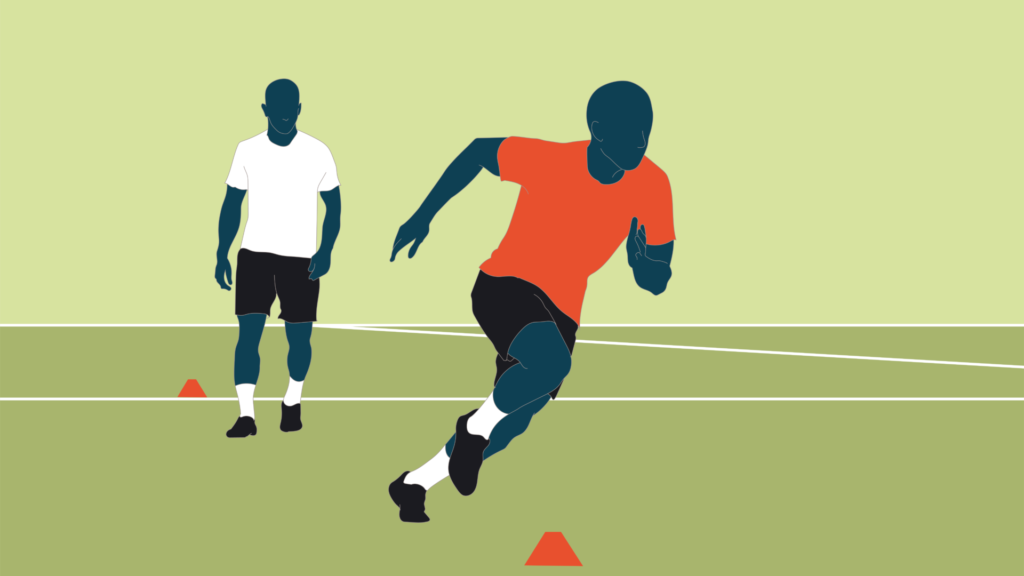
Kicking, changing directions, and high speed running all place high forces on a player’s groin, so we must be cautious in adding load via gym exercises. Although training periodization often elicits day to day variation in high speed running and sprinting distance, it is more difficult to vary the prescription of accelerations, decelerations, and kicking volume throughout a training week. These consistently repetitive actions during football lead to high loads on the adductors [7]. The challenge for practitioners, then, is to find a balance between gym and pitch load to improve adductor strength.
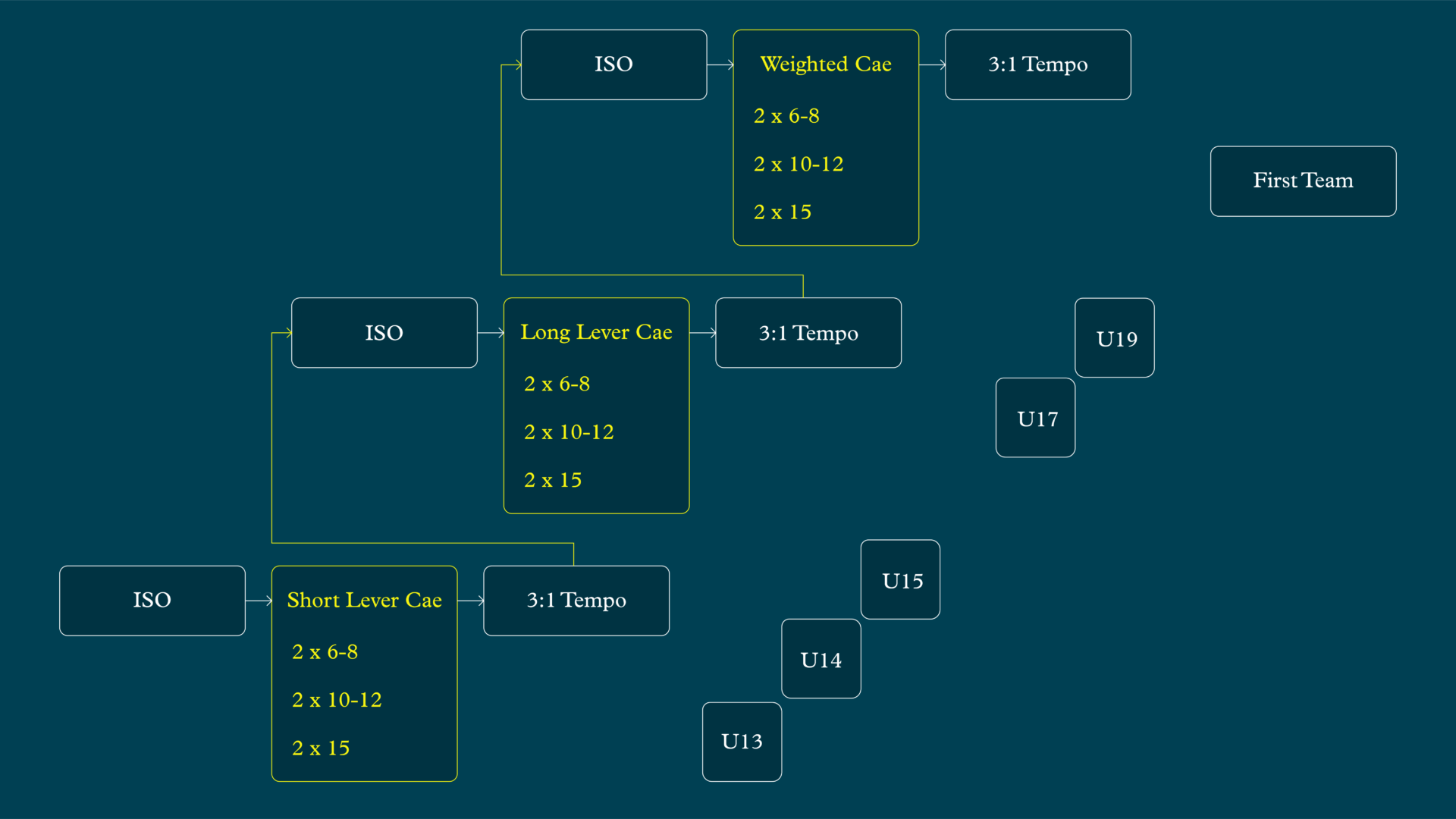
CAE programming can often be modified to fit with the constraints of football participation. Through accommodation, players become adjusted to performing the CAE–even during the season –and they experience less delayed onset muscle soreness and less local fatigue.
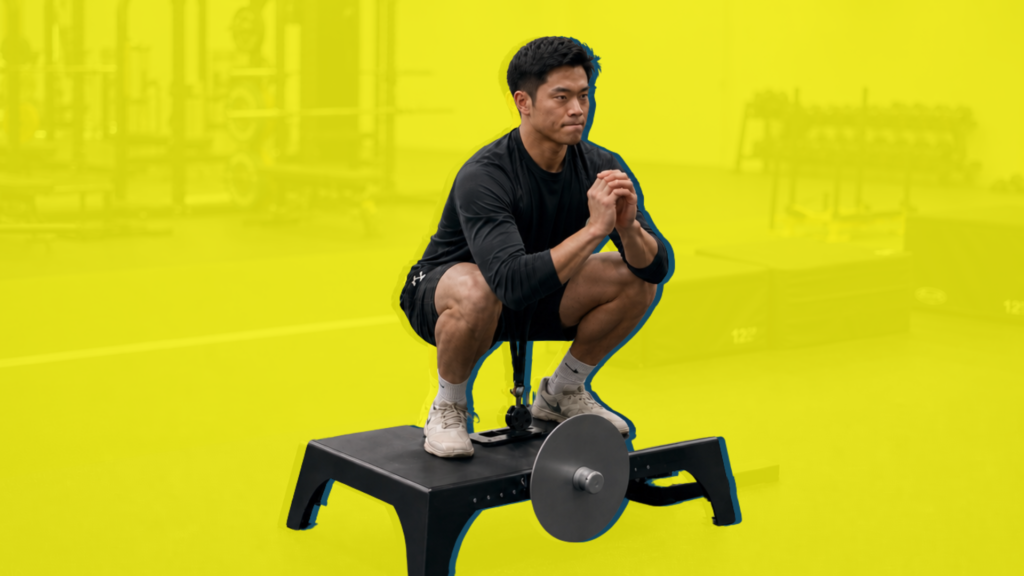
For example, in first team players who are well adjusted to performing the CAE, we can modify the exercise to perform isometric holds with external resistance, e.g., holding a 10kg plate on the hip. This reduces the volume and the eccentric demands for the exercise, yet maintains the high intensity we are striving for during a strength maintenance phase [8].
While accommodation is our friend for players in a strength maintenance phase, it is also a challenge for players who need to improve strength longitudinally.
The CAE elicits strength gains in academy football players during an initial eight week intervention, but a second, follow-up intervention period (with an identical linear periodization) only maintained adductor strength [9]. We should expect absolute adductor strength to improve throughout adolescence relative to increasing body mass, but making longitudinal strength gains beyond normal maturation need to consider a progressive overload plan [10. 11].
Rather, we can program the CAE exercise along a continuum, modifying adductor exercise exposures over time by changing the exercise, position (e.g., lever arm), time under tension, and weekly volume. We should also be conscious of exposing young athletes to too much volume of the long lever CAE, given the risk of pubic apophyseal injuries in skeletally immature athletes.
Tweet ThisSports performance practitioners should implement primary prevention strategies across their entire team, particularly in sports with high risk or propensity for groin pain, like football.
Matthew DeLang

Secondary prevention: Detect problems early!
Secondary prevention requires early detection of the initial signs and symptoms of an injury, before the player loses any training or playing time, and then strategically intervening.
Most athletic groin pain arises from gradual overuse, but how often do we capture the onset?
Clinically, picture a player coming into the physio room after a match, giving a history of their groin pain, and commenting that it’s been painful for the past six weeks but now it’s “actually” a problem. By that point, we’ve already failed secondary prevention.
Rather than rely on players’ subjective reporting of the early onset of groin pain symptoms—because often, they won’t report anything!—we implement a serial monitoring system to combat groin pain through early detection [12].
Evidence in the literature for secondary prevention of groin pain in football is promising. Crow et al., [13] found that adductor squeeze strength in Australian football players decreased not only at pain onset, but 1-2 weeks before reporting pain. We later observed a similar trend in American players, also showing that adductor squeeze strength returned to baseline when pain subsided [14]. Other studies reinforce this idea that secondary prevention can be a successful management tool for groin pain in football players.
Tweet ThisRather than rely on players’ subjective reporting of the early onset of groin pain symptoms, we implement a serial monitoring system to combat groin pain through early detection.
Matthew DeLang
Weekly monitoring for pain and weakness
To serially monitor groin problems in our academies and first team players, we use a weekly monitoring system with both subjective (pain) and objective (adductor squeeze strength) components.
First we ask the player if he has had any hip or groin pain while playing football in the last week, and to rate that on a scale from 0-10. Then we record their force output on a long lever 5 second squeeze test using a load cell; and the player’s response to how much pain they experienced during the squeeze test, again on a scale from 0-10. All adductor squeeze strength data is averaged between the left and right limbs and calculated relative to body mass (N/kg) to avoid overestimating between-limb comparisons that are dependent on the contralateral limb for stabilization, and to allow for between-player comparisons.
Long lever adductor squeeze strength is a sensitive test to capture pain [15]. It is easy to implement efficiently across a whole squad compared to a short lever position, which adds the complexity of changing hip and knee angles. Last, it has high inter-test reliability, therefore becoming the basis for week to week comparisons [16].
As with any ongoing data collection, consistency in collection and methodology is paramount. Collecting data under similar testing conditions, such as timing (always prior to football training on MD+1) and cueing (identical verbal cues for every athlete, every time) helps reduce random error. Repeated measure within-player comparisons require a sufficiently small standard error of measurement if we want to interpret a minimally detectable change. If there is too much variance in the data, we cannot make any actionable decisions.
To capture early onset groin pain as it arises, testing frequency needs to be high enough to avoid missing significant decreases in adductor squeeze strength and under reported non-time loss cases. A weekly testing protocol is often enough to capture bouts of non-time loss groin pain, which often last 1-2 weeks, but not so often that it distracts from the overall mission of playing (and developing players for) football [14].
Naturally, there will always be questions about the time commitment necessary to implement a serial monitoring system, and whether athletes are resistant to performing a potentially painful (or, at least, pain inducing) screening test each week.
The first step is building habits. When players and practitioners alike are familiar with the screening process, why it is in place, and how the testing is structured each week, efficiency goes up and time cost goes down. With more than four years of weekly serial monitoring under our belts, we’ve developed a smooth process: each player screens in under 60 seconds, and with two testers we run through the entire team in 15-20 minutes. It’s now a habit that’s part of our pre-training gym preparation sessions.
Players may have been skeptical at first, but once the culture is set, even new players coming into the group adapt quickly to the weekly rhythm and routine.
Tweet ThisTo capture early onset groin pain as it arises, testing frequency needs to be high enough to avoid missing significant decreases in adductor squeeze strength and under reported non-time loss cases.
Matthew DeLang
Interpreting the weekly data
As with any data collection in an applied sport setting, groin strength and pain data is only useful if it is actionable. With weekly data coming in, we must sift through what matters and what doesn’t to achieve our target aim: mitigate and manage groin pain before severe time-loss cases arise.
To do this, we need to view the data quickly and efficiently, and consider flags requiring intervention.
Every week, we compare each player’s adductor squeeze strength data with his pain free average and his results from the previous week. Even with the subjective reporting that makes up part of the data, we can flag any objective drops and consider a strategy for intervention.
We define an objective drop as a decrease in adductor squeeze strength exceeding the minimal detectable change. Previous work used arbitrary cutoffs of 15%, and the minimal detectable change for long lever adductor squeeze strength was 13.7% with handheld dynamometry [16, 18].
Our internal data suggests a minimal detectable change around 21% (Ishøi et al. under review), so we flag any 21% week-to-week change. Using this higher cutoff point also may help filter out false positives.
Next, we interpret the player’s pain. If a >21% decrease in adductor squeeze strength is accompanied by >4/10 pain in the previous week, the flag is simple to interpret: the player is likely at a higher risk of continuing to trend downwards unless we intervene. However, players may have reduced adductor squeeze strength independent of pain. For them, we consider whether they may be under-reporting symptoms, or if another contextual factor is contributing to the decrease (e.g., fatigue from a high acute training load).
When flagging a player at a weekly monitoring session, we rely on a series of checks and balances to avoid over-interpreting screening tests and recommending unnecessary time-loss. We retest players who are flagged during weekly monitoring on the following day to determine whether their pain and the strength deficit persist. If they do, the player undergoes a more thorough hip/groin clinical examination (if they have not already had one) to classify pain into one (or more) clinical entities [17]. Last, we plan and implement an intervention strategy.
Tweet ThisOur internal data suggests a minimal detectable change around 21%, so we flag any 21% week-to-week change. If a >21% decrease in adductor squeeze strength is accompanied by >4/10 pain in the previous week, the player is likely at a higher risk.
Matthew DeLang
Acting on flagged players
When we identify a groin pain case, the top priority in the acute phase is pain modulation. Among players whose pain was related to decreased adductor squeeze strength, symptoms lasted a median of only two weeks and adductor squeeze strength returned to near baseline as soon as pain subsided [14]. Clearly, adductor hypertrophy or true strength gains did not occur in such a short window. Rather, muscle inhibition in the presence of pain resolved and squeeze strength returned to normal levels.
Given that we are in an elite football environment, we make every effort not to remove the player from training if we can modulate his pain and restore adductor squeeze strength.
Importantly, pain modulation does not mean pain medication. Masking pain and pushing through only reveals itself as a more difficult case later.
Examples of pain modulation techniques for adductor-related groin pain cases are:
- Reciprocal inhibition: target the antagonists, inhibit the adductors. Exercises include quadruped or standing fire hydrants, side plank with resisted hip external rotation, and monster walks.
- Autogenic inhibition: contract-relax the adductors in short- or long lever by performing an isometric contraction, reducing muscle tone, and passively stretching at a gradually increased range of motion.
- Low load, long duration exercises: increasing time under tension can activate analgesic pathways for pain relief. Although this is traditionally reserved for tendinopathy, it can be a temporary pain modulator in these cases as well.
- Activity modification: anything from removing the player from team training to just educating him not to smash free kicks after training. The simplest pain modulator of all is removing only the activity that elicits pain.
We also have a continued emphasis on maintaining static and dynamic adductor mobility during the secondary prevention intervention phase. Examples include a 90/90 hip lift, groiner stretch, and dynamic leg swings.
If pain cannot be successful modulated over the course of a week or so without activity modification, and the subsequent adductor squeeze strength test continues to raise flags, it may be time to remove the player from team football activities and enter tertiary prevention.
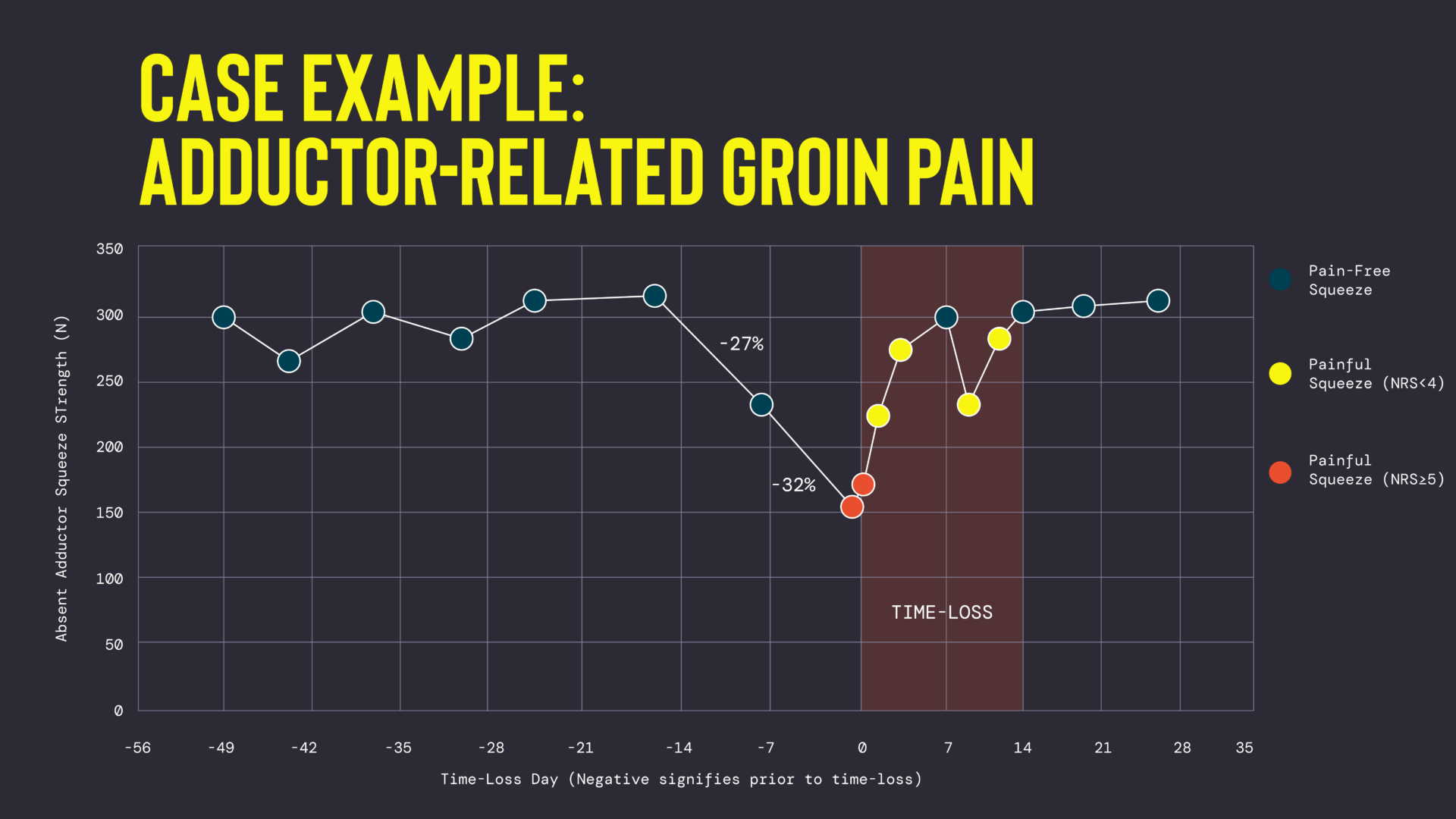
As observed by weekly monitoring, the player whose data is in the chart was pain free and consistently strong over the first six weeks of preseason. Following a match, he decreased 27% on MD+1 with no pain reported. One week later, again on MD+1, the player decreased another 32% and reported 7/10 pain. At this point, we diagnosed him with adductor-related groin pain and removed him from training. Even with the occurrence of a time-loss injury, the early detection protocol identified the problem and allowed for appropriate intervention prior to more severe, longstanding symptoms occurred.
We regularly performed test-retest of his adductor squeeze strength throughout his rehabilitation. The player progressed consistently, with a slight drop between days 7 and 10, the period where he rejoined pitch based actions. Upon restoring adductor squeeze strength and maintaining pitch volume during rehabilitation, he successfully returned to sport and maintained his adductor squeeze strength in the following weeks.
This shows how serial monitoring can function to detect adductor-related groin pain early and mitigate the risks of longstanding groin pain cases occurring.
Tweet ThisWhen we identify a groin pain case, the top priority in the acute phase is pain modulation. Clearly, adductor hypertrophy or true strength gains did not occur in such a short window. Rather, muscle inhibition in the presence of pain resolved.
Matthew DeLang
Macro trends from weekly adductor testing
From amassing more than 10,000 adductor squeeze strength measures over the past four years across the organization, naturally we begin to find some trends in the data. With weekly check-ins posing as an opportunity for dialogue with each player, we also begin to see trends in the individual profiles we observe.
We often see players fitting loosely into one of four categories: 1) painful and weak, 2) painful and strong, 3) pain free and weak, 4) pain free and strong.

Players in Category I (painful, weak) should be screened further to understand whether they are experiencing a serial or acute weakness, and whether it is first time or recurrent pain. Naturally, the cutoff criteria usually flags these players, and then we intervene. The primary focus remains pain modulation in the sub-acute phase, but if adductor squeeze strength deficits persist after pain subsides, then we program additional local load tolerance exercises.
Players in Categories II (painful, strong), and III (pain free, weak) are also often flagged. If a player is painful and strong, does it suggest over-reporting of symptoms, or that an impending decrease is soon to come?
Ongoing dialogue throughout the week and a new objective squeeze strength score the following week can continue to shed light on the case. Often, we can integrate mobility and pain modulation strategies into gym sessions for these players.
Players who are pain free and weak may be experiencing other contextual factors leading to the weakness, such as high acute training load. These players may also be under reporting symptoms, leading to increased attention from the medical staff until squeeze strength is restored. If the adductor strength has been persistently weak and pain-free over a long period, it may be appropriate to add local load tolerance exercises, while being aware of possible adverse reactions to the increased load. In general, as long as the intervention is not posing a potential risk or harm, it is better to intervene early with these two categories of athletes than allow adductor squeeze strength to gradually deteriorate in the coming weeks.
Players in Category IV (pain free, strong) are not the target population for a secondary prevention protocol. These players are stable, the exercise prescription from team gym exercises is sufficient, and the pitch load is appropriate. No other actions needed!
Groin problems are common in football players, and many longstanding cases are a result of under-reported or unaddressed non-time loss groin pain that eventually manifests as a more severe pathology. Primary prevention exercises (i.e., CAE) establish a foundation for all players to emphasize adductor strength. The next layer, secondary prevention, objectively monitors a player’s groin profile, fosters trust and rapport between practitioner and player, and intervenes before cases become severe.
Of course, groin injuries still occur. Part II will examine tertiary prevention for rehabilitation and treatment of groin injuries in a football club setting.
Tweet ThisPlayers who are pain free and weak may be experiencing other contextual factors leading to weakness. In general, as long as the intervention is not posing a potential risk, it is better to intervene early than allow adductor strength to deteriorate.
Matthew DeLang