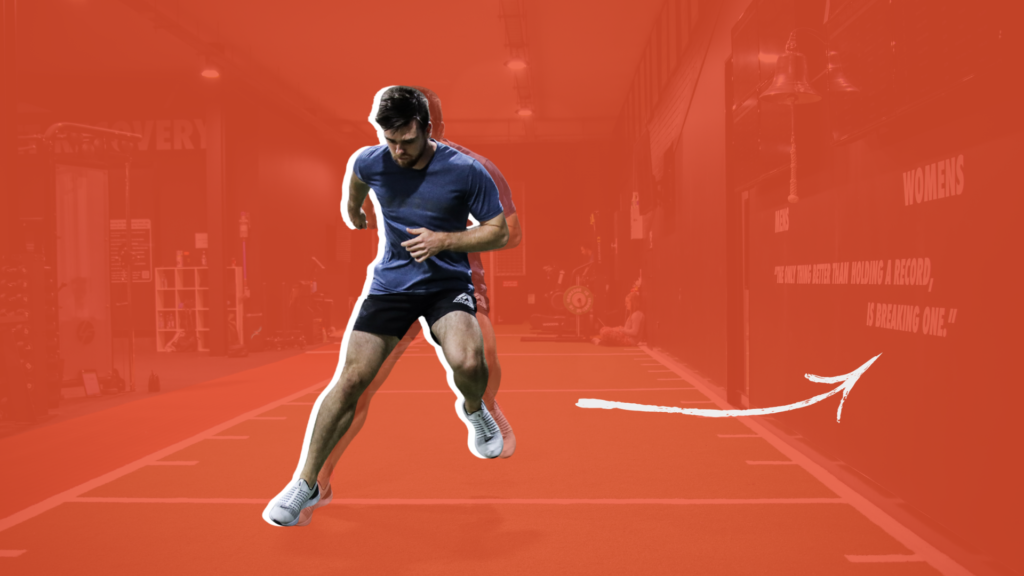
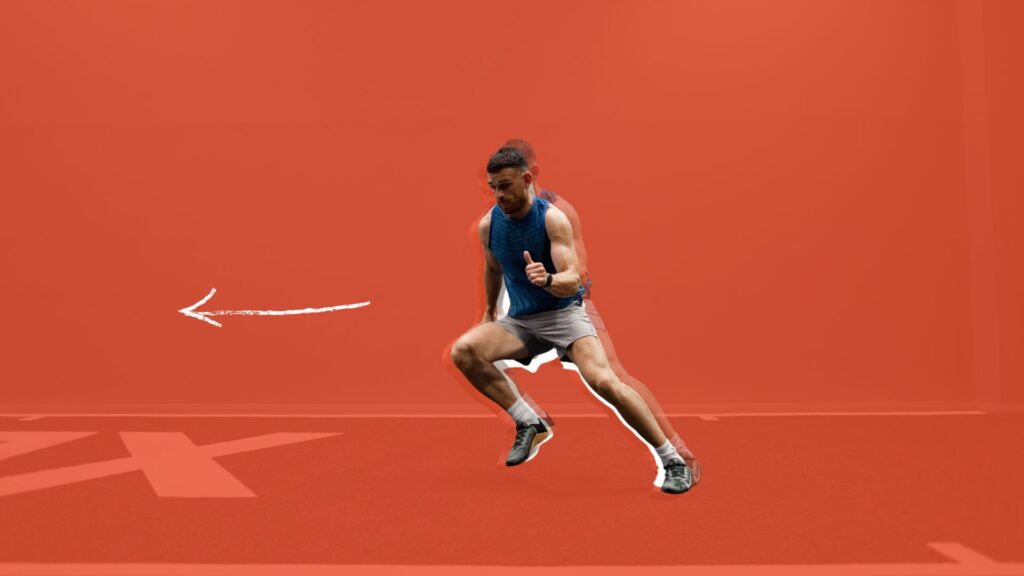
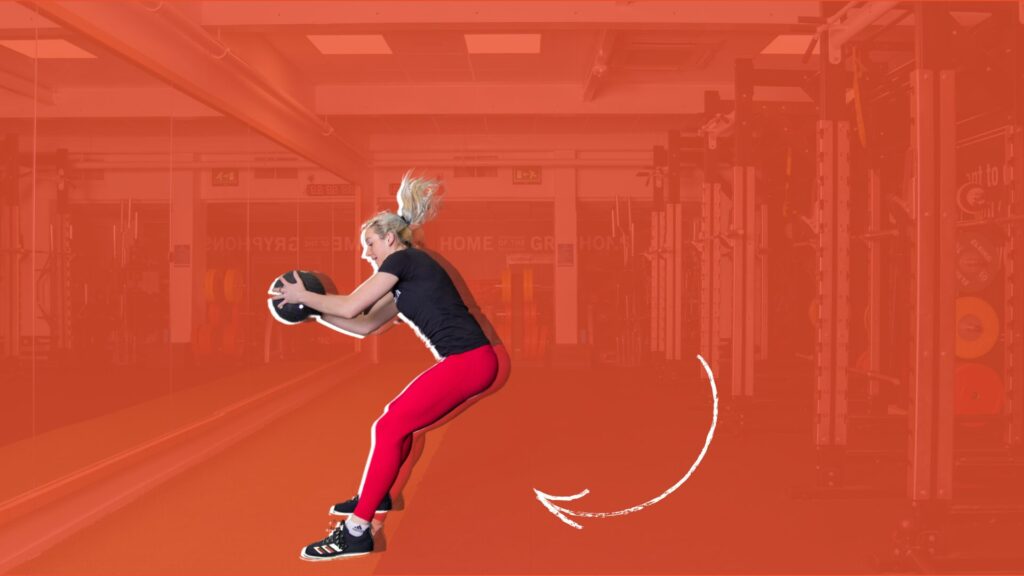
Speed and agility are among the most sought after athletic qualities, and athletes who excel in these abilities can hold a significant advantage in their sport. This realisation has resulted in many organisations, in the quest to produce the next sports prodigy, investing a lot of time and money into driving these qualities in their youth athletic development programmes. But while these traits are undeniably important, why is it that we see “slower” athletes outperforming “faster” athletes, those with rapid 505 agility and 30 m sprint times? How is it that a physically inferior athlete can get to the ball quicker or create space against a physically superior athlete?
While the capability to sprint fast and change direction quickly are, quite rightly, desirable attributes to possess, the more critical ability is using these in the context of the sport. This is the backbone of the Gamespeed philosophy [8].
These traits are simply mechanisms of the broader capacity of movement. The best performers in most sports are proficient movers, athletes who can interpret what is happening in front of them, anticipate the opposition’s movement, select the right movement strategy and integrate this effective movement with sport-specific skills.
Consequently, our goal as sports practitioners working on youth athletic development pathways should be to develop an athlete’s ability to move with speed, efficiency, control and effectiveness in the context of their sport(s).

Acceleration, max speed running, deceleration, and change of direction (COD) are the cornerstones of the youth Gamespeed framework. If we can develop these four physical and technical qualities within the context of the sport, then we are equipping our youth athletes for sporting success.
Tweet ThisWhile the capability to sprint fast and change direction quickly are, quite rightly, desirable attributes to possess, the more critical ability is using these in the context of the sport
Craig Atkins
Defining the game speed for your sport and athletes
To build an effective, sport specific game speed programme, we need to start by looking at the sport and identifying the key tasks or movements that determine success or failure.
Practitioners must understand the game, the positional demands and what our athletes need to do. We likewise need to know our athletes, observing how they handle certain situations in order to identify their strengths and weaknesses. This will inform us where they need to develop physically, the movements around which we need to build technical competency, and the task design and constraints appropriate for our tasks.
In its simplest form, success in most sports is determined by space. Offensively, the objective is to create and utilise space. Defensively, the aim is to take away that space and close the gaps. Therefore, if we see a player in space, we know that, in the preceding moments, either the offensive player has moved well to create that space or the defensive player has failed their task. Athlete movement can also be deceptive: a defensive player may wish to show an offensive player space to create a more favourable defensive situation for the team.
Identifying change of direction movements may feel like an overwhelming task, but there are a relatively narrow range of COD manoeuvres and patterns in each sport. What changes in the context of the game are task objectives and perceptual triggers.
A useful tip for practitioners as well as players is to not get caught ball watching. Most game activity takes place away from the ball.

Physical development for change of direction training
Developing a strength base is integral for all youth athletes, as the adaptations are performance enhancing and reduce the risk of injury [9]. Improving the ability to generate high force in short time frames and express force at various angles and in multiple directions will benefit all aspects of youth game speed [2]. Similarly, developing tissue capacity, good movement competency and mobility across all stages of development should be at the core of all athletic development programmes [9].
Because of the increased injury risk associated with unanticipated cutting movements [3], developing limb and joint stability, postural control and load tolerance – specifically targeting hip, knee and ankle stability are essential starting pointing for long term COD game speed development [10].
Additionally, increasing the capacities to resist, absorb and express force and be reactive off one leg are critical to COD performance.
Tweet ThisImproving the ability to generate high force in short time frames and express force at various angles and in multiple directions will benefit all aspects of youth game speed
Craig Atkins
| Video 3. Exercises | Sets x reps | Exposure per week |
| All exercises | 1-3 x 1-5 | 2-3 |
| * Pogo variations | 1-3 x 1-10 | 2-3 |
Closed technical skill sessions
We want our athletes to develop their movement portfolios, encompassing their sport’s entire movement spectrum. Movement is a skill, and athletes successfully acquire a skill through sequential development. That applies whether they are learning a new language or a new sports skill. Fundamental patterns always form the basis for subsequent performance [1].
Athletes should master the basics before progressing to more complex skills and patterns. Closed, preplanned practice offers a platform to build sound technical competency around the fundamental movement patterns, and is a chance to further enhance the physical qualities that underpin COD movements.
From a technical perspective, closed practice allows us to break down or segment movement patterns and highlight certain variables, such as velocity management, orientation, foot placement, propulsion and re-acceleration. It’s also an opportunity for physical development by exposing the athletes to COD actions at different angles and velocities, increasing their ability to tolerate higher loads.
Overloading COD movements will also add the potential performance benefit of greater capacity and confidence to deploy COD movements at higher velocities in the game. This could be the advantage our slower linear sprinting athletes need to get to the ball quicker or to gain that extra metre of space.
Coaches must exercise caution to ensure they don’t overload the athlete while attempting to overload the movement.
Changes of direction at high speed may be desirable, but not at the expense of control. The overarching aim for successful COD performance is to have control while being quick. Control allows our athletes to perceive, adjust and be lethal. Lack of control results in stumbling and less capacity to make an effective next move.
As the objective of the closed technical phase is to develop physical qualities and technical efficiency, we want to avoid adding perceptual or cognitive components to these tasks. Instead, we can influence various environmental and task constraints to progress and regress exercises throughout this phase [7].
Tweet ThisClosed practice allows us to break down or segment movement patterns and highlight certain variables, such as velocity management, orientation, foot placement, propulsion and re-acceleration
Craig Atkins

Coaches can manipulate tasks by increasing or decreasing the velocity. They can do this by instructing the athlete to approach or move through the task more quickly, or by expanding the area. Additionally, adjusting the approach or exit angles will change the difficulty depending on the objective. For example, a 90° cut will be more challenging than 45° due to the physical and technical requirements [12].
If applicable to your sport, you can consider environmental constraints. For example, here in the UK, we have variable weather. Can our athletes execute the movement well when it is windy or raining? How consistent is their performance if we change the surface from grass to a 3G pitch or sports hall?
Seldom in sports do single movement patterns happen in isolation. They usually are combined with other movement patterns. For example, a defensive football player may follow a back pedal with an acceleration in various directions or a side shuffle, in response to the offensive player’s movement.
Once our athletes have locked in the technique of the movements in isolation, a natural progression will be to build movement complexes.
| Video 3. Exercises | Reps | Exposure per week |
| All movements | 1-5 | 2-3 |
Prepubertal athletes have a unique window of opportunity to develop sound movement mechanics due to the neural plasticity of these early developmental years. Laying good foundations here allows for greater performance outcomes and the ability to tolerate higher external loading during more dynamic sport specific movement as they become older and progress through their training [10].
However, skills develop the way they are practised. That’s great if our athletes are applying good quality practice with a high focus on practical and efficient movement technique. But if the opposite occurs and our young athletes practice with poor, inefficient technique, then this poor technique becomes ingrained and is much more challenging to correct and reprogram.
One of the biggest flaws I see in a lot of speed and agility training is that the focus is solely on the task rather than the technique the athlete deploys when performing the task.
To develop effective movement, it is imperative that coaches observe and correct poor technique, and encourage their athletes to focus on their movement instead of simply finishing the task as quickly as possible. This reinforces the need for coaches to quickly recognize good technique in the movements we teach, establish our bandwidth, and prepare coaching cues and interventions to accompany our sessions. Avoid the temptation of regularly turning these closed tasks into competitions for youth athletes. The instant we do, all technique disappears due to the overwhelming desire to win.
“Transitional movements” occur while the athlete is waiting to read and react to the given stimuli.
| Movement | Function |
| Jockeying | Maintain a dynamic position |
| Side shuffle | Moving laterally |
| Cross step | Moving diagonally |
| Back pedal | Moving backwards |
| Back track | Moving backwards with direction change |
| Cut step | Accelerate and decelerate laterally |
Finally, movement is a motor skill. Getting our athletes moving with proficiency and confidence will benefit the cognitive process known as the attentional reserve [11].
Athletes with low exposure to a motor skill will use a significant portion of their attentional capacity on the motor skill itself, leaving little attention to external factors, such as the opponents’ movement. The more competent the athlete becomes, the more attentional capacity is available to focus on the game as they no longer need to focus on their own movement [11,13]. Thus, the closed technical phase allows our athletes to thrive in the next phase.
Tweet ThisOne of the biggest flaws I see in a lot of speed and agility training is that the focus is solely on the task rather than the technique the athlete deploys when performing the task
Craig Atkins
Closed to open game speed
Movement is rarely preplanned in most sports. Instead, it is prompted and determined by one or more external stimuli. An integral component of successful movement execution is our ability to perceive and comprehend the stimulus in front of us [14]. Therefore, the closed to open phase is critical to maximising transfer from the gym and closed technical tasks to performance. This is where we give our movement context.
Our athletes may be able to move well in a closed, preplanned environment, but now it is time to gradually progress and develop perceptual and cognitive skills. We present our athletes with ever changing, sport specific problems to solve.
The overall aim is to make our athletes excellent problem solvers, ones who can scan their environment, read the situation that is unfolding in front of them, place their attention on the most relevant information source, anticipate and react to the movements of the opposition, select the right movement solution, and manipulate the situation to a favourable one.

Closed game speed serves as the gateway from closed technical to open game speed. These tasks are predetermined and look similar to the closed technical tasks, with the addition of minor perceptual and cognitive constraints before progressively becoming more open and complex.
Open game speed entails more sport and position specific constraints, with a gradual increase in the perceptual and cognitive demands. These tasks will encourage the athlete to problem solve, read the environment around them, develop an understanding of opposition movement, anticipate moments, react to stimuli and manipulate movement.
Introducing constraints to increase the learning opportunity
Each constraint comes with its own perceptual and cognitive challenges. We must consider how these modifications affect our athletes. An effective method to understand these processes is to imagine you are both the offensive and defensive athlete in the task. Below are some examples of the conscious and subconscious thoughts taking place:
Positioning
Where am I in relation to the target (goal, net, try line, etc.)? How much space is between the opponent and me? How much space is behind or in front of me? What space does the opponent want to exploit? What space do I want to exploit? Where do I need to move to create space or prevent space from being taken away?
Add the ball
How fast is the ball travelling? What is the movement of the ball? Where is the opponent in relation to the ball? How far away am I from the ball? Where do I want the ball to go? Where does the opponent want the ball to go? Can I intercept or challenge for the ball? Can I pass or shoot?
Add opponent or teammate
Which opponent do I need to focus on? Where are they positioned or moving? What space do they want to block or exploit? Where is my teammate? Should I press or cover? What is my teammate saying? What are the opponents saying to each other?
Speed of opponent
What can this opponent do? Are they a better mover? Do they possess a higher level of skill than me? What patterns do they favour? Are they direct or deceptive? What are their weaknesses?
Change tactics
What are they attempting? What possible weakness have they identified in my teammates or me? How do I need to adapt to this change of approach? Do I need to change my position or movement?
Multiple opponents and teammates
Which opponent is my key responsibility? Who are my secondary and tertiary targets? Where are my teammates? What is the opposition doing? Are my teammates successfully doing their tasks? Do I need to change my focus to a different opponent? How can I confuse or control my opponents?
That is a non-exhaustive sample of the thoughts taking place in the athlete’s mind. There will be more sport, position, and athlete-specific questions that you will have to consider, and not all of them arise in every situation. This process illustrates the complexity of the perceptual and cognitive demands placed on the athlete within the sport, highlighting the considerations we need when designing and coaching our sessions.
For youth athletes, frequent exposure to this type of training will result in increased cognitive development, whereby they subconsciously recognise patterns and consequently anticipate and react faster. Athletes with enhanced cognitive capacity will be able to read the game and their opponents better [6], allowing them to control or create space more effectively. This enhanced cognitive ability can enable slower athletes to influence games and have an advantage over faster opponents.
Progressions and regressions for game speed change of direction
Gradual progression is essential in this phase. Closed and open game speed sessions should be treated the same as progression in the gym. In neither environment do we throw every single progression tool we have at our disposal all at once. Every manipulation of a constraint needs to be purposeful and considered; subtle changes to a task can have considerable implications for the movement behaviour which emerges.
We build in a degree of untidiness with these tasks. Athletes will fail, perhaps through misreading the stimuli or selecting the wrong movement or strategy.
Failure is integral to developing any skill and becoming a good problem solver. Coaches and teams should create a culture in which failure is expected and framed as a positive learning opportunity. We can use these moments of failure to guide our athletes towards understanding where the mistake came from and how to rectify it. The process takes precedence over “successful” task outcomes.
Nevertheless, we should manipulate constraints accordingly to avoid overwhelming the athlete into repeatedly failing the task. If this happens, we should regress the task by adjusting or removing a constraint.
We need to consider the age and level of our athletes. For example, younger athletes usually play on smaller pitches with fewer players. Tasks shouldn’t exceed these dimensions or number of players, and tasks should be tactically age appropriate.
To challenge our cognitively advanced younger athletes, it can be beneficial to occasionally compete against an older athlete who is slightly more physically developed or experienced in open game speed tasks. This provides an opportunity to stimulate the athlete by working them close to the edge of their capacity, which is essential for motor learning.
If errors recur, don’t be afraid to stop or slow down the practice. Don’t get caught on the conveyor belt when coaching groups, resulting in athletes constantly running through the tasks one by one without sparing a thought to mistakes or sloppy form. We cannot leave our athletes to simply “self-organise.”
Our coaching capability determines the success of this process. As coaches, we need to learn what effective and efficient movement looks like. We must observe and evaluate to help our athletes solve the problems. And we must know how to instruct on the training ground for success on the field of competition. We should induce technical and tactical adjustments through questioning and elicitation instead of giving the athletes the answers.
Remember, we won’t be out on the court or pitch with our athletes on game day. The goal is to move our athletes towards becoming autonomous problem solvers.
Training and match play
S&C coaches need to create time in our schedules to watch what is unfolding on the court or field. This is our opportunity to discover if our process is positively affecting our athletes’ performance, their limitations and what they might need to work on. Here we can observe our athletes’ movement, positioning, anticipation, reactions, adaptability, and their ability to solve puzzles and make the right decisions. Program refinement is a continuous process. We take the information before us and constantly iterate upon our process.
Additionally, we need to have conversations with the technical coaches. They are the on-field, in-game experts. They know the ins and outs of the game, the positioning, the desired outcomes and the cognitive decisions that athletes need to make. Consequently, they can have a real impact on our task design. S&C coaches should develop a positive relationship with the team coaches, one where we speak the same language and appreciate the entire Gamespeed process.
Frameworks are necessarily general because there is no single process or programme that applies to every athlete.
Some prepubertal athletes may develop technical competency quickly. A circumpubertal athlete undergoing rapid growth may experience “adolescent awkwardness” and might need to revisit rudimentary technical tasks. And some post-pubertal athletes may struggle with the basics. Movement is a skill, and its acquisition is a non-linear process. Our athletes are individuals and we should approach them as such.
The categorisation of the cornerstones and the framework phases can help guide your thinking and ease planning. Your game speed sessions should train all cornerstones and phases simultaneously. How much of a session is allocated to each will depend on the desired session outcomes, athlete level and time available.
Finally, the key is consistency. We need to conduct frequent, high quality game speed practice. Furthermore, we need to ensure that training is progressive, variable and that the tasks are randomly allocated to create a successful and enjoyable motor learning environment for our young athletes [1].