
The problem with “best practices” is that they make you blind to the possibility that there’s a better way to do something.
For decades working with athletes of all ages and types, I followed the well-worn path of a traditional athlete warm-up: soft tissue work followed by industry-accepted thermogenic exercises (my athletes could out-skip/jumping-jack/crawl any opponent), at which point I’d throw mini-bands around their knees in an attempt to “activate” an increasingly bored group of athletes. Layer in a copy-paste stretching session, some overly-thought-out plyometric progressions, a couple of quick-foot rapid-response drills, yada-yada and I had a daily warm-up through which my athletes and I could comfortably sleepwalk. It wasn’t until I transitioned to working with elite women’s volleyball teams (first China, then Netherlands and now Germany) that my rituals began to change.
To be fair, it was fine. My standard athlete warm-up kept everyone safe and ready to practice, but that bar is a pretty low one to clear.
I learned long ago that simply getting tissues warm was the single most crucial factor in minimizing injuries. But I could immediately think of many thermogenic activities that would be more beneficial to my volleyball team than the carioca/shuffle/backpedal buffet I was serving up daily. Plus, I’m always angling for more time with my players, so daily warm-ups would be a natural place to do the speed training I think we need, the extra shoulder work my hitters want and the volleyball-specific agility drills my head coach likes.
Tweet This“I’m always angling for more time with my players, so daily warm-ups would be a natural place to do the speed training I think we need, the extra shoulder work my hitters want and the volleyball-specific agility drills my head coach likes”
@rettlarson
Looking more closely at my weekly warm-ups, I allowed myself to see each 15-minute session as three roughly 5-minute blocks.
The first block had to cover thermogenics and activation, the second block is where stretching would happen and the third block would contain the neural stimulation that would get them primed and closer to game-speed. Taking a step back, that gave me a lot of blocks with which to work. In fact, if my team had 7 practices that week, I was looking at 21 separate 5-minute blocks of time.

I still wanted more time, so I made some additions by subtraction.
First, I got rid of obligatory soft tissue time and told my athletes to do their foam rolling before my warm-up started. Next, I eliminated unnecessary stretching. I whittled my stretch library down to a few big-bang-for-the-buck stretches that target only the areas where volleyball players need mobility most. This would enable me to bolster my stretching block with additional strength or rehab work.
Last, I challenged myself to get more creative. I didn’t want my athletes to see the same warm-up twice in a month. This necessitated shopping for toys, cheap modalities that could help me build constraints into their movements, facilitate strength training or simply make the warm-up more stimulating. I’d still train the movements and exercises I thought were most important for volleyball, but I’d find novel ways to do so.
For example, I think isometric split squats are as beneficial as they are boring, so in one athlete warm-up I might challenge my athletes to do them while performing Indian club swing patterns with their hitting arm. The next time I’d have them partner-up and throw a medicine ball back and forth, seeing which team could do the most throws in 30 seconds without either partner falling. Next week I’d have them blindfolded while challenging them to activate their ankle by raising their front heel off the ground while not falling over. Maybe next week they’d partner-up again, but this time competing in a tug-of-war against their partner using a bungee cord, trying to pull their partner off-balance.
Give me tennis balls, scarves, balloons, dowel rods, hula hoops, kettlebells, etc. and I’ll find a way to make a 30 second ISO split squat engaging for my players.
Tweet This“I think isometric split squats are as beneficial as they are boring, so in one warm-up I might challenge my athletes to do them while performing Indian club swing patterns with their hitting arm”
@rettlarson
Of course, this takes time, which is a key difference in the way I used to phone-in warm-ups. Each week I look at my blank slate of blocks and try to determine how to best use them.
Building out the week in warm-ups
My brain typically works in the following fashion. First, I’ll fill in the two types of athlete warm-up that are consistent each week: two barefoot sessions and one max speed sprint session. Logistics necessitate that I keep these on a regular schedule. I’ll then consult with my physio and determine if there are any movement screens we’d like to slyly incorporate. If we haven’t checked ankle ROM in a while, I might add an overhead squat (with stick) station to my Thermo Circuit one day and have the physio sit there looking for red flags.
Next, I’ll add the volleyball specific movements that I’ve seen the head coach using in practice recently. If he/she thinks our blocking speed needs work, I might add bungee resisted cross-overs to Monday’s neural prep and medicine ball resisted cross-overs to Thursday’s. If I hear him/her talking about our first-step quickness, then I’ll add acceleration and reaction drills to a few warm-ups.
If the end of my athlete warm-up looks almost exactly like volleyball practice, then I’ve done my job.
After that, I’ll add any of the strength work that doesn’t fit into my three weekly weight room sessions, either because the exercise takes up too much time (like a unilateral isometric hold), space (sled push) or isn’t a high priority (single joint accessory exercises). I’ll filter out any exercises that require heavy equipment or are too intense for a warm-up. That still leaves me with tons of shoulder exercises, isometrics, out-of-alignment strength, single leg balance challenges and low-intensity “grinds” like farmer carries.

I might even use warm-up to practice more technical lifts that are in an upcoming strength block. We might do Turkish get-ups or dumbbell snatches with light weight and high reps for a month in warm-up, so when the players see those lifts in their weight room program they can immediately grab heavy weights.
Next, I’ll ask my medical team if there’s anything they’d like me to add. Perhaps they’re seeing more shoulder problems than usual and the physio has a thoracic spine mobilization that she found on Instagram and can’t wait to try. I’ll give her time to lead that (or teach it to me) in my Strengthen & Lengthen block for a few days that week.
Last, I’ll check the week for flow and engagement. I want to make sure we have a nice balance of general biomotor and volleyball-specific tasks. I work with anaerobic athletes who don’t typically cover a lot of area during games, so we practice lots of starts, stops, jumps and landings, and always with a variety of constraints to stimulate athletic growth. I also check that the flow of those 15-20 minutes is seamless with zero down-time. I want different pieces of equipment in a variety of set-ups on the court every day that week. When athletes walk into practice, I want them wondering what the hell we’re going to do with the hacky-sacks and kettlebells I’ve laid out. I want to have athletes in pairs sometimes, and other days have them solo or in groups of 3 or 4. I want to have games that trick my athletes into smiling and laughing while they’re getting prepped and primed.
And just like that, my weekly warm-up grid fills up.

Five years and three national volleyball teams later, my warm-up programming system has grown more than it has evolved. The three 5-minute blocks are still my foundation and I would apply this framework to any sport:
- The thermo circuit
- Strengthen & lengthen
- Neural Prep
The breakdown for each block depends on how much time my coach gives me.
| 20 minute warm-up | 15 minutes | 10 minutes | 7 minutes | ||||
| Element | Time allocation | Element | Time allocation | Element | Time allocation | Element | Time allocation |
| Thermo circuit | 8 minutes | Thermo circuit | 6 minutes | Thermo circuit | 5 minutes | Thermo circuit | 4 minutes |
| Strengthen and lengthen | 5 minutes | Strengthen and lengthen | 4 minutes | Strengthen and lengthen | 3 minutes | Strengthen and lengthen | 3 minutes |
| PAP, plyometrics, sprinting, games, sport specifics | 7 minutes | PAP, plyometrics, sprinting, games, sport specifics | 5 minutes | PAP, plyometrics, games | 2 minutes | ||
The first block of training can be anything you need it to be. If it’s pre-season and your tennis player is weak, it might take the form of a mini strength session. If your baseball team is as mobile as Frankenstein, then you might be including an active mobility station, like weighted stretches or the “hovers” popularized by Functional Range Conditioning. Footballers need more speed? Your circuit should look like a sprinter’s warm-up because your athletes will be racing each other in the neural Prep block. For the rugby guys, if they are banged-up your circuit should include rehab; if they’re stressed out it might have a station where they practice a Tik-Tok dance; if they need foot and ankle strength it might be barefoot. You get the idea.
Round out your thermo circuit with stations that cover different biomotor abilities, areas of the body, movement planes or sport-specific activites that the coaches will love.
The selection criteria are that each exercise is thermogenic (no foam rolling) and low-impact enough that it can be performed cold. Clearing that bar, we can geek-out about the programming a bit more.
Constraints-led approach
There’s an old adage that states, “Skateboarders don’t improve because of instruction. They improve because of the ground.”
Working overseas for the last decade, I’ve been unable to rely on language to craft the perfect cue that will get my athletes moving better. Instead, I’ve had to adopt a more constraints-based approach to my training, designing drills that guide the athletes into better positions without my having to say a word. I want my athletes to “feel” the movement problem and attempt to solve it. This allows their bodies to self-organize, using creativity to find movement “solutions” much like they do during competition.
Examples of how I might design some constaint-based thermo circuit stations for different sports are:
- Basketball players having to shoot free throws from the edges of the free throw line, slightly in front or behind it, off of one leg, or with a lighter/heavier ball.
- Volleyball setters moving two steps (multidirectional) to catch medicine balls overhead to train the bracing stiffness needed to set or overhand dig a ball.
- Archers shooting from a variety of heights (standing on boxes or kneeling) or with distractions like blinking lights.
- Court-sport athletes getting lower on defense by forcing them to duck under a bungee cord or stick before performing defensive movements.
- Handball players performing a light bar snatch followed immediately by a single-leg box step-up to train the hip extension and hike necessary for single leg jumping.
- Baseball pitchers having to step on a variety of different soft or elevated surfaces after releasing the ball to stimulate ankle, knee, hip and core co-contraction at game-speed.
- Teaching the correct bar path for cleans and snatches by holding a stick in front of the athlete and challenging them not to let the bar hit it.
- Integrating hula hoop intervals with sport-specific tasks to prepare the pelvis for the gimbal-like mobility necessary in multidirectional sports like rugby or football.
- Field-sport athletes sprinting while holding a med ball or a stick overhead to not only “teach” co-contraction of core musculature, but constrain athletes’ speed enough that you don’t have to worry about them pulling a hamstring even while running at 100%.
- Shooters having to use their opposite hand or pistols that are lighter/heavier than usual.
Therapy or screens
As mentioned above, I’ll frequently turn one of my Thermo stations into a movement screen that my physio or I can monitor. It just has to be active. This way I don’t have to take time to do devoted testing sessions. I can also allot stations for my physios to do the corrective exercises they think we need. Single-leg balance challenges often end up here.
This is also one of the ways I try to ingratiate myself with the rest of the medical staff by including them in this process.
Microdosing strength
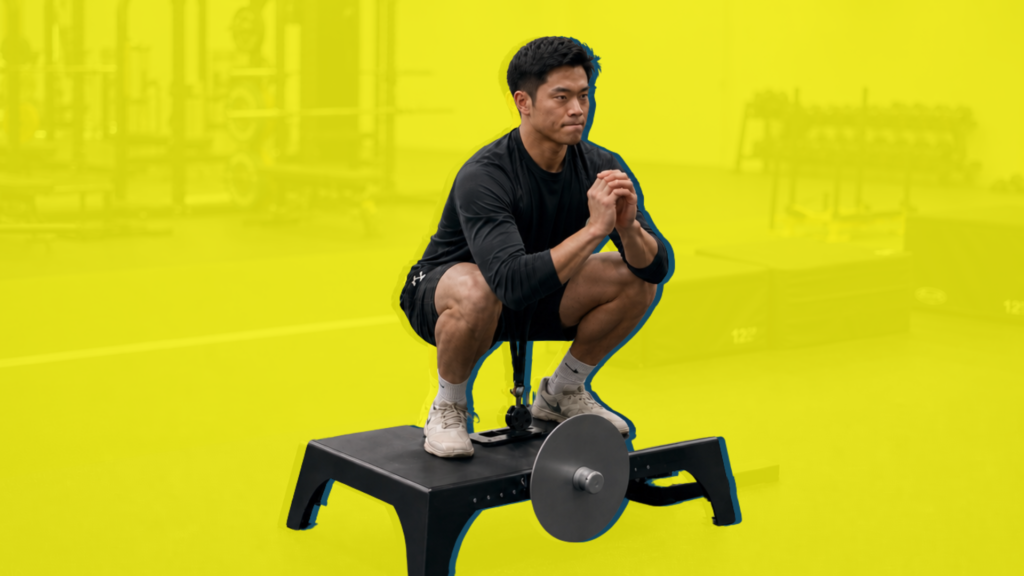
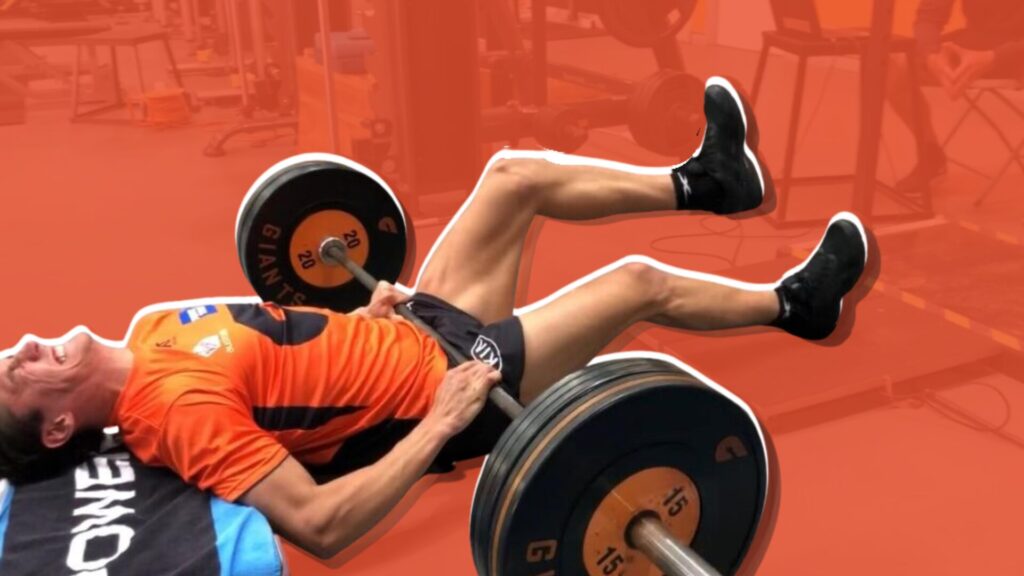
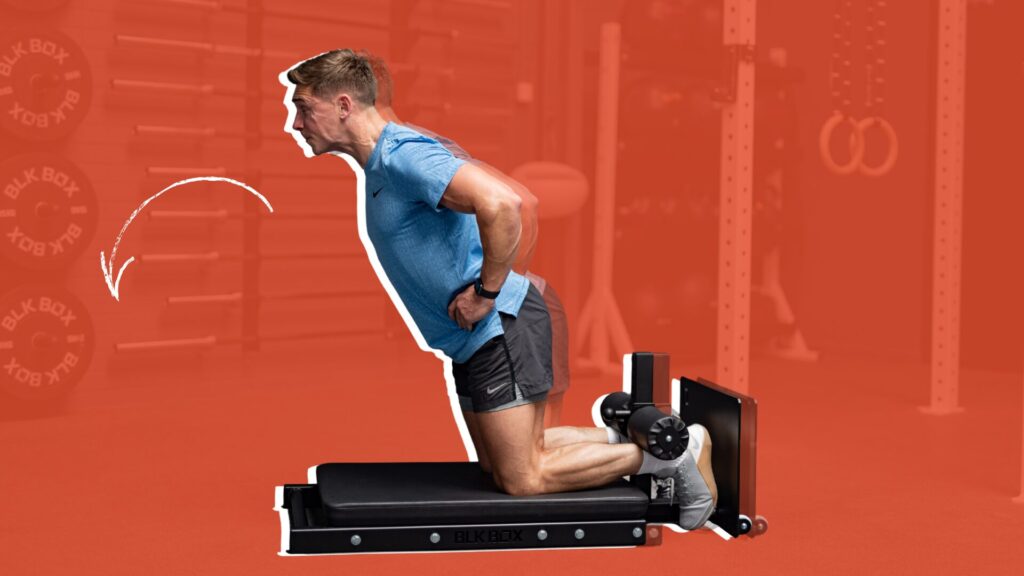
The Thermo Circuit is where I put a lot of the exercises I know will benefit my athletes but just don’t fit into their normal weight room program. This would include some of the isometric grinds that my physios love, and much of the shoulder work that doesn’t require a lot of weight. Accessory leg exercises like kneeling adductor slides and resisted hip flexion, or single joint exercises like Nordics, reverse Nordics or resisted dorsiflexion all go here.
It’s the same with my “out of alignment” work. Since volleyball players spend lots of time in rounded back and valgus knee positions, I’ll do exercises like Jefferson curls or valgus knee squats here in an effort to bulletproof those positions. I give myself bonus points if I can inject some fun into an otherwise rough exercise. Doing a 45-second single leg squat ISO is a lot more engaging if you’re holding a Nerf dart-gun and trying to hit targets I’ve set up a few meters away.
Games and play
I have an arsenal of around 50 games that I’ve stolen from physical education teachers over the years, and I deploy them liberally regardless of the age, gender or sport with which I’m working. Like the rest of my exercises and drills, I’ve categorized them by the trait they target (acceleration, balance, strength, teamwork, agility), as well as by the section of athlete warm-up where I can use them.
Some games are perfect for Thermo Circuits because constraints built into the game prevent the athletes from moving fast enough to hurt themselves. Frisbee throwing / catching challenges, hula hoop relay races, balance games, dancing video games and hacky-sack competitions fall into this category.
The rest of the games in my database are too intense to do cold, so they go into the Neural Prep section. This is where my athletes get to play tag or compete in whatever crazy relay race or obstacle course I can dream up.
Effectiveness and fun are not mutually exclusive, so my advice is to stop taking yourself so seriously and let your athletes play.
Tweet This“Effectiveness and fun are not mutually exclusive, so my advice is to stop taking yourself so seriously and let your athletes play”
@rettlarson
It’s worthwhile to note that some games tend to be ideal for women (dancing) while others work better with men (dodgeball). Some childhood games transfer perfectly to elite athlete warm-ups (tag) while others are best left for the kids (duck, duck, goose). That said, every team and culture is different. I’ve worked with men’s teams who love the occasional dance session, so don’t rule anything out. Everyone loves to play.
Strengthen & lengthen
When it comes to stretching, try to find the least effective dose. Coaches often forget that the link between flexibility and injury prevention is weak, so they spend too much time in pursuit of flexibility, time that could be better spent targeting more acute weaknesses in their team.
I pick one good, preferably multi-joint stretch for the ankle, hip, t-spine, and shoulder, and that’s it. Then I’ll try to find no-equipment strength, core or balance exercises that flow nicely between stretches. Crawls fit well here, as do some tough yoga poses like the crow or volleyball-specific exercises like fingertip ISO holds.
Tweet This“Coaches often forget that the link between flexibility and injury prevention is weak, so they spend too much time in pursuit of flexibility, time that could be better spent targeting more acute weaknesses in their team”
@rettlarson
Neural prep
The final stage primes the player’s nervous system for the training ahead. Postactivation potentiation (PAP) encompasses the exercises that acutely enhance force output by activating more fast-twitch motor units to increase maximal voluntary contraction or contraction speed.
These can be exercises that assist athletes in attaining supranatural speeds, like when a batter swings a light bat before grabbing a regular bat and stepping up to the plate. You could also use bungee cords to tow athletes into overspeed sprinting velocities, or perform quick-foot ladder drills before a soccer practice. In sports like volleyball or tennis, where athletes typically don’t have to run for more than a few steps, having players sprint 15-30m at the end of warm-up would qualify as overspeed neural prep.
Alternatively, we can elicit PAP by resisting movements using harnesses, bands or weight vests, causing muscles to contract with more force and recruit more and bigger motor units to do the required work. Generally, athletes tend to get the most benefit when the resistance is no more than 10% of their normal weight. Any more than that and it could fatigue, slow or alter their mechanics too much to transfer.
Sport-specific drills
With these principles in mind, this is also where I try to make my warm-up look a lot like volleyball practice, taking the same drills I saw the coach doing last week and adding constraints: setting drills while hula hooping, defensive drills wearing weight vests or blocking drills while resisted by bungee cords. The sport coaches help me ensure the mechanics are sound, and I take mental notes of their coaching cues.
Plyometrics
Plyometrics are one of the most commonly used methods of training / tricking the nervous system into producing higher firing frequencies in training. Whereas I might use low-level plyos (like jump-rope or lateral skips) in a Thermo Circuit, Neural Prep is more appropriate for a higher intensity option (depth jumps, bounds or box jumps) that we superset with an upper body exercise to give athletes more rest between sets.
Gamification
Athletes rarely want to work particularly hard during warm-up. But in order for some of the neural work like plyometrics or sprints to be effective, they need to be performed at max effort. Gamifying the Neural Prep bridges this gap and drives intent.
Gamification can take many forms. In the same way video games constantly surprise players, occasionally introduce different and novel challenges into the warm-up. For example, I might divide my team into groups of three and see which team can do a cumulative 10 minutes of handstand holds against a wall with the fewest partner switches.
You can also prey on your athletes’ hatred of losing. When running sprints at the end of warm-up, let the three fastest players retire after each race while the slower players keep racing. No athlete wants to be in the last group still racing.
Similarly, you should record, rank and publish the results of any challenge you stage in Neural Prep. Asking basketball players to jump as high as possible will probably get you 90% effort. Having them step up to the jump mat for a vertical jump contest, knowing you will post the results in the lunchroom after practice, will get you 100% effort.
Athletes are generally social animals, so divide the athletes into smaller teams often throughout the week. Players almost always run faster and jump higher when they know that they’ll be letting some teammates down if they don’t give max effort.
Autonomy is another core driver of gamification, so give the athletes some control over the process. The night before our weekly barefoot warm-up I might poll the team to ask if they’d prefer I use ladders, balance pads or mini-hurdles to work their foot and ankle strength. If it’s time to blow off some steam I’ll let them choose whether we dance or play dodgeball the next day.
You can take autonomy a step further and design individualized Thermo Circuits for each athlete. Consult with your head coach, the physios and the athlete to design three separate warm-up circuits with three athlete-specific exercises on each card. Then, a few times each week, put out all the necessary equipment and tell the athletes that for the first 5-6 minutes of warm-up they should cycle through the exercises on one of the cards as many times as possible.

Make your warm-up worthy of everyone’s time and attention
If you’re reading this and moaning because your head coach only gives you seven minutes before practice starts, that’s because you haven’t proven that your warm-up is worth the time. Begin a passive campaign for more minutes. Start by ditching all of your typical thermogenic work in favor of drills the head coach is doing in practice, except with bungees attached, mini-bands around knees, blindfolds or weight vests on to slow the athletes down. These tools constrain and “activate,” and will certainly increase body temp with the bonus of making your warm-up look a lot like the head coach’s practice.
The Dutch sprint coach Franz Bosch said that coaches should “spend less time in the misguided pursuit of mastery in perfect conditions.” Don’t be afraid if your warm-up looks messy. As an inexperienced coach I strove to make my athletes look like a perfectly choreographed assembly of walking-knee-hug robots. But that was to make ME look good, possibly at the expense of their growth.
Over the years I’ve realized that warm-up is the perfect place to push athletes to the less coordinated outer edges of their athleticism. It’s where we practice failing, self-organizing, adapting and trying again, which is the essence of sport.