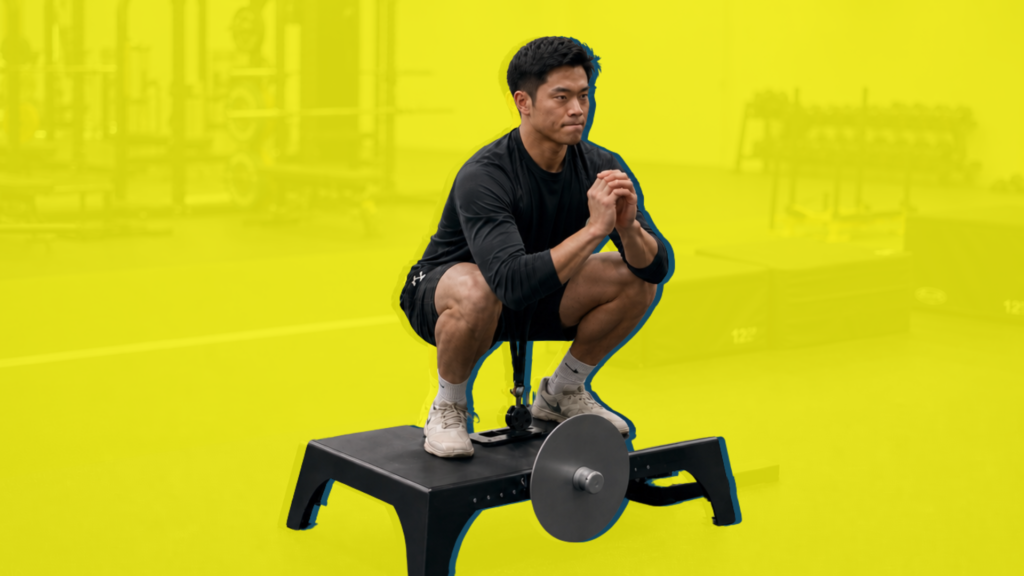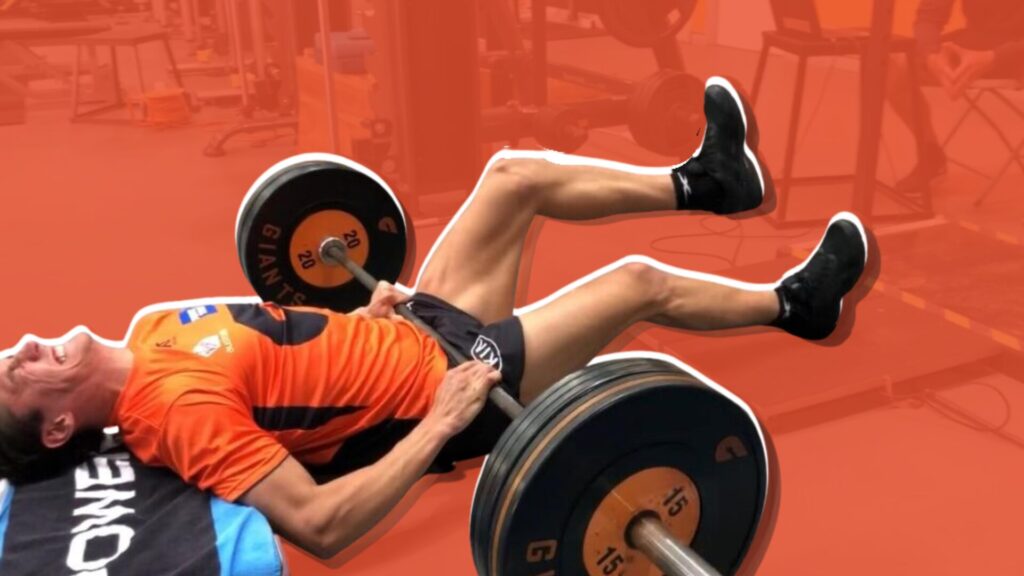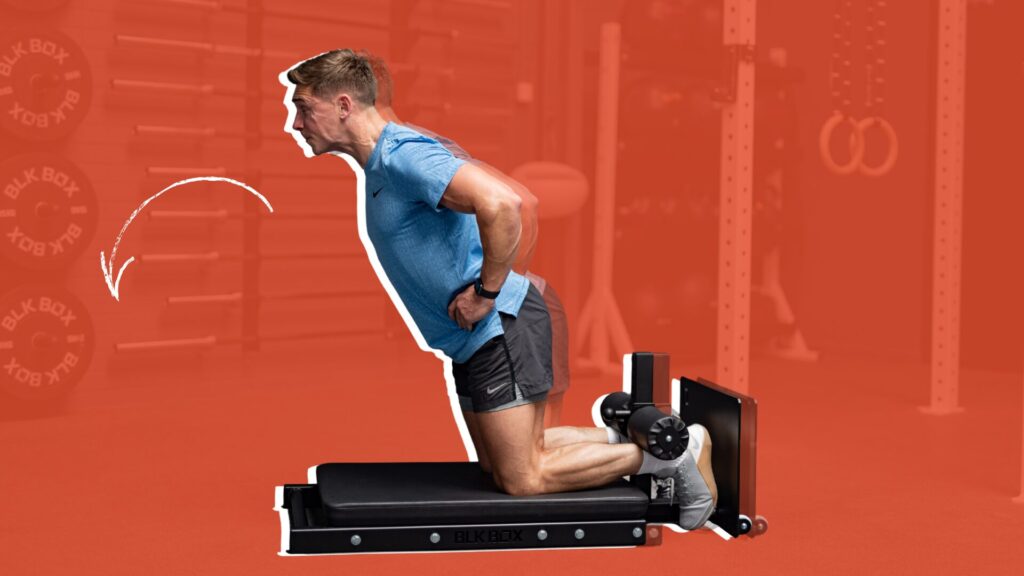


In an earlier article I discussed the differences between the two “pure” isometric muscle actions, the holding isometric muscle action (HIMA) and the pushing isometric muscle action (PIMA). I also briefly touched on the eccentric quasi-isometrics, referring the reader to a fantastic review by Oranchuk and colleagues [1]. These quasi-isometrics are the focus of this article.
The prefix quasi- means “to a degree, but not completely.” Quasi-isometric could then simply mean a muscular action in which tension is developed “to a degree, but not completely,” that is, a muscle action in which there is neither shortening nor lengthening of the muscle. The intent behind a quasi-isometric is to be isometric, and it looks isometric to the eye but, in reality, it is not truly isometric. This is in keeping with “pure” isometrics, which are also not truly isometric as they involve constant oscillations of shortening and lengthening of the muscle; [2] and, with tendon creep, there is also progressive shortening of the muscle. [3]

In coaching terms, quasi-isometrics are dynamic isometric muscle actions, where the athlete attempts rapid isometric stabilisation immediately after a dynamic movement. A good example of a quasi-isometric is an altitude landing, where you drop from a box and land in a predetermined static position, attempting to minimise compression of the leg spring at ground contact. Quasi-isometrics are part of a sub-group of isometric strength training (IST) methods known as pseudo-isometrics.
Know your pseudo-isometrics
Within isometric strength training are the pure isometrics and the pseudo-isometrics. The pseudo-isometrics subdivide into quasi-isometrics, eccentric quasi-isometrics, oscillatory isometrics and isotonic isometrics, to name a few distinct methods. Many of these methods have not been thoroughly researched and instead appear mostly in coaching manuals, textbooks and online resources. However, disregarding these methods of training because they aren’t peer reviewed is extremely limiting.
Eccentric quasi-isometrics
A failed HIMA that becomes a maximally resisted eccentric muscle action is essentially an eccentric quasi-isometric. An example of an eccentric quasi-isometric is a leg press held at 140 degrees knee extension with a maximal repetition duration load that induces HIMA failure within 30 seconds. When HIMA failure occurs, the muscles start to lengthen and the exercise essentially becomes an eccentric exercise as the athlete attempts to control the lowering of the weight.
Eccentric quasi-isometrics appear to be most beneficial for morphological adaptation at the muscle-tendon level, as they lack the neuromuscular specificity for high velocity movements.
These exercises often work best in early preparation periods, an important time to maximise morphological and architectural adaptations, when the macrocycle best supports high levels of fatigue. In both team or individual sports, lower body eccentric quasi-isometrics might be best placed in the off-season or early preseason. During these periods, running and higher intensity training demands are lower and there is less of an urgent need for transfer to higher velocity movements. Coaches can also program eccentric quasi-isometrics deeper into the preseason, but they must account for the content of training over the subsequent 48-72 hours, again because of the fatigue and muscle soreness that this form of training induces.

In a recent presentation with Victoria University, Dr. Andre Nelson and Dr. Dustin Oranchuk recommended training loads of 40-80% of concentric 1RM and total work time per repetition of 40-60 seconds for eccentric quasi-isometrics. Within this total work time, the athlete performs a 30-40 second HIMA to failure and a 10-30 second controlled eccentric muscle action to end range. Normally, just 1-2 sets of eccentric quasi-isometrics are performed per exercise. HIMA failure typically occurs around the 30-40 second mark under a load of 80-90% of an equivalent maximal PIMA, making this the recommended loading.
Tweet ThisEccentric quasi-isometrics appear to be most beneficial for morphological adaptation at the muscle-tendon level, as they lack the neuromuscular specificity for high velocity movements
@alex_natera
Oscillatory isometrics
Oscillatory isometrics have become popular, with leading practitioners implementing a variety of oscillatory work over recent years. Oscillatory isometrics occur in “semi-static” positions with pulsating movements over small joint ranges.
This pulsating movement entails constant, rapid contraction and relaxation of a targeted muscle or muscle groups. Proponents of oscillatory-isometrics suggest that these oscillations bring about reciprocal inhibition of rapidly contracting and relaxing muscles. If this is the case, an increased level of neuromuscular activation leading to increased rate of force development may result.
Not only might oscillatory isometrics increase rate of force development, they may also influence the rapid relaxation of muscles, which could be an important factor in dynamic athletic performance. Oscillatory isometric loads are submaximal, so they cause low levels of neuromuscular adaptation. Any neuromuscular adaptation is likely to be primarily the result of rate of muscular contraction.
Using the same leg press example, an oscillatory isometric commences with the sled at 140 degrees knee bend before rapidly pushing the sled to a 150 degree knee bend and rapidly relaxing so the sled back returns to the 140 degree position. The athlete rapidly repeats these “pulses” for a set number or time. The number of pulses can be as few or over 20, while the time periods are anywhere from 1-10 seconds long. Many coaches mix one or more full isotonic repetitions between series of pulses. This mixed approach may negate some of the benefits of pure IST, like lower mechanical damage, lower fatigue and the ability to perform a higher frequency of training. The low loads and minimal fatigue of oscillatory isometrics mean these can be performed multiple times through the training week.
Because of the lower loads, oscillatory isometrics can be a part of a successful peaking strategy. Anecdotally, this pseudo-isometric method may improve motor control strategies during peaking phases by assisting in overriding the inhibition of antagonist muscles.

Tweet ThisNot only might oscillatory isometrics increase rate of force development, they may also influence the rapid relaxation of muscles, which could be an important factor in dynamic athletic performance
@alex_natera
Isotonic isometrics
Bob Hoffman of York barbell popularised isotonic isometrics in the 1960s. They are essentially a partial concentric lift from a deeper position until some form of stoppers block the lift just before the athlete performs a maximal PIMA.
Isotonic isometrics are a hybrid lift where the training objective might be a “best of both worlds.” An athlete can still achieve adaptation and potential transfer via isotonic / concentric work while achieving some of the established benefits of IST within the same repetition.
Again using our leg press example, the athlete would lift the sled from 90 degrees at the knee until they hit stoppers at a 140 degree knee bend, where they would then perform a PIMA.
Normally, just the one working set of one repetition of 8-12 seconds is sufficient in a maximal isotonic isometric exercise. This is due to repetition duration reserve (RDR) being completely maxed out within this time frame. Repetition duration reserve is the amount of time the isometric action is performed as a percent of the maximal duration the athlete could hold the isometric muscle action before failure or a reduction in force output. A maximal effort PIMA can only be sustained for approximately 10 seconds before there is a 5% drop in force output. Although I don’t advise regularly utilising 100% of RDR with high performing athletes, this is an important part of why pseudo-isometrics are touted as a potent training method. A more conservative approach entails 1-2 quality sets and double the total volume of work through 4-6 second repetitions, which corresponds to an RDR of 40-60% and induces far less fatigue.
Isotonic isometrics employ high loads, and they appear to bring about consistently higher force outputs in the PIMA. What’s really interesting with this pseudo-isometric method is that there is a dual isometric muscle action, where both types of pure isometrics are performed at the same time. After the concentric lift, the athlete performs a maximal PIMA in driving the load into stoppers while simultaneously performing a HIMA, as the weight is clearly a movable quantity that will drop should he apply insufficient force to hold it against the stoppers. Consequently, these movements place high stress on the athlete. This will certainly drive neuromuscular adaptations when part of a well-balanced program. Again, some of the benefits of pure IST are negated using this “mixed method” approach, where isotonic lifting is incorporated with isometric lifting.
Within the training calendar, isotonic isometrics are best programmed at times in the preparation phase where coaches can modify isotonic lifting load to accommodate training and competition demands. For example, in a block of training where the athlete can tolerate additional fatigue, isotonic isometric loads can be as high as 80-90% concentric 1RM. When looking to reduce fatigue, aim for a load of 60-70% concentric 1RM. In the latter option, the joint PIMA/ HIMA provides the main stimulus rather than the isotonic lift.
Isometric to a degree, but not completely: The quasi-isometrics
Quasi-isometric exercises attempt to be isometric, but an external force acts against the system and likely forces the muscles to lengthen momentarily. If the load is light or manageable, then the muscles can brace isometrically. But if the load is too great the muscles will perform eccentrically to decelerate the load. The “load” can come from body mass in landing or striking the ground, as in an altitude landing, or it might be from catching a barbell in a braced position after a barbell throw. Using the leg press example again, the athlete “throws” the leg press sled and then catches it in a predetermined braced isometric position.
Pretension and loading rates
A key differentiator between quasi-isometrics and the other pseudo-isometrics is the requirement to create an appropriate level of pretension, also known as pre-load and pre-activation, before the acceptance of load.
Pretension is a preparatory neuromuscular strategy to optimize joint stiffness and stability prior to accepting load. It is the ability of the neuromuscular system to anticipate the magnitude of load and respond with the appropriate level of muscle activity to either resist or attenuate impact force, and is a critical biomechanical factor for both athletic performance and injury resilience [5,6]. As a skill coupled with the necessary isometric strength capabilities, pretension can let an athlete anticipate impact forces and effectively activate muscles to rapidly produce force to resist joint deformation.
Quasi-isometrics are really dynamic exercises with very brief periods of static muscle action. Their loading rates are the highest of all the IST variants. Consequently, their external load is light compared to HIMA and PIMA exercises, typically 20-65% of the equivalent maximal PIMA load.
These rapid loading rates and high impact forces provide a substantial stimulus to the neuromuscular system. For programming lower body exercises, coaches should conceive of pseudo-isometric exercises like they would high intensity plyometric exercise in terms of the placement of the training stimuli and the overall quantity of training.
Run-specific quasi-isometrics
Similar to plyometric exercises, the run specific quasi-isometric exercises can impose considerably high impact forces, especially when the athlete attempts to resist rather than attenuate impact force. For example, impact forces in high intensity bilateral plyometric exercises can range from 3.5x body weight (BW) in a 46 cm drop jump to 5.4x BW in a 90 cm depth drop (or altitude landing) [7,8,9,10]. These forces are similar to the impact forces in maximal velocity running, but in these plyometric exercises the impact forces are shared between both legs [11].
Knee iso-switch impact forces
The knee iso-switch is a run-specific quasi-isometric exercise. The stance leg starts in a mid-stance running position, and the recovery leg starts with the thigh parallel to the floor. The recovery leg switches aggressively with the stance leg, striking the floor with the mid-foot. Impact forces on the one leg can range from 3.6-6x BW, given equivalent maximal PIMA loads of 25% and 65%, respectively. The knee iso-switch exercise generally includes a brief bilateral load share, which slightly offsets the load on the striking leg.


The advanced knee iso-switch is a higher intensity variant that eliminates this brief bilateral load share. The thighs switch in front of the body while the body is in true flight. Impact forces in the advanced knee iso-switch are upwards of 7x BW using moderate loading schemes. Therefore, stay with lighter loads (25-40% max PIMA) for the advanced iso-switch.


The high impact forces of some quasi-isometric exercises require coaches to consider where they place these exercises in the training schedule, and the volume. Coaches have to balance quasi-isometrics with other high impact loading elements of the sport and S&C programme, e.g., high speed running and plyometrics along with knee iso-switch loading.

Quasi-isometrics normally feature later in preparation phases once tissue properties and neuromuscular qualities are well developed. The athlete’s development stage and the training leading up to the implementation of high intensity quasi-isometrics is crucial not only for safety but also performance. As discussed earlier, quasi-isometrics require effective pretension, which entails both effective anticipation and the capacity to tolerate the impact load. Otherwise the athlete risks flexing joints and lengthening muscles beyond the predetermined position during an exercise like the knee iso-switch. As in the mid-stance phase of maximal velocity running, the predetermined position for the knee iso-switch is 140-145 degrees at the knee and 160-165 degrees at the hip (with 180 degrees being full extension at both joints) [11].

Athletes can develop the specific capacity to tolerate the high impact forces through long term training of both maximal and ballistic PIMA and HIMA exercises at the joint angles and specific muscle lengths in the knee iso-switch landing position. The ballistic HIMA, referred to as the ballistic knee iso-hold, is a perfect segue to the run-specific quasi-isometrics.
Unlike for HIMA and PIMA exercises, the duration of each repetition or the pushing and holding times are less important for quasi-isometrics. Again, the main objective is to achieve high levels of pretension to then rapidly generate high rates of force immediately upon ground contact. Therefore, 1-2 seconds of holding in order to reset effectively are generally all that’s required. Due to the high intensity of the knee iso-switch exercise, volumes range from 4-18 repetitions in total. However, coaches can push the volume up to 50 repetitions with reductions in load and intent of the exercise, or when they have minutely considered other elements of the program.
Knee iso-catch impact forces
The knee iso-catch is another run-specific quasi-isometric exercise. There is a similar theme and rationale to the knee iso-switch: the greatest challenge is creating the appropriate level of pretension to effectively hold joint positions at ground contact. The major difference, and the key factor that makes this exercise a higher intensity option, is the use of a jump. The jump propels the centre of mass vertically and gravity accelerates the system (athlete and additional load) down to the ground, with the athlete landing against that force at the established mid-stance joint angles and corresponding muscle lengths.
This is much like a depth drop or altitude landing, but with lower heights and additional (external) load. Those off-setting factors are why the knee iso-catch may be more effective than an altitude landing.
As drop height increases in an altitude landing, the vision and knowledge of drop height affect landing stiffness with more compliant strategies to dissipate landing forces [12]. This effect is amplified when the athlete must land on one leg, causing heightened anticipation of total landing forces to be absorbed in a unilateral stance.
In a knee iso-catch, adding load adequately makes up for a much lower drop height and avoids the negative anticipatory and regulatory responses associated with landings from height. The increase in leg stiffness during a knee iso-catch further increases the impact forces experienced and, collectively, height, load, stance and level of stiffness provide a very intense loading stimulus.
A knee iso-catch with the lightest recommended load of 20% of an equivalent maximal PIMA can incur impact forces of over 3.2x BW with just a 10 cm displacement. Performing a knee iso-catch with 25 cm of displacement can lead to impact forces over 4.6x BW; and 35% loads can have impact forces reaching well above 6x BW. Again, due to the high intensity nature of this exercise, loading is lighter than in the knee iso-switch and total volume of approximately 15 contacts should be the maximum.
Run-specific quasi-isometrics are earned before they are programmed
Coaches must take extreme care when programming and implementing both run-specific quasi-isometric exercises. The knee iso-switch and knee iso-catch are both very high intensity exercises that elicit extreme impact forces. Many months of training embedded within years of gradual progressions are necessary to safely execute and get the most out of both of these exercises.
The majority of athletes will achieve long and sustained benefits using the run specific PIMA and HIMA. The run-specific quasi-isometrics should be reserved for those few athletes who have “earned the right,” or, specifically for those athletes returning to running performance post-lower limb injury.