
 English
  Español
  Português do Brasil
 Isometric Strength Training
with Alex Natera An online course dedicated to the scientific basis and real world application of isometric strength training Join thousands of coaches and therapists worldwide who have already registered!Course includes
- 5 hours of high-quality lectures with Alex
- 14 hours of expert guest presentations
- 2 hours of real-world case studies from coaches across the globe
- Accompanying PDF of each lesson with additional resources
- 13.75 CEU's for AT's and *PT's & NSCA members (*full list of eligible states in FAQs)
What You'll Learn
Sportsmith has partnered with Alex Natera and other world-leading experts to deliver the world’s best resource on isometric strength training.
Isometric strength training has an abundance of advantages over traditional strength training. But this training method is commonly misunderstood, neglected in mainstream education and has little usable information in the scientific literature.
Register now to get access to cutting edge information on isometric strength training. The course is delivered through pre-recorded video explanations, white board sessions, athlete demonstrations, coaching sessions and guest lectures, the information in this course is unrivalled in its depth and delivery.
You will have lifetime access to the course and any future updates so can learn at your own pace.
Course Tutors

Alex Natera has well over twenty years of experience in high performance sport including time spent as a professional sportsman, a technical coach, a lecturer and published researcher and a world leading strength & conditioning expert. Alex is currently the Manager of Sport Sciences within the National Institute Network of Australia strategizing, overseeing and optimising performance support for Olympic athletes. Over Alex’s career he has had a decade of directly physical preparing track & field sprinters and middle- and long-distance runners. Alex has been fortunate enough to ply his trade, and learn his craft, from influences working across the globe in a variety of sports including Premier League Soccer, Championship level Rugby Union and the Australian Football League.

Keith is a professor at UC Davis and a renowned tendon training researcher and expert. Professor Keith Baar received his PhD from the University of Illinois where he discovered the molecular signal that causes load-induced muscle hypertrophy. Keith is currently the head of the Functional Molecular Biology Laboratory (FMBLab) at the University of California Davis.
Over the last 15 years, Keith has worked with elite athletes, as the scientific advisor to Chelsea Football Club, USA Track and Field, Paris Saint-Germain Football Club, British Cycling, The English Institute of Sport, Leicester Tigers Rugby, and the Denver Broncos. He also spent time as an assistant strength coach with the University of Michigan football team where he was an undergraduate. Keith’s current work is focused on how loading and nutrition alter tendon/ligament/ECM health and performance.

Dr Paul Comfort is a Reader in Strength and Conditioning and programme leader for the MSc Strength and Conditioning at the University of Salford. He is also an adjunct professor at Edith Cowan University. Paul has applied experience across a range of sports and consults with numerous professional and semi-professional sports teams, which he has undertaken throughout his academic career.
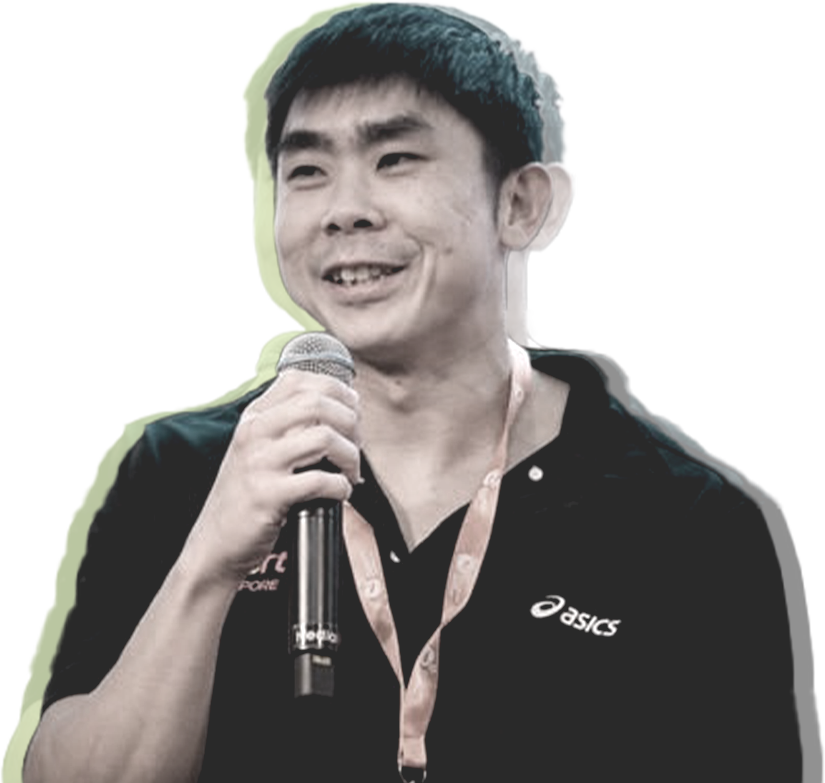
Danny is the Head of Strength and Conditioning at the Singapore Sport Institute. He is currently working with a number of different sports including bowling, track and field, canoe, diving, kayak, judo and track cycling. Danny is at the cutting edge of research in the area of isometric strength training. He recently completed his PhD, researching the effects of isometric strength training on sports performance. Alongside his PhD, he is also researching the use of variable resistance exercises to induce postactivation potentiation.

Matt Van Dyke is the Director of Sports Science for the Houston Texans. With the Texans, Matt is responsible for the management of training loads and other performance aspects implemented to each individual athlete in order to maximize performance and readiness.
Prior to his position with Houston, Van Dyke was the Associate Director of Applied Sports Science at the University of Texas. During his tenure with the Longhorns, Matt was responsible for the oversight of the football team in regards to training loads and recovery processes applied in order to create an optimal level of performance availability for each competition.

Ben is working as a consultant with teams and individuals to help solve shoulder performance problems. He has over two decades of experience as a practitioner with Masters in both Physiotherapy and Strength & Conditioning and for the past 2 years has been employed in leadership role as Director of Performance.
Ben’s interest & experience in shoulders developed from his time in professional rugby at London Wasps (2002-2005) and was accelerated through his work with the English Institute of Sport & in particular the British Judo team in the lead up to his Team GB role at the Olympics in London 2012. The Athletic Shoulder testing & monitoring philosophy combines Ben’s shoulder expertise with over ten years of monitoring athletes in performance environments. Creatively challenging the way we use information to impact on minimising injury risk and maximising athletic performance potential.

Simon Harries is currently Head of Strength and Conditioning at the New South Wales Institute of Sport. He has spent the last decade working as a strength and conditioning coach and sports scientist with elite and developing level athletes across AFL, Rugby League, Rugby Union and Rugby Sevens. During his career he has focused on developing and implementing safe and effective strength and conditioning programmes to both adolescent and adult athletes to achieve their potential. Recently he has directed his passions towards helping injured athletes rehabilitate from injury to enable successful return to sport.

Nick is currently First Team Physiotherapist at AFC Bournemouth in the Premier League. He has extensive experience working in elite level teams in a variety of sports, including AFC Bournemouth, Saracens Rugby, Melbourne Rebels Rugby, the English Institute of Sport and British Judo. He holds degrees in Sports Science, Physiotherapy, an MSc in Sport & Exercise Medicine and currently lectures to MSc students at QMUL and UCL on hamstring and groin injuries. Nick’s exposure to hamstring injuries and enthusiasm for facilitating optimal hamstring performance through the principles of functional anatomy and athletic development was further enhanced during his time working within a unique high-performance sporting culture in Melbourne. With access to a network of world leading organisations, researchers and practitioners, as well as advanced training in sports injuries at the Australian Institute of Sport, Nick has a detailed insight into the application of cutting edge research, ideas and technology to hamstring training. Subsequently, he has now started his PhD and also delivers a one-day CPD course on hamstring rehabilitation, monitoring and training titled, ‘The High Performance Hamstring’.
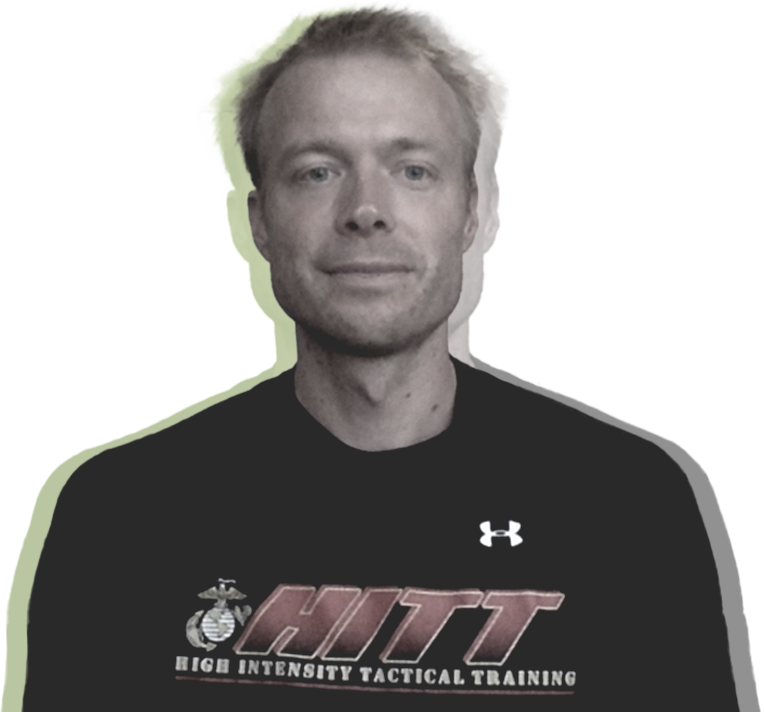
Joel Smith is the founder of Just Fly Sports and is based in Cincinnati, Ohio. Joel hosts the Just Fly Performance Podcast, has authored several books on athletic performance, and trains numerous clients in the in-person and online space. Joel was formerly a strength coach for 8 years at UC Berkeley. A track coach of 15 years, Joel coached for the Diablo Valley Track and Field Club for 7 years, and also has 6 years of experience coaching sprints, jumps, hurdles, pole vault and multi-events on the collegiate level, working at Wilmington College, and the University of Wisconsin, LaCrosse. He now coaches at the high-school level.

Dr. Dan Baker is currently the president of the Australian Strength & Conditioning Association. Previously, Dan had been the strength and power training coach for the World Famous Brisbane Broncos Rugby League team for 20 years, leading them to 4 titles.
Not limited to just one organization, Dan has an extensive coaching career working with the Queensland Reds Rugby Union team, as well as coaching elite athletes in mixed marital arts (cage fighting), diving, soccer, netball, track & field and of course, powerlifting.
Unlike most PhD’s he does not work full time as a lecturer or in a laboratory – he trains athletes in the field.

Dustin Oranchuk has a deep background as a strength and conditioning specialist, and as a researcher in several areas of exercise physiology, biomechanics, and sports science. Dustin has worked with teams in the private sector, Canadian Olympic, NCAA, and U-Sports systems. He has also published over 25 peer-reviewed articles in scientific journals and presented at several national and international conferences.
Following his undergraduate degree, Dustin had a brief stint working with the Canadian Sports Institute, and later as a Strength and Conditioning coach at a private hockey training facility in Connecticut, USA. Dustin then completed a Master of Science degree in Colorado while serving as the head Strength and Conditioning coach for the University’s swimming, volleyball and basketball teams.
Dustin enjoys utilizing his scientific background to achieve results while educating each athlete/client and navigating ways to make training an enjoyable experience regardless of the goal. He aims to merge his scientific and practical experiences to help Acumen provide a top-notch, comprehensive sports performance system and utilize the scientific method to drive intelligent change.

Neil is an Assistant Professor within the Bond University Sport and Exercise Science degree with a focus on Strength and Conditioning as well as Injury Prevention and Management. Neil is involved with Bond University Sport within the Bond University High Performance Training Centre working across a number of sports. Neil holds a PhD which was focussed on investigating novel hamstring strain injury prevention techniques utilising a combination of eccentric and isometric contractions. Neil has practiced as a Clinical Exercise Physiologist for over 15 years, working with junior and senior athletes to rehabilitate and then build resilience against injury. Neil has presented at National and International conferences and published in the area of hamstring injury prevention, muscle physiology and heat acclimation in Rugby Union.

David is first team physiotherapist currently working with Munster Rugby. From Limerick, Ireland, David received his Bachelors in Sport and Exercise Science from the University of Limerick before going on to complete a Master’s in Physiotherapy from Queen Margaret University, Edinburgh. Prior to working in sport, David worked at the Sports Surgery Clinic in Dublin before taking up a role at Leinster Rugby’s academy. Since then, David has worked as rehabilitation lead at Wasps Rugby and Manchester City football academy at U23 level. David’s clinical interests include calf and hip & groin injury rehabilitation in athletes. Outside of work, David plays hurling with club side Na Piarsaigh and represented Limerick at first team level.
What's included
- 5 hours of high-quality lectures with Alex which includes testing and exercise demonstrations, and whiteboard sessions
- 14 hours of expert guest presentations with Matt van Dyke, Keith Baar, Danny Lum, Dan Baker, Dustin Oranchuk, Neil Chapman, Joel Smith, David Breen, Ben Ashworth, Simon Harries, Nick Court and Paul Comfort
- 2 hours of real-world case studies from coaches across the globe
- Accompanying PDF of each lesson with addtional resources
- 13.75 CEU’s for AT’s and *PT’s & NSCA members (*full list of eligible states in FAQs)
Course Schedule
- Lesson 1a – the history of isometrics, pro’s and con’s of isometric strength training and how isometric strength training compares to traditional strength training
- Lesson 1b – what isometric training variables you need to know, how holding and pushing isometrics differ and the adaptations you can expect from this method of training
- Lesson 1c – how muscles function during running, the birth of run-specific isometrics and how it compliments other methods of training
- Lesson 1d – guest lecture from Danny Lum – [Isometric training research and practice]
- Lesson 1e – guest lecture from Dustin Oranchuk – [Eccentric quasi-isometric training]
- Lesson 1f – guest lecture from Neil Chapman – [Stretch isometric contractions: The application of force enhancement]
- Lesson 1g – guest lecture from Joel Smith – [Oscillatory isometrics in sports performance training]
- Lesson 2a – how to execute the iso-push and ankle iso-push, different types of assessment and key performance indicators
- Lesson 2b – how to execute the knee iso-push, different types of assessment and key performance indicators
- Lesson 2c – how to execute the hip iso-push, different types of assessment and key performance indicators
- Lesson 2d – guest lecture from Paul Comfort – [Isometric testing]
- Lesson 2e – guest lecture from David Breen – [Using the seated calf isometric test to better understand and manage calf injuries)
- Lesson 3a – how to execute iso-holds, load quantification, progressions and regressions and program execution
- Lesson 3b – how to execute iso-switches, load quantification, progressions and regressions and program execution
- Lesson 3c – how to execute iso-catches, load quantification, progressions and regressions and program execution
- Lesson 3d – guest lecture from Matt van Dyke – [Isometrics and triphasic training]
- Lesson 4a – run-specific isometric progressions and key performance indicators, annual planning, peaking and LTAD periodization
- Lesson 4b – run-specific isometrics microcycle planning, theoretical fatigue models and session planning
- Lesson 4c – run-specific isometrics during return to performance and tendon management
- Lesson 4d – how to use repetition reserve duration (RDR) and its relationship to total volume
- Lesson 4e – guest lecture from Keith Baar – [Using low jerk, long duration isometrics to maximise musculoskeletal health]
- Lesson 4f – guest lecture from Dan Baker – [Using functional isometrics to improve resistance training outcomes and sports performance]
- Lesson 5a – how to use run-specific isometrics during return to play from an Achilles rupture
- Lesson 5b – guest lecture from Nick Court – [Isometric training for hamstring rehab]
- Lesson 5c – guest lecture from Simon Harries – [Isometric training strategies to enhance early-mid stage ACL rehabilitation]
- Lesson 5d – guest lecture from Ben Ashworth – [Shoulder isometrics: Assessment and training]
- Lesson 6a – How to warm up for a session involving RSIST
- Lesson 6b – What does a complex session look like involving RSIST
- Lesson 6c – What does a session look like when an RSIST exercise is the key lift
- Lesson 6d – What does a session look like when an RSIST exercise is an accessory lift
- Lesson 6e – What does a session look like when using RSIST as a standalone exercise
- Lesson 7a – case study from Tom Druce [Run-specific isometrics with sprinters]
- Lesson 7b – case study from Taylor Evernden [Run-specific isometrics in Canadian University Sport]
- Lesson 7c – case study from Nico de Villiers [Run specific isometric knee-pushes]
- Lesson 7d – case study from Ryan Grubbs [Combining sprint profiling with sprint isometrics]
- Lesson 7e – case study from Mark Taylor [Using isometrics to maintain maximal force production in female tennis athletes during competition blocks]
- Lesson 7f – case study from Tim Madden [Run-specific isometrics in youth athletes]
- Lesson 7g – case study from Jonas Mikalčius [Isometrics on maximum speed development]
- Lesson 7h – case study from Greg Hollins [Run-specific isometrics in international cricket]
- Lesson 7i – case study from Steffan Jones [Isometrics and the fast bowler]
- Lesson 7j – case study from Chris Gaviglio [8 weeks to launch – Using run specific isometrics to return to full competition 8 weeks post knee arthroscopy]
- Lesson 7k – case study from Colm Mac Rory [Run specific isometrics in rehab]
- Lesson 7l – case study from Emma-Lea McKay [Return to sport non-operative ACL]
- Lesson 7m – case study from Justin Richardson [Isometrics – restoration of neural drive post ACLR]
- Lesson 7n – case study from Antonio Flores [post tendon rupture]
- Lesson 7o – case study from Simon Harries [Isometrics – Enhancing dynamic tasks]
- Lesson 7p – case study from Spencer Goggin [Using heavy knee iso hold as a potentiation stimulus]
Learning outcomes
- Attendees can distinguish between the various types of isometric strength training, holding and pushing, and describe the adaptations they create
- Attendees to gain a good understanding of what the scientific literature says about isometric strength training
- Attendees will evaluate the various types of isometric testing at the hip, knee and ankle, and their links to dynamic performance
- Attendees can coach and cue a variety of isometric strength training exercises
- Attendees to gain a good understanding of progressing and regressing isometric strength training exercises
- Attendees can programme run-specific isometrics on a session, microcyle, meso cycle and macro cycle level, for peaking, youth athletes, and athletes who have tendon issues

“Alex has been the biggest influence on what we do in the weightroom over the past two years. His information and insight is invaluable”

“Alex is an exceptional practitioner who has excelled in athletics as well as team sports using his isometric training systems. We have worked together on a number of projects and this course will be incredibly valuable for coaches of any level.”

“Alex Natera has been at the forefront of the renaissance of isometrics as a training modality for about a decade now, so you can be sure that any course he runs will be bringing a blend of the best available science with practical implications you can immediately implement”

“When it comes to isometric training for performance enhancement and rehabilitation, Alex is a world leader. I have implemented a lot of his ideas into my own practice and would highly recommend this course for physios, rehab specialists and strength and conditioning coaches.”

“I couldn’t recommend this course highly enough to both experienced professionals with many years experience to those who are new and developing practitioners. Alex has been able to bridge the gap between enhance performance whilst progressing our scientific understanding of some of these key practices”