
Isometric training has come to the forefront of human performance given its wide range of benefits and ability to provide consistent results. While the glut of information may seem overwhelming at times, isometrics are like any method. As long as they align with your principles and fit within your system, they are an exceptional tool in any performance practitioner’s toolbox.

Three attributes I rely on when programming isometrics are their ability to educate, isolate and stimulate.
Isometrics allow for high levels of motor learning to take place while fine tuning movement and muscle recruitment patterns. Practitioners can manipulate and isolate numerous variables such as joint angle, muscle length, magnitude of force, rate and time of force production, regime of muscular work, and dynamics of effort. And isometric strength training can provide all that at a relatively low cost compared to traditional strength training. Due to their low technical requirement, low cognitive load and high physical output, they provide a disproportionately high return. This becomes increasingly valuable during times of frequent and intense sporting activity, return to play scenarios and when working with developing athletes.

Tweet ThisDue to their low technical requirement, low cognitive load and high physical output, isometric exercises provide a disproportionately high return
@connorschoeppsc
Programming isometrics: Go iso early
Programming isometrics is similar to programming traditional training. The table below summarizes some of the key training parameters for delivering isometric training to athletes.
| Isometric Programming Chart | |||||
| Method | Sets | Reps | Rep Time (s) | Total TUT (s) | Intensity/ MVIC |
| Extensive yielding | 1-3 | 1-3 | 20-60 | 60-180 | BW-40% |
| Extensive overcoming | 1-3 | 2-4 | 10-30 | 30-90 | 50-70% |
| Iso-dynamic | 2-4 | 1+5-10 | 5-10 | 20-40 | 60-80% |
| Grinding overcoming | 2-4 | 2-5 | 3-10 | 10-40 | 75-100% |
| Grinding yielding | 2-4 | 1-4 | 4-8 | 16-48 | 60-85% |
| Ballistic overcoming | 2-5 | 3-6 | 0.5-2 | 20-30 | 100% |
| Ballistic yielding | 3-6 | 3-6 | 1-3 | 15-25 | 50-65% |
| Drops/switches/catches | 2-4 | 2-6 | N/A | 6-24 | 10-40% |
Isometric loading is the product of the following relationship:
Sets x Reps x Rep Time x Intensity (or Load)
The exception to the rule are isometric dynamics, whose load equation is:
Sets x Initial Rep Time x Dynamic Reps
These rep ranges apply to both bilateral and unilateral variations. This will affect the total time under tension, and practitioners should adjust accordingly. Unilateral variations stress the entire system, even as the single limb is the emphasis. This is something to consider so we don’t overstimulate the athlete.
Athletes can productively perform isometrics throughout a training session. Using them as preparatory exercises before more traditional strength training takes advantage of the athletes being at their peak freshness, which allows them to reach the highest outputs. The early parts of the sessions are also when they are most receptive to the motor learning aspects. One possible exception to the “early isometric” guideline is that light extensive isometrics generally fit better towards the end of a training session.
When programming in a more linear model, choose the isometric method based on how it aligns with the primary emphasis of the training block.
For example, if we are in a strength block, we will primarily utilize grinding isometrics on each of our lift days as our prep work. Then we aim to marry our exercise selection for that day with the dynamic work on the field prior to lifting.
On our acceleration day, the isometric emphasis will be hip dominant and focus on deeper joint angles. During acceleration, the ability to project and attack the ground is driven by the ability to produce high amounts of force at the hip. Especially during initial acceleration, the joint angles at the hip, knee and ankle during ground contact will be much deeper, as opposed to during more upright sprinting.
The max velocity day isometrics will be more ankle dominant and focus on shallow joint angles. The ability to create stiff ground contacts is a major KPI for high speed sprint performance. In contrast to acceleration, ground contacts during max velocity will be much shallower as our hips and posture elevate.
Lastly, our multi-directional day will be more knee dominant. During change of direction, the knee needs to possess the capabilities to create and dampen high levels of force in order to effectively rebound out of position.
| Day 1 – Acceleration – Grinding | |||||||||||||
| Exercise | Week 1 | Week 2 | Week 3 | ||||||||||
| Sets | Reps | :Rep | Load | Sets | Reps | :Rep | Load | Sets | Reps | :Rep | Load | ||
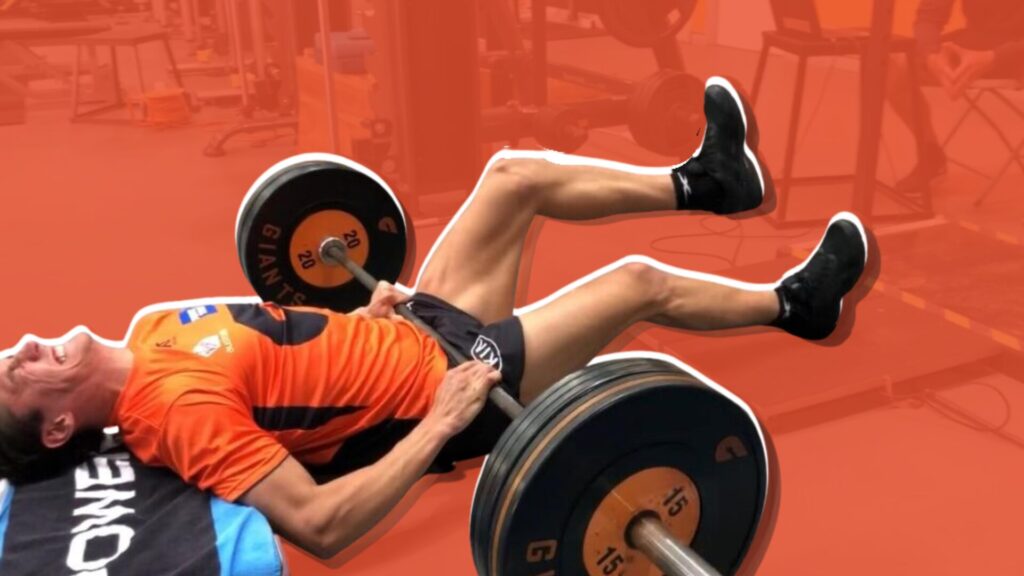
| A1 | Supine hip extension ISO (90) | 3 | 5 | :6 | 75% | 3 | 4 | :5 | 85% | 3 | 3 | :4 | 95% |
| A2 | Seated calf raise ISO | 3 | 5 | :6 | 75% | 3 | 4 | :5 | 85% | 3 | 3 | :4 | 95% |
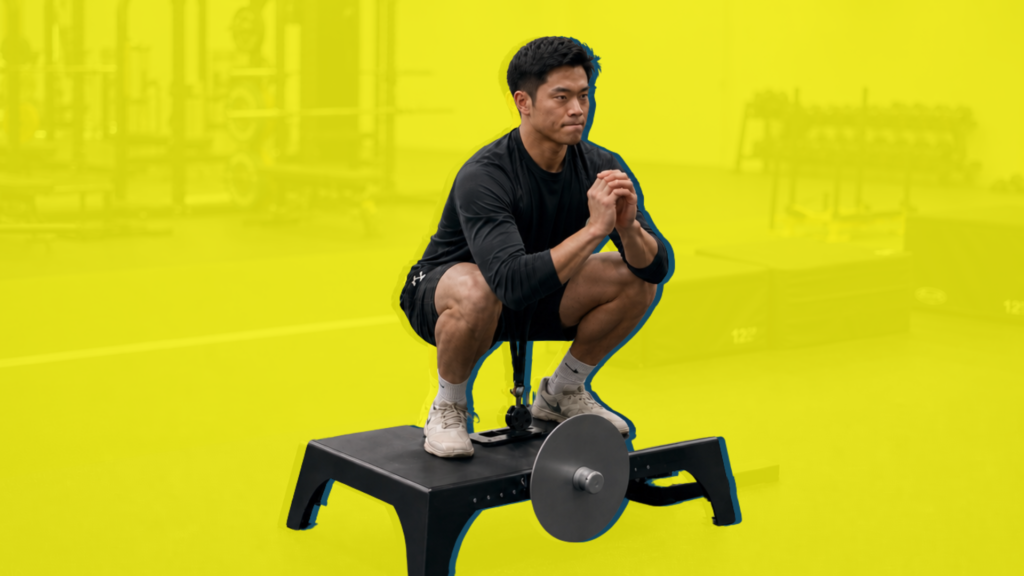
| A3 | Prowler knee ISO (45) | 3 | 5 | :6 | 75% | 3 | 4 | :5 | 85% | 3 | 3 | :4 | 95% |
| Exercise | Week 1 | Week 2 | Week 3 | ||||||||||
| Sets | Reps | :Rep | Load | Sets | Reps | :Rep | Load | Sets | Reps | :Rep | Load | ||
| B1 | Front squat | 3 | 5 | 70% | 4 | 4 | 75% | 5 | 3 | 80% | |||
| B2 | Ankle mobility | 3 | 5ea | 3 | 5ea | 3 | 5ea | ||||||
| Exercise | Week 1 | Week 2 | Week 3 | ||||||||||
| Sets | Reps | :Rep | Load | Sets | Reps | :Rep | Load | Sets | Reps | :Rep | Load | ||
| C1 | BB bench press | 3 | 5 | 70% | 4 | 4 | 75% | 5 | 3 | 80% | |||
| C2 | Ab rollout | 3 | 15 | 3 | 15 | 3 | 15 | ||||||
| Exercise | Week 1 | Week 2 | Week 3 | ||||||||||
| Sets | Reps | :Rep | Load | Sets | Reps | :Rep | Load | Sets | Reps | :Rep | Load | ||
| D1 | Chest supported row (0-2-0) | 3 | 8 | 3 | 8 | 3 | 8 | ||||||
| D2 | BB RDL (3-0-0) | 3 | 6 | 3 | 6 | 3 | 6 | ||||||
| Day 2 – Max Velocity – Grinding | |||||||||||||
| Exercise | Week 1 | Week 2 | Week 3 | ||||||||||
| Sets | Reps | :Rep | Load | Sets | Reps | :Rep | Load | Sets | Reps | :Rep | Load | ||
| A1 | Ankle RSIST ISO | 3 | 5 | :6 | 75% | 3 | 4 | :5 | 85% | 3 | 3 | :4 | 95% |
| A2 | Supine hip extension ISO (10) | 3 | 5 | :6 | 75% | 3 | 4 | :5 | 85% | 3 | 3 | :4 | 95% |
| A3 | Knee RSIST ISO | 3 | 5 | :6 | 75% | 3 | 4 | :5 | 85% | 3 | 3 | :4 | 95% |
| Exercise | Week 1 | Week 2 | Week 3 | ||||||||||
| Sets | Reps | :Rep | Load | Sets | Reps | :Rep | Load | Sets | Reps | :Rep | Load | ||
| B1 | DB walking lunge | 3 | 5ea | 3 | 5ea | 3 | 5ea | ||||||
| B2 | Hip 90/90 with MB | 3 | 5ea | 3 | 5ea | 3 | 5ea | ||||||
| Exercise | Week 1 | Week 2 | Week 3 | ||||||||||
| Sets | Reps | :Rep | Load | Sets | Reps | :Rep | Load | Sets | Reps | :Rep | Load | ||
| C1 | DB incline | 3 | 6 | 3 | 6 | 3 | 6 | ||||||
| C2 | Side plank w/ leg lift | 3 | 10ea | 3 | 10ea | 3 | 10ea | ||||||
| Exercise | Week 1 | Week 2 | Week 3 | ||||||||||
| Sets | Reps | :Rep | Load | Sets | Reps | :Rep | Load | Sets | Reps | :Rep | Load | ||
| D1 | Neutral grip pull up (0-2-0) | 3 | 6 | 3 | 6 | 3 | 6 | ||||||
| D2 | SL 2 DB RDL (3-0-0) | 3 | 5ea | 3 | 5ea | 3 | 5ea | ||||||
| Day 3 – Multi-Directional – Grinding | |||||||||||||
| Exercise | Week 1 | Week 2 | Week 3 | ||||||||||
| Sets | Reps | :Rep | Load | Sets | Reps | :Rep | Load | Sets | Reps | :Rep | Load | ||
| A1 | Lateral wall lean ISO | 3 | 5 | :6 | 75% | 3 | 4 | :5 | 85% | 3 | 3 | :4 | 95% |
| A2 | Supine hip extension ISO (90) | 3 | 5 | :6 | 75% | 3 | 4 | :5 | 85% | 3 | 3 | :4 | 95% |
| A3 | Eversion ankle ISO | 3 | 5 | :6 | 75% | 3 | 4 | :5 | 85% | 3 | 3 | :4 | 95% |
| Exercise | Week 1 | Week 2 | Week 3 | ||||||||||
| Sets | Reps | :Rep | Load | Sets | Reps | :Rep | Load | Sets | Reps | :Rep | Load | ||
| B1 | Goblet lateral lunge | 3 | 5ea | 3 | 5ea | 3 | 5ea | ||||||
| B2 | Lunge + T-spine rotation | 3 | 5ea | 3 | 5ea | 3 | 5ea | ||||||
| Exercise | Week 1 | Week 2 | Week 3 | ||||||||||
| Sets | Reps | :Rep | Load | Sets | Reps | :Rep | Load | Sets | Reps | :Rep | Load | ||
| C1 | 1/2 kneeling landmine press | 3 | 8ea | 3 | 8ea | 3 | 8ea | ||||||
| C2 | Cable rotation | 3 | 10ea | 3 | 10ea | 3 | 10ea | ||||||
| Exercise | Week 1 | Week 2 | Week 3 | ||||||||||
| Sets | Reps | :Rep | Load | Sets | Reps | :Rep | Load | Sets | Reps | :Rep | Load | ||
| D1 | 1/2 kneeling cable pull down (0-2-0) | 3 | 10ea | 3 | 10ea | 3 | 10ea | ||||||
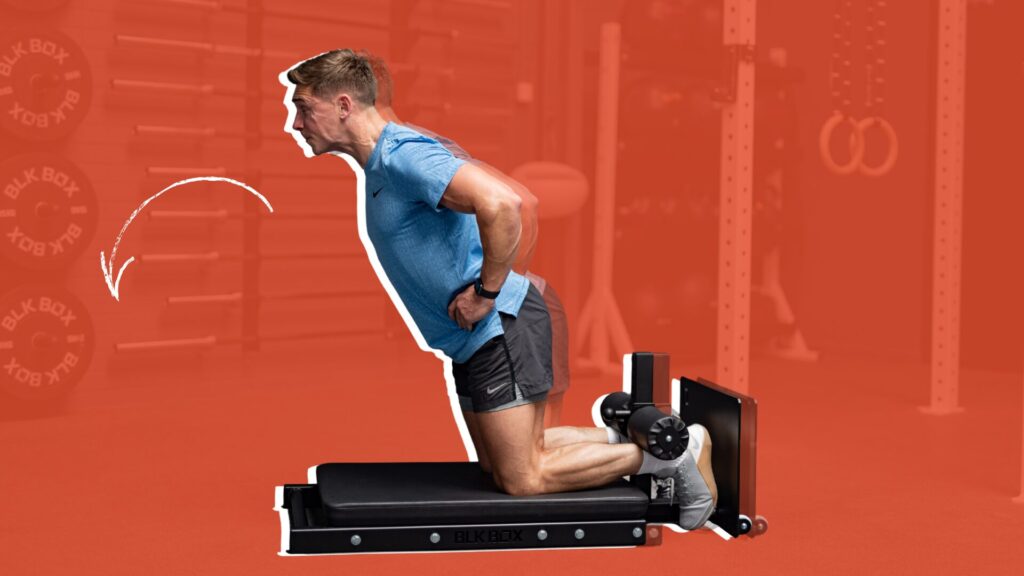
| D2 | Nordic ECC only (5-0-0) | 3 | 5 | 3 | 5 | 3 | 5 | ||||||
Working from a more undulated model, we base our isometrics not on the emphasis of the block but of the day. This has the best result with teams that have brief training periods interspersed with frequent extended breaks, as we can address all aspects of performance as opposed to a more linear model that only emphasizes one quality.
For example, in a Monday, Wednesday, Friday split we may focus on grinding isometric strength on day 1 with moderate intensity and volume, ballistic strength on day 2 with high intensities but low volume, and more extensive isometric strength on Friday 3 with low intensities but high volume.
| Day 1 – Acceleration – Grinding | |||||||||||||
| Exercise | Week 1 | Week 2 | Week 3 | ||||||||||
| Sets | Reps | :Rep | Load | Sets | Reps | :Rep | Load | Sets | Reps | :Rep | Load | ||
| A1 | Trap bar pin pull | 3 | 5 | :6 | 75% | 3 | 4 | :5 | 85% | 3 | 3 | :4 | 95% |
| A2 | Broad jump | 3 | 3 | 3 | 4 | 3 | 5 | ||||||
| Day 2 – Max Velocity – Ballistic | |||||||||||||
| Exercise | Week 1 | Week 2 | Week 3 | ||||||||||
| Sets | Reps | :Rep | Load | Sets | Reps | :Rep | Load | Sets | Reps | :Rep | Load | ||
| B1 | SSB switch | 3 | 5ea | 20% | 3 | 4ea | 30% | 4 | 3ea | 40% | |||
| B2 | Drop jump (18″) | 3 | 5 | 4 | 4 | 4 | 3 | ||||||
| Day 3 – Multi-Directional – Extensive | |||||||||||||
| Exercise | Week 1 | Week 2 | Week 3 | ||||||||||
| Sets | Reps | :Rep | Load | Sets | Reps | :Rep | Load | Sets | Reps | :Rep | Load | ||
| C1 | Lateral lean ISO | 3 | 3ea | :10 | 50% | 3 | 3ea | :10 | 60% | 3 | 3ea | :10 | 70% |
| C2 | Skater jump | 3 | 2ea | 3 | 3ea | 3 | 4ea | ||||||
Tweet ThisOn our acceleration day, the isometric emphasis will be hip dominant and focus on deeper joint angles while on max velocity day it will be more ankle dominant and focus on shallow joint angles
@connorschoeppsc
Isometrics for testing, testing for isometrics
Due to the low technical requirement, low risk and high reliability, isometrics are ideally suited for force testing with force plates, crane scales or dynamometers. Budget, logistics and goals are, more often than not, going to determine the best tool. The exercises we primarily use for force plate testing are the ankle run specific iso, knee run specific iso, and the lying single leg hip extension iso at 10 and 90 degrees knee bend.
Sprint performance is our primary KPI for field and court sport athletes. The hip, knee and ankle all play an integral role in sprint performance. By looking at each one individually, we can take away the guesswork and target the weakest link. We vary the angle of the knee during the lying hip extension test to compare how forces are produced in patterns similar to max velocity (10 degrees) and acceleration (90 degrees). This process can take quite a bit of time and manpower, so it’s not ideal for scenarios with large athlete to coach ratios. The intermediate mid-thigh pull can easily be exchanged for a general measurement of lower body strength. I also always recommend using a belt squat as opposed to a barbell to avoid any unnecessary shearing forces on the spine.
We collect and examine peak force, force at 100ms, force at 250ms, as well as asymmetries from the force plate data. We then use z-scores to compare athlete performance across the team and bucket the athletes’ training accordingly based on force-velocity characteristics. For example, an athlete with a relative high peak force in the hip extension (90 degrees) test but low force at 250 ms will receive more ballistic hip training. If an athlete has a low peak ankle force but can produce a lot of force at 250 ms then they will receive more grinding ankle work as opposed to ballistic.
Tweet ThisThe exercises we primarily use for force plate testing are the ankle run specific iso, knee run specific iso, and the lying single leg hip extension iso at 10 and 90 degrees knee bend
@connorschoeppsc
Return to play starts with isometrics
Isometric training is particularly beneficial for injured athletes. Training and rehab are, in many ways, the same process, just at opposite ends of the spectrum. The same physiological principles still apply to the body. In long term injury rehab scenarios, Al Vermeil’s pyramid of development is a helpful road map to a successful return to play. Many isometrics methods, including those below from an ACL rehab, may be used in different variations throughout the rehab process, and even simultaneously. It all comes down to the specifics of the injury and the athlete’s needs at any given time.

Phase 0
The process started as soon as the injury occurred. During this phase, we collected as much information as we could and began meeting with all departments of the performance team including nutrition, sports medicine, orthopedics, psychology, sports staff and, of course, the athlete.
This phase centered around very low intensity extensive isometrics to maintain motor control and begin addressing any neural inhibitions that may have developed due to the injury. It is important to remember all injuries are brain injuries. In this scenario, the athlete moved on to phase 1 immediately post-operation.
Phase 1
Our primary goals during this phase were to minimize effusion and scar healing, restore walking gait, and acclimate back into formal training. During this time, we primarily work with long muscle length, extensive yielding and overcoming isometrics. Training goals were addressing the morphological structures of the tendon and muscle tissue, as well as the metabolic response at the tissue. This work will prep the body for more intensive loading later in the rehab process. The exit criterion for phase 1 was the sports medicine staff clearing the athlete of all contraindications, in order to begin general strength training on the affected limb.
Phase 2
We began to intensify training during this phase, focusing on raising peak force capabilities. This is where we started our use of run specific isometrics. Popularized by Alex Natera, they serve as an excellent general yet highly specific tool to develop run specific strength. As Alex has stated in his work, they allow athletes to “run before running,” developing the foundational qualities of sprint specific strength at the hip, knee and ankle.
Start with grinding overcoming isometrics before progressing to yielding isometrics. During this phase we also began our testing protocol. We have pre-injury baseline numbers that will help us understand where the athlete was to compare with where they are now, which helps us formulate a systematic approach to training them beyond their pre-injury level. Testing repeated after each phase evaluated the athlete against our exit criteria for the block. The exit criteria for this phase were being within 10% of pre-injury peak force and <15% asymmetry compared to the non-injured limb.
Phase 3
Once the athlete satisfied the phase 2 exit criteria, we moved our focus to applying that force at higher rates using ballistic overcoming isometrics. It is important to note that we continued to address strength throughout the current block through more traditional strength training, such as squats, deadlifts, hinges, presses and pulls. The exit criteria was being within 5% of baseline peak force and maintain <10% asymmetry compared to the non-injured limb.
Phase 4
Phase 4 is the beginning of the peaking stage, where we apply our newly developed force capabilities and focus on more elastic and reactive strength. We progressed to high intensity ballistic yielding exercises such as marches, switches and drops. This training focused on maximal isometric contractions under 250ms. The athlete also progresses from double support to single support to drops and catches.
The exit criteria were being within 5% of the baseline speed profile data and maintaining the strength standards of the last block. While it is not the goal of this phase, the athlete – as was the case with our athlete – may set personal bests, likely due to the consistent training and low sporting volume.
Phase 5
The final phase in this process is the gradual integration back into training with the rest of the team. Training volume during this phase was drastically reduced as sporting volume increases. But it’s important to maintain intensity so the athlete does not regress from their – potentially personal bests – during the preceding process. Our athlete, at this point, continued with more extensive isometrics in line with what the rest of the team was doing at the time.

Isometric training is not new, and even the most basic isometric exercises can have positive outcomes for high performance athletes. As we expand our playbook of isometric exercises based on a more detailed understanding and application of isometric principles, we can do more with them for our athletes. This is particularly the case in rehab settings, where protocols must be truly specific to the athlete and the injury. Our knowledge of isometrics is catching up with our understanding of the rehab and RTP process. Coaches and other practitioners have an array of new options that can bring injured players back to the squad more quickly, and at a higher level than they were at pre-injury.
Tweet ThisOur phase 0 of an ACL rehab centres around very low intensity extensive isometrics to maintain motor control and begin addressing any neural inhibitions that may have developed due to the injury
@connorschoeppsc