
What role does upper body strength play in the ability for a boxer to be able to generate high punch impact forces? Would this differ in elite and sub-elite/amateur boxers?
The answer from the research literature is that maximal strength capabilities of the upper body are not associated with punch impact force and does not differentiate between elite boxers who punch with “high” and “low” impact forces. Having said that, it doesn’t mean that upper body strength is unimportant for a boxer because 1) we need to acknowledge the limited amount of knowledge we have in this area and the conclusions we draw from this; 2) punch force has been assessed in many different ways and there is no universal gold standard which makes it challenging to compare punch force, indices of punch force and associations between upper strength and these metrics, 3) there are clearly important phases of a punch that do require well-developed upper body strength capabilities such as, effective mass/snap/stiffening on impact and 4) lets not forget that without upper body strength as a general quality boxers would shatter hands, wrists, elbows and shoulders. There’s also the neglected area of clinching that requires upper body strength to dominate that position and use it to either control ring position, or ‘sap’ the opponents energy.
If punch impact force is only associated with maximal strength of the lower body, do you have any general recommendation as to how boxers should train the lower body?
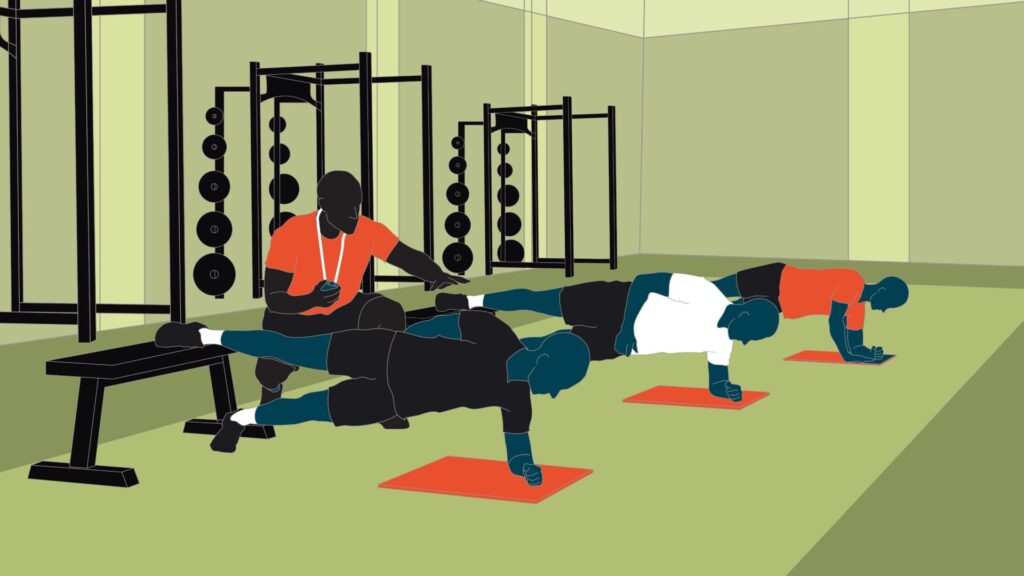
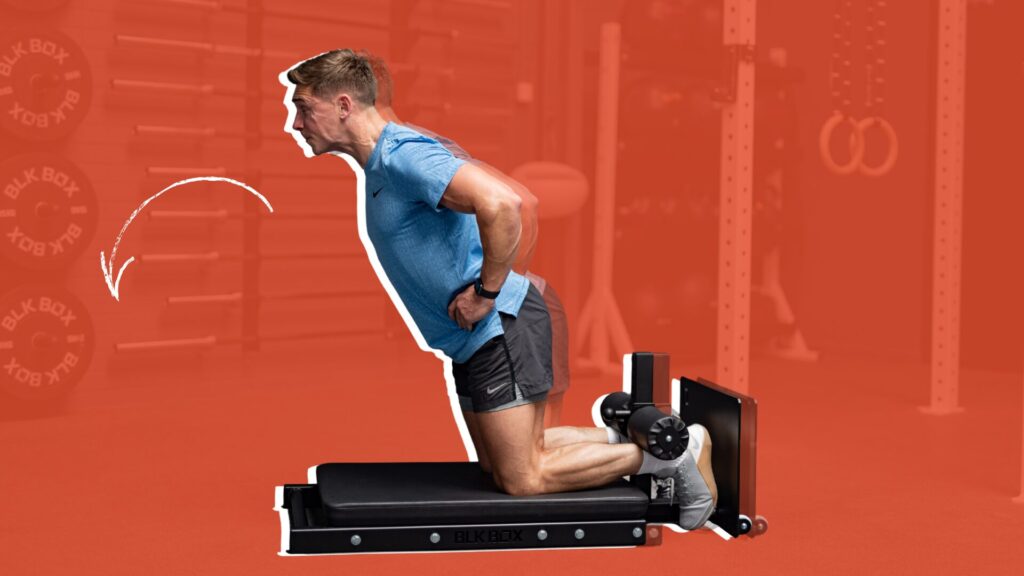
It’s easy for us to fall into the debate of upper and lower body training, but we need to remember most punches (you could argue a jab is not in this category) are a whole body actions where force is transmitted from foot-to-fist through the kinetic chain and as such is a complex athletic movement performed a high-force and high-speed with various muscle groups activated and relaxed consecutively. A key area for us at boxing science is ‘core’ training because the function of the ‘core’ is also related to punching capability, this notion becomes clear when you consider the rotational demands of punching (even during jabbing). Our general recommendations are to first address movement dysfunctions associated with the boxing stance (anterior dominant, restricted hip, thoracic and shoulder mobility), we’ll focus on this during warm-up and extend the warm-up to use mobility circuits. Next, and depending on the movement capability we’ll look to improve the stability of movement/joint by challenging movement in this area, this will typically involve some isometric exercise combined with controlled concentric and eccentric activity through the range of motion. Finally, we aim to strengthen with the goal of working towards developing maximum strength in the lower body because we know that boxers are underdeveloped in this area. There’s nothing surprising we do here, we’ll typically have a squat, hinge and single leg focus, use various plyometric and jumps, and use velocity based training to work across the load-velocity/force-velocity spectrum through a training camp.
Tweet ThisMaximal strength capabilities of the upper body are not associated with punch impact force and does not differentiate between elite boxers who punch with “high” and “low” impact forces
@ruddock_boxsci
Your recent paper suggests that explosive strength in the upper and lower body is largely associated with punch impact forces. Do you have any recommendations as to how athletes can develop explosive upper body strength?
Assuming there is good mobility in the trunk and upper body and the boxer has had some exposure to strength training and can lift to our minimum standards we’d progress to explosive rotational and punch-specific exercises. Rotational exercises are performed mainly with medicine balls and comprise of throws whereby we can have an eccentric focus, concentric focus or challenge the stretch-shortening cycle; these can be performed standing or kneeling to add variation. We can transition from medicine ball work into punch specific medicine ball actions, such as the back hand throw, and add in some movements before the throw such as back-steps, dips etc. We also use resistance bands with medicine ball throws to encourage acceleration and increase momentum – which is a key biomechanical consideration for effective punching. To add load in a punch specific exercise we’ll use landmine punch variations, again we can change from kneeling, to standing, add attachments (like a Viking press) to help shoulder position and obviously change the load and monitor velocity.
Where does isometric strength training fit into the programme for a boxer wanting to increase training transferability?
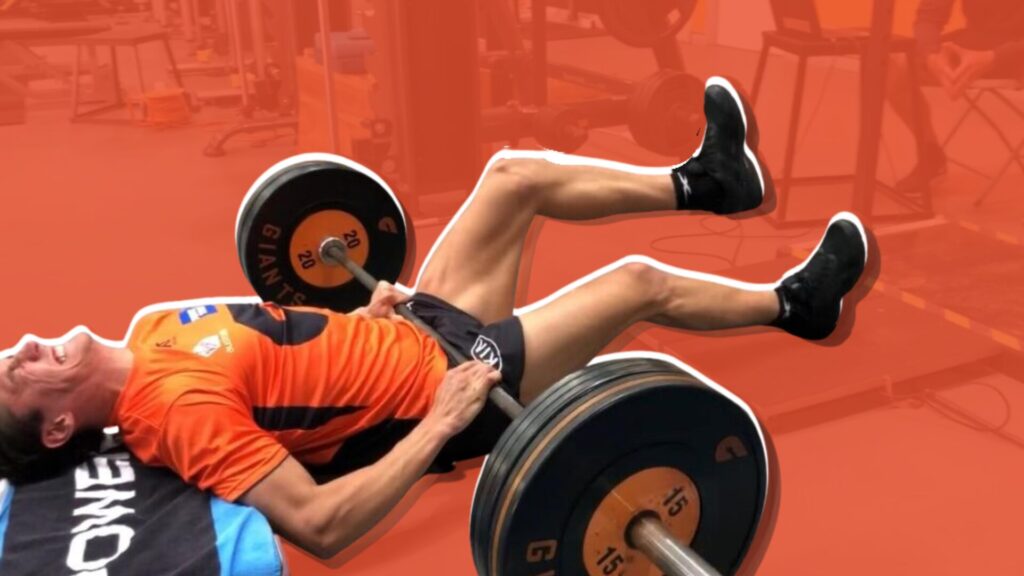
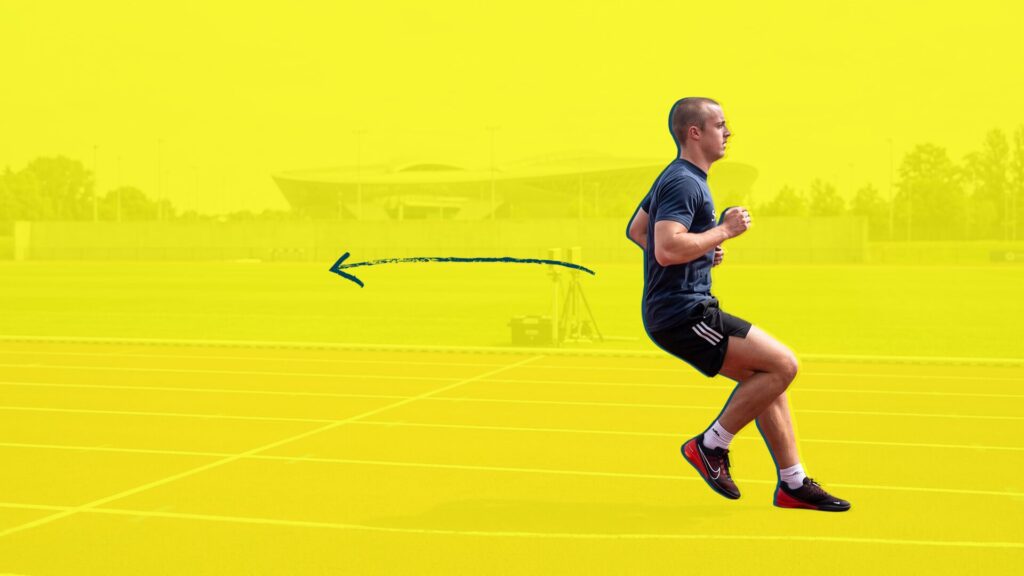
We’ll use isometric training throughout our programme in the three main areas of 1) punch specific exercises; 2) core training and 3) lower-body (mainly calf and around hip-thrust variations). Punch isoholds at different elbow angles (thinking about length-tension relationships) are great in a warm-up for a boxing session, if the S&C session is focused on punch specific or on return from injury. We’ll use isometrics in core-training to resist flexion, rotation, extension; isometric trunk testing is also part of our testing battery where we test time-to-exhaustion on different isoholds and we’re now investigating isometric force in rotation. We do a lot of high-intensity training and sprinting with the boxers so to help prepare for these sessions we’ll use various calf isometric exercises and hip thrusts to prepare and strengthen musculotendinous units; boxers have sore Achilles tendons so this helps alleviate soreness too.
Tweet ThisWe use resistance bands with medicine ball throws to encourage acceleration and increase momentum – which is a key biomechanical consideration for effective punching
@ruddock_boxsci
At Boxing Science you seem to use the landmine throw a lot as a training and testing tool. What information does this give you and how do you use it to benchmark athletes and inform their training?
We made a decision a long time ago to focus on training and preparation and use general assessments of strength and fitness to guide our programming. Some of our tests have become more specific to boxing over time as we’ve been able to collect and analyse more data but one thing we’ve always stayed clear of is a direct assessment of punch force. This is mainly because we’re not biomechanists in truth, and we hoped a group smarter than us would be able to come up with a valid and reliable solution to assessing punch force! I think this work is coming on some groups and we’re looking forward to seeing this develop. In the meantime, we needed an assessment of whole body force production in a punch-specific movement pattern, so we came up with the landmine punch throw test. Depending on the weight class of the boxer we’ll use loads of 20 kg (bar only) up 40 kg and ask the boxer to throw the barbell from a backhand stance as hard and as fast possible. We use the gymaware to assess velocity of the throw and the plot load and velocity to generate a load-velocity profile for each athlete. Using benchmarks we have for weight-class we use this information in conjunction with other tests (such as countermovement jump, squat jump, reactive strength index, mobility etc.) to make training recommendations. During training we’ll use the gymaware as a feedback tool to help motivate the boxer by providing velocity targets and update our load-velocity model to demonstrate progress.
What are the biggest mistakes you see young practitioners make and what advice would you give them to help?
In terms of boxing strength and conditioning it’s really important to understanding the movement capabilities of the athlete and be aware of the common dysfunctions that boxers have, without this understanding and the skills to adapt the programme there is larger risk of injury in an already dangerous sport, if these needs aren’t addressed then the platform to develop strength will never be there. Young coaches also need to develop good relationships with the coaches of their boxers, the priority is always boxing training so we need to work around this and there needs to be mutual respect. This concept also plays an important role in programming, often young practitioners will only think about strength and conditioning and not the programme as a whole, which includes sparring, technical training, making weight/training in an energy deficit. Young coaches should also aim to quantify more of their training and be diligent with data collection, this will not only help programming and the athlete but it will help the coach develop too.
Tweet ThisWe needed an assessment of whole body force production in a punch-specific movement pattern, so we came up with the landmine punch throw test
@ruddock_boxsci