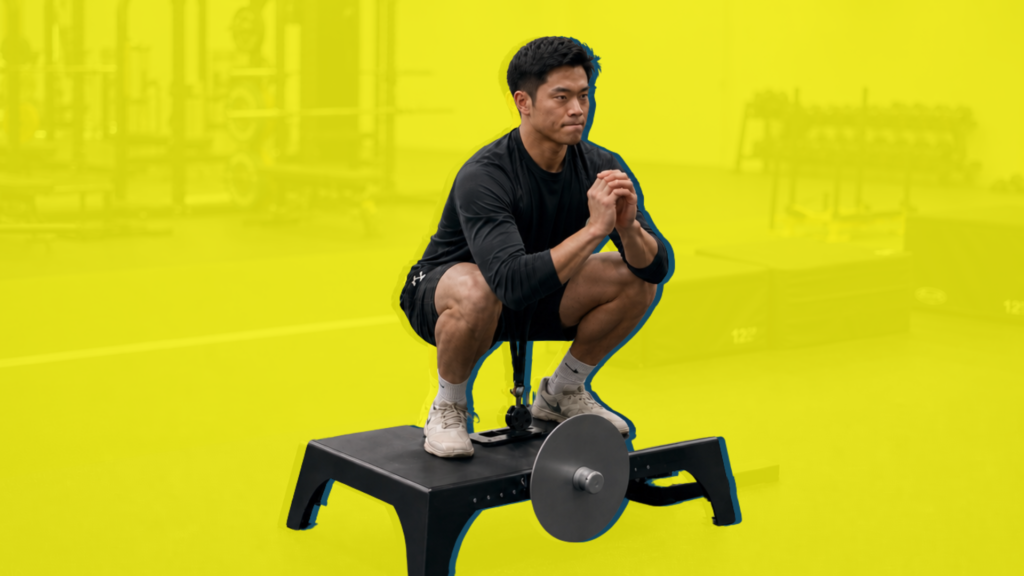
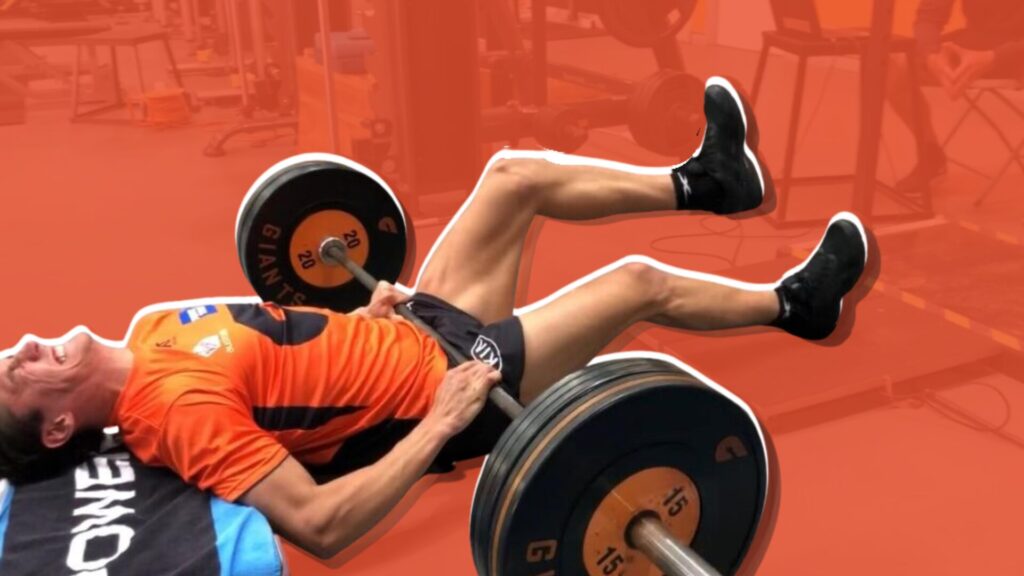
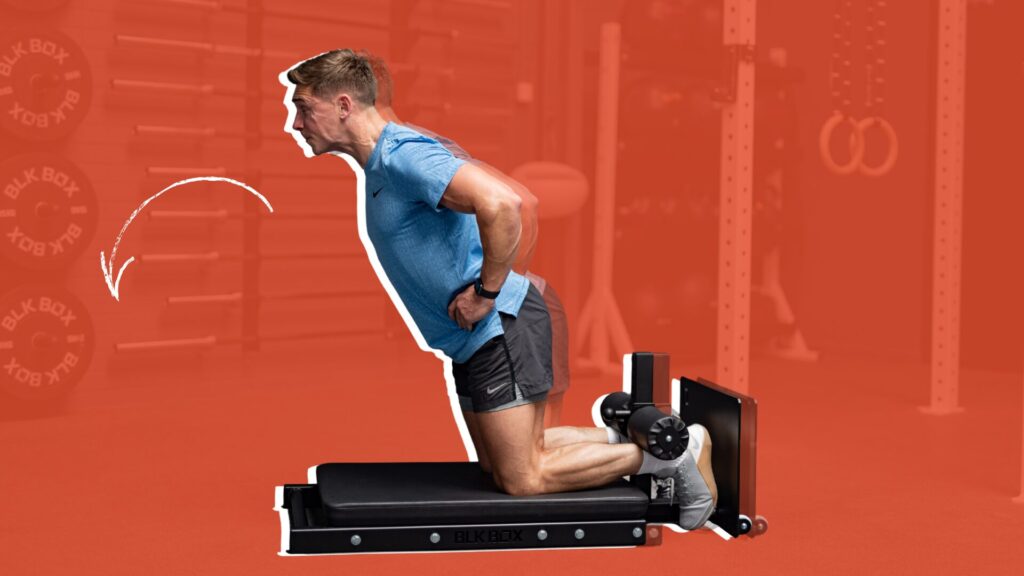
Why would a coach want to programme joint specific isometric or quasi-isometric exercises?
First, increased strength and stability. Isometric exercises, where the muscle contracts without any change in muscle length, can be highly effective at increasing strength and stability in specific joint angles. By targeting specific joint angles, a coach can help an athlete improve their ability to produce force in those positions and improve joint stability.
Second, injury prevention and rehabilitation. By focusing on joint specific exercises, a coach can help an athlete target specific muscles and joint angles that may be prone to injury. Isometric exercises can also be useful in rehabilitation, as they can help maintain and improve muscle strength and function while injured areas rest and recover. This has been done in sprint cycling, where back injuries limit the ability to perform compound movements under heavy axial load, such as back squats. As such, isometric and quasi-isometrics in the cycling specific positions can be beneficial to maintain strength while allowing the back to recover.
Third, sport specific performance. Many sports require athletes to produce force in specific joint angles, such as a shot putter or javelin thrower. By incorporating joint specific isometrics or quasi-isometric exercises into their training, a coach can help the athlete improve their ability to produce force in those specific angles, which can translate to improved performance.
Fourth, isometrics and quasi-isometrics can be used in the warm up, particularly for strength and power sports in the form of post-activation potentiation.
Last, time efficiency. Isometric and quasi-isometric exercises can, in some cases, be done quickly and with minimal equipment, making them an efficient use of training time. They can also be done at home or while traveling, so they are a convenient option for athletes who may not have access to a gym that suits their needs.
What’s the process for coaches out there who want to identify angles within their sport that are most relevant to train isometrically? Can you give us any examples, either hypothetical or ones that you have experienced?
The process for coaches to identify angles within their sport that are most relevant to train isometrically can involve several steps:
- Analyse the demands of the sport. Coaches should start by analysing the specific movements and positions their sports requires and focus on the movements they believe are the determinants of an athlete’s performance.
- Identify important or weak points of the athlete. Once coaches have a good understanding of the demands of the sport, they can identify any weak points or target areas that directly impact their athletes’ performance. This might involve analysing video footage; conducting movement assessments via traditional gym exercises; asking athletes to perform specific exercises to identify areas of weakness; or using a dynamometer to identify an asymmetry or specific muscle group deficiency.
- Develop a programme. Based on the analysis and identification of which muscle groups and joint angles to work on, coaches can then develop a training programme that includes joint specific isometric or quasi-isometric exercises. This program should be tailored to the athlete’s specific needs, and may involve progressing the exercises over time as the athlete improves.
For example, in rowing, the peak power off the start is an important determinant of performance in 2000m rowing on the ergometer (as well as the big boat class). The high volume, low intensity nature of training in rowing means that rowers may often be weak in this critical area.
Isometrics can be introduced with a rowing ergometer. Position an Olympic bar against a power rack to trap the handle of the ergometer, then adjust to change the positions. This will help improve the task specific force without the need to fully commit to a strength training programme.
Once the athlete has mastered performing this exercise with maximal intent, you can make it more quasi-isometric. Maximize the drag factor in the first half of the starting stroke and eventually build to a full one.
How would you program specific joint isometric strength training within the wider programme? Could you give us any example sessions that highlight exercise order, sets, reps and times for a hypothetical athlete?
Traditional gym training varies in reps, sets and load / intensity. Isometric training should always be performed maximally. Therefore, in contrast, it can only vary in reps and sets (i.e., volume).
As such, over a set time period, a practitioner should identify the specific joint angles that they think are important and then progress the volume with time. For example, doing three reps and two sets in each joint angle position is a good starting point. From there you can increase the reps and sets over time.
I do not believe an isometric protocol should last longer than 6 – 8 weeks. From a mental perspective, the sessions become too long and laborious for the practitioner and athlete.
I always advise the athlete to create as much force and perform the effort as “hard and fast” as possible for three seconds. Each rep is separated by 60 seconds and each set by 2 – 4 minutes, depending on the athlete and the aim of the protocol. I would never go more than a total of 15 isometric efforts per joint angle per session unless there is a specific reason, as the session drags, the athlete can become disengaged and the quality will drop.
Tweet ThisI would never go more than a total of 15 isometric efforts per joint-angle per session unless there is a specific reason as the session drags and the athlete can become disengaged and the quality will drop.
@MehdiKordi
What results have you seen, published and unpublished, from implementing joint specific isometric strength training exercises within the programme?
I have published some work about improving maximum power output in sprint cycling using isometrics and quasi-isometrics. I have also done side projects that have not been published about using isometrics in a taekwondo fighter’s rehab / prehab training when she was coming back from a serious knee injury and it was clear that she had lost strength and muscle mass. Isometric training using a forward lunge position and a knee extensor close to full extension helped improve the strength imbalance without the need for extensive weight training, which her initial knee extensor weakness limited.
I have had cases where isometrics have not had a detectable positive improvement in performance. While I can not give an exact reason why, a factor could have been that we simply did not perform enough isometric training – both within a session and frequency of sessions – in that training period. With training programmes pushing riders to their limit, it is difficult to introduce a fully committed isometric training protocol for a given time. As such, it has to be integrated within a session (usually a gym session), and perhaps the reps and sets were not enough to make an improvement.
Tweet ThisI have had cases where isometrics have not had a detectable positive improvement in performance. I have speculated that a factor could have been that not enough isometric training was completed in that training period.
@MehdiKordi
Do you or would you conduct isometric tests in these sport specific positions? If so, how would you set those up and how do you use the information when programming?
Isometric tests and assessments can be quite costly, as you need to measure force in specific angles. Traditionally, this required a dynamometer, which is specialist equipment and expensive. But recently, cycling cranks that can measure torque individually have become available and these can be used creatively outside the cycling domain (such as grinding in sailing or using modified equipment in place of or attached to the pedal to measure other joints).
I would only recommend conducting isometric tests if you can link it to improving the outcome (performance, rehab, etc.), which requires some initial data collection. In addition, being able to measure and display the force trace in real time also motivates the athlete to engage as much as possible rather than doing it “blind.” But, again, that takes specialist equipment.
Each isometric training session can serve as an assessment as the efforts should be maximal. However, if you only have limited access to some equipment (e.g., a dynamometer), 4 – 6 weeks is enough time to see a measurable change.
Tweet ThisBeing able to measure and display the force trace in real time also gives motivation to the athlete to engage. Each isometric training session, as the efforts should be maximal, can act as an assessment. So technically, it can be monitored each session.
@MehdiKordi
What are the biggest mistakes you see young practitioners/clinicians make and what advice would you give them to help?
In my experience, young coaches and practitioners make two common mistakes: First, poor communication. Communication is key in any sport setting. Tensions and emotions run high with athletes and irrational behaviour is part of the norm. Good communication means finding time to explain plans, techniques and giving feedback in a clear, timely and concise manner to staff and athletes. Coaches should also encourage their athletes to communicate with them, providing opportunities for feedback and open dialogue.
Second, appreciating the non-technical aspect of their job / not just focusing on the technical element. A balanced and good working relationship with athletes is essential.
If you just focus on the technical aspect, the human element is lost, as some trust can go with it. But if you are too friendly, you wont be taken seriously. Getting the right balance of open and approachable but professional is key.