
While blood flow restriction has gained recognition in rehabilitation and hypertrophy training, its application as a performance enhancing tool during warm-ups and pre-training preparation is still largely untapped. Pre-ischemic conditioning (PIC) via blood flow restriction deserves more attention.
Pre-ischemic conditioning involves temporarily restricting blood flow to a specific muscle group using blood flow restriction cuffs or bands. This restriction reduces oxygen supply, creating a hypoxic environment that challenges the muscle’s metabolic pathways. When the restriction is released, the resulting surge in blood flow delivers oxygen and nutrients to the muscles while efficiently clearing metabolic waste.
While this article focuses on pre-ischemic conditioning, it shares similarities with ischemic preconditioning (IPC), with their primary distinction lying in application. Ischemic preconditioning is primarily used 30-60 minutes before endurance based activities like running and cycling to improve oxygen efficiency, delay fatigue, and enhance aerobic performance. It involves 3-5 cycles of five minutes of blood flow restriction at 50-80% arterial occlusion pressure (AOP) followed by five minutes of reperfusion.
IPC creates repeated hypoxic stress, which improves VO2 kinetics, mitochondrial efficiency, and lactate buffering, making it useful for sustained, high output activities.
In contrast, athletes exploit pre-ischemic conditioning immediately before training or competition to enhance explosive power, neuromuscular readiness, and fast twitch fiber activation in sports like sprinting, weightlifting, and baseball. Pre-ischemic conditioning consists of 1-3 rounds of 3-5 minutes of occlusion at 40-80% limb occlusion pressure (LOP) with two minutes of reperfusion between rounds. This method increases motor unit recruitment, muscle temperature, and force output, reducing warm-up time while optimizing performance in short burst, high intensity movements.
Both methods leverage blood flow restriction. But IPC focuses on endurance and aerobic efficiency, whereas PIC is for immediate power and speed enhancement.
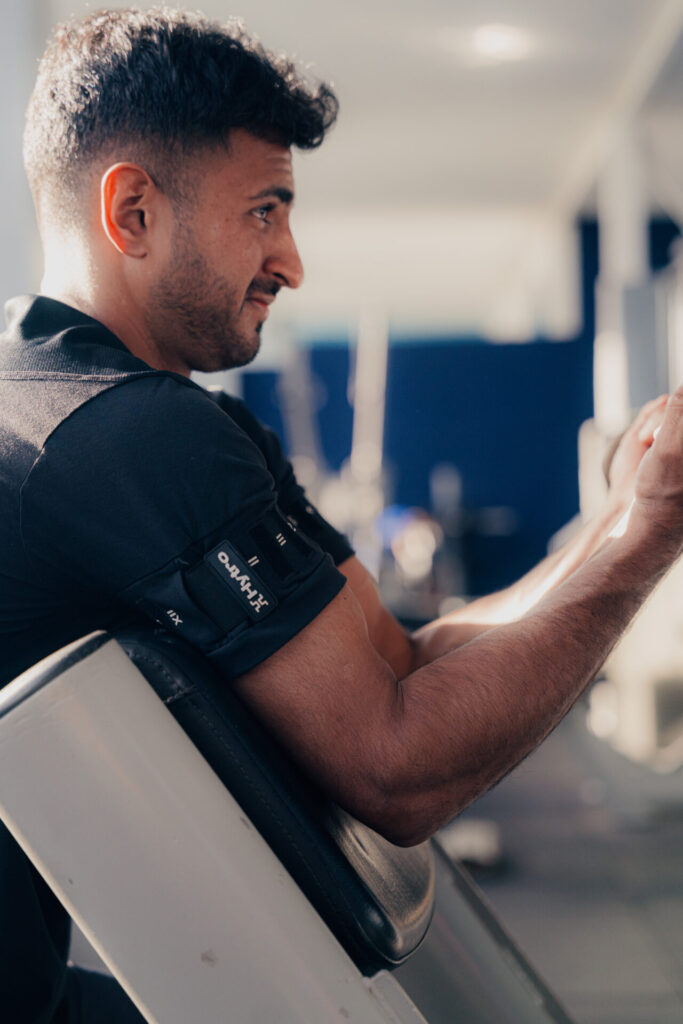
Given PIC’s role in warm-up and activation routines, wearable blood flow restriction solutions allow coaches and athletes to apply pre-ischemic conditioning efficiently, on the fly, and at scale without the hassle of removing bands or cuffs.
Tweet ThisPre-ischemic conditioning involves temporarily restricting blood flow to a specific muscle group using blood flow restriction cuffs. This restriction reduces oxygen supply, creating a hypoxic environment that challenges the muscle’s metabolic pathways.
@brianbuck6
How pre-ischemic conditioning prepares the athlete for intense activity
Pre-ischemic conditioning enhances activation and dynamic warm-ups by accelerating key physiological processes, including increased blood flow, muscle temperature, and metabolic activity, all within the same time frame. Additionally, individuals with persistent aches and pains often experience immediate relief and improved range of motion, especially in areas they instinctively guard or restrict.
The low oxygen environment created by blood flow restriction forces the muscles to recruit Type II fibers earlier than they would under normal conditions. These fibers are essential for explosive actions like sprinting, jumping, or heavy lifting, making PIC especially beneficial for athletes in power and speed based sports. The surge in blood flow to the muscles upon releasing the restriction primes the muscle for peak performance by rushing oxygen and nutrients into the muscle while clearing metabolic byproducts.
The metabolic stress induced by blood flow restriction stimulates the release of growth hormone, IGF-1, and other anabolic factors. These hormones play a critical role in muscle repair, recovery, and long term adaptation. These are delayed effects that will not necessarily impact the immediate training session but will accelerate recovery, enhancing future sessions and adaptations. The repeated cycles of ischemia and reperfusion condition the muscles to handle oxidative stress more effectively. This increases tissue resilience, helping to reduce the risk of fatigue related injuries and enhancing recovery between intense efforts.
Pre-ischemic conditioning can significantly enhance the efficacy of training by addressing three critical aspects: priming the muscles, reducing warm-up time, and enhancing neuromuscular readiness. Athletes, particularly as they age, often depend on lengthy warm-ups to prepare their muscles for high intensity activities.
While traditional warm-ups effectively boost blood flow and raise muscle temperature, they may fall short in fully engaging fast twitch muscle fibers, the key drivers of strength and power.
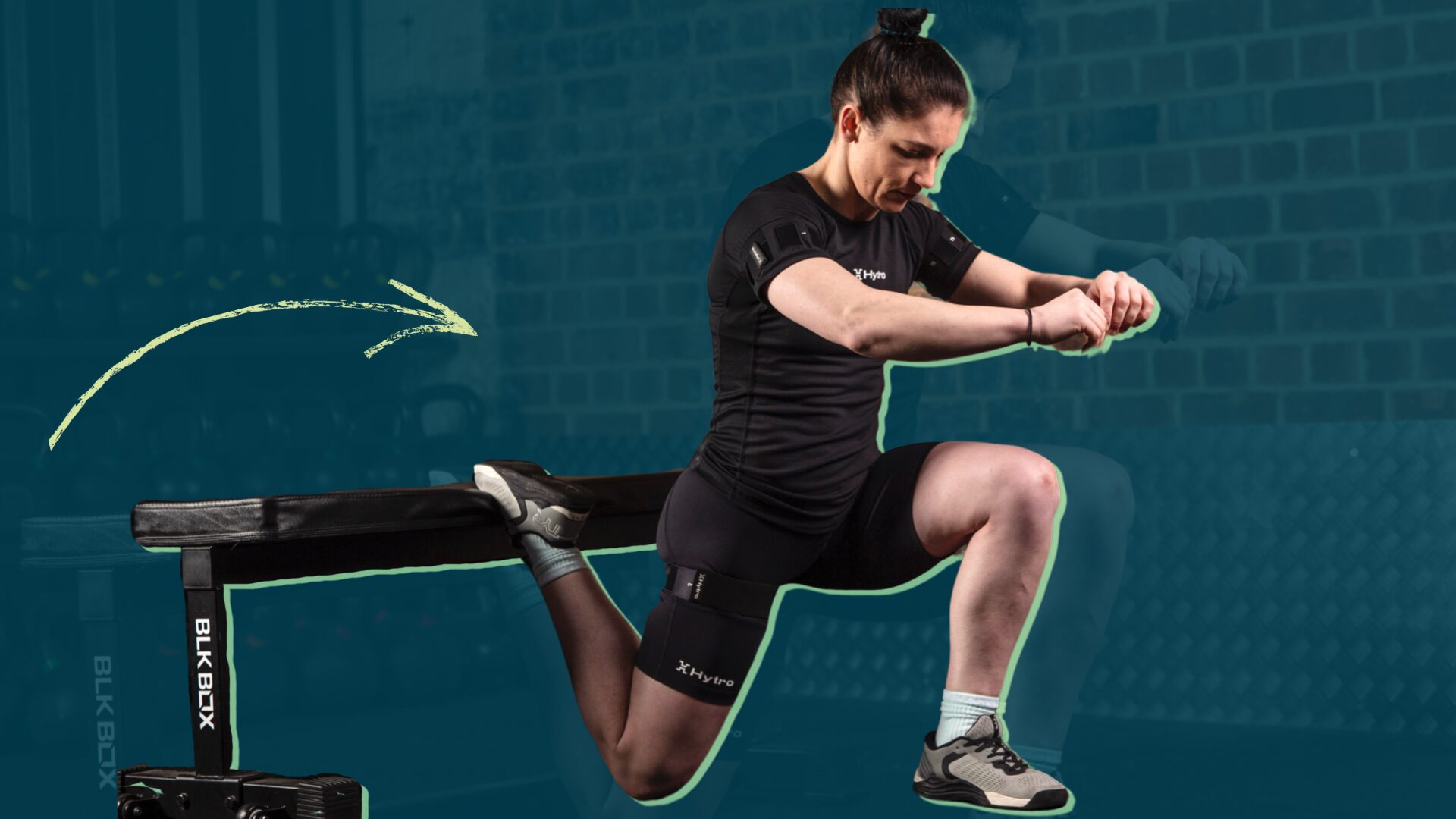
Blood flow restriction creates metabolic stress that mimics the effects of high intensity exercise, activating fast twitch fibers without the need for heavy loads or prolonged effort. This primes the muscles for explosive movements like sprinting, jumping, or lifting. For example, a middle infielder in baseball could incorporate PIC into his warm-up with light exercises like bodyweight squats or single leg supine hip extensions. These movements effectively activate the key muscle groups required for explosive sprint work, quick lateral movements, and, if performing skill work, the agility needed to field ground balls. Likewise, a basketball player could integrate PIC during dynamic stretches, ensuring their legs are fully primed for explosive jumps and quick directional changes without interrupting the flow of their warm-up routine.
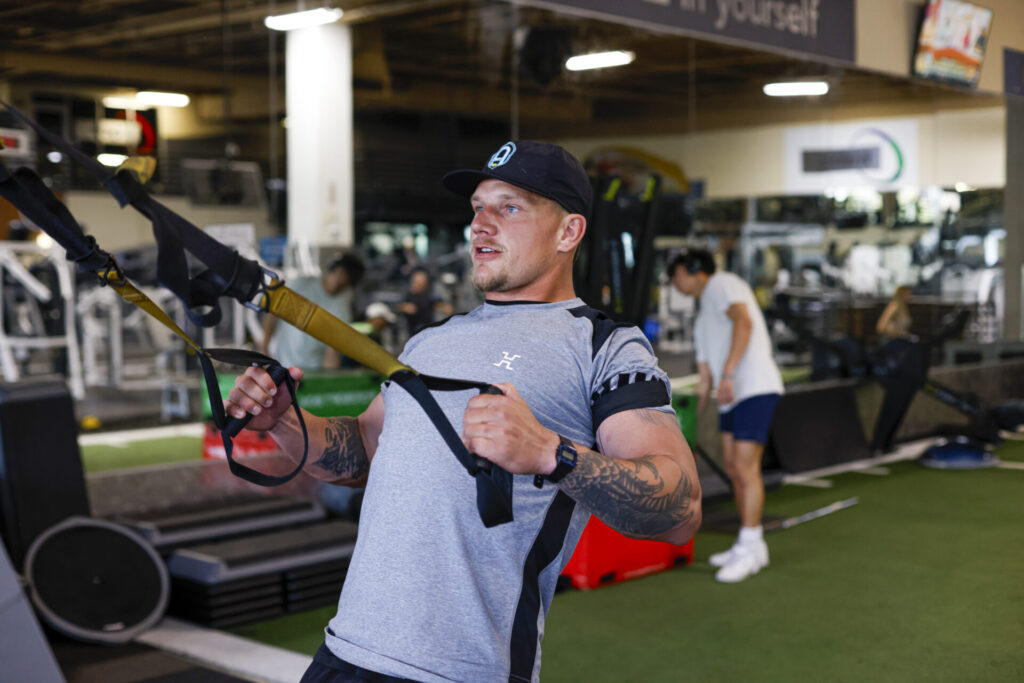
Neuromuscular readiness is critical for executing complex and high power movements. Pre-ischemic conditioning improves the synchronization of motor units and neural pathways, ensuring that the muscles respond efficiently during training. The heightened metabolic and neural activity induced by PIC primes the nervous system for high intensity loading. Weightlifters can use PIC to activate key muscle groups before attempting heavy or more technical lifts, ensuring maximum coordination and force production.
Wearing blood flow restriction garments while performing low intensity movements can help achieve a more efficient warm-up, all without the need for cords or being tethered to machines. This frees up valuable time for more skill based or high intensity training.
Tweet ThisPre-ischemic conditioning improves the synchronization of motor units and neural pathways, ensuring that the muscles respond efficiently during training.
@brianbuck6
Measuring the effects of PIC during warm-ups
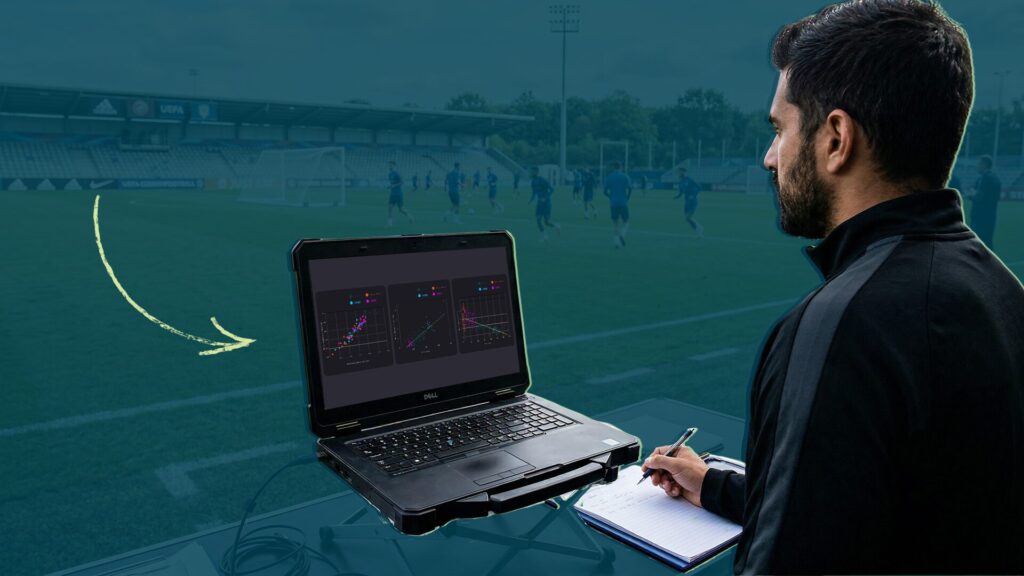
Force plate analysis lets us assess athlete readiness and gain deeper insight into realized adaptations from previous training blocks. Through consistently integrating PIC into warm-ups, we have observed distinct trends in ground reaction force data that highlight its impact on movement efficiency and explosiveness.
The countermovement jump (CMJ) trends below are from a 32 year old Major League Baseball shortstop who had previously used blood flow restriction only during brief rehabilitation periods. However, he had never consistently implemented PIC as a primer or pre-activation for his training sessions. He was very familiar with force plate testing throughout his career.
The left side of the trend report is from his offseason training from the previous year (2023), where PIC was not part of his routine. The right side of the report contains data from his current winter offseason, following a structured program similar to the prior year, but with the integration of PIC. His training progression included muscle hypertrophy during a general preparation phase in October, followed by 4-6 weeks of strength and force development (accumulation phase), leading into a 4-6 week intensification phase aimed at increasing contraction speed and velocity as the new year approached.
Beyond the objective force plate data, the athlete subjectively reported feeling “more prepared” for both upper and lower body sessions after incorporating PIC into his warm-ups. He also frequently noted feeling “less pain” or “less sticky” during training sessions. The most significant improvement was observed with upper body PIC before his throwing program, which aligns with the high stress and specificity of throwing in baseball. This adjustment likely contributed to his enhanced readiness and reduced discomfort, making a noticeable impact on his overall performance.
One clear trend is a decreased time in the unweighting phase. The unweighting phase in a countermovement jump represents the portion of the jump cycle where an athlete actively descends before reaching the lowest countermovement point. This phase is critical for jump efficiency, stretch-shortening cycle utilization, and overall explosiveness.
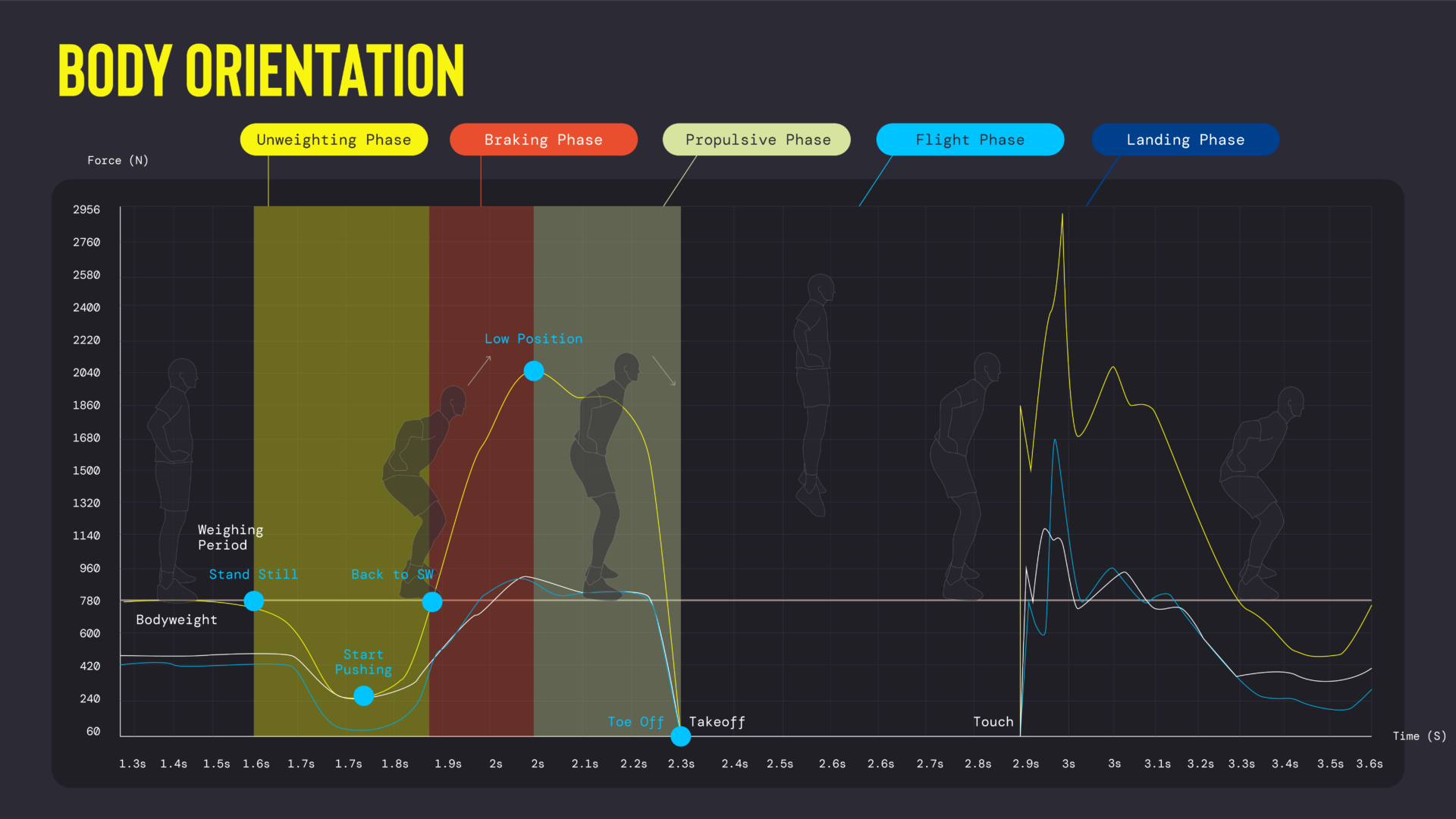
With pre-ischemic conditioning’s pain modulating effects, this player appeared to generate a more rapid, controlled downward momentum in the unweighting phase, leading to greater stretch-shortening cycle and enhanced braking force production. Those factors combined for greater propulsive force application: elite propulsive phase numbers in the CMJ are a direct result of a more efficient unweighting phase.
The increased efficiency in the unweighting phase may contribute to a more seamless transfer from the braking phase to the propulsive phase, also known as the switch phase. Notably, this faster transition occurred while countermovement depth remained relatively unchanged. Key observations included a higher braking rate of force development, greater force at minimum displacement during the switch phase, a shorter time to takeoff, and improved jump height.
The enhanced unweighting phase efficiency likely optimizes the muscle length-tension relationship, allowing for greater force production at deeper joint angles, ultimately improving both output and overall movement efficiency.
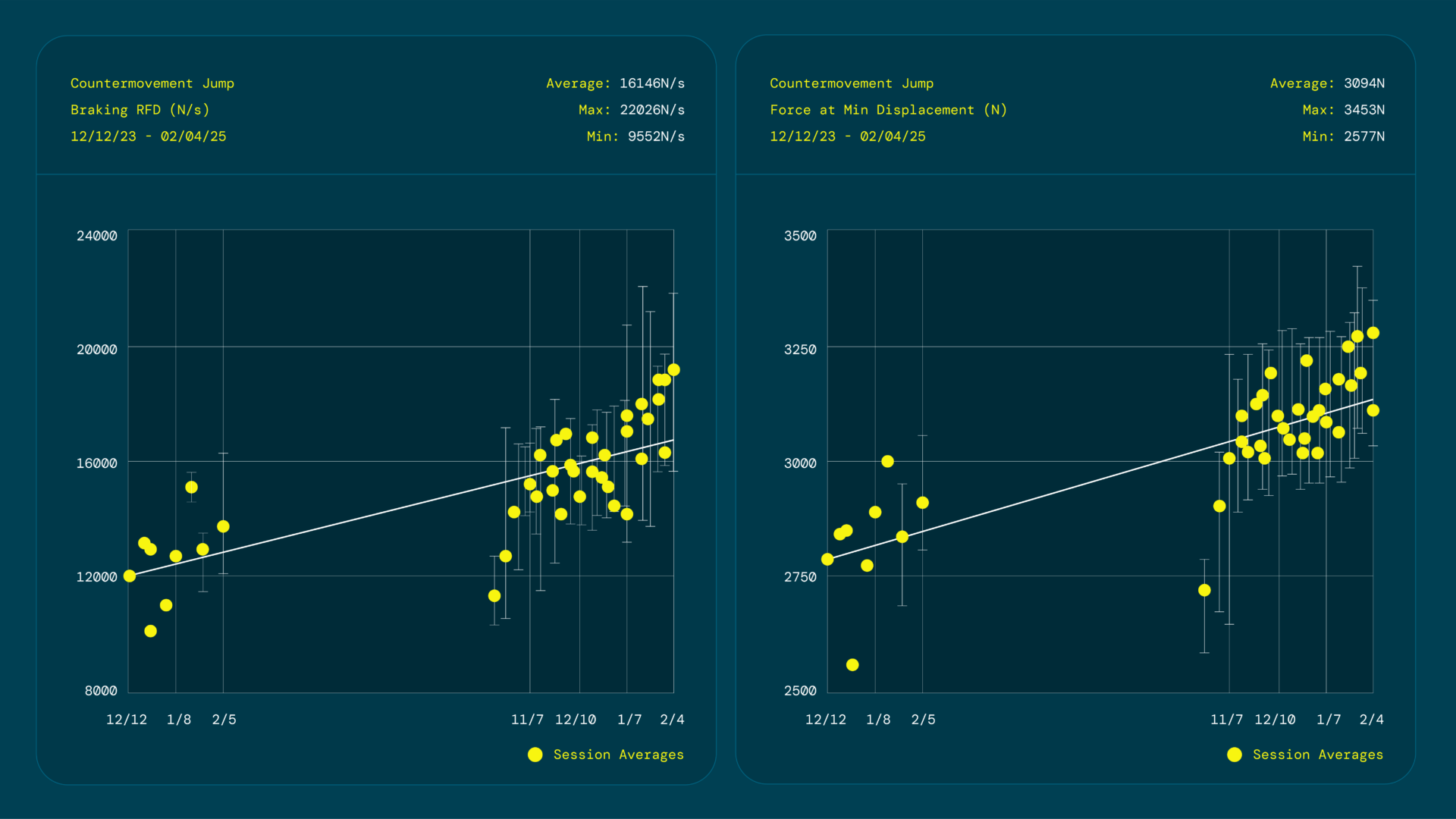
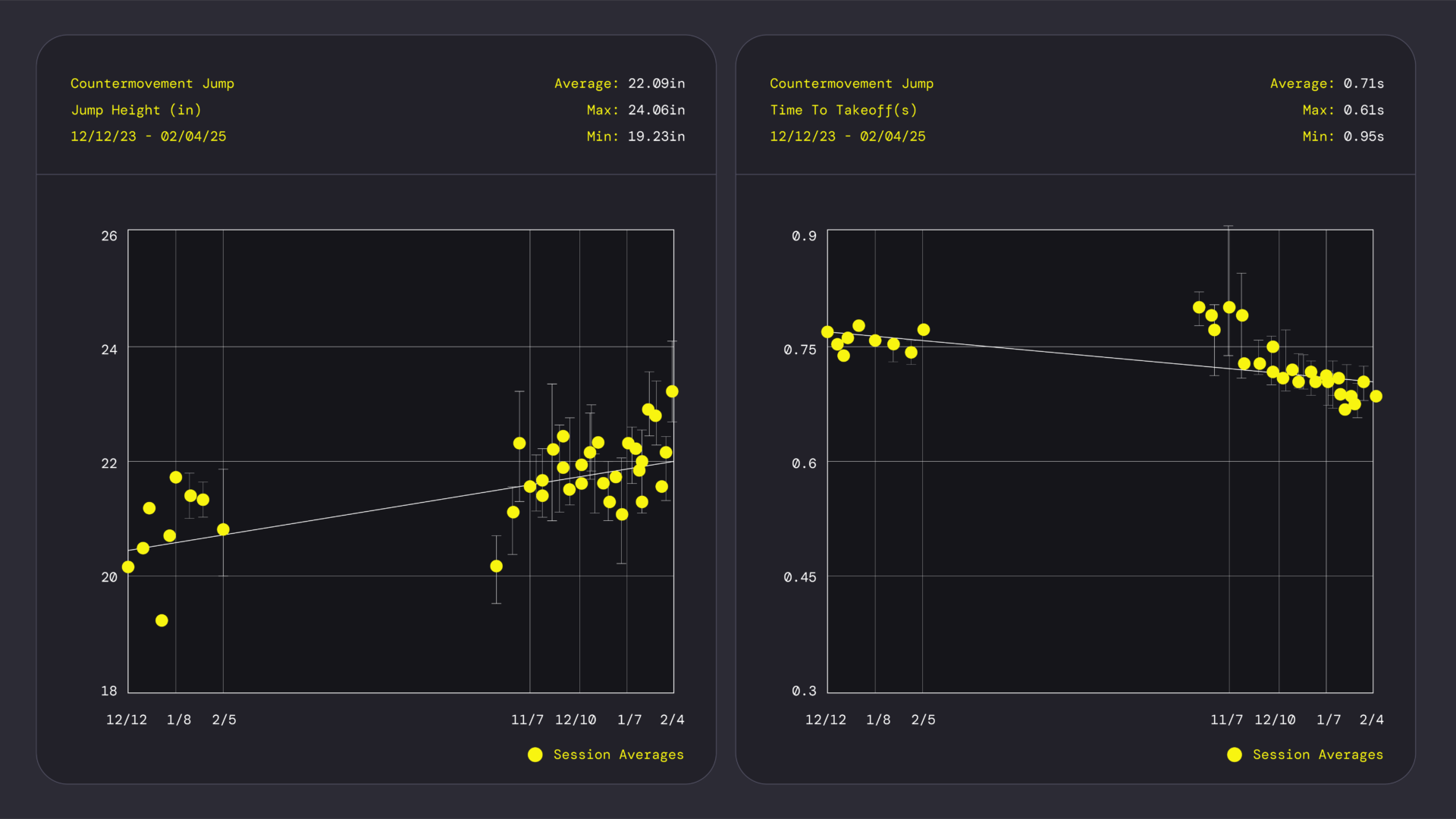
Figure 3. Jump height (left) and time to takeoff (right), showing an improved performance over time via PIC
To maximize the benefits of these improvements, they must be integrated with structured strength and power development. This ensures that increased range of motion and neuromuscular efficiency directly enhance explosive performance, rather than resulting in excessive countermovement depth without effective force application. Expanding range of motion in athletes who are already naturally lax or less rigid can create inefficiencies and increase injury risk, highlighting the importance of strategic implementation.
Tweet ThisWith pre-ischemic conditioning’s pain modulating effects, this player appeared to generate a more rapid, controlled downward momentum in the unweighting phase, leading to greater stretch-shortening cycle and enhanced braking force production.
@brianbuck6
Using PIC during a baseball player’s off season
A standard off season schedule is built around a high/low training model, emphasizing two high intensity sessions per week. With those sessions occurring on Tuesdays and Fridays, Monday serves as a lower intensity “ramp up” day, acknowledging that weekends often bring variability in activity, rest, and lifestyle choices. After Tuesday’s intense session, Wednesday and Thursday include lower neural demand work, emphasizing aerobic and structural qualities while promoting recovery. This sets the stage for Friday’s high intensity session, where the athlete can push hard knowing the weekend offers additional time for recovery and adaptation.
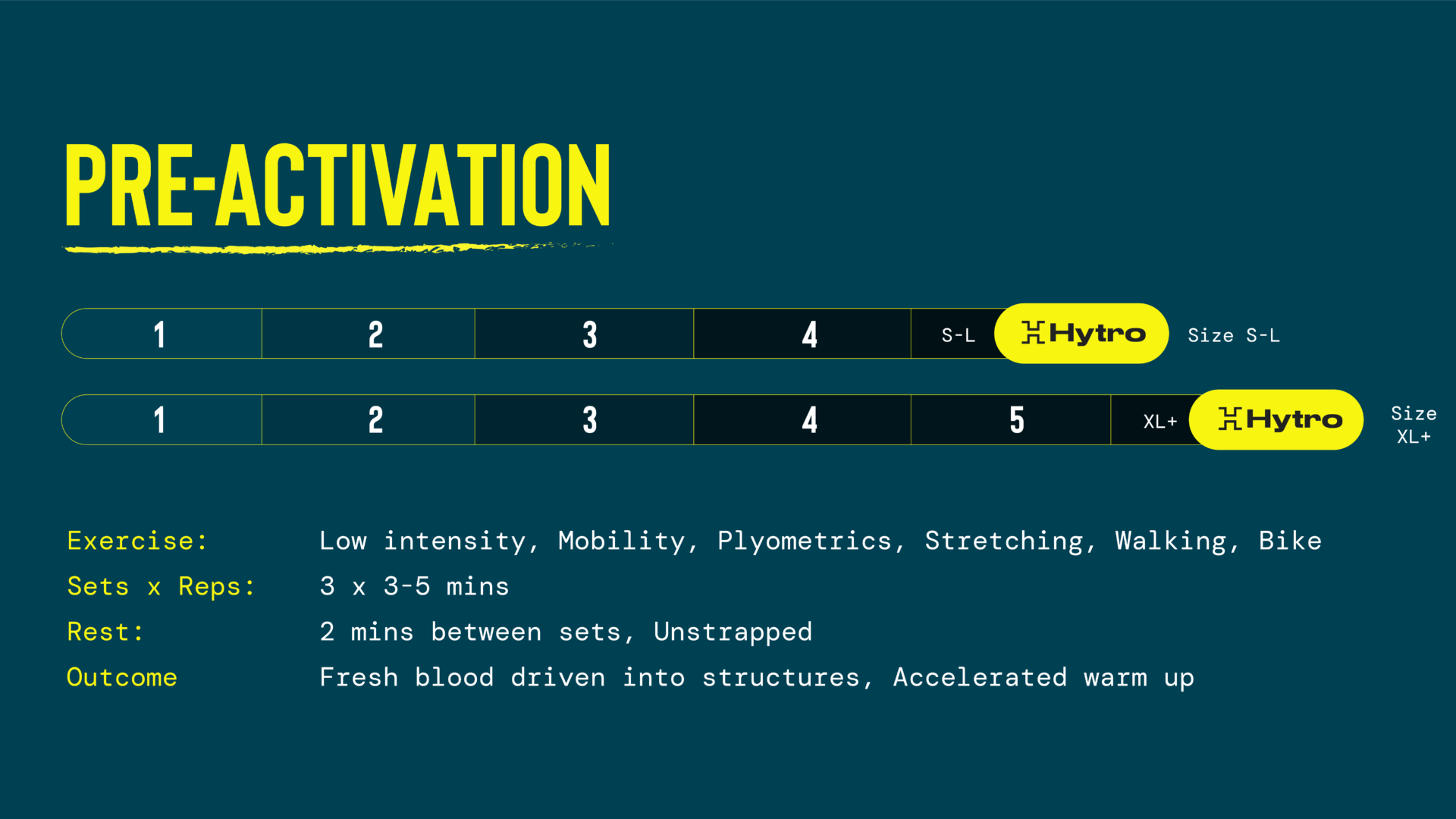
A professional baseball player’s offseason weekly schedule includes the following activation/warm-up to achieve increased neural priming, activate type II muscle fibers, reduce perception of pain, and enhance acute performance. The activation series does not differ day to day, but the PIC alternates from upper extremity to lower extremity based on the emphasis for that day. When there is less time available, the protocol can be shortened to two rounds, which still delivers noticeable subjective benefits in performance and readiness.
Tweet ThisBeyond the objective force plate data, the athlete subjectively reported feeling “more prepared” for both upper and lower body sessions after incorporating PIC into his warm-ups.
@brianbuck6
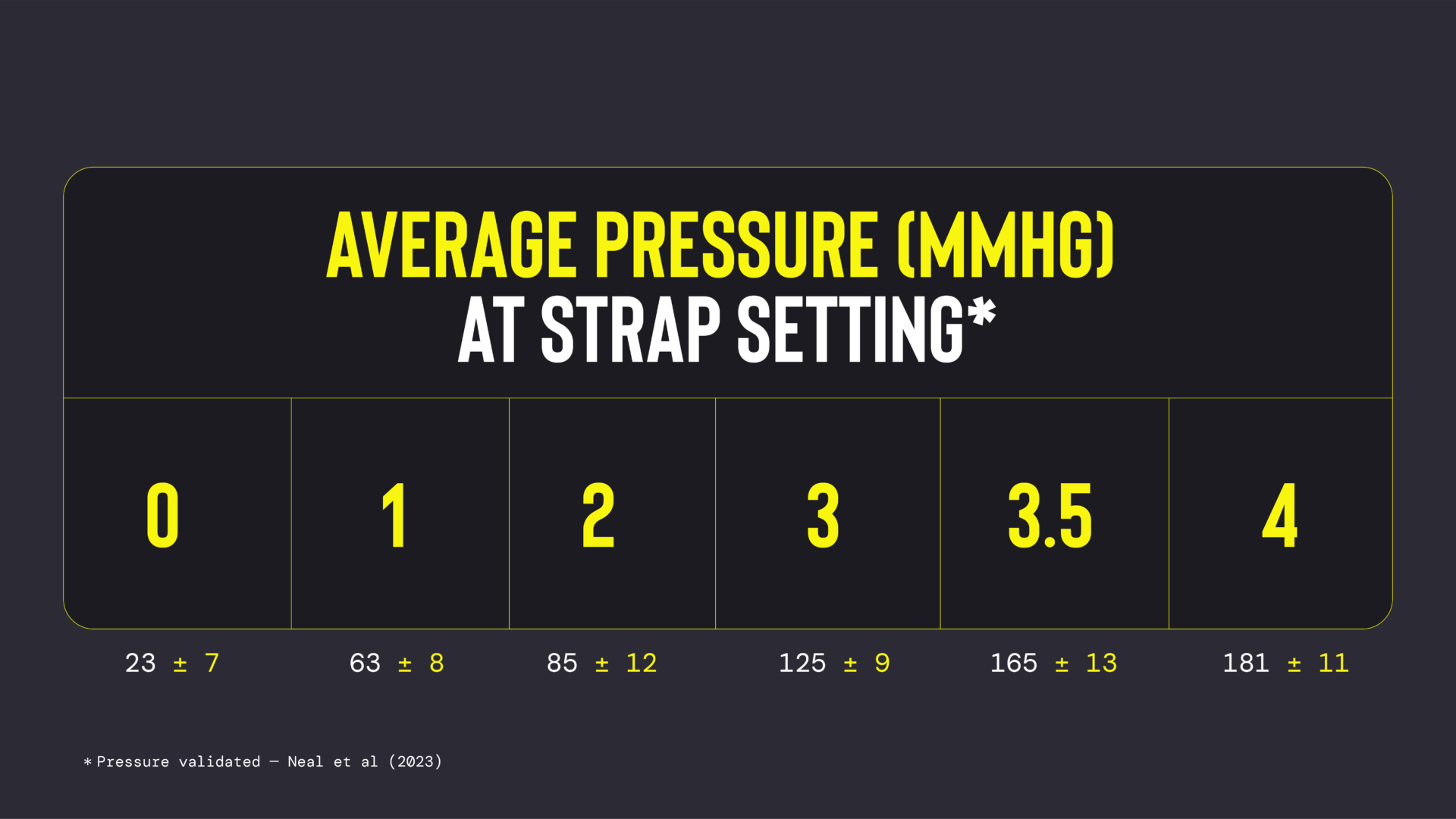
Foot series (barefoot): 1 minute each, fully strapped in at level 3-4
- Lacrosse ball foot roll out
- Big toe wedge work
- Slant board hops
- Sissy squat against the wall
- Lateral leaning calf raise against the wall
Foam roller series: 2 minutes
- Lower shanks
- Thighs
- Glutes
Lower movement series (barefoot): 5 minutes, fully strapped in at level 3-4
- Supine hip extension 1 x 10
- Supine single leg extension 1 x 5
- Side lying hip raise 1 x 10
- Bird dog 1 x 10
- Copenhagen adductor 1 x 30 seconds
- Single arm heavy KB walk 15 yards
Medicine ball series (4-8lb): 2 minutes
- Lateral MB throw against wall 1 x 5
- 30 yd walk
- Overhead MB throw against wall 1 x 10
- 30 yd walk
- MB slam 1 x 5
- 30 yd walk
Dynamic warm-up: 5 minutes, fully strapped in at level 3-4; walk back after each
- A-skips 2 x 15 yards
- Lateral A-skips 1 x 15 each way
- Lateral lunge with reverse pivot 1 x 15 yards
- World’s greatest stretch 1 x 15 yards
- Reverse lunge 1 x 15 yards
- Walking quad stretch with reach 1 x 15 yards / hamstring swoops coming back
- Pogos 1 x 15 yards, progressively more intensive
- Split stance pogos 1 x 15 yards, progressively more intensive
Locomotion prep: 2 minutes; 30-40 yards, walk back after each
- Reverse run (easy pace)
- Power skip for distance
- Reverse run (more velocity)
- Power skip for height
- Reverse run for speed
Weekly training plan following activation / warm-up:
Monday: Upper extremity PIC during activation / warm-up, tempo runs, and upper body strength and power work
Tuesday: Lower extremity PIC during activation / warm-up, speed with an acceleration emphasis, explosive medicine ball throws, and lower body strength and power work
Wednesday: Regenerative day with light movement, conditioning, passive lower extremity PIC in sauna (3 x 5 minutes followed by 2 minutes of reperfusion), optional cold water immersion
Thursday: Upper extremity PIC during activation / warm-up, tempo runs, and upper body strength and repetition work
Friday: Lower extremity PIC during activation / warm-up, speed with a multi-directional emphasis, plyometrics, and lower body strength and power work
Saturday and Sunday: Passive recovery, walking, and hot / cold therapy
Tweet ThisPIC alternates from upper extremity to lower extremity based on the emphasis for that training day. When there is less time available, the protocol can be shortened to two rounds, which still delivers noticeable subjective benefits.
@brianbuck6
Pre-ischemic conditioning during the season
Pre-ischemic conditioning also plays a valuable role during the competitive season. Baseball presents a unique challenge compared to other sports due to the downtime between pre-game work and the start of the game. Players complete their initial warm-ups and on field work, then rest before ramping back up for the game. A traditional high volume “second warm-up” is not practical, making it essential to find a more efficient way to get game ready. Pre-activation protocols effectively activate the athletes and help them regain optimal readiness without expending excessive time or energy.
Given what we know about pre-ischemic conditioning and its ability to rapidly activate the neuromuscular system, it makes sense that athletes coming off the bench late in games could benefit from its application.
Extended periods of inactivity can lead to muscle stiffness, decreased explosiveness, and slower reaction times, making it difficult to perform at a high level immediately upon entering the game. Traditional warm-ups are often impractical due to time constraints and game flow, leaving many athletes at a disadvantage when called into action. By incorporating PIC as a low volume, high impact activation tool, athletes can efficiently re-prime their nervous system, re-engage fast twitch muscle fibers, and enhance circulation without excessive energy expenditure. This is particularly useful in sports like basketball, soccer, and baseball, where substitutes or pinch hitters must step in with immediate explosiveness and precision.
PIC offers a time efficient solution to ensure these athletes transition from the bench to peak performance without the risk of sluggishness or heightened injury susceptibility.
Despite its proven benefits, PIC remains underutilized in performance training. Many coaches and athletes are unaware of PIC and its potential benefits, as its relatively recent emergence in sports science has not yet achieved widespread recognition. There is also a perception that BFR requires advanced knowledge or specialized equipment, deterring its adoption.
Athletes and coaches often prioritize established training methods over newer approaches, and the limited research on elite athletes further contributes to this. While substantial evidence supports BFR’s benefits, much of the research has focused on rehabilitation or untrained populations. More studies on PIC and its impact on acute performance could help validate its effectiveness and encourage adoption. However, the research on BFR and its impact on performance is growing rapidly.
By integrating PIC into their routines, coaches and athletes can maximize their training windows, improve performance readiness, and enhance recovery. Its ability to activate fast twitch fibers, reduce warm-up time, and improve neuromuscular readiness makes it an invaluable tool for serious coaches and athletes looking to gain a competitive edge.
Tweet ThisThe ability of PIC to activate fast twitch fibers, reduce warm-up time, and improve neuromuscular readiness makes it an invaluable tool for serious coaches and athletes looking to gain a competitive edge.
@brianbuck6