How does the Sharks’ internal load monitoring philosophy guide day-to-day training decisions, and what role does heart rate data play as the cornerstone of that system?
We look at both internal and external load daily and in real time during practices and on-ice rehab sessions. Our performance, medical, and coaching staffs need to understand the “cost of doing business” each day our players are in the building. We debrief at the end of each day by asking: How much did we do? Was it on target? How did the players respond? And can we do what we have planned for tomorrow?
It sounds simple, but when something is simple, consistent, and produces results, it becomes highly effective in future planning.
Heart rate is at the cornerstone of this philosophy because it provides immediate feedback. When an athlete is running “hot” and spending significant time in the red, there is a substantial amount of fatigue associated with that workload. We need to plan recovery and drill structure around those responses.
We also look at the lack of heart rate recovery (HRR) during drills and conditioning sessions to gauge an athlete’s current fitness level, rather than relying solely on in-season conditioning tests. It is a great strategy for answering the coaches’ age-old question: “Is this player in shape?”
Tweet ThisWe debrief at the end of each day by asking: How much did we do? Was it on target? How did the players respond? And can we do what we have planned for tomorrow?
@mike_potenza

Which heart rate monitoring technologies and platforms do the Sharks currently use, and what were the key criteria that led you to select them over alternatives?
Twenty years ago, on the same day as my interview with the San Jose Sharks, Suunto was there to present their system. At the time, I was working in collegiate hockey and was using the original Polar Team System, which had just 10 units. The head coach asked me to sit in on the presentation. I thought it was odd at the time, but to this day, I am glad I did.
I fell in love with the system and used Suunto all the way through its transition to Firstbeat. I then became a dedicated Firstbeat user and still am to this day.
As much as I love the technology, the people have also been great to work with and are always available when needed. The key features I value most about the system are the live monitoring, which we use daily during practice, and the team and individual player calendars, which allow us to look longitudinally at each player’s internal loads.
These metrics and visualizations have helped us develop a better understanding of where our workload “sweet spots” are leading into game day.
Tweet ThisThe key features I value most about the system are the live monitoring, which we use daily during practice, and the team and individual player calendars, which allow us to look longitudinally at each player’s internal loads.
@mike_potenza
Beyond raw heart rate, which derived metrics such as time in zones, TRIMP, or HRV do you find most useful when trying to understand player readiness and fatigue, and why?
Training effect (TE) has been a useful metric for us over the years to understand the anaerobic cost of a practice session. Hockey is very anaerobic. But training that energy system too aggressively during the season can elevate fatigue levels and negatively impact recovery.
Over time, we have learned that there is a maximum level of TE that we’re willing to exceed on MD-1 to ensure our players do not carry high levels of residual fatigue into a game.
Acute-to-chronic ratios (ACR) allow us to determine whether we are maintaining an appropriate level of stimulus throughout the season, especially when we have a high concentration of games or extended breaks, such as holidays and all-star breaks. ACRs also provide useful baselines for long-term injured players during an RTP.
One of the simpler metrics we use is raw HRR from specific game-like drills that the coaches have identified. One of the best ways to answer the question of whether a player is in shape is essentially a highly hockey-specific field test. The head coach identifies his preferred on-ice drill(s) that are most representative of the game and that we can track throughout the season. We monitor those drills during practice and measure the beats of HRR during the one-minute period following each repetition to determine a player’s current fitness level.
This method also does not negatively impact morale because players are not required to perform a graded exercise test in the middle of the season.
Tweet ThisThe head coach identifies his preferred on-ice drill(s) that are most representative of the game. We monitor those drills and measure the HRR during the one-minute period following each repetition to determine a player’s current fitness level.
@mike_potenza

How do you combine heart-rate-based internal load with external load metrics and accelerometry to build a complete picture of what a player has experienced in a session?
Our post-practice report for the health and performance staff and coaching staff includes both external and internal workload scores from the session. We use conditional formatting to categorize these workloads as red, yellow, or green based on each individual player’s yearly metrics.
Anything of major concern is reviewed immediately after practice. We also review the report during the morning coaches’ meeting so we can make adjustments to the daily training plan if needed.
The NHL is unique in that the technology approved for practice monitoring and the technology used for in-game monitoring are different. This creates a real challenge for performance staffs to compare “apples to apples.” Unfortunately, players also have to go through an approval process with the Players’ Association to wear heart rate monitors during games.
Another part of that complete picture is comparing the players’ game-day sprint speeds from league data sources with our Catapult ClearSky practice sprint speeds.
Players who have not reached their top speeds within a 3-7-day period will have a planned top-up sprint block at the next available practice. We want our players to touch above 90% of their best speed within a 7-day period so top speed qualities do not deteriorate. The volume is low and carefully planned within the context of the head coach’s practice.
Tweet ThisPlayers who have not reached their top speeds within a 3-7-day period will have a planned top-up sprint block at the next available practice. We want our players to touch above 90% of their best speed within a 7-day period.
@mike_potenza
What is your strategy for presenting heart rate and internal load data to coaching staff in a way that is both meaningful and actionable without overwhelming them with numbers?
My approach to communicating with coaches is based on three questions.
First, did we hit the mark on the planned intensity for the day? This is critical at certain times of the year. If we overdo it on the ice, particularly during the condensed second half of the season, we could negatively affect recovery leading into the next game.
Second, did we apply the correct dose of speed through the planned drill set? Coaches love to teach, and that is very much a positive. At times, however, the teaching component can bring the pace of practice down. In our coaches’ meetings, we want specific drills to serve as our speed work, and we want to dose those drills very intentionally throughout the season.
And based on what we did today, what can we do tomorrow? That question is primarily answered the following day when we assess the players as they come in. However, you will see a hard, heavy practice affect players immediately afterward, and our staff can begin planning for the next day based on those responses.
Tweet ThisAnd based on what we did today, what can we do tomorrow? That question is primarily answered the following day when we assess the players as they come in. However, you will see a hard, heavy practice affect players immediately afterward.
@mike_potenza

What are the biggest limitations or unsolved challenges you still face in internal load monitoring, and where do you see the biggest opportunities for improvement over the next 2-3 years?
Compliance is always a challenge, and it always will be for any type of monitoring across the four major professional sports in the United States. Some players’ associations push back on monitoring because they believe the information could be used against players during contract negotiations. I believe that is false and discredits the work of performance professionals in sport.
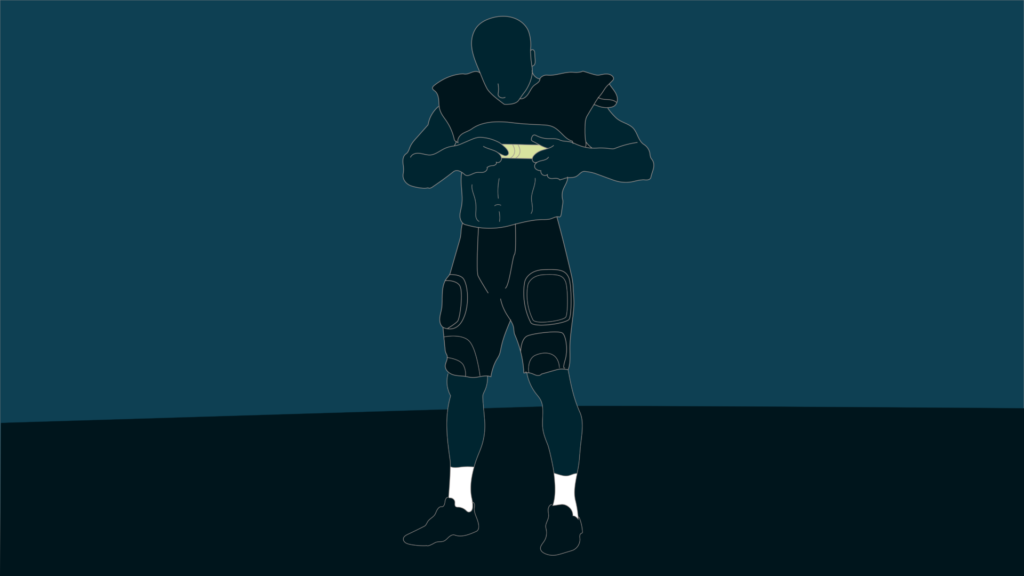
From a technology standpoint, hockey presents some unique challenges. The padding and equipment can cause the heart rate monitor to slip down to the player’s torso, and at times we lose data. Garments designed to hold the heart rate monitor in place are available, but players have specific preferences regarding the gear they wear. Heart rate monitor shirts have not been particularly successful.
Internal load data is extremely valuable and has stood the test of time. In the coming years, I believe we are going to see more accurate solutions for monitor placement on the body, as well as technology capable of capturing specific blood markers through NIRS sensors in real time. We are currently just scratching the surface in this area.
Tweet ThisIn the coming years, I believe we are going to see more accurate solutions for monitor placement on the body, as well as technology capable of capturing specific blood markers through NIRS sensors in real time.
@mike_potenza