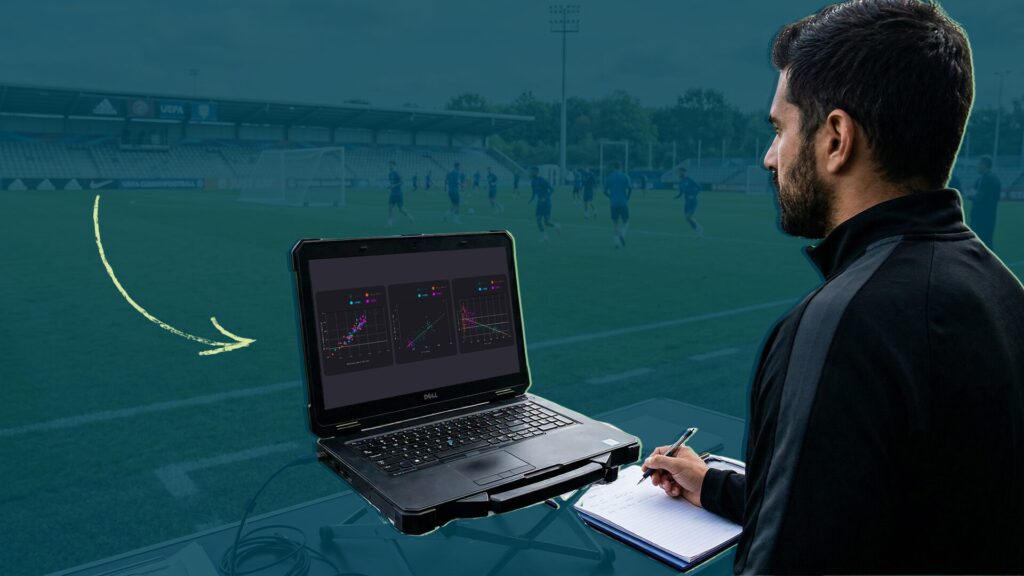
If you’ve been working in sport for a while, the advent of new technology taking the industry by storm and the issues that come with it might seem like a familiar journey, one that brings back memories of GPS technology a few years ago. 24/7 wearable technology that collects biometric data is arguably in the middle of this journey now (Figure 1). It’s a hot topic that practitioners are facing pressure to pursue, with early adopters starting to surface some of the key issues of accuracy and usability in the field as we highlighted in Part 2. While collaborating with manufacturers has helped create meaningful solutions to similar issues for GPS technology, Phases 3 & 4 might prove harder for wearable technology since these devices are primarily designed and created for the mass market, not for sport scientists to use with high-performance athletes.
| Phase 1 – Pressure and early adoption | Phase 2 – Data collection and realization | Phase 3 – Feedback and collaboration | Phase 4 – Iteration and updates | |
| GPS | “Other teams are getting this, we can’t be left behind” | Large, longitudinal data collection and validation. Academic publications | Feedback to manufacturers about what works in real life | Applied research findings fuel improvements, firmware and software |
| “We should get this technology to get ahead of our competition” | Frustrations that several variables and metrics aren’t accurate as advertised | Collaborative applied research projects to address issues | E.g., algorithm tweaking, technology updates | |
| Wearable technology | “I’ve seen other top athletes using this on social media” | Large, longitudinal data collection and validation starting. Few publications | Feedback to manufacturers about what works in real life | Applied research findings fuel improvements, firmware and software |
| “This will make team monitoring quick and easy” | Questions around accuracy and utility starting to emerge | Collaborative applied research projects to address issues | E.g., algorithm tweaking, technology updates |
For instance, if manufacturers make most of their money from selling to the general population, why would they bother listening to any product feedback from a sport scientist working with elite athletes, who make up a tiny proportion of their target audience?
Tweet This“Why would a manufacturer bother listening to any product feedback from a sport scientist working with elite athletes who make up a tiny proportion of their target audience?”
@drsianallen & @drpetertierney
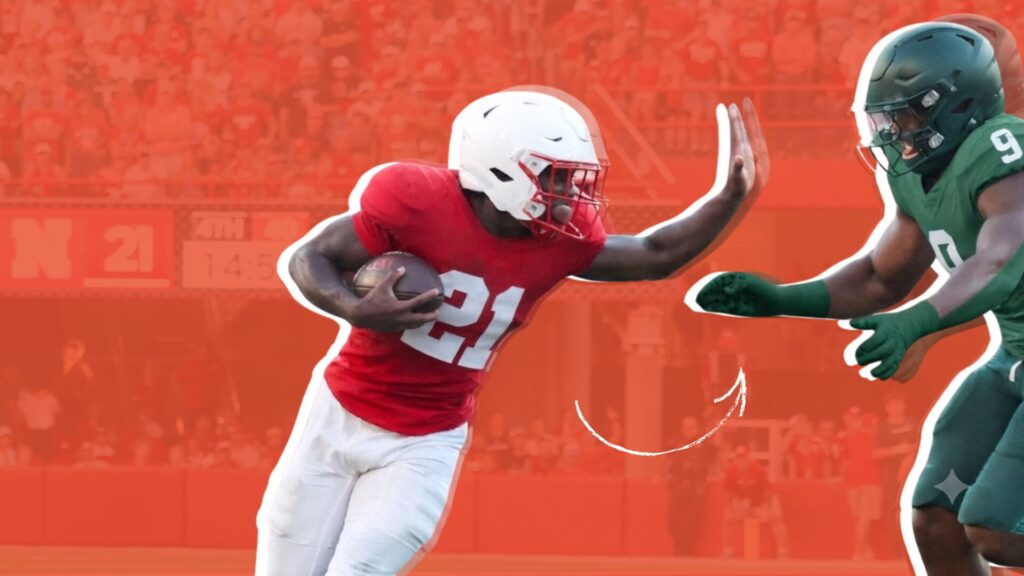
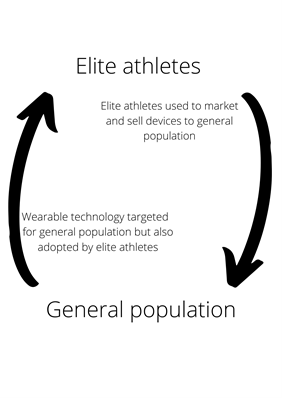
It might be worth their while… but only in exchange for you or your athletes agreeing to publicly market and promote their products to the audience they really care about – the mass market (Figure 2). Ultimately, this could be a dangerous trade-off to put our reputations behind, considering some of the unresolved issues we’ve highlighted.
These market dynamics also raise another issue of athlete buy-in. Will your multi-million dollar player be happy wearing the same $100 wrist-watch as the one their grandma wears to count her daily steps? Perhaps this is where our value as practitioners truly comes into play: our ability to add insight beyond what’s publicly available, creating a personalized service for our athletes that money can’t buy.
If these products can’t or won’t adapt to support our needs, what steps can we take ourselves to best apply them in our environments? In the final part of this three part series, we’ll share our practical recommendations for implementing wearable technology with your athletes, starting with a case study of them in action.
Wearable technology case study: Senior male rugby union athlete and Oura Ring Gen 2
Below are some real data from a senior male professional rugby union athlete wearing the Oura Ring Gen 2. He was interested in optimizing his level of preparedness before match days, and his level of recovery after them.
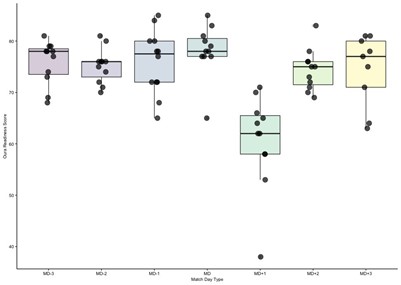
Although we typically prefer raw data values and trends as explained in Part 2, Figure 3 shows the Oura Readiness score for this athlete. Here we see a clear pattern of suppressed “readiness” following a match day. Obvious changes like this represent an example of times where composite Readiness and Recovery Scores can be somewhat useful as a simple overview of multiple physiological markers of recovery and preparedness. Observing this kind of trend is a valuable signal to dive deeper into each of the raw metrics underpinning it, understand more of the nuance about what’s going on and see where we might be able to intervene for a positive impact.
For example, looking at total sleep time (TST) for this athlete in relation to match day, the impact of a match on TST is clear: evening kickoffs delay going to bed and MD+1 values are subsequently lower than after non-match days (Figure 4). Adding context into the mix to help with our interpretation of the data, this athlete only ingests caffeine on match day, which may also contribute to this trend. Other potentially interesting patterns include the higher levels of sleep on MD and MD-3. MD-3 is a non-training day for this athlete, after a typically heavy training day.
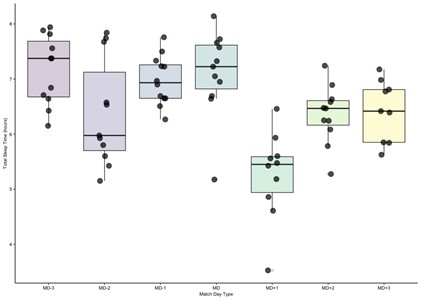
MD = match day; MD-1 = the day before match day; MD+1 = the day after match day.
TST on MD is the sleep hours that an athlete/coach would see upon waking on match day.
Heart rate variability is also typically a fairly sensitive measure of acute stress, and we can start to see that in this athlete’s daily values (Figure 5). The suppression of overnight HRV on MD+1 and MD-3 appears to show the body has been stressed by match competition and heavy training (on MD-4).

Based on the signals observed in this short case study, it would seem appropriate and useful to assess this athlete’s response to stress over a longer period of time. Further, comparing and contrasting his responses against those of other athletes who have different contextual factors at play may be a decent strategy for generating some universal wisdom that could shorten your path to successful interventions for new athletes joining your team.
The athlete in this example has high aerobic fitness for his position. Given what we know about the benefits of aerobic fitness for recovery and the evidence of this athlete’s HRV status on MD+2, we might conclude that this player “recovers well” (within 48 hours) after competition. However, if we compared a less fit individual, we might notice a delayed recovery of HRV back to normal range and, as such, might need to alter training for a longer period of time after competition.
Gathering and interpreting group data may be a useful way to assess if there are meaningful relationships between greater fitness and improved response to stress. Would improving parameters of fitness consequently improve markers of recovery, and subsequently have any meaningful knock-on effects on performance? Do any these relationships vary for different athletes based on their make-up or profile?
Implementation: From wearable technology data to impact
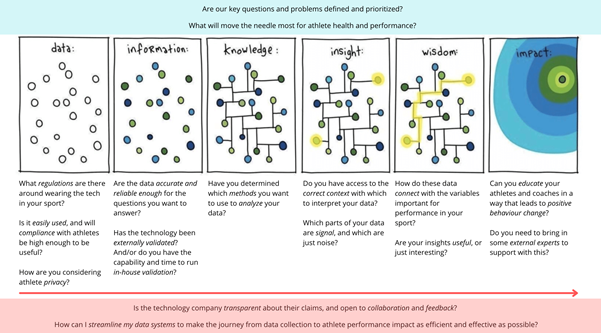
Before jumping into any kind of solution, our first step is clarifying the biggest problems or questions you’re trying to solve for your athletes. Otherwise, wearable technology might be the square peg you’re trying to jam into a round hole, more of a distraction than something worth pursuing. Assuming this tech might offer a viable solution to your key performance problems, and you’ve scoped out some products that measure what you’re interested in, we’ve identified a number of key questions you could consider next (Figure 6).
Data
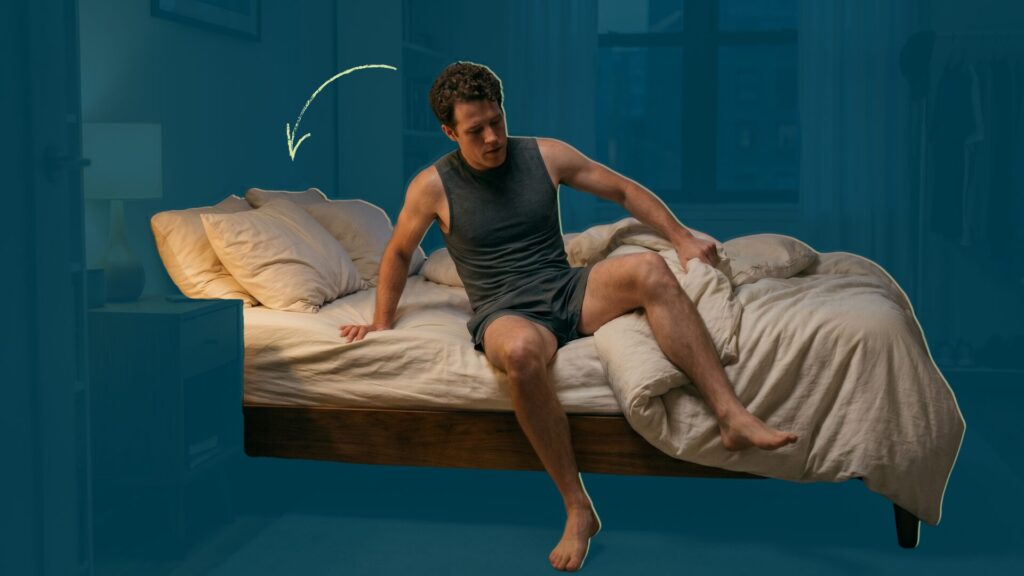
First, it doesn’t matter how accurately a device measures sleep if it’s too uncomfortable to wear and it sits on an athlete’s bedside table instead of their wrist all night. One way to understand the friction involved in using a product is to try it yourself and observe where things get a bit painful, frustrating or just plain impossible.
Tweet This“It doesn’t matter how accurately a device measures sleep if it’s too uncomfortable to wear and it sits on an athlete’s bedside table instead of their wrist all night”
@drsianallen & @drpetertierney
Ask for permission or forgiveness?
A sometimes unspoken data collection consideration: are athletes actually permitted to wear the device in competition?
Take football and rugby, for example. Heart rate monitors are actually not approved devices (yet). World Rugby specifically states: “Heart rate monitors worn on the chest (among others) are not permitted to be worn in matches by any player” [1]. Despite this, many athletes have been spotted sporting wearable devices in competition (Figure 7)! Presumably, injury risk upon contact is a key concern, along with sponsorship and product placement issues. Would practitioners supporting the implementation of this tech be responsible and liable for any damage accrued? Given these concerns, should athletes even be wearing these kinds of devices in training?

Where’s the line between performance and privacy?
A huge concern with wearable technology and the data it provides is the invasiveness of such devices into corners of an athlete’s life that were previously private.
Who owns the data if clubs adopt team-wide technology solutions? Can athletes refuse letting their data be collected, analysed and shared? Are all athletes really comfortable with sport scientists and coaches being able to know the intimate details of their menstrual cycle without even needing to have a conversation about it? And what happens if personally sensitive data somehow fall into the wrong hands and end up on the tabloid back pages, for example?
Here is a hypothetical situation with GPS technology:
Team sports use performance data (passes completed, tackles missed, goals scored, metres gained, etc.) before signing players in an attempt to ensure the player will add value to the team, fill a required performance gap and play a style that is suited to the coaches. What about physical data? A team is trying to sign a player and is requesting GPS-derived load and physical data before confirming the deal, in an attempt to understand how the athlete will tolerate the training and style of play. If an athlete can barely string a week of training together, but this club trains and plays in a style and manner that requires high physical output, is the data available to the team?
Now think about a similar situation arising with 24/7 wearable technology data. Will athletes fear that if they share their wearable data it might be used against them? Will coaches request sleep data from athletes after competition in an attempt to peek into their social behaviours?
Will players misinterpret data requests from ill-informed coaches and then start “chasing” numbers? I once heard of a horrid situation where a performance coach was nudging a player to complete a higher volume of sprint and high-intensity distance during matches. This was separate from the team’s tactical goals and style, and as such sparked debate between performance coaches, players and staff:
“Why are you sprinting around so much? You were out of position, and you looked exhausted after that period.”
“I was told by XX that I need to get my high-speed metres up in games.”
While it’s beyond the scope of this series to go into the details of privacy, legality, agreements, contracts, ownership and guidance, these are certainly issues that need deep discussion with athletes and organisations. Our advice: be aware of potential landmines, and tread carefully!
Information quality
Next, how well is the device measuring what it claims to be (accuracy) and how consistently is it doing it (reliability)? Contrary to what’s in the textbooks, the key here is not making sure the device is as accurate and reliable as possible but making sure it’s accurate and reliable enough for the questions you’re trying to answer. Does knowing an athlete slept 8 hours 17 minutes or 8 hours 27 minutes yesterday really change any decisions you would make about their preparation? However, distinguishing between an 8 hour 17 minute sleep vs. a 6 hour 17 minute sleep might.
Tweet This“Contrary to what’s in the textbooks, the key here is not making sure the device is as accurate and reliable as possible but making sure it’s accurate and reliable enough for the questions you’re trying to answer”
@drsianallen & @drpetertierney
Also, is the device providing sufficiently believable data?
For example, if an athlete knows they were awake for at least three of the eight hours they were lying in bed trying to sleep, but their wearable tells them they slept a full eight hours, they may never believe anything the device reports ever again or anything you say, since you’re the one who asked them to wear it. On the other hand, some athletes might be inclined to blindly believe anything a device tells them, even if it’s completely implausible. Confirming – or challenging – people’s perceptions are an important yet difficult consideration here.
How do you balance running a full-blown validation study yourself that delivers answers ASAP while continuing to do your day job? The key: validate to the level of minimum acceptable accuracy for your needs, i.e., it’s accurate enough to help you answer your questions; and it’s accurate enough, often enough, to be believable with your athletes.
Translating data to knowledge
Now, move beyond the facts and figures, and use relevant data analysis to give them meaning. Revisit the questions you are trying to answer, and match them with appropriate analysis methods. It’s worth thinking about this long before you start data collection, so you can:
- Make sure you’re recording all the information you need and in the right format to run your analysis promptly and as effectively as possible;
- Give yourself time to upskill or refresh in your chosen analysis methods and analytical software, or enroll someone else to handle it for you.
To take a straightforward example, let’s say your athletes have complained about not getting enough sleep the night after game day and then having to get up early to report for a recovery session. You want to look at some objective data to see if changing the schedule would better support their recovery. A simple way to approach this problem is to see what the differences are, on average, in sleep parameters for players on game day vs. other days of the week. Voila, we now have some awareness and understanding of what’s going on with our potential performance problem. That is, we have knowledge.
Transforming knowledge into insight
Which pieces of knowledge should we pay attention to, and what should we ignore? Having a lot of knowledge about a problem has the potential to be a huge red herring, unless we’re able to sift through it all and discern the signal amongst the noise.
Continuing with our example above, is 20 minutes less sleep on game day vs. other days a meaningful difference, or could it just reflect someone’s natural day-to-day variation in sleep duration? By calculating the typical variation in sleep duration (standard deviation) across a baseline period reflective of usual activity (minimum two weeks), we can start to extract some insight here. Changes of more than one standard deviation from an individual’s average values might be worth paying attention to, although this is obviously a rough rule of thumb that you can adjust depending on how conservatively you want to approach each specific problem.
It’s a popular myth that data are just numbers. In reality, emotions, feelings, behaviours and conversations are all relevant data points that give you signals about what’s going on with an athlete. Only by combining all these sources of knowledge can you obtain insight.
Returning to our example, perhaps one athlete’s numbers show substantially lower sleep on game days. Instead of implementing scheduling changes straight away, by talking to the athlete you can first take context into account to see if there are any other reasonable explanations that require different solutions. Maybe game days are usually weekends and their neighbours are up late partying, making it harder for them to sleep, so they really just need some decent ear plugs… or some new neighbours.
Wisdom
Now imagine having this kind of knowledge, but in advance of a bad night of sleep, or a poor recovery from a game. This is wisdom, or the ability to be able to connect the dots between multiple data streams and find patterns that give you some advanced warning of what might be likely to happen in future. The Interesting-Useful Matrix that we met in Part 1 is helpful here, as is foundational knowledge of the mechanisms underlying human behaviour or the determinants of performance in your sport. What are the causes of poor sleep (e.g., raised body temperature after a game) vs. the correlates and potential red herrings (e.g., the day of the week)?
Impact makes it real
Wisdom is only as useful as your ability to apply it successfully. How you capture your athletes’ attention and share this wisdom with them, educate them on what you’ve learned and make it as easy as possible for them to positively change their behaviour are all critical for impact.
Data visualization and storytelling are really powerful tools here, so it’s worth taking the time to understand how your athletes and coaches prefer to learn and interact with information.
We’ve also found sharing our own experiences and challenges can help create an empathic connection with athletes. They see that you might be going through similar problems, or just that you are putting in the effort to understand problems and help identify solutions that might help them.
Often, the art of having impact lies in distilling complex information (like all the values a wearable technology device spits out) into messages that are so simple that an athlete or a coach doesn’t even need you there to explain them. That probably requires some education up front (e.g., this is what slow wave sleep is, and this is why it’s important to get X amount per night). If you don’t have the kind of time or expertise in-house to deliver this effectively, you could bring in external experts to support and also help enhance the credibility and believability of your whole monitoring process.
Making the process self-perpetuating
Once you have a process implemented, how can you make it more efficient so more of your time is freed up for the critical stuff that machines and systems can’t yet do?. Can you set up systems to automatically clean data, run analyses or create dashboards? Can you outsource any stages of the process to others?
Equally, how can you collaborate with the product manufacturer to make your process as streamlined as possible? Can they share data with you in a format that’s easier to analyze, or calculate variables of interest for you? As we shared in Part 2, the more data you personally collect and sift through, the more nuances and opportunities for improvement you start to observe. These could easily remain frustrations that you continually side-step to get what you need, but making the effort to build a constructive and open relationship with manufacturing companies could allow them to take your feedback onboard and improve the product for your future use.
In contrast, don’t invest in a ton of devices from a company that lacks transparency in their approach or is unwilling to collaborate. Your entire monitoring process could fall over like a Jenga tower if they were to make any unexpected or unwanted changes to their hardware or software.
If you take one thing from this series, take action!!
Instead of waiting for an academic article to be published, or attempting to run a full randomized controlled trial yourself, the biggest leverage point of wearable technology is that you can test and learn quickly with your athletes in their natural environment. The most successful examples of wearable technology use we’ve seen combine this pace with the direction of clear performance questions. Choose velocity, not speed! (Figure 8).

Define your key questions and start reading and researching where they match to different wearable technology solutions (DC Rainmaker’s blog is a great resource[2]). Reach out to tech companies to ask for a free trial. Reach out to researchers and fellow practitioners who have tested devices and software. Gather your own data and interrogate these solutions yourself. Be curious, ask many questions and document what you find. If something seems good, share it; and if it seems bad, share it, too! This is how technology, and we as practitioners, can evolve and improve.
Don’t feel “left out” if you aren’t using certain devices – if you have good reason to not use them. Be optimistic, yet cautious. Be aware of privacy concerns and tech companies’ motivations for collaborating with you.
But picture a world where you can empower your athletes to perform and recover better; to take ownership over their health; and potentially influence not only their athletic careers, but their lives and well-being far beyond the court, track, field or pitch.