

The sports wearables industry continues to innovate at a breakneck speed, delivering on both wearable hardware and software developments. In the hardware space, wearable technology manufacturers continue to jam an unprecedented suite of sensors into small, light form factors that move effortlessly with our bodies – like the extraordinary research sandwiching cardiac ultrasound technology into a skin patch as thin as a spider’s web that you’ll read about below!
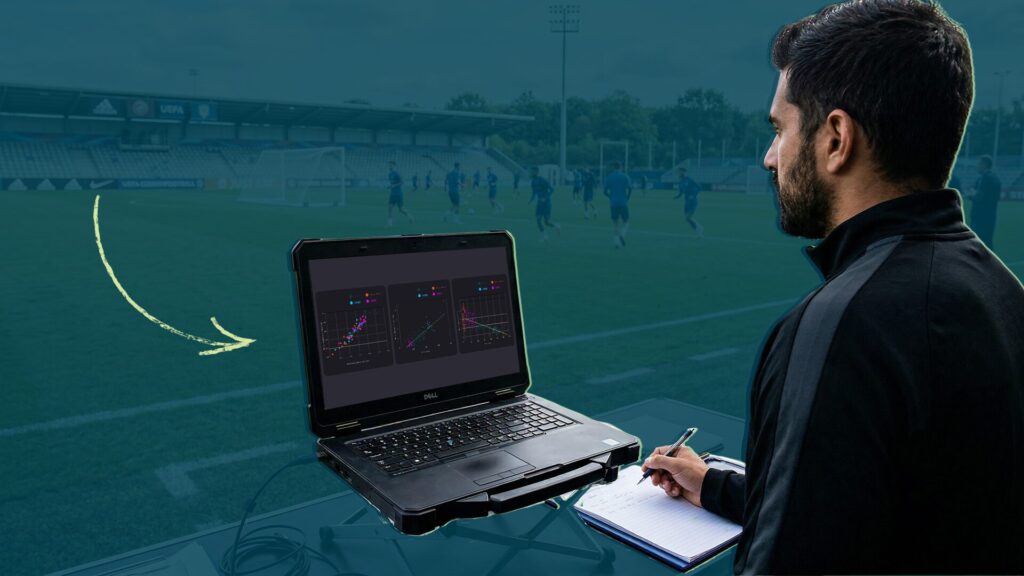
On the software side, data scientists apply increasingly novel and complex techniques to massage wearable sensor signals and extract meaningful biomechanical and physiological insights. For example, novel algorithms that extract running biomechanics insights from foot strike sound waves, which you’ll also read about below.
Let’s unpack a few sports wearables innovations that have the potential to change the way athletes train, recover, and push the limits of human performance.
Skin temperature sensing is hot
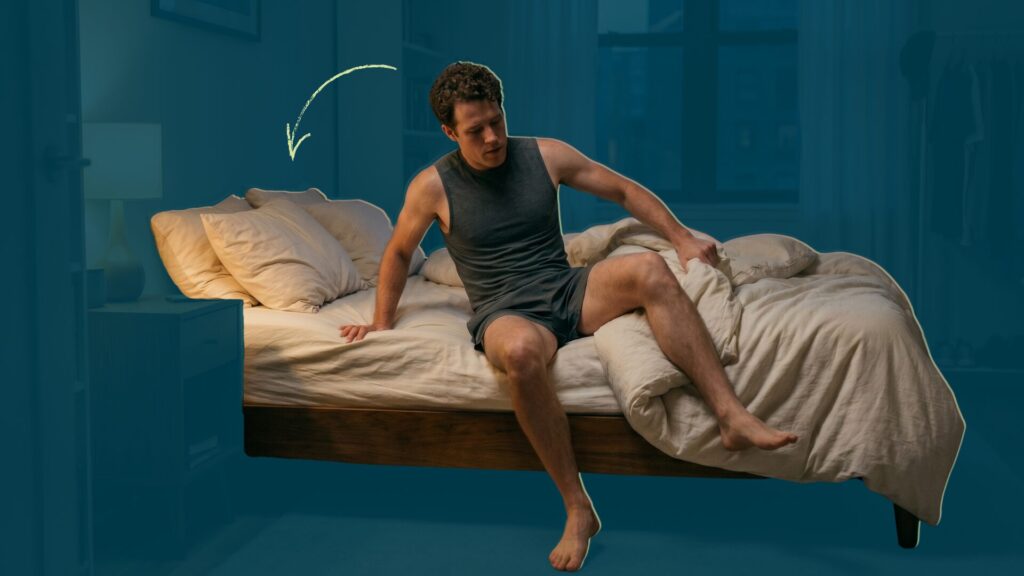
You may start noticing more and more activity trackers adding “temperature sensing” to their feature list. When the second and third generation Oura rings launched in 2018 and 2021, respectively, the novelty and utility of the embedded skin may not have been fully appreciated.
Today, the Samsung Galaxy Watch 5 series and Apple Watch Series 8 and Ultra include temperature sensors. Rumors also suggest that Garmin watches will soon include wrist temperature sensing.

What does the research say?
Skin temperature sensing today focuses on three primary categories.
Sleep tracking
Many wearables integrate skin temperature signals into multi-sensor approaches for sleep stage detection. Using the accelerometer (motion tracking) embedded in a ring or wrist wearable alone is somewhat effective at detecting sleep vs. wake stages, but integrating other biometric signals like skin temperature and heart rate variability is useful for classifying sleep stages.
A 2021 study led by authors affiliated with Oura demonstrated that combining accelerometer, temperature and HRV features from the Oura ring with machine learning techniques yielded high sensitivity and specificity (74-98%) for classifying four stages of sleep: light NREM, deep NREM, REM and wake.
Monitoring skin temperature on the hands and feet is useful for sleep stage tracking because of its inverse relationship with core temperature. Core temperature steeply declines in preparation for sleep, then fluctuates slightly with different sleep stages.
Menstrual cycle tracking
An array of wearables utilize skin temperature monitoring for period tracking, fertility checks and pregnancy monitoring.
Similar to sleep onset detection, wearable menstrual cycle tracking leverages the inverse relationship between core temperature and skin temperature. Basal body temperature characteristically fluctuates across days for those with a typical menstrual cycle, and those fluctuations can be detected via the inverse fluctuations in skin temperature. The Oura ring detected the menstruation and fertility windows with sensitivity up to 87% in a 2019 study.
Illness detection
While somewhat controversial, time-continuous skin temperature monitoring can predict the onset of illnesses like the flu or COVID-19 (think back to the integration of the Oura ring into the NBA bubble in 2020). Data from consumer wearables can support early detection of imminent illness.
Interestingly, most of the wearables mentioned above currently only leverage skin temperature readings during sleep, as this is the phase of the day where core and skin temperature exhibit a strong inverse relationship (Table 1). Further, during sleep it is less likely that other confounding factors will add “noise” to the finger temperature readings, e.g., environmental temperature, activity level, food and beverage consumption. That makes sleep a more reliable window for data capture.
I suspect many wearables have multiple temperature sensors in order to increase the accuracy and reduce the bias of these inherently “noisy” temperature signals (Table 1) . Also of note, unlike accelerometer and heart rate features, skin temperature fluctuates very slowly, reducing the need for high frequency data, but also limiting the opportunities for real time instantaneous biofeedback.
| Number of temperature sensors | Location | Sampling rate | |
| Apple Watch Series 8 and Ultra | 2 | One on the back crystal, near your skin One just under the display | During sleep, every 5 seconds |
| Samsung Galaxy Watch 5 | Unknown | Unknown | Unknown |
| Oura Ring Gen3 | 7 | “Surrounding your finger” | Once per minute, nocturnal temperature used for most features |
| Garmin watches | TBD (many watches have an internal temperature sensor, but it primarily measures ambient temperature not skin temperature) | TBD | TBD |
Tweet ThisSimilar to sleep onset detection, wearable menstrual cycle tracking leverages the inverse relationship between core temperature and skin temperature
@EmilyMatijevich
How could skin temperature monitoring be integrated within a sporting environment?
Sleep quality, menstruation and illness all contribute to an athlete’s recovery and readiness to perform, highlighting the value skin temperature is already adding to strategic training planning. One frustration is how an athlete is supposed to act when there is a mismatch between a quantitative “battery body” or “readiness” score from their wearable and their subjective feelings of recovery.
Looking ahead, commercial wearables have only scratched the surface of sports and wellness insights that can be gained from time-continuous skin temperature monitoring. Other exciting opportunities include:
- Drops in muscle performance. There are preliminary suggestions that wearable measurements of skin temperature, and potentially also measurements of perspiration, reflect how much energy is being diverted away from the muscles to cool the body, indicating a drop in muscular output and performance.
- Emotional status. When we are emotionally relaxed, our blood vessels also relax, allowing more blood flow to our extremities and an increase in our hand and foot temperatures. Alternatively, under stress, our body hordes blood flow to the core, meaning less blood flow to the extremities and cooler hands and feet. Wearable monitoring of skin temperature can provide biofeedback to athletes about when they are successfully “keeping their cool.”
- Hydration status. Fluctuations in skin temperature may provide a useful surrogate for monitoring perspiration and hydration status. Accurate, continuous monitoring of hydration levels would be extremely useful for endurance athletes who struggle to maintain performance and minimize thermal stress.
Verdict: Skin temperature monitoring
Skin temperature is a physiologically relevant signal for integration into multisensor algorithms that monitor strain, recovery and readiness. This is a wearable sensor modality worth keeping on eye on for unlocking new performance insights; and for helping athletes tap into the complex interplay between the cardiovascular, hormonal and muscular body systems.
The area most ripe for innovation is data processing and algorithm innovations that allow users to cut through the noise and leverage daytime skin temperature readings.
Tweet ThisSleep quality, menstruation and illness all contribute to an athlete’s recovery and readiness to perform, highlighting the value skin temperature is already adding to strategic training planning
@EmilyMatijevich
Wearables that listen to how you run
Could footstep sounds be the next biomechanical sensing opportunity for runners and other athletes? Emerging research suggests sound waves can unlock new insights into running kinetic (force) parameters, an exciting opportunity given that the majority of running wearables are accelerometers are GPS units that only provide information about kinematic (motion) parameters.
What does the research say?
The use of sound waves to measure sporting biomechanical variables is still very green and in the early research stages. A new study out of Aalbord Univeristy in Denmark demonstrated that microphone signals could be inputs to a machine learning algorithm to reconstruct relevant biomechanical variables during running. The biomechanical variables included the vertical ground reaction force (the interaction force between the foot and the ground) and foot contact style.
That study actually used stationary mics placed close to the ground. The authors suggest that footwear wearables, skin sensors, mobile phones, or even smartwatches or earphones could provide similarly reliable and valid data. This is certainly plausible, but is not yet proven. Keeping with the theme of sound, research from Ghent University in Belgium has demonstrated that music-based biofeedback is an effective tool for gait retraining. There is potentially exciting closed-loop solutions that measure athletes’ biomechanics with sound, then provide feedback on how to improve biomechanics with sound.
How could running audio be integrated within a sporting environment?
Vertical ground reaction forces (vGRF) are one of the most fundamental variables in sports biomechanics. They give insights into the force and power the athlete is delivering to the environment around them.
However, GRF features are widely misinterpreted in an injury prevention context. Both academia and industry repeatedly misstate that reducing GRF impacts and loading rates are effective methods for reducing running overuse injury risk. Multiple studies, though, have demonstrated that these running impacts comprise just a small portion of the loading on the foot and leg bones, muscles and tendons at risk of injury. vGRFs, in isolation, are poor indicators of injury risk (Nigg 1997, Matijevich et al. 2019, Schmida et al. 2023 paper).
More promising integrations of wearable vGRF monitoring in a sporting environment are:
- Combining both kinetics (vGRF) and kinematics (athlete motion) to estimate the forces generated at the foot, knee, ankle and hip. Joint level kinetics provides information about which muscle tendons are effectively delivering power to achieve a desired range and rate of motion.
- Monitoring how the vGRF changes over time, like during prolonged runs. Scientific studies on athlete fatigue are some of the most challenging to conduct because lab based fatigue inducing protocols are never 100% representative of muscle and cardiovascular fatigue during actual competition. Wearables that allow for the measurement of athlete kinetics over prolonged periods deliver extraordinary value for unlocking insights about how biomechanics deteriorate with fatigue.
- Monitoring how the vGRF changes with different interventions. Footwear researchers obsess over tiny fluctuations in the vGRF with each tweak to the shoe outsole, midsole or upper. These evaluations are primarily performed in a motion analysis lab, again a protocol that does not fully represent real world conditions. The opportunity to measure and evaluate changes in the vGRF while running in the real world with different footwear (or any other sporting equipment) can inform the next generation of gear designs.
Listening to running kinetics
The two biggest barriers to more widespread use of sound waves as wearable sensor signals is privacy and literally tuning out the noise.
The integration of mics into smart home and smart assistant devices has been hotly debated by those with valid concerns about their privacy: How can I be sure Big Brother is only listening when I say “Hi Siri” or “Hello Alexa?” Similar concerns will arise if and when mics are further leveraged in health, wellness and sports wearables.
The other primary concern is that we are constantly surrounded by variable background noise. Training algorithms to be really good at separating a footstep sound from a car horn, overhead plane, dog barking, wind blowing, etc. is extremely difficult. It’s a similar challenge to having automated algorithms remove backgrounds from images or videos. We have probably all experienced an awkward Zoom “blur background” scenario where it accidentally chops out half your face.
Despite these barriers, sound-based wearables are an extremely promising space because the sensor hardware is very well established, leaving lots of resources for data processing and software algorithm innovation.
Sound could go on to unlock other sporting and health insights. Can wearable mics quantify my breath quality? Estimate changes in mid-game anxiety via breath and heartbeat sounds? Summarize how well a team communicated with each other over the course of a play?
Tweet ThisCould footstep sounds be the next biomechanical sensing opportunity for runners and other athletes? Emerging research suggests sound waves can unlock new insights into running kinetic (force) parameters
@EmilyMatijevich
Wearable cardiac function assessment
New research from the University of San Diego demonstrates a wearable ultrasonic cardiac imager in a stretchable, deformable skin patch. The patch captures two B-mode ultrasound views of the heart chambers with image accuracies similar to manual echocardiography.
The patch captures high quality images during standing, bending, lying and movement. Time-continuous heart images in combination with image processing by deep learning allowed the study’s authors to automatically extract numerous image features that are indicative of the heart’s pumping capabilities, like ventricular volume, stroke volume and ejection fraction.
How could wearable cardiac imaging be integrated within a sporting environment?
Cardiac assessment in athletes provides invaluable information about exercise capacity, athletic conditioning, and risk of cardiac pathologies or cardiac events. The recent cardiac arrest of a Buffalo Bills player during a game play tackle was a traumatic reminder of how sudden and unexpected cardiac events can be.
Routine evaluations of cardiac function allows for management of modifiable abnormalities and can inform training regimes. While the frequency of cardiac assessments varies based on age, cardiovascular risk and competitive preference, they are typically performed every few years.
Inexpensive, non-invasive, wearable tools for cardiac assessment would expand the options for high frequency testing or even continuous monitoring of cardiovascular risk factors.
Time-continuous measures of cardiac function open new opportunities for training optimization. Research shows changes in cardiac function and morphology is highly athlete specific: athletes’ hearts don’t all get stronger in the same way.
There is also ongoing research interest in how different types of sports differentially influence the heart’s function. New insights unlocked through wearable cardiac monitoring may help athletes strategically coordinate training regimes to optimize the load on the cardiac muscles.
Looking into the future of cardiac imaging
Wearable cardiac imaging tools are an emerging science. However, electronics packaged into a patch or tattoo have captured the imagination of biomedical, material science and electrical engineers for decades. Electronic components embedded in skin-like patches have demonstrated the ability to monitor numerous physiological parameters like heart rate, EEG (brain signals) and EMG (muscle activity). There is also excitement about using the skin-worn sensor signals as control signals: think using your brain to control a prosthetic arm or using your muscle flexing to control an avatar in a video game. Thus far, there has been particular interest in these skin sensors for medical and human-computer interface applications, with less focus on sports science applications.
Sensors embedded in skin patches are no longer science fiction. Advances both in hardware fabrication and automated signal processing have unlocked big human health insights in a small form factor.
Given the extremely low profile of these skin wearables, and their unique ability to move with the body, these devices will spark a lot of excitement from athletes and sports scientists.
Tweet ThisSensors embedded in skin patches are no longer science fiction. Advances both in hardware fabrication and automated signal processing have unlocked big human health insights in a small form factor
@EmilyMatijevich