

What forms of improper neuroplasticity typically develop after ACL reconstruction? How can velocity-based training help counter them early in rehab?
After ACL reconstruction, the problem goes beyond weak quadriceps: it’s a rewired nervous system. One of the key changes is reduced corticospinal excitability to the involved limb. The brain simply doesn’t “drive” that leg as well anymore. At the same time, you see a shift in control strategy. Subcortical, automatic pathways become less dominant, while higher cortical areas (prefrontal, parietal, visual) step in to compensate.
Clinically, that means movement becomes slower, more cautious, and visually guided. The athlete starts to “think the movement” instead of “feeling the movement.” It looks like a novice learning a skill for the first time: high attentional demand, internal focus, and stiff, inefficient patterns. If we overload this with constant internal cues— “keep the knee aligned with the toes,” “control the hip,” “contract the glutes”—and high fatigue, we actually reinforce this unwanted neuroplasticity.
There’s also evidence of reduced cerebellar excitability post-ACLR, which further compromises feed-forward motor control, automatic error correction, and fine tuning of movement [1,2].
The cerebellum prioritizes fatigue regulation over movement precision when under load. [3] Add the fatigue that comes with high volume hypertrophy phases, and cerebellar contribution to motor control drops even more.
That’s why I often call fatigue the silent killer of motor relearning in ACL rehab.
This is where velocity based training (VBT) becomes a kind of neurocognitive tool, on top of being a strength tool. Bar speed feedback shifts attention externally (on the outcome of the movement), creating a focus oriented on performance rather than on a body part. This aligns with the constrained action hypothesis, showing that external focus enhances automaticity, improves coordination and movement robustness, and promotes superior long term motor learning. [4,5]
Moreover, velocity loss thresholds let us cap neuromuscular fatigue in each set. We can stop a set after, for example, 15-20% velocity loss instead of grinding to technical failure. That means we stimulate the nervous system without crushing it—exactly what we want when trying to reverse quadriceps activation failure and corticospinal inhibition.
Early after ACLR, VBT helps us do two crucial things simultaneously: drive high quality intent with external, performance based feedback, and avoid the kind of excessive fatigue that deepens the very neuroplastic deficits we’re trying to fix.

Tweet ThisThis is where velocity based training (VBT) becomes a kind of neurocognitive tool, on top of being a strength tool. Bar speed feedback shifts attention externally (on the outcome of the movement), creating a focus oriented on performance.
@Int_Performance
We often see selective inhibition of fast twitch fibres post-ACLR. Why does this happen, and how does VBT more effectively target these fibres compared to traditional rehab approaches?
Post-ACLR quadriceps inhibition is not uniform. Type II fibres are selectively suppressed, especially the high threshold units responsible for rapid force production. [6,7] In the acute phase after injury, this inhibition may even be adaptive: when tissue is vulnerable, the nervous system prioritizes protection over performance to avoid further damage. However, if not reversed through targeted rehab, this same protective mechanism becomes problematic, as fast twitch fibres are essential for rate of force development, reactive strength, and safe return to play.
Selective inhibition becomes a major challenge when rehab aggressively pursues hypertrophy without regulating fatigue.
Classical rehabilitation often relies on high rep sets, slow tempos, and training close to failure. Without objective monitoring, velocity loss within a set can exceed 35-45%. This produces hypertrophy, but with a notable downside: deep fatigue shifts muscle phenotype toward slower fibre characteristics, reducing the proportion and function of type IIx fibres. [8]
Just 6-8 weeks of RM-style training can reduce IIx fibre proportion by more than half. [9]
This creates a paradox: in trying to solve atrophy and strength loss, traditional rehab further suppresses the fibres most needed for RFD, reactive strength, and return to play.
Driving this belief is the misconception that maximal hypertrophy requires training to failure. Not only is this scientifically unsupported, but heavy failure-based training produces excessive metabolic stress, creating an unfavourable anabolic–catabolic balance early in ACL rehab. [10] It amplifies neuromuscular fatigue, blunts high threshold recruitment, and prolongs motor inhibition.
VBT provides a solution by dosing hypertrophy according to fatigue, not repetition count. Instead of prescribing 3 x 10 and hoping for the best, we stop a set based on velocity loss (VL), which directly reflects neuromuscular fatigue.
10-20% VL is optimal for strength without fatigue-induced slowing, while 20-25% VL is enough stimulus for hypertrophy with a fast twitch emphasis.
Hickmott et al., [11] meta-analysis shows that hypertrophy above 25% VL is not statistically superior to 20-25% VL. That is, deeper fatigue gives no meaningful hypertrophy advantage, but it does increase fibre slowing.
Fatigue management also matters for the brain. High fatigue reduces voluntary drive, alters cortical excitability, and impairs reflex activity. [12,13] When the brain is tired, motor learning degrades—exactly what we must avoid post-ACLR.
VBT helps us target fast twitch fibres with the right dose, without inducing the very fatigue that suppresses them. Instead of simply “training hard,” we train with objectively monitored intent. By protecting high threshold motor units from fatigue-driven downregulation, we preserve their capacity for rapid force production and make them available for retraining.
This advances strength training into safeguarding the neuromuscular foundation required for restoring movement quality and a successful return to play.
Tweet ThisVBT provides a solution by dosing hypertrophy according to fatigue, not repetition count. Instead of prescribing 3 x 10 and hoping for the best, we stop a set based on velocity loss (VL), which directly reflects neuromuscular fatigue.
@Int_Performance
True 1RM is almost impossible to estimate safely in early / mid-ACL rehab. How does VBT provide a more accurate and adaptable way to prescribe load across the entire rehab continuum?
In the early and mid stages after ACL reconstruction, prescribing load based on a 1RM is neither feasible nor meaningful. Post-surgery, corticospinal inhibition, pain, and apprehension make any “maximal” effort both unsafe and unreliable. Even if an athlete attempts a maximal lift, the value obtained does not truly represent their physiological capacity—1RM values can fluctuate by up to 20% on a daily basis. [14]
The limiting factors include strength, coordination, and confidence.
Velocity-based training bypasses these limitations by using movement speed as a proxy for relative intensity. There is a stable relationship between bar velocity and %1RM in common exercises. For example, a squat performed around 0.75 m/s corresponds roughly to 75% 1RM. This means we don’t need to know the true 1RM: we simply prescribe load based on the speed-load relationship.
In practice, this allows clinicians to say: “Today we train in the 0.60-0.70 m/s zone for clusters of 2-4 reps.”
The athlete adjusts the load until their repetitions fall within that zone. Load scales automatically to whatever their neuromuscular capacity is on that specific day. If they are fatigued, inhibited, or hesitant, velocity decreases, and we adjust the load or modify the session accordingly. If they are fresh and ready to push, velocity increases, allowing us to progress load safely and objectively.
Remember that VBT is not the same as explosive training. Athletes always lift with maximal intent, but the actual velocity zone may be slow, moderate, or fast, depending on the rehab phase and periodization. Early rehabilitation lives mostly in slower strength zones with controlled speeds, driven by maximal intent and objective feedback.
As rehab progresses, the same system transitions seamlessly into power and speed-strength zones, without the need to ever perform a 1RM test.
With VBT, we also use the principle of embedded testing: every training session is simultaneously a diagnostic tool. Bar speed provides real-time data on fatigue, readiness, and progression, allowing immediate adjustments instead of waiting for separate testing days.
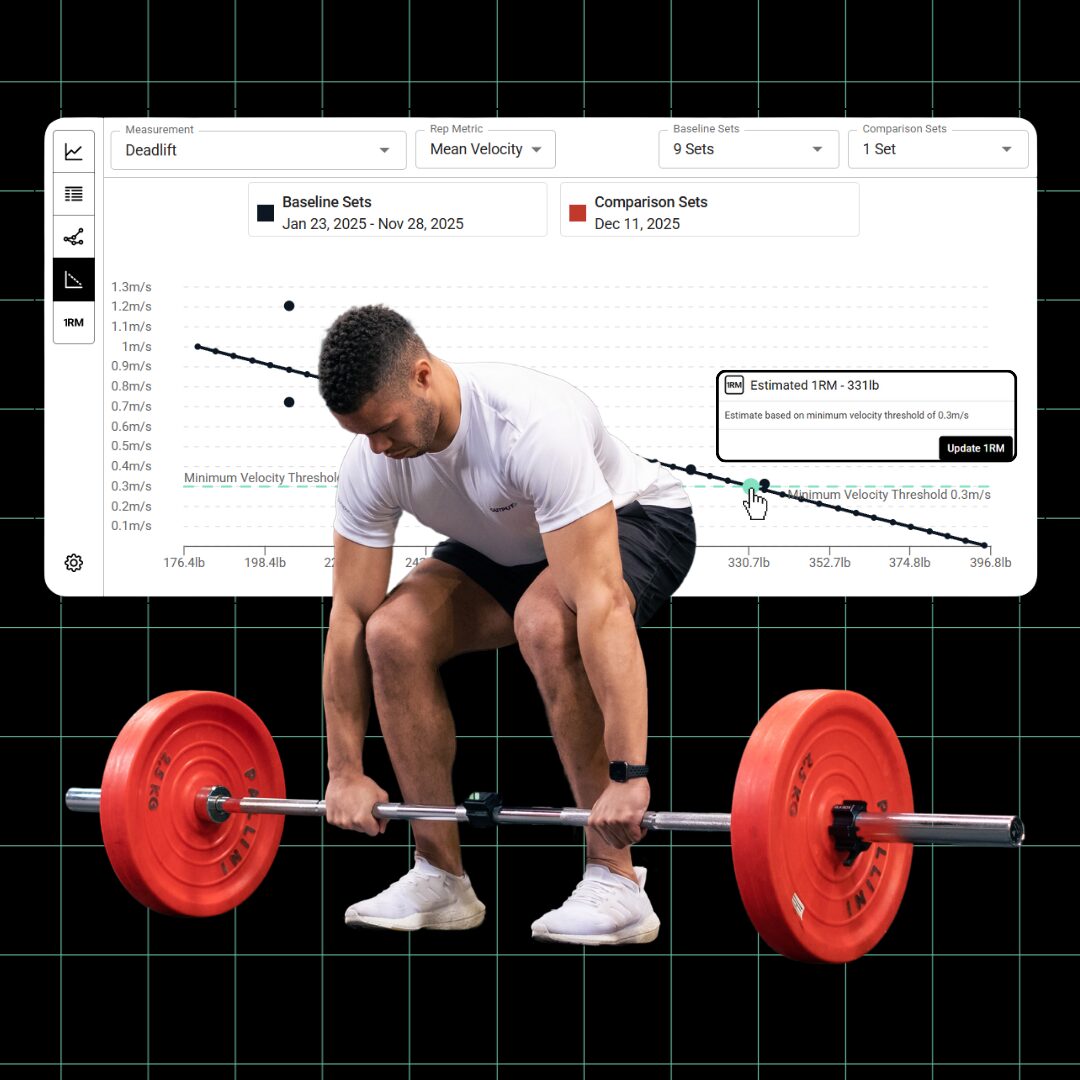
Tweet ThisVelocity-based training bypasses these limitations by using movement speed as a proxy for relative intensity. There is a stable relationship between bar velocity and %1RM. For example, a squat performed around 0.75 m/s corresponds roughly to 75% 1RM.
@Int_Performanec
What does classical rehab miss when trying to restore RFD?
Classical ACL rehabilitation is generally effective at restoring maximal strength and limb symmetry in slow, controlled tasks. Yet athletes often return with a major deficit in rate of force development—the ability to produce force rapidly in the critical first 50–100 ms of contraction. [15,16]
This is not a small detail. Most non-contact ACL injuries occur within 40-50 ms of ground contact, where reactive force production and rapid motor output matter far more than maximal strength. [17,18] An athlete may be “strong” on paper, but if they are slow, they are not protected.
Traditional rehab struggles to restore RFD for two main reasons.
First, excessive fatigue during a given set promotes a slower muscle phenotype. Classical hypertrophy and strength blocks rely heavily on sets performed to near failure. Without objective monitoring, velocity loss within a set often exceeds 35-45%. At that level of fatigue, fibre characteristics shift toward a slower profile, reducing the proportion and contribution of type IIx fibres—the very fibres responsible for rapid force production.
The paradox is clear: while maximal strength may improve, explosive capacity declines. In trying to rebuild muscle, we suppress the motor units most needed for RFD and return to sport performance.
Second, fatigue disrupts motor learning at the neural level. RFD is not just muscular—it is neurocognitive.
When neuromuscular and cortical fatigue build up, voluntary motor drive drops, corticospinal excitability decreases, and reflex responses slow down. [19,20] As a result, the nervous system struggles to scale force effectively. Movements become less precise and slower to adjust. Instead of relying on fast, automatic pathways, the athlete shifts toward more conscious control. They start “thinking the movement,” using more visual guidance, which makes them slower and less reactive. [21,22]
The real danger is that these altered strategies can stick. Branscheidt et al., [23] showed that motor patterns learned under fatigue can persist even after the fatigue is gone. In other words, fatigue doesn’t just reduce performance in the moment: it can teach the brain to move inefficiently, and lock that pattern in.
Velocity-based methods flip the model by prioritizing quality over exhaustion. Research supports low velocity loss thresholds (~5-15%) for training RFD. Short clusters, high intent, and controlled fatigue preserve fast twitch expression and maintain neural freshness.
Even without devices, clinicians can apply the same principle using cluster sets and low fatigue programming.
Ultimately, what classical rehab often misses is not a different exercise selection, but a fatigue management strategy that respects how RFD adapts. Without controlling fatigue, we build slow athletes. With targeted load management and fatigue control (low VL and clusters), we accelerate neural recovery, preserve fast twitch expression, and create athletes who can produce force rapidly.

Tweet ThisVelocity-based methods flip the model by prioritizing quality over exhaustion. Research supports low velocity loss thresholds (~5-15%) for training RFD. Short clusters, high intent, and controlled fatigue preserve fast twitch expression.
@Int_Performance
Given persistent RFD deficits up to 12 months post-ACLR, how can VBT be used to target RFD in late-stage rehab and RTP?
By the time athletes reach late-stage ACL rehab, it often looks like the work is done: strength scores are good, limb symmetry is acceptable, and movement quality appears solid in controlled drills. Yet under the hood, a key deficit persists.
Research consistently shows that RFD can remain 35-40% below pre-injury levels at six months post-ACLR, and may only fully normalize closer to 12 months. [16,24]
This matters because non-contact ACL injuries occur within 40-50 ms of ground contact. [17] Late-stage rehab must therefore shift from rebuilding “how much force” to improving “how fast force can be produced.”
If we’ve done our job in the early stages—limiting phenotype shift, rebuilding fast twitch recruitment, and restoring strength—we already have a strong base. In late-stage rehab, the emphasis shifts towards expressing that capacity at high speed. This is where VBT becomes uniquely beneficial.
Low velocity loss (VL ~5-15%) emphasizes speed-quality. RFD adapts best under conditions of high intent and controlled fatigue. Using VBT, we cap velocity loss to maintain recruitment of high threshold motor units. Rather than grinding through long sets, we rely on short, explosive clusters where every rep is fast and technically precise.
This preserves neuromuscular freshness and prioritizes high velocity output, the foundation of RFD.
Late-stage rehab is not simply “lifting heavy, but faster.” We deliberately target strength-speed, speed-strength, and ballistic zones. Progressions may include loaded squat jumps, split jump variations, step-up jumps, or Olympic derivatives. With VBT, we can verify whether the athlete actually reaches the required velocities for end force expression.
Instead of assuming adaptations are happening, we measure them rep by rep.
At this stage, gym work must enhance field performance, not compromise it. Because velocity loss reflects neuromuscular fatigue and estimated recovery time, VBT offers precise control over when the nervous system will be fresh.
When VL stays low (~5-10%), we can be certain that neuromuscular freshness returns within 24 hours. These sessions can be placed the day before high speed or change of direction training as a neural priming stimulus.
As VL approaches 15–20%, we cannot guarantee complete neural recovery within 24 hours. These sessions must, therefore, be scheduled further away from high intensity field work, ensuring full neural readiness before exposing the athlete to high intensity sport-specific loads.

Tweet ThisLate-stage rehab is not simply “lifting heavy, but faster.” We deliberately target strength-speed, speed-strength, and ballistic zones. Progressions may include loaded squat jumps, split jump variations, step-up jumps, or Olympic derivatives.
@Int_Performance
What would an evidence-based ACL rehab progression look like when VBT is integrated from early strength work through to high speed power training?
When VBT is integrated from day one of ACL rehab, the process stops being a collection of disconnected phases and becomes a continuous, data-driven progression. Instead of guessing with sets and reps, we regulate load, fatigue, and stimulus through objective feedback.
This allows us to protect high threshold motor units early, build strength efficiently, and later convert that strength into rapid force production under real sport demands.
In the early post-operative to mid-strength phase, the goal is not merely to rebuild muscle, but to do so without driving the neuromuscular system toward a slower phenotype. Moderate velocity loss thresholds provide enough stimulus for hypertrophy (20-25%) and strength (10-20%) without excessive fatigue and metabolic stress.
This offers two key advantages. First, it restores fast twitch capacity instead of inadvertently suppressing it. Second, the use of bar speed feedback creates an external focus of attention, which may help prevent the over-reliance on cortical control: a common unwanted neuroplastic adaptation after ACL reconstruction.
As athletes progress, the target shifts from building capacity to preparing that capacity for speed expression. We still use objective zones, but velocity loss narrows as neural quality becomes the priority. Cluster sets become especially valuable here, allowing heavy or fast reps without accumulating fatigue.
In late-stage rehab, the emphasis transitions to producing force within sport-relevant time constraints.
We target strength-speed, speed-strength, and ballistic ranges, using VBT to confirm that the athlete truly reaches the velocities required to restore RFD.
Here, fatigue scheduling becomes a high performance tool. Low VL (~5-10%) restores neuromuscular readiness reliably within 24 hours, while moderate VL (~20-25%) at moderate to low intensities requires more than 24 hours to fully recover.
This gives us far more control than traditional strengthening, where recovery time is unpredictable.
With this knowledge, we can use low VL sessions as neuro-priming before high speed field work, and place higher VL sessions further from demanding on-field days.
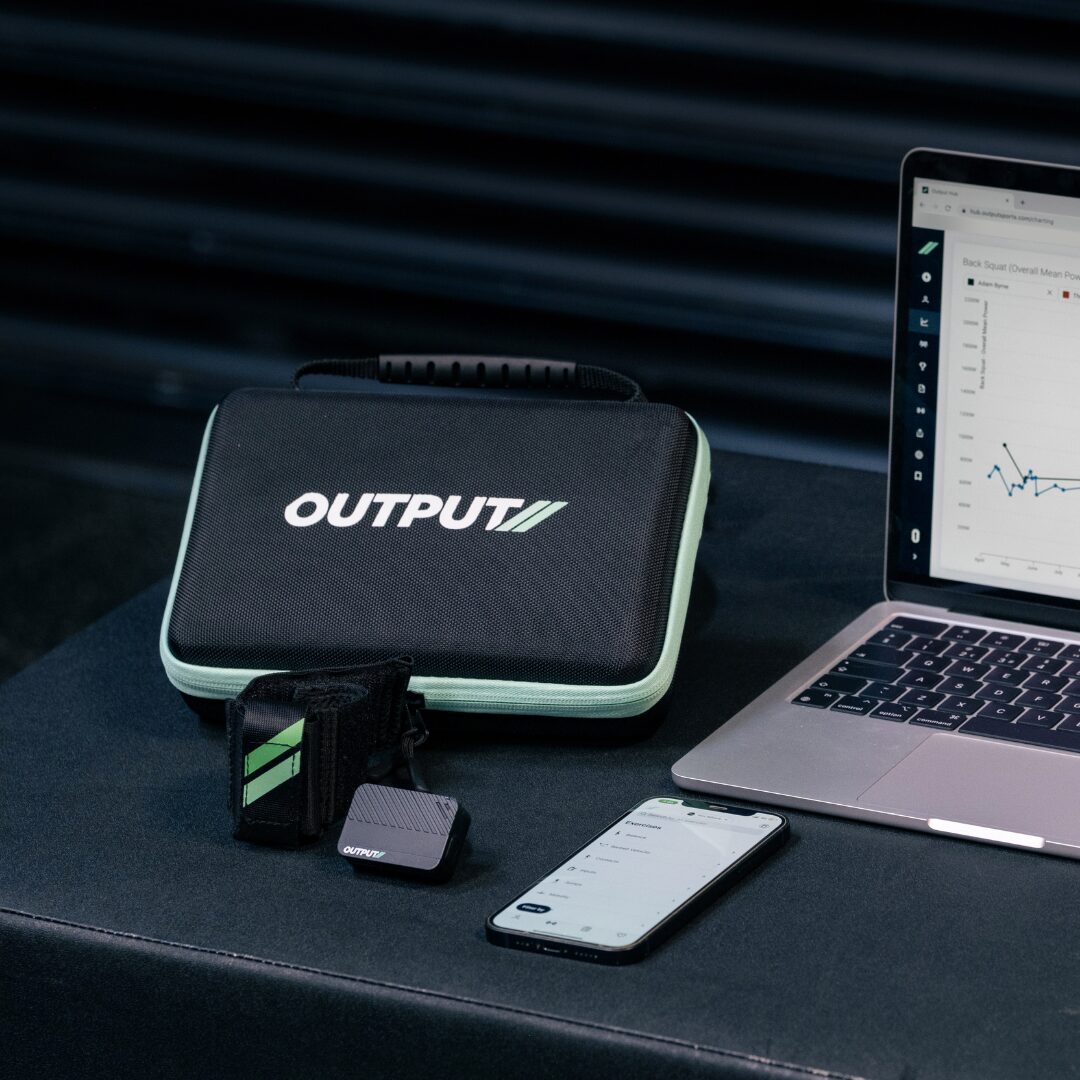
Finally, VBT enables continuous autoregulation. Because every session generates objective velocity data, we can detect plateaus early, adjust load on the spot, and individualize progression without waiting for periodic testing. In traditional rehab, testing moments are fixed weeks apart, which means load is progressed based on outdated information. VBT, in contrast, tests while training, providing immediate feedback that allows precise adjustment of intensity, fatigue, and recovery across the entire rehab continuum.
Tweet ThisWhen VBT is integrated from day one of ACL rehab, the process stops being a collection of disconnected phases and becomes a continuous, data-driven progression. Instead of guessing with sets and reps, we regulate load, fatigue and stimulus.
@Int_Performance