Definition and mechanisms of proprioception
Since the term proprioception was introduced, there have been various interpretations and ongoing debates in defining exactly what proprioception is. This has likely contributed to the misunderstanding and misuse of the term “proprioception” by sports performance practitioners.
So what is proprioception? The contemporary definition describes proprioception as the perception of body position and movement in three-dimensional space [1]. This definition includes peripheral and central mechanisms, as well as perception which is shaped by memory and is amenable to change with learning and experience. The quality of available information and an individual’s ability to interpret sensory input determine overall proprioceptive performance. More broadly, we can think of proprioception as an internal guide, critical for informing movement and refining motor skills – highlighting the inextricable link to motor performance.
Adaptations relevant to sports performance will occur at the central level, which reflects the ability to interpret sensory input.
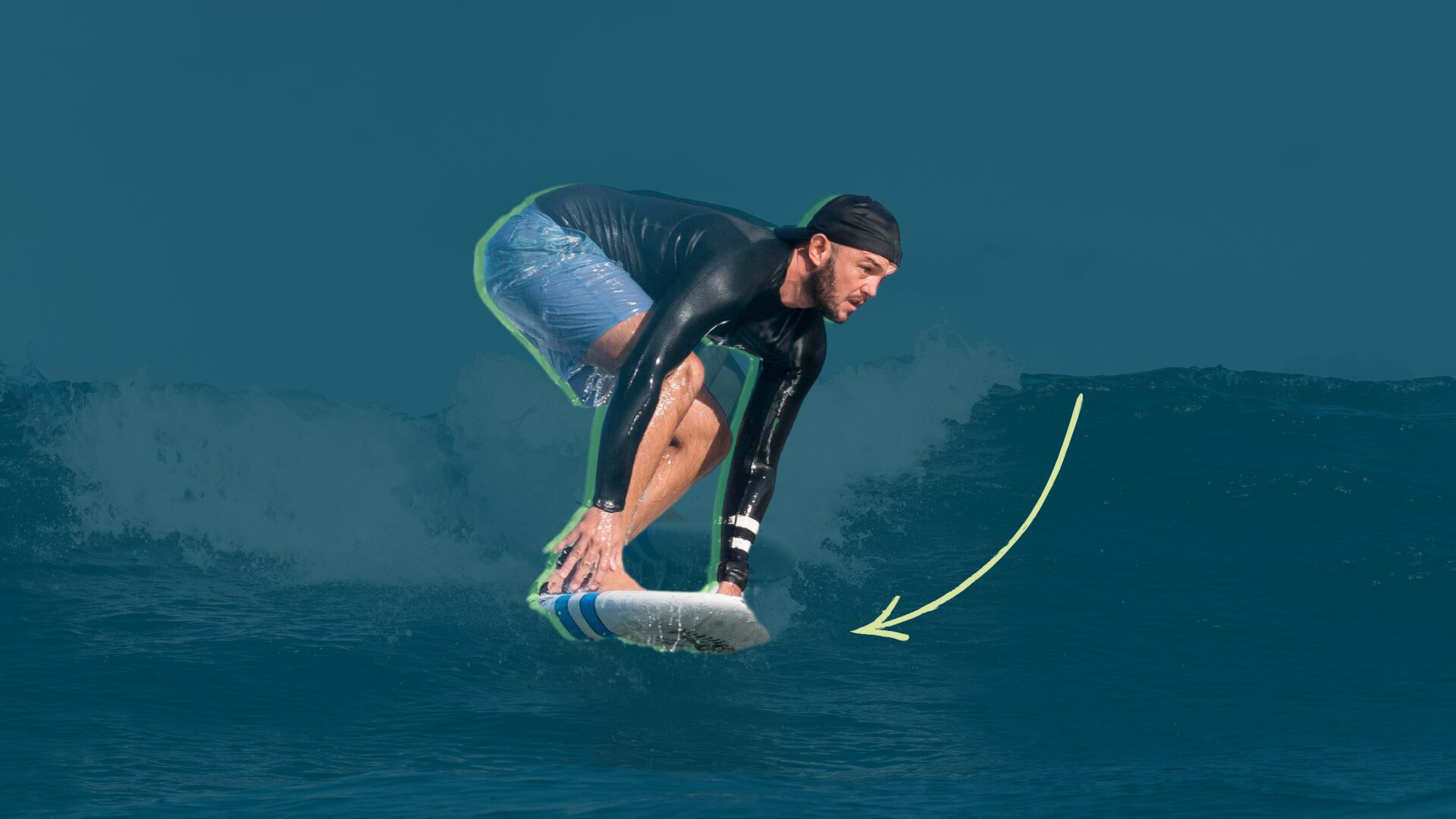
For example, surfing increases demand on the visual system to monitor the environmental conditions relevant to manoeuvre choice. Repeated and regular exposure to these conditions may enhance a surfer’s ability to recognise relevant information and quickly shift sensory dominance to maximise the use of available sources of information. Adaptations that will influence the wave parameters a surfer can navigate and the major manoeuvres that can be successfully performed – which in competitive surfing would increase scoring potential.
In team sports, if a player can allocate less cognitive capacity to movement control, they can focus more on strategic tasks like deciding when to pass or take a shot.
Tweet ThisMore broadly, we can think of proprioception as an internal guide, critical for informing movement and refining motor skills – highlighting the inextricable link to motor performance.
@rebecca_dowse
Postural control, balance, and proprioception
It is claimed that sports experience may elicit changes in the subcomponents of the sensorimotor system, including improved proprioceptive ability.
However, confirming this requires a direct assessment of proprioception, and is where semantic confusion often arises. To start, we must distinguish postural control, balance, and proprioception. These are distinct terms that we should consider independently. The overarching systems are also highly complex, requiring systematic evaluation to understand the specific changes. For example, determining balance capabilities requires evaluation of the interacting subsystems – biomechanical constraints, movement strategies, sensory strategies, orientation, control of dynamics and cognitive processing [2].
Despite the complexity of the postural control system, sports practitioners often use basic tasks like standing on one or both feet to assess balance.
These simple tests are not sufficiently specific or challenging to reveal differences in balance performance related to sporting experience. While sensory manipulations – such as removing vision or using an unstable surface – might expose some differences, they still don’t provide detailed insights into specific sensory changes [2, 3, 4]. Therefore, many current balance assessments may be limited in their value. To accurately determine proprioceptive performance and how changes may be linked to motor experience and sports performance, we need a direct assessment of proprioception.
Tweet ThisIt is claimed that sports experience may elicit changes in the subcomponents of the sensorimotor system, including improved proprioceptive ability. Confirming this requires a direct assessment of proprioception, and is where semantic confusion often arises
@rebecca_dowse
Assessing proprioception
When selecting a proprioception assessment, it is important to consider the mechanisms you want to evaluate. Joint position matching and threshold to detection of passive motion tests limit inputs from other sensory receptors (e.g., the occlusion of visual and auditory information) and often involve static and passive movements. This restrictive approach may be relevant when examining peripheral risk factors associated with injury but precludes insight into the ability to integrate and use the different sensory inputs.
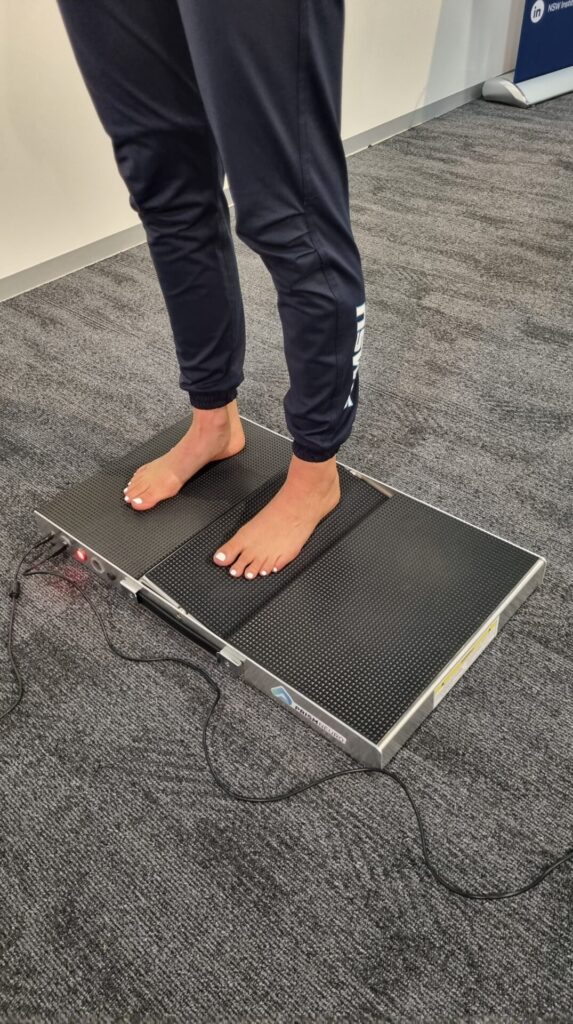
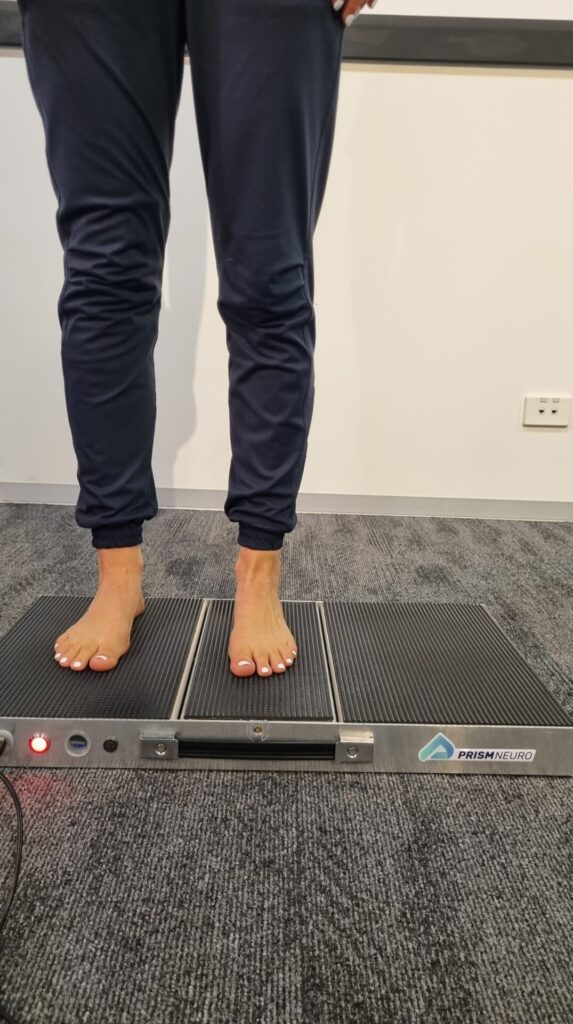
The active movement discrimination apparatus (AMEDA) offers an ecologically valid measure of proprioception. The AMEDA simulates real-world conditions and permits all sensory information for integration [1]. This enables insight into the central mechanisms and the coupling between perception and action. Tests that permit these conditions will be more sensitive to changes associated with motor experience and sports performance.
Applying the AMEDA to surfers, surfers can stand in a stance similar to standing on a surfboard. The test also involves pushing down on a wooden board to varying depths of ankle movement, like the fine adjustments surfers make while riding waves. Surfing occurs in a constantly changing environment, demanding intricate coordination of perception and action, requiring an assessment of proprioception that allows the normal function of this process – which the AMEDA permits.
Our results indicated that surfers have a unique “uniformity” in ankle proprioception, and that senior-elite surfers had higher scores than recreational and junior-elite surfers.
We also observed undulating changes in proprioceptive performance during a 12-week surf-specific neuromuscular training program (unpublished).
Tweet ThisThe active movement discrimination apparatus (AMEDA) offers an ecologically valid measure of proprioception. The AMEDA simulates real-world conditions and permits all sensory information for integration.
@rebecca_dowse
Click here to view more images of the AMEDA positions.

Proprioceptive performance across different sports groups
Previous research underscores how sport-specific demands relate to proprioceptive abilities. In tennis and water polo, better forearm precision and shoulder proprioception has been associated with higher competition levels and more favourable skill evaluations by coaches [5, 6]. While in lower-body dominant sports, ankle proprioception was determined to be the strongest predictor of competitive success [7]. Ankle proprioception is also thought to have a crucial role in controlling force application during key motor skills such as jumping, landing, and changing direction [8].
Athletes often show improved proprioception on their non-dominant side and exhibit variations in proprioception based on the specific motions they frequently perform.
For instance, hockey players and dancers, who regularly engage in activities involving extensive medial-lateral ankle movements on stable surfaces, tend to have heightened awareness and control in those directions (i.e., ankle inversion and eversion) [9]. These specific adaptations in ankle proprioception can enhance their balance and ability to perform complex skills.
Although our results differed from the studies mentioned, we attribute the uniformity in ankle proprioception among surfers to the unique task and environmental constraints of surfing. In surfing, both ankles must work together, as they are semi-constrained by the surfboard. The unpredictable nature of the ocean likely requires surfers to develop a well-rounded ability to sense movement in all directions to adapt to changing wave conditions.
This connection between proprioception and sport-specific demands highlights the adaptive nature of proprioceptive development.
Tweet ThisAthletes who regularly engage in activities involving extensive medial-lateral ankle movements on stable surfaces, tend to have heightened awareness and control in those directions. These specific adaptations in ankle proprioception can enhance their balance and ability to perform complex skills
@rebecca_dowse
Trainability of proprioception
Research on the trainability of proprioception yields mixed results, largely due to the inconsistencies in definitions, varying beliefs about its mechanisms, and diverse measurement techniques.
A common misconception is that balance exercises on unstable surfaces effectively target proprioception. However, peripheral proprioceptive inputs are less accurate in these conditions, thereby forcing the central nervous system to rely more on other sensory sources, such as visual information [10, 11]. The benefits of unstable surface training to sports performance are not clear and may be counterproductive. Training on unstable surfaces could hinder the development of key attributes like strength and power, and could even lead to declines in physical performance [12, 13].
Proprioception is more likely to improve through stable surface training combined with targeted sensory manipulations, and resistance training methods like plyometrics and strength training.
Training programs should also consider critical movement patterns and skills. In some sports, particularly those with acrobatic elements, this may require the collaborative development of a framework to target the development of critical skills.
When developing a framework, it is important to consider task constraints that gradually scale the difficulty according to the individual’s evolving skill level, physical capacity, and abilities over time. If a task is too complex for their current abilities, new behaviours may not develop [14].
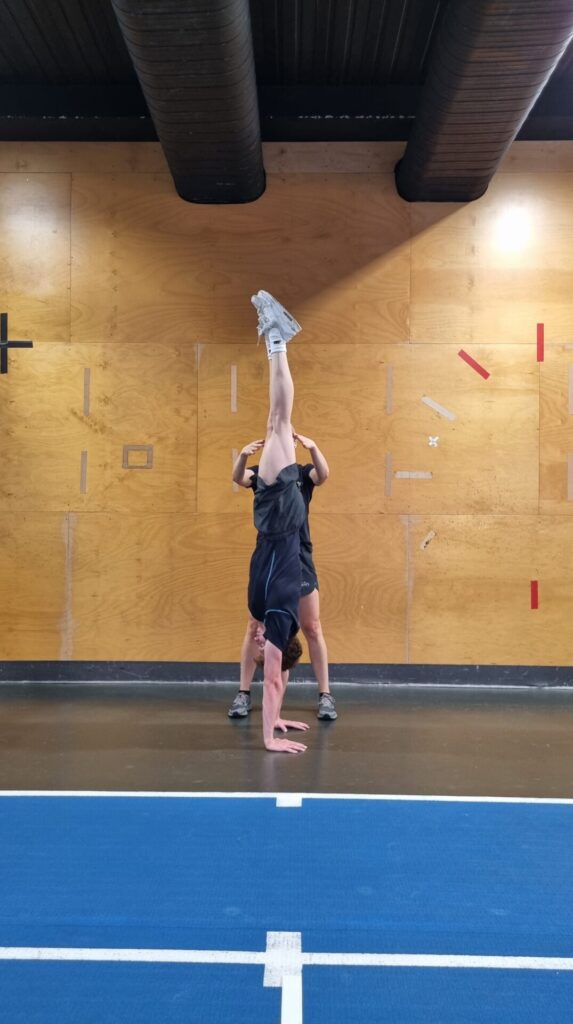
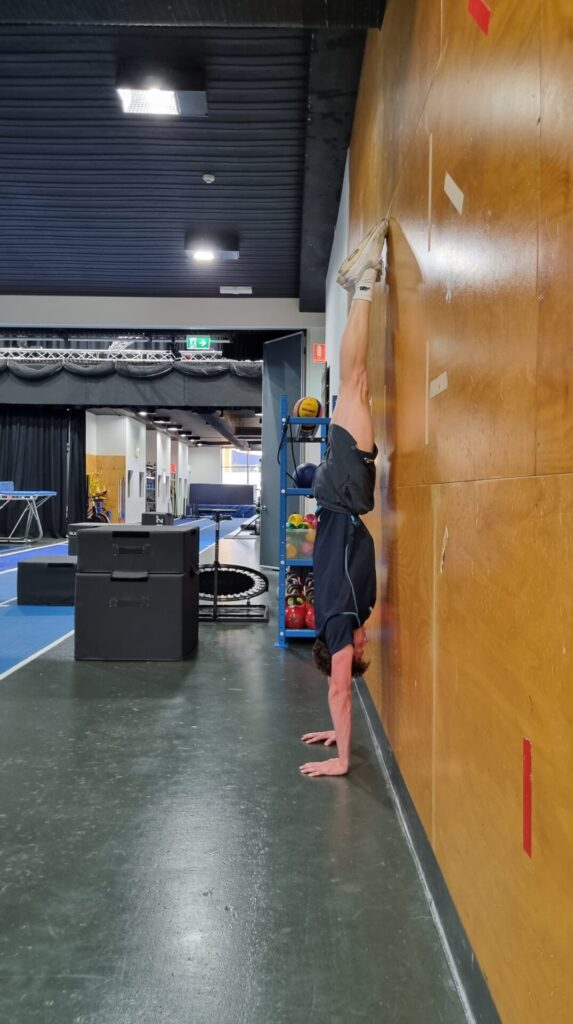
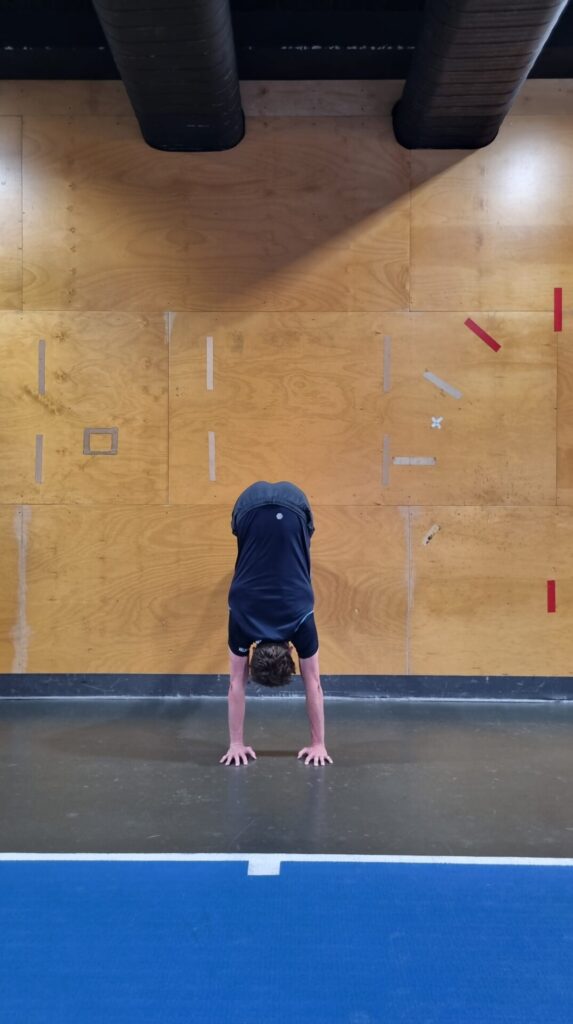
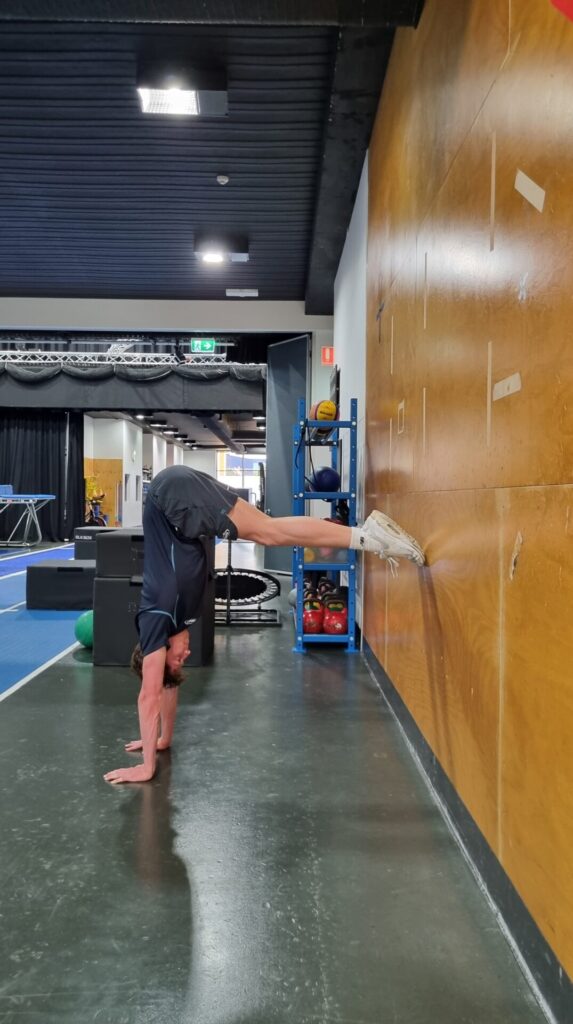
For example, we incorporate handstands into our swimming program to target proprioception.
The body shape during a handstand closely resembles the streamlined position – full shoulder flexion with the arms touching the side of the head, the head in a neutral position and alignment of the entire body – and involves progressive loading of the muscles that contribute to pulling propulsion and scapular stabilisation (e.g., upper and middle trapezius and serratus anterior muscles) [15]. Achieving and maintaining a proficient streamlined position reduces drag, which enhances the effectiveness of propulsive efforts and is essential for optimising swim performance.
Performing a freestanding handstand would be too advanced for most swimmers, so the skill is scaled, and sufficient competency is attained at each level before progressing.
Tweet ThisA common misconception is that balance exercises on unstable surfaces effectively target proprioception. However, peripheral proprioceptive inputs are less accurate in these conditions, thereby forcing the central nervous system to rely more on other sensory sources, such as visual information
@rebecca_dowse


Click here to see a library of handstand progressions


The specific tasks and environment of each sport influence the variation of these skills.
We established a comprehensive framework for surfing that encompassed gymnastics skills considered important for high-scoring manoeuvres like aerials, tube riding, and major turns. This framework used progressions and cueing aligned with the World Surfing League’s scoring criteria.
Athletes initially practised the tumbling skills in isolation before linking the skills together. We then progressed the individual by combining the movement skills with task constraints to target specific performance outcomes, such as smooth transitions between skills and the expression of power. In both cases, the overall program incorporated shaping drills – prerequisite positions relevant to the skill or sport – alongside targeted mobility drills and resistance training exercises.
Gymnastics skills require a heightened awareness of body position and movement – aligning with the definition of proprioception – and increase sensory reliance on proprioception [16].
Furthermore, repeated exposure to rotational movements may suppress vestibular symptoms such as dizziness and visual instability, allowing for improved visual tracking and body reorientation. This is particularly important in surfing, as athletes rely on visual cues to navigate the constantly changing environment and need to quickly reorientate themselves after a fall or major manoeuvre.
The flow chart below outlines a progression guideline that will help in selecting appropriate drills and skills. Athletes may be at varying stages across different movements and skills, so they may be further along their progression — and progress more quickly — for some skills compared to others. The athlete will not be at a given step in a “global” sense. They will be at the appropriate step for each skill they are developing.

Key takeaways
Proprioceptive ability includes both peripheral and central mechanisms, with adaptations relevant to sports performance primarily occurring at the central level.
An ecologically valid assessment of proprioception, such as the AMEDA, is required to determine ability relevant to sports performance and monitor changes over time.
The most effective approach to training proprioception for sports performance is through an evidence-based, multi-faceted program that combines movement and skill development with targeted sensory manipulations. The specific design of this program should be tailored to the individual’s needs, the demands of the sport, and the training environment.
To promote continuous performance improvements, it is also important to apply constraints that appropriately scale the task difficulty according to the athlete’s skill level.
Tweet ThisThe most effective approach to training proprioception for sports performance is through an evidence-based, multi-faceted program that combines movement and skill development with targeted sensory manipulations.
@rebecca_dowse