
Although I have been a strength & conditioning coach throughout my career, my work has developed almost exclusively around injuries. Over seven years at Virginia High Performance, I worked with Navy SEAL and Naval Special Warfare personnel. As you’d imagine, this exposed me to a large number of injuries covering a wide spectrum of injury types and severity. This was my firsthand education on injury restoration, and it was anything but conventional. Nevertheless, now as I’ve transitioned back into sport performance, somewhat to my surprise, I’m noticing a similar disconnect in the way injuries are managed.
The return to play (RTP) process takes a team of experts, each contributing a specific piece to the puzzle. My job as a strength coach is not to rehabilitate the injury, but, rather, provide what I call restorative based training.
Where the physical therapist has the task of localized treatment and rehabilitation, the priority for the strength coach is to re-integrate the injured area with the rest of the body. Restorative strength training is an extension of care, building upon the work of early phase rehab by providing a more specific and individualized RTP process.
By providing this intermediate training approach, we can conduct a more thorough and, often, accelerated transition back to sport.

This phase represents a critical window within the RTP, coming at a precarious time where practitioners can mislead athletes into rushing back to sport prematurely. Along with the players’ drive and motivations to get back on the field or court, an array of extraneous factors can contribute to incomplete rehabilitation, e.g., pressures from team management or ownership, incomplete physical testing, or the threat of losing their roster spot.
ACL injuries seem specifically vulnerable to this type of interference and mismanagement. Although ACL injuries have been the centerpiece of sports injury research for over a decade, we still can’t seem to crack the code on mitigating them.
In this article, I will present a handful of strategies along with a conceptual framework for how we can better navigate restoring ACL injuries, provide our athletes a better opportunity to sidestep these devastating injuries and, where they happen despite our efforts, mitigate the consequences.
Markers and limits for restoration training
The top priority for any successful return to play endeavor is having a thorough blueprint or timeline for how to conduct this process. The restoration timeline begins at the conclusion of conventional rehab. Although this milestone is highly variable, we can use roughly six months post op as a general starting point.
Figure 1 shows a clear delineation between phases of training and well marked time points, but each case is highly individualized and will rarely go as expected. Practitioners shouldn’t clear athletes based solely on dates, but by the agreed upon metrics based on training loads and capabilities.
| Phase 1 | Phase 2 | Phase 3 |
| – Movement & capacity – 60-80% / HR zone 2-3 – Moderate-increasing volume Linear/simple | – Strength & stability – >80% / HR zone 3-4 – Moderate-high volume – Non-linear/simple | – Power & speed – 80-100% / HR zone 4-5 – Moderate-diminishing volume Non-linear/complex |
| Training goals & KPI’s | ||
| Phase 1 (6-9 months) “Retrain to train” | Phase 2 (9-12 months) “Train to practice” | Phase 3 (12-15 months) “Train to play” |
| Restore base functional measures (aerobic, ROM, HRV, etc.) | Restore functional mass (i.e. body weight, quad atrophy) | Improve speed-power measures (i.e. CMJ, SLJ, COD) |
| Improve eccentric force tolerance (i.e. NordBord) | Increase functional capacities (i.e. aerobic, ROM, HRV, SL strength) | Reduce non-functional asymmetries (<15%) |
| Establish foundational stability/motor control (i.e. time to stabilise) | Establish eccentric & landing mechanics | Establish acceleration & top end speed mechanics |
As with any injury, there is an extensive list of potential factors contributing to ACL injuries. Our job is to recognize and separate the modifiable and non-modifiable risk factors in order to plan and prioritize our approach. The non-modifiable factors include previous injury history, body structure, playing surface and environmental conditions.
But practitioners may have influence over:
- total workload and sport demands (individual and team training volume / intensities)
- rapid changes in acute workload or demand
- training inputs (exercise selection, volume, intensity, density)
- mechanical (force) coupling ability
- body structure and mechanics: midfoot pronation, active hip internal rotation ROM
- non-functional asymmetries: >15% L-R differences between extremities, quad atrophy, eccentric hamstring strength
- managing compounding stressors: stress management strategies, sleep profiling, nutritional inputs.
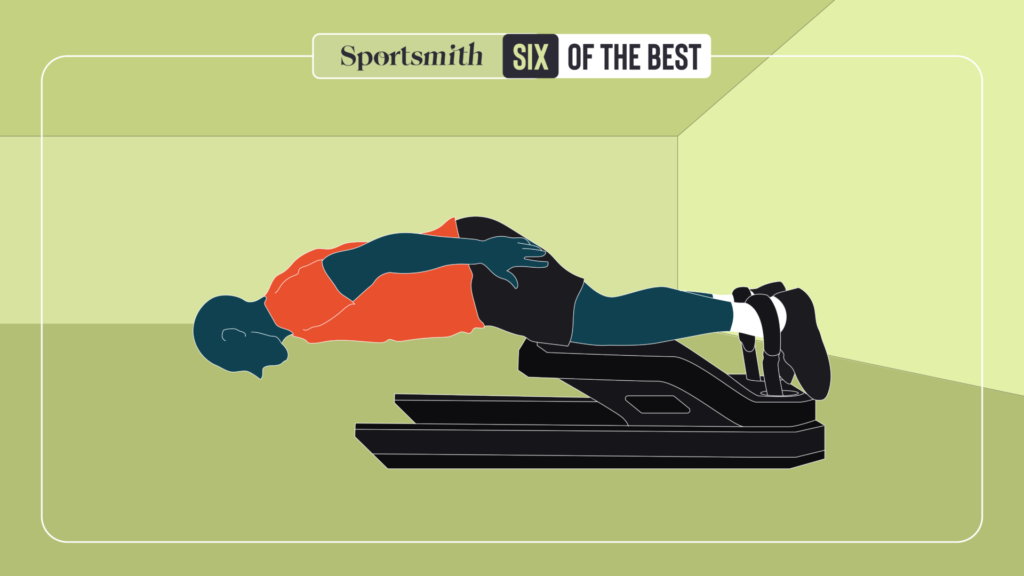
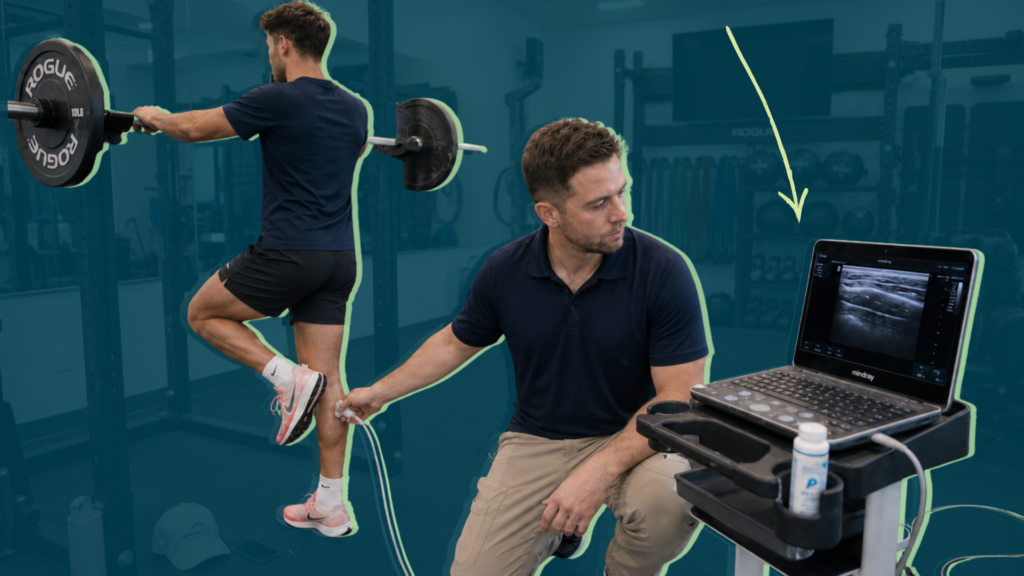
The optimal tools for monitoring the progression of restoration are independent force plate testing, timing gates, and a device for tracking movement velocity. But these are not often obtainable for most strength & conditioning coaches. Regardless of your resources, the goal is to use what you have and create a testing battery that is as objective and reliable as possible. I take a three prong approach that includes daily, weekly and monthly monitoring inputs. Across these inputs, I can make short term adjustments based on how the athlete is responding to training on a daily and weekly basis, while the monthly monitoring allows me to forecast subsequent training blocks more precisely.
| Daily monitoring | Weekly monitoring | Monthly monitoring |
| Omegawave reading – Physiological readiness | Thigh circumference – Muscle atrophy | Strength/power testing – Hex bar DL |
| Conversational – Psychological readiness | Y balance testing – Functional range of motion | Jump testing – RFD, eccentric RFD, concentric impulse |
| Testing battery | Phase 1 | Phase 2 | Phase 3 |
| Goals | <20% | <15% | <10% |
| Hex bar kickstand DL – 3 rep (average & peak concentric velocity) | From above knee @BW | From below knee @1.25x BW | From floor @1.25x BW |
| SL jump (vertical) – 3 reps each leg for average measure | SL static jump with BL landing | SL jump with SL landing | SL RSI jump |
| SL jump (horizontal) – 3 reps each leg for total distance | SL hop with BL landing | SL repeat hop | SL repeat bound |
| – The goals listed represent margins of difference between injured and non-injured side. Values listed are loosely adopted from Matt Jordan – Jump testing protocols can also include time to stabilise (TSS) for neural analysis – Having precise pre-injury values can be difficult to obtain. In these cases, this can serve as a conceptual framework to follow | |||
Tweet ThisThe first phase of ACL restoration centres around functional motor control, relearning foundational movements, and improving body position and awareness
@danny_ruderock
Phase 1 (months 6-9): Re-train to train
Body and foot position
A hallmark of ACL health is proper mechanical coupling around the knee joint. Mechanical coupling, or co-contraction, reveals itself by the relative positioning of the base of support (BOS) and the center of mass (COM). The dynamic relationship between the foot and trunk is a central determinant for specific muscle actions and firing patterns.

Whether an athlete has a heel dominant strike or more forefoot positioning upon ground contact is a significant variable for ACL injuries. Foot position at ground contact determines the displacement of the tibial plateau angle (TPA) [2]. The TPA defines the tibial slope relative to gravity and body position (limb angle). The greater the distance between the COM and the BOS, that is, between the foot position and trunk center of mass, the higher the risk of an ACL injury.
Effective mechanical coupling is a primary factor for joint health. Instructing athletes to maintain specific relationships between the foot and the trunk can help them move more beneficially from the perspective of the knee.
During squat, lunge or other lower body movements, the athlete should position their body and perform the movement so they create parallel angles between trunk and shin: more positive shin angle, more trunk incline. By mirroring the trunk and shin angles. the athlete is more likely to establish proper force coupling between the leg compartments, while demonstrating an advantageous TPA or relationship between BOS and COM.
The better they can stabilize joints through adjacent muscle groups, the less stress (torque) they place on the soft tissue structures spanning and surrounding the joint.

Proprioceptive acuity
I believe that most acute soft tissue injuries don’t occur due to overloading, but to being loaded faster than they’re able to respond. Although the research in this area is still in its infancy, there is a growing body of evidence that visual processing and localized proprioceptive acuity are significant factors for injury [4, 10].
Therefore, proprioceptive and sensorimotor acuity should be a top priority during injury restoration. Compromised proprioceptive acuity at the lower legs, ankles and feet impairs the subsequent neuromuscular processes that prepare the athlete to respond to stimulus or stress. Before we move on to strength and power qualities, we must first attend to proprioception.
Like the research, the training applications for improving proprioceptive function are also ambiguous and somewhat controversial. Many times, it’s just overcomplicated, resulting in coaches neglecting proprioceptive work because there’s not enough scholarly evidence or because they think it falls outside their responsibility.
Particularly in this phase of the restoration process, a simple approach is to have the athletes perform portions of each training session without shoes; do something that directly stimulates the feet; and build in movements and exercises that challenge the athletes’ ability to respond to stimuli.
For athletes in this phase of restoration, just having them out of their shoes is enough to stimulate proprioceptive processes. Designate portions of the warm up for them to do barefoot, leaning into functional or rudiment movements like lunging, crawling, skips and hops. A few specific drills that work particularly well barefoot are battle rope walks, tennis ball smashing, and vibrational tools. These all directly stimulate the proprioceptive and mechanoreceptive bodies, and “alert” the tissues to prepare for the external load.
Phase 2 (months 9-12): Train to play
Strengthen the feet

After establishing movement efficacy and positional awareness, the next priority is redeveloping functional strength, beginning at the feet.
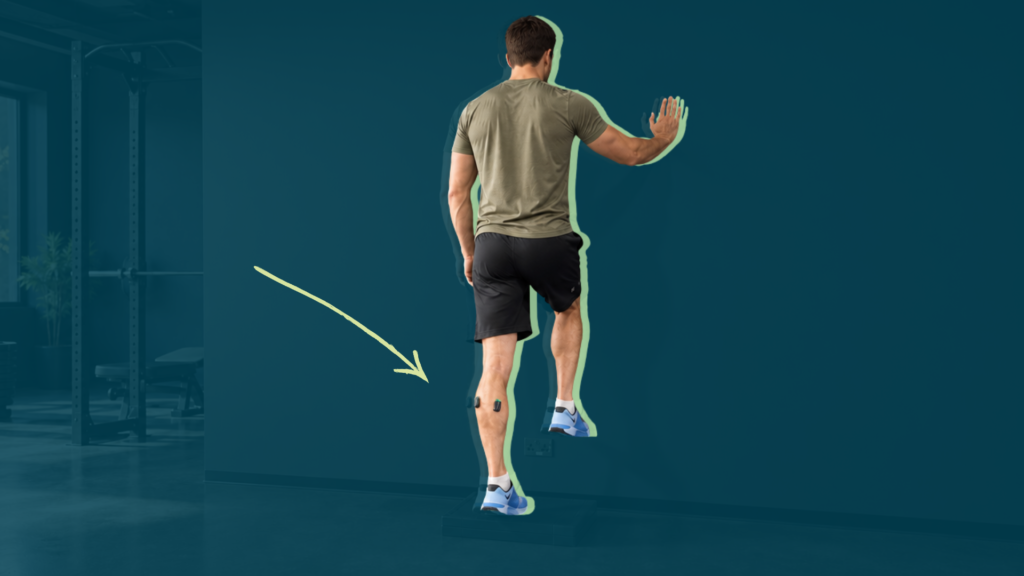
The foot is the direct interface for force exchange and can strongly influence how force is sequenced and transmitted throughout the body. Coaches can program foot strengthening through intrinsic foot strength, foot compliance and suspended heel.
Intrinsic foot muscles (IFM) are particularly important for ACL health. The IFM particularly help the foot “splay,” which is essential for dispersing eccentric forces [7]. A way to think about this is that a greater contact area creates a broader channel to disperse force. By strengthening the IFM, the foot can better splay and stabilize, which likely reduces the impact on these joints during change of direction, landing or cutting tasks.
Foot compliance is the ability to interact with the ground by bending and contorting across the segments of the foot. This is akin to dexterity, whereby improved compliance allows us to better manipulate and maneuver across the foot. When athletes are deficient in foot compliance, they can experience greater stress and torque at the knee due to a poor ground interface. Consider an athlete who cannot fully pronate / evert their foot upon ground contact. The reduction in pronation / eversion will result in the tibia having less room to translate naturally, amplifying the shearing effect where the tibia interfaces with the knee.
The suspended heel, a.k.a. the Windlass mechanism, is the ability to fully tense the medial plantar arch, providing a locking mechanism that stabilizes the foot and ankle.
This component of foot strengthening is likely the most compatible to the foot actions we see in sport: forefoot dominant, heel off the ground, forward leaning body position, and transitioning between supinated and pronated foot patterns.
The calf muscles are instrumental in dispersing impulsive ground reaction forces that reach the knee. The triceps surae act as an “air bag” to dissipate impulse by functioning as both a knee flexor and ankle plantarflexor [2]. Considering the importance of the forefoot’s dominant initial ground contact position and this function of the triceps surae, strengthening the arches of the feet is a critical component to ACL restoration.
| Intrinsic foot strength | Foot compliance & stability | Suspended heel (Windlass) |
| – Creating a strong interface with the ground – Ability to ‘splay’ and open the feet – Ability to exxentrically load through the feet | – Creating foot dexterity and acuity – Ability to ‘bend’ and contort the feet – Ability to pressurise through a variety of foot positions | – Creating a mechanical coupling between the foot & ankle – Ability to ‘lock’ and load through arches – Ability to extend and load through the big toe |
| Foot strengthening exercise bank | ||
| Intrinsic foot strength | Foot compliance | Floating heel |
| Mini band arch series | Tennis ball smash/rope walks | Spring ankle series |
| Foot bridges | SL KB pass | Split stance knee bends |
| Wall sit with heel-toe lift | BB SL tilts | FFE split squat with heel float |
| Low box depth jumps | KB crossover hinge | Reverse lunge with heel float |
| Rudiment series (hop, skip, pogos) | BB OH offset march | Speed (shin drop) lunges |
Close the gaps: Unilateral loading
One of the standard, high priority outcomes from ACL restoration is reducing the deficit between the injured and non-injured legs. Matt Jordan has suggested 10% as a standard for safely clearing an athlete back to sport [5]. This can apply to whatever specific measures you collect: jump height / displacement, isokinetic testing, ground contact time, or thigh circumference.
While narrowing the difference between injured and uninjured limbs should be a priority, we cannot overlook the intralimb deficits, such as in specific strength-power qualities like eccentric vs. concentric force measures. As the athlete nears their return to play, we want to progressively close the gap across the key measures.
In a study analyzing predictive markers for ACL injuries, injured athletes had proportionately greater eccentric rate of force development (load) compared to relative concentric force outputs (explode) [7]. Moreover, injured athletes had proportionally greater relative concentric impulse (drive) compared to relative concentric force.
These findings suggest that various proportions across force profiles and the neuromuscular qualities they represent may be more significant to ACL injuries than purely force deficiencies.

| Vertical jump variable means (SDs) and group differences | |||||
| Variable | Uninjured mean (SD) | Injured mean (SD) | Test statistic | p-value | Effect size |
| Load | 48.2 (8.5) | 48.4 (9.5) | 1792 | 0.89 | 0.02 |
| Explode | 49.4 (8.5) | 45.0 (6.8) | 1331 | 0.08* | 0.52 |
| Drive | 52.0 (8.6) | 57.3 (9.2) | 2386 | 0.06* | 0.61 |
| Load:Explode | 0.99 (0.20) | 1.08 (0.19) | 2373 | 0.06* | 0.45 |
| Explode:Drive | 0.99 (0.32) | 0.81 (0.19) | 1181 | 0.03* | -0.57 |
| Load:Drive | 0.96 (0.28) | 0.86 (0.20) | 1552 | 0.33 | -0.36 |
| Those predominant factors include proportionately greater eccentric rate of force development compared to average relative concentric force, and proportionally greater relative concentric impulse compared to relative concentric force | |||||
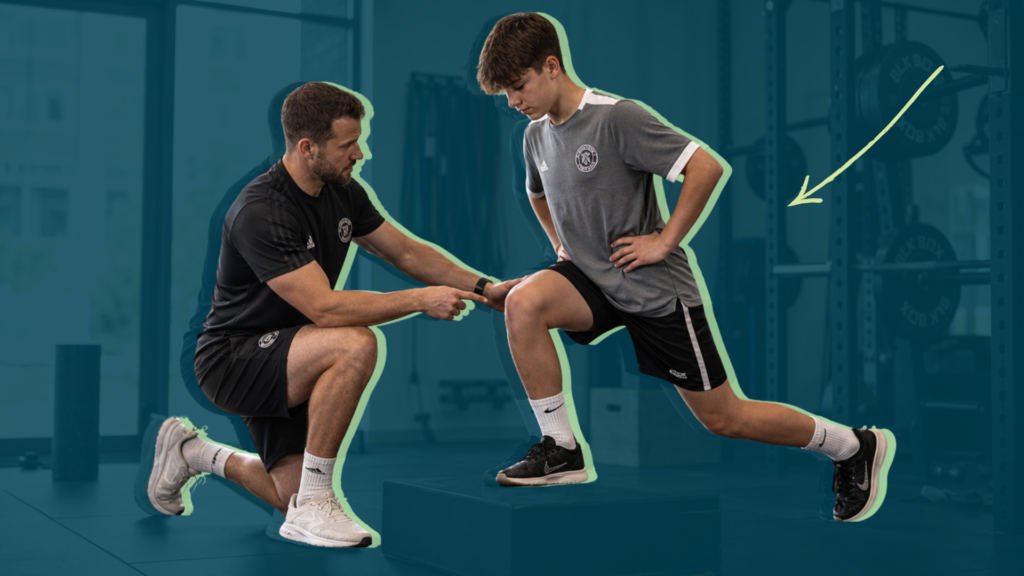
A foundational strategy for reducing both inter- and intralimb deficits is prioritizing unilateral loading. Another general but effective marker is a 3:1 ratio of unilateral to bilateral movements.
When athletes are exposed to bilateral loading too frequently, too early in the RTP process, they may bias the injured leg. Along with not loading the structures they need to load, this can also create unfavorable compensation patterns for when they do return to sport. Weighting the program towards unilateral loading is a pragmatic strategy for addressing these deficits. When athletes have a large delta across limbs, we can then take a more biased approach to our programming.

Tweet ThisI believe that most acute soft tissue injuries don’t occur due to overloading, but to being loaded faster than they’re able to respond
@danny_ruderock
Phase 3 (months 12-15): Train to compete
Improve ability to tolerate variability
Ultimately, sport turns on how an athlete responds to external stimuli within a very small window of time.
Returning to a point from the beginning of the article, I take the perspective that most non-contact ACL injuries result from tissues being loaded faster than they’re able to respond, rather than simple overload. Non-contact ACL injuries occur within 100-300ms of ground contact [6], so we must recognize the very small window of time that athletes have to position themselves and prepare for force exposures. We will never be able to recreate the unpredictable situation athletes encounter in sport, and we must factor that limitation into our programming and exercise selection. Shawn Myszka wrote “the movement behaviors that emerge in sport can be viewed as problem solving tasks for the athlete… Integrated movement solutions are underpinned by intertwined processes of

The third phase of restoration should emphasize high velocity movements that closely reflect the vectors, forces and actions of sport. Moreover, our exercise inputs and training parameters should present less predictability the closer the athlete gets to returning to sport in order to create more demand for problem solving.
This does not require anything expansive or outlandish. Simple acceleration, change of direction, and plyometric drills with progressively layered demands is an effective framework for challenging variability. Building off a simple curved acceleration drill by adding verbal and visual commands can create a complex task to challenge the athlete’s reactiveness. This concept can be applied to virtually any base drill, and can be progressed in any number of ways.
Ultimately, the goal is to continue adding these layers of complexity to increase the demand of reactiveness and perceptual acuity, replicating the demands of sport as best we can in a training environment.
Tweet ThisNon-contact ACL injuries occur within 100-300ms of ground contact, so we must recognize the very small window of time that athletes have to position themselves and prepare for force exposures
@danny_ruderock
Restore trust and confidence
The capstone for injury restoration is facilitating the athlete’s ability to regain trust and confidence in the injured area. Too often, practitioners overlook this element, and it must become more of a priority.
We can have the most sophisticated testing and evaluation battery backed by the most robust training protocols, but if the athlete doesn’t regain their confidence and trust in their ability to perform, did we really do our job? Injuries can be psychologically damaging, especially something as serious as an ACL tear. The baseline level of stress rises dramatically if the this is the athlete’s first major injury, or if it comes during a critical juncture of their career (e.g., junior year of high school, during a contract year). Whatever the circumstances, our job is to create a process and environment that accommodates them and all aspects of their recovery.

Time and repetition are fundamental for improving trust and confidence. We should be controlled and calculated with the risks of failure that our exercises present. They must be present, and the athlete must fail at times, but those failures cannot have lingering after-effects. The feedback and instruction we provide is essential for the effectiveness of the application or exercise.
How we correct and constrain movement must be relatable and actionable for the athlete. Clarity and confidence of instruction both influence an athlete’s confidence. Whether the athlete can’t comprehend your input or isn’t confident in your delivery, they will ultimately be more guarded or reserved in their efforts. We need to show them we believe.
Tweet ThisWe can have the most sophisticated testing and evaluation battery backed by the most robust training protocols, but if the athlete doesn’t regain their confidence and trust in their ability to perform, did we really do our job?
@danny_ruderock