
As the role of the strength & conditioning coach evolves, practitioners demonstrate increasingly impressive levels of knowledge and intellect in developing athleticism, while cultivating innovative abilities to handle and organise data, amongst a range of other outstanding qualities. However, an often neglected area is the ability to coach, specifically, the ability to identify when an athlete requires an exercise regression or progression, and then instructing that modification.
It’s one thing to have a deep toolbox, from mobility drills within warm ups all the way to advanced sport specific movements. What defines coaches is their ability to understand which exercises are best for their athletes under any set of circumstances to optimise both learning and development.
To paraphrase a familiar quote, a mediocre programme delivered by an outstanding coach will always trump an outstanding programme delivered by a mediocre coach. That emphasises the need to attain the basics of coaching ahead of the more finite areas of expertise.
Ideally, coaching is geared towards developing athlete autonomy. However, some S&C coaches perceive this outcome as a threat, believing that as the athlete matures into greater autonomy, they’ll perceive less need for a coach. Taken this line of thought to its conclusion, the S&C coach becomes redundant, even irrelevant.
In truth, as autonomy increases, the need for exercise advancement increases, further challenging and advancing athletic ability and placing a higher demand on professional inputs. A well-developed, autonomous athlete needs us to be at the top of our game, doing our best work. Moreover, the principle of sporting transfer extends beyond exercise selection. Neglecting athlete autonomy will transfer into negative performance outcomes.
Tweet ThisWhat defines coaches is their ability to understand which exercises are best for their athletes under any set of circumstances to optimise both learning and development
@Rich_Kite
Movement competency is the basis of athlete autonomy
The requirement to move into more advanced exercises is a foundation of movement autonomy, without which the athlete has a low ceiling for progression.
The conscious competency model is useful at this point (Figure 1), as athletes need to first acknowledge their incompetence before they can move towards autonomous competency. They progress through a planned approach.
Athletes develop autonomy through acknowledging – consciously and subconsciously – a task’s demands. Coaches, therefore, absolutely need to be mindful of limiting the demands the task places on the athlete in order to optimize learning through task accomplishment. One or two task demands are sufficient for this process. Any more and the quality of training dips. The athlete will likely overthink the movement and, as a result, will not generate a meaningful stimulus to develop the targeted physical qualities.
This leads us to the importance of exercise continuums in aiding the development of athlete autonomy, while simultaneously progressing athletic performance.

An exercise continuum allows the coach to either expand or restrict the demands on the athlete.
Exercise regressions constrain the exercises and shift the emphasis towards isolated tasks, overcoming the complexity of multiple combined demands by breaking them down into more manageable components. This leans on the whole-part-whole approach or chunking, straight out of the technical coaches’ playbook. Expose the athlete to the movement, break it down into components they can learn in isolation, and then put them back together to be executed as one movement.
Likewise, progressing the exercise allows us to introduce new tasks the athlete has to overcome, further challenging their abilities and progressing movement capacity.
Exercise continuums for the back squat
The back squat provides a relatable example. Squatting is pretty much a staple exercise in 99% of able bodied sports to increase force production.
Overhead squat to develop postural control
While we could get the athlete squatting under a barbell immediately, it doesn’t mean we always should. The back squat may not be a highly complex movement, but there are elements that athletes might struggle to grasp, such as retaining neutral spinal posture (lack of lumbar curvature, in particular), gauging full range of motion and maintaining good limb alignment. Exercises such as the overhead squat can be introduced as a regression, given the demand of the exercise is now focused on postural retention.
Acknowledging that there may be several triggered coaches out there, let’s break down how and why this is a valid move along the exercise continuum.
Biomechanically, the closer the load is to the centre of mass, the greater load we can move. By moving the bar further away from us, like in an overhead squat, we increase the complexity of the movement while reducing the loading potential. Therefore, the overhead squat is not a lower limb strength exercise – don’t confuse effort with intensity! Instead, the overhead squat places a high demand on shoulder stability and torso position (i.e., posture), in order to keep the barbell overhead and balanced over the base of support (the foot). A consequence of failing to retain good posture is failing to keep the bar overhead.
Moreover, the exercise provides instant feedback to the athlete that an error has occurred. Dropping the chest is the most common error.
This is also why it is critical to use a meaningful load when learning overhead squats. When I say meaningful, I refer to a load that can’t be held overhead outside of the base of support (essentially, outside the length of the foot). Broom handles and technique bars have a good place within the gym – just not here.
We want errors. We want them to not be able to retain the bar overhead – in this case to signal to the athlete that there’s an issue they need to address. Load is necessary to highlight these movement issues.
Once the athlete masters the overhead squat, put them into a back squat and watch them demonstrate an improvement in torso position during squats.
The key elements to this regression are the feedback the coach provides and the need for the athlete to actively engage in the task to overcome such demands. The latter consideration points towards athlete autonomy.
Tweet ThisThe overhead squat is not a lower limb strength exercise – don’t confuse effort with intensity. By moving the bar further away from us we increase the complexity of the movement while reducing the loading potential
@Rich_Kite
Continuums for lower limb mobility and intra-abdominal pressure
We must prioritise the constraints we impose based on the individual’s needs. The overhead squat will encourage better torso position, but it will neither address nor highlight knee alignment or ankle range of motion. Additional exercises, such as mini-band goblet squats or ankle mobility work can do for those biomechanical components what the overhead squat did for torso position.
Sticking with the squat, many athletes will not understand the application of intra-abdominal pressure. We could use exercises such as the Palloff press to educate, develop and improve intra-abdominal tension while sharing similar positional demands as the squat. This can then be progressed into a Palloff press at three positions – quarter squat, half squat, full squat – to further develop such abilities.
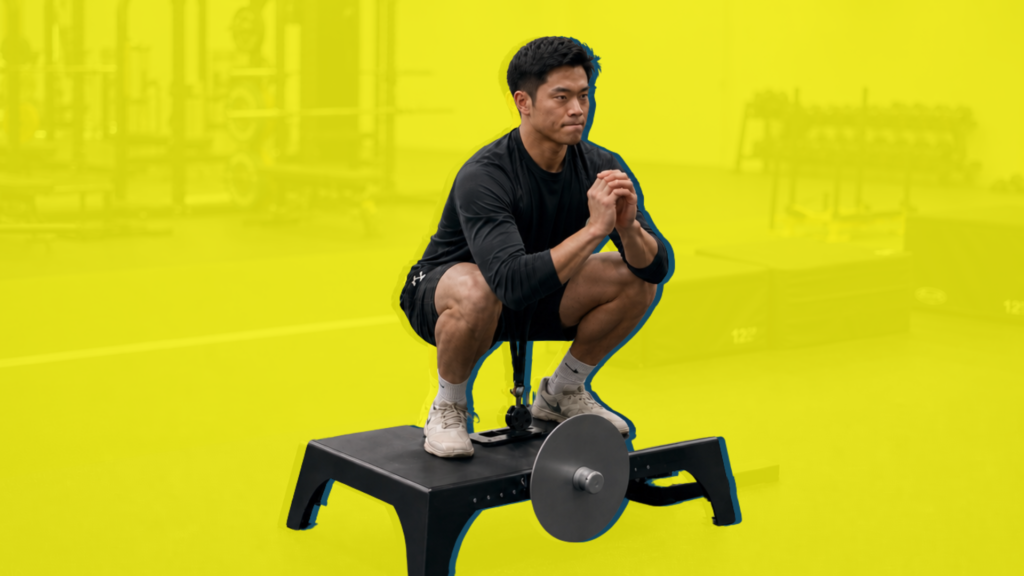
Coaches can weave in other basic forms of squatting to address other components of the overall movement, such as the leg press or the goblet squat to understand basic movement mechanics, or using mini-bands to focus on limb alignment.
Managing task demands in the back squat continuum
A few of you may be thinking “In the interests of time efficiency, why not combine the two?” You certainly can, but you may be placing too many tasks upon your athlete at once. Think back to the rule of only one or two demands for optimal learning.
With this back squat continuum in mind, let’s imagine a world wher you just stick to teaching the back squat, pure and simple. You might simply instruct the athlete to stick their chest out and butt back during a squat, ensure their limbs are aligned, and all the rest
But some athletes lack a sufficient comprehension of the exercise demands or the ways to overcome them.
They either consider the task as merely bending the knees and hips into a full range and then standing back up, regardless of postural position, limb alignment, etc; lack any bodily awareness, and perceive themselves as moving with good mechanics, when, in fact, they exhibit poor mechanics; or, most likely, a combination of both. Think back to Figure 1 and the conscious competence model.
When you step into your athletes’ shoes, you can acknowledge a key consideration: They don’t know what they don’t know.
It’s our job to provide them with the tools to educate themselves on the full exercise demands. Once they develop that awareness, you can refine abilities and progress performance.
While regressing athletes to focus on specific abilities may appear as one step backwards to take two steps forwards, in my experience many athletes haven’t earned the right to execute their current exercise prescription.

Continuums for Nordic hamstring curls and Olympic lifts
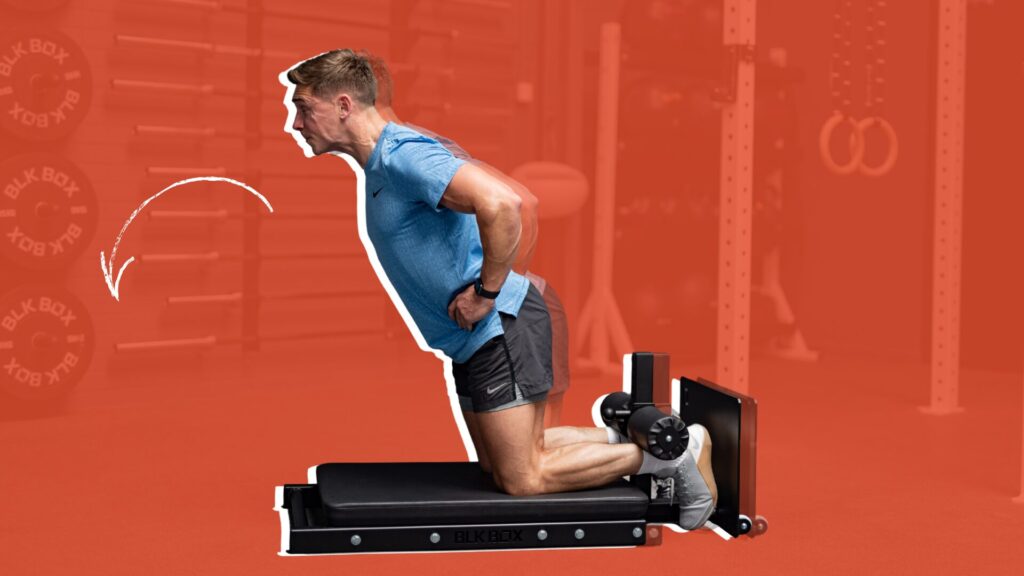
Another continuum that I have applied with great success with youth academy football players is within the Nordic hamstring curl exercise. This takes on a slightly different approach to using continuums. The common mistake with Nordic curls is perceiving an effective workout as attaining high rates of eccentric force within minimal ranges at the top few degrees of eccentric movement.
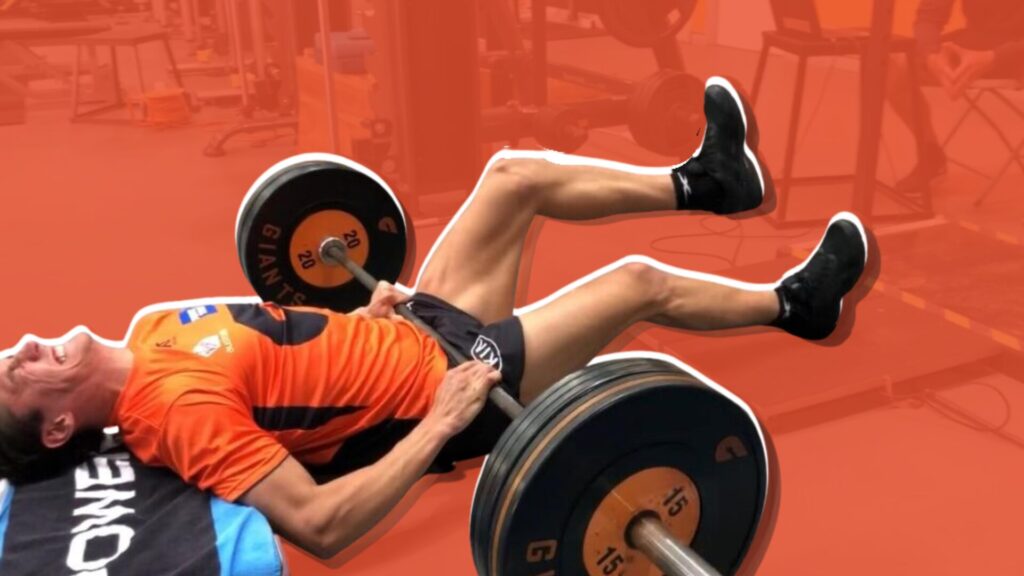
Ben Drury provided me with great insights into effectively programming Nordic curls. My current understanding is that while the end goal is improving hamstring strength, the immediate goal is the full range of movement. Body weight assistive exercises best allow athletes to achieve this. Once they can control the movement over the full range, then we can pursue greater loading.
The only caveat is that if you need to use a band so large that it is doing more work than the athlete, I typically start with isometric holds at different angles, going as far as the athlete can go without falling.
| Stage | Exercise | Objective |
| 0 | Isometric holds | Basic strength development |
| 1 | Band assisted Nordics (eccentric only) | Attaining a full range of motion |
| 2 | Band assisted Nordics (eccentric and concentric) | Attaining a full range of motion |
| 3 | Nordics with assisted concentric | Eccentric overload and development of concentric strength |
| 4 | Nordics | Eccentric and concentric overload |
In a similar but more advanced scenario, the application of weightlifting commonly suffers from too much focus on technical mastery at arguably insufficient loading for performance enhancement. This is somewhat of a contradiction, given that we program weightlifting movements to develop specific qualities related to higher force production. So, once again, we can apply a continuum to further develop both movement competency and physical development.
The second pull is typically where the athlete realizes the most immediate gains. The specificity of triple extension and exploiting the stretch-shortening cycle are the driving characteristics.
Therefore, developing a good use of the stretch-shortening cycle with a load via jump shrugs seems the clear starting point. But we do want to progress this to the full lift so that we can take advantage of not only the stretch-shortening cycle but reactive (or yielding) strength capacity.

In this example, while the main movement focuses on building towards the full weightlifting movement, auxiliary exercises work towards the progression of the movement.
By the third stage, what was once a primary movement has now become an assistant movement. This continuum would, of course, continue, with main exercises extending towards the full lift and assistant exercises developing the next stage of the lift or complementary progressions. Suchomel et al.[1] offer insights into how weightlifting derivatives can be applied across the spectrum of force and velocity, which may also be of wider consideration.
Tweet ThisThe application of weightlifting commonly suffers from too much focus on technical mastery at arguably insufficient loading for performance enhancement
@Rich_Kite
Programming continuums beyond individual lifts
The utility of continuums extends beyond learning movements. Plyometrics are one, with robust guidelines based on strength capabilities relative to body weight (BW)[2, 3]. In the example of developing capabilities to perform depth jumps, an athlete should be able to perform back squats with 1.5 x BW. If this is not possible, provide regressed exercises based on current strength capacities, such as >1.0 x BW hops and repeated jumps, and <1.0 x BW for repeated countermovement jumps and pogo jumps.
Given the guidelines Suchomel et al. [2, 3] provided, the continuum further provides a structure and greater understanding of how plyometric training depends upon physical capabilities. While any athlete can visually execute the most complex of plyometric movements, only athletes of a specific competency will be able to generate sufficient force at the rate necessary to develop the associated, desired, sport relevant qualities. Athletes of an inferior standard will instead generate compensation patterns, resulting in high contact times and consequently the reduced use of the stretch-shortening cycle, for example.
Therefore, the athlete must have a foundation of abilities, including a conscious understanding of movement and an ingrained level of autonomy prior to advancing to such models.
Progressing movement competency under load
I’m certainly a coach who is happy to “work through the rough,” that is, allow technical breakdown to occur under significant load. However, the key is consistency of movement. An athlete with good consistency that slowly deteriorates under significant fatigue is not the same as one who is inconsistent in movements across a range of stimuli, or, more obviously, those who consistently produce poor movement. There may be a time where movement represents less than ideal mechanics (i.e., maximal efforts), but the majority of training meets the standards of good movement competency.
The beauty behind the use of continuums is that the athlete develops continually throughout the process. With the constraints in place, an athlete can still use loads that evoke the correct stimulus for growth, a key element to programming.
Whereas squatting with an empty bar may gradually enhance technique, the lack of load prevents any meaningful progression of performance. This raises the question of whether we are efficiently using our contact time while we’re fighting for more athlete access! Given the choice, I would always prefer loading an athlete in a regressed movement and advancing them as they master the basics, over prescribing more advanced movements with minimal load.
The continuums described above are merely examples. They are not some sort of “final product,” let alone the “only way.” The art of coaching is, of course, working with what’s in front of you.
Any one continuum may be appropriate for one athlete, addressing the issues they evince in order of priority. Other athletes will make the same journey via different continuums. Some athletes may require more exercises, while others require less. Different athletes will be really good in specific movements and poor in others.
Applying a continuum requires the understanding of what movement deficits are present, and employing the exercise that exaggerates the demand of this ability to raise the athlete’s awareness of this aspect. Once they have this awareness and control, reassembling the components into the original movement (e.g., the squat) will then progress their performance and autonomy in tandem.
Tweet ThisGiven the choice, I would always prefer loading an athlete in a regressed movement and advancing them as they master the basics, over prescribing more advanced movements with minimal load
@Rich_kite