





We asked six experts in sports science this question, and this is what they said:
Marc Lewis
Director of Applied Sports Science, Houston Texans
The monitoring tool that has provided the highest return on investment in the last 12-24 months has been a wellness questionnaire.
We implemented a short and practical wellness questionnaire that assesses self-reported fatigue, sleep quantity, muscle soreness, stress, and mood state. Each wellness construct is assessed on a five-point scale and then summed to generate an overall wellness value. Athletes can complete the questionnaire early in the day to allow adequate time for the data to help inform decisions about training or practice later that day.
The addition of the wellness questionnaire provides subjective information that complements the numerous objective measures we collect on a daily and weekly basis to monitor the recovery-fatigue continuum. This data provides distinct and complementary insights, avoiding the redundancy of information, while allowing us to combine data streams into a more complete picture of an athlete’s current state.
Moreover, it provides insight into external factors such as sleep and general stress that influence an athlete’s response to training; and it provides opportunities for targeted plans to improve areas of concern.
To analyze the data, you can use day-matched (e.g., compare MD-3 to MD-3), within-individual z-scores with rolling averages and standard deviations to identify change in each wellness construct and the overall wellness score. This will allow you to identify when athletes are outside of their individual normal ranges.
The addition of a subjective tool to assess factors influencing recovery and readiness to train allows for a more holistic view of the athlete. We can then better identify whether an intervention is appropriate, and if so, what that intervention might look like.
It also creates opportunities for conversations, enforces collaboration between stakeholders, and facilitates mutual understanding, learning, and perspective, all towards the goal of enhancing individual performance and health.
Tweet ThisWe implemented a short and practical wellness questionnaire that assesses self-reported fatigue, sleep quantity, muscle soreness, stress, and mood state. Each wellness construct is assessed on a five-point scale.
@marctlewis
Ken Knox
Director of Sports Performance and Return-to-Performance Coordinator, Wake Forest University
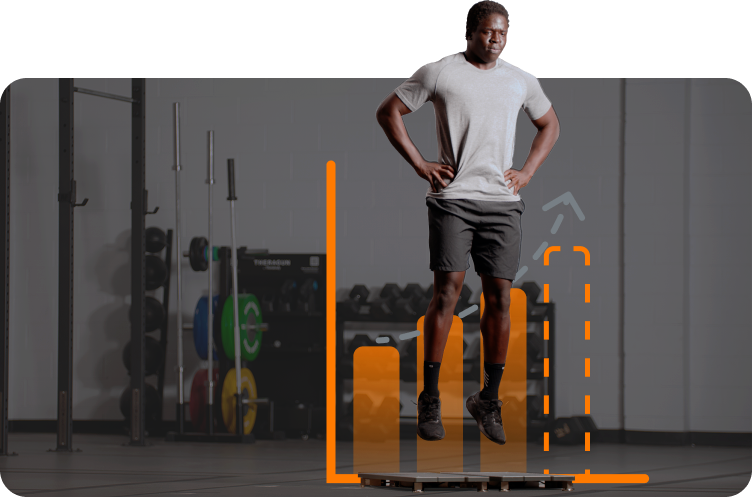
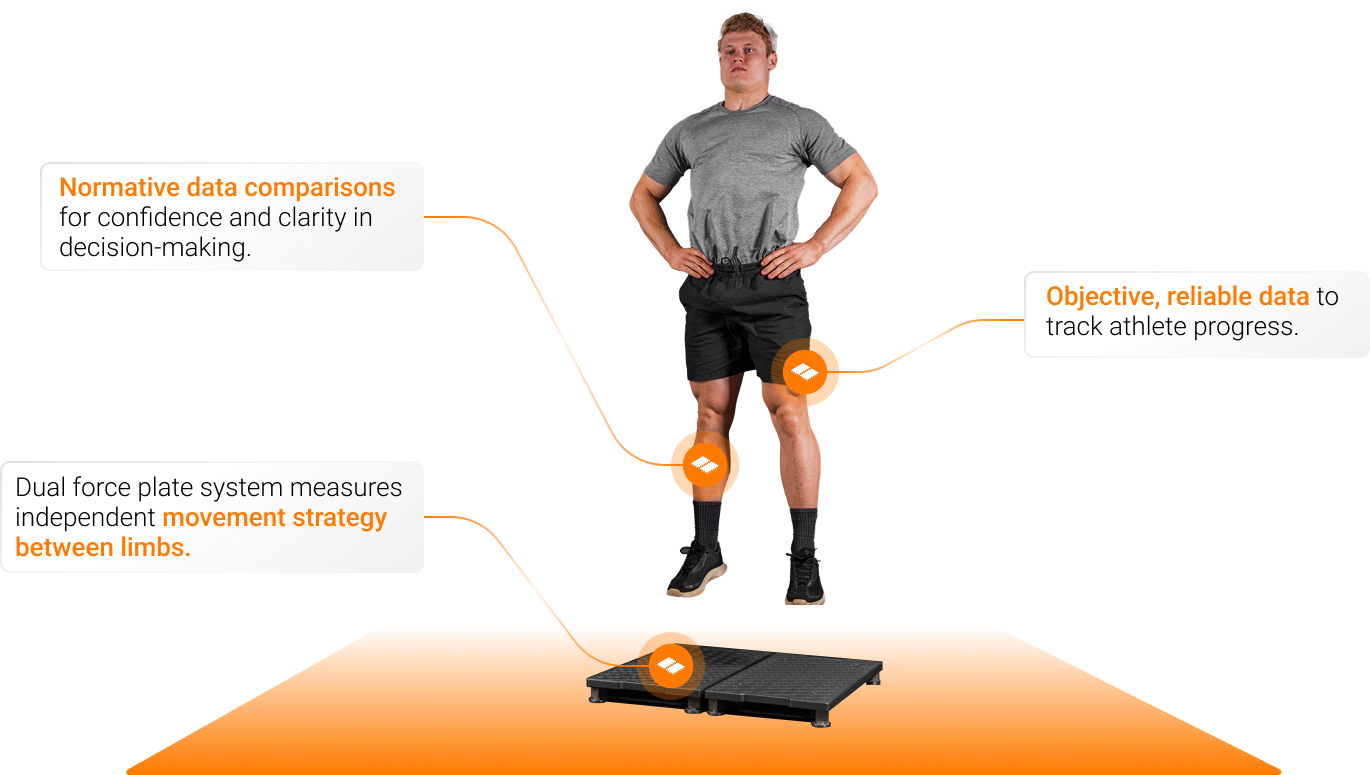
Our VALD ForceDecks have played an integral part with all of our student-athletes and provided a huge return on investment for both performance and returning from injury.
Our dual force plate system offers a variety of benefits that allow for general movement capability assessments, enhanced physical performance, and improved rehab outcomes. ForceDecks provide objective and accurate data, so we no longer have to rely solely on subjective assessments for informed decision-making. That lets us collect baseline data and track our student-athletes progress over time.
This longitudinal monitoring then allows us to ask the question “Was that result good?”
While this question is reasonable, it is only relevant if we can compare it to this individual’s baseline or previous data, as well as normative data from their peers. The context that VALD offers allows us to give confident answers when speaking with our student-athletes, coaches, and other support staff regarding their progression.
Being a dual plate system, ForceDecks can also measure forces exerted by each limb independently, highlighting limb asymmetries and imbalances. This has been crucial both prior to and following injury for identifying areas that can be improved, implementing appropriate strategies within athletes’ training and rehab, and minimizing their risk of injury or reinjury.
Tweet ThisBeing a dual plate system, ForceDecks can also measure forces exerted by each limb independently, highlighting limb asymmetries and imbalances. This has been crucial both prior to and following injury for identifying areas that can be improved.
@thekenknoxxx
Kevin Hollabaugh
MiLB Strength and Conditioning Coordinator and Founder/CEO, ProForce Sports Performance
Over the past 12-24 months, the technology that has delivered the highest return on investment for my business is without question the 1080 Sprint. This piece of equipment has completely transformed both our assessment and training systems, offering value that extends beyond performance metrics into business growth and client satisfaction.
From a performance standpoint, the 1080 Sprint allows us to rapidly generate accurate force-velocity profiles for each athlete. This enables us to individualize speed training programs with precision—whether the athlete needs to develop force at early acceleration or maximize power at top-end speed.
Rather than guessing or relying on subjective feedback, we now make data-informed decisions that significantly accelerate outcomes. This precision in programming has directly translated to improved results for our athletes, which in turn has fueled retention and word of mouth referrals.
Beyond its utility as a testing tool, the 1080 Sprint became a revenue-generating asset almost immediately. It allowed us to launch a new premium service line centered around speed diagnostics and individualized programming. The uniqueness of the technology helped differentiate our facility in a competitive market and attracted both high level athletes and parents seeking measurable, high performance training.
Within the first 12 months of ownership, we had fully recouped the cost of the unit, a clear indicator of its ROI.
Moreover, the 1080 Sprint has elevated our professional credibility. Coaches, teams, and sports medicine professionals view our use of the technology as a marker of advanced expertise and commitment to evidence-based practice. This has opened doors to new partnerships and consulting opportunities.
The 1080 Sprint has had a profound impact on both our athlete outcomes and our business model. It has allowed us to assess more precisely, train more effectively, and grow strategically—all of which make it the most impactful technology investment we’ve made in recent years.
Tweet ThisBeyond its utility as a testing tool, the 1080 Sprint became a revenue-generating asset almost immediately. It allowed us to launch a new premium service line centered around speed diagnostics and individualized programming.
@KevinHollabaugh
Alexi Pianosi
Head of Strength and Conditioning, Colorado Avalanche Hockey Club
One of the best, most versatile, and useful pieces of technology I’ve used over the past two years is the 1080 Sprint. I can take the 1080 Sprint on the ice or off the ice, prescribe a wide range of movements, and capture data points for each rep of every drill.
For example, I could have an athlete recovering from a lower limb injury begin by performing a simulated hockey stride movement using an isokinetic loading strategy and a sub-pain threshold cue to get baseline deficits in force production. In addition to getting key data points for assessing function, the 1080 Sprint allows me to perform the exercise through a full range of motion and detect any deficits at specific joint angles or speeds. This contrasts with many established isometric testing protocols that only assess isometric force output at specified joint angles.
As the athlete progresses, the isokinetic settings can be increased to look closer at not just force production, but also power production. The isokinetic setting can then be adjusted so the athlete can execute the movement faster and we evaluate any deficits or asymmetry at higher velocities.
For hockey, specifically, we can take the 1080 Sprint on the ice so the athlete can perform a sprint from the goal line to the far blue line while we track the force and power output for each stride. This lets us detect any remaining asymmetries in as close to a game-like scenario as possible.
While this example provides only a brief snapshot of the 1080 Sprint’s capabilities, the underlying system can be used in many other ways, as force, power, and velocity can all be collected and assessed through a full range of motion.
Tweet ThisFor hockey, specifically, we can take the 1080 Sprint on the ice so the athlete can perform a sprint from the goal line to the far blue line while we track the force and power output for each stride. This lets us detect any remaining asymmetries.
@alexipianosi
Jillian Zeller
Senior Associate Director of Athletic Performance, University of Georgia
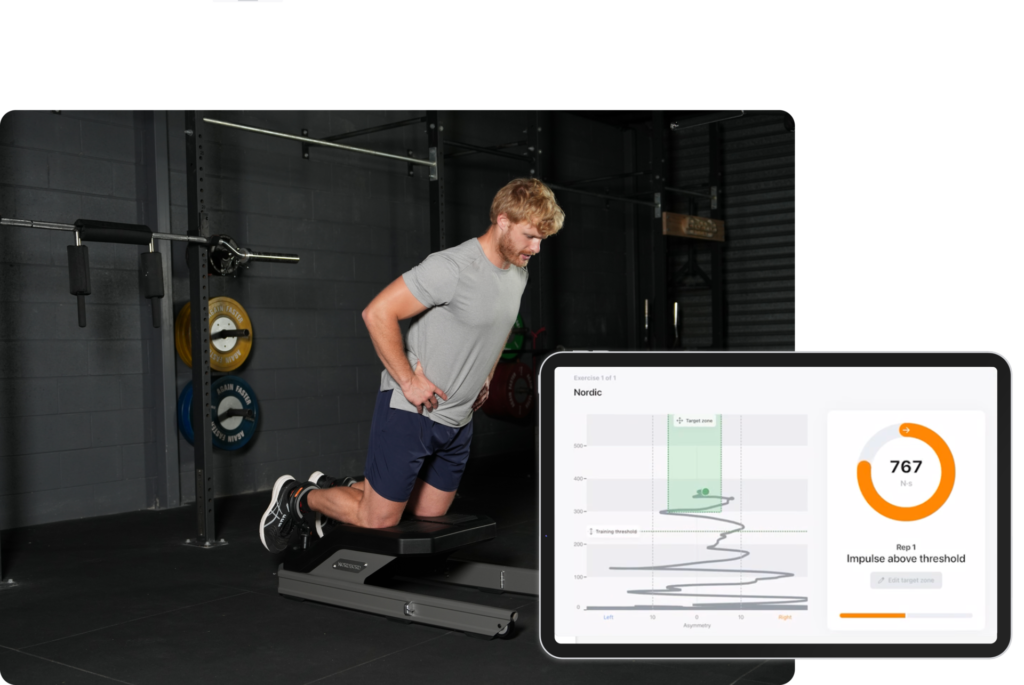
Our VALD pair—the ForceFrame and NordBord—have given us the best ROI.
The VALD ForceFrame is a staple for our full battery of tests as well as weekly fatigue monitoring.
When we conduct our comprehensive tests, we use the ForceFrame for abduction / adduction at short and long levers, hip external and internal rotation, and seated plantar flexion. We also use shoulder external and internal rotation for our goal keepers.
On a weekly basis we use groin squeeze as a way to monitor fatigue. We look at total force output as well as asymmetry relative to that athlete’s typical weekly values. As the number of calf injuries have increased across field based sports we have incorporated plantar flexion into return to play.
The ForceFrame is very reliable and provides us great insight on specific athlete deficiencies.
Hamstrings are one of the most common injuries in football, so a NordBord is essential in assessing and monitoring hamstring strength and asymmetry throughout the course of a season. We test with Nordics, ISO 30 and unilateral ISO 30. If we conduct a full battery of tests, an athlete will go through all three. As injuries occur, we will pick 1-2 of these during return to play.
The NordBord is reliable, repeatable, and provides the practitioner insightful information about what an individual athlete will need in their program.
Tweet ThisOur VALD pair—the ForceFrame and NordBord—have given us the best ROI. The VALD ForceFrame is a staple for our full battery of tests as well as weekly fatigue monitoring.
@Jillian Zeller
Matt Tuttle
Director of Sports Medicine, Denver Nuggets
One of the most valuable investments I’ve made in technology for high performance sport, particularly in basketball, has been a local positioning system (LPS). When evaluating return on investment in both financial and performance terms, LPS has provided the most significant “bang for the buck” by allowing us to accurately define and replicate the physical demands of basketball practices and games during an athlete’s rehab progression.
LPS provides precise, real time positional and movement data in confined spaces. This enables us to quantify key external load variables, including total distance, high intensity efforts, accelerations, decelerations, and player-specific movement patterns with game-relevant fidelity.
During rehab, this allows us to create practice and conditioning drills that mirror the physical outputs and positional demands of live competition. That’s a game-changer in professional basketball, where return-to-play decisions carry high stakes for the athlete and the organization.
From a practical standpoint, LPS provides objective data that supports clinical reasoning and aligns the medical, sports science, strength, and coaching staffs. We can clearly show when an athlete is underloaded or overloaded, justify progression or regression, and provide benchmarks that reflect position-specific workloads. This has helped remove subjectivity from rehab decisions, minimized unnecessary setbacks, and increased staff and athlete buy-in.
What makes LPS especially cost-effective is its versatility. It is not just a rehab tool. It can be used daily in practice sessions to inform periodization throughout the season, track cumulative loads across the roster, and manage return to play across various stages. It seamlessly integrates into any performance model by supporting individualized planning and shaping team-wide strategies around readiness and fatigue.
Ultimately, the LPS system has elevated the standard for monitoring and prescribing basketball-specific demands in a way that aligns with our high performance philosophy. In an environment where player availability is one of the most important variables, being able to simulate game intensity and movement patterns with precision has created a safer, more efficient, and more evidence-informed pathway from rehab to return-to-performance.
The insights we’ve gained have justified the initial investment many times over.
Tweet ThisWhat makes LPS especially cost-effective is its versatility. It is not just a rehab tool. It can be used daily in practice sessions to inform periodization throughout the season, track cumulative loads across the roster, and manage return to play.
@DocTuttleDPT