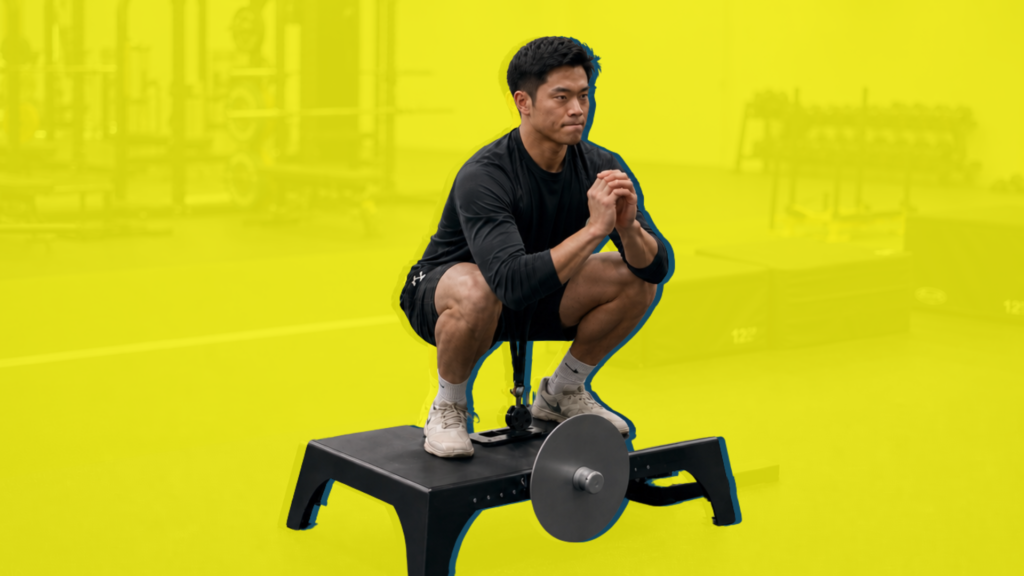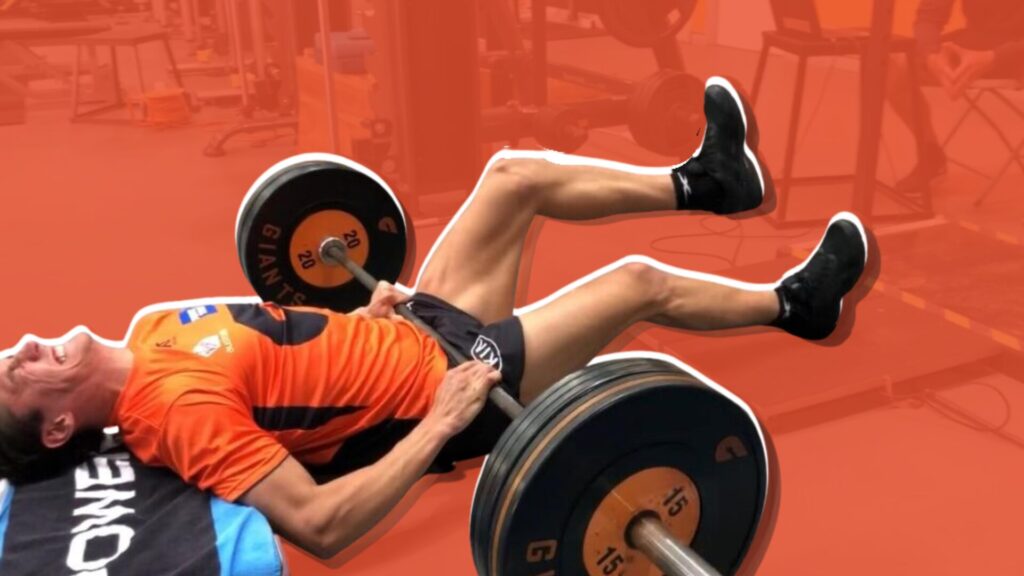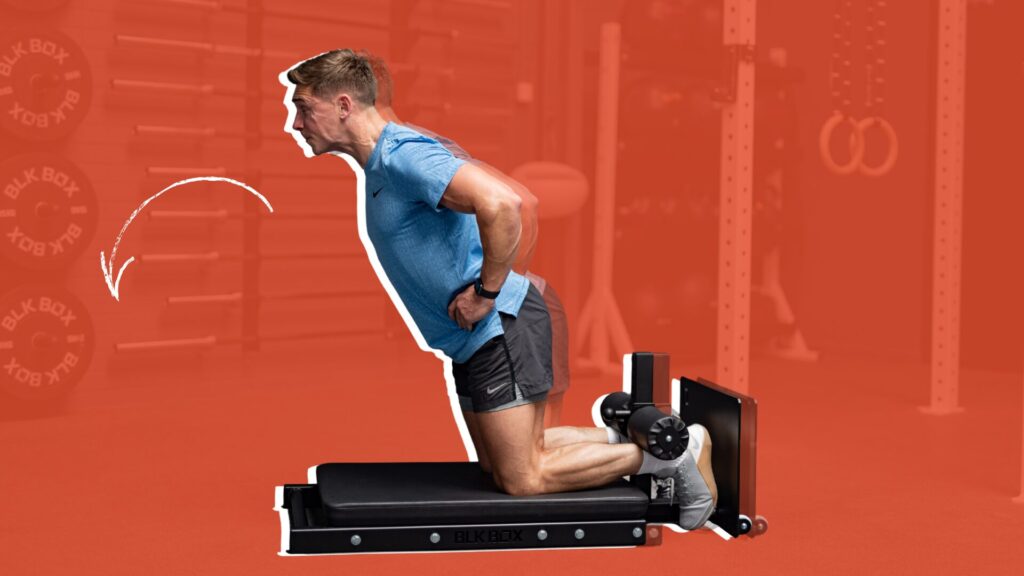

That the knees should never pass the toes is one of strength training’s strangest and most pervasive myths. New evidence and training methods abound, demonstrating that the knees can adapt to and be strengthened through training where the knees track over the toes. However, when it comes to fitness fads that have taken the world by storm, the Knees-over-Toes (KOT) movement may be one of the biggest of them all.
Everywhere I look, I see KOT training taking over. Whether it’s an Instagram feed, commercial gyms, public park personal training sessions or even in high performance sports, it seems like driving your knees way in front of your toes is the only way to train these days.
As this type of training proliferates, so, too, do the pseudoscience and misinformation regarding mechanisms, specificity and appropriateness of the KOT training philosophy.
Knees-over-toes style training has become popular partly due to trainer Ben Patrick, also known as the “Knees over Toes Guy” (KOTG). Patrick has risen to prominence in the online fitness world largely owing to exposure to vast audiences on social media and via podcast appearances with the likes of Joe Rogan.
Patrick’s Instagram page is littered with content from collaborations with many other online fitness figures and dozens of high production value posts with tens of thousands of likes each. His Instagram page and YouTube channel are packed full of quick-cut, pseudo-informative exercise instructionals, punctuated with highlights of athletic feats like slam dunks and splits. It’s eye-catching, algorithm-tailored, social media candy. Much of this content is sound advice. However, not all that is brown is chocolate.
This article will focus on the knees-over-toes split squat, which is a cornerstone of Patrick’s program and has become extremely popular in the past few years. During the KOT split squat, athletes are encouraged to use maximal knee flexion range of motion, sometimes by elevating either the front foot or front heel to artificially increase ankle dorsiflexion range of motion. The long term goal is progressing to a flat front foot on the ground. This exercise induces a pronounced weight shift, and the athlete’s knee tracks anterior to the foot: knees over toes.
Knees-over-toes can benefit athletic performance and healthy movement

Knees-over-toes isn’t all bad news, so let’s start with the good. You need only look at the countless examples of elite weightlifters, who have some of the strongest and healthiest knees on the planet and squat ass to grass with knees that track over the toes every day, to conclude that this is not bad for knee health. The knees are capable of handling and adapting to anterior tracking motions and often thrive under progressive exposure to such movements through training.
Knees passing the toes is not only safe in training, it is a normal and functional component of everyday movements like walking down stairs or kneeling on the ground.
Tweet ThisKnees passing the toes is not only safe in training, it is a normal and functional component of everyday movements like walking down stairs or kneeling on the ground
@nathankiely_
Knees-over-toes can be associated with patellofemoral pain. But remember: the dose makes the poison. With progressive exposure, the body can and will adapt to stressors. A well-designed strengthening program can build tissue capacity and tolerance to KOT positioning and prevent pain and injury.
Knees-over-toes has opened many fitness enthusiasts’ eyes to the full potential of the human body. Many lifters – recreational or professional – have at some point been told to avoid letting their knees go in front of their toes during exercises like squats or lunges. The most likely culprit is an ill-informed personal trainer or physiotherapist, overzealous gym bro or simply the expanding social media landscape where some fitness trainers promote 90˚ joint angles as the best, safest and only way to train.
In fact, restricting the knees from tracking forwards redirects forces to the lumbar spine. This could lead to the increased incidence and severity of lower back injuries and lower back pain. Fry, Smith & Schilling [2] demonstrated that knee torque increases by 28% (knee torque [N·m] unrestricted: 150.1 ± 50.8, restricted: 117.3 ± 34.2) when the knees travel freely in front of the toes. However, of far greater concern, when the knees are restricted from travelling forwards, hip torque increases by a staggering 1073% (hip torque [N·m] unrestricted: 28.2 ± 65.0, restricted: 302.7 ± 71.2). The spinal erectors and lower back have to handle that extra torque.
Tweet ThisWhen the knees are restricted from travelling forwards [over toes], hip torque increases by a staggering 1073%. The spinal erectors and lower back have to handle that extra torque
@nathankiely_
Patrick, through his savvy visual media featuring many eye-catching feats of athleticism and deep knee flexion angles, has demonstrated that deep knee flexion can be part of a safe and effective strength training program, and brought it to a wide audience. I, too, am a big proponent of full range of motion lifting. My programs will often promote deep knee flexion range of motion, and my athletes are familiar with the cues for getting comfortable deep in squats and at end range of motion.
Exercises like the KOT split squat can help athletes build strength and muscle cross-sectional area in ways that partial range of motion training cannot. Strength training adaptations are range of motion specific, and longer muscle lengths best stimulate muscle hypertrophy [4].
Coaches that avoid full range of motion will argue that force production in sporting actions like running, jumping and cutting is typically in obtuse joint positions. They are correct about that. But strength training is only ever a general physical preparation tool. Chasing specificity in the weight room is a fool’s errand.
Finally, failing to train acute angles leaves a lot of stones unturned for the moments in sport – training and competition – when things don’t go quite to plan. Failing to prepare for those outlier scenarios potentially increases the risk of catastrophic injury.
Why we need to pump the brakes on the knees-over-toes movement
However, I do have my concerns when it comes to the tidal wave of new KOT trainees and disciples. I’ve heard several anecdotes from coaches and athletes who have either followed specific programs or tried to adapt elements of the KOT method into their own training with mixed results.
Knees-over-toes training is promoted as the answer to knee pain and the key to unlocking athletic performance. You can, therefore, imagine my intrigue upon hearing examples of increased or worsening knee pain symptoms or reduced jump performance after KOT training. I have spoken with athletes who had to quit their training programs entirely because their knees were “sorer than they had ever been” due to patellofemoral issues. I also found this vlog describing the mixed results of some trainees using KOT training programs. It turns out jumps and plyometrics improve jump performance – not niche squat variations and anterior tibialis raises.
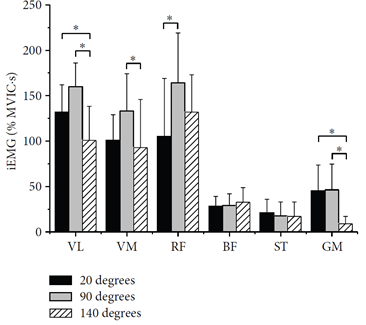
Proponents of the KOT split squat also make some pretty poor mechanistic connections between specific adaptations and exercise selection. For example, one of Patrick’s most persuasive claims is that the vastus medialis (VM) is the key muscle for reducing knee pain (citing a 2013 study) and that a 2016 study demonstrated the VM is preferentially trained through full range of motion lifting.
The first study he cited shows that some individuals with patellofemoral pain have relatively weaker VM muscles. But some in the study do not [5]. This is hardly definitive.
As for the second study, Figure 2 below shows that VM surface EMG activity decreased by 30% at 140˚ of knee flexion compared to 90˚, suggesting deep squats do not preferentially recruit the vastus medialis [3].
Knees-over-toes is promoted heavily as the solution to knee pain in athletes, particularly in the jumping sports where patellofemoral pain is common.
Unfortunately, not all cases of patellofemoral pain respond well to deeper knee flexion via squatting and lunging. This is where we run into trouble with the misguided assertions that greater VM strength fixes all knee pain, and that the VM is preferentially trained through deeper knee flexion. For many athletes who are suffering from patellofemoral pain, training programs based on aggressive deep knee flexion can exacerbate symptoms and prolong chronic pain.
In these cases, partial range of motion training is often the best way to relieve their symptoms and begin progressing them back towards full function.
Additionally, many other coaches have begun to adopt philosophies and exercises like the KOT split squat into their own programs without fully understanding how, if and why they work.
Recently, I saw a Twitter post from a strength & conditioning coach suggesting KOT split squats were more specific for sports performance because they better replicate the acute shin angle associated with the acceleration phase during sprinting. This fundamental misunderstanding of the difference between global and local coordinate systems is increasingly common; and was particularly prevalent when the barbell hip thrust exercise became popular, with some coaches and researchers claiming it was better for acceleration training due to horizontal force production (see “force-vector theory”)[1].
As shown in Figure 3, the knees-over-toes position during the acceleration phase of a sprint is very different to that of the KOT split squat. Take note of the knee joint angle during the sprint start and step-ups vs. the KOT split squat.

To understand this, we must first distinguish between the local (athlete-centric perspective) and global (world-fixed perspective) coordinate systems.
In the world-fixed view, we observe the athlete moving forwards, backwards, up, down and side-to-side in the global x, y and z axes. In contrast, our local system approaches movement and its relationship to the athlete in the anterior-posterior, superior-inferior, lateral and transverse planes relative to the body.
The athletes generates force during the sprint start in a superior-inferior orientation through the body, which they can better replicate with a traditional low box step-up. The KOT split squat, on the other hand, emphasises distributing load over the toes and then pushing back against the forefoot to return to the start position. A very different movement, both locally and globally.
View this post on Instagram
Knees-over-toes: When a sometimes good idea goes very, very, very wrong
Excessive lumbar extension and anterior-pelvic tilt elongate the hamstrings, compressing the posterior aspect of the spine, and can lead to tightness and fatigue in the spinal erectors. This is a fundamental movement error that compromises pelvic position, leading to reduced running performance and increased hamstring strain injury risk.
The KOT split squat regularly coaches poorly in this regard.

It is common to see not just athletes but those who are featured directly in the KOT Guy’s marketing material (including KOTG himself) performing the trademark exercises with pronounced lumbar lordosis driven by the spinal erectors. I am concerned that this is becoming the accepted and default mechanism by which KOT adherents are coaching and performing many of these exercises.
Rather than using muscles around the pelvis to neutralise posture and allowing for more specific activation and recruitment patterns, these athletes are reinforcing poor movement and exacerbating their injury risk in other areas.
Proponents of the KOT split squat will contend that this element of the exercise increases hip flexor and psoas length, leading to greater hip extension range of motion. I agree that these are crucial areas to train, and flexibility and mobility in these areas are cornerstones of well-rounded athletes. However, these qualities can and should be trained with a more neutral trunk and pelvic position.
Pelvic control is central to contemporary approaches to sprint training. When we understand the force-length relationship of the trunk stabilisers – muscles that operate optimally in a very narrow range of muscle length – it is clear that posture is crucial in setting up good pelvic control. When trunk muscles are at sub-optimal lengths (shortened or lengthened), their ability to develop force is restricted and we often observe a loss of pelvic control, typically in the form of anterior-pelvic tilt. The excessively tilted pelvis then inhibits hip flexion, reducing an athlete’s ability to access front-side dominant running mechanics and increasing ground contact times and over-striding.
All these factors accumulate to increase the risk of hamstring strain injury and reduce sprint running performance.
Poorly performed KOT split squats reinforce excessive lumbar lordosis, taking the trunk stabilisers out of their optimal length and increasing anterior pelvic tilt.
While this may not be important or relevant for all athletes, those in running-based field sports – where sprinting is important – may want to consider the potential negative transfer of this training towards their performance and injury risk.
Prioritising understanding and evidence over knees-over-toes
Athletic performance and strength & conditioning coaches should be critical in their consumption of fitness influencer material. We should always seek to review and understand the first principles and observational evidence when considering training philosophies and exercise selection. On the evidence alone, the KOT split squat is simply another tool in the toolbox.
Can these exercises help people? Absolutely. Have I used and prescribed knees-over-toes in my coaching? Yes. Is it safe for most trainees? Yes. Can it be contraindicated for some individuals? Yes. Is it a general preparation exercise? Yes. Can an athlete rehabilitate a knee injury without using it? Yes. Can athletes attain and maintain elite jumping performance in the absence of deep knee flexion training? Yes.
Is the knees-over-toes split squat an innovative strength training panacea? No.