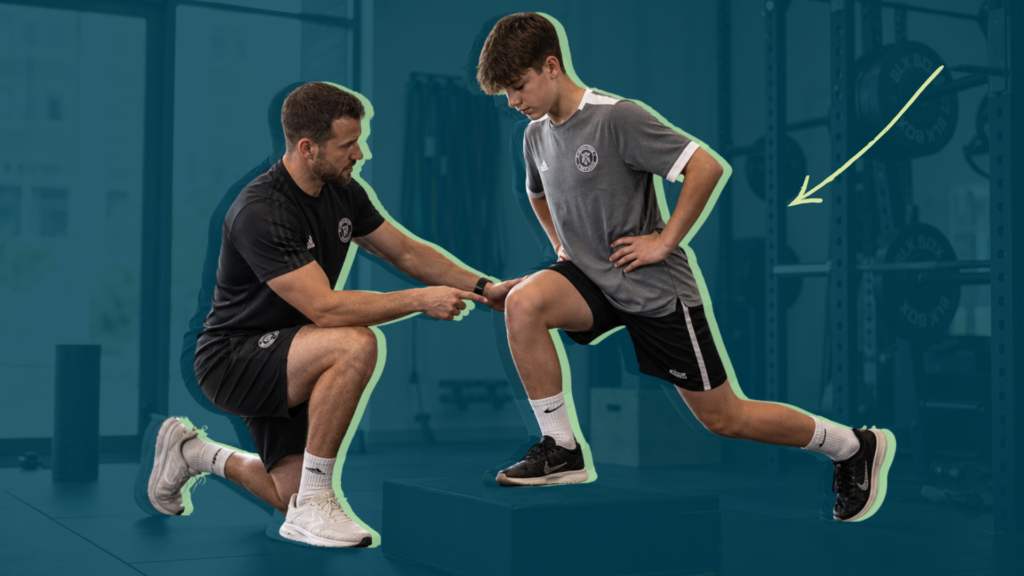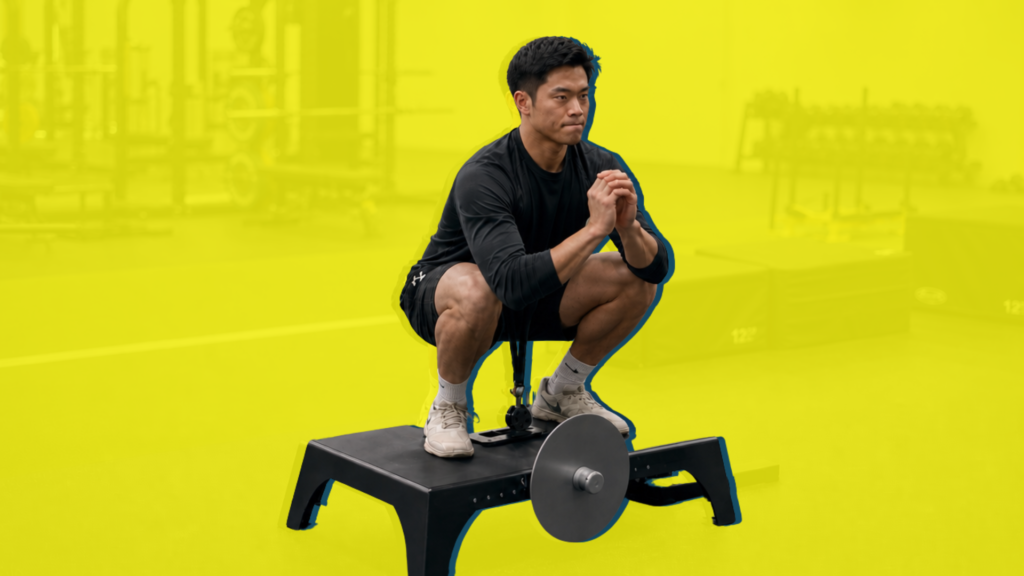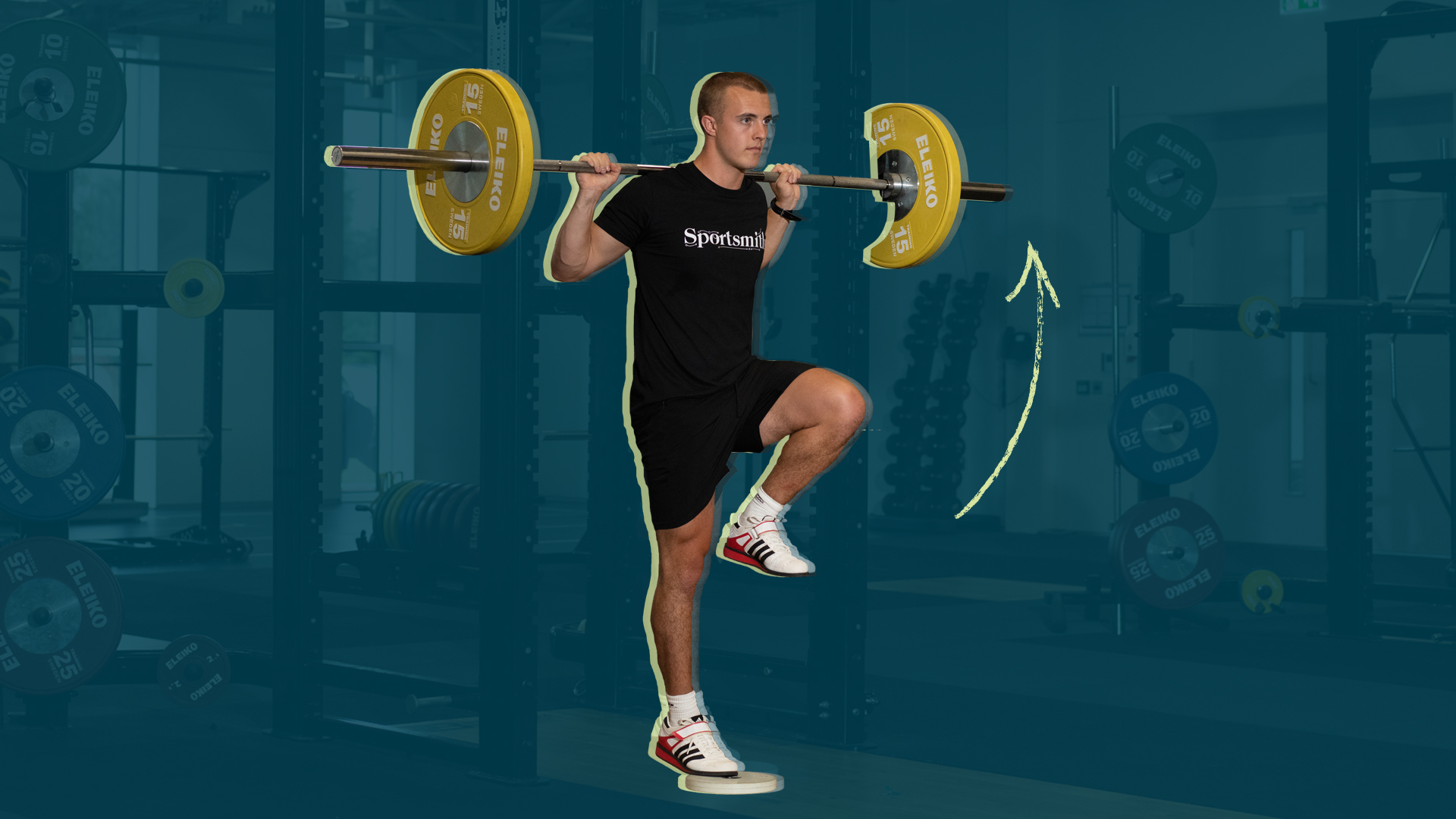

The end goal for any coach is enhancing performance on the field or court. How each coach supports their athletes in this endeavor is unique to their environment. Working in private settings, I have access to athletes for 1-3 sessions per week with minimal input into their training outside of what we do together. The demands of their respective sport’s talent pathway mean time is not on our side either.
With 45-90 minutes a week with athletes who may not have prior experience with a physical preparation program, we have 6-12 months to get them bigger, stronger, faster and fitter (sometimes significantly so) before their time in the talent pathway expires.
Using isometric training with youth team sport athletes – predominantly in Australian football, netball and basketball – has helped me overcome these challenges and build better athletes, with my particular emphasis on lower limb function.
Isometric training creates buy-in early in the process by generating measurable improvements the athlete can see within 1-2 sessions. In the past, I have had younger athletes become frustrated and impatient while learning new lifts due to their technical nature. The learning process requires a reduction or even a lack of loading, and competitive athletes can struggle with what seems like a step backwards. Isometric training somewhat cures this necessary evil. It can provide the high end stimulus the athletes want and need from a development standpoint, while reinforcing some of the key positions they may be struggling with, ultimately building physical competency for the future.
Tweet ThisIsometric training creates buy-in early in the process, particularly for youth athletes by generating measurable improvements they can see within 1-2 sessions
Tim Madden
Categorizing isometric exercises
To keep it simple, I categorize isometric training variations into the following buckets:
- Push grind: concentric, overcoming, pushing action lasting 3-30 seconds with a focus on maximal neuromuscular recruitment.
- Push explosive: concentric, overcoming, pushing action lasting 1-2 seconds with a focus on rapid neuromuscular recruitment.
- Hold: eccentric, yielding, holding action lasting 2-10 seconds with a focus on neuromuscular stiffness.
- Switch (double support): rapid eccentric, yielding, holding action lasting 1-3 seconds where both limbs share the load following the switching action.
- Switch (single support): rapid eccentric, yielding, holding action lasting 1-3 seconds where a single limb accepts the load following the switching action.
- Catch: rapid eccentric, yielding, holding action lasting 1-2 seconds where a single limb accepts the load following vertical displacement of the centre of mass.
This terminology will differ across the various resources you’ll read, learn from and consult. Overcoming vs. push, yielding vs. hold… we are talking about the same thing. I like to name my exercises using language that the athletes can understand (and is simple enough that I can remember).
Direct benefits of isometric training for youth athletes
Isometric training can be beneficial to youth athletes for the following reasons:
- Provides a method for targeted and safe assessments.
- Allows for accurate training prescription with progressive overload.
- Trains specific strengths and weaknesses, including rehabilitation applications.
- Trains specific muscle actions with specific postural and temporal considerations.
- Enhances technical transfer.
Isometrics are a method for targeted and safe assessments
Obtaining reliable and relevant assessment information in a safe manner can be challenging when working with younger athletes or athletes with a relatively low training age. Performing maximal (or near maximal) assessments comes with a higher level of risk, especially during dynamic tasks with high levels of variability, e.g., back squat 1RM testing.
Isometric assessments offer an assessment option with higher levels of reliability. They also have the flexibility to create your own testing battery by selecting specific positions relevant to your environment. With the mantra “testing is training and training is testing,” isometric tests like the ones below allow me to incorporate frequent data collection into my training, enhancing what I can deliver and not subtracting from valuable contact time with my athletes.
My testing battery, built mainly for field sport athletes, includes:
| Test | Youth target values |
| Isometric assessments | |
| Ankle run-specific isometric (single-leg) | 2.5 – 3.5 x BW e.s |
| Knee run-specific isometric (single-leg) | 4.0 – 5.0 x BW e.s |
| Hip run-specific isometric (single-leg) | 2.0 – 3.0 x BW e.s* |
| Glute bridge isometric (single-leg) | 2.5 – 3.5 x BW e.s* |
| Dynamics assessments | |
| Sprinting max velocity | 8+ m/s (F) 9+ m/s (M) |
| CMJ jump height (hands on hips) | 30+ cm (F) 40+ cm (M) |
| Multi-jump 10/5 RSI | 3.0+ |
| Multi-jump 10/5 RSI (single leg) | 1.25+ e.s |
| Box squat est. 1RM ** | 1.5 x BW |
| Bench press est. 1RM ** | 0.75 x BW (F) 1.25 x BW (M) |
** Calculated using Load-Velocity equations
This information helps us better understand our athlete’s strengths and weaknesses, thereby gaining insight into their needs. As we design and refine the training program, the data also provides benchmarks we can use to accurately prescribe intensities and progress over a training block.
Tweet ThisWith the mantra “testing is training and training is testing,” isometric tests allow me to incorporate frequent data collection into my training
Tim Madden

Isometrics facilitate accurate training prescription with progressive overload
Much like %1RM is a basis for prescribing intensity (loads) for traditional lifts, % of peak force can fill the same role for isometric training. Force plate data from the different isometric tests gives us the means to replicate these positions in training, providing live feedback to sustain a given effort. Youth athletes enjoy the real time feedback, and visible targets often make them more willing to work harder.
Here are examples of different training prescriptions over 5-week blocks:
Athlete training one session per week:

In this example, the athlete is completing the Push-Grinds over a 5-week period before progressing into the Push-Explosive isometric variant.
Athlete training two sessions per week:

In this example, as the athlete is training with me twice per week, we can train different qualities across the week. For example, the first session could be an acceleration-focused session earlier in the week that uses Push-Grinds as the preferred isometric option due to their concentric nature. The acceleration session could progress from the Push-Grinds to the Push-Explosive variants in the subsequent block, as shown in the above example.
For the second session, the focus could shift to maximal velocity. In this example, the isometric training moves through the Hold progressions into Catches (double support). For both examples, the isometric training can stand alone as its own segment within the session, or paired with other exercises / movements as the coach deems appropriate.
From any given starting point, you can progress volume, intensity, frequency or the isometric variant, much like you would with different periodisation models for traditional exercises.
Isometrics hit specific strengths and weaknesses
I have shifted my thinking somewhat when it comes to profiling young athletes. I now place a greater focus on what the athlete does well, as opposed to what they don’t do well. It’s a juggling act to figure out where to invest your focus and the athlete’s valuable time and energy. This is where having data to support your decisions can be invaluable.
Using the testing battery I mentioned, I try to answer a few questions:
- What type of athlete is this? Are they more strength dominant or elastic driven?
- Where are they likely to generate their movement from? Are they more knee or hip dominant? Are they strong around the foot / ankle complex?
- How do they perform in isometric vs. dynamic tests? How does their force production compare to their force application?
If I can answer these questions, I can confidently build a training program to focus on the athlete’s strengths and bring up their weaknesses as required. For adult athletes and high performers, this training program will almost exclusively be strength focused, that is, 90+% of their training will be centered around what they do well. The opposite is true for younger, low performing athletes. The priority for the latter is building a well-rounded generalist. Everyone else likely sits somewhere in the middle.
Building from the ground up is also the case when working with an injured athlete. I like to take a holistic approach to rehabilitating the youth athlete to return them to pre-injury levels or better. Isometric exercises train specific tissues in specific postures to complement targeted movement needs, much like the example of a younger athlete. To quote Alex Natera regarding the use of run-specific isometrics, the stimulus applied creates a “run before you run” stress to build tolerance for future exercises. I tend to take what I believe to be true with movements like sprinting, change of direction and jumping, and incorporate isometric exercises to expose athletes to graduated stresses in line with the athlete’s progress.
Tweet ThisI take what I believe to be true with movements like sprinting, change of direction and jumping, and incorporate isometric exercises to expose athletes to graduated stresses in line with the athlete’s progress
Tim Madden
Here is a program example for a state-level 16 year old AFL athlete with a training age of six months.
General preparation phase


In this example, based on the training phase, isometric exercises form part of the preparatory work. Based on test results, the ankle has priority over the hip, which has priority over the knee.
Specific preparatory phase


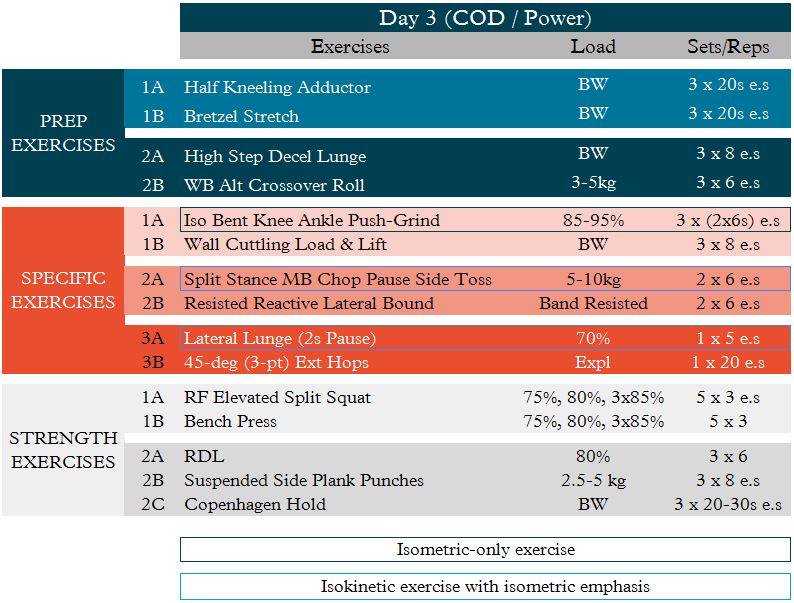
Based on the training phase for this example, isometric exercises are a major part of the training session in a contrast design. Based on the same test results, the priorities are still – in order – ankle, hip and knee.
Isometrics develop specific muscle actions within postural and temporal considerations
Once an athlete is demonstrating technical proficiency and their testing numbers are approaching or have reached the target values, I aim to incorporate more advanced forms of isometric training with more specific ballistic and plyometric exercises. Here, I am considering what qualities I am trying to train within the context of the athlete’s sport. That is, the specific postures, muscle actions and temporal considerations.
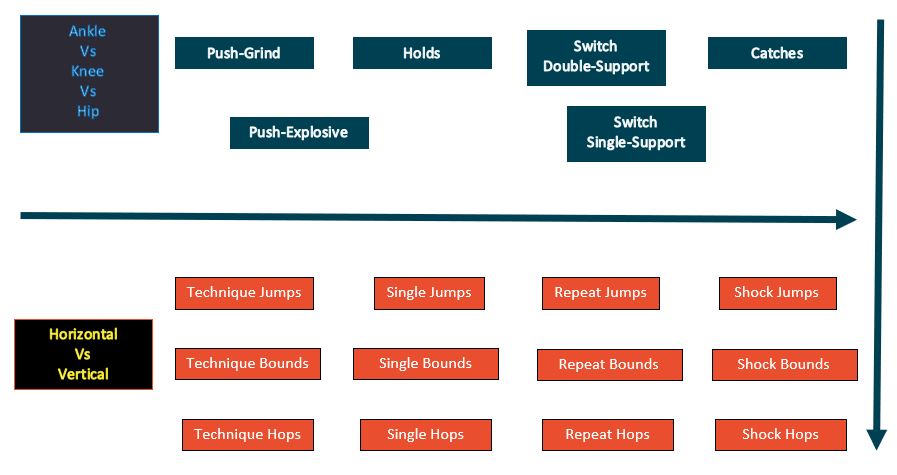
At this point in the training process we are moving towards training their strengths and breaking those down within their sport’s respective model.
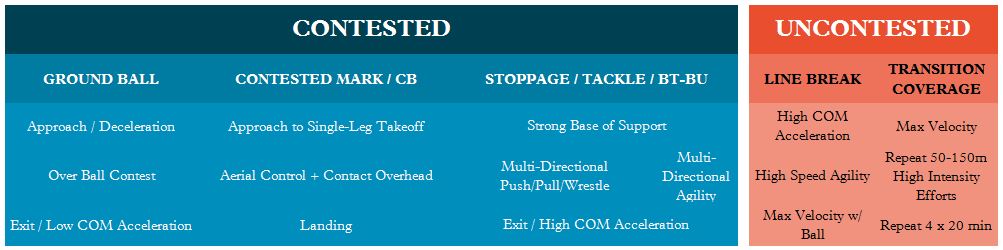
Here is an example of my AFL model:
Sport-based approach physical preparation – AFL

Gym based exercise examples
Isometric back squat + back squat + vertical CMJ to horizontal jump
Sport-based examples – AFL
Isometric low stance split squat +10m acceleration from half kneeling
Wall acceleration hold + resisted 10m acceleration
Acceleration exercise examples
Explosive knee push + resisted acceleration bound
Isometric low stance split squat + rearfoot elevated split squat + split squat broad jump
Maximal velocity exercise examples
Hip push grind + sprinter hip thrust
Hip switch (single support) + bent knee scissor bounds
Knee switch (double support) + overhead double switch
Enhance technical transfer with isometrics
I came up with this equation to explain my approach to maximising the transfer of a skill or quality to competition:

Time (duration * frequency) is a key factor in enhancing transfer from training to performance. The more repetitions in practice, the more likely the skill or quality will thrive in competition. Isometric training can increase the duration of training by simply holding a significant position for a prolonged period. Isometric training is rarely associated with soreness or noticeable fatigue, so we can prescribe it as a frequent training stimulus.
The right environment further increases the likelihood of transfer, just like a poor environment limits transfer and essentially wastes time. The environment can include the culture of the training space, the level of support and quality of coaching and the ability of the environment to replicate the pressure of competition. Isometric training can form part of a constraints based approach where the athlete can explore positions through trial and error. When combined with good coaching and a competitive atmosphere using objective feedback, the young athletes enjoy training and train hard.
The denominator of transfer is the difficulty of the skill or quality we are training. The more difficult it is to achieve a given outcome, the less transference we see or the longer it takes to achieve a given level of transfer.
To offset this, I like to break the skill down into its parts to learn by sequencing. Some athletes grasp new concepts immediately, while others can take weeks to months. The strategic use of isometric exercises in sequences has the potential to fast track this process. For example, athletes who have had prior exposure to knee push, hold or switch variations perform better at speed drills such as switches and dribbles than those who haven’t had that exposure. I believe there is contextual or kinesthetic learning at play here, as well as the increase in specific strength that complements their performance in the speed drills.
Tweet ThisIsometric training is rarely associated with soreness, so we can prescribe it as a frequent training stimulus
Tim Madden
Case Studies
Case study #1: Increasing speed for an endurance, slow twitch dominant footballer
This footballer came to me after being cut from the AFL talent pathway for lacking speed. We had 12 months, if we were lucky, to get his maximal velocity from under 8 m/s to over 9 m/s.
At the time, I thought strong equated to fast. When his solid numbers in the squat, dead lift and bench press (amongst other lifts) hadn’t transferred to any changes in speed, I had to question this approach. We were training speed in the field at the time, and this individual had huge variability in his best and worst speed training days. The technical model and the performance outputs were obviously not transferring.
We tried training multiple qualities in the gym and on the field across multiple sessions in the week in a vertical integration periodisation model. We still weren’t seeing the results in his maximal velocity that we were working towards (and had to hit).
I started to experiment with different strategies with the goal of improving force application in a more specific context to sprinting, while working on a technical model of sprinting that I believed would apply to him.
Maybe we had laid a solid platform for what was to come next. Maybe the stimulus we provided was exactly what was needed at the time. Maybe there were other factors at play that I hadn’t considered. Regardless, when we introduced the run-specific isometrics there was a spike in force plate metrics, coinciding with faster sprint times. To the eye, his sprinting seemed to have more “pop” and appeared to take less effort, which he self-reported, as well.
High intensity Isometric training that contrasted with acceleration and maximal velocity training seemed to have a strong effect on sprint performance when part of a focused training block in a 17-18 year old male footballer with a strength training background of one year.
| Date | Initial assessment. Cut from NAB league due to lack of speed | 09/11/20 | Focus on getting strong in the gym for ’21 season 2-3 x wk | 30/06/21 | Build power and speed, maintain strength via vertical integration approach 2-3 x wk | 20/09/21 | Accel + max v & run-specific iso’s (push progression) 2-3 x wk | 17/10/21 | Accel + max v & run-specific iso’s (hold progression) 2-3 x wk | 21/11/21 |
| Surface | Turf | Track | Turf | Track | Track | |||||
| Velocity | 7.9 m/s | 8.3 m/s | 8.3 m/s | 8.9 m/s | 9.43 m/s | |||||
| % change | N/A | 5.1% | 0.0% | 7.2% | 6.0% | |||||
| Ankle | 2.36 x BW | 2.45 x BW | 2.49 x BW | 2.75 x BW | 2.81 x BW | |||||
| Knee | 2.63 x BW | 3.67 x BW | 3.69 x BW | 4.03 x BW | 4.11 x BW | |||||
| Hip | 2.05 x BW | 2.1 x BW | 2.42 x BW | 2.5 x BW | 2.55 x BW |
Case study #2: Sibling comparison
Athlete 1 and Athlete 2 signed up to train with me at about the same time as the athlete in the first case study was getting results with isometric training. The 15-year old Athlete 1 played Australian football and cricket, and the 17-year old Athlete 2 played Australian football and netball.
Athlete 1 was new to the gym and had poor technique with most of the major movements, while Athlete 2 moved better overall and had some prior gym experience.
As their training progressed, they both completed speed work early in their training sessions. However, Athlete 2 then completed run-specific isometric exercises as part of her sessions. Athlete 1, lacking prior gym experience and with poor lift technique, would finish the session by training the key movements, i.e. squats, deadlifts, split squats and RDL’s. Interestingly, his speed went backwards over this period. At the time, I thought this was due to the intensity regressions in his gym work while he improved his technique and worked on his deficiencies.
What came next really surprised me, and was probably my defining moment for isometric training in youth athletes. When I introduced Athlete 1 to isometric training in the form of run-specific isometrics that contrasted with his speed work, after battling with his prior speed work and gym lifts, his speed improved by 10% over a three week period.
Did the isometric training increase critical force output due to the high intensity nature of this form of training? Did isometric training complement the speed training by increasing the technical transfer? Or did both occur?
| Date | Initial assessment | 01/09/21 | Speed work, strength/power 2 x wk | 24/09/21 | Accel + max v & run-specific iso’s (push progression) 2 x wk | 08/10/21 | Accel + max v & run-specific iso’s (hold progression) 2 x wk | 01/11/21 |
| Velocity | 6.7 m/s | 7.1 m/s | 7.3 m/s | 7.5 m/s | ||||
| % change | N/A | 6.0% | 2.8% | 2.8% | ||||
| Velocity | Initial assessment | 6.7 m/s | Speed work, strength/power 2 x wk | 7.0% | Accel + max v & class strength training 2 x wk | 6.8% | Accel + max v & contrast run-specific iso’s with strength exercise 2 x wk | 7.5% |
| % change | N/A | 4.5% | -2.9% | 10.0% | ||||
The time frame over which isometrics, particularly run-specific isometrics, produce positive outcomes is not just relevant to the athletes: it’s important to the coaches, too. We also need to buy in. Many coaches are reluctant to deviate from their “tried and true” methods because they are concerned that an experiment will fail at the expense of an athlete or a season. My experience in the second case study validated what I had learned from leaders in the field like Alex Natera.
The nature of isometrics lend themselves to “trust, but verify” what we hear from experts and other coaches, and this should make more coaches comfortable in adopting them in all settings, including youth.