Eamonn Flanagan
Two areas immediately come to mind. The first is in the professional development domain. A lot of practitioners can leverage their own self reflection habits to improve their professional learning and delivery.
As S&C coaches or sport scientists, we are often meticulous in our record keeping around reps, sets, programs and assessments. However, we often have limited record keeping when it comes to how we coached, how we felt, how we perceived our work or how we plan to improve in our delivery.
Self reflection is an underleveraged skill for practitioners to integrate into their regular practice. Writing provides a unique opportunity to focus on a single thought process or topic. The simple act of writing or reflecting can bring clarity to one’s thoughts and can directly benefit practice. Having a series of simple, consistent writing prompts can also provide a coach with a strong historical record of their practice, their thoughts and their philosophies. Oftentimes what we think is obvious today, can be insightful or informative tomorrow.
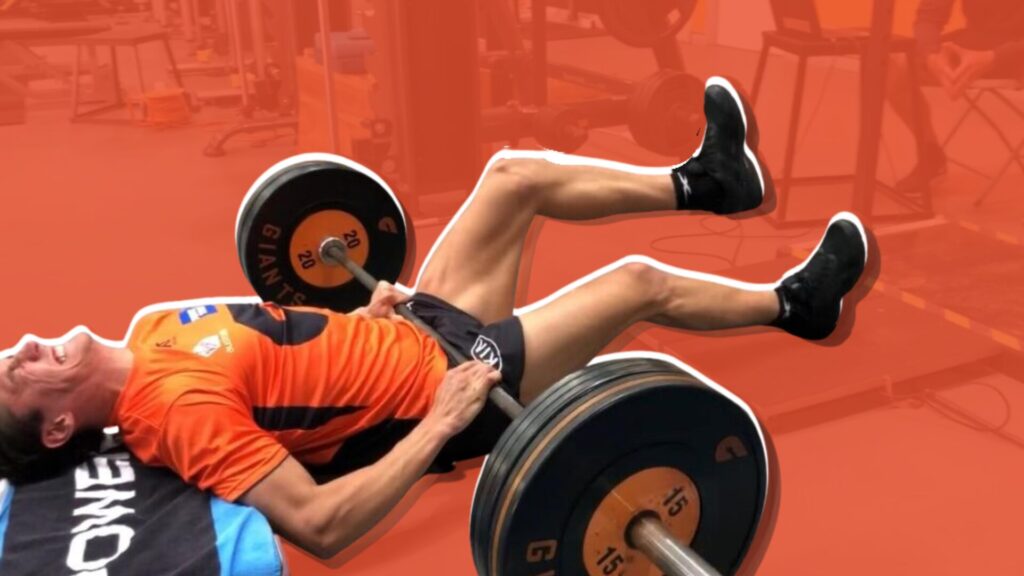
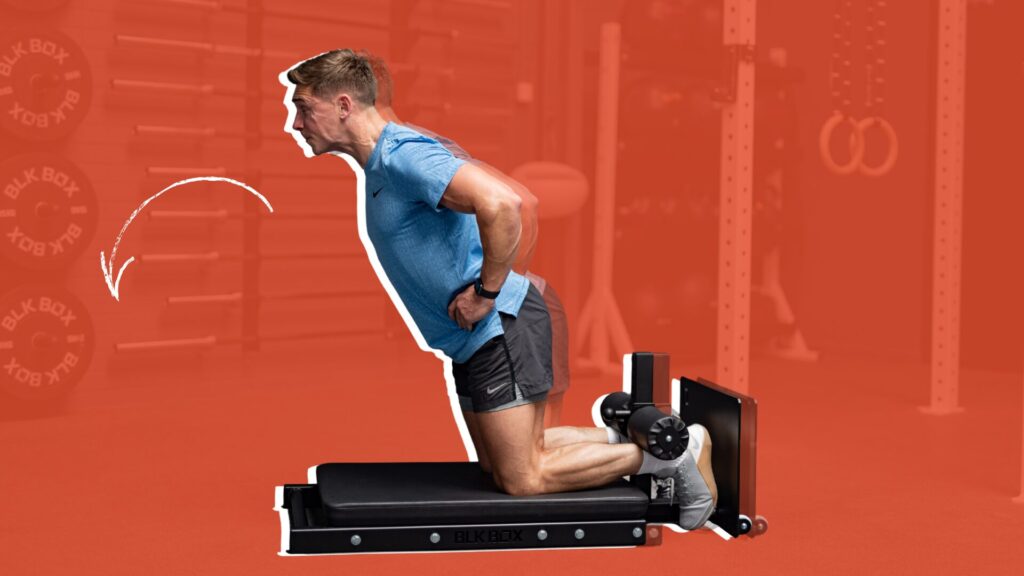
However, being an S&C coach is fundamentally about helping our athletes become brutally powerful within the demands of their sport. In that regard, although widely understood, I think eccentric training methods are largely underused.
In recent times, isometric training has become heavily popularized. However, while isometric training has some significant upsides in both the testing and the training space, it doesn’t typically provide any training adaptations that can not be accrued through other training modalities.
This is not true, however, in the case of eccentric training. There is significant research that demonstrates that maximal or supra-maximal eccentric training, which is not constrained by concentric strength levels, can powerfully stimulate unique strength training adaptations that are not always possible with traditional training methods.
Implementation is one of the primary obstacles to the widespread adoption of maximal eccentric training. Without specialized motorized equipment, it can be difficult to implement operationally. Two appeals of isometric training are how simple it is to program and perform, and its very low level of risk. Near maximal or super maximal eccentric strength training is difficult to implement and is a riskier modality. However, the unique adaptations that athletes can accrue (such as the preferential increase in the size of type II muscle fibres) means that eccentric training is worth upskilling for S&C coaches to develop their experience in this space.
Tweet ThisSelf-reflection is an underleveraged skill. Writing provides clarity and a historical record of practice, thoughts, and philosophies. What seems obvious today can be insightful tomorrow.
@EamonnFlanagan
Rett Larson
A healthy respect for AI leads me to believe that “specific knowledge” won’t be a competitive differentiator among coaches in a future where your laptop can birth the programming offspring of Louis Simmons and Richard Simmons with one click. Instead, my crystal med ball tells me that the ability to make these programs sing will set coaches apart.
The mistake is in thinking that some coaches will need a lobotomy in order to become good motivators and culture builders. It can be learned. You will see students of gamification, psychology, and group control taking jobs from coaches who read SuperTraining in Russian and own all of Paul Chek’s DVDs. This new breed of coach will understand what levers are at their disposal to increase compliance in their programs and drive intent on the fifth set of heavy Bulgarians. They’ll know how much autonomy and unpredictability goes into a program that athletes talk about over dinner or want to boast about on TikTok.
These coaches will spend less time studying different theories of periodization and more time learning how to make athletes care about power cleans after four years of doing them every Wednesday. Understanding the power of loss avoidance, curiosity, scarcity, ownership, unpredictability, accomplishment, and social influence will become some of the most important tools in a coach’s tool belt. These skills are anything but soft.
While grizzled veterans might eschew social media, these coaches will weaponize trends to spur engagement and meet athletes where they live. Coaches who see these “distractions” as opportunities to connect with athletes will drive higher intensities and get more high fives.
Rest assured, the playing field of exercise selection, sets and reps will be leveled. Everyone will have access to the best practices of the best athletes and coaches who ever put pen to paper.
Being known as a coach who can create a weight room culture of consistent effort and raucous camaraderie will ensure devoted athletes and steady employment over a long career.
Tweet ThisAI will democratize programming knowledge. Coaches who master motivation, culture, and engagement will stand out. Understanding gamification and psychology will be key to driving athlete compliance and intent.
@RettLarson
Jack Christopher
There is no better starting point than focusing on the ability to coach. At its most basic level, it’s understanding the art of coaching, having a variety of different styles, and the self awareness to adapt and change those styles depending upon the group or athlete.
At a deeper level, it’s understanding the science of skill acquisition, how to create optimal learning environments, and providing the right balance of support and challenge.
This is a blend art and science that leads me to the second quality: the ability to meticulously reflect.
Both internally and with others, constantly refine and update the way you work. Linked to this is an understanding of neuroscience on two levels. First, in how you think, operate, and your innate preferences. This will help you make wise career choices and help you work in the most effective and efficient ways. Second, an understanding of others, as this will help you build teams, surrounding yourself with a group of people that both complement and challenge each other, allowing you to embrace both your strengths and your flaws.
S&C coaches should understand generational and societal changes. To create the optimal development / performance environment we must understand the people we are working with. The differences between the generation born into technology (digital natives) and those born before it (digital immigrants) are huge. Educational institutions are undergoing substantial changes in how they support young people to help them flourish, and I’m convinced we will see the same in elite sport.
Last, S&C coaches are dealing with a vast amount of information. The emergence of AI and complex learning systems will enable coaches to make more objective decisions, quicker. Understanding how to utilize these systems within context, based upon decades of knowledge, experience and sound principles will be invaluable.
Tweet ThisEffective coaching blends art and science. Understanding skill acquisition, neuroscience, and generational changes is crucial. Building optimal performance environments requires adapting to the people we work with.
@Jack_C91
Matt Van Dyke
Don’t get too caught up in tech or methods of training. Instead, focus on understanding physiology and the adaptations that are occurring. This will allow coaches to be adaptable in different environments.
Advancements in technology offer incredible insight and the ability to objectively quantify training and competition outputs like never available before. However, these devices are merely tools to offer a “peak behind the curtain” in regard to desired adaptations, and should never replace fundamental understanding of training principles.
Coaches must continue to seek an understanding of principles rather than just the methods of the training.
If you are looking back through books written by Verkhoshansky and Zatsiorski, such as Supertraining, Science and Practice of Strength Training, or Special Strength Training Manual for Coaches (my personal favourite), you will quickly realize that concepts or training principles are rarely created, but rather renamed or rebranded.
However, through tech advancements we are now able to better measure and quantify principles that were left up to a “coach’s eye.”
When coaches understand training principles more completely, the tech can be a complement to create a potent training environment for any athlete, in any setting.
A few examples illustrate this process:
- Improved understanding of the use of oscillatory and other “high velocity” exercises and their impact on the components of RFD allowed for a deeper understanding of the use of the “peaking block.”
- Force is king. Improved general understanding of physics and how we can apply these rules to maximize desired training outcomes.
- Jump mat testing after each phase or block of triphasic training to better understand the changes to both the squat jump and countermovement jump.
- Range of motion testing to understand each athlete’s perception of “threat,” a concept that will continue to be significant in athlete injury mitigation.
- Autoregulated in season testing methods allow more individualized training based on an athlete’s current CNS state.
- Understanding the principles of power development allows us to train it with greater intentionality
Each of these involves some amount of technology. However, the tech answered a specific question around a training principle. The tech was not there to “test” an athlete, but rather ensure they are trending in the desired direction based on the prescribed training program.
Practitioners could further develop and enhance each of them as valid and reliable tech becomes more widely available. The availability of force plates and now even kinematics output allows each of these training principles to be applied in an even more specialized setting with increased specificity to the individual athlete.
Tweet ThisFocus on understanding physiology and adaptations. Tech should complement, not replace, training principles. Improved understanding of RFD and force application can enhance training outcomes with greater specificity.
@Matt_Van_Dyke
Molly Binetti
Strength & conditioning coaches are on a constant quest to keep up with industry trends and incorporate innovative methods, equipment, and technology to deliver the highest quality training to the people we work with. Continuing education and sharpening our skillset has never been an issue.
However, when it comes to the areas we study, we spend the majority of our time on X’s and O’s, training methods, and the science behind everything we do. We will spend countless hours talking shop, diving into the physiology behind training, and learning new technologies and how to analyze the data we are getting from it. What we tend to overlook is that we don’t just coach athletes, we coach people, and more important than the training we deliver is how we lead, communicate and build relationships in order to make our work most effective.
The world is changing, and we are working with a different generation of athletes. There is a huge communication and understanding gap between generations. The intricacies of interpersonal skills, learning and communication styles, and human behavior have never been more important.
It’s not very hard to create a solid training program. That’s not to undermine what we do, but it’s definitely not rocket science. What is really difficult is working with people. Humans are incredibly complex and there are several factors that go into behavior, motivation, decision making, and communication.
Every coach believes they are an effective leader and communicator, but none of us ever receive any formal education or training in these areas.
We are responsible for meeting our athletes where they are, truly understanding them, and breaking down barriers to pull out their potential and help them get to where they are trying to go. We should be spending as much time studying psychology and motivation, sharpening our communication, and developing our leadership abilities in order to continue to reach our athletes on a deeper level.
Tweet ThisCoaching isn’t just about training athletes; it’s about leading, communicating, and building relationships. Understanding psychology, motivation, and human behavior is essential to truly reach and develop our athletes.
@MollyBinetti
Nick Grantham
Strength & conditioning remains a relatively young discipline within sports science. Like the other sciences, it is constantly evolving to keep up with the ever changing landscape of high performance sports.
The obvious answer to the question would be to suggest that strength & conditioning coaches of the future would need to master technological advances such as the application of artificial intelligence, predictive modelling, computer programming, wearable diagnostics devices, etc. However, future strength & conditioning coaches will need to master far more critical skill sets and working practices if they are to stay ahead of the curve.
The successful S&C coach of the future will be a generalist. While many organisations and teams are experiencing rapid growth in sports science and medical departments, I believe we will start to see a downsizing of support teams and a movement away from specialists working in silos back to smaller, more agile support teams that can pivot when faced with change. We will also see a rise in smaller “personal support teams” working with individual athletes outside the sports team or home institute support structures.
Strength & conditioning coaches will find it increasingly important to be able to collaborate and embrace the external consultant or support team. They may also find themselves working as part of a small support team with an athlete.
Either way, S&C coaches who are comfortable working across various disciplines and can communicate effectively with multiple stakeholders will be successful.
Finally, there is a fundamental skill that will stand the test of time long after the latest innovation or technological advance has become obsolete. The clue is in our job title.
To stay ahead of the curve, they will need to be coaches!
Tweet ThisFuture S&C coaches must be generalists, comfortable collaborating across disciplines. Embrace technology and diagnostics but remember the fundamental skill: engaging and connecting with athletes to impact performance.
@coachnickg